
A Showcase of Global Modernity
The exhibition was intended to celebrate France’s leadership in luxury craftsmanship and modern industrial design after the First World War. The 1925 Paris World Fair – or the International Exhibition of Modern Decorative and Industrial Arts, as it is also called – opened its gates on 29 April and ran until 25 October 1925, attracting 16 million visitors and 15,000 exhibitors from 20 countries – which was, of course, extraordinary at that time.
The visitors wandered through elaborate pavilions, marvelling at lacquered furniture, geometric textiles, stylised sculpture and glassware that shimmered with elegance and restraint. The central message from the exhibition was clearly that beauty and progress could and should coexist.
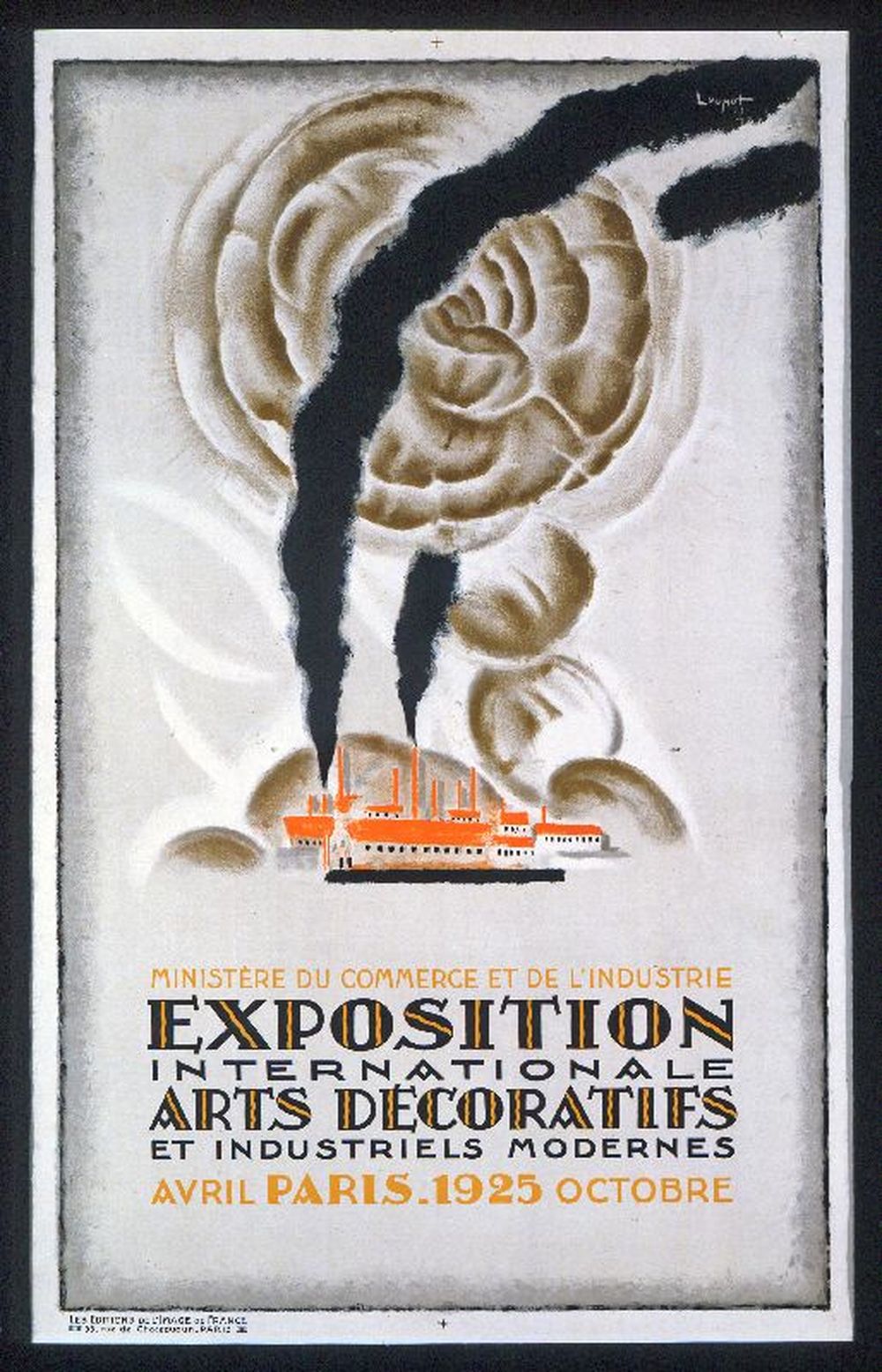
Poster from the exhibition by Charles Loupot, whose design depicts a factory with a smoking chimney whose plume transforms into a rose in the sky – a fitting symbol of the Art Deco era’s defining marriage of art and industry. © Wikimedia Commons
Art Deco: A New International Style
Although the term “Art Deco” wouldn’t be coined until the 1960s, its aesthetic was born here, on the banks of the Seine. The exhibition’s influence spread rapidly, shaping everything from skyscrapers in New York to cinema interiors and jewellery design. It also marked a shift in attitudes towards non-European art, with African textiles and motifs being energetically incorporated into the Art Deco aesthetic.
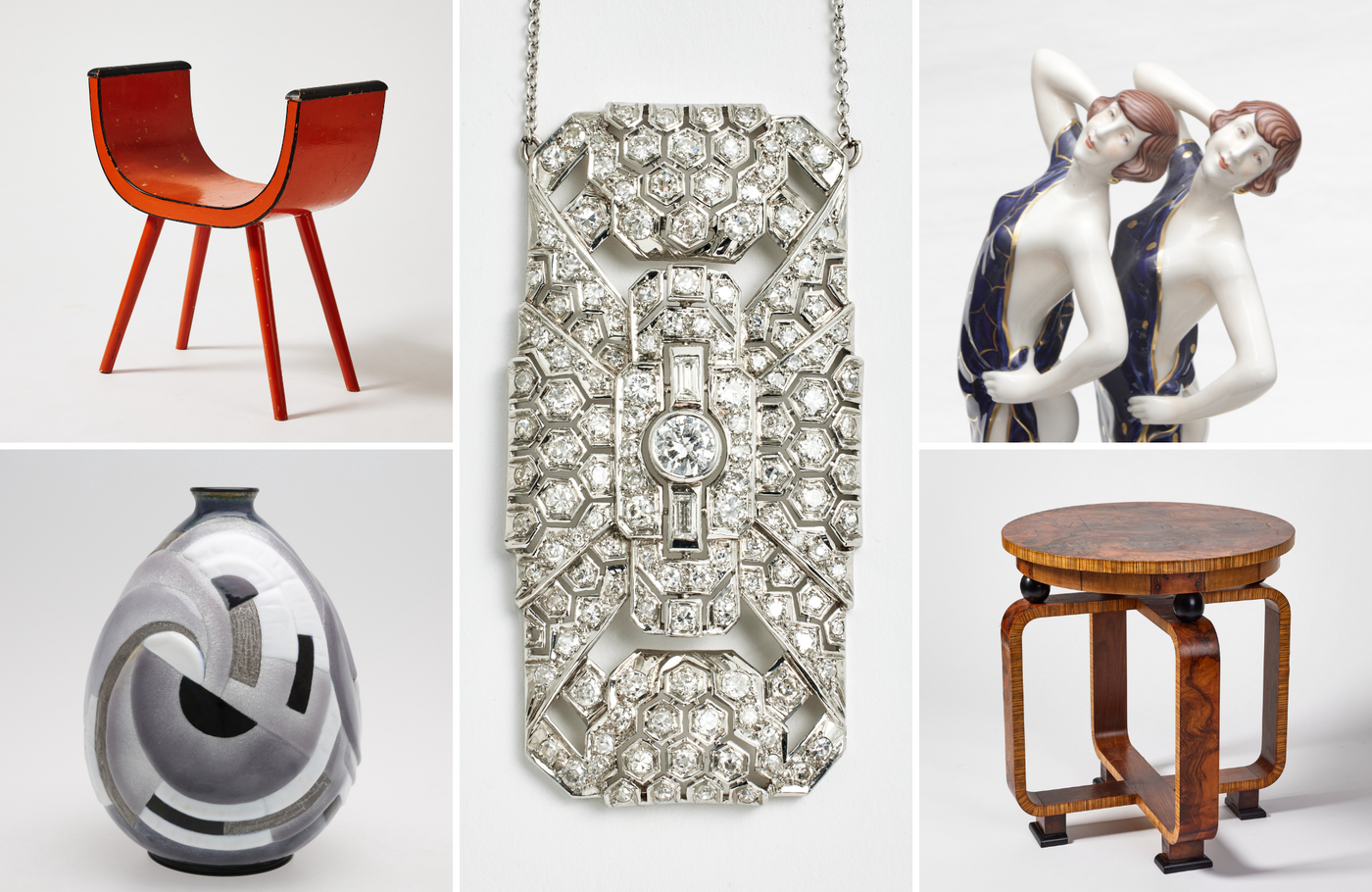
The Paris 1925 Pavilions
The exhibition’s distinctive layout of individual pavilions was very much in keeping with the tradition of international expositions at the time. Since the mid-nineteenth century, nations and companies had used individual pavilions at world’s fairs to showcase their own architecture, technology, and artistic identity. The pavilions themselves became symbols of the world’s fairs’ ambition to “exhibit the world” in miniature – and also facilitated practical logistics across the sprawling Parisian site.
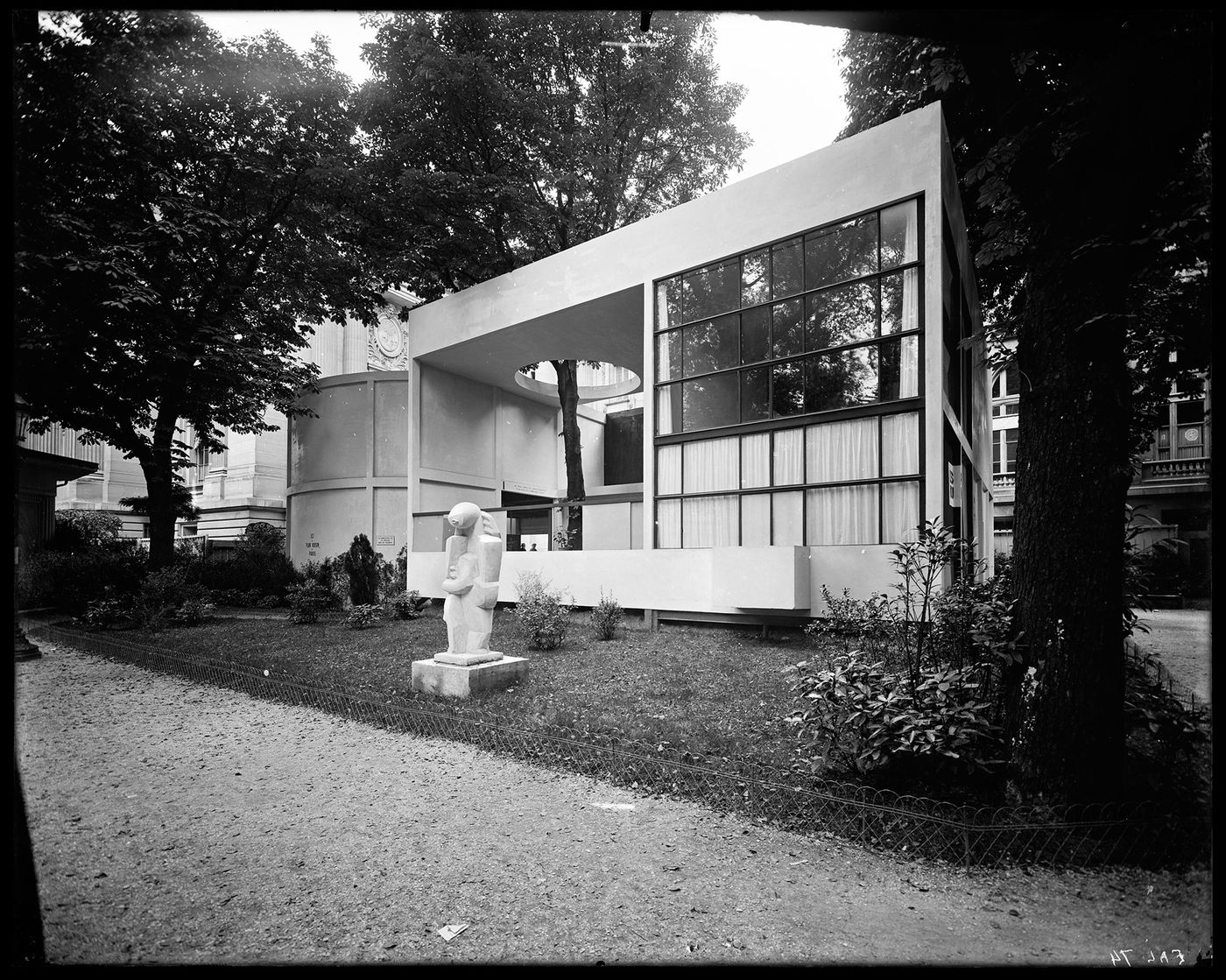
Pavillon L'Esprit Nouveau, designed by Le Corbusier and Pierre Jeanneret. © Wikipedia
Several pavilions became instant icons and remain influential to this day:
Pavillon de l'Esprit Nouveau (Le Corbusier and Pierre Jeanneret): Le Corbusier’s white, cubic pavilion was a manifesto for modern architecture. With its flat roof, open plan and modular furniture, it stood in stark contrast to the decorative richness of Art Deco, foreshadowing the International Style that would soon transform cities worldwide. The pavilion was so radical that organisers attempted to hide it behind a fence.
Soviet Pavilion (Konstantin Melnikov): This striking, angular structure of wood and glass embodied the spirit of the Russian avant-garde. Its bold, diagonal forms and open staircase symbolised modernity and progress, making it one of the most talked-about buildings of the fair.

The Pavillon de l’URSS, designed by Konstantin Melnikov, shown alongside a sketch of the Tourism Pavilion by architect Robert Mallet-Stevens. © Wikipedia and Wikimedia Commons
Tourism Pavilion (Robert Mallet-Stevens): Marked by its tall, streamlined tower, this pavilion exemplified the emerging trend towards functional, ornament-free architecture. Its clean lines and geometric forms pointed the way to the future.
Swedish Pavilion (Carl Bergsten): Sweden’s contribution was celebrated for its elegant simplicity and harmonious proportions – a style later dubbed Swedish Grace. The pavilion’s interiors won international acclaim and 36 gold medals.
Lalique Crystal Fountain: René Lalique’s 14-metre-high crystal fountain, adorned with over 128 glass figures, became a symbol of Art Deco luxury and craftsmanship, drawing crowds and photographers alike.
Belgian Pavilion (Victor Horta): Designed by the famed Art Nouveau architect Victor Horta, the Belgian pavilion stood out for its distinctive tower and rich interiors, blending tradition with modernity.

The Swedish Pavilion, designed by architect Carl Bergsten. © Public domain
Key Designers of the 1925 Paris World Fair
While the 1925 Paris World Fair featured hundreds of exhibitors, a handful of designers left a lasting imprint.
Émile-Jacques Ruhlmann: Often considered the master of Art Deco furniture, Ruhlmann combined neoclassical refinement with modern materials. His desks, cabinets and lighting pieces are among the most sought-after items in early 20th-century decorative arts.
René Lalique: A pioneer in glass and jewellery design, Lalique stunned visitors with his frosted vases, perfume bottles and light fixtures. His work captured the sensual, organic side of Art Deco.
Jean Dunand: Known for his monumental lacquer panels and metalwork, Dunand bridged the decorative and the sculptural, creating timeless interiors and objets d’art that remain centrepieces in museum and auction collections.
Sonia Delaunay: One of the few women to exhibit independently at the fair, Delaunay’s colourful, rhythmic textile and fashion designs brought abstraction and movement to everyday objects.
Edgar Brandt and Raymond Templier: Brandt’s sculptural wrought iron and Templier’s bold geometric jewellery both embodied the era’s shift toward machine-age elegance and abstraction.
Today, works by designers like Ruhlmann, Lalique and Dunand remain highly prized at auctions, often fetching remarkable prices at venues such as Auctionet.


Your Chance to Own a Piece of Design History
Objects from the 1925 Paris World Fair continue to appear at Auctionet and auctions worldwide. Posters, commemorative medals, catalogues and even original award certificates from the fair have fetched impressive prices.
Among the remarkable pieces connected to the exhibition is Uno Åhrén’s armchair, originally displayed in the so-called ladies’ salon alongside a chaise longue and lounge table in the Swedish Pavilion at the 1925 fair.
On Auctionet, Art Deco furniture, glass, jewellery and decorative objects regularly attract strong interest — with record-breaking results for iconic designers and opportunities for affordable discoveries.
The legacy of the 1925 Paris World Fair lives on in every auction, offering you the chance to bring a piece of design history into your own home.


)