)
“I dream my painting, and then I paint my dream,” Dutch artist Vincent van Gogh once famously stated.
The post-impressionist painter created some of the world’s most striking oil paintings, incorporating vivid colours, bold brush strokes and a truly distinctive style. His paintings now sell for tens of millions of dollars. It’s easy to see why art lovers pay a fortune to own a small part of a dream, and van Gogh is just one example of a painter whose work now sells for eye-wateringly large amounts.
Perhaps surprisingly, despite a price of $82.5 million for his Portrait of Dr. Gachet, van Gogh falls just outside the shortlist when it comes to the top 10 most expensive oil paintings ever sold.
Paintings from the world’s most influential, talented and respected artists are understandably truly coveted, not only as works of art, but also as recession-proof investments. From Rembrandt to Leonardo da Vinci, there are several of van Gogh’s contemporaries whose artwork and dreams command even bigger prices, and this article looks at the 10 most expensive.
10. The Standard Bearer – Rembrandt
Sold for $198 million (€175 million) in 2022

The Standard Bearer by Rembrandt was sold in 2022 to the Dutch government in collaboration with the Rijksmuseum, where it is now part of the national collection © Wikimedia Commons
A key figure in the Dutch Golden Age of painting during the 17th century, Rembrandt is the only artist to have more than one painting in this list. The Standard Bearer was created in 1636 and is a vivid and compelling self-portrait that encapsulates the artist's mastery of light, texture and psychological depth.
Rembrandt himself is depicted in the painting as the flag bearer, a role traditionally associated with military leadership and civic pride during the Golden Age. The painting's composition and dramatic contrast between light and shadow are particular highlights. Bold brushstrokes and richly textured fabrics further emphasise vitality, showcasing Rembrandt's technical prowess and helping The Standard Bearer to achieve a price of $198 million in 2022.
9. Les Femmes d'Alger ("Version O") – Pablo Picasso
Sold for $179.4 million in 2015
Pablo Picasso's Les Femmes d'Alger ("Version O"), completed in 1955, is an iconic work from the Spanish artist’s series which was inspired by Eugène Delacroix's Women of Algiers. It reflects Picasso's mastery of Cubism and his exploration of bold forms and vibrant colour palettes. The painting reinterprets Delacroix's romanticised vision through Picasso's modernist lens, deconstructing figures into fragmented geometric shapes.
This masterpiece is rich in symbolism, blending Eastern and Western artistic traditions while paying homage to the complex history of Orientalism in European art. Its dynamic composition and kaleidoscopic energy have cemented its status as one of Picasso's most celebrated works, culminating in a record-breaking sale of $179.4 million in 2015 when the final bid was made by Hamad bin Jassim bin Jaber Al Thani, the former Prime Minister of Qatar.
8. Pendant portraits of Maerten Soolmans and Oopjen Coppit – Rembrandt
Sold for $180 million (€160 million) in 2016

Rembransts portraits of Maerten Soolmans and Oopjen Coppit was sold in 2016. A joint purchase was made by the Rijksmuseum in Amsterdam and the Louvre Museum in Paris © Wikimedia Commons
Rembrandt's Pendant Portraits of Maerten Soolmans and Oopjen Coppit, painted in 1634, are a testament to the Dutch master’s skill in capturing opulence and individuality. These full-length portraits, depicting a wealthy couple in lavish attire, are notable for their unprecedented scale and intricate detail. Maerten and Oopjen are dressed in black with lace accents, symbolising wealth and status in the Dutch Golden Age.
Rembrandt's use of light and shadow enhances the textures of the clothing, resulting in incredible realism. Although actually two paintings, these masterpieces remain among the most expensive portraits ever sold, purchased jointly for $180 million in 2016 by museums in France and the Netherlands, reflecting the work’s shared cultural significance.
7. No. 6 (Violet, Green and Red) – Mark Rothko
Sold for $186 million (€140 million) in 2014
No. 6 (Violet, Green and Red) was created in 1951 and is a prime example of Mark Rothko’s distinctive signature colour field painting. This abstract work comprises layered translucent hues, with the American painter’s subtle blending of colours creating a dynamic interplay between serenity and tension.
The painting’s minimalist yet profound composition reflects Rothko's interest in evoking human spirituality through abstraction. Its record-breaking sale for $186 million in 2014 underscores the enduring appeal of Rothko's emotionally charged works within the art market.
No.6 was sold once again in 2024 in a private sale facilitated by Christie's. While the exact price remains undisclosed, reports suggest it exceeded $100 million.
6. Wasserschlangen II – Gustav Klimt
Sold for $183.8 million in 2013

"Wasserschlangen II" has a complex provenance. Originally owned by a Viennese art collector, it was confiscated by the Nazis in 1938. © Wikimedia Commons
Gustav Klimt's Wasserschlangen II (or Water Serpents II), painted between 1904 and 1907 typifies Klimt's fascination with sensuality, nature and feminine beauty. This opulent oil painting features Klimt's signature use of gold leaf and mosaic-like patterns, depicting intertwined female figures in a dreamlike aquatic setting.
Rich in Art Nouveau aesthetics, Wasserschlangen II exudes a sense of fluidity and intimacy, exploring themes of love and desire. The artwork was sold for $183.8 million in 2013 in a private sale and remains one of Klimt's most celebrated masterpieces, revered for both intricate detail and evocative imagery.
The mastepiece was actually hidden for over 60 years and was publicly displayed just recently, in 2023 at Belvedere Museum in Vienna.
5. Number 17A – Jackson Pollock
Sold for around $200 million in 2015
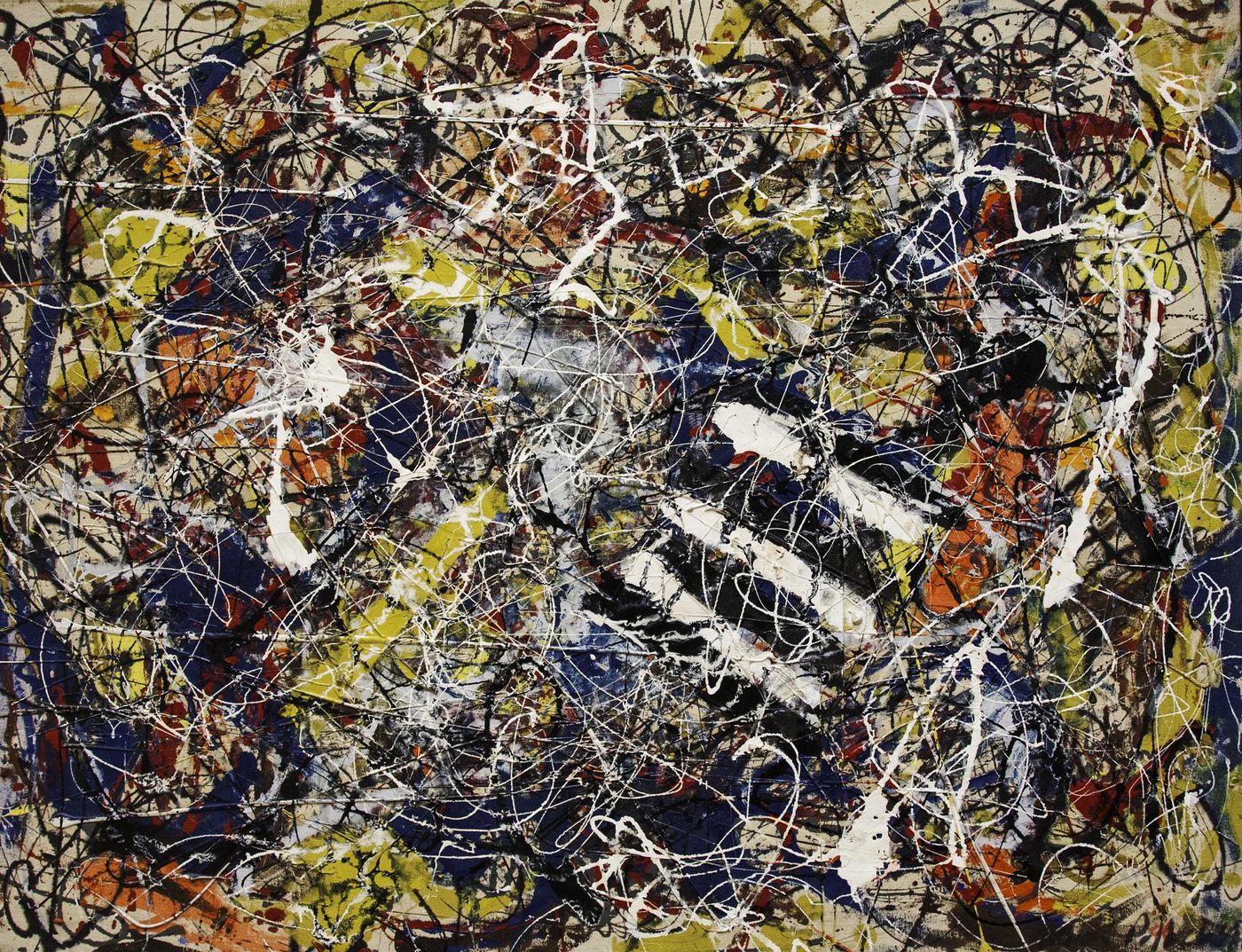
"Number 17A" is an abstract expressionist work created by Pollock in 1948, utilizing his signature drip technique. © Kent Baldner/Flickr: https://creativecommons.org/licenses/by-nc-sa/2.0/
Jackson Pollock's Number 17A was completed in 1948 and showcases the pinnacle of Pollock's drip painting technique. This abstract expressionist work features chaotic yet harmonious patterns of paint, embodying the energy and spontaneity of Pollock’s creative process.
The layers of colour and texture draw viewers into an immersive experience, reflecting the raw emotion and movement that are integral to Pollock’s art. Purchased for approximately $200 million in 2015, Number 17A represents Pollock's revolutionary impact on 20th-century art and the continuing demand for his groundbreaking creations.
4. Nafea Faa Ipoipo (When Will You Marry?) – Paul Gauguin
Sold for $210 million in 2014

Paul Gauguin's 1892 painting "Nafea Faa Ipoipo" was owned by Swiss collector Rudolf Staechelin for nearly 50 years. It is believed to be sold to Qatar, but its current location remains unclear. © Wikimedia Commons
Paul Gauguin's Nafea Faa Ipoipo (When Will You Marry?) was painted in 1892 during Gauguin's time in Tahiti. The work is a vibrant and symbolic depiction of two Tahitian women, juxtaposing Western artistic traditions with Polynesian culture that captures Gauguin's fascination with the exotic and the spiritual.
The vivid colours and serene composition evoke a sense of timelessness, while the painting’s title alludes to themes of cultural tension and romantic longing. Its sale for $210 million in 2014 highlights its status as one of Gauguin’s most iconic and valuable works.
3. The Card Players – Paul Cézanne
Sold for over $250 million in 2011
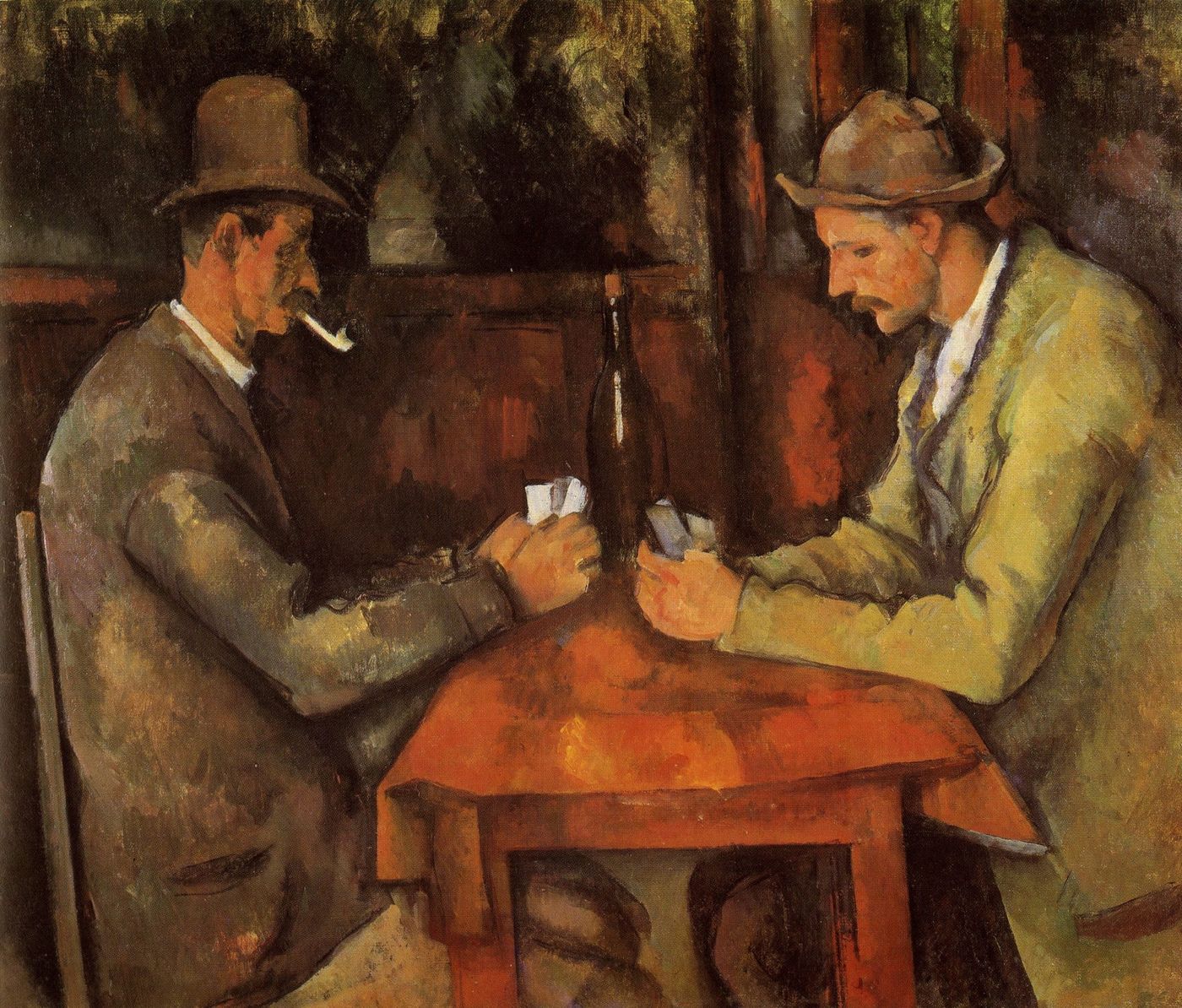
Unlike earlier depictions of card players in art (like those by Caravaggio or the Dutch Masters, which often showed gambling and trickery), Cézanne’s figures are calm and focused © Wikimedia Commons
Paul Cézanne's The Card Players is part of a series painted in the early 1890s, recognised as a cornerstone of Post-Impressionist art. This particular painting sold for over $250 million in 2011 and is celebrated for its quiet intensity and masterful composition.
The Card Players depicts two men engrossed in a card game, with the painting exploring themes of rural life, concentration and human interaction. Cézanne's use of bold brushstrokes and muted tones emphasises structure and form, paving the way for modern art movements like Cubism.
Cézanne actually painted five versions of The Card Players between 1890 and 1895. He often took inspirations from workers and farmers from streets of his hometown, Aix-en-Provence in France.
2. Interchange – Willem de Kooning
Sold for around $300 million in 2015
Willem de Kooning's Interchange was completed in 1955 and represents a seminal work of Abstract Expressionism. Its vibrant palette and energetic brushstrokes reflect de Kooning's exploration of movement and emotion and was inspired by the human form and landscapes.
The work's groundbreaking approach to colour and composition marked a turning point in de Kooning's career as the Dutch-American artist transitioned from a focus on figurative abstraction to a more landscape-inspired purely abstract style.
Interchange was actually sold alongside Jackson Pollock's Number 17A (number 5 on this list). Hedge fund manager Kenneth C. Griffin had his spending trousers on when he bought two paintings for half a billion dollars in one single day.
At this historical auction day in 2015 Interchange became the most expensive painting of all time, until two years later when it was surpassed by masterpiece below.
1. Salvator Mundi – Leonardo da Vinci
Sold for $450.3 million in 2017

Salvator Mundi was thought to be lost for nearly 200 years. In the 1600s, it was owned by King Charles I of England, but vanished and rediscovered 1958. © Wikimedia Commons
Leonardo da Vinci’s Salvator Mundi, a Renaissance masterpiece, portrays Christ as the saviour of the world, holding a crystal orb in one hand and raising the other in a gesture of blessing. The painting’s exquisite detail and delicate sfumato technique are hallmarks of Leonardo’s genius.
Despite debates about its attribution, the work's historical and artistic significance is undisputed. Sold for $450.3 million in 2017, Salvator Mundi became the most expensive artwork ever sold, highlighting Leonardo’s enduring legacy and the painting’s unparalleled cultural value.
Salvator Mundi was thought to be lost for nearly 200 years. In the 1600s, it was in the royal collection of King Charles I of England, but then it vanished. It resurfaced in 1958, but no one recognized it as a da Vinci, and it was sold for only £45.



)