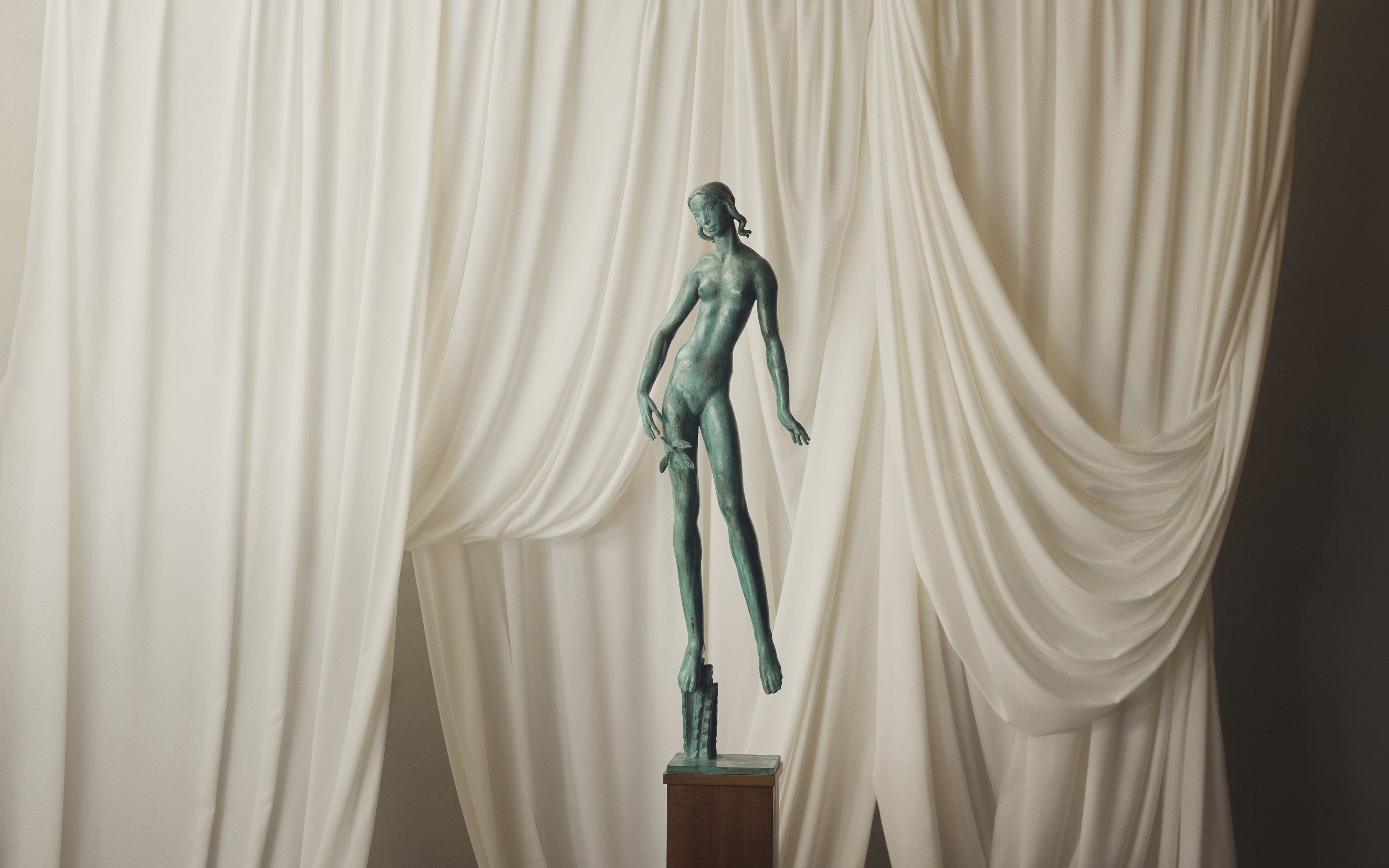
Swedish Grace can be described as a Swedish interpretation of the internationally established 1920s style, Art Deco. It is sometimes also associated with Neoclassicism as a parallel ideal. Common to both were inspirations drawn from the classical architectural elements and decorations of antiquity.
The breakthrough for Sweden's 1920s style came at the 1925 Paris Exposition, which also marked the zenith of Art Deco. Inside Sweden's elegant pavilion, visitors encountered exquisite furniture designed by Carl Hörvik and Uno Åhren. Swedish glass art also took centre stage, with designers such as Edward Hald and Simon Gate achieving major international recognition. The thin, engraved glass from Orrefors became an iconic representation of the celebrated Swedish Grace.
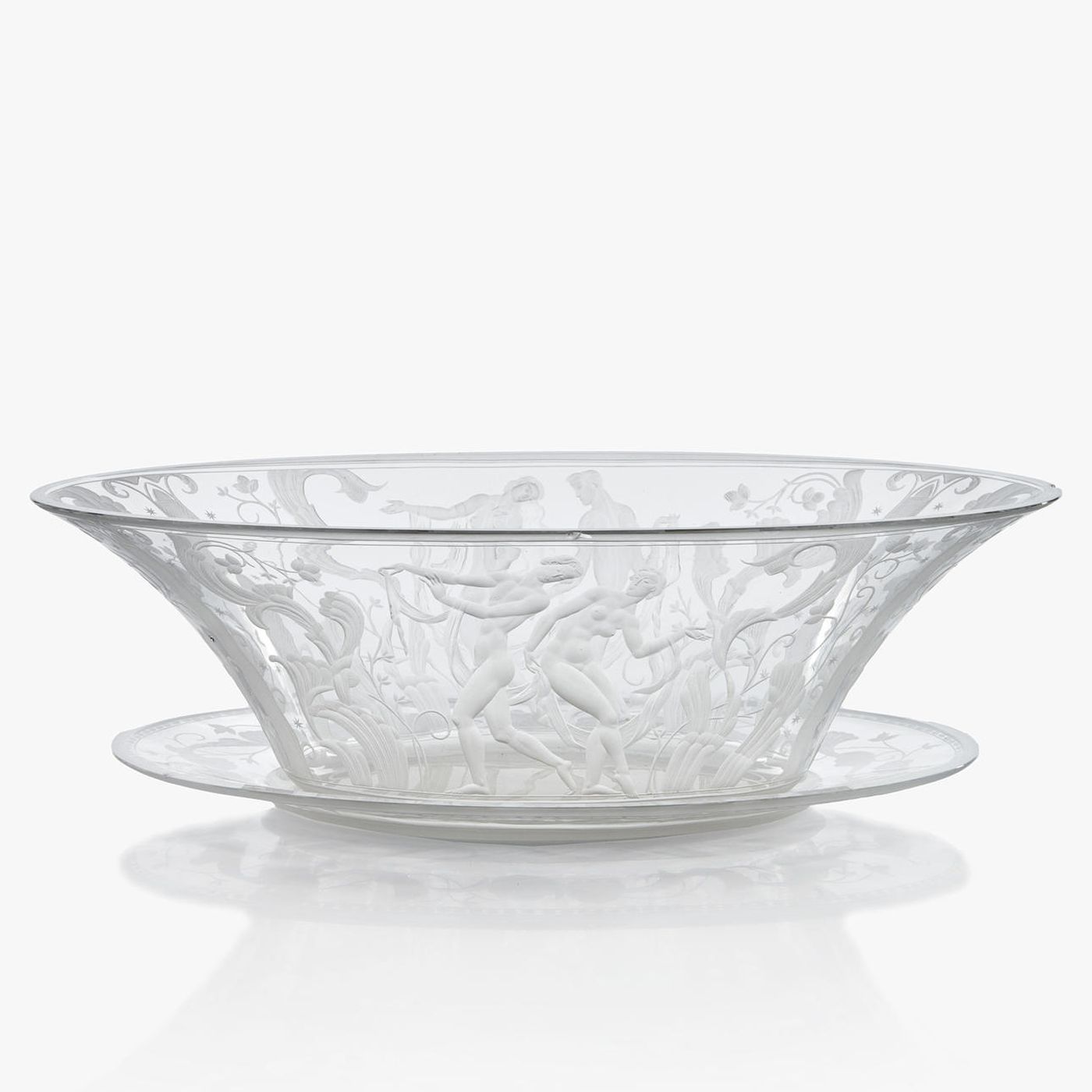
Engraved glass bowl with plate by Simon Gate for Orrefors.
At the Paris Exposition, Sweden was awarded no fewer than 36 medals, a result considered an outright sensation. This success laid the foundation for the growing Swedish confidence in design and craftsmanship throughout the 20th century.
Art Deco is characterised by symmetrical shapes, clean lines, and the use of then-modern materials such as aluminium and Bakelite. It was a style that embodied luxury, joie de vivre, and optimism for the future. Swedish Grace adopted the visual language of Art Deco but placed less emphasis on exclusivity. While Art Deco drew inspiration from ancient Greece and Rome, Swedish Grace was also influenced by the Gustavian style era.
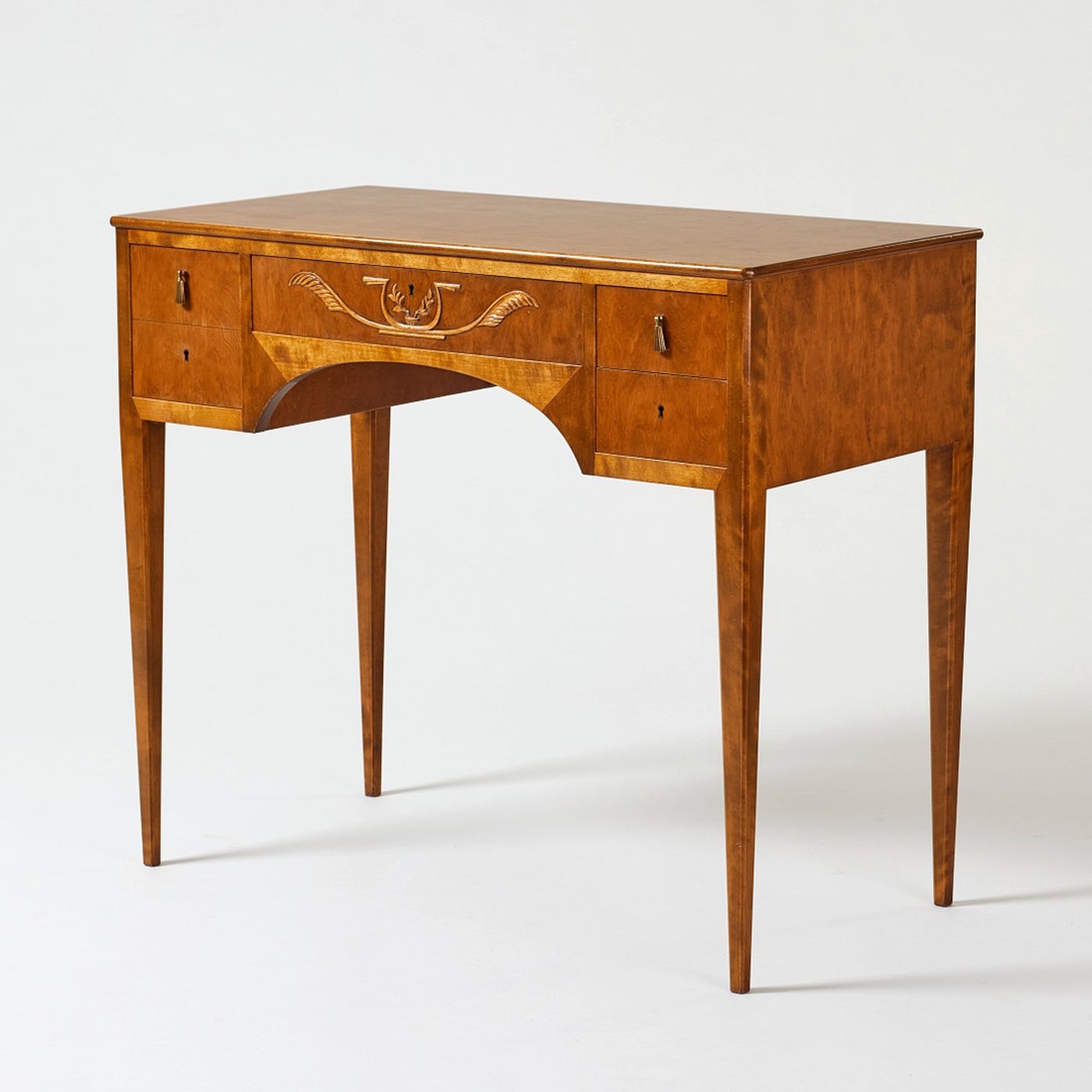
Carl Malmsten, desk, Swedish Grace
Simple elegance with meticulously considered details defined 1920s design. Craftsmanship and quality were central, both in execution and aesthetics. Carl Malmsten, an early advocate of 1920s classicism, created numerous exclusive furniture pieces in birch and dark-stained oak, often adorned with intricate marquetry. Sideboards, ottomans, and buffets became popular during this period. Similarly, Axel Einar Hjorth, head architect at Nordiska Kompaniet, drew significant inspiration from Art Deco in his designs.
Today, interest in Art Deco and Swedish Grace is exceptionally high in the auction market, particularly among international collectors. Naturally, there are many other 1920s objects that may not be strictly classified as Art Deco or Swedish Grace but still add a touch of timeless beauty to any home.
Do you want to learn more about Swedish Grace, Art Deco, and 20th-century design? Become your own expert in modern design at Auctionet Academy.
)


