
The story of the iconic Eames Lounge chair is a true Hollywood tale. But this time, it is for real. In fact, one of Hollywood’s leading directors was behind the creation of one of the world’s most iconic chairs. The married couple Charles and Ray Eames had become acquainted with director Billy Wilder, known for films such as Some Like It Hot when he asked them to design a house for him. The house never materialised, but their friendship endured. It wasn’t uncommon for the Eames’s to visit Wilder at the film studio. Between takes, Wilder would often pull out a few sawhorses and some plywood sheets to build himself a makeshift napping spot. There and then, the idea for the perfect chair, complete with a matching ottoman, was born.
A Well-worn Baseball Glove
The Eames’s had worked for the aviation industry during World War II. They had learned to work with plywood, particularly how to bend and shape the material using heat and pressure. The couple’s hallmark was creating furniture that could be mass-produced and reasonably priced. At least, that had been the case with their previous chairs, but this time, no expense was spared. The goal was to create a modern and contemporary version of the classic British club chair, with the same “warm and welcoming feel as a well-worn baseball glove,” as Charles Eames put it.
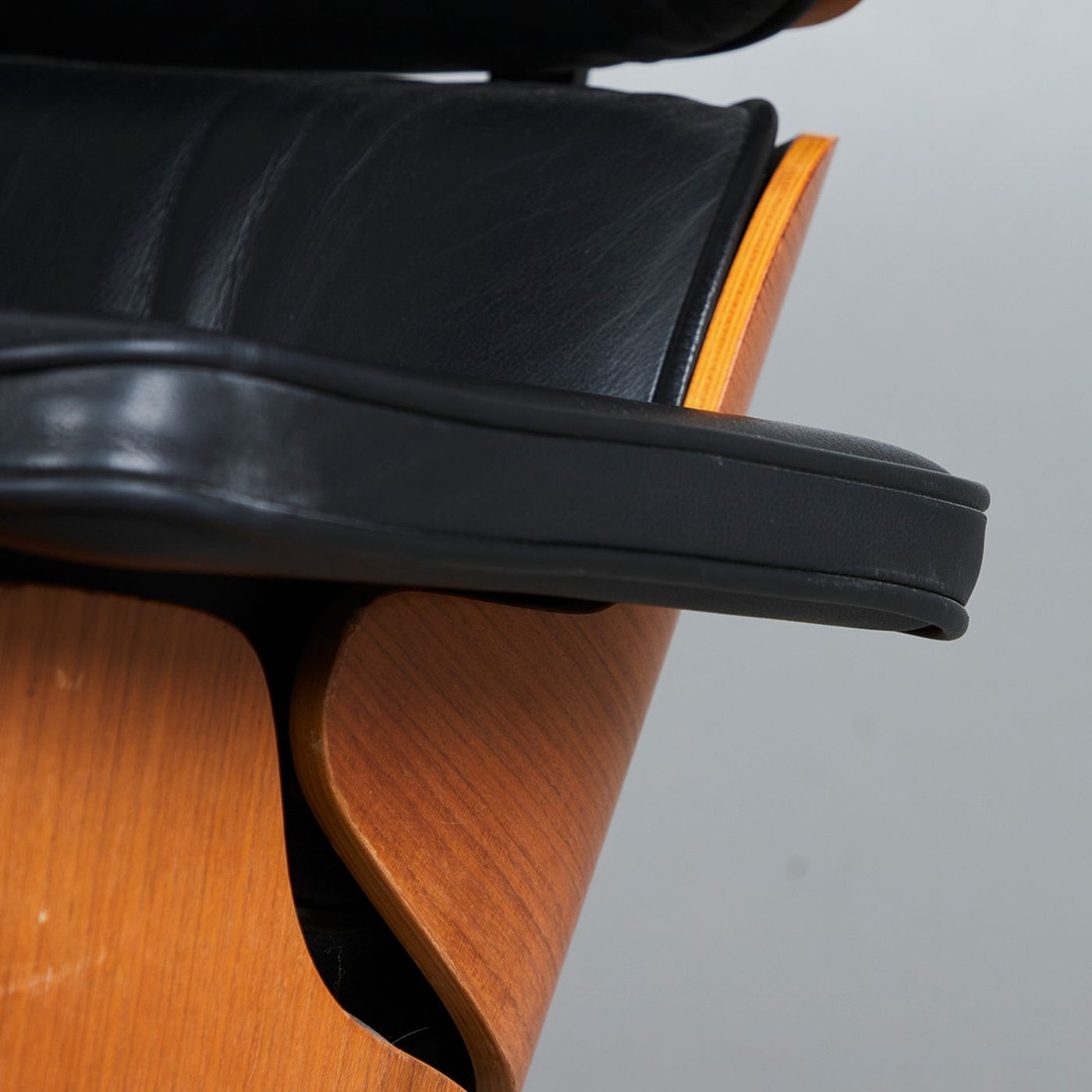
The Eames Lounge Chair and Ottoman, as it’s officially titled, was unveiled to the public for the first time in 1956 after several years of prototyping. The success, as they say, was immediate. A lounge chair was a must-have in your office or home if you wanted to show interest in design and modernity and do well for yourself.
What works is always better than what looks good. The look of something may change over time, but what works, works
But the secret behind the comfortable chair’s success and its relevance and contemporary appeal 68 years after its launch isn’t just its beautiful design – although its sculptural qualities certainly contribute to its iconic status as one of the most important furniture pieces of the 20th century – but also its ergonomics and functionality.
For All Body Types
Charles Eames was tall and fairly slim, while his wife Ray was shorter and had a more, shall we say, compact build. But the ambition, and the result, was a chair that would work equally well for almost all body types. The posture that results when you sit deeply in the chair with your feet up on the ottoman is, in fact, the most perfect relaxation a body can achieve after a day of standing, walking, and sitting at a desk with feet on the floor.
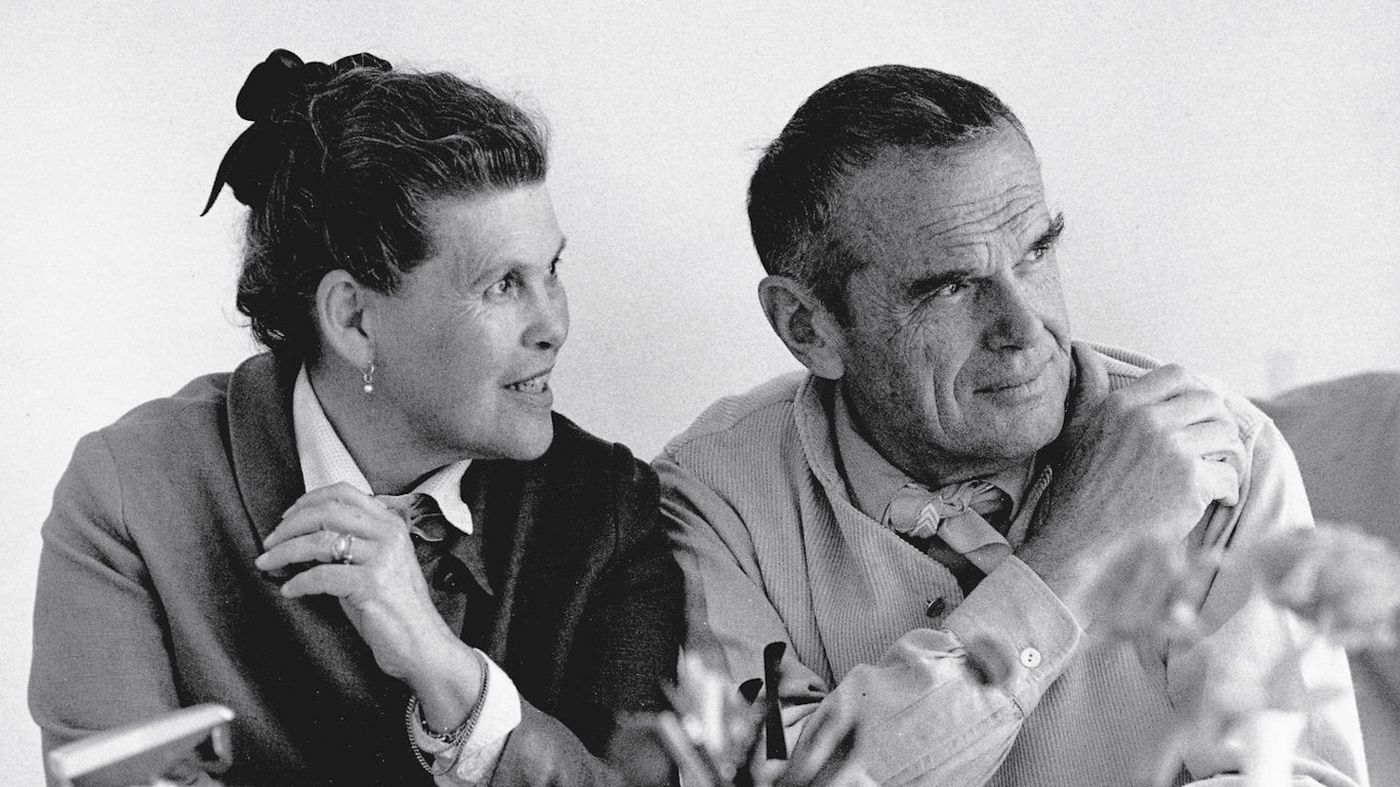
Ray and Charles Eames in the 1950s.
Despite the couple’s extreme obsession with aesthetics, function and usability always come first. “What works is always better than what looks good. The look of something may change over time, but what works, works,” Charles Eames once said.
When it comes to the Lounge Chair, however, what was beautiful in 1956 is still so today. The chair is included in the permanent collections of the Museum of Modern Art in New York and the Museum of Fine Arts in Boston, a testament to this.
Over the years, the chair has come to be regarded as an example of iconic design and almost a work of art. When a modern, successful, and thoughtful person is to be portrayed in a film or TV series, a Lounge Chair is the obvious choice to reinforce those qualities. Just look at Iron Man, Frasier, or House. Not a bad journey for something that began as a few plywood sheets propped up on sawhorses in the backyard of a film studio.

)

