
London, 1856. Smoke stacks blot the sky, machine-milled furniture floods showrooms, and a young Oxford dropout named William Morris walks the Strand disgusted. “The age of ugliness is upon us,” he writes to his friend Edward Burne-Jones. Within a decade Morris will answer that gloom with riotous walls of indigo leaves and pomegranate reds, preaching that every home – rich or modest – deserves honest craftsmanship.
His crusade forged the Arts & Crafts movement, birthed the world-class Kelmscott Press and stoked a marketplace that still sees bolt-ends of “Strawberry Thief” trade for five-figure sums.

A Craftsman’s Revolt: Wallpaper Against the Machine
Victorians adored stucco frills; Morris despised them. In 1861 he co-founded Morris, Marshall, Faulkner & Co. and launched hand-blocked designs like “Trellis” and “Daisy,” each repeating natural forms with medieval fluency. Where mass printers used aniline dyes, Morris returned to indigo, madder and weld – vegetal colours that age like wine rather than fade to beige.
“Have nothing in your house that you do not know to be useful or believe to be beautiful,” he told clients. The slogan still guides today’s slow-design start-ups – and many an Auctionet bidder eyeing a single unused roll of “Willow Bough.”
Printing Utopia: the Kelmscott Years
By the 1890s, Morris had pivoted from wallpaper to wood-type, founding the Kelmscott Press to rescue what he called “the black-art of printing” from industrial vulgarity. He designed Golden, Troy and Chaucer typefaces, recut on brass matrices, and printed on hand-made rag paper.
The pinnacle, the 1896 Works of Geoffrey Chaucer, ran to just 425 copies; its Gothic borders and lavish initials make collectors’ pulses race today, proving fine press can rival blue-chip modern art – just as Auctionet’s record lists show for rare Windsor chairs or Bauhaus lamps.
Have nothing in your house that you do not know to be useful or believe to be beautiful
Pattern, Politics and the Socialist Salon
Morris’s socialism was no arm-chair theory; he lectured in strike halls, edited the newspaper Commonweal and participated in the 1887 “Bloody Sunday” protests. He saw pattern as protest too: by preserving hand-skills, he offered a counter-economy to sweatshop labour.
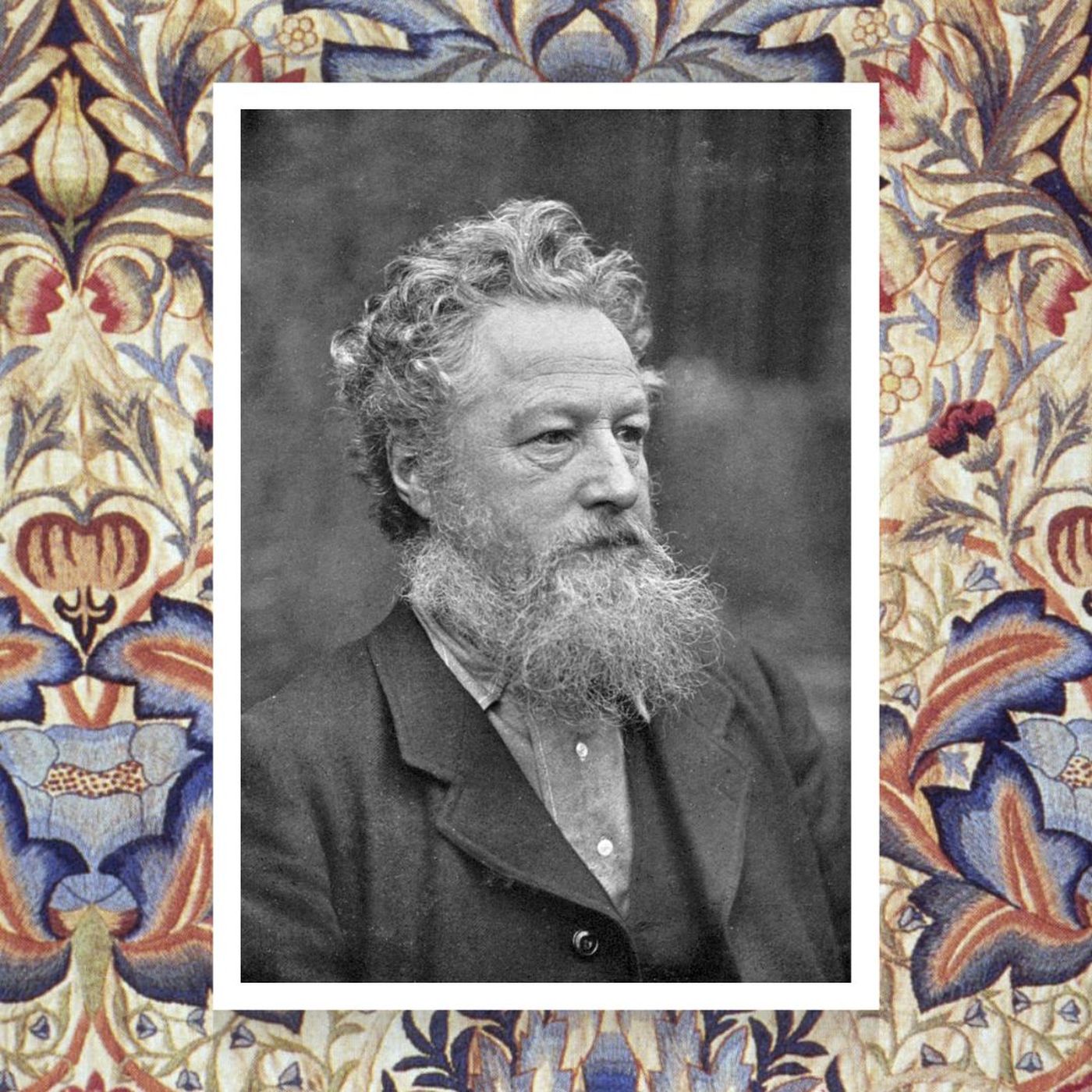
His Red House interiors, co-authored with architect Philip Webb, blurred art and daily life – the dining-room settles carved with Chaucer verses, the hallway lined in hand-painted tiles. Today, Red House is a National Trust shrine; a single Webb-built oak table can exceed €50,000 when authenticated.
Marketplace Snapshot: Going Rates in 2025
Entry-level buyers often start with single Kelmscott leaf pages (€400–€1,200) or 1930s Sanderson reprints of classic wallpaper – affordable, frame-worthy, and still steeped in William Morris lore.
Early “Fruit” wallpaper panels (c. 1865): €8,000–12,000, valued for hand-blocking, natural dyes and paper watermarks.
“Strawberry Thief” indigo cotton (c. 1883): €14,000 per metre, driven by its iconic repeat pattern and vibrant blues.
Kelmscott News from Nowhere (1892): €6,500–9,000, prized for its fusion of politics and press craft.
Stained-glass roundels by Morris & Co.: €18,000–25,000, combining Pre-Raphaelite artistry with domestic-scale charm.
Curating Morris in a Modern Home
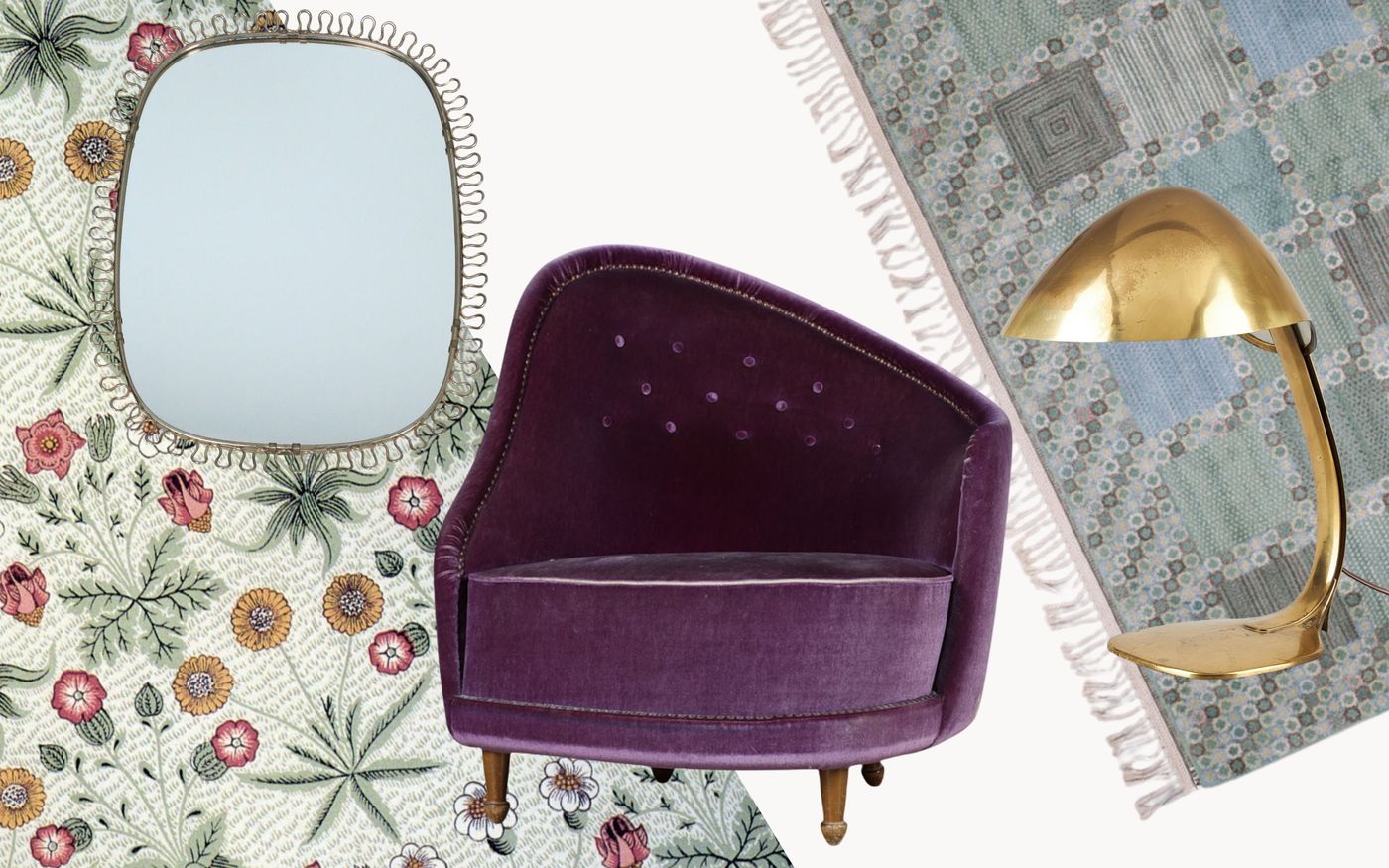
We would pair "Daisy" wallpaper with A Paavo Tynell brass lamp, and a pop of colour like this purple delight by Carl Cederholm
Mix old and new: pair “Acanthus” curtains with a minimalist Fritz Hansen Series 7 – floral exuberance tamed by Danish calm.
Let colours converse: Morris’s natural dyes sing under warm LEDs; avoid cool white bulbs that flatten ochres and indigos.
Layer textures: russet leather, unbleached linen and brass echo Morris’s love for tactile honesty.
Tell the story: a framed Kelmscott title page doubles as dinner-party talking point – and an appreciating asset if kept away from direct sunlight.
Other styling choices that goes with the William Morris aesthetics


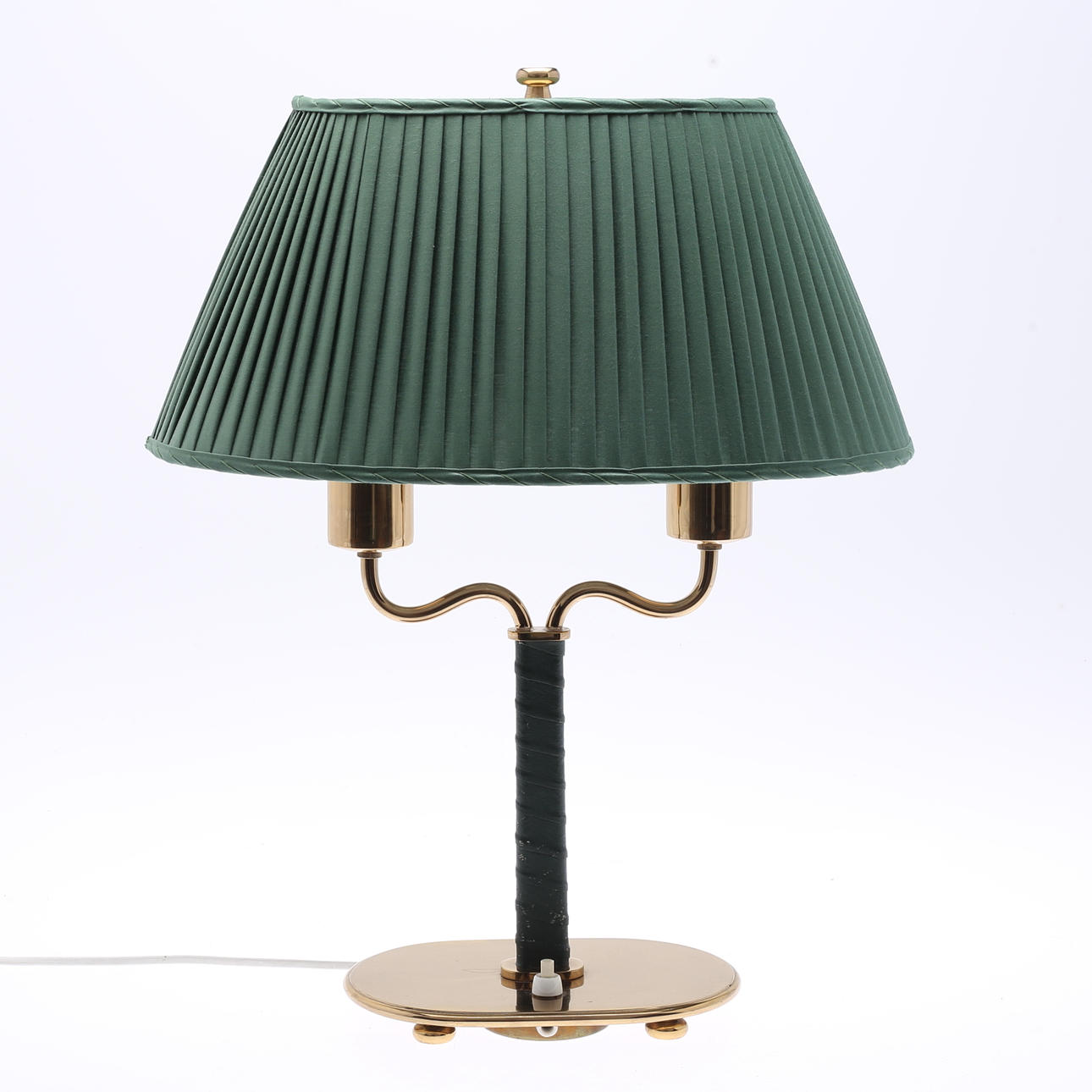


Finding Morris on Auctionet
Because Morris pieces range from broadsheets to oak settles, consignors worldwide list items year-round. A saved search for “William Morris” will flag everything from a modest “Honeysuckle” cushion to an attic-found roll of “Bird & Anemone.” Auctionet’s transparent provenance notes – modelled after its Windsor Chair and Lots Road deep-dives – help buyers gauge authenticity before they click “bid.”
Conclusion: a Victorian with 21st-century relevance
William Morris preached that beauty and utility, art and labour, should be fused – not stratified. His conviction turned humble wallpapers into cultural lightning rods and still challenges today’s throwaway culture.
Whether you secure a museum-grade Kelmscott folio or a single repeat of “Trellis,” you’re joining a lineage that measures value by craft, story and social conscience. Browse Auctionet’s listings, set your alerts, and let Morris’s botanical rhythms – and radical ideals – take root in your collection.

)

