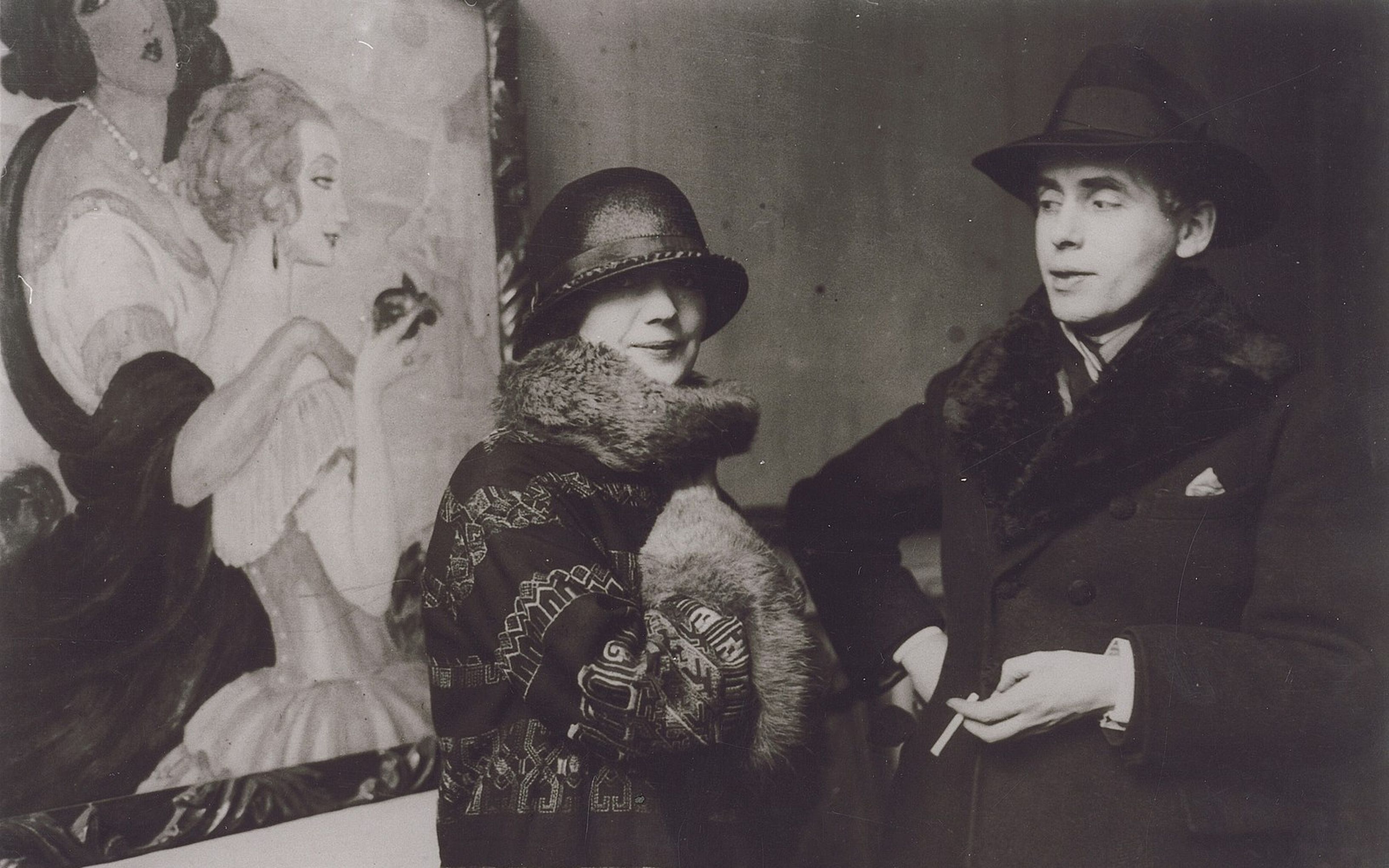
The transgressive love story between Gerda Wegener and Lili Elbe has become iconic, especially through the The Danish Girl, the feature film that earned Alicia Vikander an Oscar for her portrayal of Gerda, capturing the life of the Danish artist couple.
Their collaboration and mutual support were groundbreaking in a time when topics like gender, sexuality, and identity were rarely discussed openly. Their art also explored and challenged societal norms, continuing to inspire both the art world and the general public.
Works by both artist were sold in November 2024 at Stockholms Auktionsverk Fine Art and Helsingborgs Auktionskammare.
Lili Elbe: A Pioneer Both as a Person and an Artist
Einar Wegener was born in Denmark in 1882. He studied at the Royal Danish Academy of Fine Arts in Copenhagen, where he also met his future wife and collaborator, Gerda (then known as Gottlieb). Together, they formed an intimate partnership, both personally and artistically, which shaped the careers of both artists.

Lili Elbe and Einar Wegener
Legend has it that Einar’s journey toward becoming a trans woman began when one of Gerda’s female models had to cancel a sitting. Gerda asked Einar to try on women’s clothing, and he felt so comfortable and authentic in them that he created a female persona, “Lili Elbe.” Gerda even encouraged her husband to attend a party as "Lili," dressed in a gown and wig.
What began as an innocuous role-play for Gerda soon became serious for Einar, who realized he was a woman trapped in a man’s body. Eventually, he underwent one of the first gender-affirming surgeries in the world, thus becoming Lili Elbe.
I am two beings: a man, Einar, whom you know, and a woman, Lili, whom you know only through Gerda’s best portraits. In character and essence, they are as different as night and day. You cannot imagine how happy I feel when I dress as a woman.
As an artist, Einar initially had a realist and traditional style. His works consisted primarily of portraits, landscapes, and genre paintings, with detailed depictions of his models. Later in his career, he became more intimate, personal, and experimental, especially in his portrayals and photographs of Gerda, reflecting his exploration of femininity.
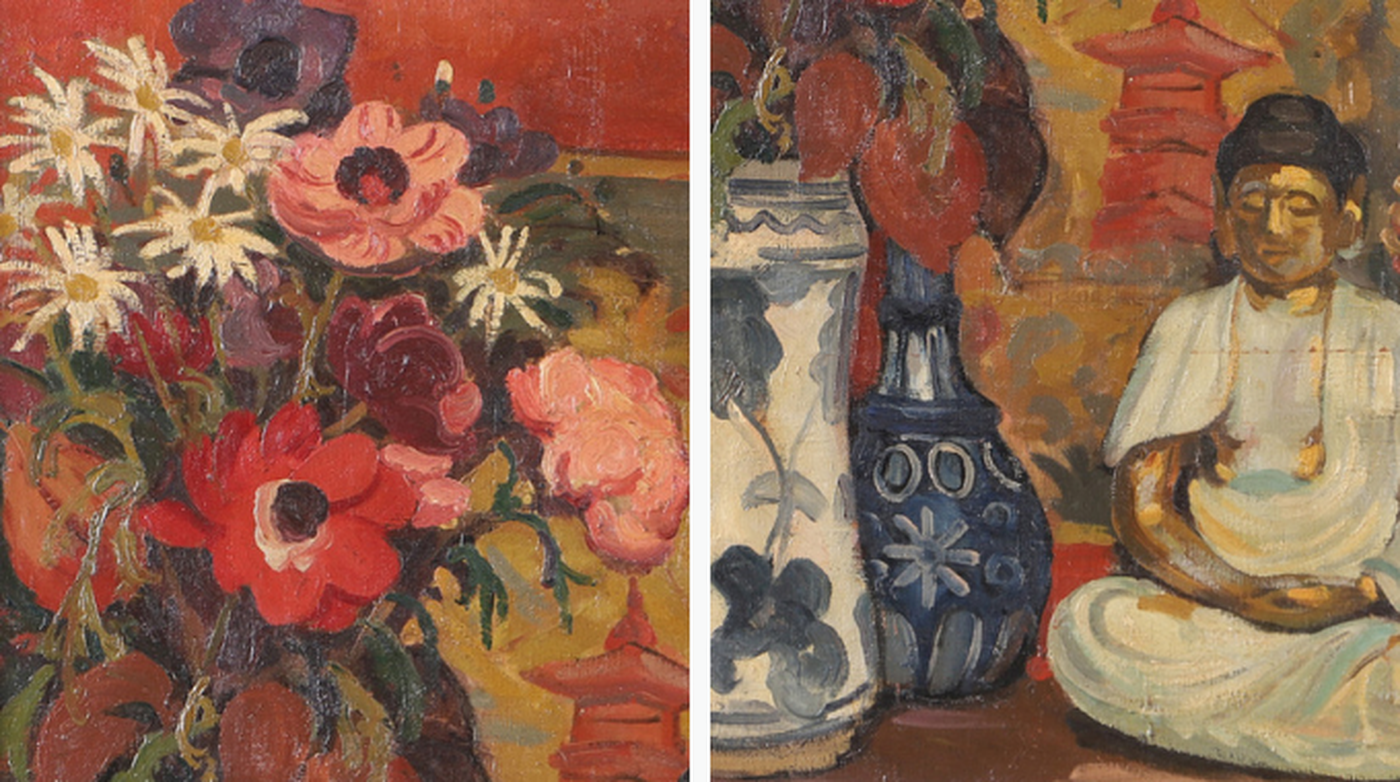
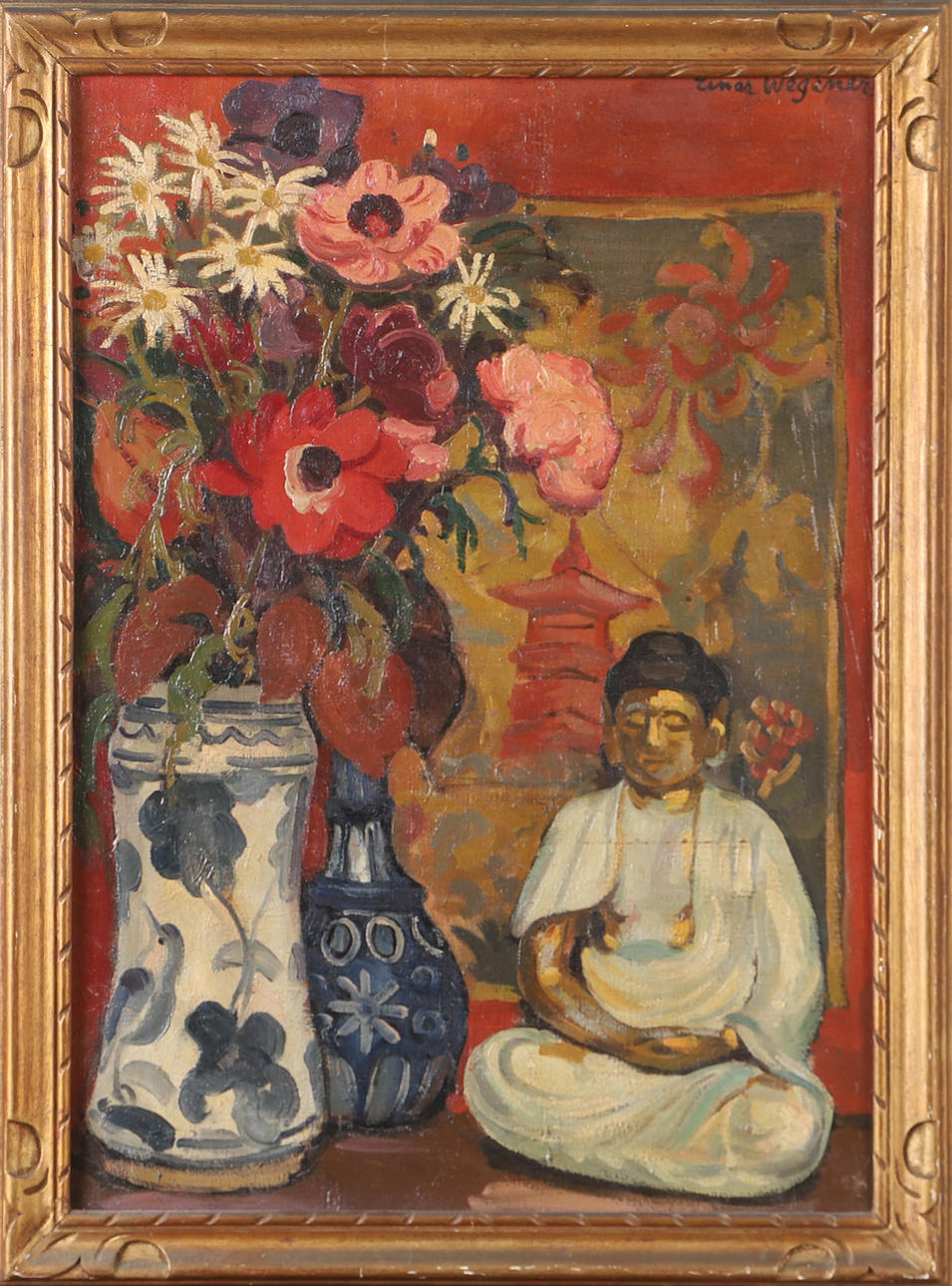
Still life, signed Einar Wegener. As an artist, Einar was prominent in lanscapes and genre paintings. As Lili became more prominent, her art also grew more personal and exploratory.
In the early 1930s, Lili underwent gender-affirming surgery in Germany, one of the first in history to do so. These surgeries were both experimental and highly risky. Although the process was physically and emotionally demanding, it ultimately led to freedom—Lili could finally live as the person she felt herself to be. By embracing a new identity, she overcame not only personal challenges but also challenged a society bound by strict social norms.
Gerda Wegener’s Artistry: A Study in Female Identity
Gerda Wegener specialized in portraits and illustrations, closely associated with the early Art Deco era. Her works are known for their sophisticated style and bold sensuality, often depicting women in glamorous, sometimes erotic, poses that explore themes of female strength, beauty, and independence.
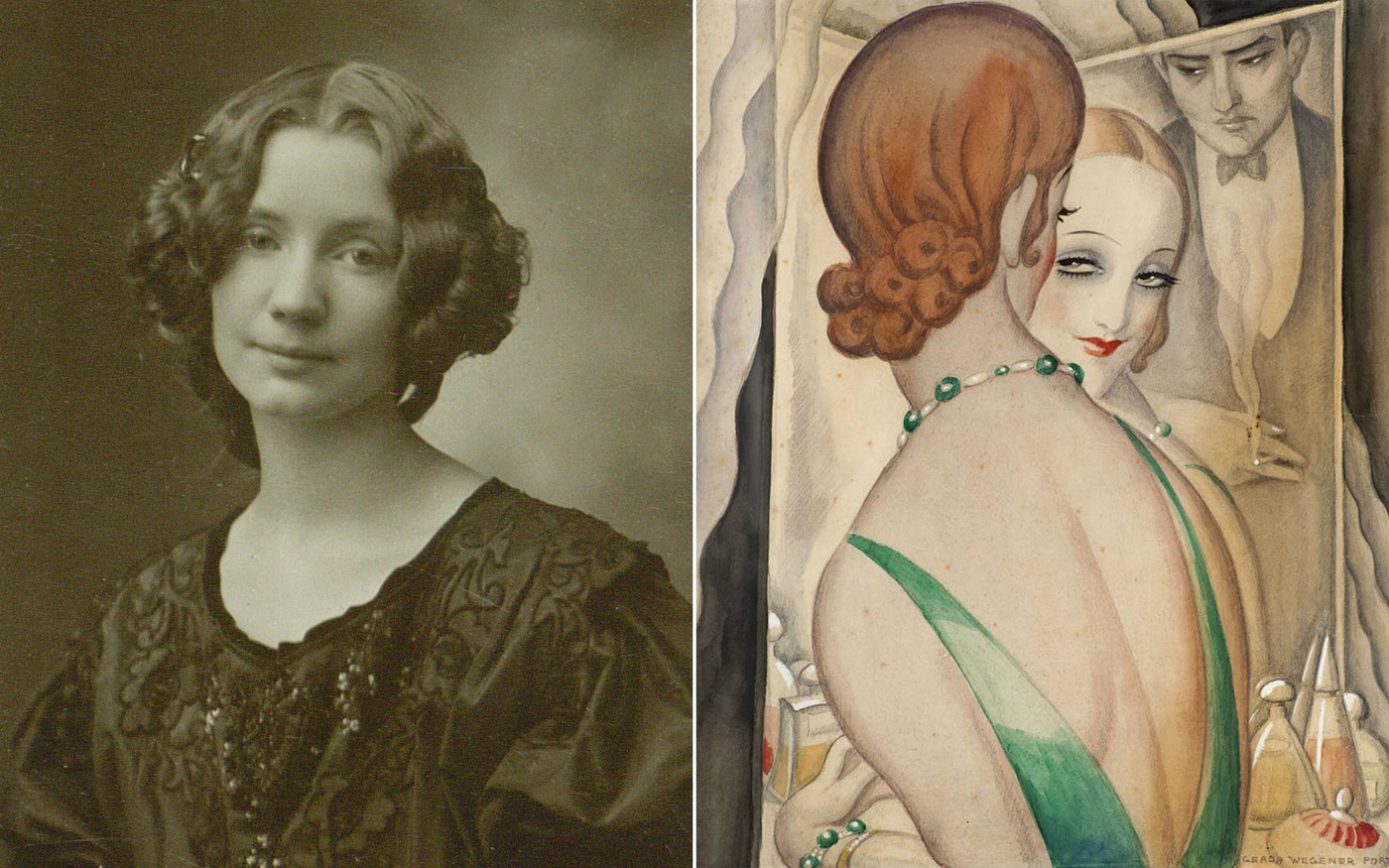
Left: Gerda on her wedding day in 1904. Right: "At the mirror" from the 1930's
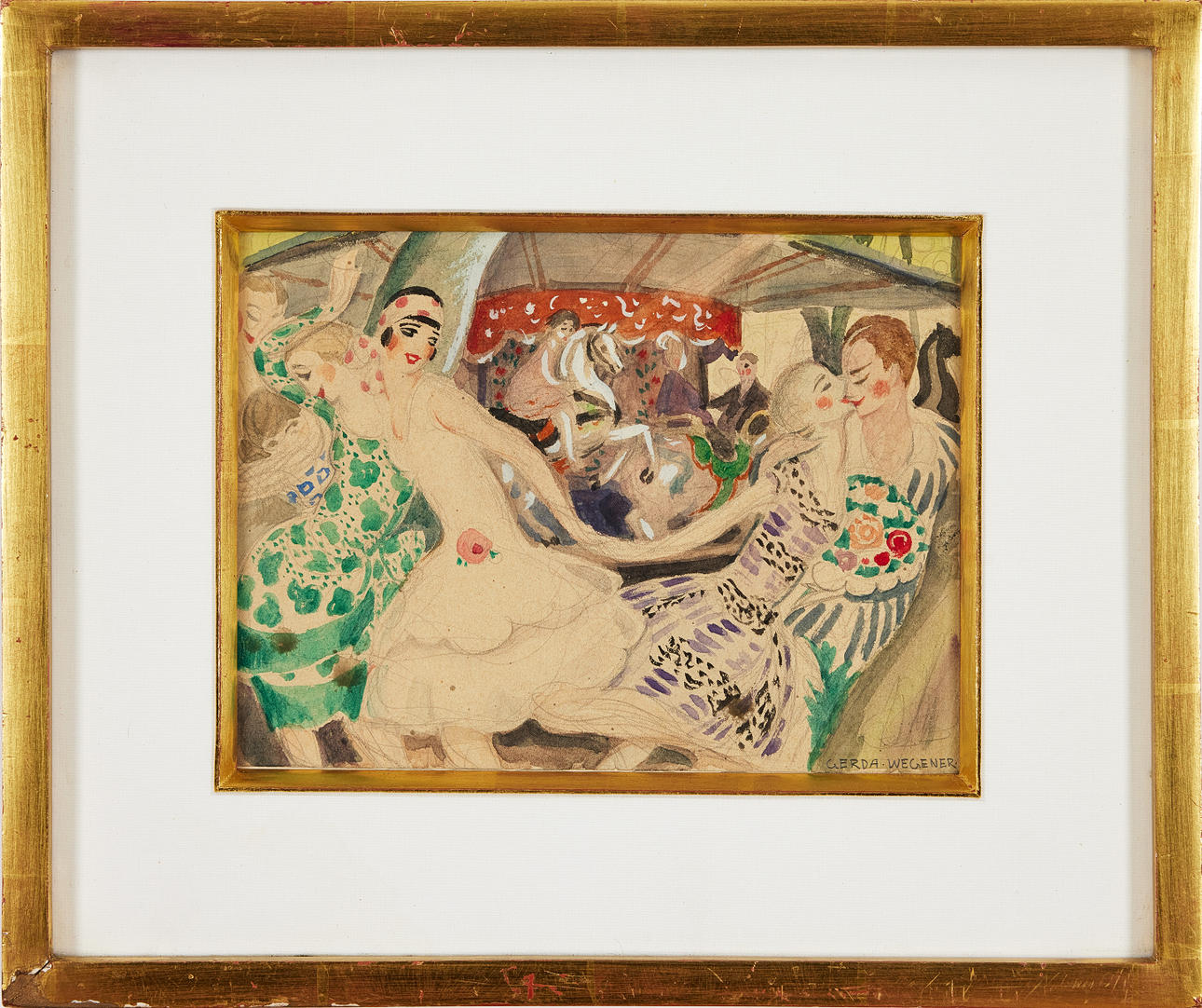
An example of this is her artwork currently up for auction, Scene from Bakken, at Stockholms Auktionsverk. Bakken, the world’s oldest amusement park, is located north of Copenhagen and has always been a place for joy and escape, which Gerda captures vividly in her expressive depiction. Using bold colors and a dreamlike perspective, she paints an intense scene. Bakken represents a sanctuary where people can express themselves freely, aligning with Gerda’s view of art as a refuge where one can reveal innermost thoughts without adhering to societal restrictions.
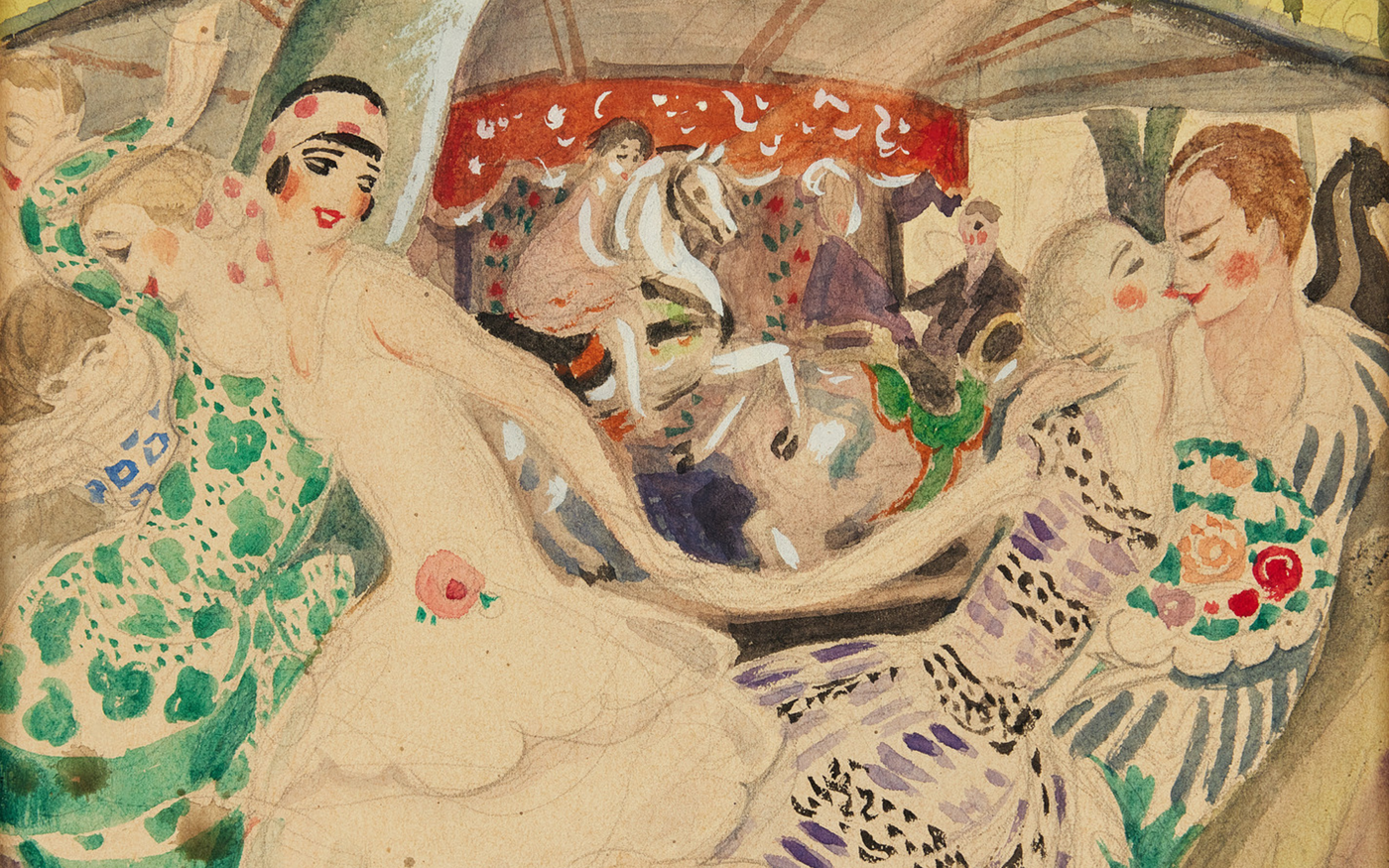
"Scene from Bakken" portrays Lili Elbe with dark hair, making it more than just an illustration of an amusement park—it is a tribute to freedom, where the boundaries between reality and fantasy blur.
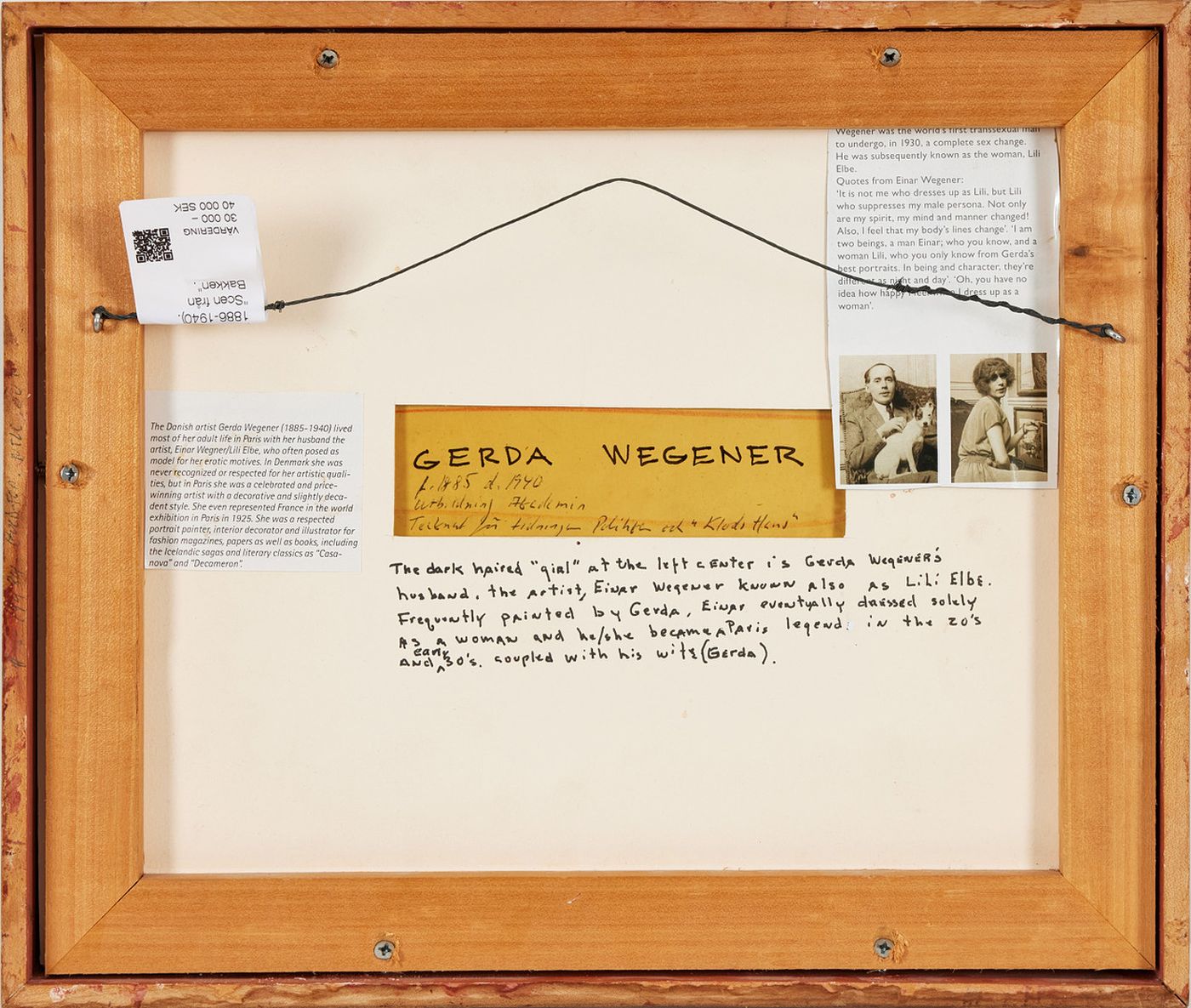
Scene from Bakken portrays Lili Elbe with dark hair, making it more than just an illustration of an amusement park—it is a tribute to freedom, where the boundaries between reality and fantasy blur. Just as Bakken provided a haven from societal norms, Gerda’s art offered a space to explore and celebrate identities that were not always accepted by society.
Art and Identity: A Shared Exploration
It is impossible to fully understand Gerda Wegener’s artistry without knowing her relationship with Lili Elbe. Gerda painted numerous portraits of Lili, depicting her as the woman she identified as. These works confirmed Lili’s identity and made it visible in a way that was both personal and loving. By portraying her spouse in women’s clothing or as Lili Elbe, Gerda created a new way of exploring gender and identity in art—an approach that not only allowed Lili to be validated in her identity but also established Gerda as a pioneering artist.

"Gerda and Einar at the terrace" from the 1930's depicts Gerda and Lili. The painting is signed with Gerda's name as remarried - Gerda Wegener Porta. © Wikimedia Commons

Lily also named a painting "Gerda and Einar at the terrace " in 1920, signed Einar Wegener © Wikimedia Commons
Gerda’s works are a captivating blend of love, acceptance, and identity exploration. She depicted Lili as both sensual and strong, reflecting the inner strength and femininity that her partner experienced. Gerda’s portraits of Lili were not only beautiful but also a form of liberation for both of them. By presenting Lili as a confident, feminine woman, Gerda challenged traditional norms and initiated an artistic exploration of gender and identity that remains rare even today.
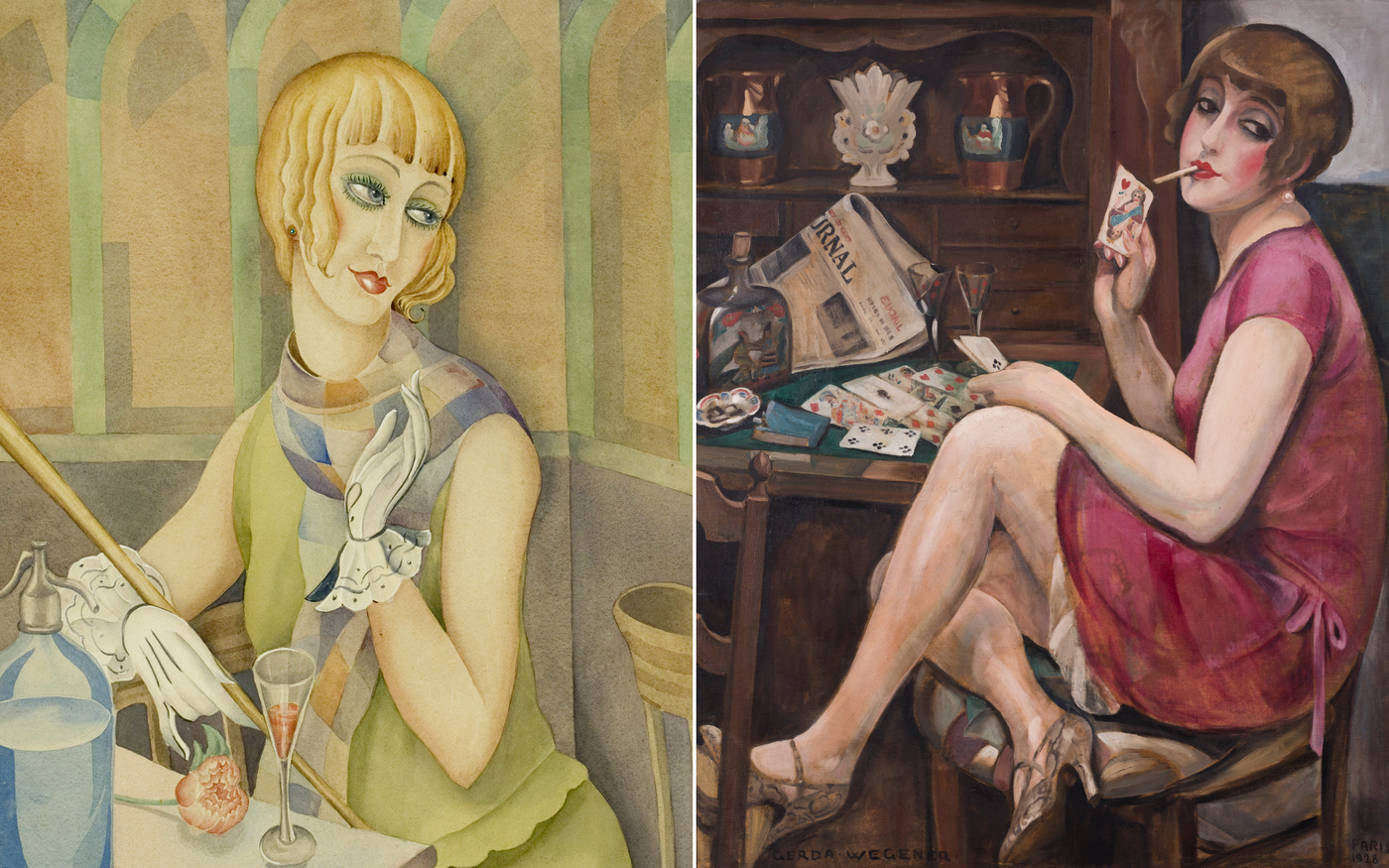
Gerda often portraid Lili in her work, capturing her as both sensual and strong, reflecting inner strength and femininity. © Wikimedia Commons
Paris: A Private and Artistic Sanctuary
When Gerda and Einar moved to Paris in the 1910s, they found an environment that was far more permissive than conservative Denmark. In Paris, they could live openly, and Einar enjoyed the freedom to explore his identity as Lili Elbe. At that time, Paris was the world’s cultural epicenter, where artists, poets, and writers lived bohemian lives and experimented with expressions and identities. This environment allowed Gerda and Lili to live freely, unrestrained by societal judgment.
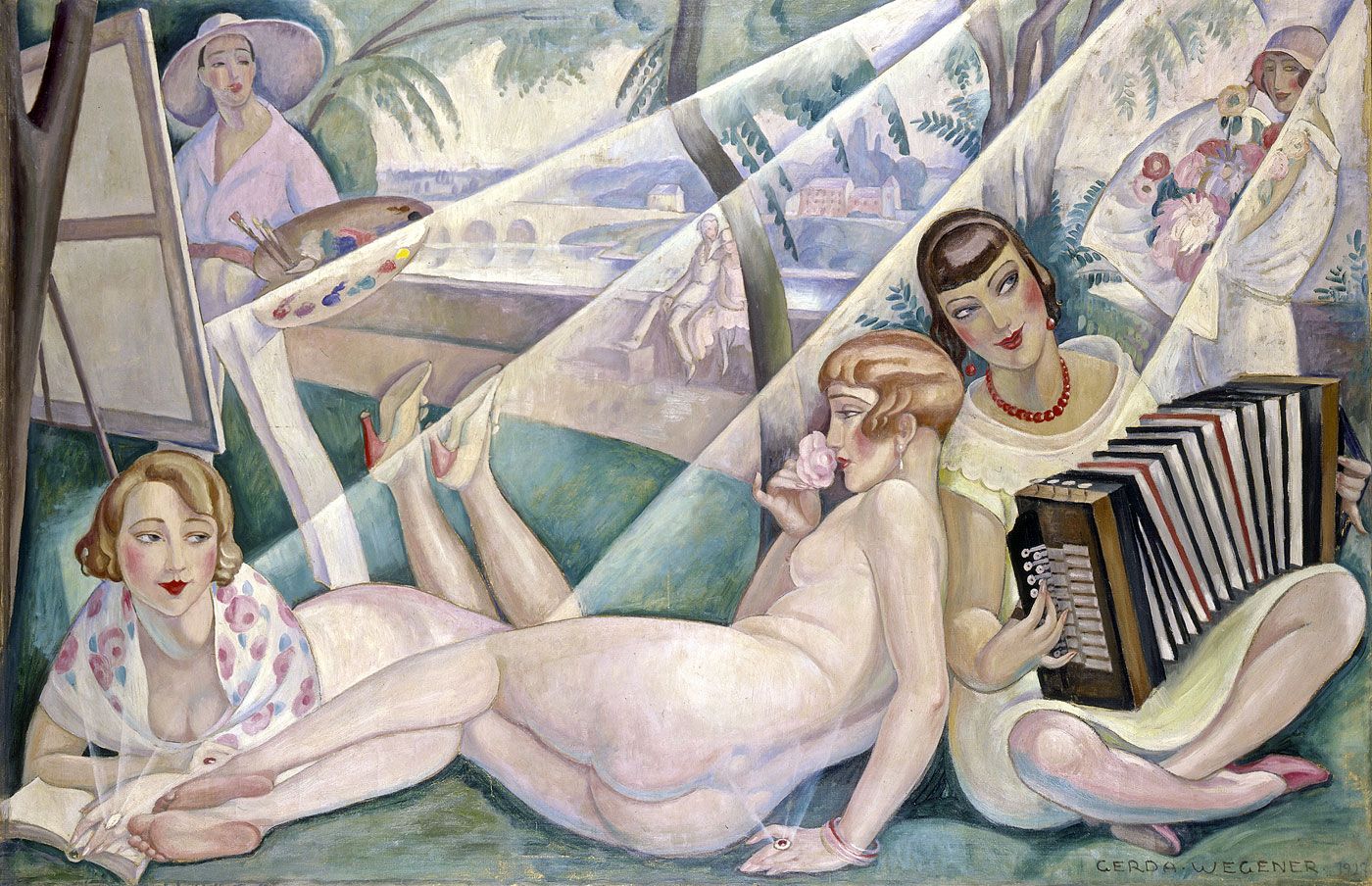
"A summer day" from 1927 by Gerda Wegener captures the freedom they must have experienced from their time in Paris © Wikimedia Commons
For Lili, Paris became a place where she could feel like her true self. She increasingly appeared as Lili in daily life, becoming one of the first documented individuals to live openly as a transgender woman. Paris played a crucial role in her personal liberation, and it was also in Paris that the couple first discussed the possibility of Lili undergoing gender-affirming surgery.
The Artistic Legacy: Courage and Innovation
Gerda and Lili lived in an era when gender identity and sexuality were highly taboo subjects. Despite this, they created a world where art became a tool for self-discovery, freedom, and acceptance. Their life together is a powerful example of how art can become a sanctuary for individuals to explore and embrace their identity. Their art reflects a blend of personal courage and artistic innovation, which not only helped develop their craft but also laid the groundwork for a more modern understanding of gender and identity.
Gerda and Lili’s story is not only a fascinating chapter in art history but also an inspiration for anyone who wishes to live fully, unbound by external norms and expectations. Their works continue to captivate, and the couple’s personal story carries a timeless message of courage, love, and freedom.

)

