)
Edouard Manet vs. Edgar Degas
The tension between these two behemoths of 19th Century art history is well documented: Degas, painter, sculptor and printmaker, renowned for his depictions of dancers in pastels and light oils, preferred to term himself ‘a realist’ yet was widely considered one of the founders of the groundbreaking Impressionist movement. Manet was a contemporary of Degas, part of the same Parisien art milieu; he sought to distance himself from being termed ‘an Impressionist painter’ yet the overwhelming influence of Degas and the movement on his work is palpable.
Monsieur, I am returning your plums.
The tale has it that the two famed artists were close friends until, ironically, one fateful painting caused a long running rift between them: Degas painted a portrait of Manet and his wife, Suzanne, as a gift to which Manet returned the gesture, gifting him a painting he had done of ‘plums.’ Months later Degas unexpectedly visited Manet’s studio to find that the surface of the portrait had been slashed right through Suzanne’s face; Degas demanded an answer from Manet (nowhere is that reason documented) and furious with his former friend took home the portrait intending to mend it. He never got around to fixing the portrait but instead returned to Manet his ‘plum’ artwork with a note, ‘Monsieur, I am returning your plums.’
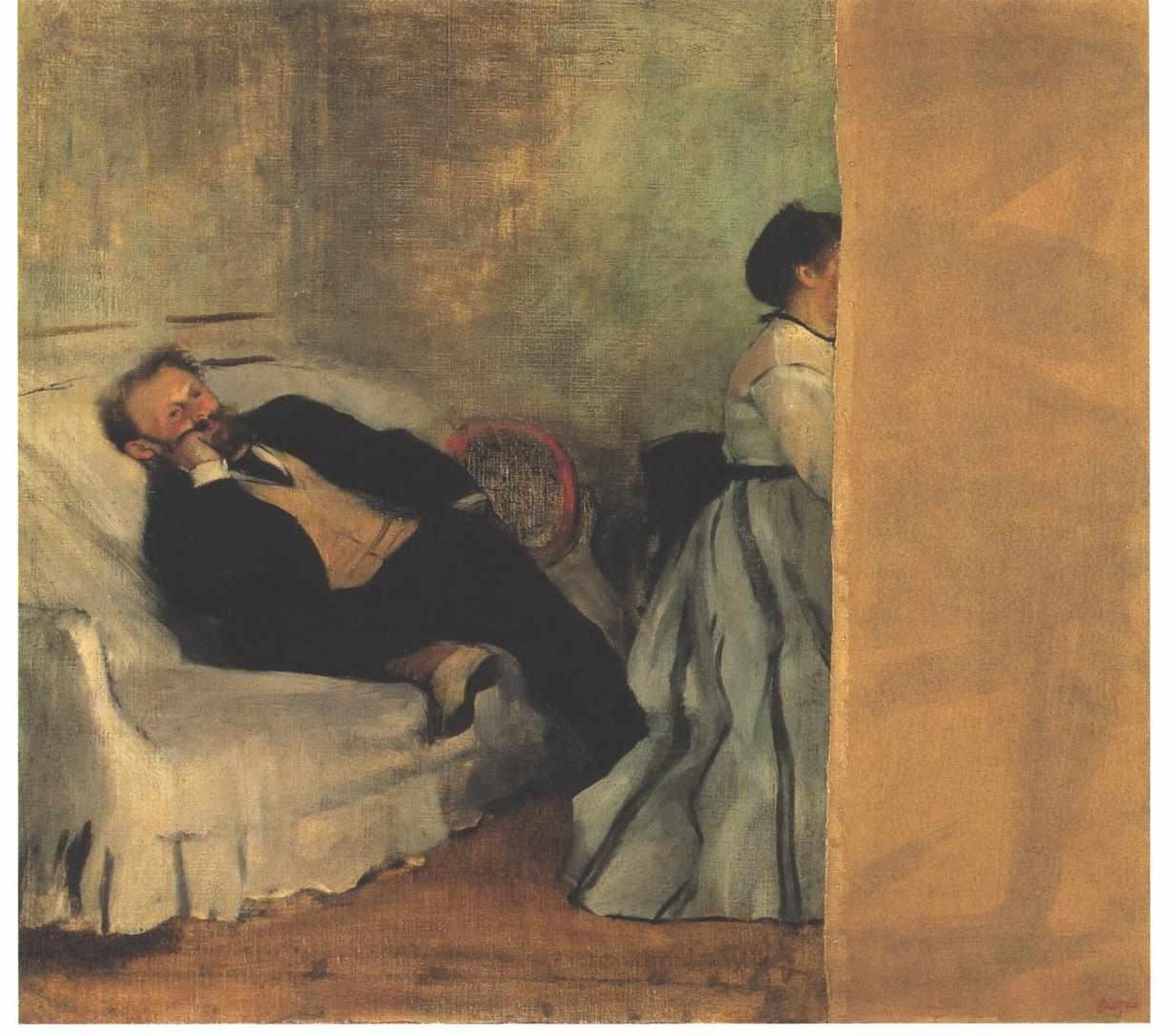
Degas and Manet were close friends until Degas painted a portrait of Manet and his wife. In return Degas sent him a painting of plums. © Wikimedia Commons
Luckily the notorious rivalry between these two art titans, (Degas represented the independent Impressionist movement, whilst Manet remained predominantly mainstream) ended harmoniously with both regrouping before their respective deaths.
Vincent Van Gogh vs. Paul Gauguin
Van Gogh and Gauguin first met in Paris in 1887 and formed a friendship based on an exchange of letters and paintings, including Van Gogh sending his contemporary two of his most storied paintings, Sunflower Studies. The following year, Van Gogh set up his renowned ‘Yellow House,’ an artist commune space, overlooking the Place Lamartine in Arles, where he invited his contemporary, Gauguin, to reside for nine weeks in the autumn of 1888. Whilst the two post-Impressionist artists had a friendly rivalry at first – both used colour and line to emphasise feelings and ideas in their paintings – they had diverse personalities and approaches to creating art: Van Gogh was artistically daring and intense during his life whilst Gauguin was a louche and freestyling figure.
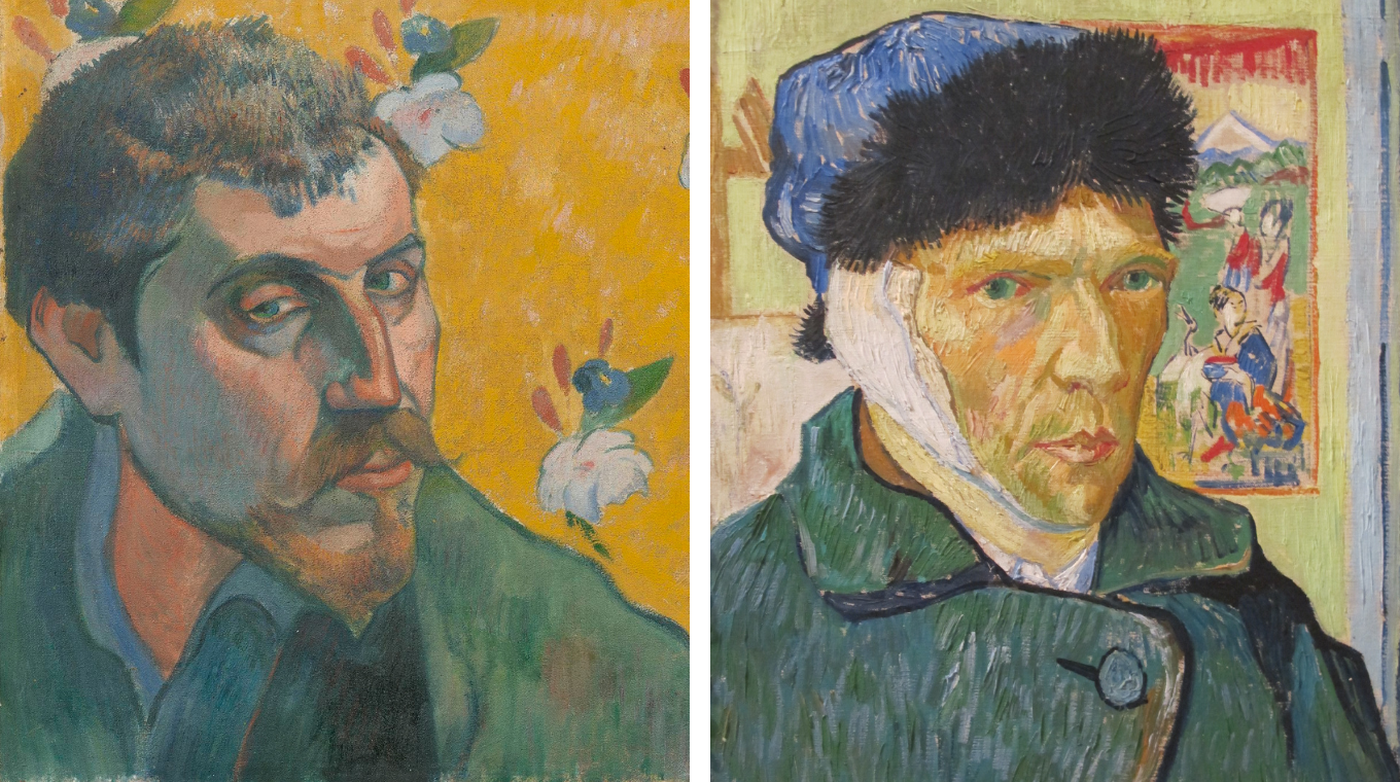
Bad blood. The famous brawl between the two post-impressionists ended with a blood bath when van Gogh famously cut his ear off © Wikimedia Commons
Tensions continued to escalate between the Dutch born, Van Gogh and Parisien born, Gauguin, whose work translated the post-Impressionist movement into Synthetism. Myth and controversy still pervades as to what exactly happened to end the once dynamic friendship: in December 1888, Gauguin recounted that he left the house to take a walk and Van Gogh chased after him with a razor, when he returned the next morning from the hotel he had stayed the night in, he found Van Gogh soaked in blood with his ear razored off. After this incident, Gauguin left France to never return. Van Gogh ended his life two years later in 1890.
Leonardo Da Vinci vs. Michaelangelo
Arguably the two most renowned painters in art history, Da Vinci and Michaelangelo, both Italian born, were part of the High Renaissance movement with canvases that were largely inspired by classical antiquity and had a profound, lasting influence on Western art. Da Vinci was both a rival and an older contemporary to Michaelangelo. Both artists were working in the 15th/16th Century, when painters relied on patronages from wealthy benefactors or nobility to support themselves. In 1504, an intense hatred and feud broke out between the two when both were commissioned to paint companion pieces in the Hall of Five Hundred, the Council Chamber of the Palazzo Vecchio in Florence.

Leonardo was commissioned to paint The Battle of Anghiari Palazzo Vecchio in Florence, and Michelangelo The Battle of Cascina (featured). © Wikimedia Commons
Francis Bacon vs. Lucian Freud
Bacon and Freud were two contemporary artists living through the freedoms of 1950’s/60's London, whose intense relationship pushed forward the boundaries of their own oeuvre. Both, arguably, lived debauched existences fueled by their own personal demons, spurring the other on to explore the depths of human psychology and complexities of life experience through portraiture.
Infact, their volatile, dynamic friendship led to self portraits in which the artists attempted to enact the inner dialogue of the other: ‘Study for Portrait of Lucian Freud,’ (1967) by Bacon, based on a photograph of Freud taken by his assistant, John Deakin, sold for over £43 million at Sotheby’s in London in 2022.
Willem De Kooning vs. Jackson Pollock
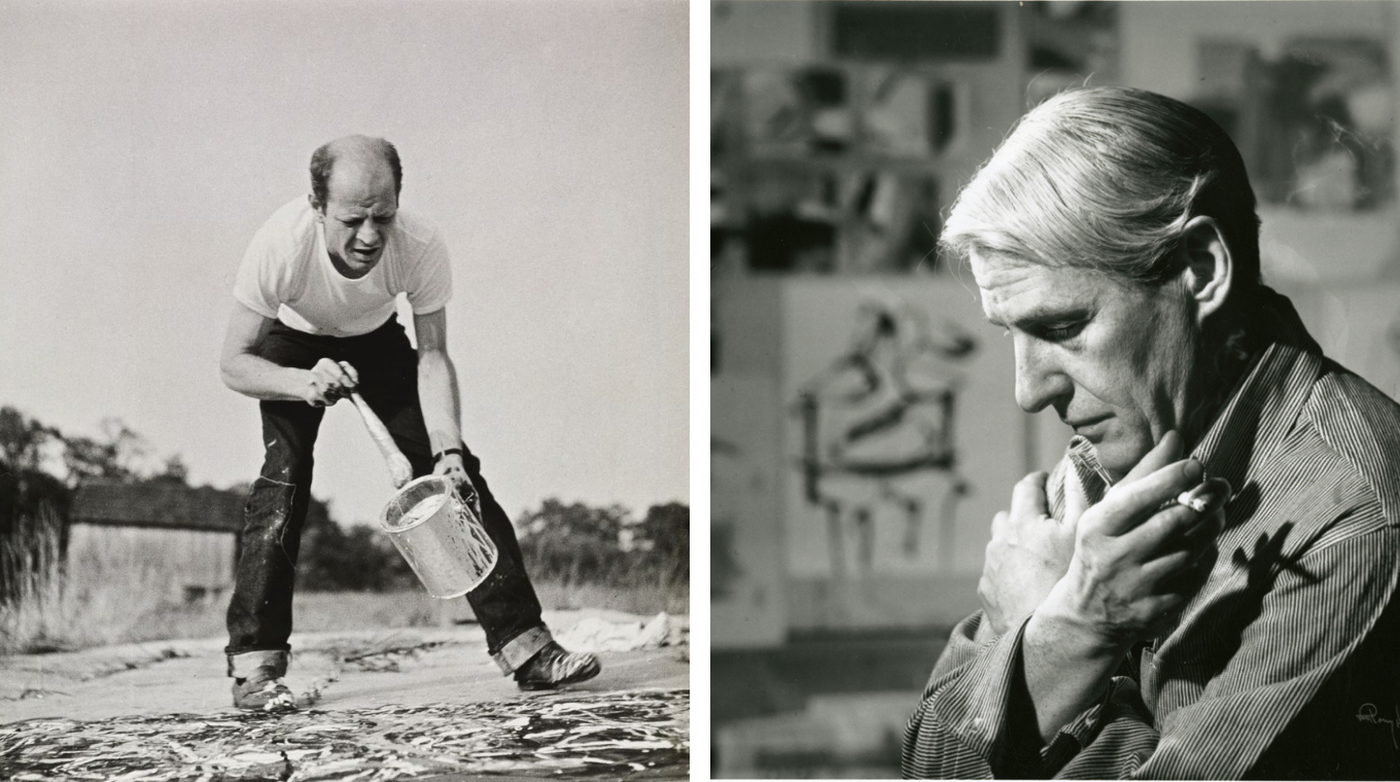
Pollock and De Kooning's feud went on even after Pollocks death in 1956, as De Kooning "stole" Pollocks mistress Ruth. She was in the car crash that killed Pollock, but survived. After Pollock’s death she went on to become de Kooning’s lover. © GettyImages/Wikimedia Commons
The intense rivalry between De Kooning and Pollock, 20th Century American abstract expressionists, stemmed from more than just art: the long running feud turned personal as both modern art titans also shared lovers. With both suffering insecurities over each other’s commercial popularity, Pollock’s radical, free flinging paint style contrasted with De Kooning’s more structured approach, which has polarised leading art critics of the 20th Century too.
Henri Matisse vs. Pablo Picasso
© Auctionet/Wikimedia Commons
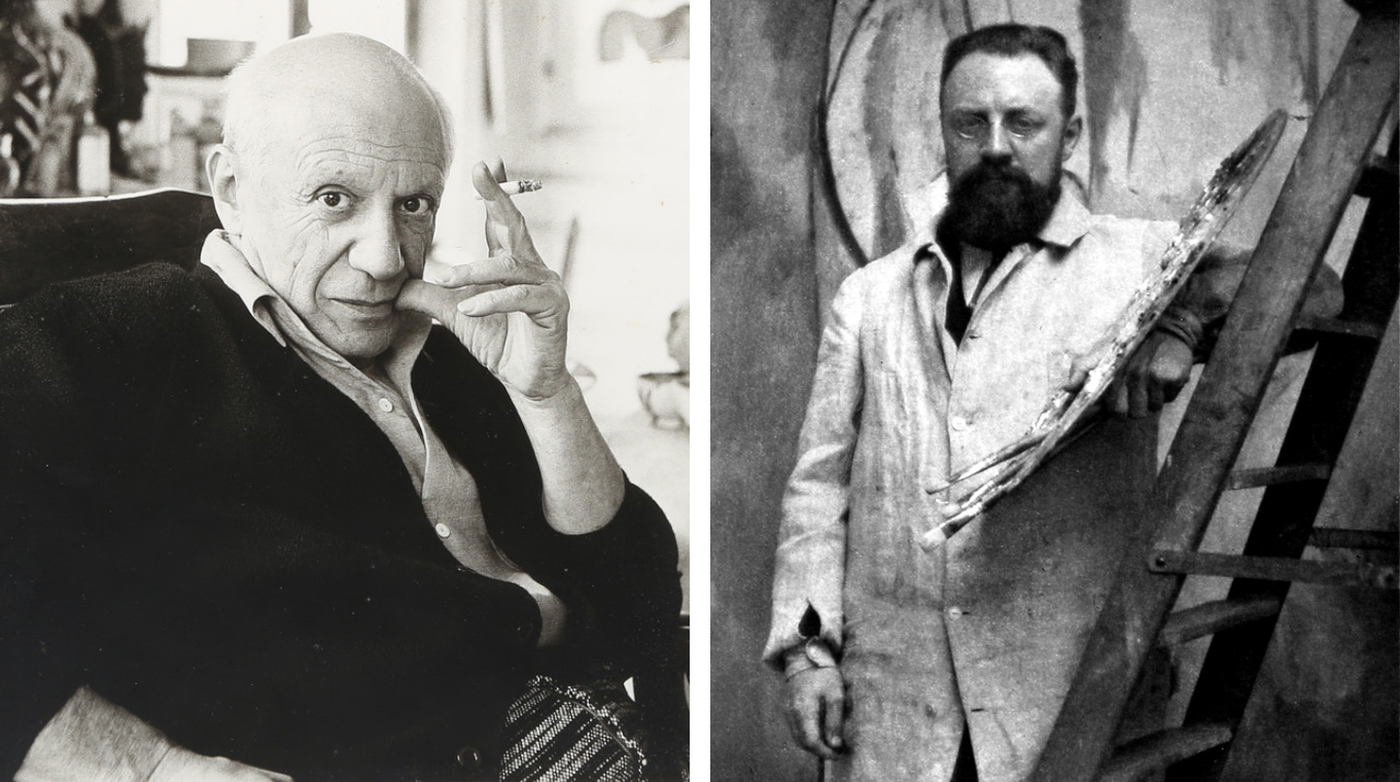
Two of art history’s foremost Modernists, Henri Matisse and Pablo Picasso, had a lifetime rivalry but one rooted in begrudging respect for the others work. Both frequented the famed Paris based salon which was opened by Gertrude Stein in 1905 at her home address, 27 Rue de Fleurus, and whose visitor’s collected works by both artists. Toward the end of his career, reports Smithsonian Magazine, Picasso said that "No one has ever looked at Matisse's painting more carefully than I; and no one has looked at mine more carefully than he."
Banksy vs. King Robbo
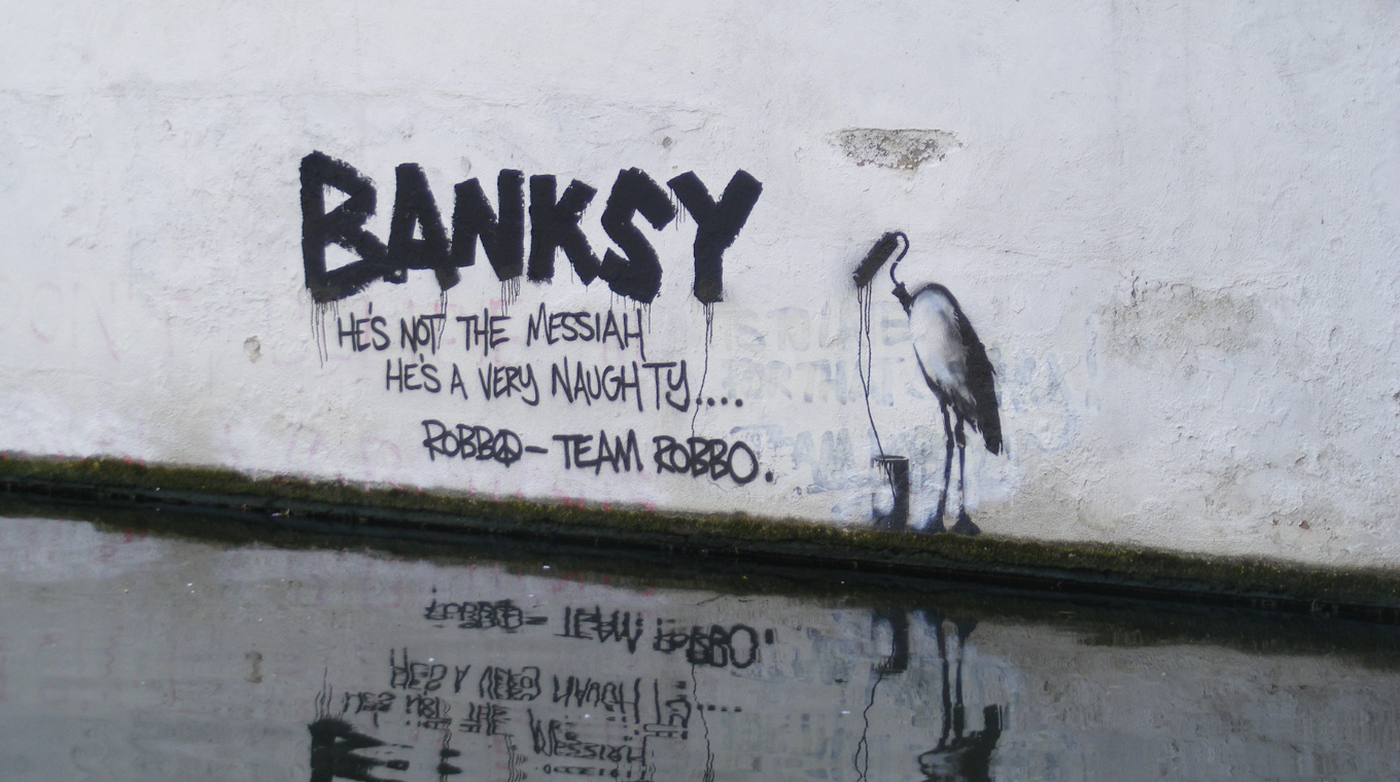
© Wikimedia Commons
Dubbed ‘The Graffiti War,’ this rivalry between two of the UK’s most foremost 90’s street artists was made more compelling by the fact both of their identity’s were anonymous. The feud allegedly began when Banksy and King Robbo met in a London bar, with King Robbo attacking Banksy after believing he had criticised his graffiti work. Banksy retaliated by creatively tampering with a graffiti work of King Robbo’s near London’s Regent Canal. King Robbo reworked the artwork: this led to a retaliative reworking of each other’s most famed graffiti works for many years until King Robbo died in 2014. Banksy took one last shot, tweaking a mural created in his ‘frenemy’s’ honour, designed to be a tribute to Robbo, showing their conflict was over, yet his friends reworked it back again.
David Hockney vs. Damien Hirst
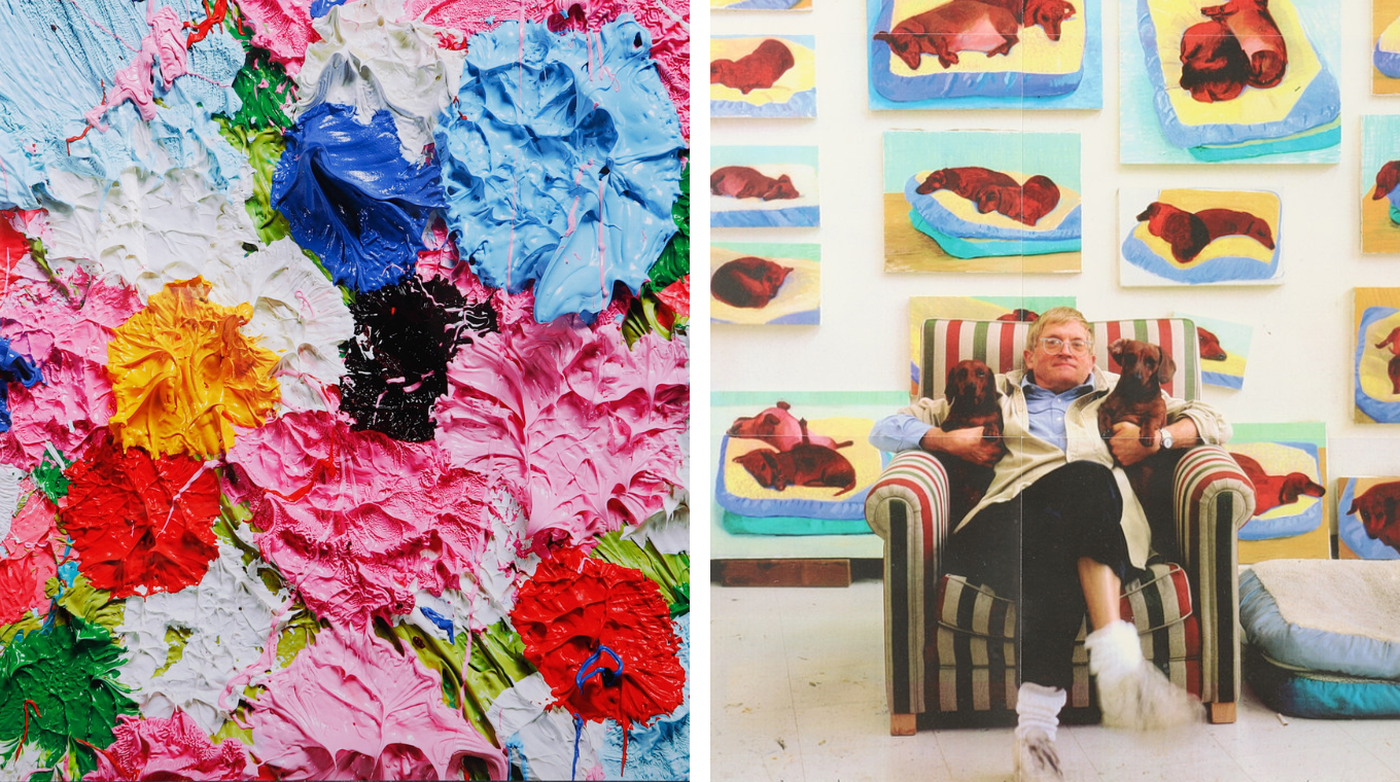
© Auctionet
Whilst these two artists are arguably the most successful artists of the 20th Century, they stand so far apart on the art landscape that it is perhaps not surprising that they don’t like each other’s work. Hockney’s oeuvre spans over 50 decades across many disciplines whilst Hirst burst onto the scene with the popularist YBA movement in the early 90’s. With one as a painter/colourist and the other as a conceptualist, the relationship is less a feud than a clash with Hockney merely saying he ‘doesn’t like’ Hirst’s work.
Stuart Semple vs. Anish Kapoor
One of the most entertaining artistic feuds of all was between contemporary British artists, Stuart Semple and Anish Kapoor over a colour pigment. High tech pigment, Vantablack, absorbs all the light falling on an object, giving such an overt black result that the image appears void of all features. The colour creator leased exclusive use to Kapoor; so angered was Semple he retaliated by creating his own version and banning Kapoor from his art store in London.
Explore the art category
)
)
)
)