
At the Exposition des Arts Décoratifs in 1925, visitors in tuxedos drifted past gilded Deco booths toward a small Danish stand. There they paused, dazzled not by brightness but by comfort: a delicately tiered fixture that bathed tables in velvety white.
Its inventor, journalist-turned-lighting-theorist Poul Henningsen, had calculated each shade to hide the bulb and bounce light sideways. Manufacturer Louis Poulsen, then a 50-year-old Copenhagen wholesaler, bet big on the design. The gamble paid off: the PH system swept gold, and modern lighting gained its first true ergonomics lesson: light should serve the eye, not blind it.
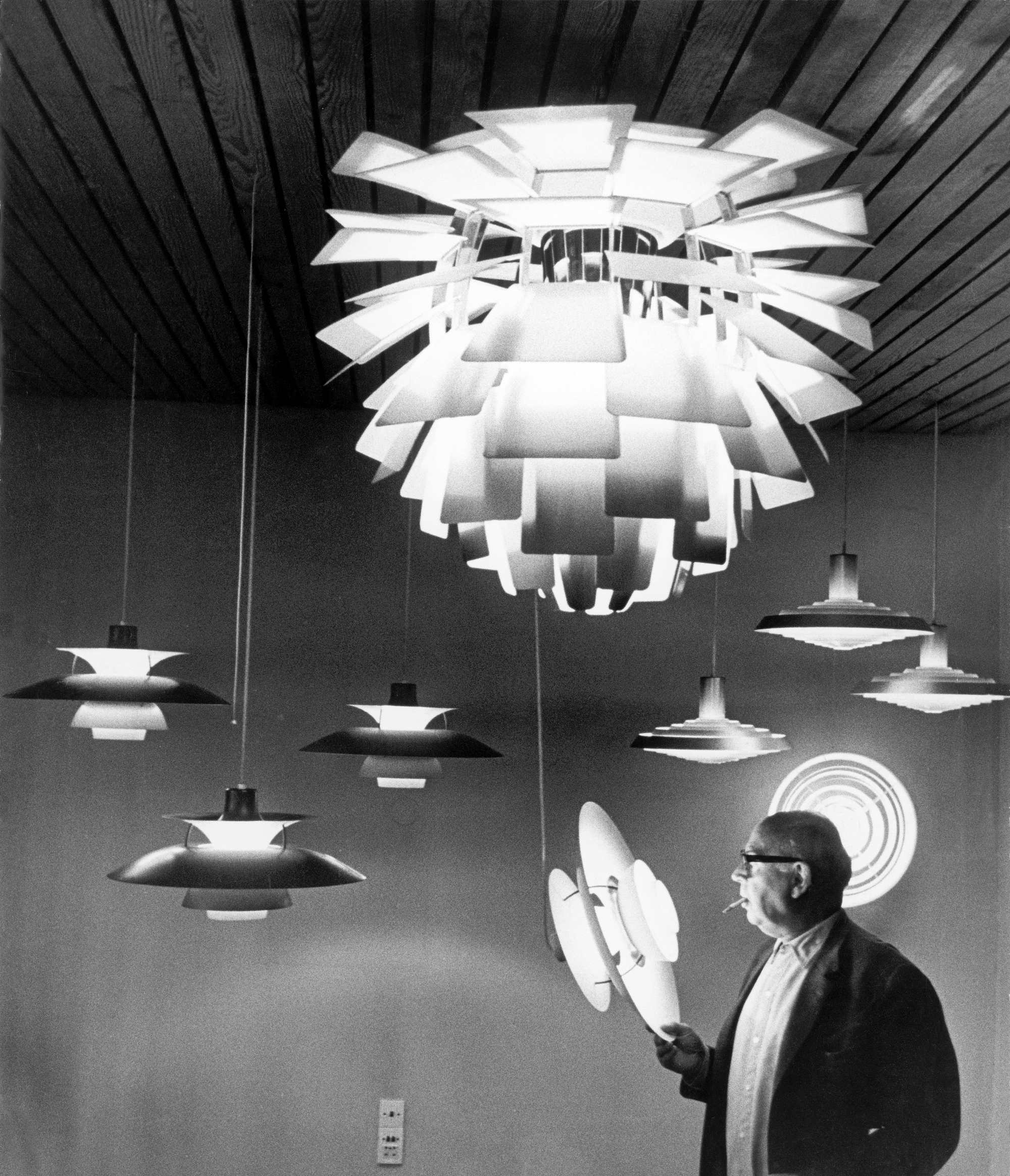
Poul Henningsen with his designs © Courtesy of Louis Poulsen
The Science Behind the Softness
Henningsen grew up in gas-lit Frederiksberg, watching his mother (actress Agnes Henningsen) squint over stage scripts. By 1920 he was experimenting with concentric shades in his attic, measuring lux values until he found a glare-free formula. Each PH lamp uses logarithmic spacing: inner surfaces are matte to diffuse light; undersides glow warmer to flatter skin tones.

Poul Henningsen with PH5
Louis Poulsen adopted the mantra “Design to shape light,” making engineering elegance their house style. This was as radical as Dieter Rams’s later Braun minimalism, yet emotionally warmer – a northern antidote to simplicity-only product design.

Star Pieces: from PH 5 to the Artichoke
PH 5 (1958): Named for its 50 cm diameter, the fixture mixes blue and red anti-glare rings to neutralise the colour shift of then-new fluorescent bulbs. Still Louis Poulsen’s bestseller.
PH Artichoke (1959): Designed for Copenhagen’s Langelinie Pavilion, 72 copper “leaves” hide the source from every angle.
PH Snowball (1958): Eight spun-aluminium shades create a floating orb – now a darling of Nordic restaurants seeking cozy minimalism.
Each lamp embodies Henningsen’s belief that good design should improve daily life.
Fake-spotting and Care Tips
Collectors chase four things: age, condition, colour, provenance. Early glass PH pendants from the 1930s — especially sand-blasted examples from the designer’s own era — can command multiples of later enamel editions, thanks to their rarity and softer light diffusion.
Originals regularly achieve strong results on Auctionet. Entry-level buyers tend to look for 1990s Louis Poulsen reissues or even minor-defect factory seconds, which often change hands for under €800. Lamps travel well — their modular design and flat-pack potential broaden the bidding pool far beyond Scandinavia.

Paul Henningsen's Artichoke lamp on display. © Wikimedia Commons.
When authenticating, start with the branding. Genuine pieces carry an engraved or stamped Louis Poulsen mark — earlier ones may read “Louis Poulsen & Co.” — while imitations often rely on stickers that don’t age well. Examine the fittings too: original fixtures typically use period brass screws and cloth-covered cords, whereas reproductions may reveal modern hardware, plastic strain reliefs or overly bright wiring.
Surface finish offers more clues. Authentic copper shades develop an even, organic patina, and enamel edges appear crisp and consistent; replicas often show flaking paint, sloppy masking, or visible weld seams.


For care, stick to pH-neutral soap and resist the urge to polish an Artichoke to mirror brightness — its gentle oxidation is intentional, helping to soften and scatter light exactly as Poul Henningsen designed.
Conclusion: Humanist Engineering with Lasting Wattage
In an era obsessed with lumen counts and smart bulbs, Poul Henningsen reminds us that the quality of light outweighs quantity. His partnership with Louis Poulsen fused math, craft and empathy into objects that still guide architects, collectors and Instagram mood boards.
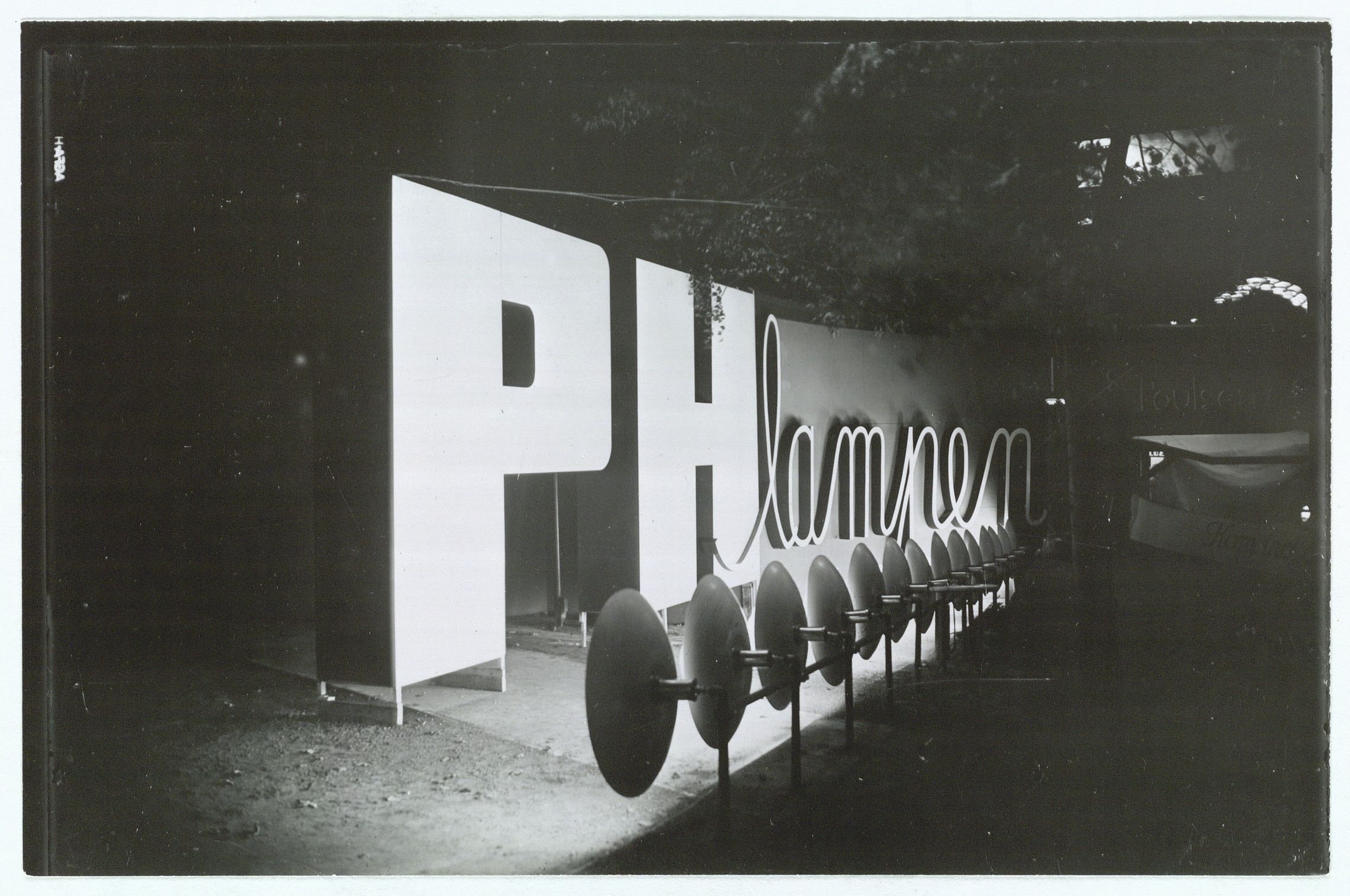
A PH lamp display at an unknown exhibit. © Wikimedia Commons.
Whether you chase a museum-grade Artichoke or an affordable PH 5 to soften home office glare, Auctionet’s global network puts Danish illumination within reach – and sheds light on why thoughtful design never burns out.
)
)

