)
Author Mats Werner, in his recently released book Pierre Louis Alexandre : "The Most Depicted Black Person in Pre-Modern Art" shares his lifelong quest to uncover the truth about the legendary dockworker.
My father, whose law firm counted the Bergöö family and their trading business among its clients, received a painting by Karin Bergöö as payment when a member of the Bergöö family fell into financial ruin in an animal husbandry venture and could not afford legal assistance. I am profoundly grateful that my father accepted it—even though, at the time, the artwork was hardly considered a highly valuable form of payment. Yet there is no doubt that he cherished the painting, as is evident from the way it was displayed in our home over the years.
All I initially knew was that, in its time, the painting was titled Black Pettersson in the 1800s and that its subject was thought to be a dockworker. After studying, among other things, art history, I embarked on a career in advertising, occasionally interwoven with research on this unknown man. My investigations were spurred by two events: after my father's passing, I discovered in a folder of assorted paper artworks a drawing by Emil Österman, also portraying the same male model, and a question posed by a reader in the newspaper Antik&Auktion about an artist named Carl Fredric von Saltza. In the reproduction featured in the paper, one could clearly see that it was the very same man depicted in the painting that once adorned my childhood walls.
)
Karin Bergöö's painting of the mysterious dock worker has hung on Mats Werner's walls since childhood. Today it has been sold to the National Gallery of Art in Washington, DC, where it hangs as the first Swedish artwork.
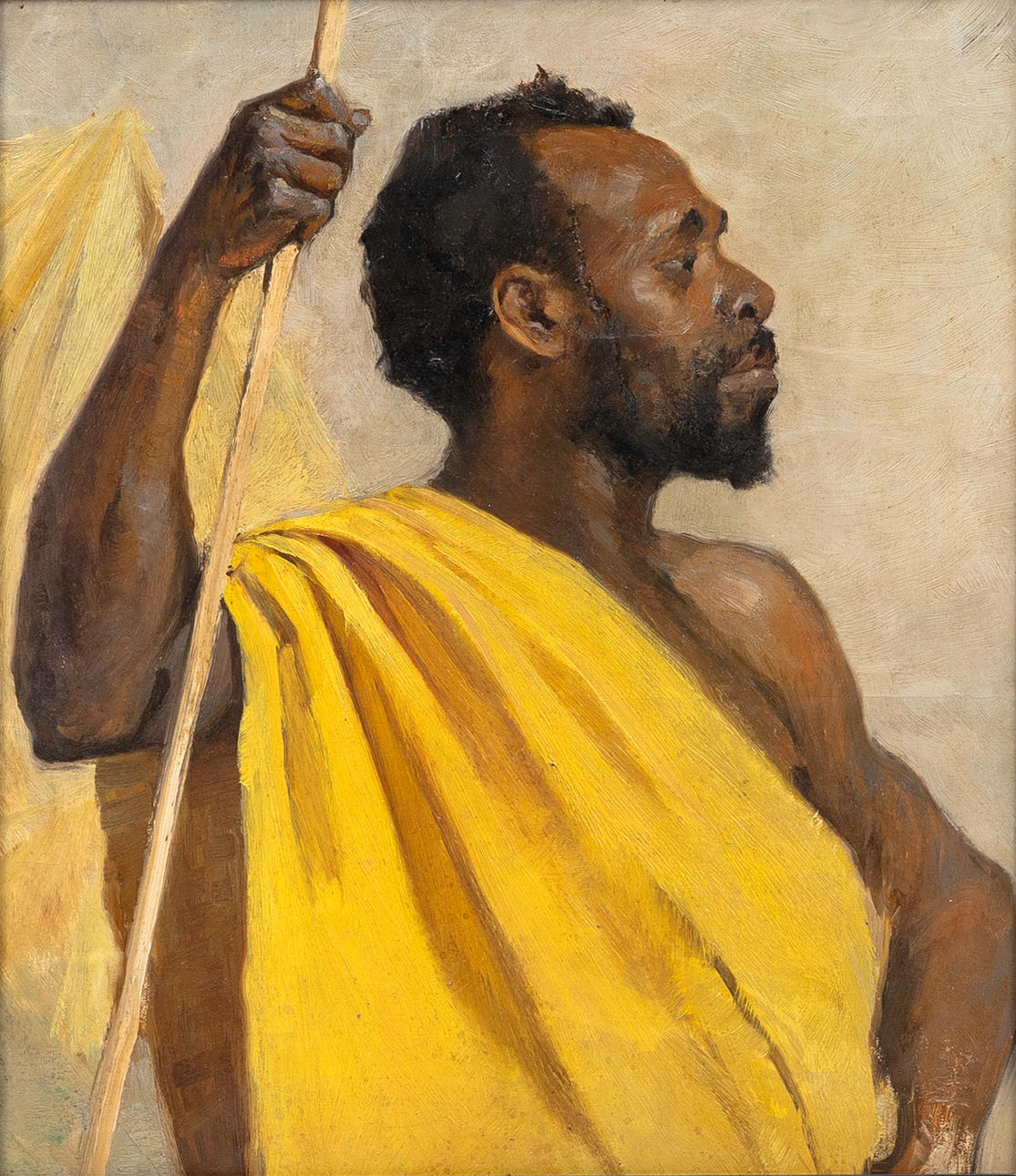
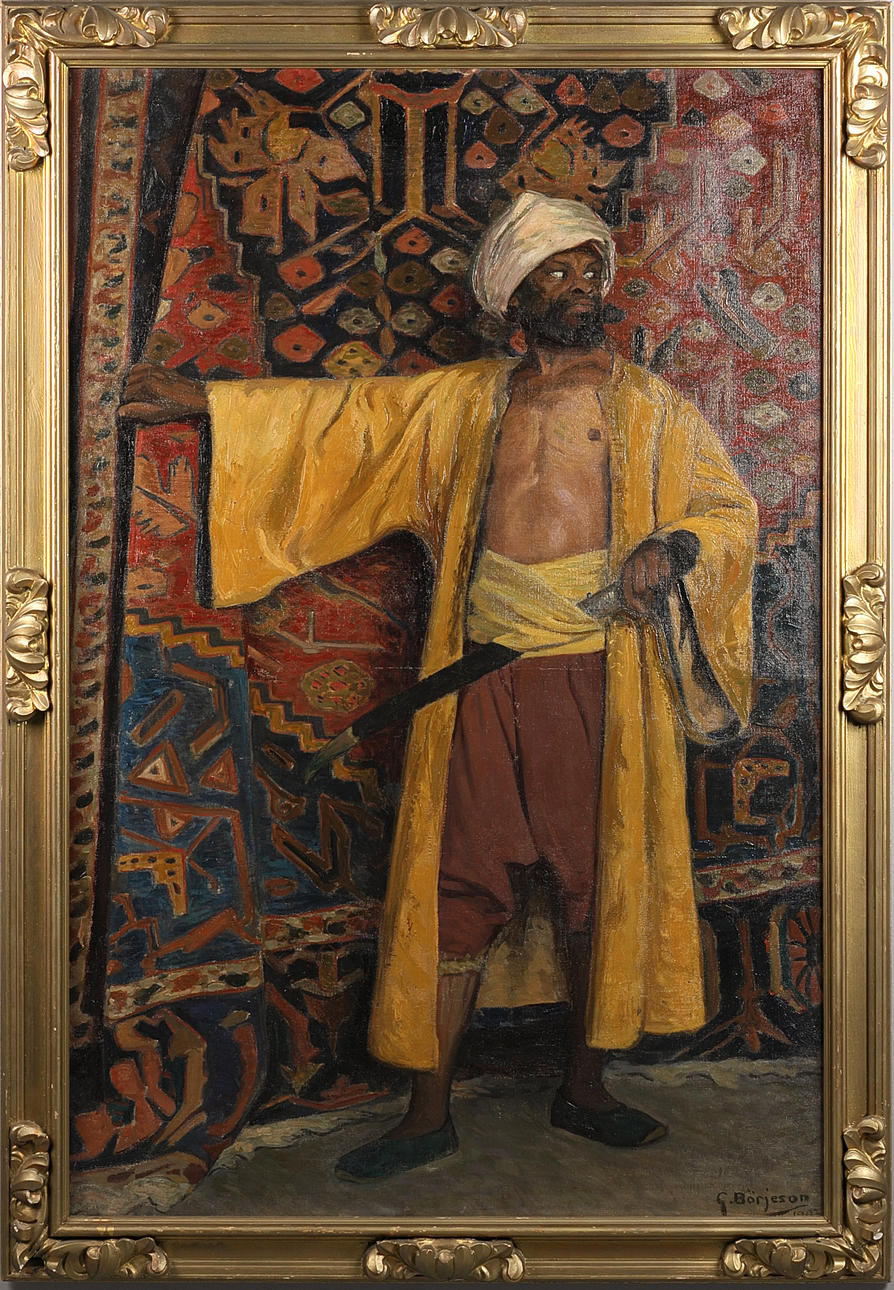
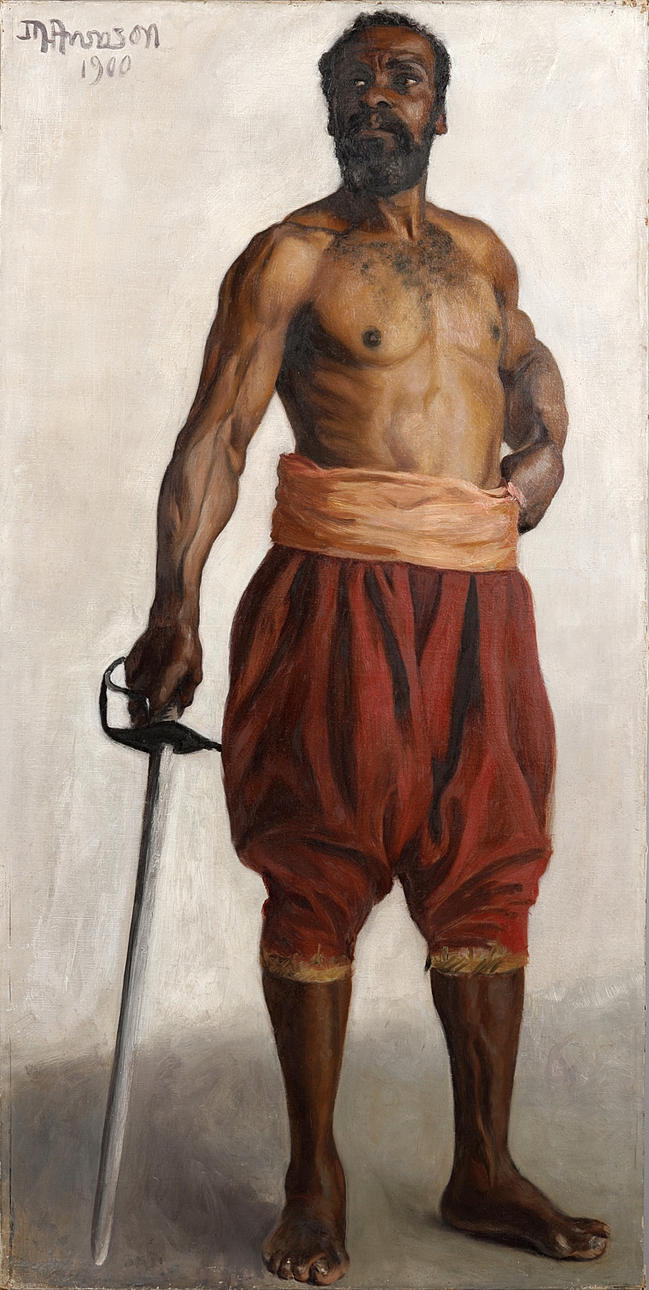
It was revealed that the man had been employed as a model at the Royal Swedish Academy of Arts, which should mean that there are more artworks depicting him. Moreover, if he had spent a longer period in Stockholm, he would surely have left some trace behind. Karin Bergöö, later known as Karin Larsson—the wife and creative partner of the painter Carl Larsson,— was active at the Royal Swedish Academy of Arts from 1877 to 1882. After years of research, portraits by Anders Zorn, Albert Engström, John Bauer, Oscar Björck, Johan Krouthén and about forty established artists were also discovered.
"Pettersson" - An Enigma
I began keeping an eye on auctions and asked friends to report if they saw artworks featuring dark-skinned men—it was, after all, not a common sight in 19th-century Europe. I inquired with the National Museum in Stockholm and other art museums about whether they had any works featuring the model in question. Nowhere did I find any answers. However, it turned out that there was a small painting in Uppsala’s art collections.
For several years, I had the painting (which I received as a gift from my mother after my father had passed away) on loan to the Bergöö house in Hallsberg, which had then come into municipal ownership. Possibly as a consequence of a small favor I had done when I was commissioned a few years earlier to create a tourist brochure for Hallsberg.
As a result of the painting being exhibited there, information started streaming in from various sources about other artworks depicting my mythical man. Leads were followed up. Journalist Martin Stugart got involved, and through his publications I got in contact with others who contributed to the research.
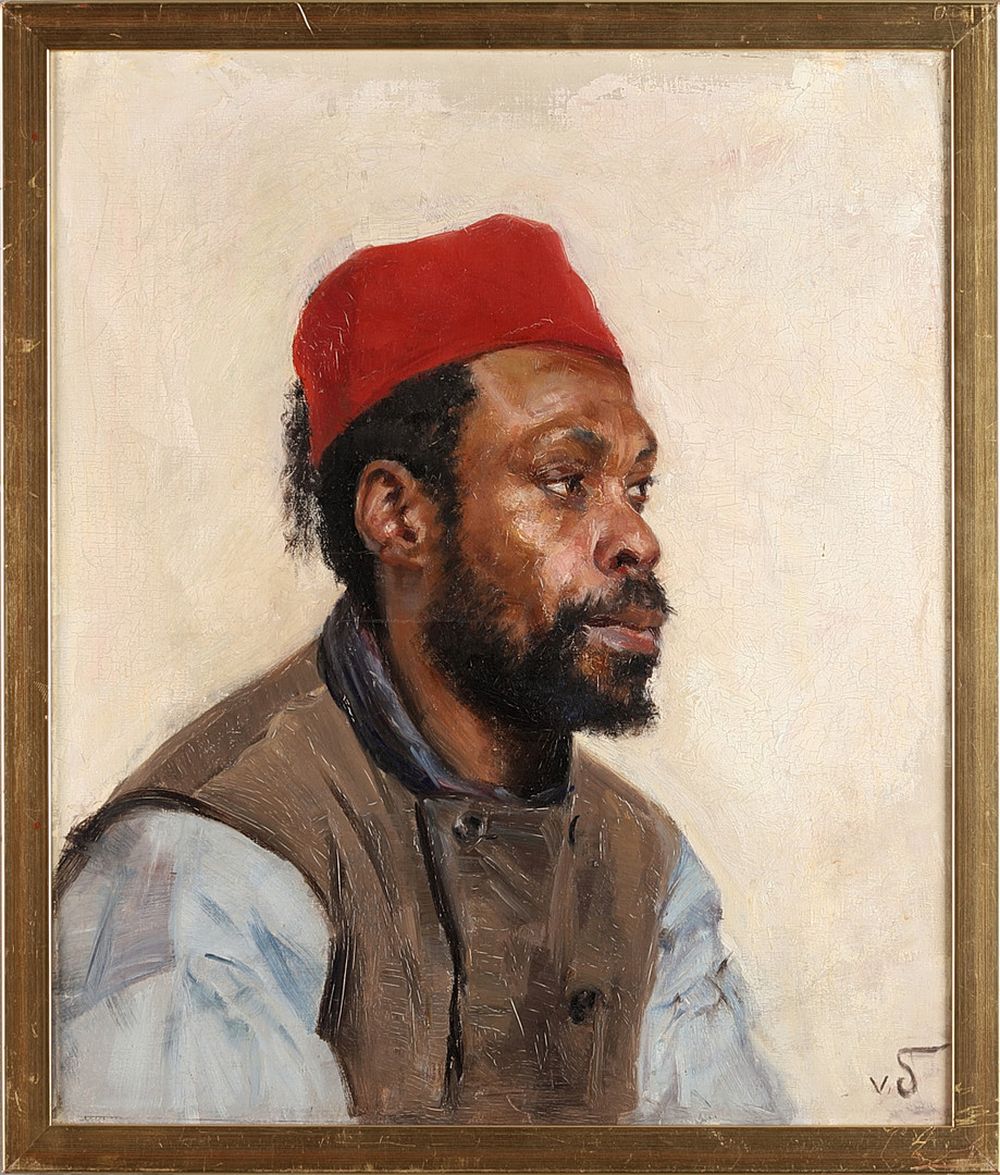
Ida von Schulzenheims skildring av Pettersson klubbades 2019 på Crafoords Auktioner Stockholm när Mats sålde delar av sin samling. Idag hänger porträttet på Nationalmuseum i Stockholm.
"Black Pedro" Became Pierre Louis Alexandre
For many years, I searched through the City Archives looking for information about dockworkers in Stockholm in the late 1800's. I had understood from my father that he most probably was a dockwalker. One man in particular caught my attention, he was supposedly called “Black Pedro” by other workers. His journey to Sweden and his origins offered many possibilities. One theory suggested that he had arrived on a ship from New York, carrying a cargo of pork. At that time, Sweden imported an immense amount of smoked pork, likely as a result of the harsh conditions prevailing during the final phase of the Little Ice Age.
It was also said that he had been married to a woman from Öland who sold local delicacies the dockworkers. "Pedro" and his wife were believed to have had two beautiful children together.
Many leads led to dead ends, but one day I had three clues that all pointed to the same answer. Ola Larsson at the City Archives in Stockholm was able to give me a name. The man was called Pierre Louis Alexandre! Through the Catholic parish archivist at the National Archives, I obtained information about when he was said to have arrived in Sweden, the two marriages he had, and the two children who were recorded as “born within wedlock,” despite being brought by Pierre Louis’s second wife.
Name: Pierre Louis Alexandre (1843–1905)
Origin: Cayenne, French Guiana. His mother was enslaved at the time. Emancipation took place in 1848, when he was 5 years old.
Arrival in Sweden: In the 1870s, presumably as a stowaway on an American ship carrying pork.
Occupation: Dockworker in Stockholm. Art model at the Royal Academy of Fine Arts for 25 years.
Artistic Significance: Depicted in over 50 known works by artists such as Olle Hjortzberg, John Bauer, Oscar Björck, Anders Zorn, and Karin Bergöö (later Larsson).
Now I knew his real name, that according to documentation he had been called “Svarte Peder” when working in the harbor, and that he had been recorded as “Black Petterson” at the Academy of Fine Arts. In this context, these names were essential pieces of information in the research process. But how did he come to have these two rather distinct occupations?
The simple explanation is that his main work at the harbor ended every year in December when the ice settled. At that time, winters were still harsh, and sailing ships could not break through the ice into Stockholm. Most dockworkers had to shovel snow, cut stone, or face unemployment during the winter, often with severe social consequences. But Pierre Louis was fortunate to have a landlady with good connections, which secured him a job as a model at the Academy of Fine Arts—allowing him to spend many winters in a far more comfortable setting than out in the freezing cold. And with better pay!
Monitor the keyword "Pierre Louis Alexandre" in the art category, and we will notify you when works come up for auction.
An Ever-Growing Collection
He was depicted by many students, but when I first started, I only knew of two or three artworks. When the Nationalmuseum organized the major exhibition commonly known as The Stranger in Art, another beautiful painting by Oscar Björck surfaced, which the museum had borrowed. Through the exhibition in Hallsberg, I received a tip about a painting by Ecke Hedberg as well as a bust by Verner Åkerman—though it remained lost until a few years ago when the Nationalmuseum acquired it as its first Petterson.
I myself began purchasing paintings at various auctions until the prices became too high for my budget. David Brolin at Auctionet then told me I had only myself to blame for making Petterson famous!
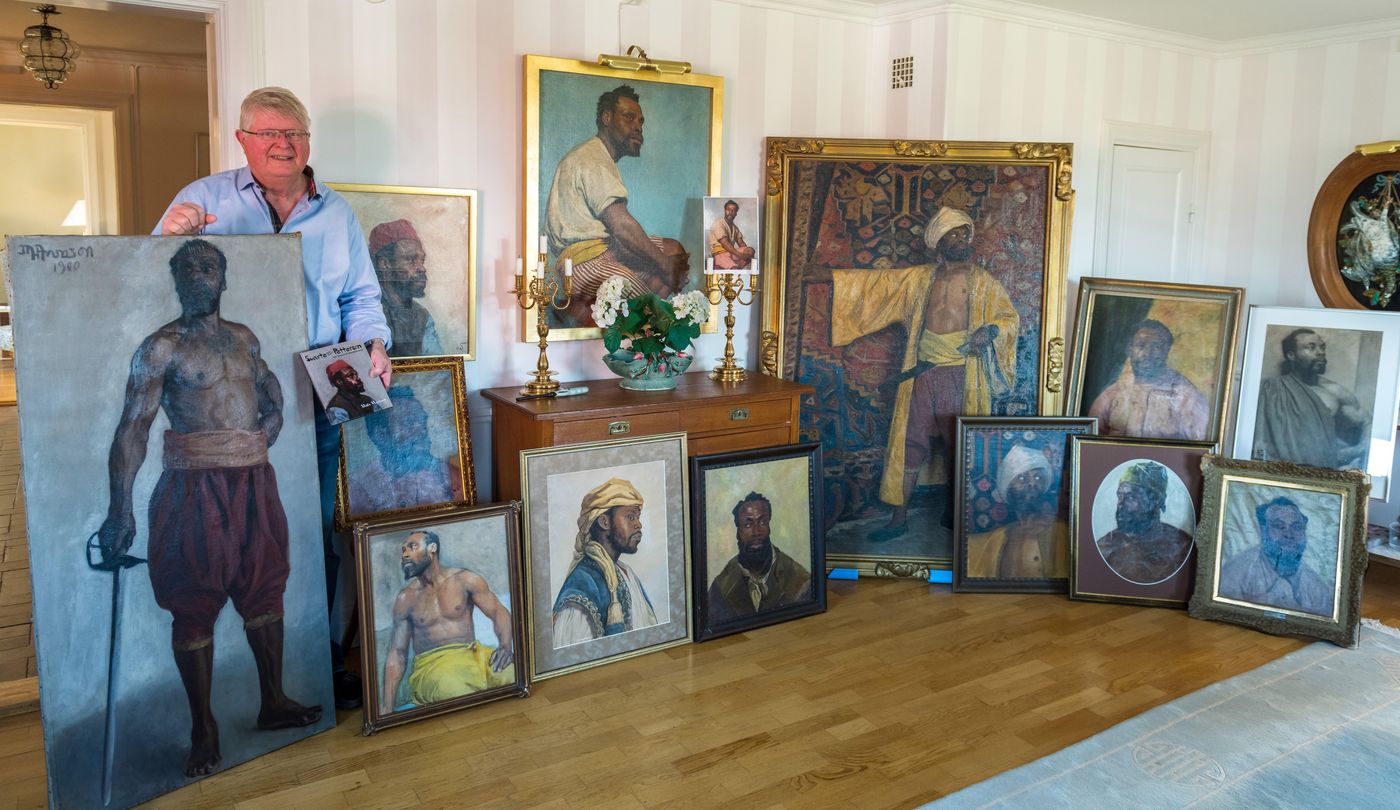
Mats Werner with his extensive collection before it moved to the walls of both the Nationalmuseum and international galleries.
In the end, I had a total of 13 works by the time I finished writing my first edition, which was published in 2021. I sold eleven of them, which made a significant impact internationally. One of the paintings ended up in an art museum in Atlanta, and another in the Nationalmuseum in Stockholm. A British art foundation posted a slideshow on Instagram and named Pierre Louis as "the most depicted black person in pre-modern art"—and prices soared even further.
Now that my book has also been published in English in a revised form with an expanded catalog featuring 54 artworks, the natural title became: ”Pierre Louis Alexandre – The Most Depicted Black Person in Pre-Modern Art”.
Previously Unknown Works at Crafoord Auctions, Stockholm
Currently, Crafoord Auctions is offering two recently discovered artworks featuring Pierre Louis Alexandre. One is a beautiful drawing by Signe Grönberger, which was not included in my first book but is part of the ten or so works discovered after its publication. It was numbered 47 in the catalogue and is included in the second edition, which has just been released and is available through sites like AdLibris.
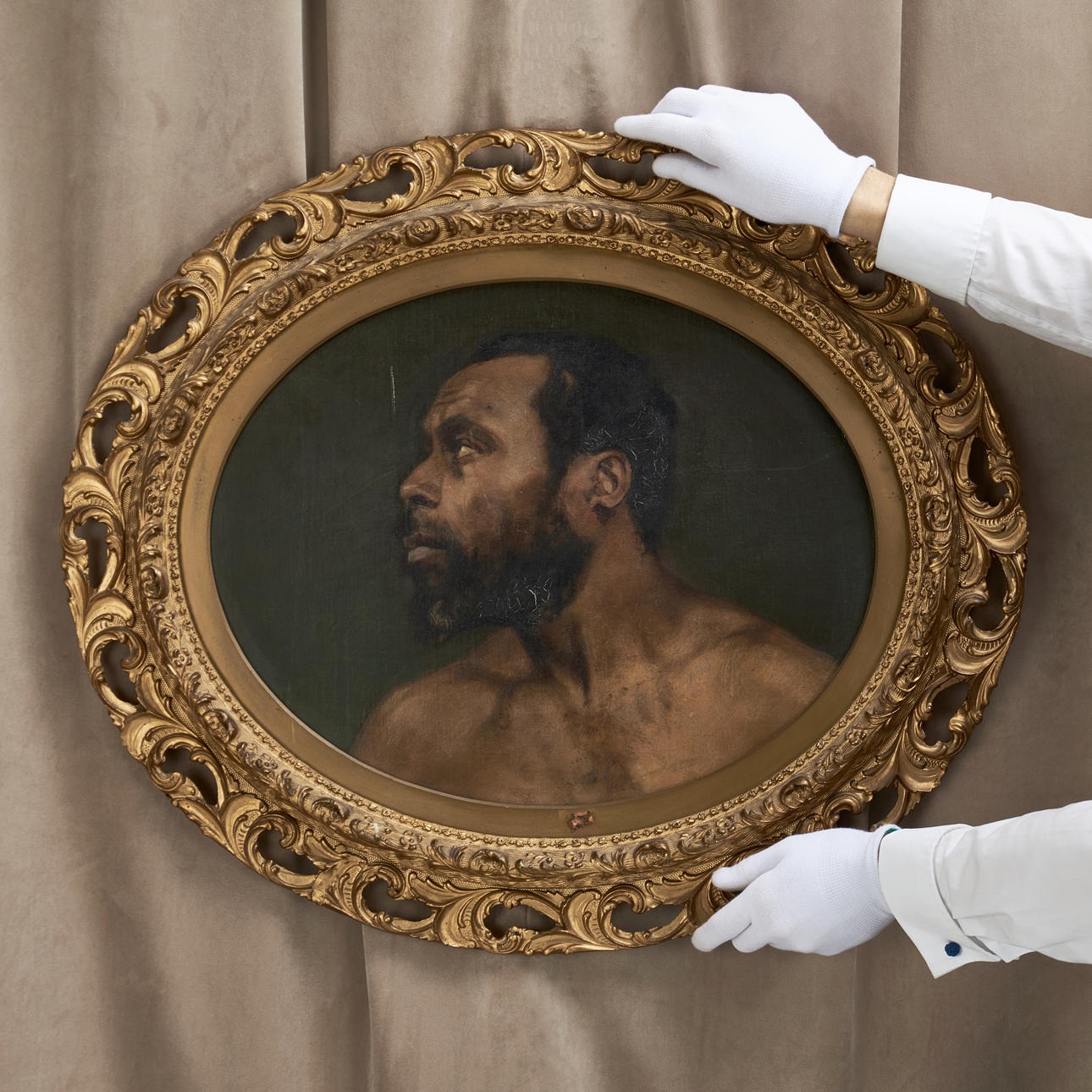
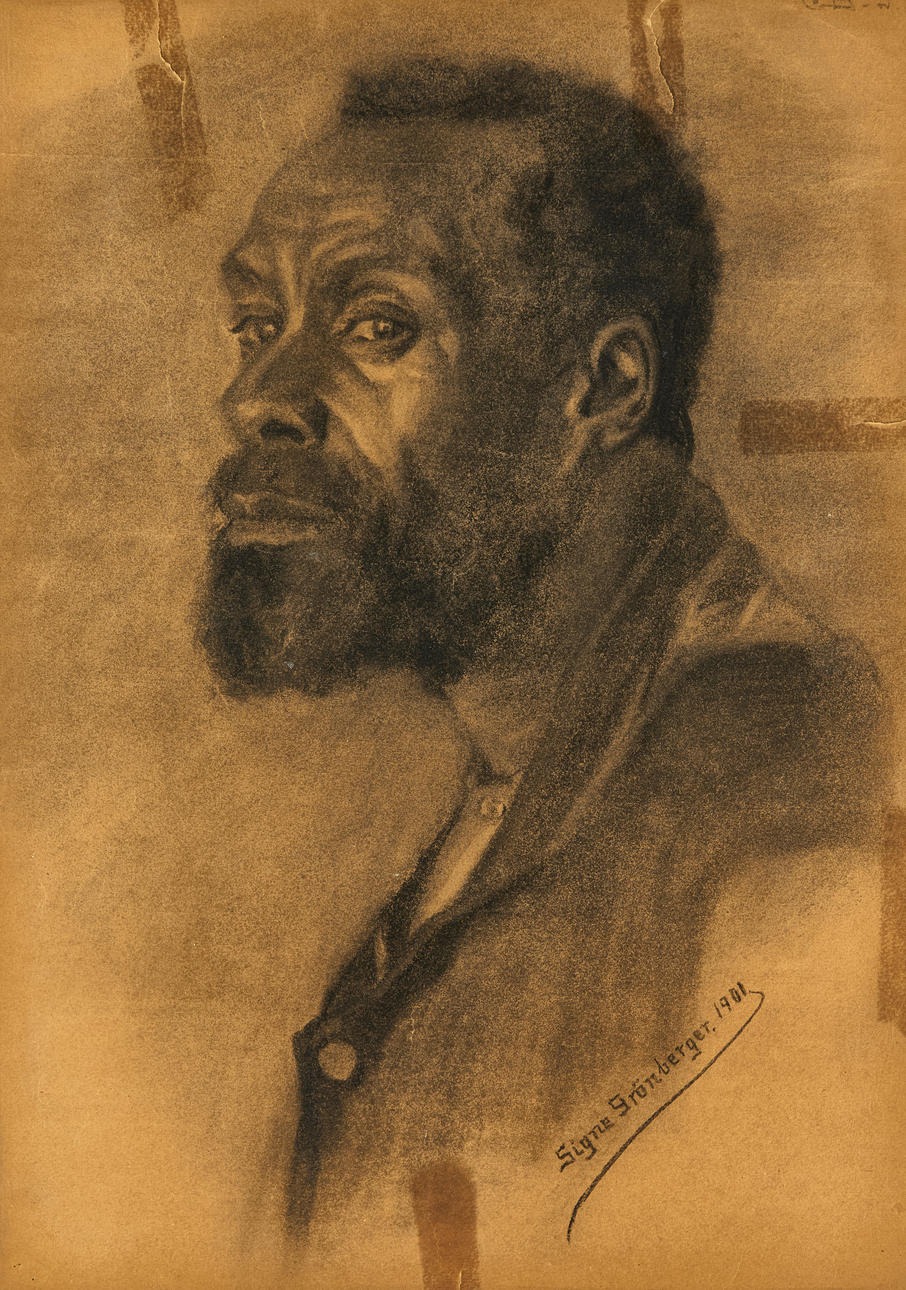
The painting that just made it into my catalogue was consigned to Crafoord Auctions a while ago in a beautiful oval frame, where our main subject is depicted with a bare chest. By the end of the 19th century, it was likely that even female artists were allowed to depict men with bare torsos. But only a few decades earlier, this would have been unthinkable, and you can see the differences when Petterson poses for the male section—he might only wear an open waistcoat on his upper body, while in the same attire for the female section, he would wear a shirt under the waistcoat.
Text: Mats Werner, Mariefred