)
Paris at the turn of the century before last. A bustling, blooming, golden cauldron of art, literature, and culture. A city that, within just a few years, hosted two World Expositions. For the first, held in 1889, a 300-meter-tall iron tower was erected—a peculiar lattice structure the world had never seen before. A bold innovation that many found difficult to accept. Critics and detractors called for its immediate demolition, but the tower remained and soon became a symbol of the city. This period came to be known as La Belle Époque.
Artists from across the continent traveled there to immerse themselves in and become part of the new ideas and movements that were debated in the city’s cafés and showcased in its theaters and galleries. But not everyone who came to Paris was a painter, writer, or poet. This story is about Vilhelm Holmgren, who came to Paris as a decorator but, within this vibrant cultural epicenter, became a visual artist.
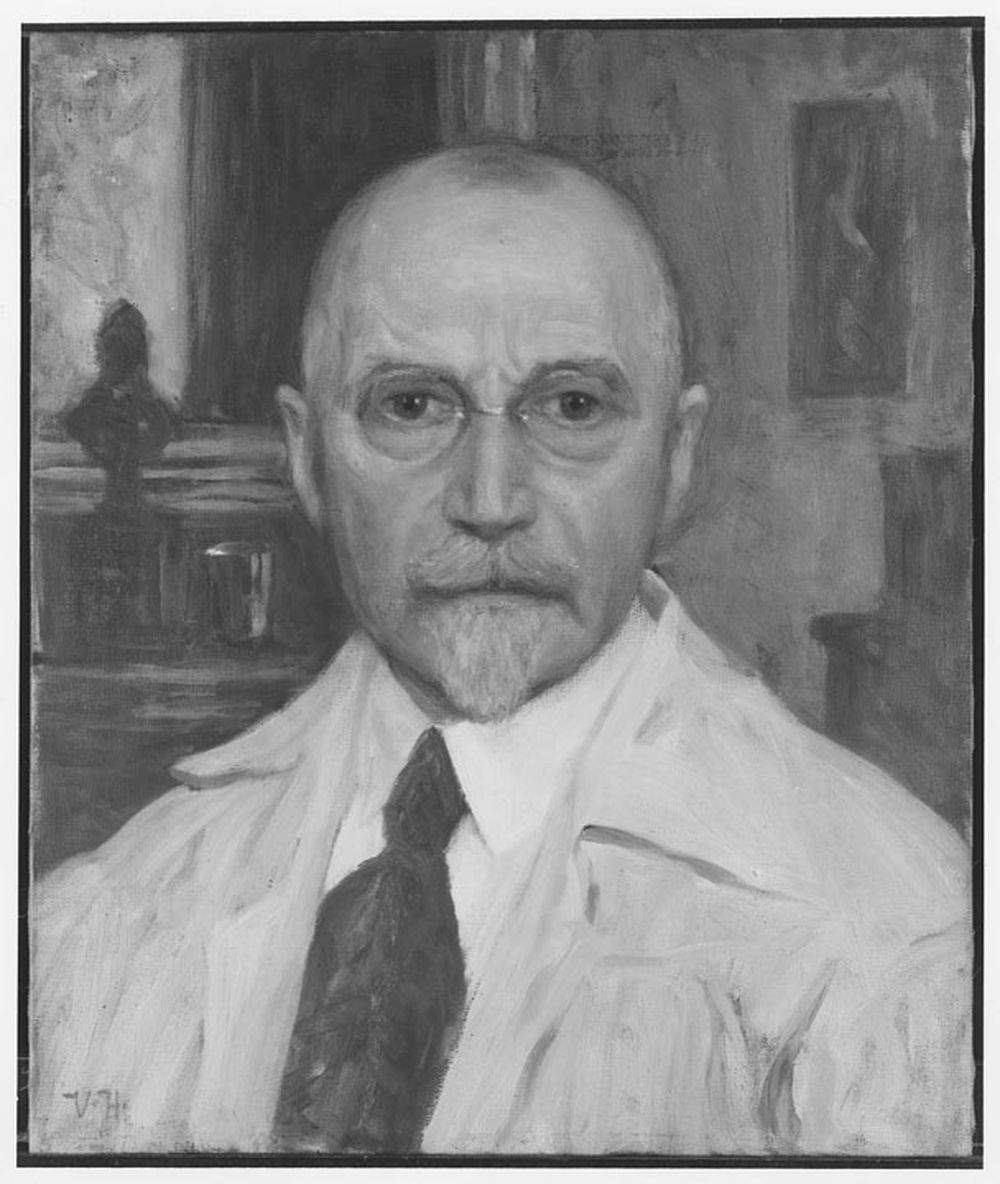
Vilhelm Holmgren (1863-1943), self portrait, Nationalmuseum
Discovering his Craft
Vilhelm Holmgren grew up in Stockholm under difficult circumstances. At the age of six, he became an orphan and was taken in by a sea captain's widow. After completing his schooling, he joined the Rörstrand porcelain factory, where he reportedly painted so-called surplus porcelain. In his early teens, he enrolled at the Technical School and subsequently worked as a painter's apprentice.
By 1883, he had obtained a journeyman certificate as a decorative painter. Six years later, he arrived in Paris to decorate the Swedish pavilion at the World Exposition. The pavilion, typical of its time, was designed by Hugo Rahm as a fairly ordinary wooden villa, richly adorned with intricate woodwork details. Holmgren then took on several assignments back home. Among other things, he was part of the team of decorators and artists who, under Isak Gustaf Clason, adorned the Hallwyl Palace—a lavishly luxurious private residence in central Stockholm, completed in 1898.
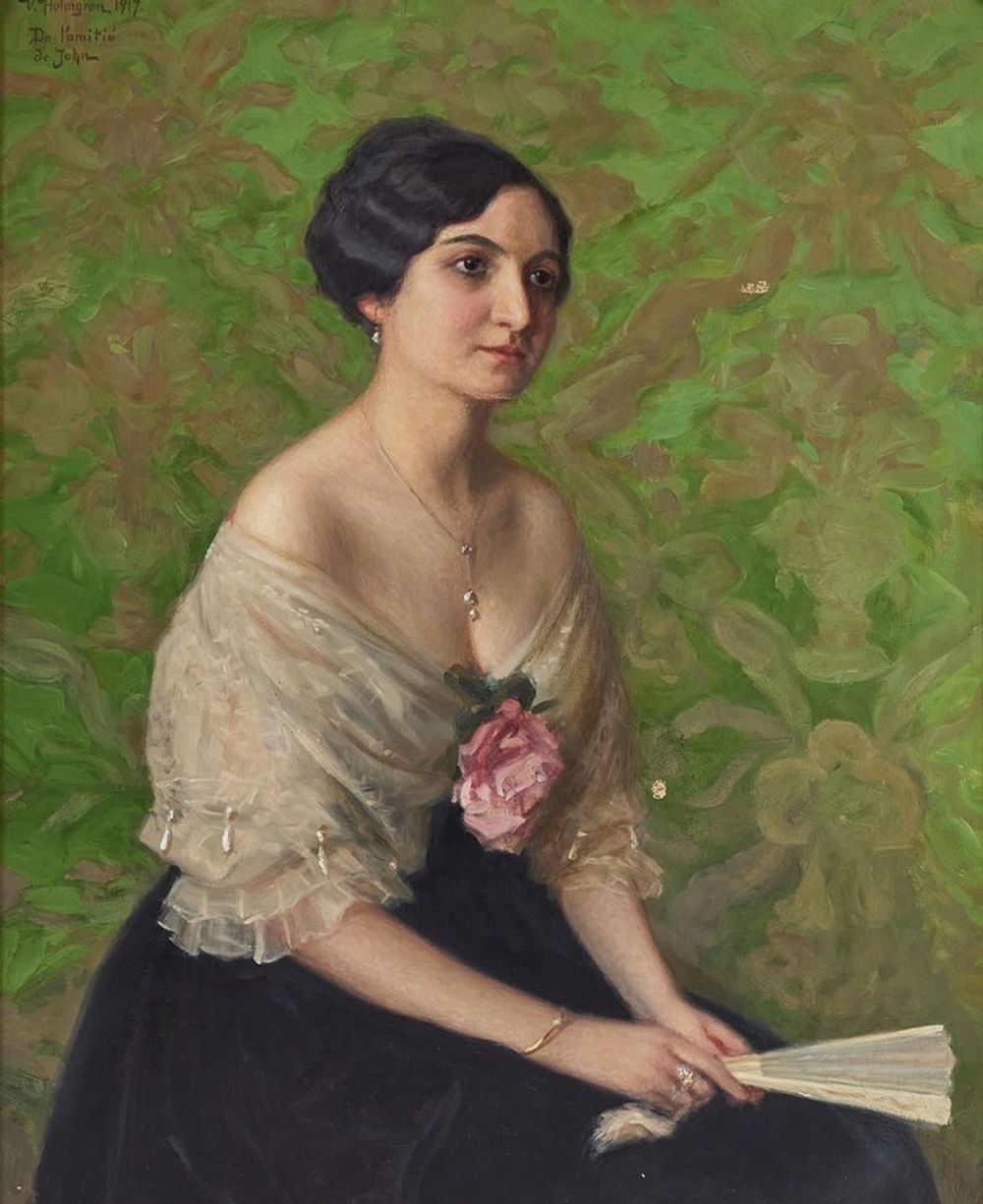
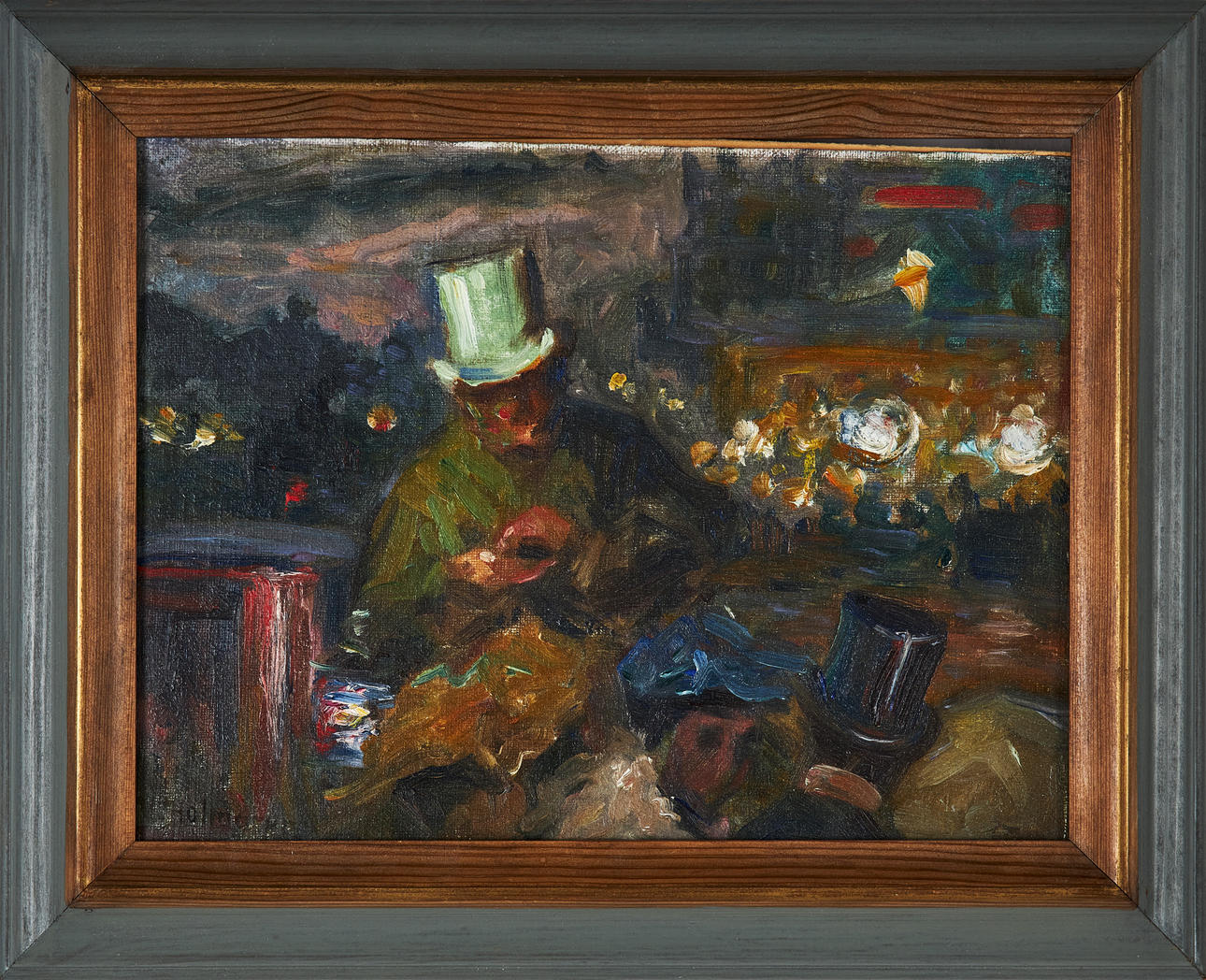
In this portrait from 1917, Holmgren's background as a decorative painter can be discerned in the green backdrop.
Return to Paris
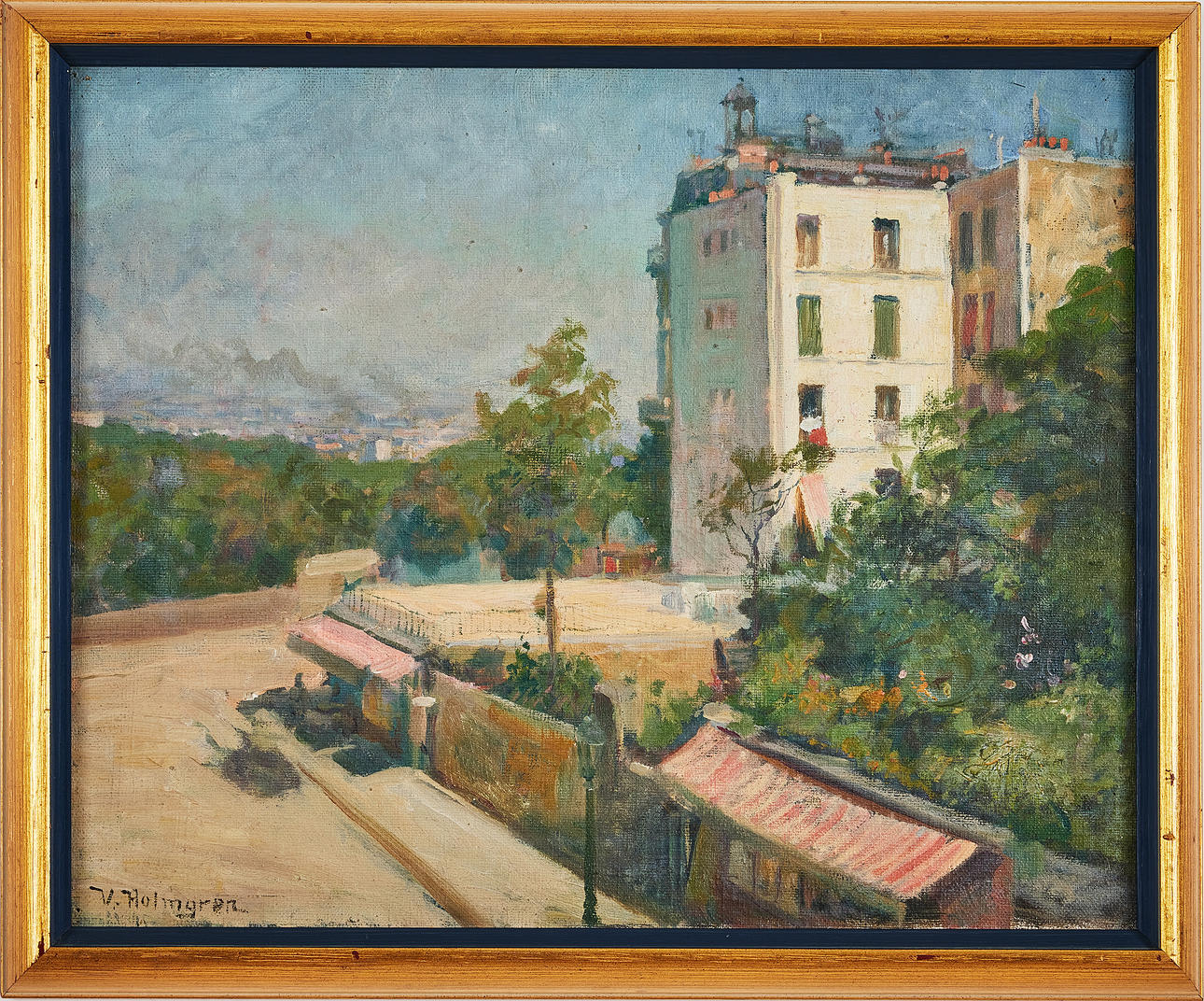
Two years later, Holmgren returned to Paris, this time to become an artist. During the first decade of the new century, he studied under Fernand Cormon, Jean-Antoine Injalbert, and Ferdinand Humbert. While Cormon worked in a traditional academic style, Injalbert leaned more toward realism, and Humbert was one of the most sought-after portrait painters among Parisian high society.
Subscribe to the search Vilhelm Holmgren. We will then notify you when his work is up for auction.
Holmgren was a perceptive student and participated in the Paris Salon in 1905 and 1906. Among his works from this period are several portraits of his wife, Marie Jeanne Ferrand. A few years later, the couple moved to Stockholm, and in 1912 Holmgren’s paintings were exhibited at Salong Joël in the Swedish capital. It was his only major solo exhibition.

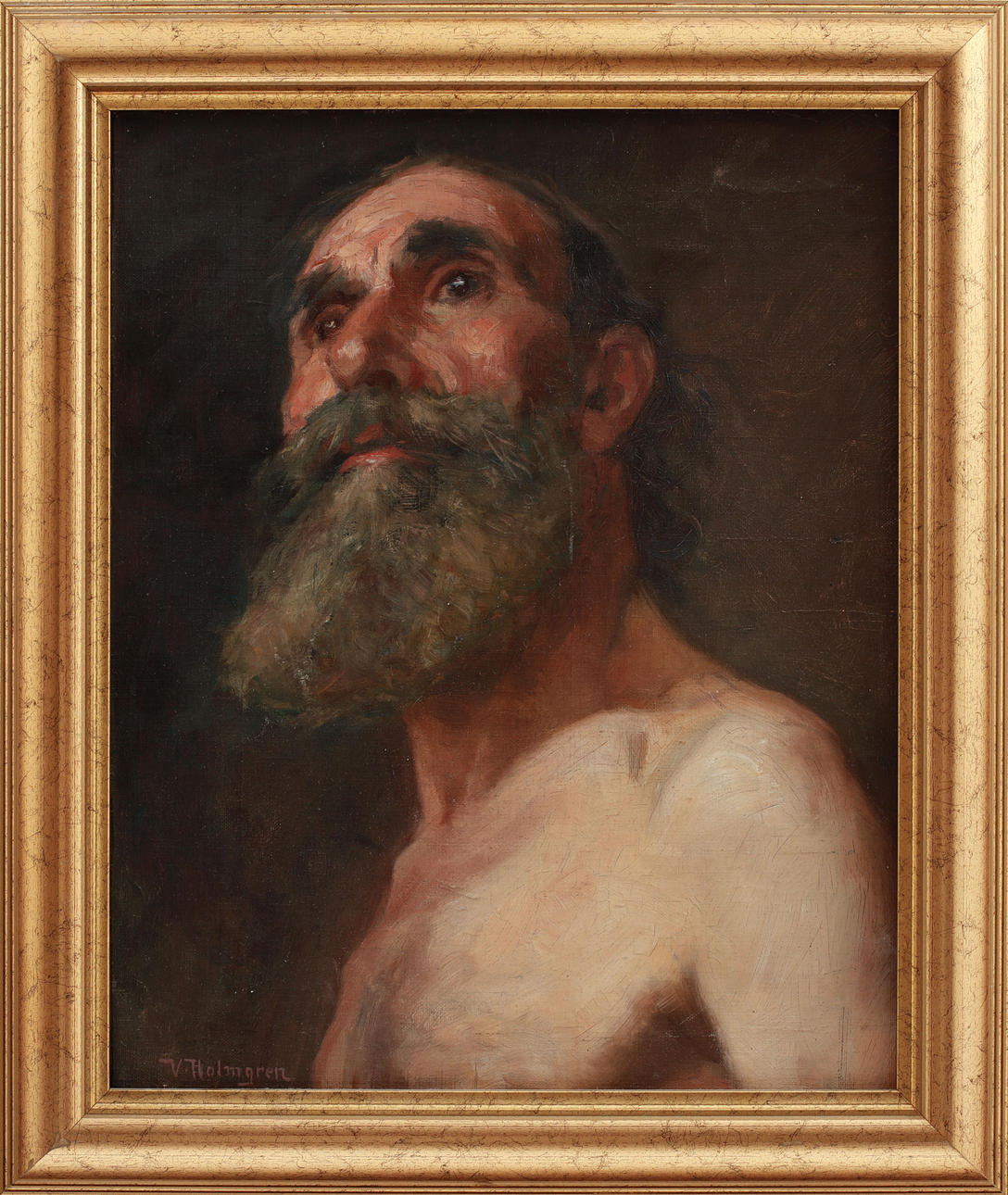
Life stories like Holmgren’s are plentiful in Swedish art history. Alongside the most famous names, many Swedes traveled to Paris to get a taste of the city’s bustling, blooming, golden cauldron. When history is written, it’s easy for these individuals to fade into obscurity. But by closely following these individual painters and sculptors, one often discovers intriguing artistic contributions worth highlighting. And who knows? Holmgren might have a brighter future ahead.

)


)