BERTRAM SCHMITERLÖW (1920-2002) Drawings, 3 pcs, signed.

Images









Description
Bertram Schmiterlöw (Karlskrona 1920-2002 Stockholm)
”Konfirmation” (Confirmation), 34x37 cm
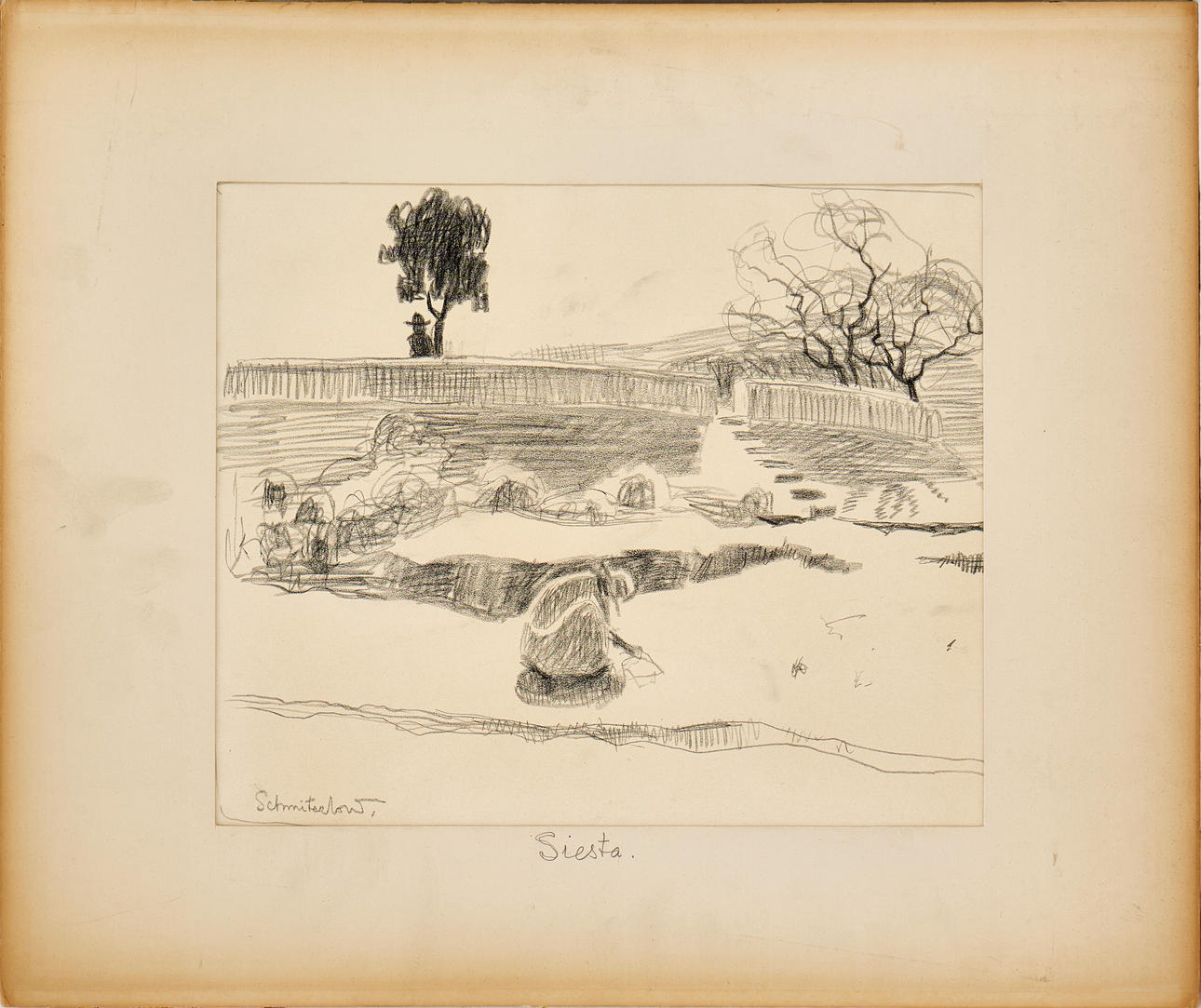
”Siesta”, 32x38.5 cm
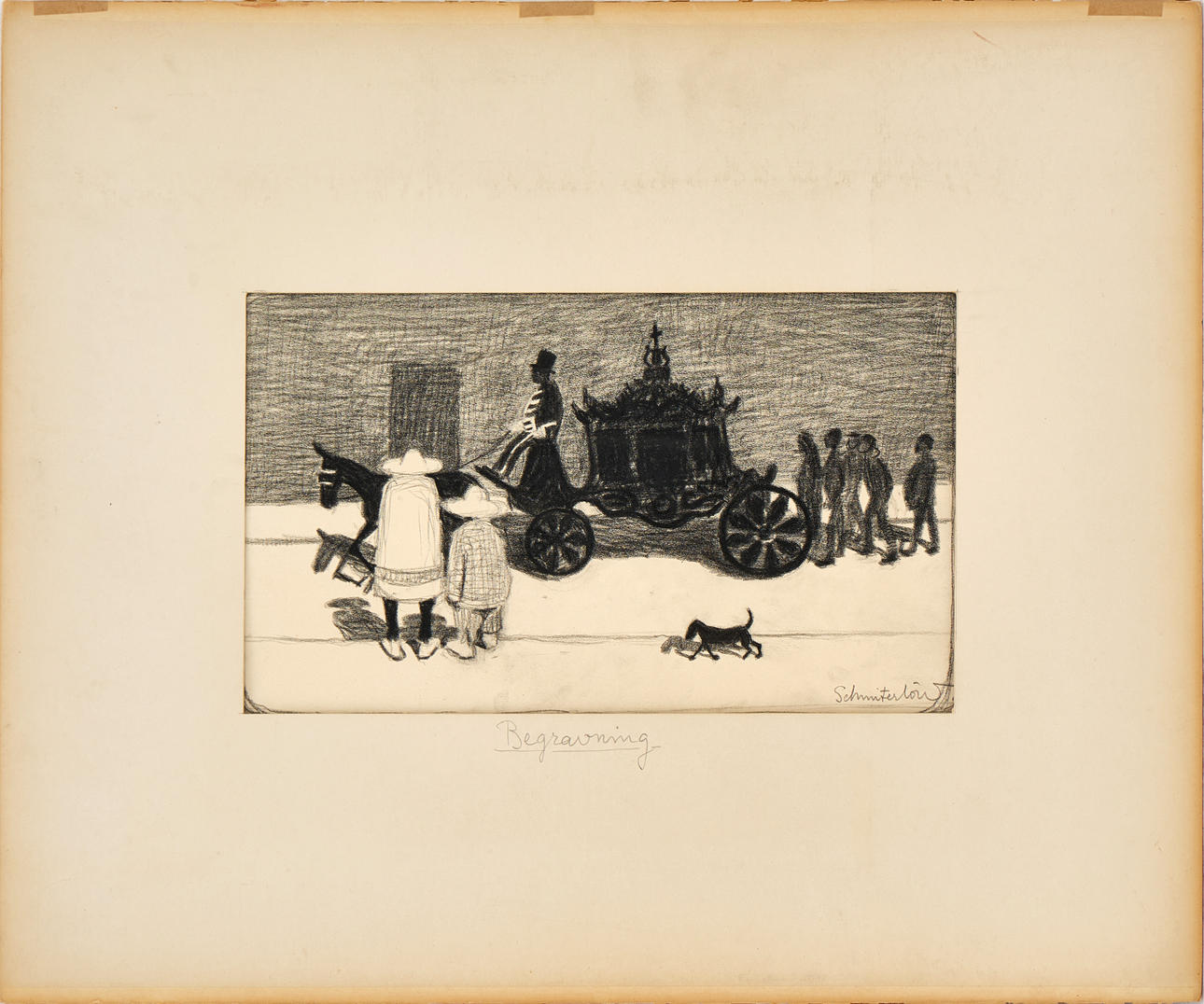
”Begravning” (Funeral), 21x35 cm
Signed ’Schmiterlöw'
Mounted in passepartout
approx. 50 x 59 cm.
”Despite many landscapes – not least expressive cityscapes – it is the depiction of people that dominates Bertram Schmiterlöw's artistic work. His keen eye – one is sometimes tempted to think mercilessly keen eye – has produced a series of masterful images of individual people, from the blonde, dreamy portrait of the poet Setterlind to the portrait of the powerful businessman Don Fransisco Yapur in his brown and white striped suit. The individuals alternate with depictions of people in groups or as a mass effect.” (Dag Widman, opening speech in connection with Bertram Schmiterlöw's major exhibition at Waldemarsudde in December 2000)
Bertram Schmiterlöw began his artistic education during his high school years, when he was a student of Gustaf Theodor Wallén in Leksand during the summer holidays. This was followed by studies at Otte Sköld's painting school in 1942 and at the Royal Swedish Academy of Fine Arts' graphic school in 1943-45. In the latter year, he traveled to Argentina with his mother and brother Christer. Bertram remained in Argentina for ten years. As a result, he remained unaffected by the breakthrough that non-figurative art had in Europe during these years. Now, one might imagine that Bertram would have stood above this development even if he had remained in Sweden; his artistic conviction was strong enough for that. During his years in Argentina, Bertram Schmiterlöw established himself as a recognized artist. He painted both portraits of the society in Buenos Aires and depictions of folk life from Jujuy, which were characterized by a strong social empathy. Bertram also had his debut exhibition in Argentina. It was at Galleri Müller in Buenos Aires in 1953.
Once back in Sweden, Bertram Schmiterlöw exhibited at Galleri Modern konst i hemmiljö in 1955. This was followed by participation in several exhibitions at the Nationalmuseum and Liljevalchs konsthall. Bertram's genuine interest in his fellow human beings and the realization that all these people had something unique that he could capture with his brush characterizes his entire artistry. This also made him one of the most sought-after portrait painters. Among those he portrayed are Prince Bertil, Bo Setterlind, Curt Nicolin, and Percy Barnevik. For Bertram, portrait painting was a natural need and not something he did to make a living. However, it was very well paid, which had the benefit that he could be completely free in his other painting and paint exactly as he wanted, without having to think about the audience's taste and their wallets. Bertram Schmiterlöw's great success as a portrait painter meant, however, that his other artistry was for a long time relatively unknown to the general public. It was really only with the major exhibition at Waldemarsudde in 2000-2001 and the subsequent documentary film by Tom Alandh that the general image of Bertram Schmiterlöw's artistry gained a new, deeper dimension.
Bertram Schmiterlöw is represented at the Nationalmuseum, Moderna Museet, the Swedish State Portrait Collection at Gripsholm, and the Bonnier Portrait Collection at Nedre Manilla.
Condition
Unframed in passepartout.
Slightly yellowed.
Resale right
Theme
Bidding
Item is located in Stockholm, Sweden
Description
Bertram Schmiterlöw (Karlskrona 1920-2002 Stockholm)
”Konfirmation” (Confirmation), 34x37 cm
”Siesta”, 32x38.5 cm
”Begravning” (Funeral), 21x35 cm
Signed ’Schmiterlöw'
Mounted in passepartout
approx. 50 x 59 cm.
”Despite many landscapes – not least expressive cityscapes – it is the depiction of people that dominates Bertram Schmiterlöw's artistic work. His keen eye – one is sometimes tempted to think mercilessly keen eye – has produced a series of masterful images of individual people, from the blonde, dreamy portrait of the poet Setterlind to the portrait of the powerful businessman Don Fransisco Yapur in his brown and white striped suit. The individuals alternate with depictions of people in groups or as a mass effect.” (Dag Widman, opening speech in connection with Bertram Schmiterlöw's major exhibition at Waldemarsudde in December 2000)
Bertram Schmiterlöw began his artistic education during his high school years, when he was a student of Gustaf Theodor Wallén in Leksand during the summer holidays. This was followed by studies at Otte Sköld's painting school in 1942 and at the Royal Swedish Academy of Fine Arts' graphic school in 1943-45. In the latter year, he traveled to Argentina with his mother and brother Christer. Bertram remained in Argentina for ten years. As a result, he remained unaffected by the breakthrough that non-figurative art had in Europe during these years. Now, one might imagine that Bertram would have stood above this development even if he had remained in Sweden; his artistic conviction was strong enough for that. During his years in Argentina, Bertram Schmiterlöw established himself as a recognized artist. He painted both portraits of the society in Buenos Aires and depictions of folk life from Jujuy, which were characterized by a strong social empathy. Bertram also had his debut exhibition in Argentina. It was at Galleri Müller in Buenos Aires in 1953.
Once back in Sweden, Bertram Schmiterlöw exhibited at Galleri Modern konst i hemmiljö in 1955. This was followed by participation in several exhibitions at the Nationalmuseum and Liljevalchs konsthall. Bertram's genuine interest in his fellow human beings and the realization that all these people had something unique that he could capture with his brush characterizes his entire artistry. This also made him one of the most sought-after portrait painters. Among those he portrayed are Prince Bertil, Bo Setterlind, Curt Nicolin, and Percy Barnevik. For Bertram, portrait painting was a natural need and not something he did to make a living. However, it was very well paid, which had the benefit that he could be completely free in his other painting and paint exactly as he wanted, without having to think about the audience's taste and their wallets. Bertram Schmiterlöw's great success as a portrait painter meant, however, that his other artistry was for a long time relatively unknown to the general public. It was really only with the major exhibition at Waldemarsudde in 2000-2001 and the subsequent documentary film by Tom Alandh that the general image of Bertram Schmiterlöw's artistry gained a new, deeper dimension.
Bertram Schmiterlöw is represented at the Nationalmuseum, Moderna Museet, the Swedish State Portrait Collection at Gripsholm, and the Bonnier Portrait Collection at Nedre Manilla.
Condition
Unframed in passepartout.
Slightly yellowed.
Resale right
Theme
Payment options for this item
Payment cardsBank transferDelivery
: Provide your locationInfo temporarily unavailableLoading…Provide your location to see transport options and prices.
Oops! Something went wrong.
Please try again in a moment. If it still doesn't work, contact Auctionet support.
Details
- Address
Galoppvägen 3
183 64 Täby
Sweden- Placement
- Vagn 11 - Ställage 4 (Vasakonst)