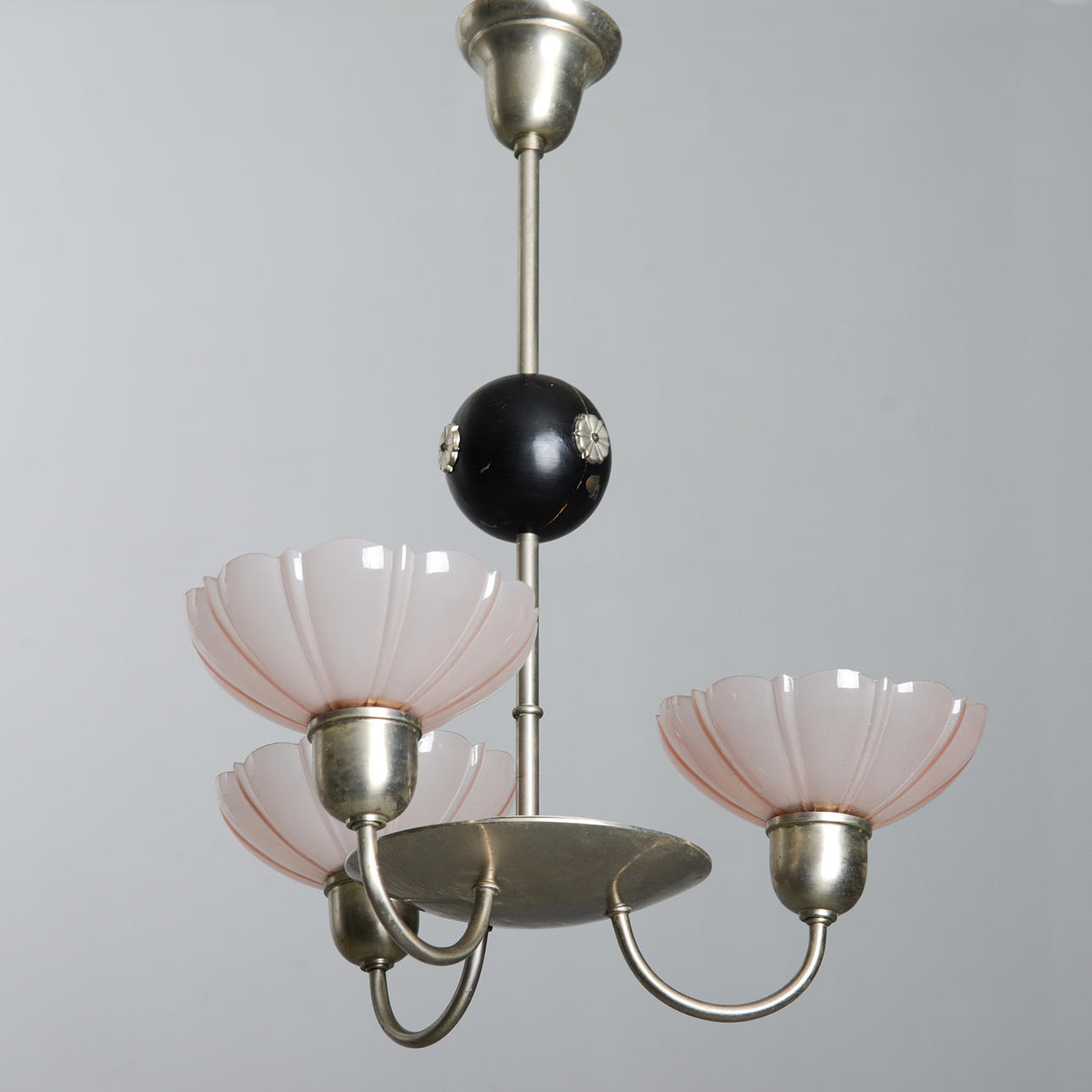
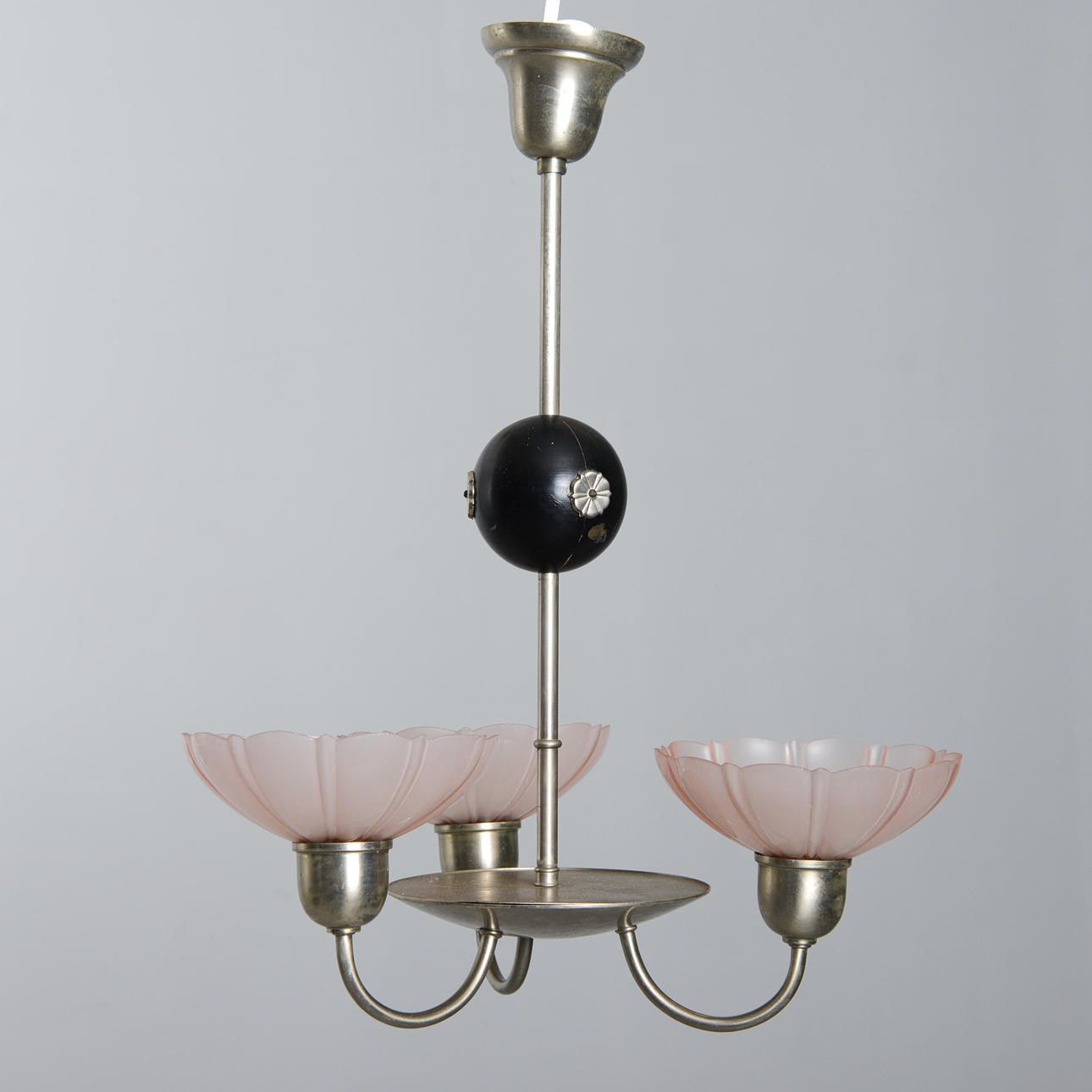
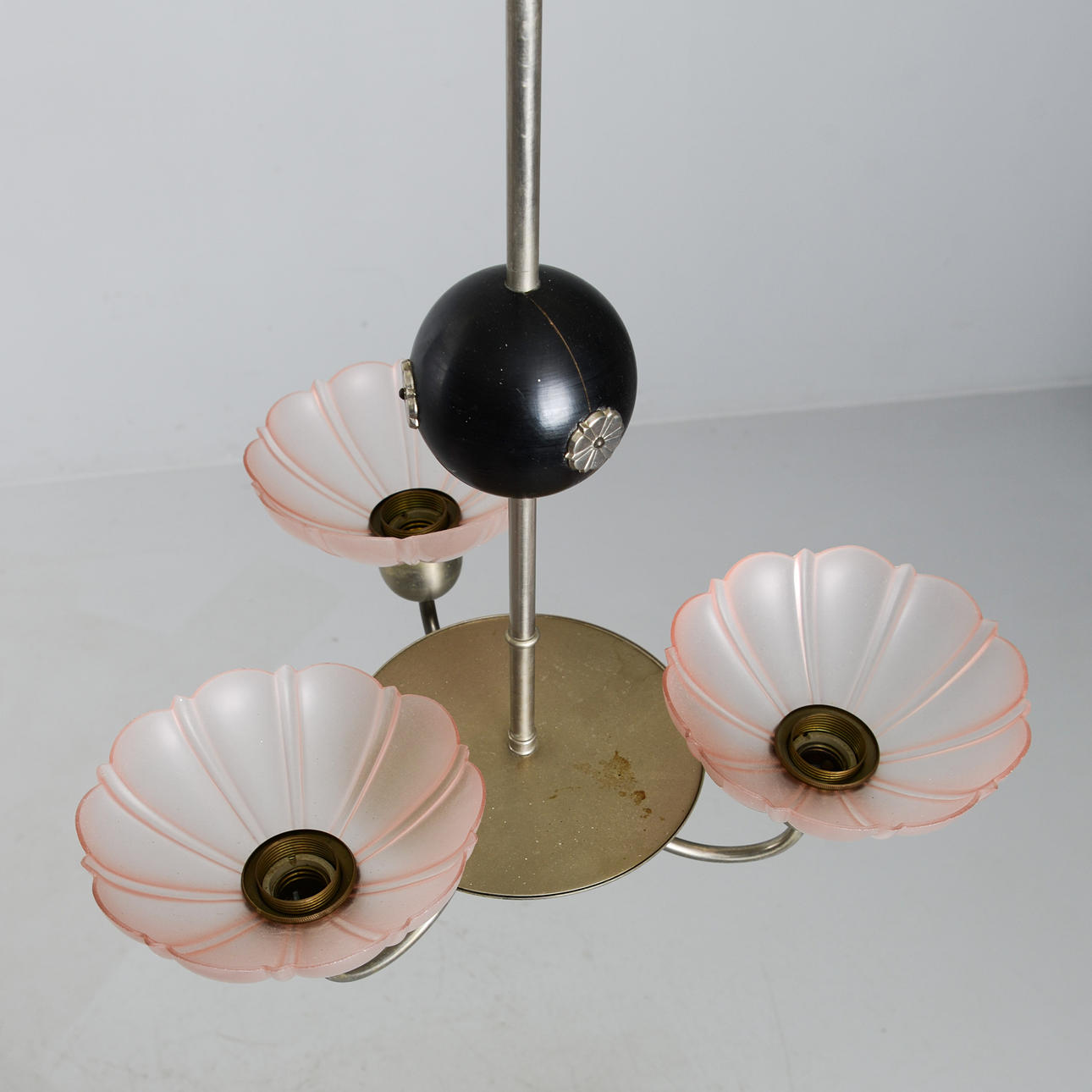
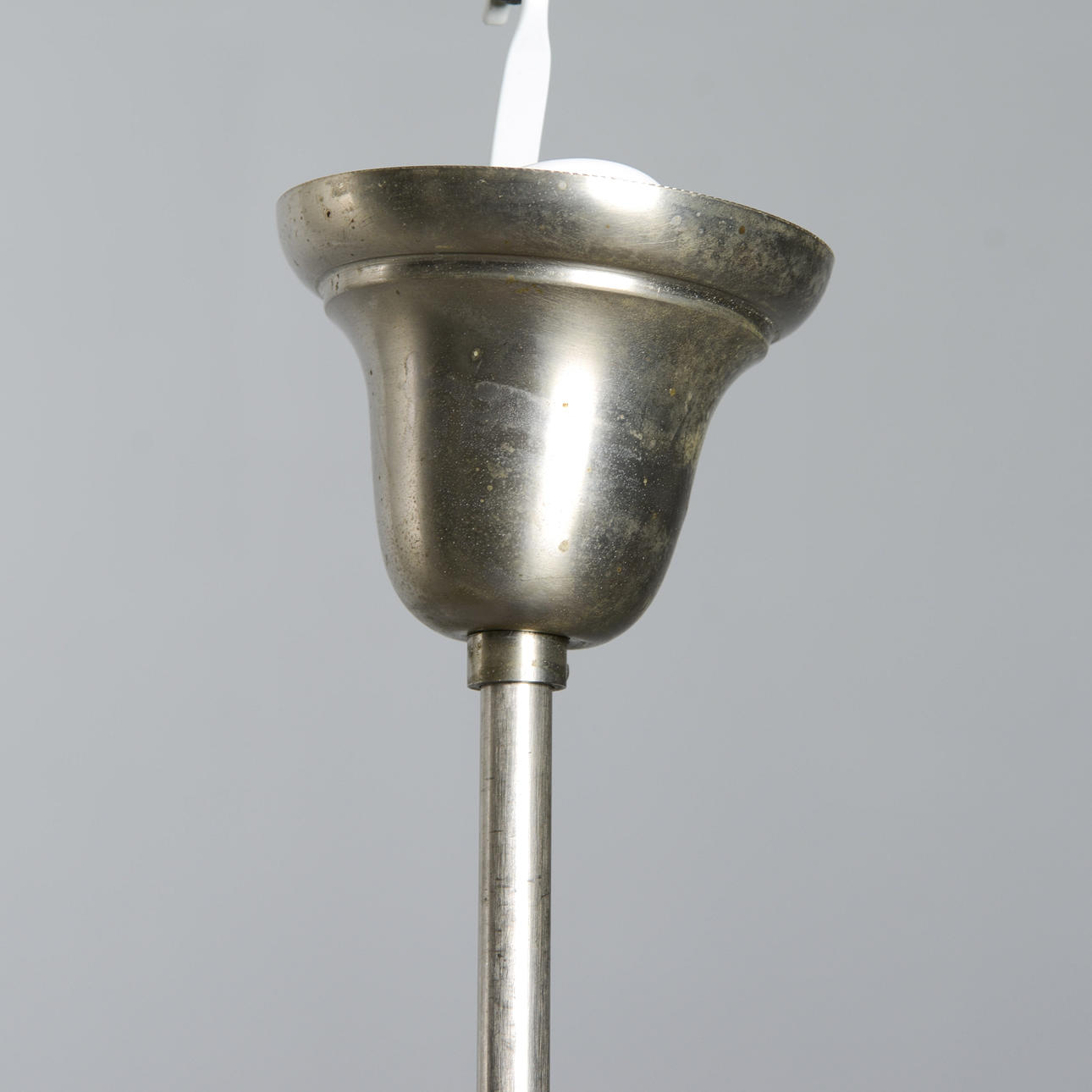
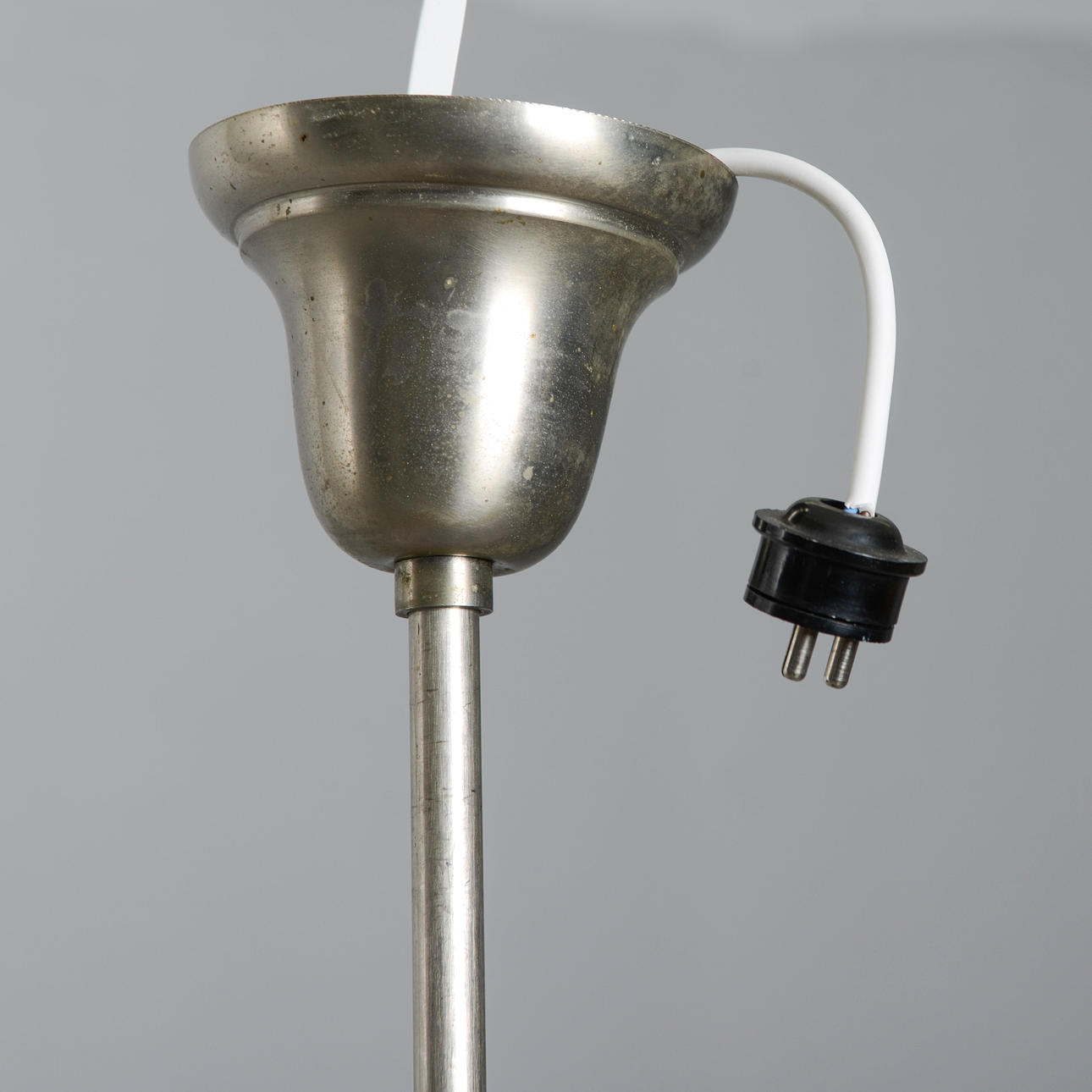
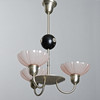
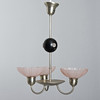
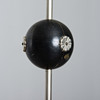
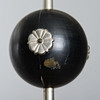
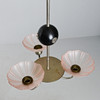
HARALD NOTINI. Ceiling lamp, Böhlmarks model 10174, functionalism, 1930s.

Images

Description
Height: 60 cm.
Diameter: 46 cm.
Harald Elof Notini (1879–1959) was one of the most influential figures in Swedish design during the first half of the 20th century. Originally a sculptor trained at the Higher School of Art and Design in Stockholm, with further studies in Germany and France, he combined artistic sensibility with technical innovation and a functionalist vision. For most of his life, Notini served as the artistic director for Arvid Böhlmarks Lampfabrik and its glass production at Pukeberg glassworks – two institutions where he left a profound mark.
His work in lighting design was particularly groundbreaking. He steered Böhlmarks from traditional style imitations toward the forefront of modernism. During the 1920s, his expression was characterized by Swedish Grace – elegant and ornamental yet restrained – which transitioned into pure functionalism in the 1930s and finally into the warm, material-rich aesthetic that came to be known as Swedish Modern during the 1940s and 50s. Brass, glass, wood, and leather interacted in his fixtures in a way that still commands admiration.
Notini was not just a designer – he was an architect of a new way of viewing light, space, and aesthetics. With several patents in lighting technology, he combined an engineer's sense of function with an artist's eye for beauty. His works have been exhibited internationally and are represented in collections such as the Nationalmuseum in Stockholm and MoMA in New York.
Despite opportunities for other commissions, he remained loyal to his workplace at Böhlmarks until the end of his life – a life defined by form, light, and an unwavering belief that the practical and the beautiful can be one and the same.
Condition
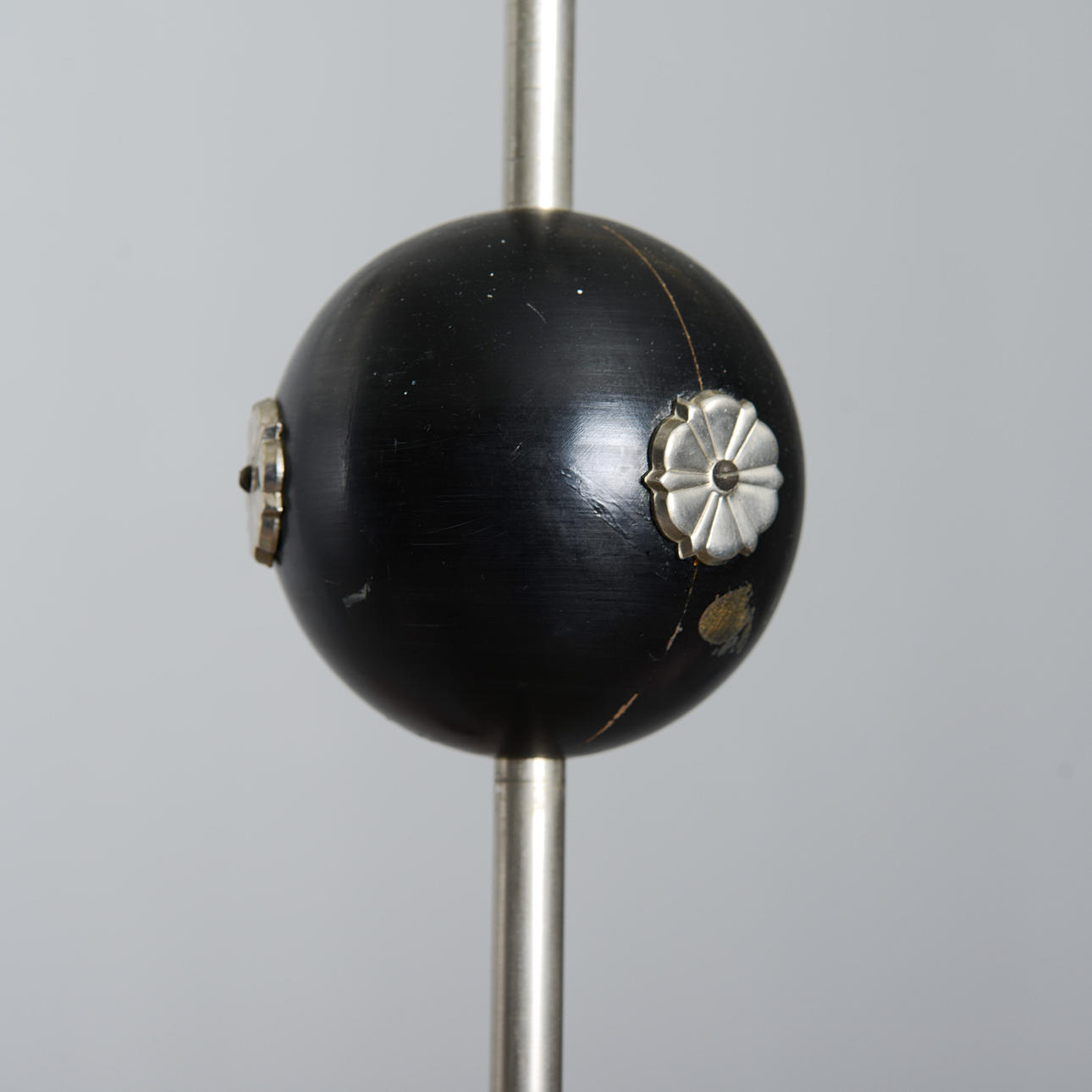
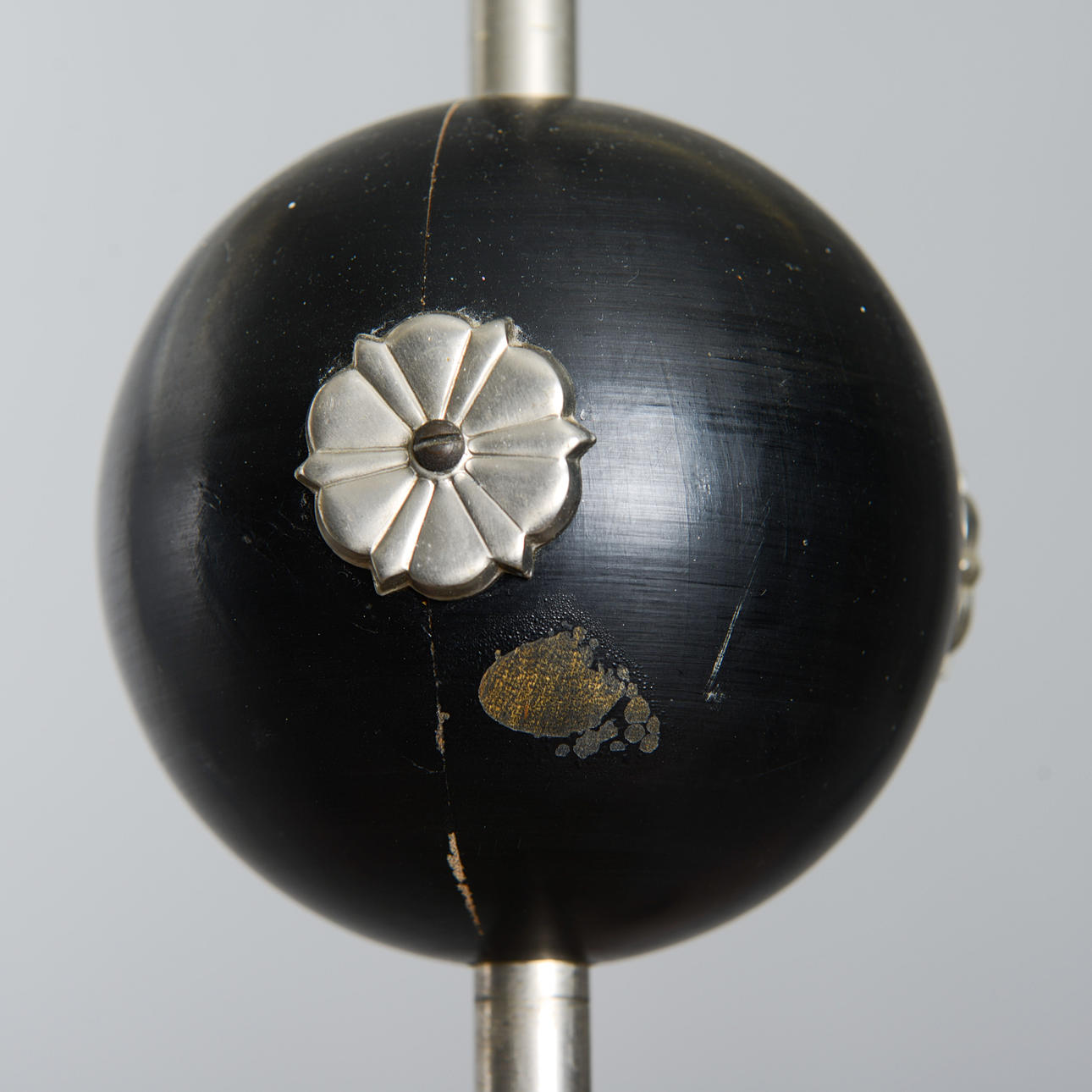
Wear from use. Not function tested.
Resale right
Theme
Description
Height: 60 cm.
Diameter: 46 cm.
Harald Elof Notini (1879–1959) was one of the most influential figures in Swedish design during the first half of the 20th century. Originally a sculptor trained at the Higher School of Art and Design in Stockholm, with further studies in Germany and France, he combined artistic sensibility with technical innovation and a functionalist vision. For most of his life, Notini served as the artistic director for Arvid Böhlmarks Lampfabrik and its glass production at Pukeberg glassworks – two institutions where he left a profound mark.
His work in lighting design was particularly groundbreaking. He steered Böhlmarks from traditional style imitations toward the forefront of modernism. During the 1920s, his expression was characterized by Swedish Grace – elegant and ornamental yet restrained – which transitioned into pure functionalism in the 1930s and finally into the warm, material-rich aesthetic that came to be known as Swedish Modern during the 1940s and 50s. Brass, glass, wood, and leather interacted in his fixtures in a way that still commands admiration.
Notini was not just a designer – he was an architect of a new way of viewing light, space, and aesthetics. With several patents in lighting technology, he combined an engineer's sense of function with an artist's eye for beauty. His works have been exhibited internationally and are represented in collections such as the Nationalmuseum in Stockholm and MoMA in New York.
Despite opportunities for other commissions, he remained loyal to his workplace at Böhlmarks until the end of his life – a life defined by form, light, and an unwavering belief that the practical and the beautiful can be one and the same.
Condition
Wear from use. Not function tested.
Resale right
Theme
Payment options for this item
Payment cardsBank transferDelivery
: Provide your locationInfo temporarily unavailableLoading…Provide your location to see transport options and prices.
Oops! Something went wrong.
Please try again in a moment. If it still doesn't work, contact Auctionet support.
Details
- House
- Formstad Auktioner
- Address
Gårdsfogdevägen 16
168 67 Bromma
Sweden- Placement
- Showroom