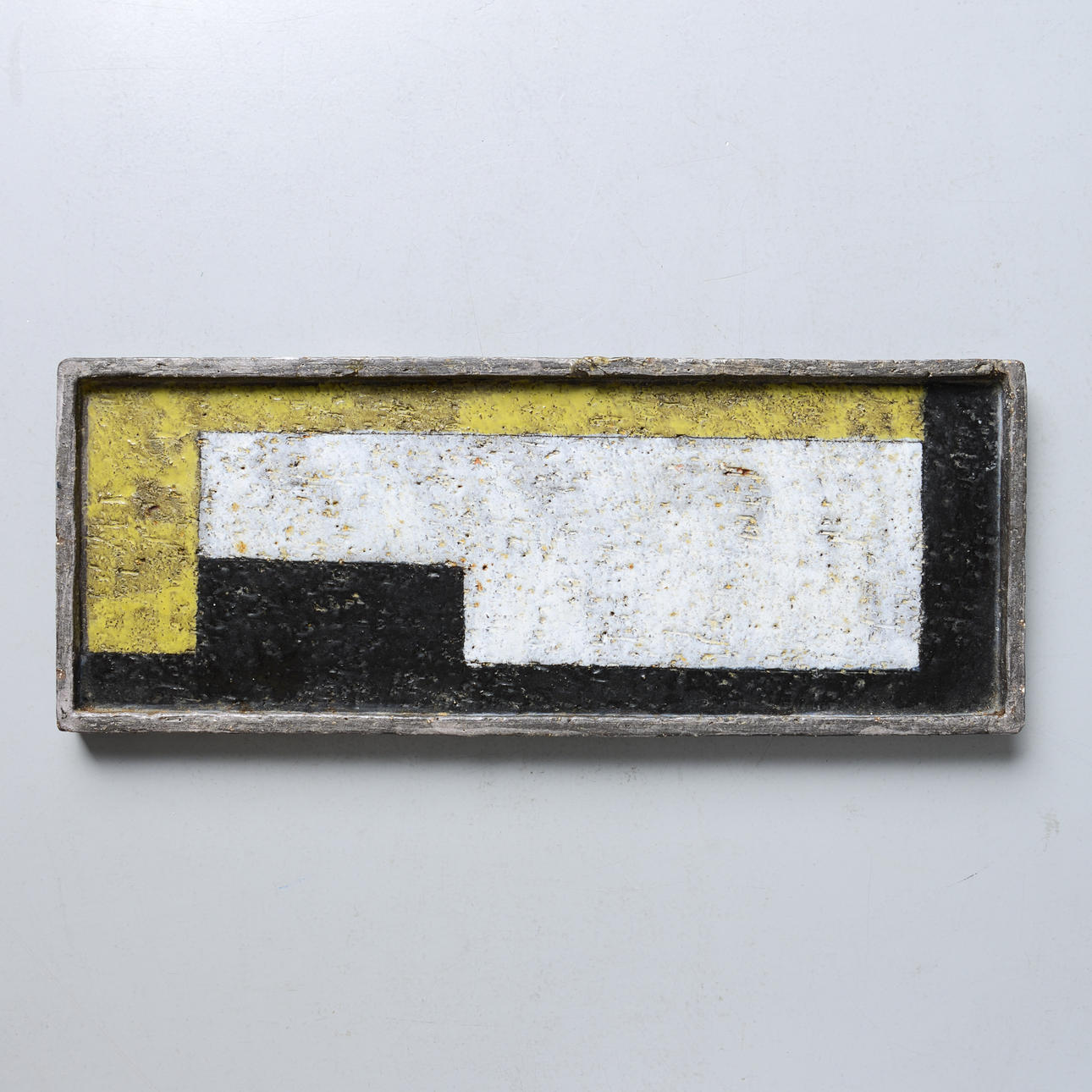
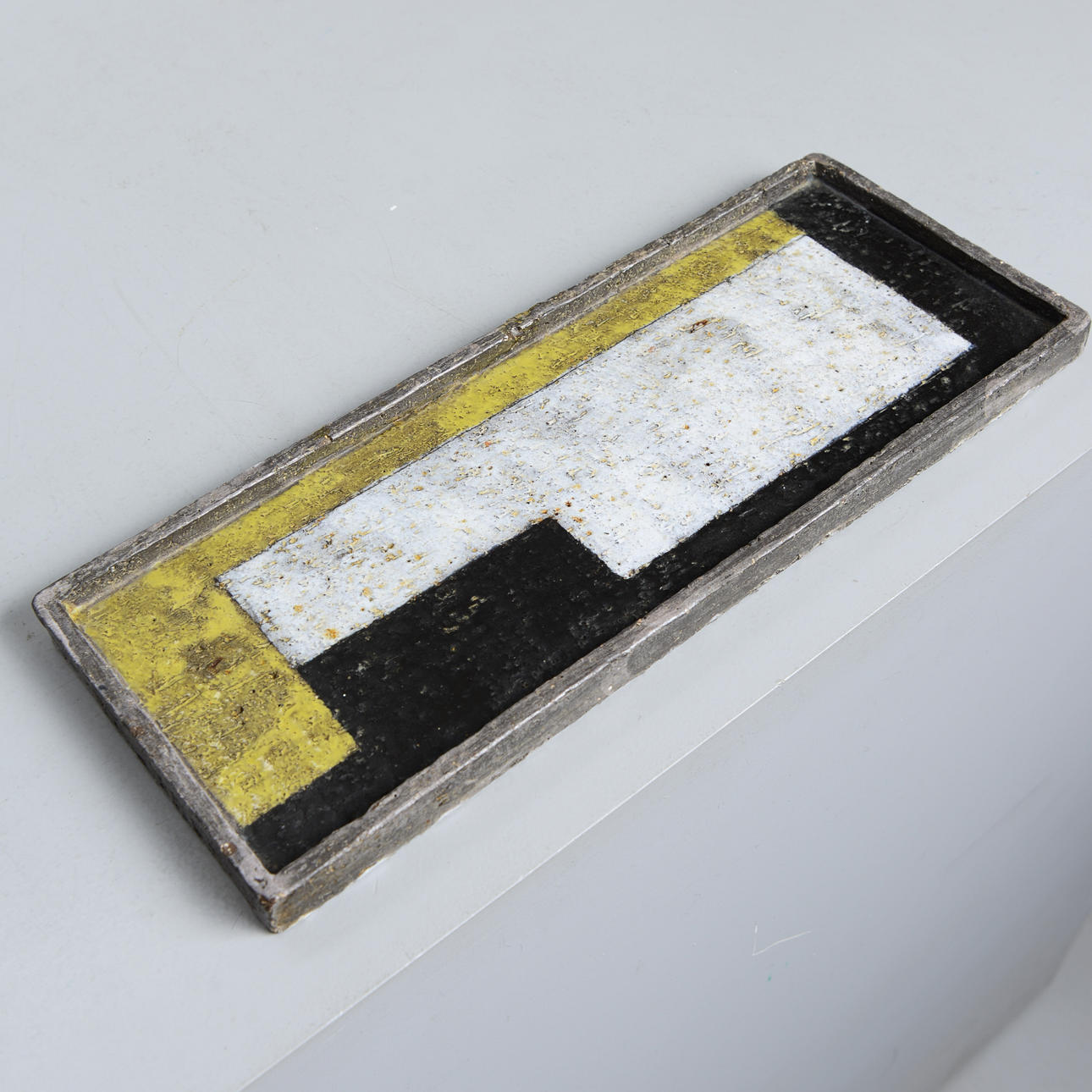
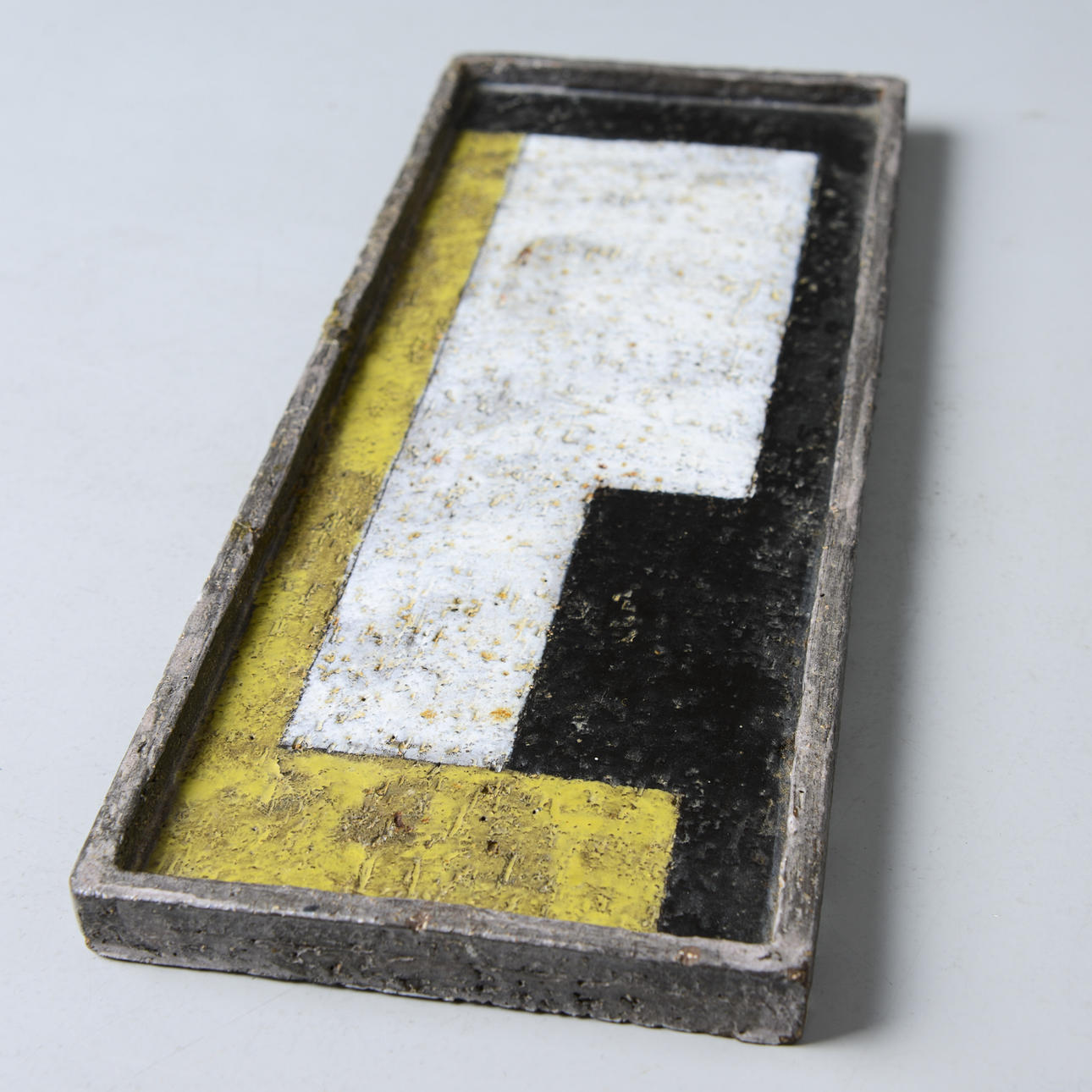
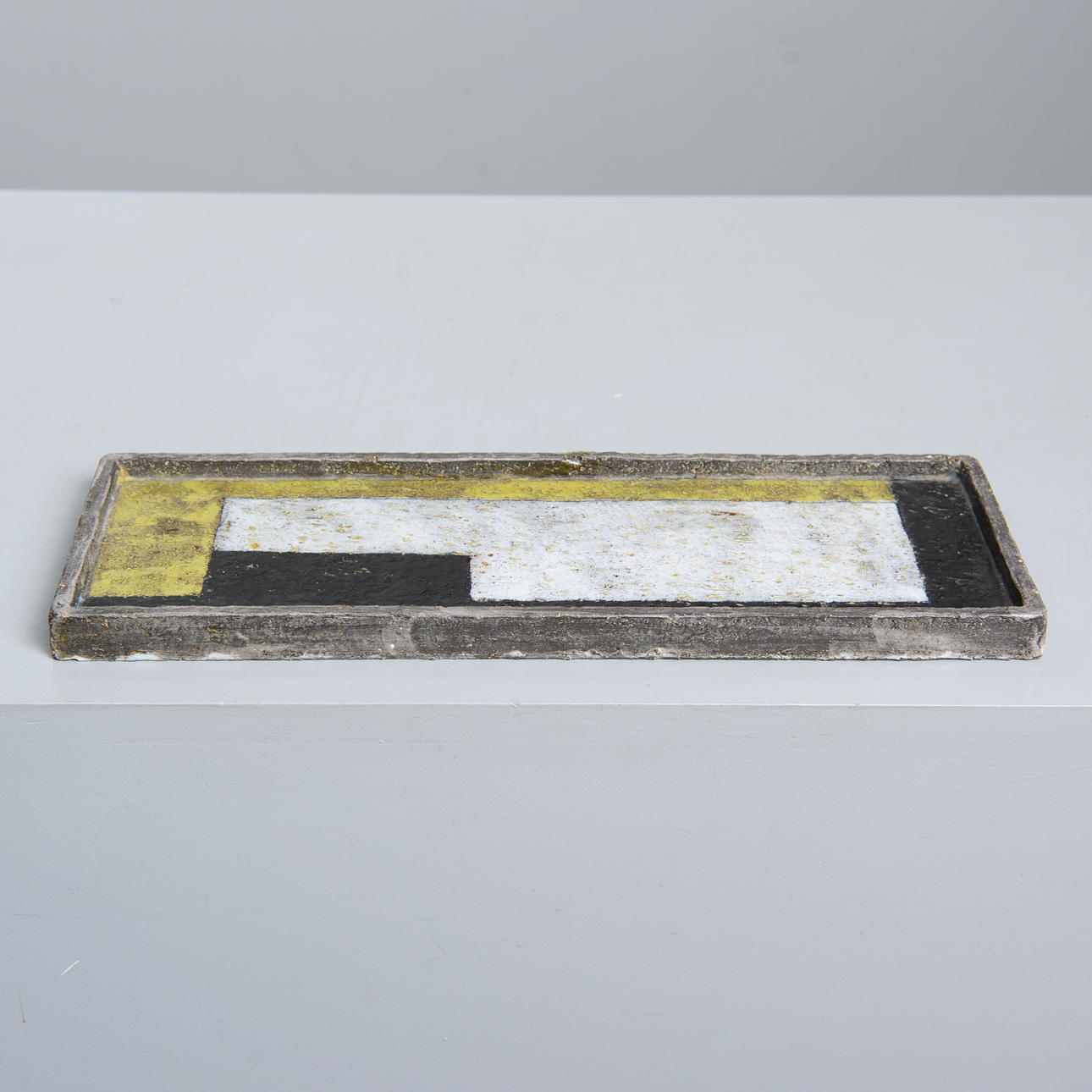
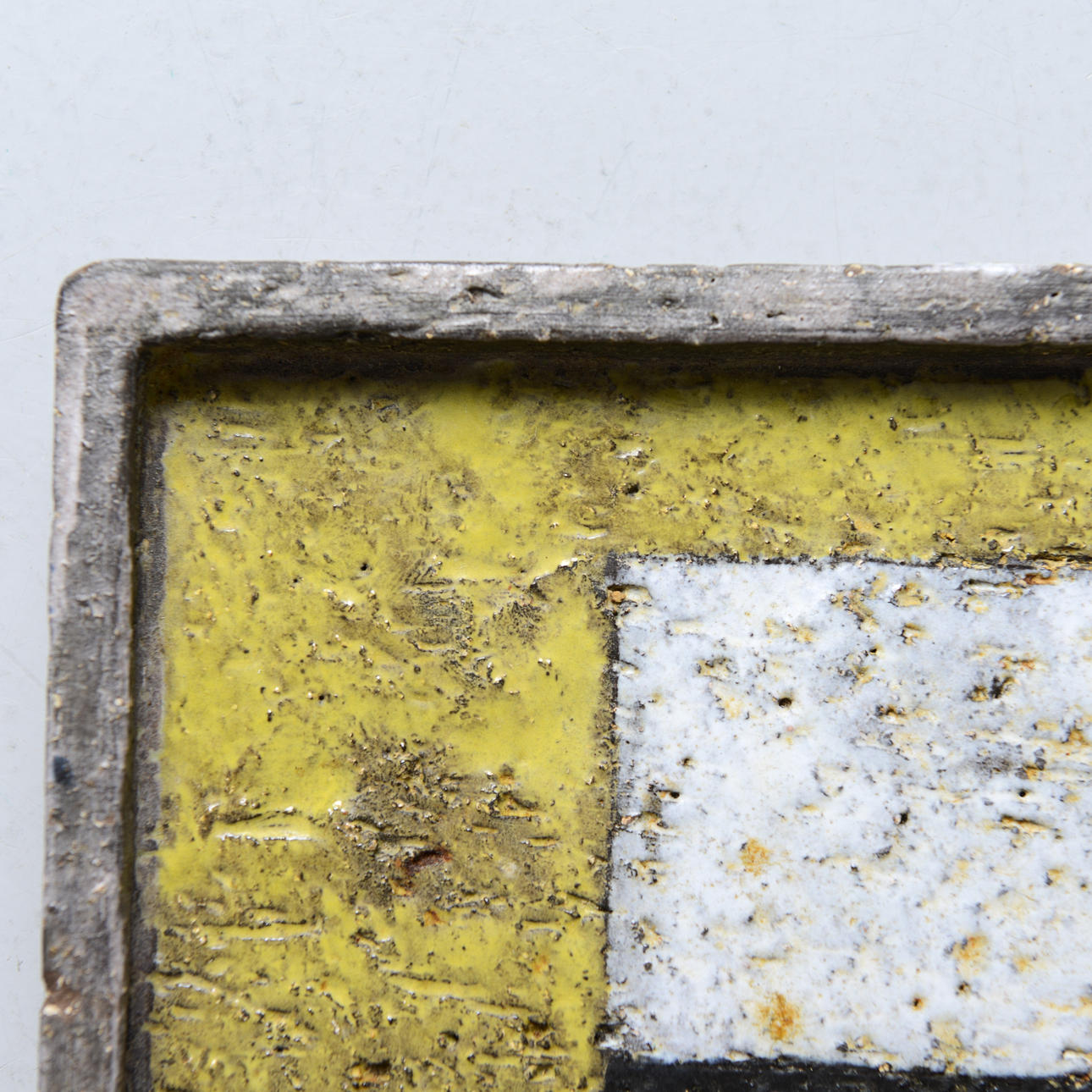
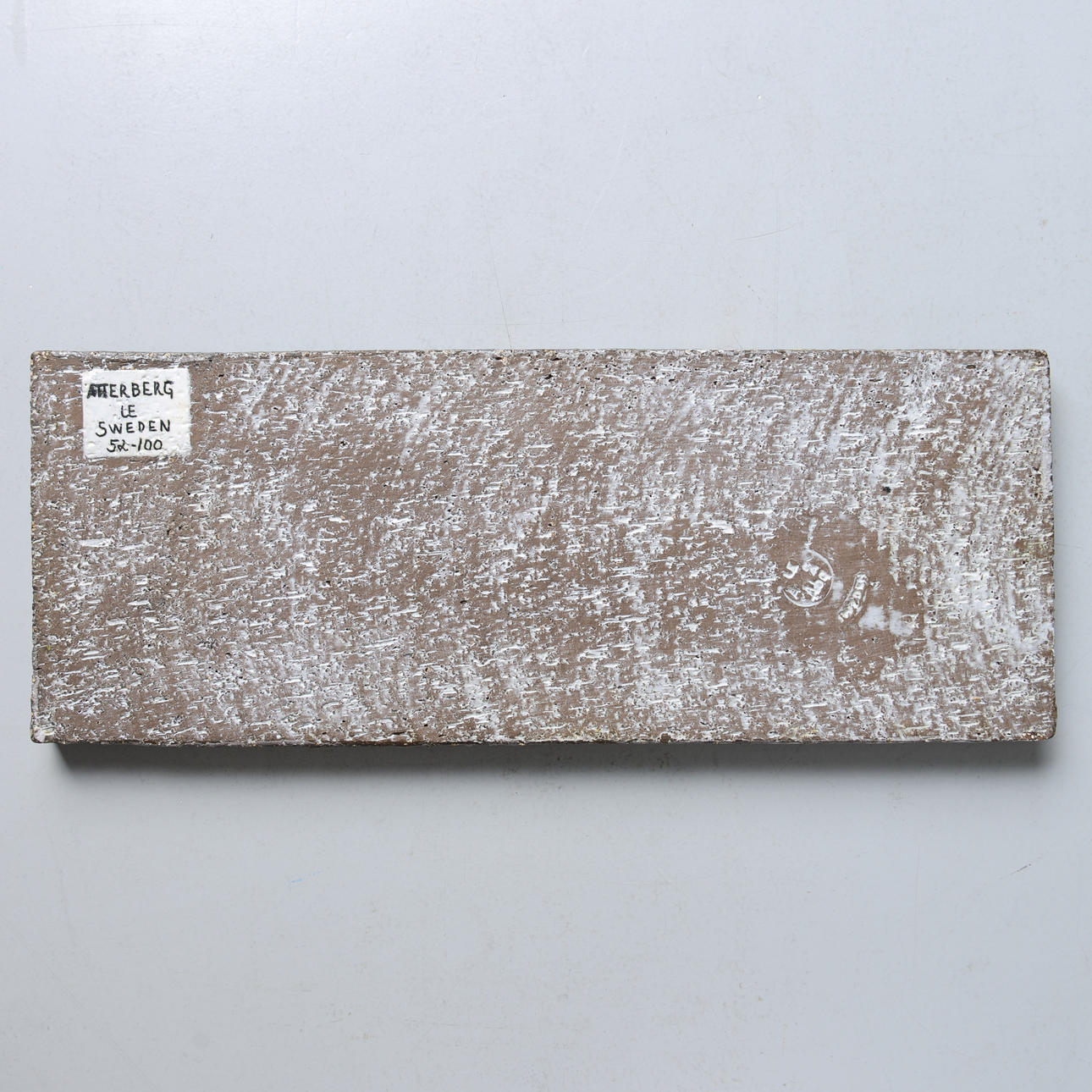
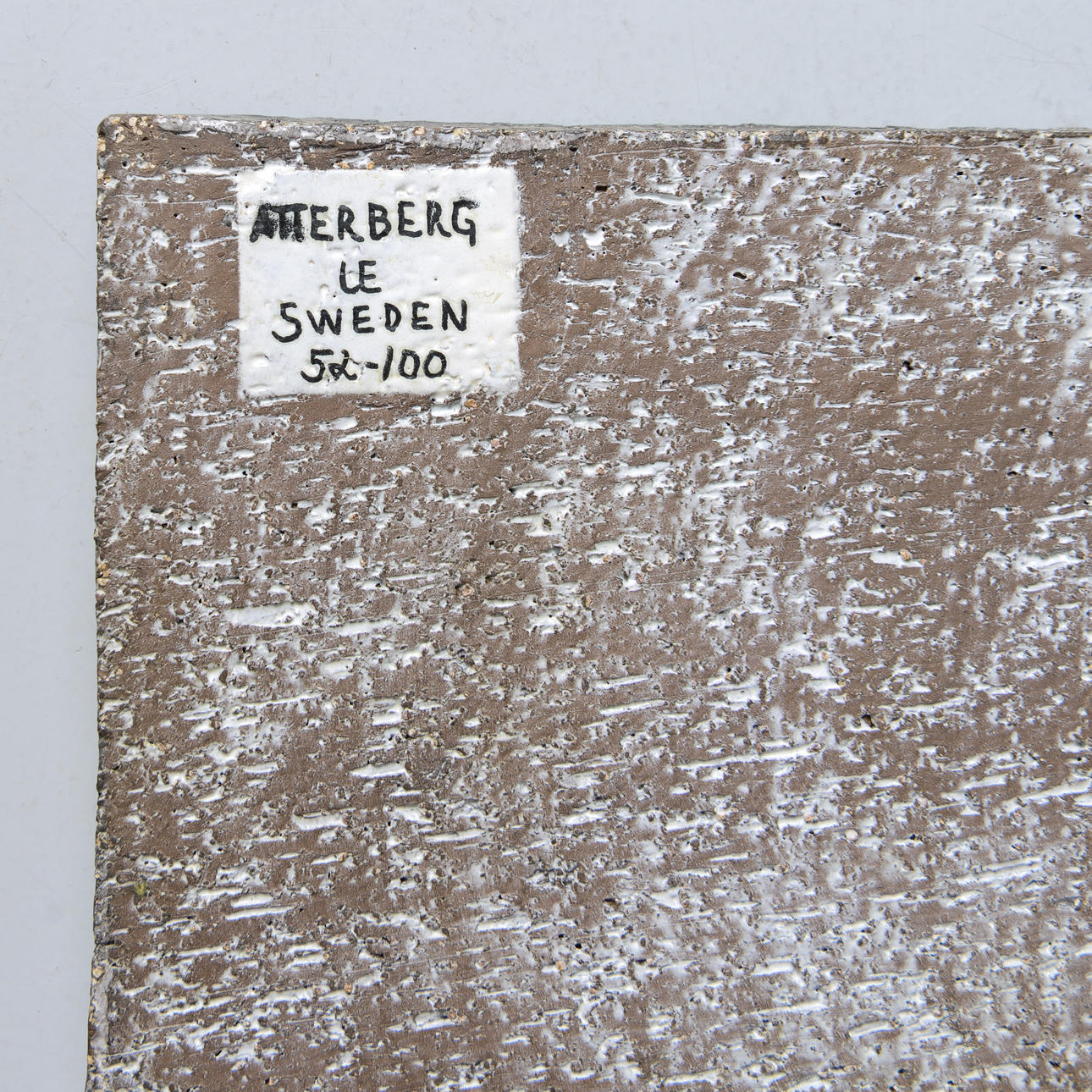
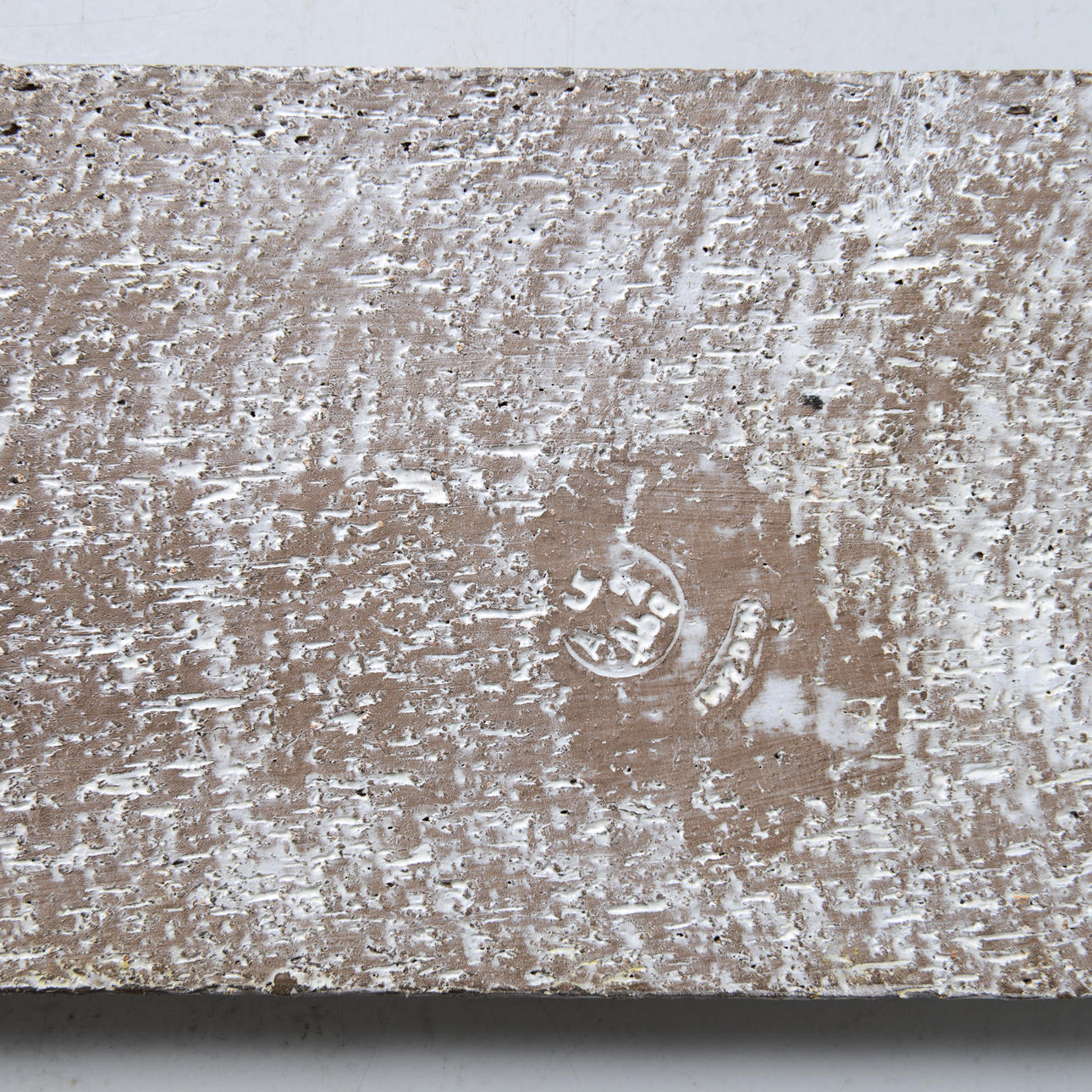
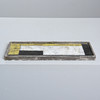
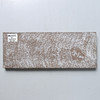
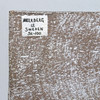
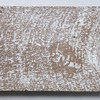
INGRID ATTERBERG. "Kort Serie", dish, model A2, Upsala-Ekeby, numbered 52/100 and signed, 1956.

Images
Description
In 1956, Upsala-Ekeby launched "Kort serie" (Short series), studio pottery in a limited, numbered, and signed edition by the three designers Hjördis Oldfors, Ingrid Atterberg, and Mari Simmulson.
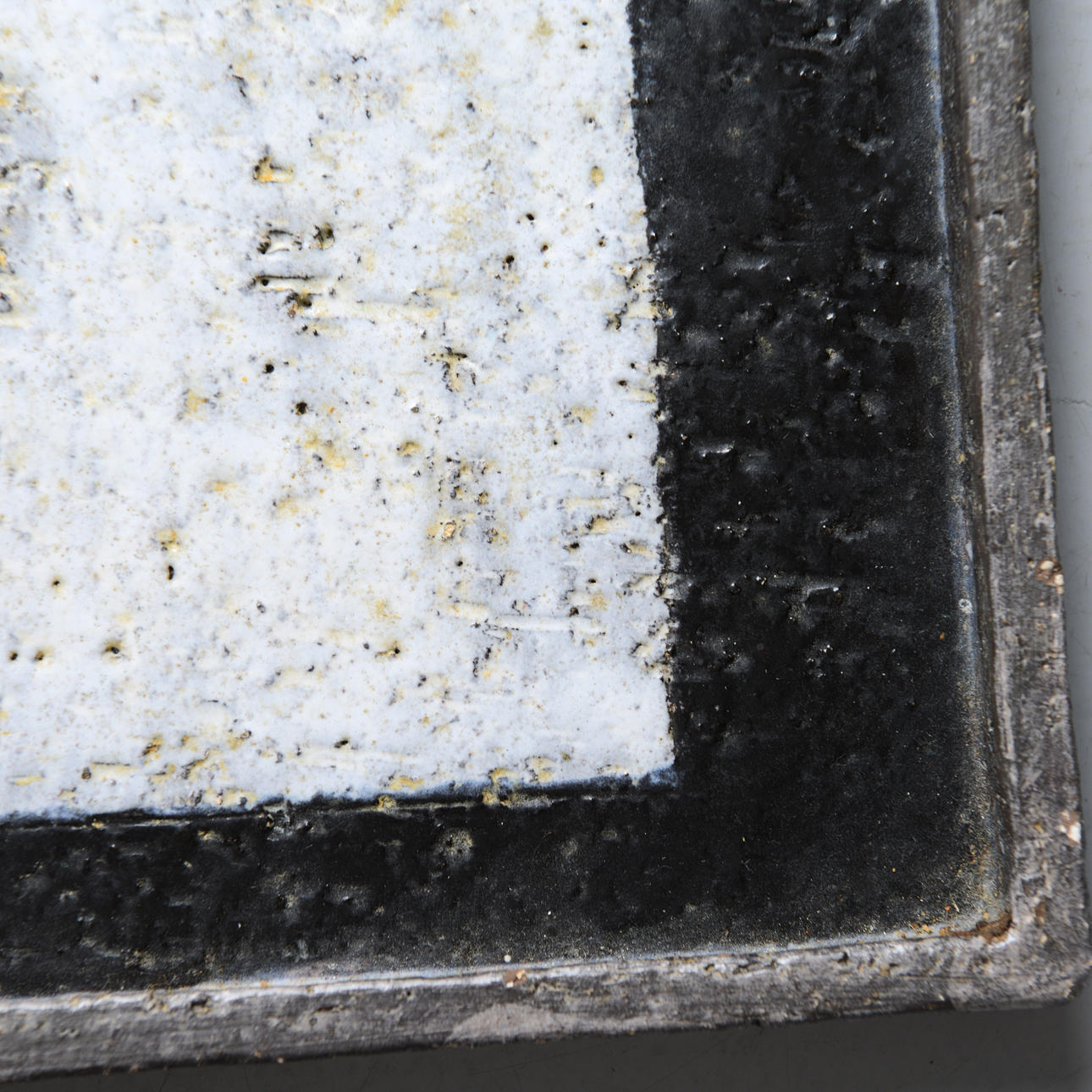
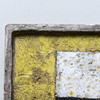
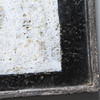
Ingrid Atterberg's short series consisted of dishes and vases in up to nine models and three patterns, totaling 26 items. Each object was numbered 1-100, in some cases 1-50. The patterns consisted of abstract lines and fields of color in a manner reminiscent of the Dutch artist Piet Mondrian, painted on coarse chamotte clay.
39 x 15 cm.
Background: The designer at Upsala-Ekeby who was closest to the clay and the material was Ingrid Atterberg (1920-2008). As the trained ceramicist she was, she experimented from the very beginning with clays, glazes, and techniques. For example, she revived black clay, a mixture of red clay and manganese oxide, and made it an effective element in many art pottery series, not just her own; she also developed a series, Sintergods, which succeeded in producing stoneware effects from the Uppland clay; she also devised a way to use the effects of chamotte clay without having to throw it on a wheel.
However, Ingrid Atterberg would not have taken her place as one of the greats in Swedish ceramics if she had not managed to combine her feel for the clay with a stylish modernist compass. This was particularly evident during the 1950s, with series such as Pepita, Domino, Pylon, Kort serie, Tricorn, Chamotte, Spira, and others. She left the factory in 1964 for other design assignments. By then, she had been there for 20 years. Eventually, she resumed ceramics in her own studio in Uppsala, where she continued her diligent experimentation with clay and glazes, but with radically different pottery as a result.
Condition
Occasional glaze flaw.
Resale right
Artist/designer
Theme
Description
In 1956, Upsala-Ekeby launched "Kort serie" (Short series), studio pottery in a limited, numbered, and signed edition by the three designers Hjördis Oldfors, Ingrid Atterberg, and Mari Simmulson.
Ingrid Atterberg's short series consisted of dishes and vases in up to nine models and three patterns, totaling 26 items. Each object was numbered 1-100, in some cases 1-50. The patterns consisted of abstract lines and fields of color in a manner reminiscent of the Dutch artist Piet Mondrian, painted on coarse chamotte clay.
39 x 15 cm.
Background: The designer at Upsala-Ekeby who was closest to the clay and the material was Ingrid Atterberg (1920-2008). As the trained ceramicist she was, she experimented from the very beginning with clays, glazes, and techniques. For example, she revived black clay, a mixture of red clay and manganese oxide, and made it an effective element in many art pottery series, not just her own; she also developed a series, Sintergods, which succeeded in producing stoneware effects from the Uppland clay; she also devised a way to use the effects of chamotte clay without having to throw it on a wheel.
However, Ingrid Atterberg would not have taken her place as one of the greats in Swedish ceramics if she had not managed to combine her feel for the clay with a stylish modernist compass. This was particularly evident during the 1950s, with series such as Pepita, Domino, Pylon, Kort serie, Tricorn, Chamotte, Spira, and others. She left the factory in 1964 for other design assignments. By then, she had been there for 20 years. Eventually, she resumed ceramics in her own studio in Uppsala, where she continued her diligent experimentation with clay and glazes, but with radically different pottery as a result.
Condition
Occasional glaze flaw.
Resale right
Artist/designer
Theme
Payment options for this item
Payment cardsBank transferDelivery
: Provide your locationInfo temporarily unavailableLoading…Provide your location to see transport options and prices.
Oops! Something went wrong.
Please try again in a moment. If it still doesn't work, contact Auctionet support.
Details
- House
- Formstad Auktioner
- Address
Gårdsfogdevägen 16
168 67 Bromma
Sweden- Placement
- Monter 5