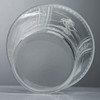
SIMON GATE. Engraved bowl with barrel, Orrefors, signed and dated 1929.
This auction is closed, but maybe you like the following items?

Images






Description
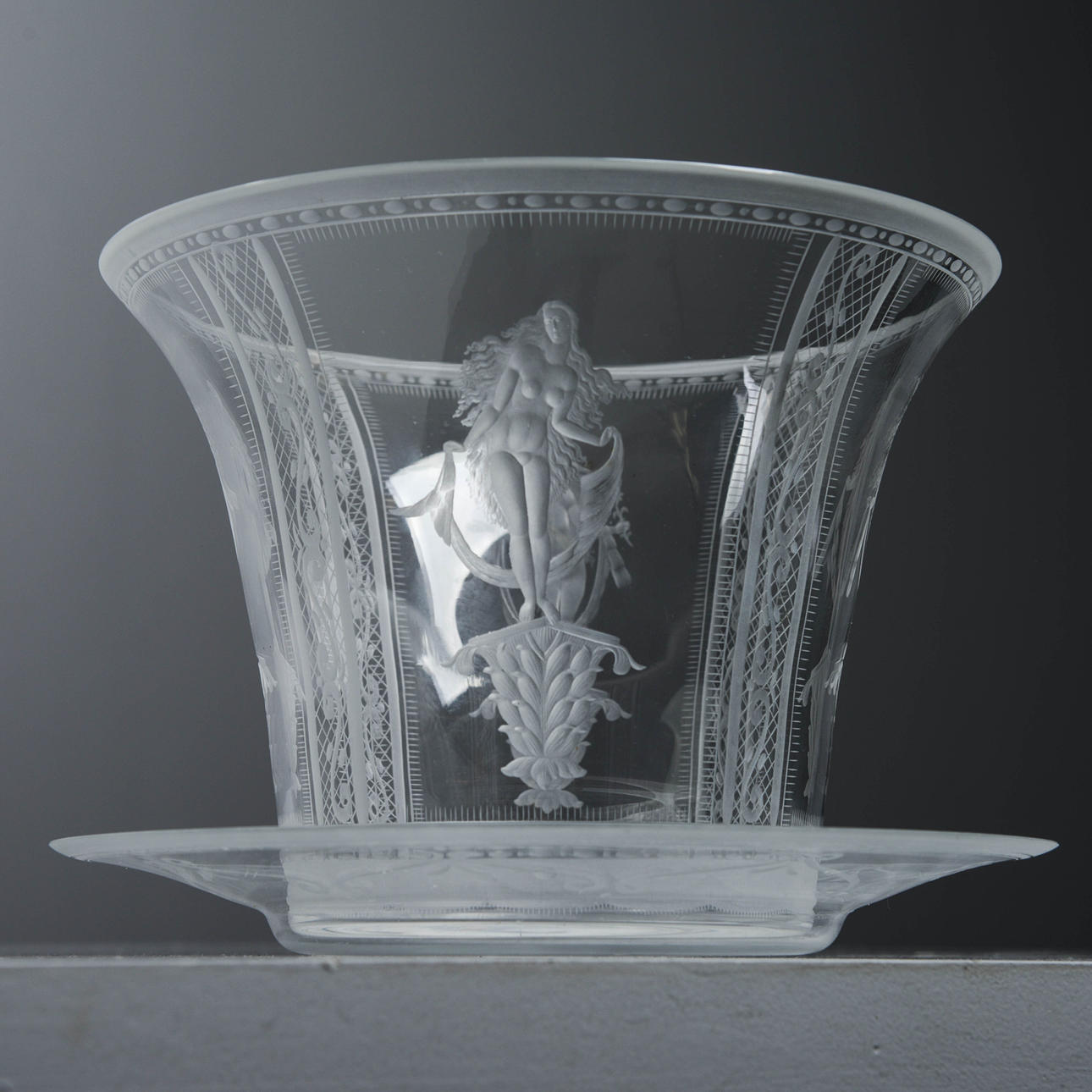
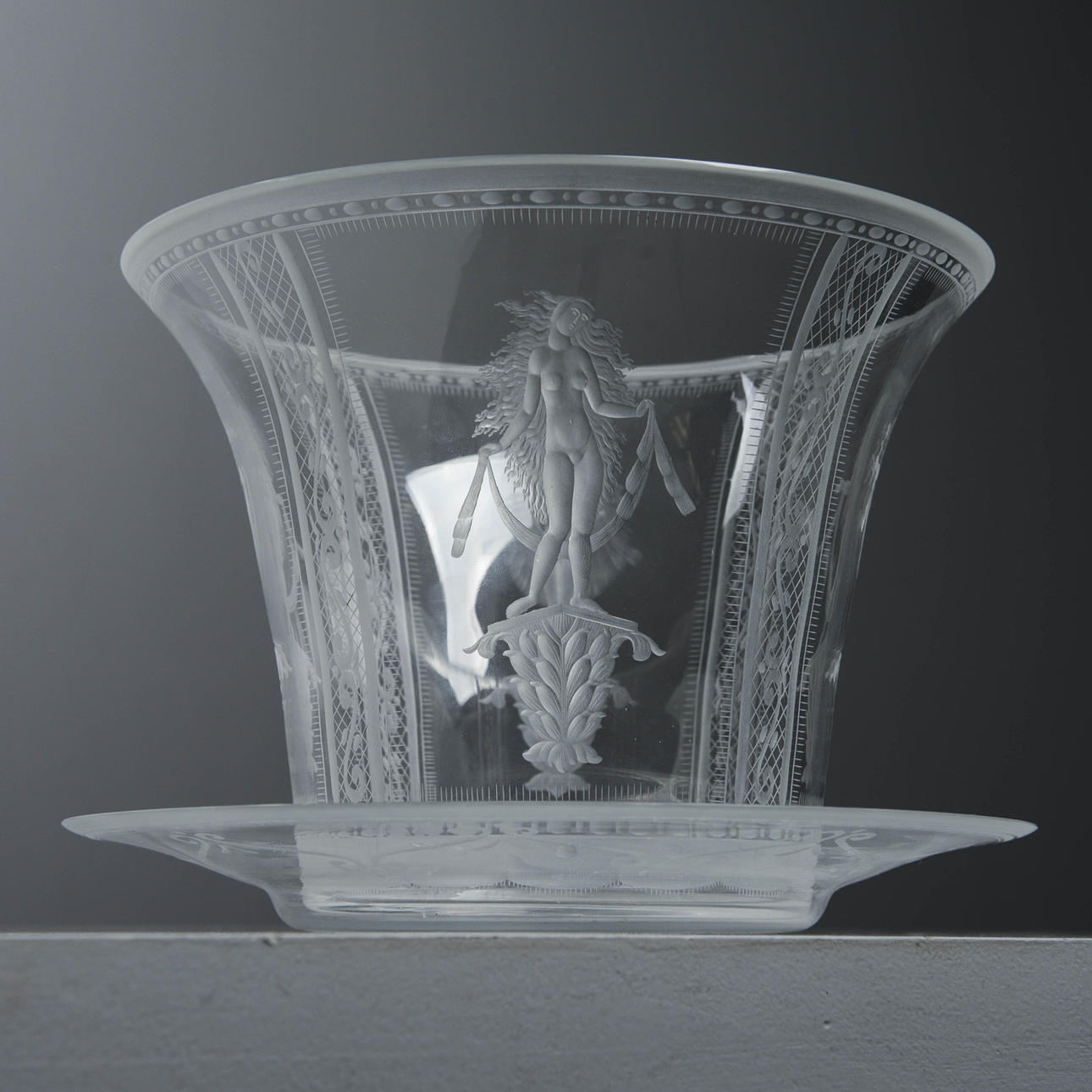
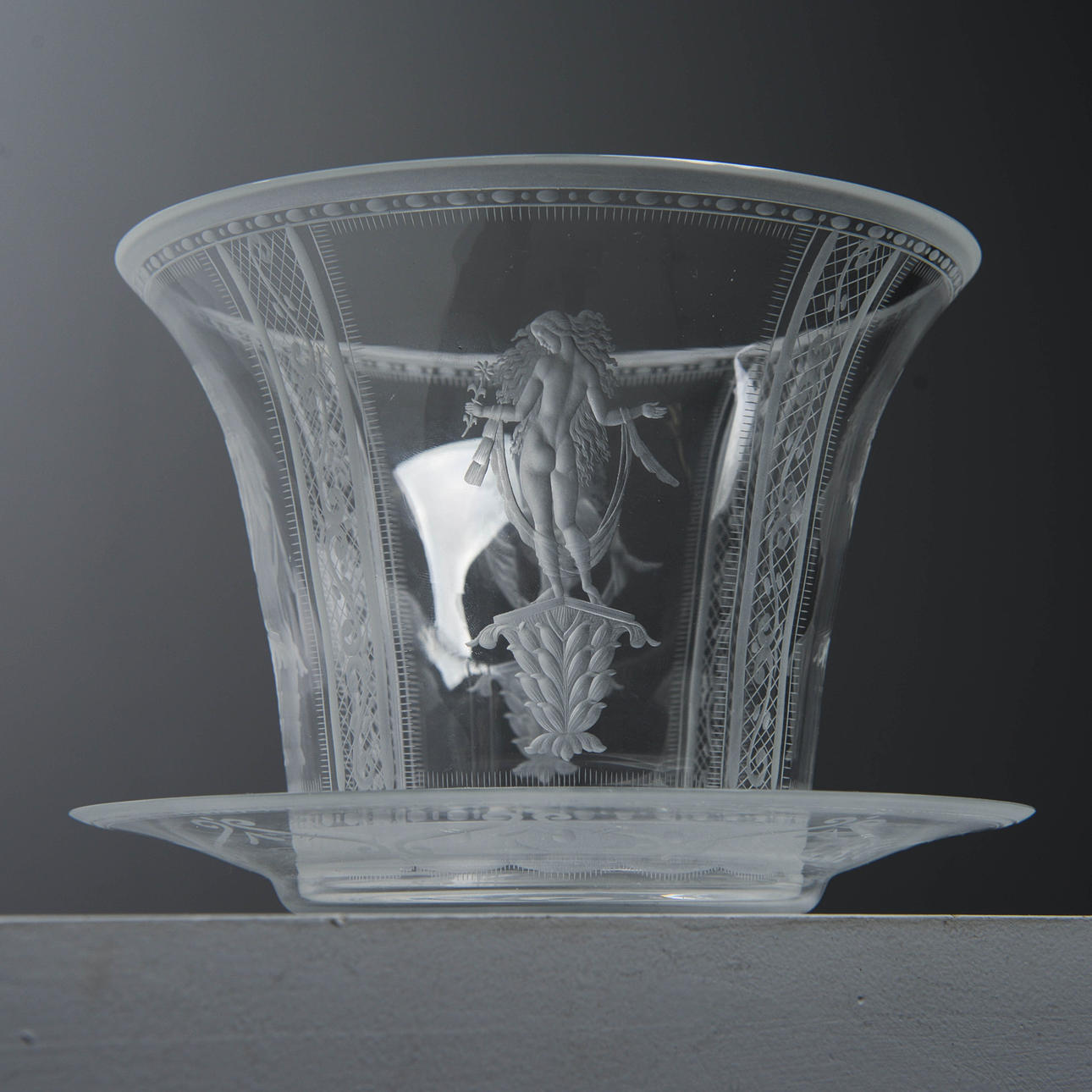
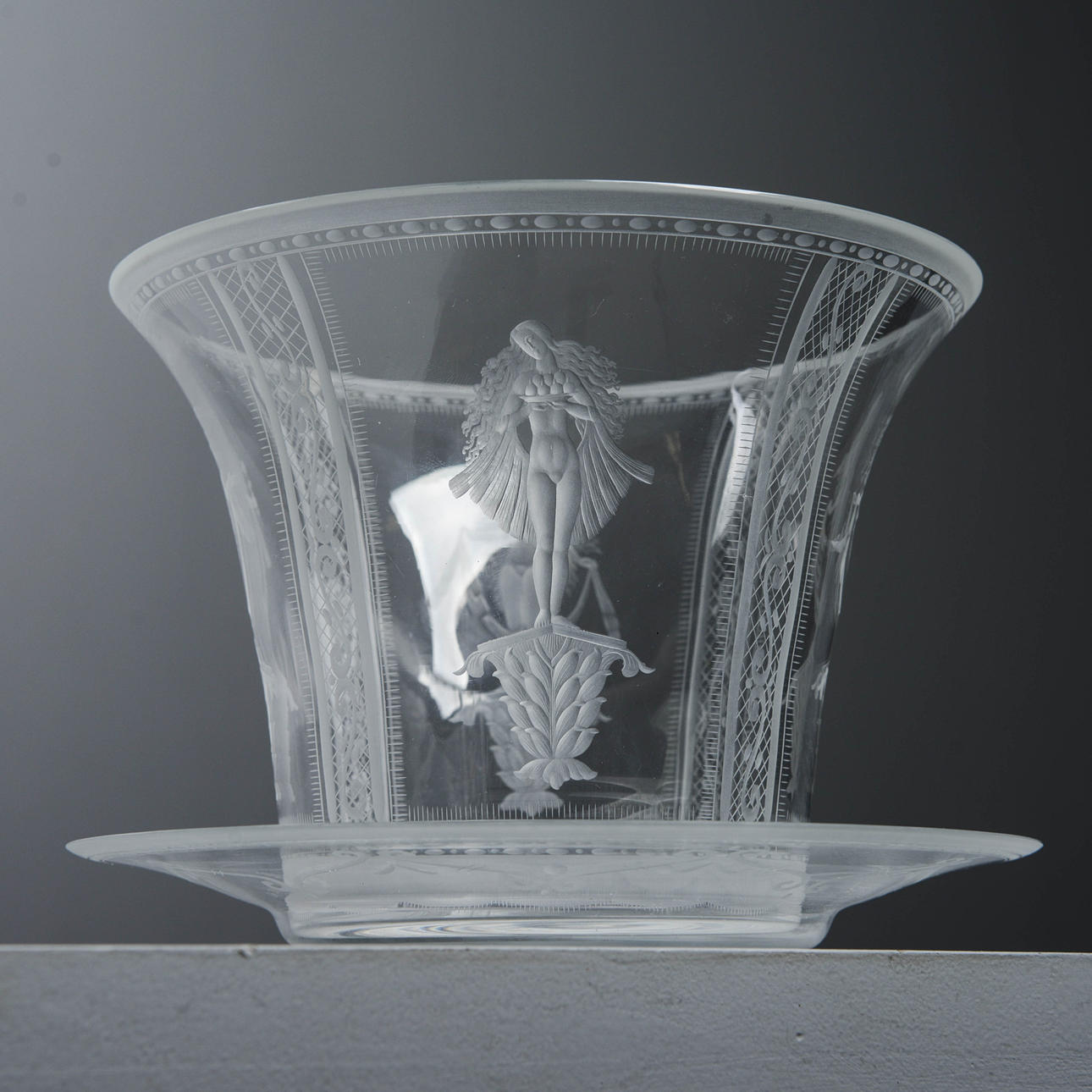
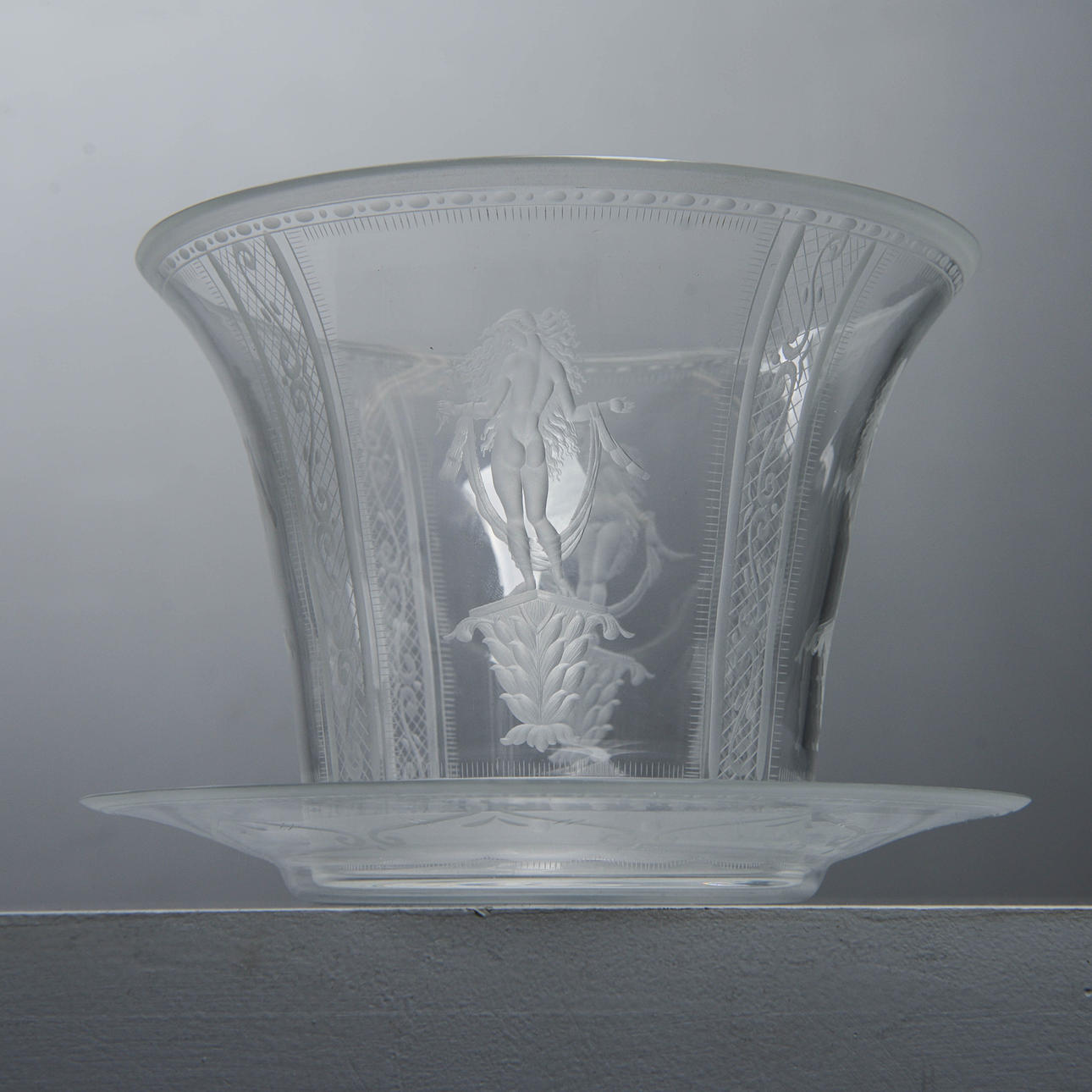
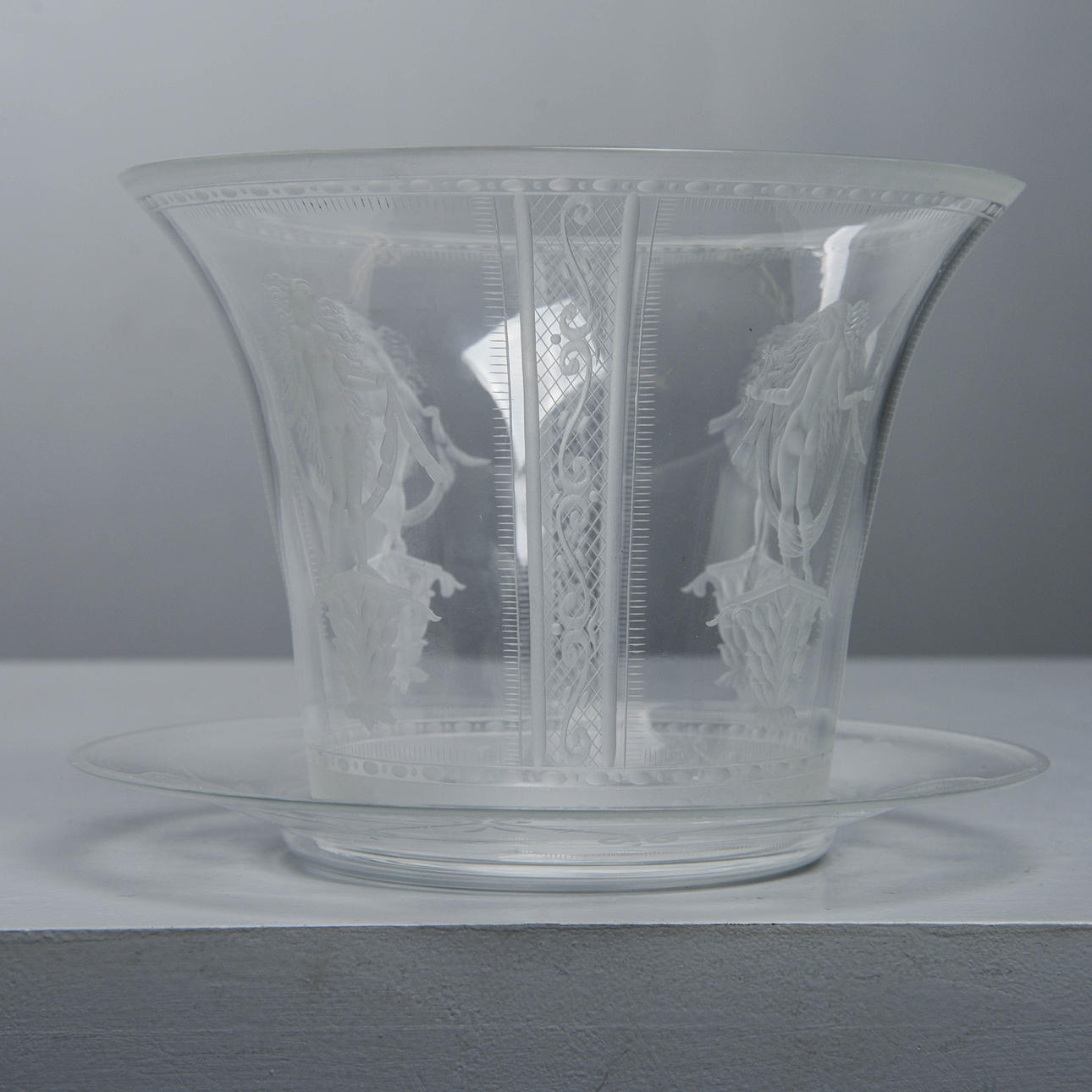
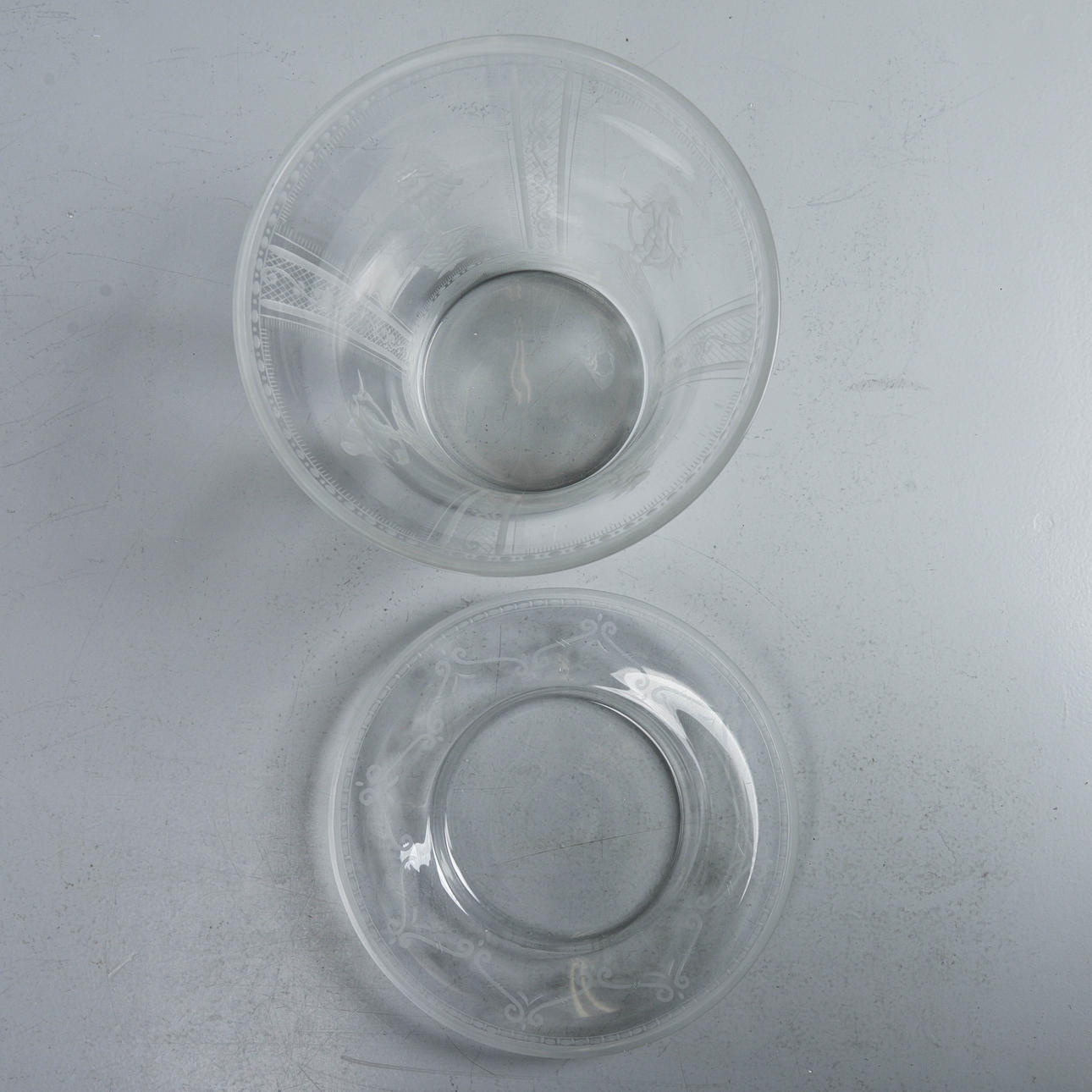
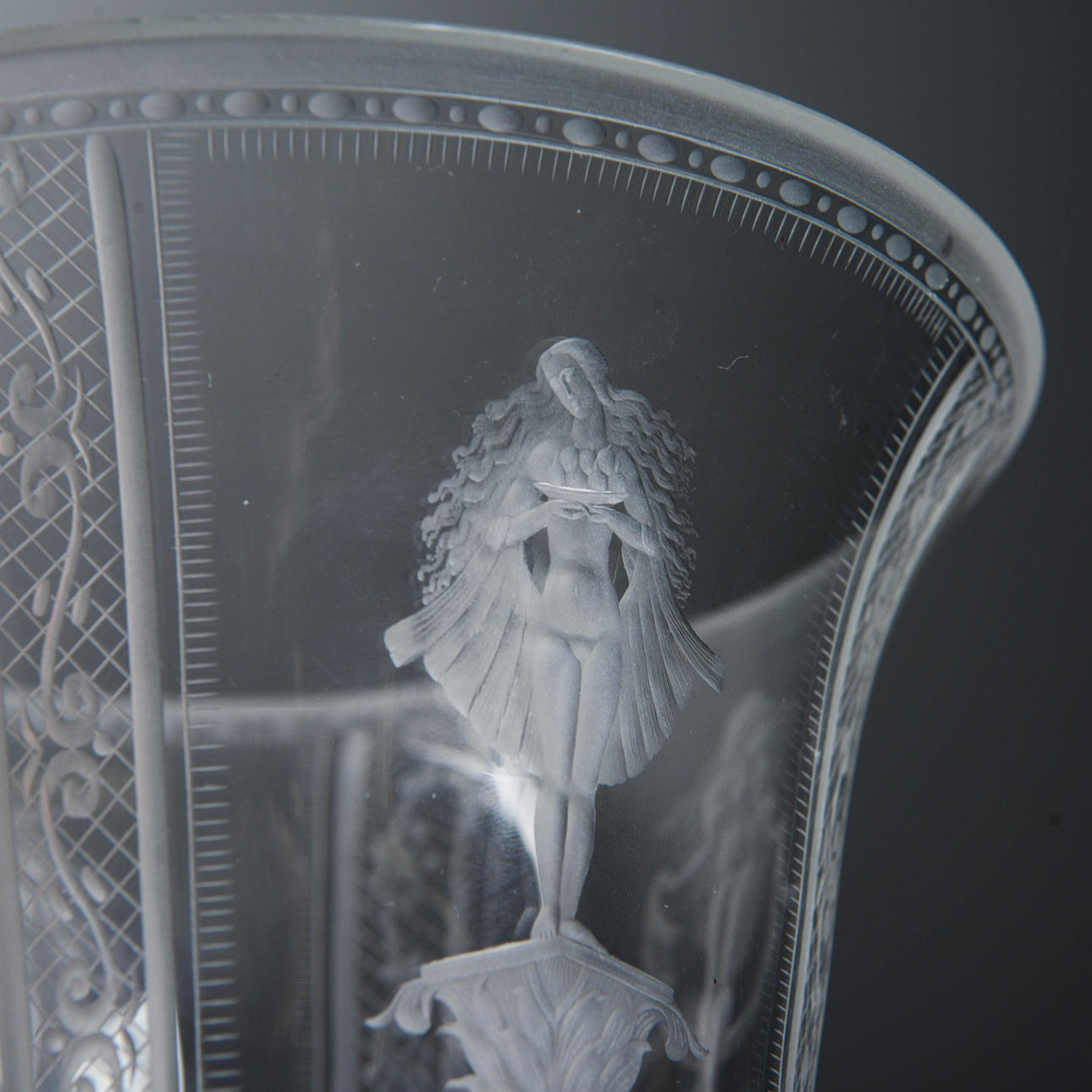
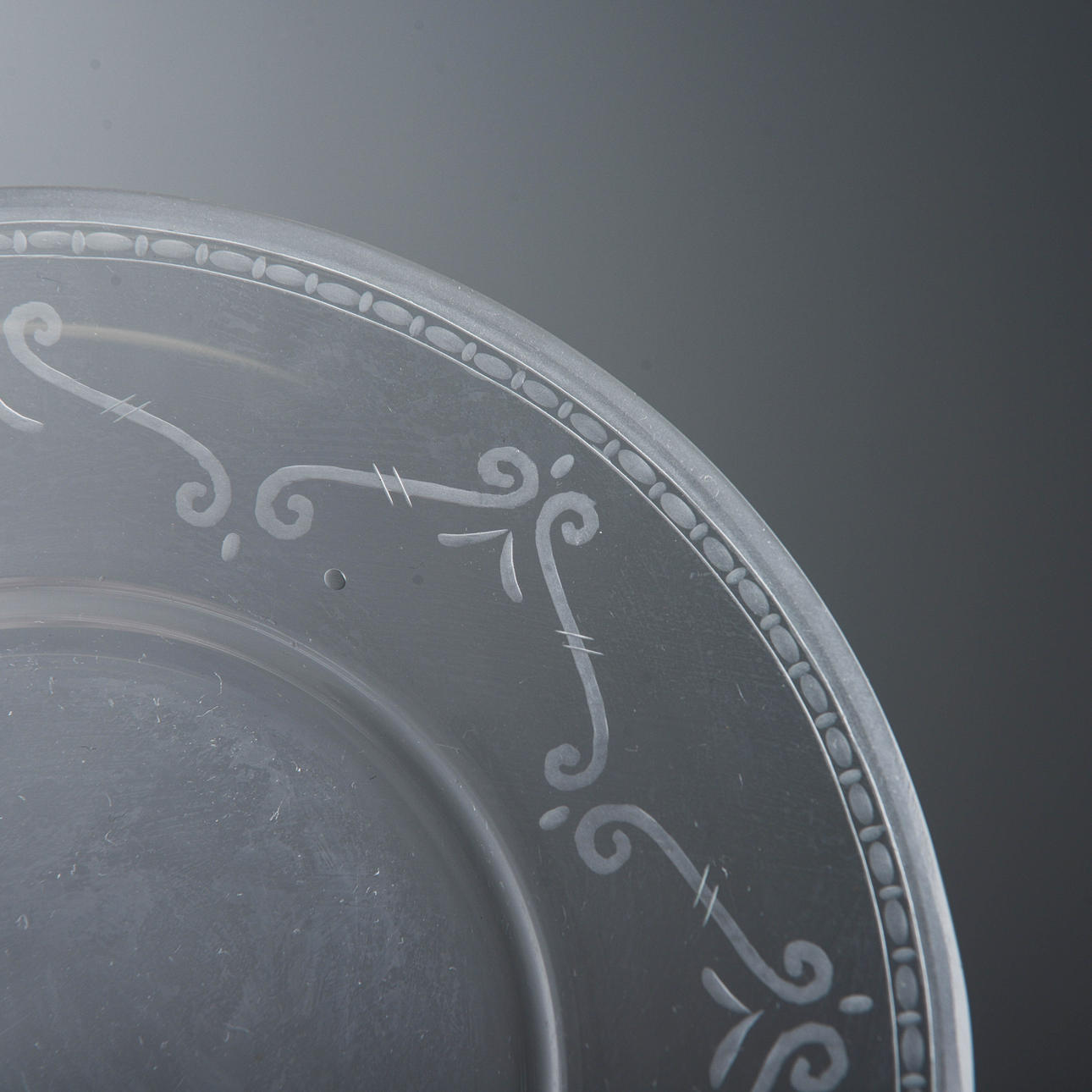
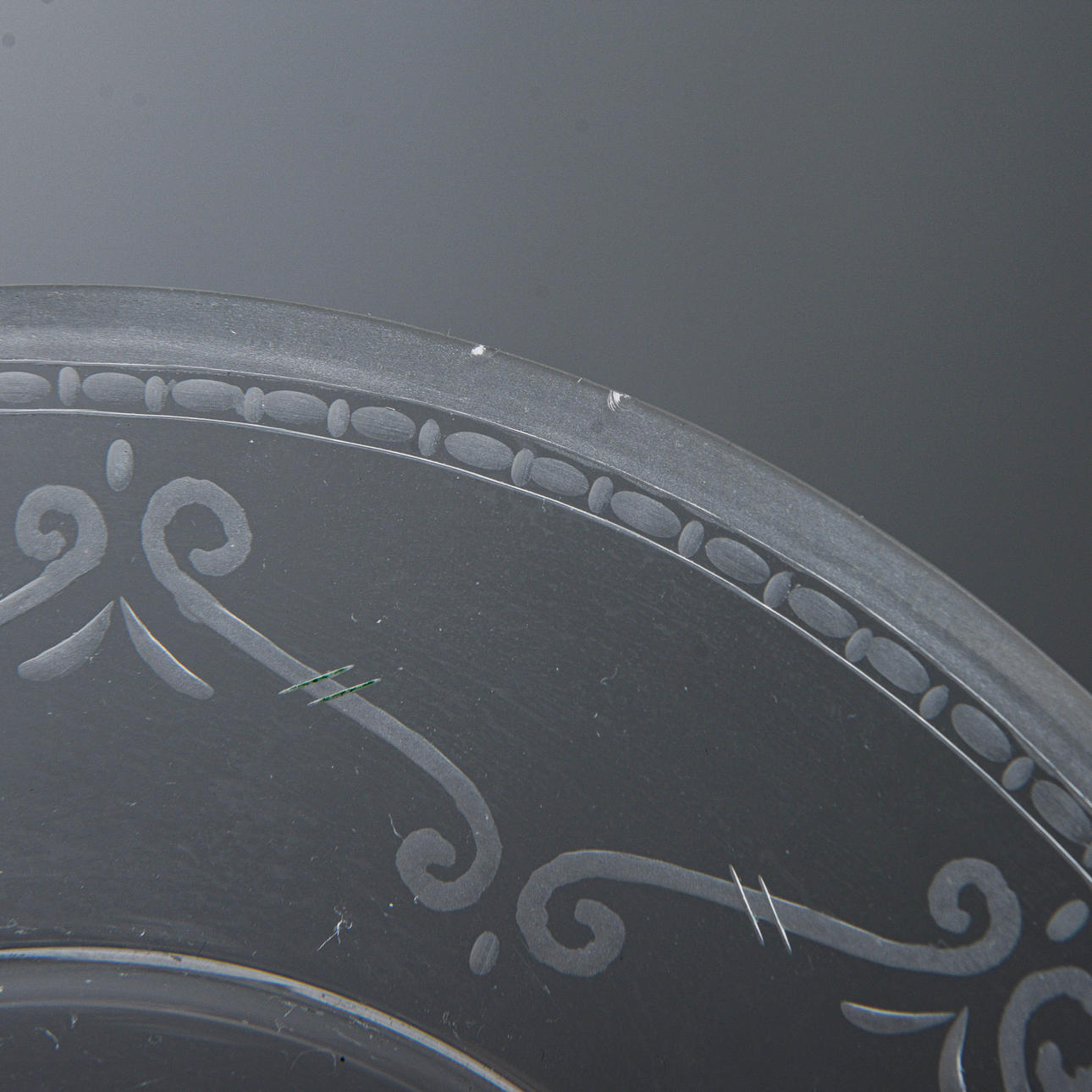
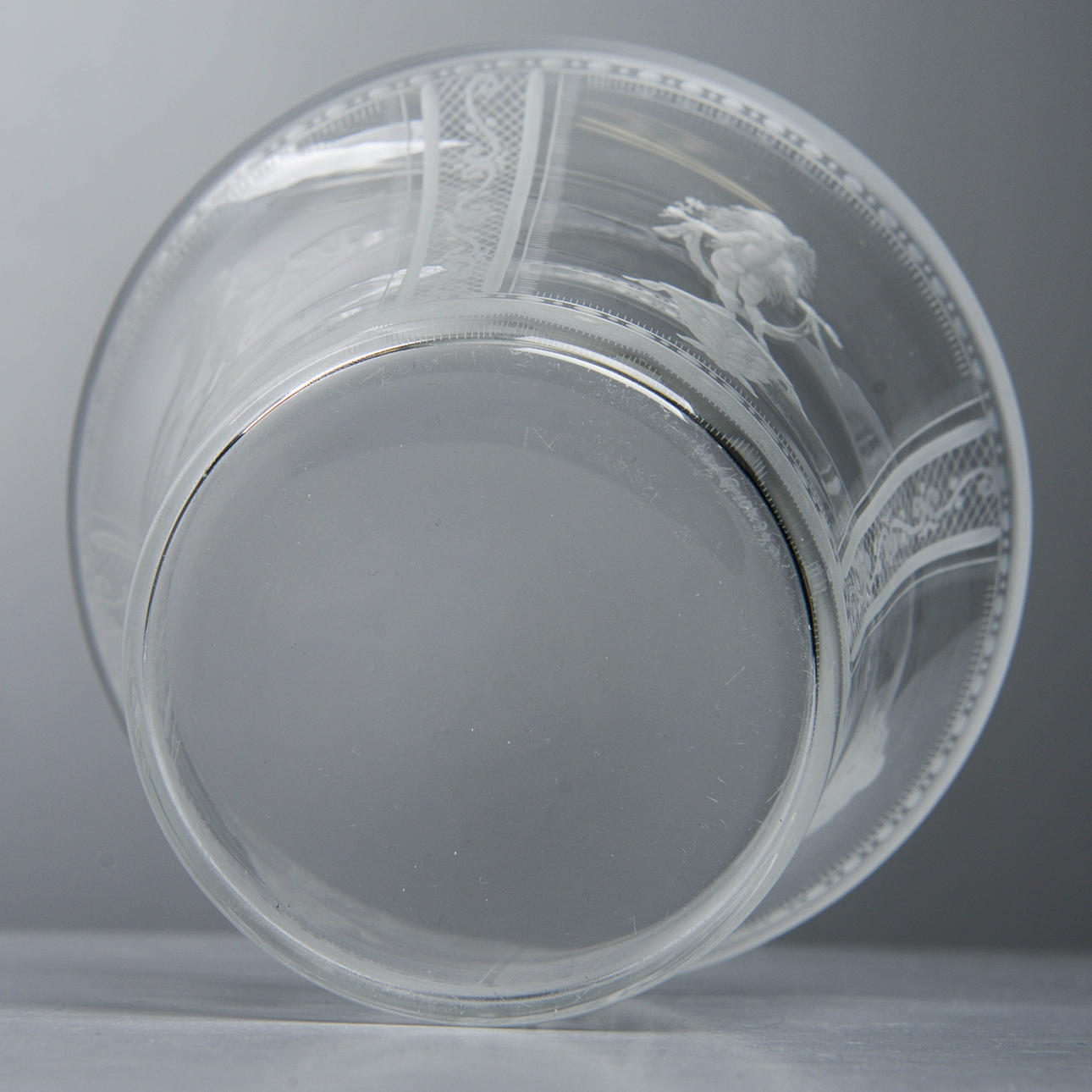
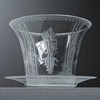
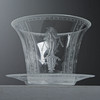
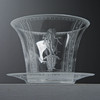
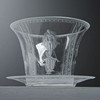
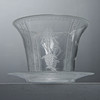
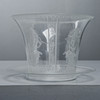
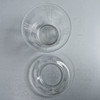
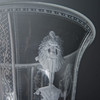
Bowl with saucer, trumpet-shaped bowl with flat bottom and saucer with upturned brim, decoration of four naked women on postaments in framed fields. Saucer with engraved decoration of loops and tablecloth. Designed in 1918, this specimen dates from 1929. Signed of.G. 107.29.P (Engraver Olof Peterson). Height 14 cm. Diametro: 18.5 cm. Dish diameter: 20 cm.
The story of how Orrefors went from a provincial glassworks with the production of window glass and glass jars for canning, to a spearhead company for advanced glass design, has been told many times. A decisive role in that story was played by Simon Gate (1883-1945). He came to the glassworks in 1915, as a relatively established artist and illustrator, but had no experience working with glass. But he quickly found himself corrected. With his participation in the birth of the grail glass around 1916, with the grail glasses he then designed, and with the engraving with which he reaped early success, and not least with his unwavering energy and zest for life, he became one of the strong forces that propelled Orrefors forward. Another was the artist Edward Hald, who came to Orrefors only a year after him. Together with the skilled craftsmen of the glassworks, they carried what would become the international breakthrough of Swedish art glass. It occurred in 1925, at the Paris World's Fair, when Gate and Hald and five glass craftsmen received a gold medal for the engraved glass on display. Swedish glass art was raised to the skies, as something completely new, a bright and clear sensualism, a much-needed reaction against the murky, over-decorated glass that dominated at the time.
Condition
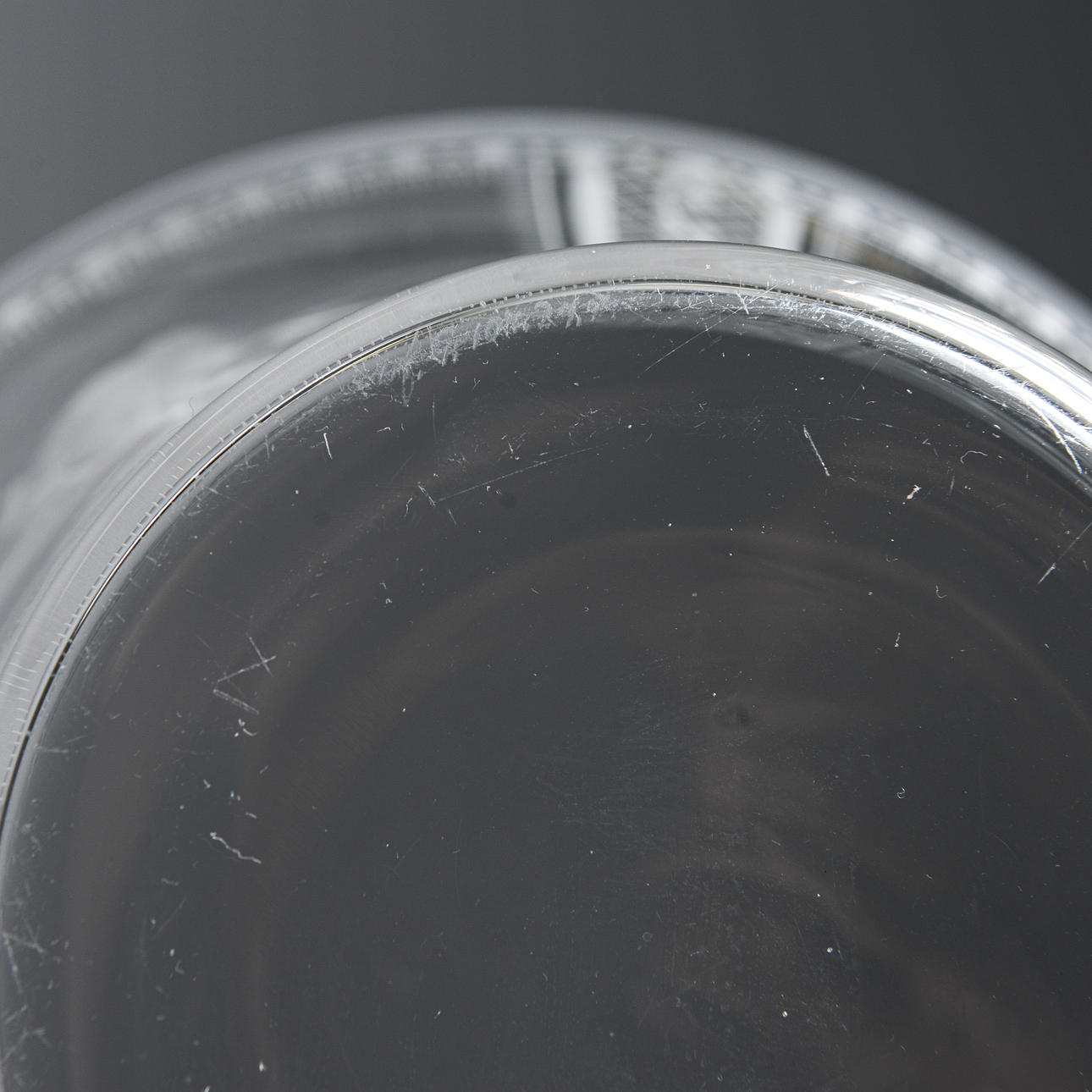
Two glass mists on the rim of the barrel, and a few scratches on the bottom of the barrel, otherwise minor wear and tear.
Resale right
Artist/designer
Theme
Do you have something similar to sell? Get your items valued free of charge!
Description
Bowl with saucer, trumpet-shaped bowl with flat bottom and saucer with upturned brim, decoration of four naked women on postaments in framed fields. Saucer with engraved decoration of loops and tablecloth. Designed in 1918, this specimen dates from 1929. Signed of.G. 107.29.P (Engraver Olof Peterson). Height 14 cm. Diametro: 18.5 cm. Dish diameter: 20 cm.
The story of how Orrefors went from a provincial glassworks with the production of window glass and glass jars for canning, to a spearhead company for advanced glass design, has been told many times. A decisive role in that story was played by Simon Gate (1883-1945). He came to the glassworks in 1915, as a relatively established artist and illustrator, but had no experience working with glass. But he quickly found himself corrected. With his participation in the birth of the grail glass around 1916, with the grail glasses he then designed, and with the engraving with which he reaped early success, and not least with his unwavering energy and zest for life, he became one of the strong forces that propelled Orrefors forward. Another was the artist Edward Hald, who came to Orrefors only a year after him. Together with the skilled craftsmen of the glassworks, they carried what would become the international breakthrough of Swedish art glass. It occurred in 1925, at the Paris World's Fair, when Gate and Hald and five glass craftsmen received a gold medal for the engraved glass on display. Swedish glass art was raised to the skies, as something completely new, a bright and clear sensualism, a much-needed reaction against the murky, over-decorated glass that dominated at the time.
Condition
Two glass mists on the rim of the barrel, and a few scratches on the bottom of the barrel, otherwise minor wear and tear.
Resale right
Artist/designer
Theme
Do you have something similar to sell? Get your items valued free of charge!