- Temas y subastas en sala
- /
- Heinz Sevenich - Collection Part II
Heinz Sevenich - Collection Part II
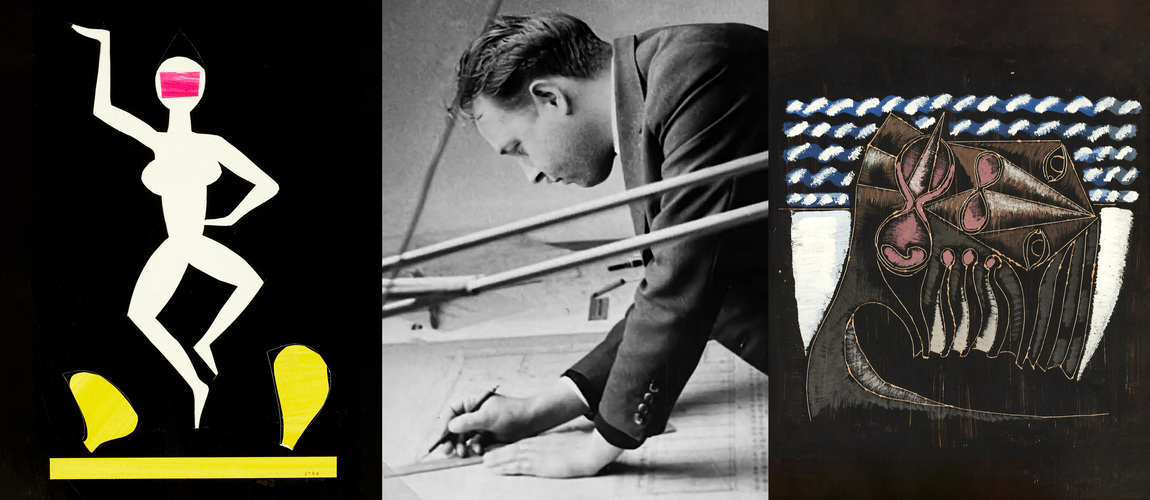
During Crafoord Auktioner Stockholm’s visit and valuation at the home of the distinguished architect Heinz Sevenich in Aachen in western Germany, near the borders of Belgium and the Netherlands, it quickly became clear that we were facing an exceptional discovery, something out of the ordinary: a collection of extraordinary scope and character.
Heinz Sevenich (1935-2023) was a mystery. Or rather: the quantity, breadth, and height of the artistic output he left behind astonished the family. His constantly flowing creativity was admittedly obvious and did not stop at paintings and sculptures. Everything from cigarette packets to branches from the forest was transformed into art objects, and his painterly imagination colored both walls and ceilings in the family’s house, which he had designed himself. But still. The studio and workshop in the yard and the room in the attic, reached by a ladder, had been his private universe. Going through them now was a dizzying discovery - thousands of artworks. Everything carefully archived. On the back of many works there was even a detailed drawing explaining how and with what thought it had been created.
Heinz Sevenich was born in 1935 in Aachen in western Germany. As a draftsman and architect, he contributed significantly to the development of Aachen’s cityscape, including the innovative university hospital, one of the largest and most technically advanced in Europe, which stylistically can be said to be related to the contemporary Centre Pompidou in Paris.
How he could at the same time develop himself and be so remarkably productive as an artist is simply fascinating. He burned for the open field of imagination in art and the liberating power beyond architecture’s stricter regulations.
Travels through large parts of Europe, the Middle East, and Asia, often together with his wife Margret, were a constant source of inspiration. A journey to Cambodia through Turkey, Iran, Pakistan, India, and Thailand made an especially strong impression.
From that geography, parallels can be drawn to Heinz Sevenich’s boundary-crossing voyages of discovery in his own creative work, which elegantly navigated between varying styles, methods, and materials. In different phases, he worked with sculptures in wood, stone, plaster, and mechanical parts; he created images in everything from oil, gouache, and tempera to charcoal, ink, graphite, and pastel; he experimented with various utility materials, made collages, formulated form analysis, and created philosophical and literary works.
His talent and inventiveness were evident early on. He made abstract artworks as a teenager. Held several patents. Made furniture and tools. Everywhere he saw opportunities to improve and beautify. Among much else, this resulted in a series of exhibitions, both solo and with the artist group Rhombus in Aachen.
In addition to his own works, Heinz Sevenich’s collection includes ethnographic objects from his many travels. The combination of an incessantly exploring creative drive and artistic stature makes it unique. It is more than a collection. It is an art treasure.