)
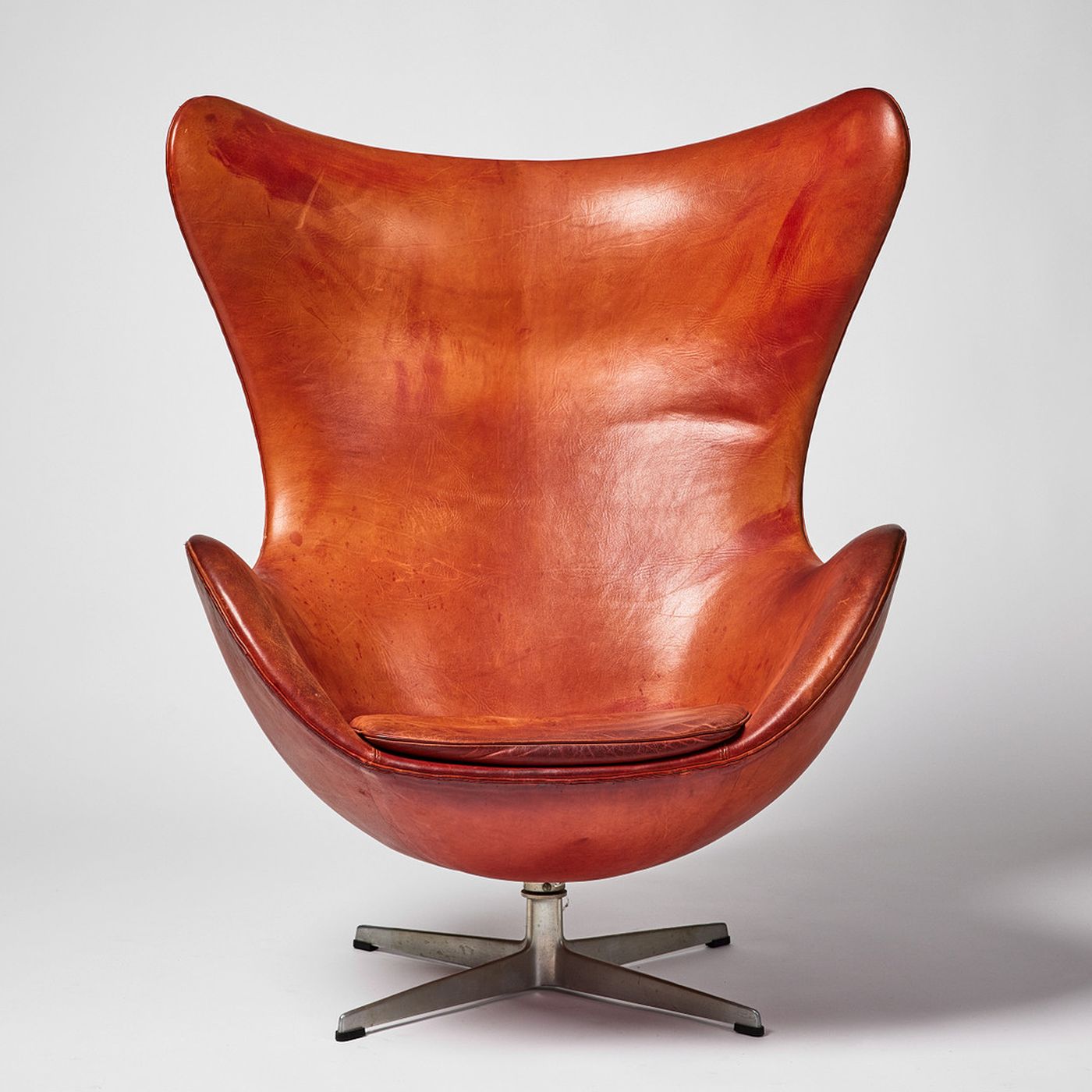
Step off the bustling streets of Copenhagen and into the lobby of the Radisson Collection Royal Hotel. Amid the cool marble and polished aluminium, you’ll notice a cluster of high-backed pods that seem to hover above star-shaped bases. Slip into one and the city noise fades: this is the egg chair, unveiled here in 1958 by Danish architect Arne Jacobsen.
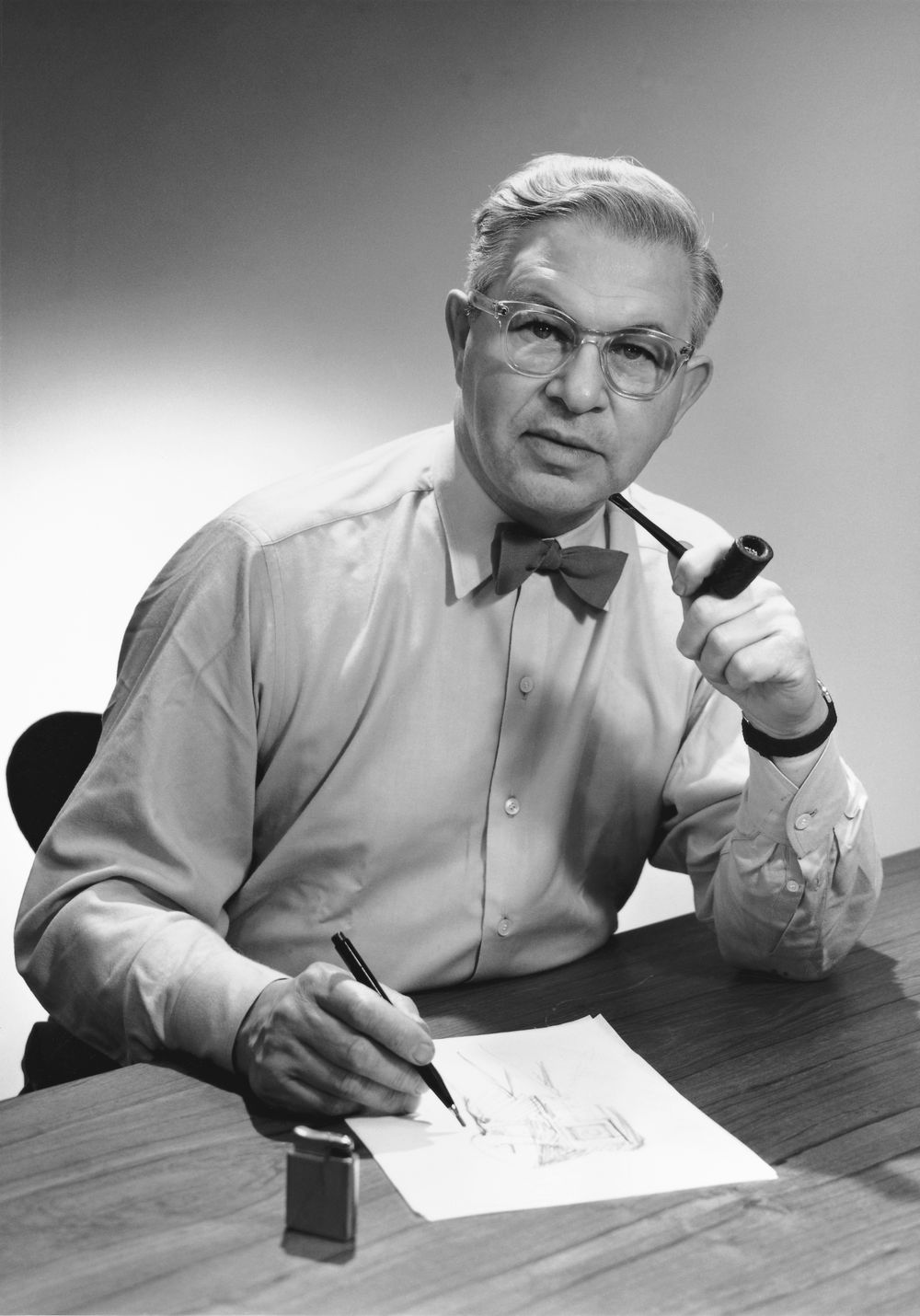
The man behind the chairs. © Courtesy of Fritz Hansen
Unlike the hard-edged modernism dominating post-war Europe, Jacobsen’s chair wrapped visitors in curved comfort – an architectural hug that announced a fresh, human-centred chapter for design.
From Plywood Experiments to a Sculptural Landmark
Before cracking the egg (forgive the solitary pun), Jacobsen had already revolutionised seating with the plywood Ant (1952) and Series 7 (1955). Both proved that mass-produced furniture could feel fluid and organic. His next commission, which was a top-to-toe design of SAS’s Royal Hotel, gave him a rare blank canvas. And this wasn’t an opportunity he was going to waste.
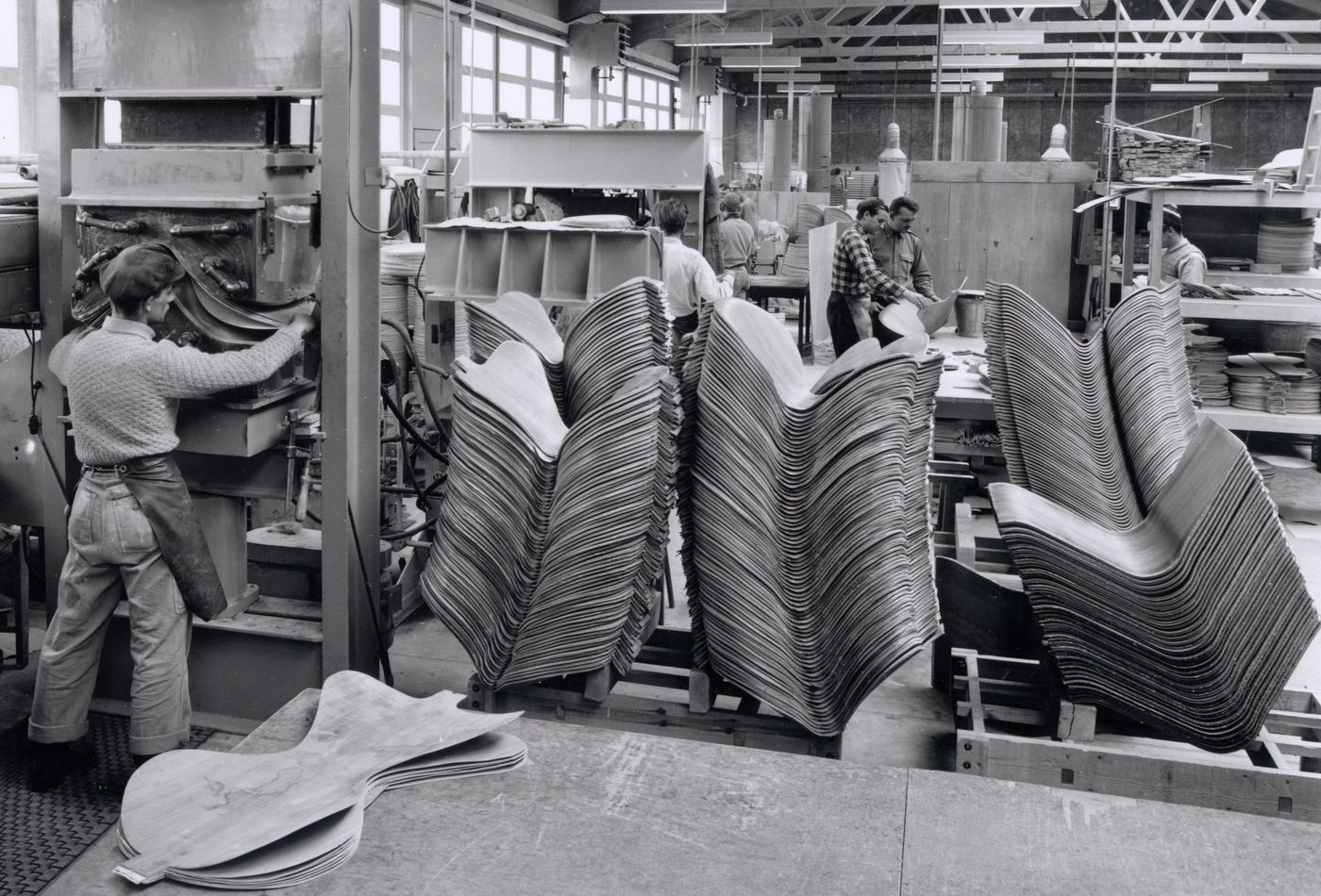
Series 7 chairs in production. © Courtesy of Fritz Hansen
Jacobsen insisted on controlling everything: building façade, doorknobs, textiles, and of course the lobby furniture. Sketches reveal an aim to combine privacy and elegance: a tall-back shell that shields conversation yet swivels with ease. Working with legendary manufacturer Fritz Hansen, he rendered the envisioned form in reinforced fibreglass, a daring material for the era.
Prototyping the egg chair demanded ingenuity that bordered on sculpture. In Jacobsen’s garage, assistants shaped chicken wire around plaster cores until the contour “felt right.” Fritz Hansen then laminated fibreglass with cold-foam padding and tailored leather or wool upholstery over the shell – techniques still in use for today’s editions.
The result was remarkably light (about 20 kg) yet structurally sound enough for constant hotel traffic. Jacobsen paired it with the lower-slung Swan chair and organic coffee tables, creating a lobby tableau that softened modernist severity without sacrificing polish.
Did you know?
The Egg Chair was created in 1958 for the SAS Royal Hotel, with Jacobsen designing everything from the façade to the furniture.
Prototypes were shaped with chicken wire and plaster before being produced in lightweight fibreglass.
A 1959 leather Egg sold for £52,500 in 2023, and anniversary editions have doubled in value.
Pop-Culture Cameos and Crice-tag validation
Cinema, television, and fashion quickly adopted the chair’s futuristic charisma. Popularity has only reinforced market value. At Phillips London in 2023, a 1959 leather Egg from an executive office hammered at £52,500.
Even late-production pieces rise steadily: limited “Jubilee” editions launched for the design’s 50th anniversary in 2008 already trade at twice their original retail price. As Auctionet’s round-ups on record art prices remind us, true icons don’t merely retain value, they compound it.
How to Recognise (and Care for) an Authentic Egg

Keep your eyes peeled for leather patina, hand stitched ridge and recline springs.
Maker’s plaque
What to look for: Fritz Hansen metal tag (post-’80s) or foil sticker (’60s–’70s) under seat
Why it matters: Confirms factory provenance
Perimeter seam
What to look for: Hand-stitched ridge on early models
Why it matters: Signals first-generation production
Tilt mechanism
What to look for: Recline spring on lounge versions
Why it matters: Adds €1k–€2k in value
Upholstery
What to look for: Original leather patina or rare Kvadrat wools
Why it matters: Can double hammer price
Provenance
What to look for: SAS Royal Hotel examples fetch premiums
Why it matters: Museum-level collectability
Condition is critical. Re-foaming is acceptable if it preserves original fabric; full re-upholstery should be documented by a certified restorer.
A Wider Denmark Design Ecosystem
Jacobsen’s Egg belongs to a broader Danish golden age that blended craft with industrial optimism – think Hans Wegner’s Papa Bear, Finn Juhl’s Chieftain, Poul Henningsen’s Artichoke lamp. Each balanced sculptural flair with democratic intent: good design for everyday life.
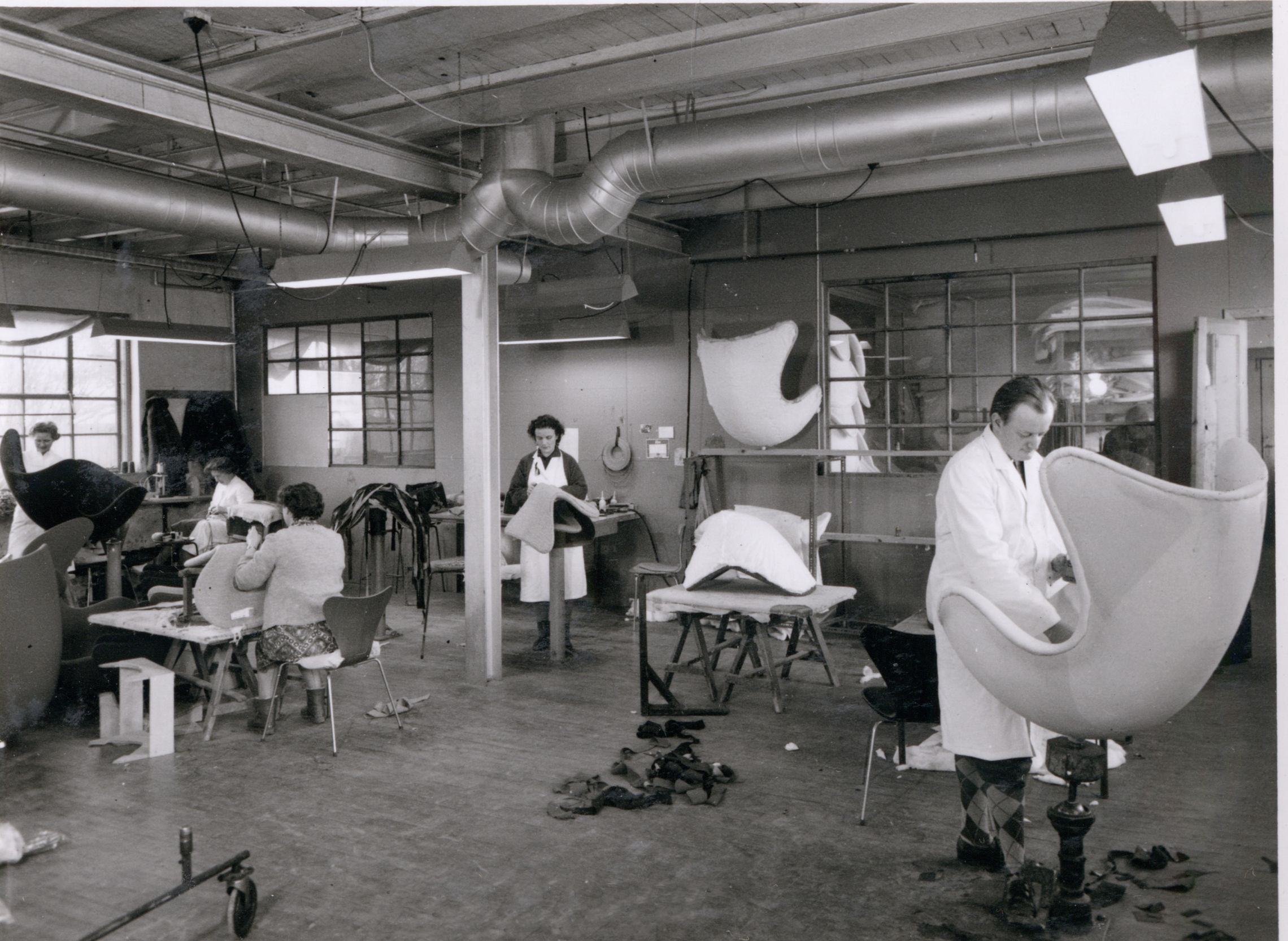
Egg chairs taking shape in 1963. © Courtesy of Fritz Hansen
That ethos mirrors Auctionet’s digital model, which connects regional auction houses to a global audience. Instead of trekking to Copenhagen, a collector in Toronto can now chase a 1960s Egg while sipping morning coffee.
Comfort, Innovation, and Enduring Appeal
The egg chair endures because it solved a timeless equation: sculptural presence plus ergonomic refuge. More than a seat, it’s a manifesto for human-scaled modernism; it’s proof that technology and comfort can coexist, and that Danish design remains a benchmark for elegance.
Ready to own a piece of that legacy? Browse Arne Jacobsen listings or set an alert for “egg chair” on Auctionet. Whether you land an early fibreglass classic or a beautifully patinated ’70s edition, you’ll be acquiring more than furniture; you’ll claim a slice of design history that keeps appreciating, stylistically and financially, with every turn of its polished aluminium base.


)
)

)