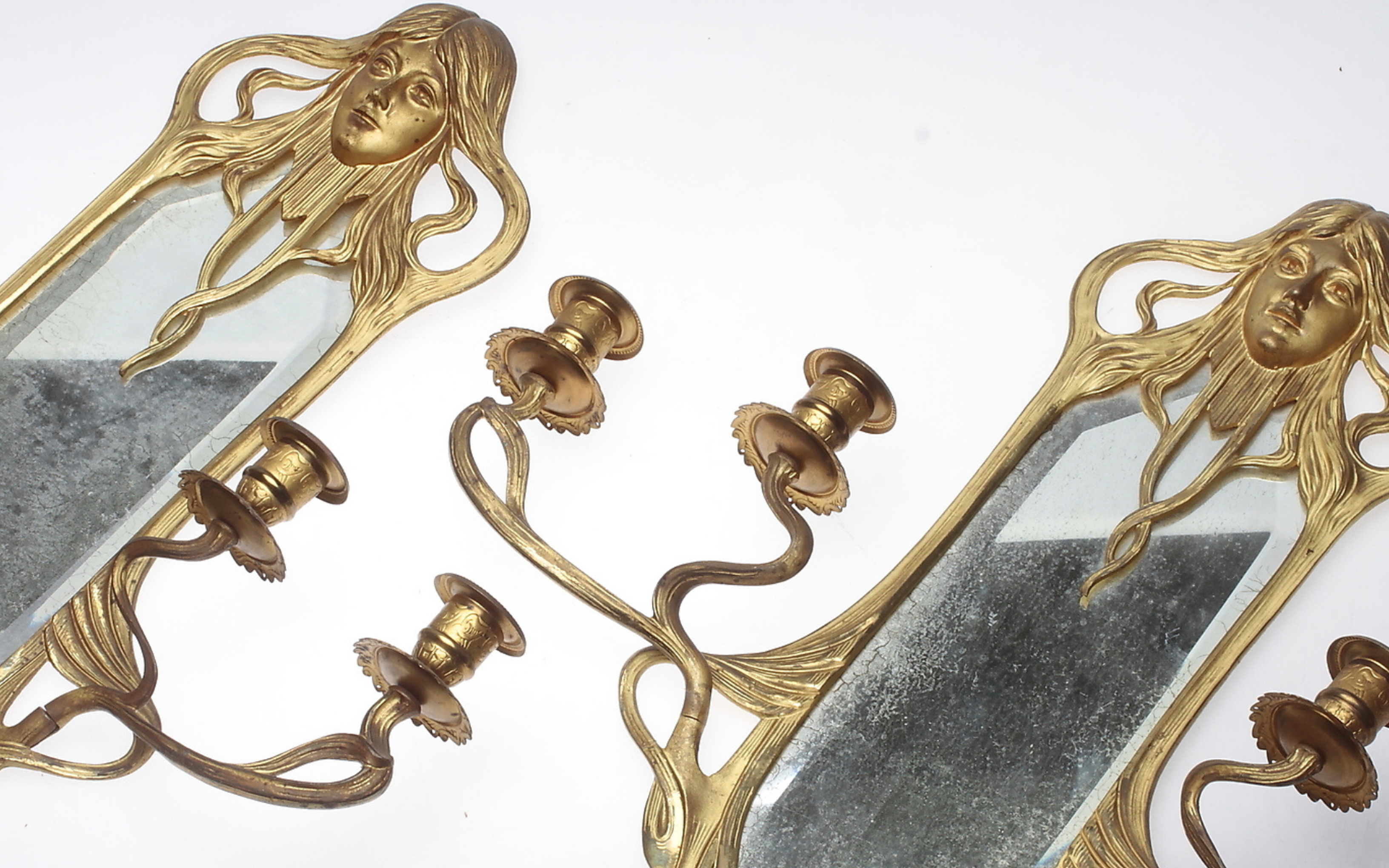
During the 1890s, a new decorative movement emerged in European architecture and design. It was a reaction against the retrospective neo-styles and pompous interiors that had dominated bourgeois homes for nearly half a century.

Émile Gallé's vases are prime examples of Art Nouveau.
The new art form, though varying slightly in expression depending on its location, shared the same core ideals. Nature and its organic lines served as the primary inspiration, with plants, flowers, animals, and elongated female figures frequently appearing as surface decorations and ornaments.
Glass artist Émile Gallé became a leading name in the French equivalent, Art Nouveau. His glasswork is typically characterized by sturdy shapes, rich colours, and motifs mainly of trees and flowers.
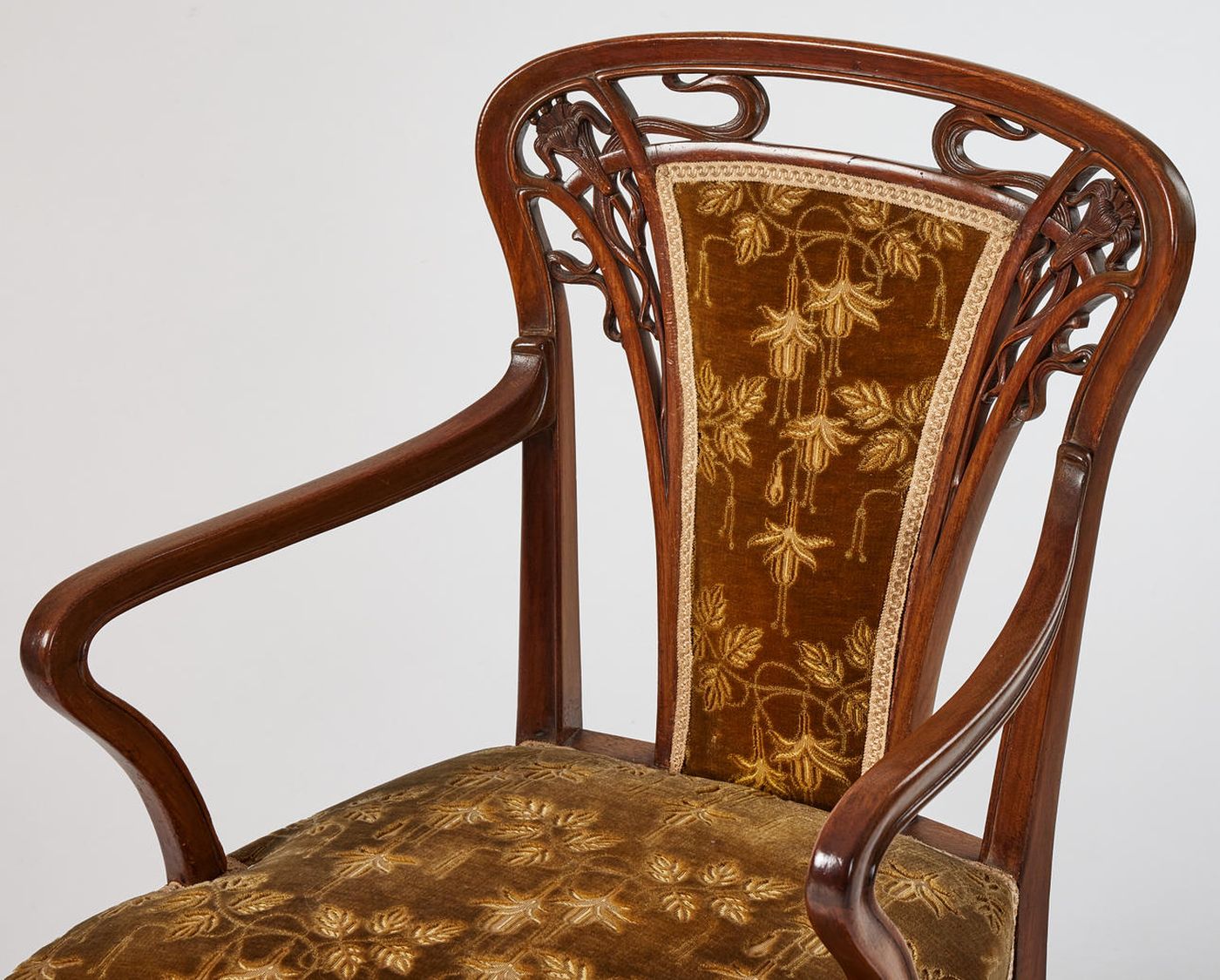
Salon furniture, France/Belgium, Art Nouveau.
Jugend in Sweden
While the intricate decorations with winding plants and petals were wholeheartedly embraced in Art Nouveau, the German Jugendstil was significantly more restrained. In Sweden, we adopted the stricter model, mixed it with National Romanticism, and drew inspiration from Swedish flora. In furniture design, carved decorations in the shape of apples and roses, onion-shaped chair legs, and tall backrests became common.
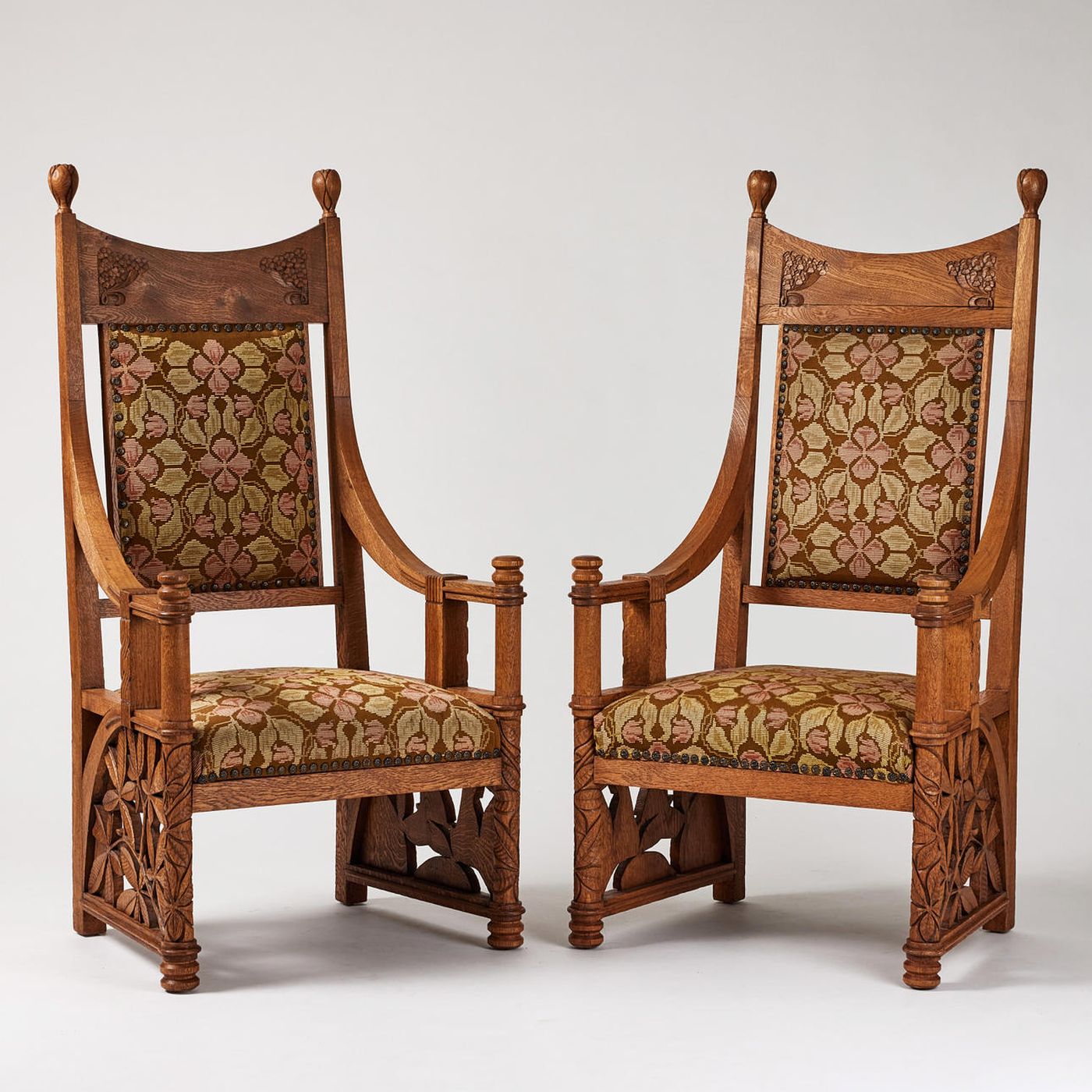
Armchairs, Jugend, Sweden, first quarter of the 20th century.
In Sweden, Jugend had its major breakthrough at the Stockholm Exhibition of 1897, particularly with works by ceramic artists Alf Wallander and Gunnar Wennerberg. Architect Ferdinand Boberg also played a significant role in Jugend's influence on Swedish architecture and crafts. Glass designer Karl Lindeberg is now considered Sweden’s foremost figure in the Jugend era.
What is the difference between Jugend and Art Nouveau?
The classic chair "Äpplet" is typical of Swedish Jugend, made of solid wood with a carved apple motif.
The different names for the style can be confusing. In many countries, the French term Art Nouveau is used, while in Sweden, the German term Jugend is more common. In Spain and Russia, it is called Modernisme, and in Italy, Stile Floreale, which perhaps best describes the essence of the style: plants and flowers.
)
"Äpplet," first half of the 20th century, green lacquered, striped textile upholstery.
There is simply no internationally established term for the style, but Jugend is not a uniform style either. Instead, Jugend can be described as an umbrella term for several design expressions with shared foundations that took on their own distinctive forms depending on where they developed.
The End of the Jugend Era
Eventually, design ideals shifted again, and the flowing shapes were gradually replaced by more pared-back designs. By the early 1920s, Jugend ultimately gave way to the clean-lined Art Deco, which in Sweden found its counterpart in Swedish Grace.
Although the Jugend era was short-lived compared to many other design periods, it was one of the most significant styles of the 20th century, continuing to fascinate and inspire even today.
Find Jugend and Art Nouveau at auction today.

)
)
