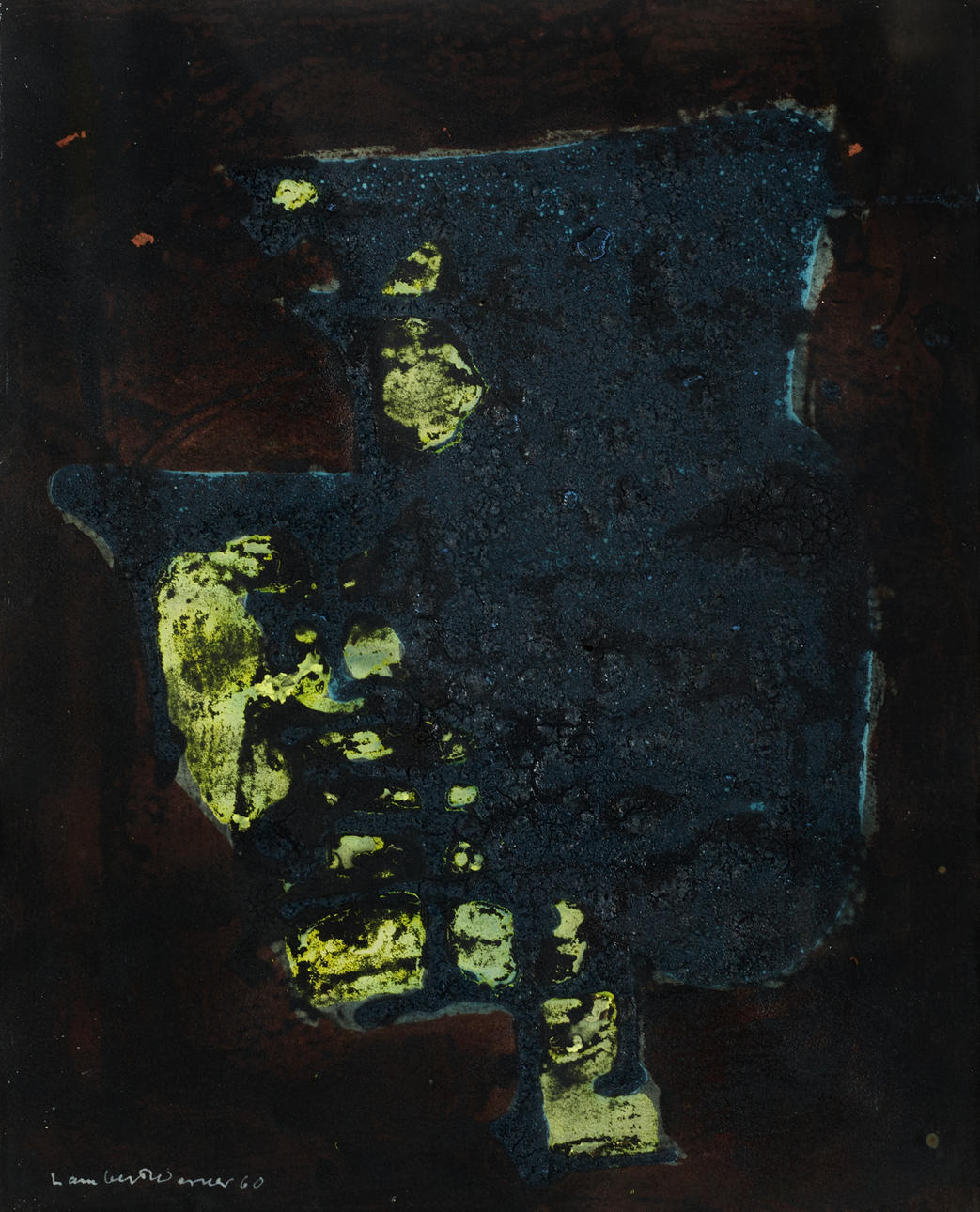
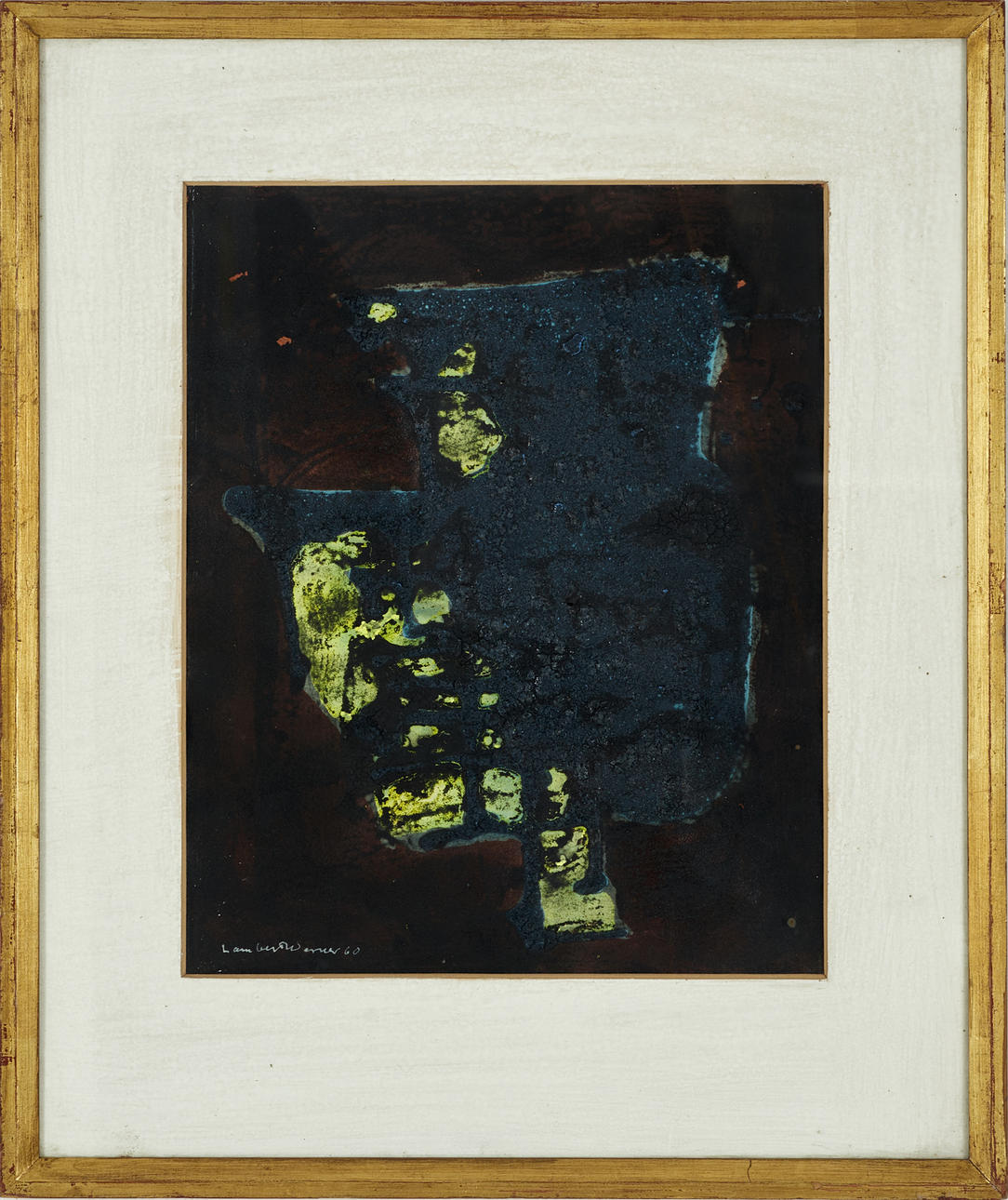
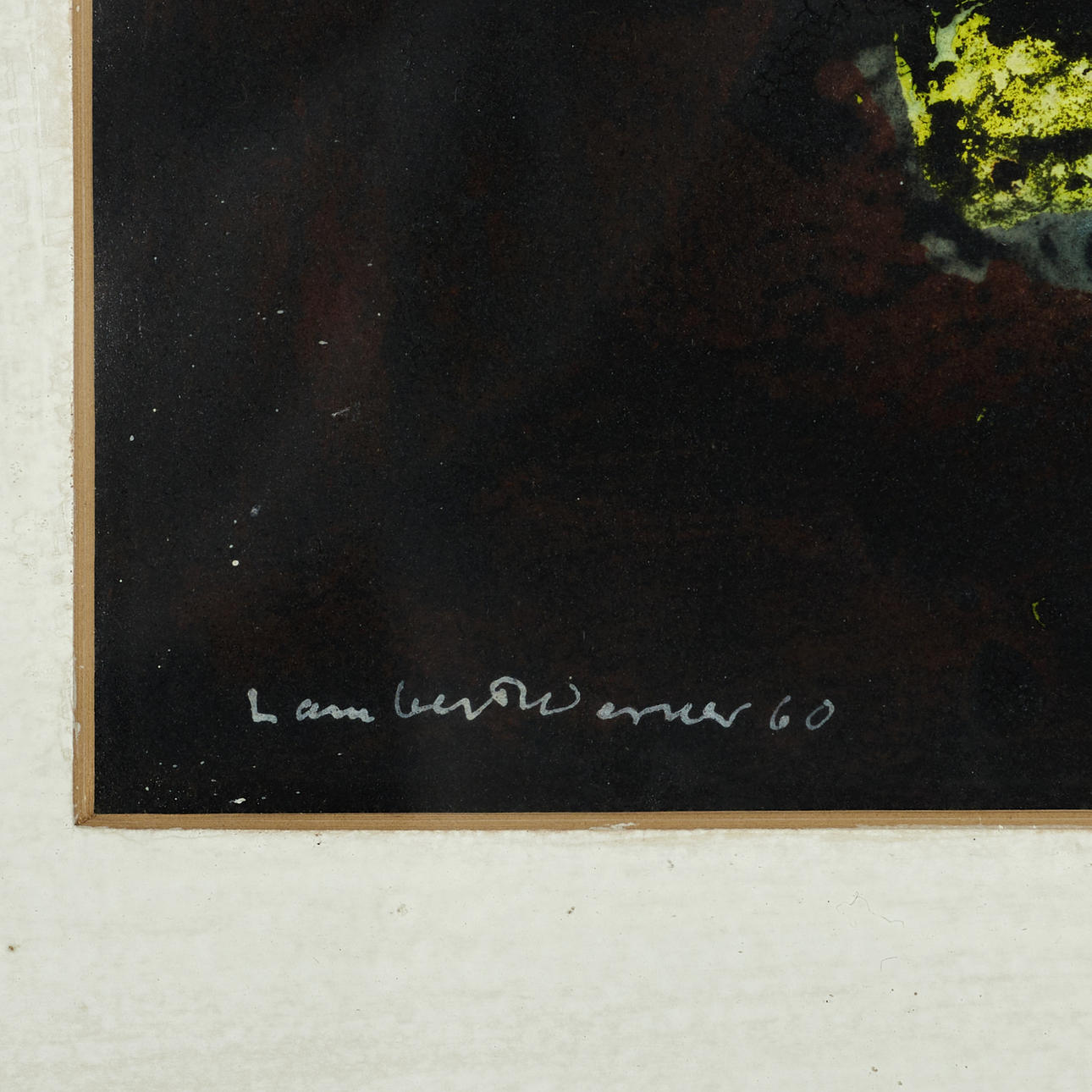
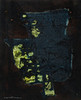
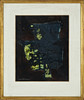
LAMBERT WERNER (1900-1983). "Målning 11", signed, dated 60, mixed media.
This auction is closed, but maybe you like the following items?

Images
Description
Image dimensions within mount 40 x 32 cm.
Frame dimensions 60 x 50 cm.
Selected exhibitions:
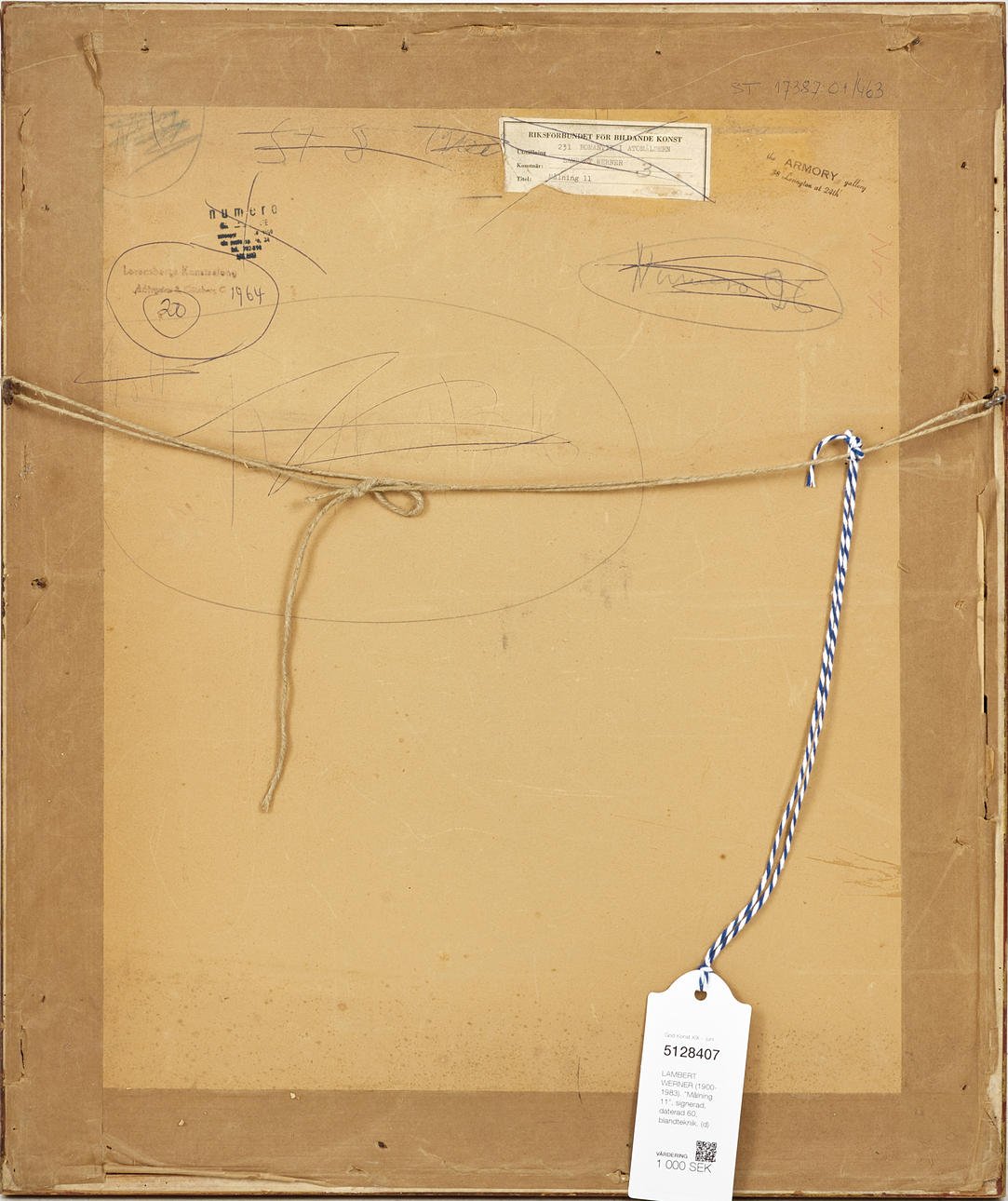
231, Romantik i Atomåldern, Riksförbundet för Bildande Konst.
Lorensbergs konstsalong, Gothenburg, 1964.
- AN ACTOR ON THE INTERNATIONAL STAGE -
Lambert Werner's distinctive artistry is among the most internationally successful in 20th-century Swedish art. He received his earliest artistic impressions at the age of 17 from Gösta Adrian-Nilsson's dynamic art, but it was through contact with Kandinsky and Klee in 1920s Berlin, where Lambert Werner studied medicine for three years, that his artistic vision was liberated and he turned entirely to painting.
He also experimented occasionally with sculpture under the influence of Archipenko and Zadkine. After his studies in Berlin, he moved his practice to Paris, where he debuted in 1928 at Galerie Mots et Images with about ten lyrical abstractions. Lambert Werner was an independent artist who long followed his own path in obscurity, with close ties to international art movements.
Kandinsky's color-musical abstractions and Klee's subtle pictorial poetry seem to have been the primary starting points, as he also partly under the influence of international surrealism developed his refined and personal neo-surrealism.
Among Swedish artists, he is likely closest to the Scanian Imaginists who emerged around the same time as him; his technique, reminiscent of automatism, his sometimes poetically charged titles, and the almost oriental splendor of color with which he often drenches his pictures – and which has led many to compare him with Max Walter Svanberg – indicate a certain affinity with them, but he is too much of an individualist to be bound to any specific movement.
The complex mixed media technique with scraping, washing, frottage, and glazes, which is his hallmark and gives his watercolors and gouaches their peculiar appearance with their somewhat batik-like luster, must obviously entail a certain degree of calculation in the artistic approach and therefore excludes pure automatism.
In most of Lambert Werner's paintings before the mid-1950s, there is a difficult-to-interpret yet clearly figurative symbolism, which speaks of deep artistic awareness. When informal art broke through during the 1950s, the step was not far for him from his surrealistically visionary art to a purely non-figurative pictorial vision with its closest roots in the calligraphic fantasies of French tachisme and the play with blots and stains. The question is whether, through this liberation from lingering figurative remnants, he finally reached an adequate expression for his artistic intentions: to create a "pure" art, which like music is sufficient unto itself without any literary determinations, an art that intends to liberate the viewer's imagination by excluding any fixation on specific things. Consequently, from the mid-1950s onwards, he refrained from giving his paintings any names.
Lambert Werner had solo exhibitions in Stockholm at Färg och Form in 1949, 1951, 1955, 1960, and 1966, Sturegalleriet in 1959, Galleri Observatorium and Sveagalleriet in 1962, Galleri Latina in 1965, in Gothenburg at Lorensbergs konstsalong in 1949, 1951, 1954, 1958, 1962, and 1966, in Norrköping in 1953 and 1956, in Borås in 1953, Örebro in 1954, Malmö in 1955, Jönköping in 1956, Västerås in 1957, and Landskrona in 1959. He participated in Paris in the Salon des Surindépendants in 1950 and showed separate collections at Galerie Raymond Creuze in 1951, 1953, 1955, and 1958. Furthermore, he had solo exhibitions in Basel in 1951, Berlin in 1952 and 1953, Brussels and Lucerne in 1953, Traunstein in 1956, Oslo in 1957, Nuremberg in 1958, Wuppertal-Barmen in 1959-62, Amsterdam in 1961, New York in 1964, as well as numerous exhibitions in Italy during the 1960s.
Represented: Moderna museet, Borås konstmuseum, Jönköpings museum, Västerås konstmuseum, and Örebro läns museum, as well as abroad, including at the Institut Tessin and Musée National d’Art Moderne in Paris, Nationalgalerie Berlin, and the museums in Nuremberg and Wuppertal.
Condition
Not examined out of frame. Frame with wear.
Resale right
Theme
Do you have something similar to sell? Get your items valued free of charge!
Description
Image dimensions within mount 40 x 32 cm.
Frame dimensions 60 x 50 cm.
Selected exhibitions:
231, Romantik i Atomåldern, Riksförbundet för Bildande Konst.
Lorensbergs konstsalong, Gothenburg, 1964.
- AN ACTOR ON THE INTERNATIONAL STAGE -
Lambert Werner's distinctive artistry is among the most internationally successful in 20th-century Swedish art. He received his earliest artistic impressions at the age of 17 from Gösta Adrian-Nilsson's dynamic art, but it was through contact with Kandinsky and Klee in 1920s Berlin, where Lambert Werner studied medicine for three years, that his artistic vision was liberated and he turned entirely to painting.
He also experimented occasionally with sculpture under the influence of Archipenko and Zadkine. After his studies in Berlin, he moved his practice to Paris, where he debuted in 1928 at Galerie Mots et Images with about ten lyrical abstractions. Lambert Werner was an independent artist who long followed his own path in obscurity, with close ties to international art movements.
Kandinsky's color-musical abstractions and Klee's subtle pictorial poetry seem to have been the primary starting points, as he also partly under the influence of international surrealism developed his refined and personal neo-surrealism.
Among Swedish artists, he is likely closest to the Scanian Imaginists who emerged around the same time as him; his technique, reminiscent of automatism, his sometimes poetically charged titles, and the almost oriental splendor of color with which he often drenches his pictures – and which has led many to compare him with Max Walter Svanberg – indicate a certain affinity with them, but he is too much of an individualist to be bound to any specific movement.
The complex mixed media technique with scraping, washing, frottage, and glazes, which is his hallmark and gives his watercolors and gouaches their peculiar appearance with their somewhat batik-like luster, must obviously entail a certain degree of calculation in the artistic approach and therefore excludes pure automatism.
In most of Lambert Werner's paintings before the mid-1950s, there is a difficult-to-interpret yet clearly figurative symbolism, which speaks of deep artistic awareness. When informal art broke through during the 1950s, the step was not far for him from his surrealistically visionary art to a purely non-figurative pictorial vision with its closest roots in the calligraphic fantasies of French tachisme and the play with blots and stains. The question is whether, through this liberation from lingering figurative remnants, he finally reached an adequate expression for his artistic intentions: to create a "pure" art, which like music is sufficient unto itself without any literary determinations, an art that intends to liberate the viewer's imagination by excluding any fixation on specific things. Consequently, from the mid-1950s onwards, he refrained from giving his paintings any names.
Lambert Werner had solo exhibitions in Stockholm at Färg och Form in 1949, 1951, 1955, 1960, and 1966, Sturegalleriet in 1959, Galleri Observatorium and Sveagalleriet in 1962, Galleri Latina in 1965, in Gothenburg at Lorensbergs konstsalong in 1949, 1951, 1954, 1958, 1962, and 1966, in Norrköping in 1953 and 1956, in Borås in 1953, Örebro in 1954, Malmö in 1955, Jönköping in 1956, Västerås in 1957, and Landskrona in 1959. He participated in Paris in the Salon des Surindépendants in 1950 and showed separate collections at Galerie Raymond Creuze in 1951, 1953, 1955, and 1958. Furthermore, he had solo exhibitions in Basel in 1951, Berlin in 1952 and 1953, Brussels and Lucerne in 1953, Traunstein in 1956, Oslo in 1957, Nuremberg in 1958, Wuppertal-Barmen in 1959-62, Amsterdam in 1961, New York in 1964, as well as numerous exhibitions in Italy during the 1960s.
Represented: Moderna museet, Borås konstmuseum, Jönköpings museum, Västerås konstmuseum, and Örebro läns museum, as well as abroad, including at the Institut Tessin and Musée National d’Art Moderne in Paris, Nationalgalerie Berlin, and the museums in Nuremberg and Wuppertal.
Condition
Not examined out of frame. Frame with wear.
Resale right
Theme
Do you have something similar to sell? Get your items valued free of charge!