- All items
- /
- Formstad Auktioner
- /
- Art
- /
- Drawings
- /
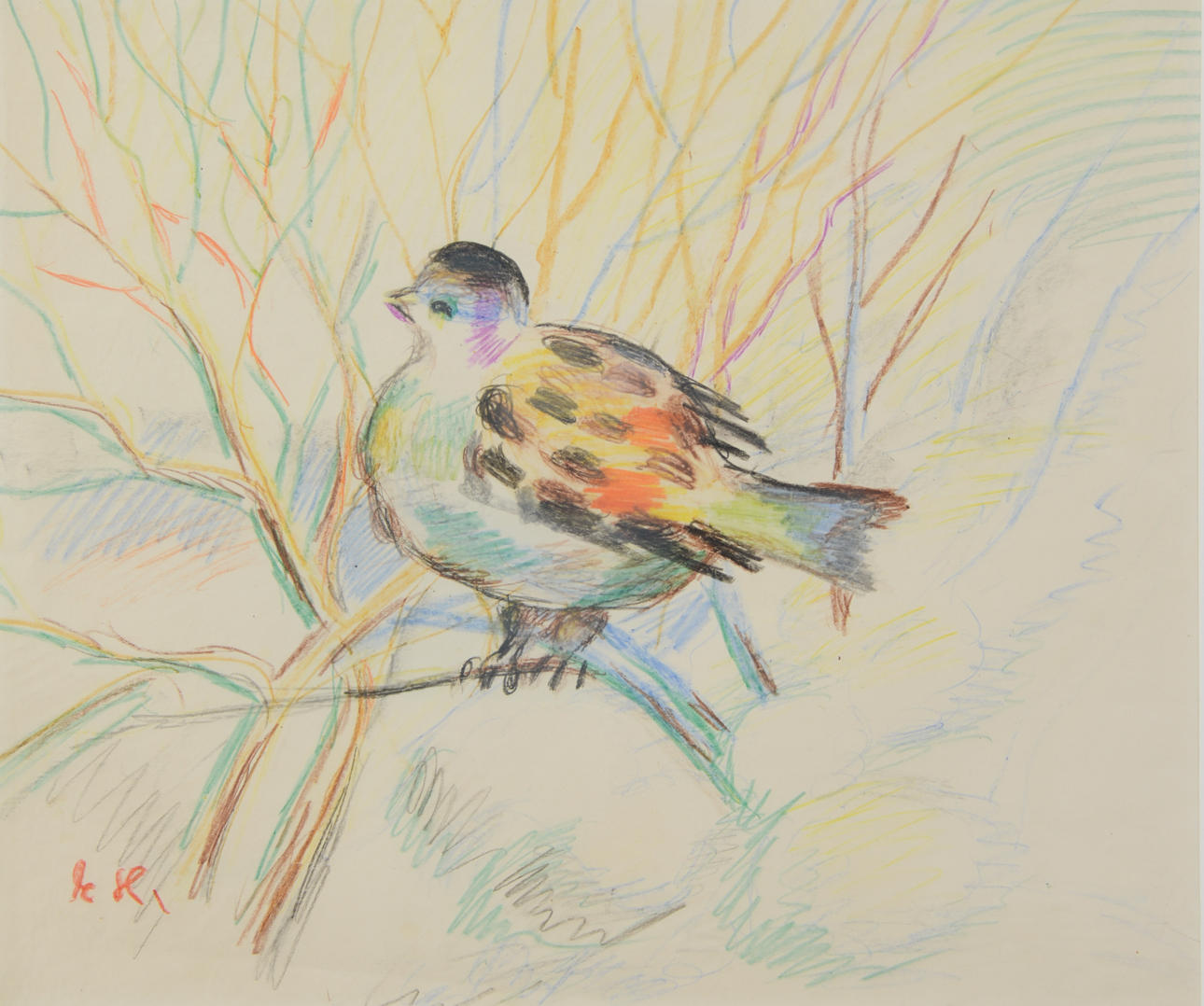
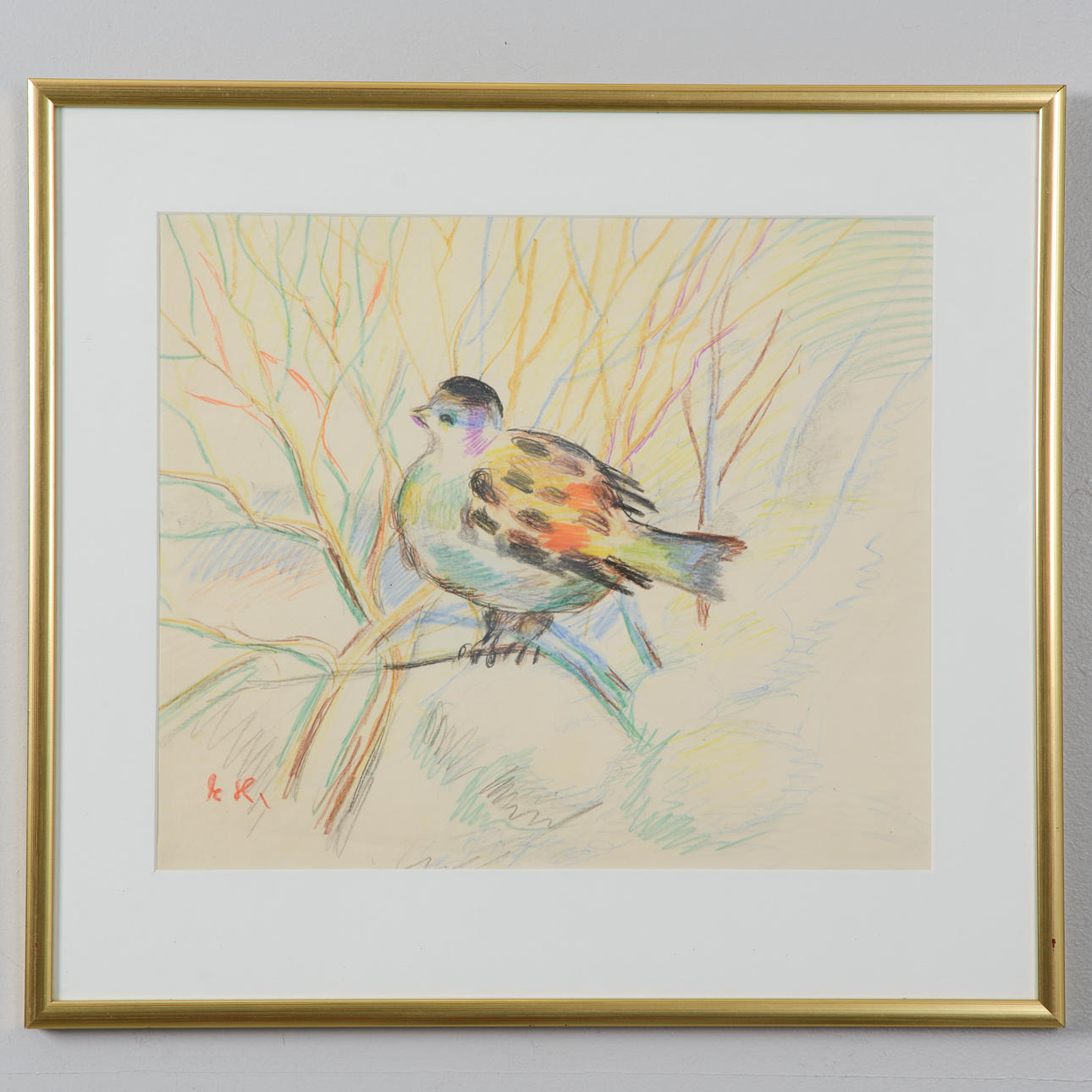
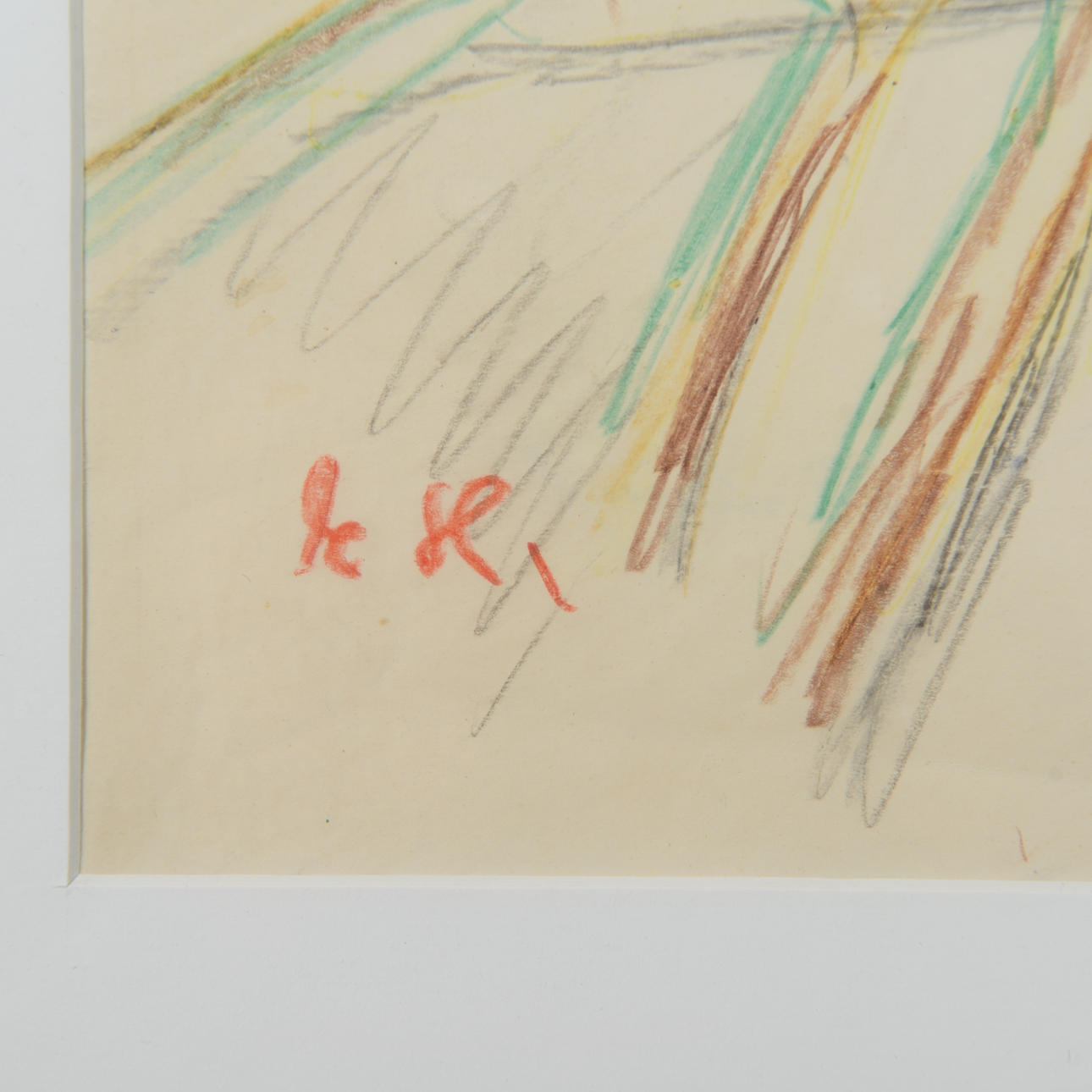
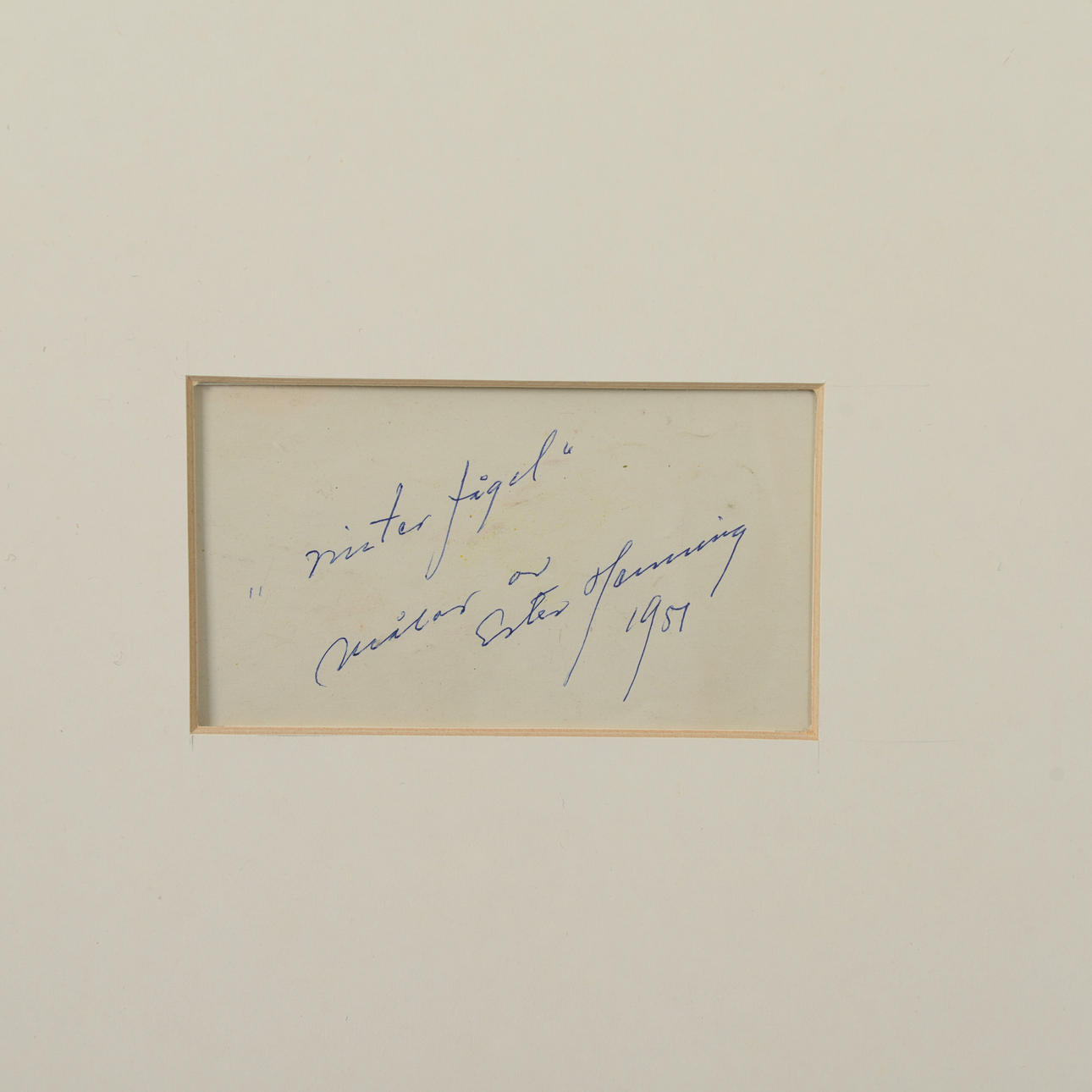
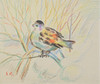
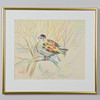
ESTER HENNING. “Winter bird”, pastel on paper, signed, dated 1951.

Images
Description
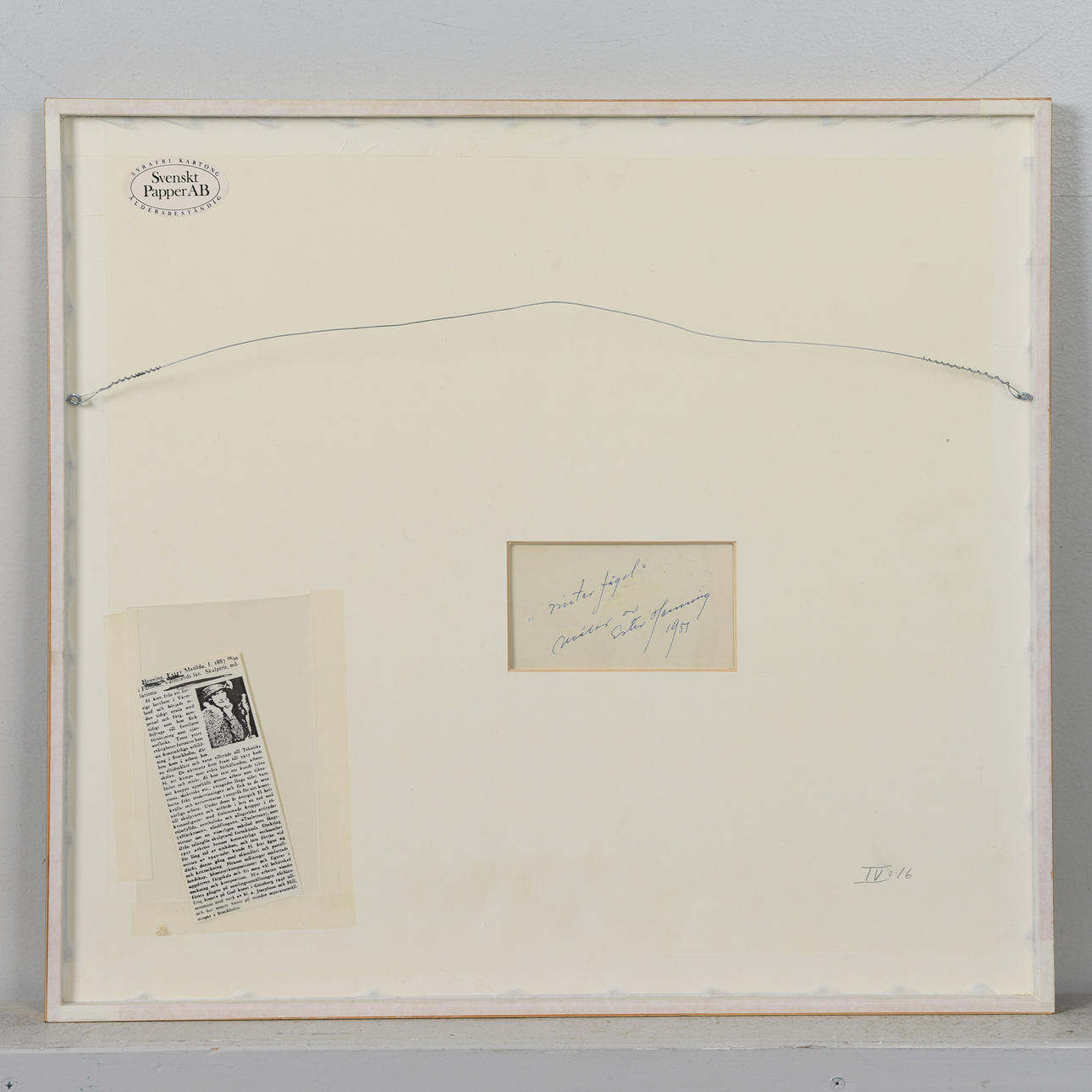
Day dimensions 36 x 42,5 cm. Frame dimensions 52 x 57 cm.
“Winter Bird”, dated 1951, depicts a solitary bird perched on a branch in a stylized shrubbery. The motif is seemingly simple, but contains a tangible presence characteristic of Ester Henning. In her production from this period, a concentrated focus on a single figure or gestalt often emerges. Here the bird appears not only as a study of nature, but as an almost symbolic entity. It sits firmly on the branch, but is surrounded by an environment that is more hinted at than firmly anchored. There is a balance between stability and fragility, where the precision of the line meets the sensitivity of the color.
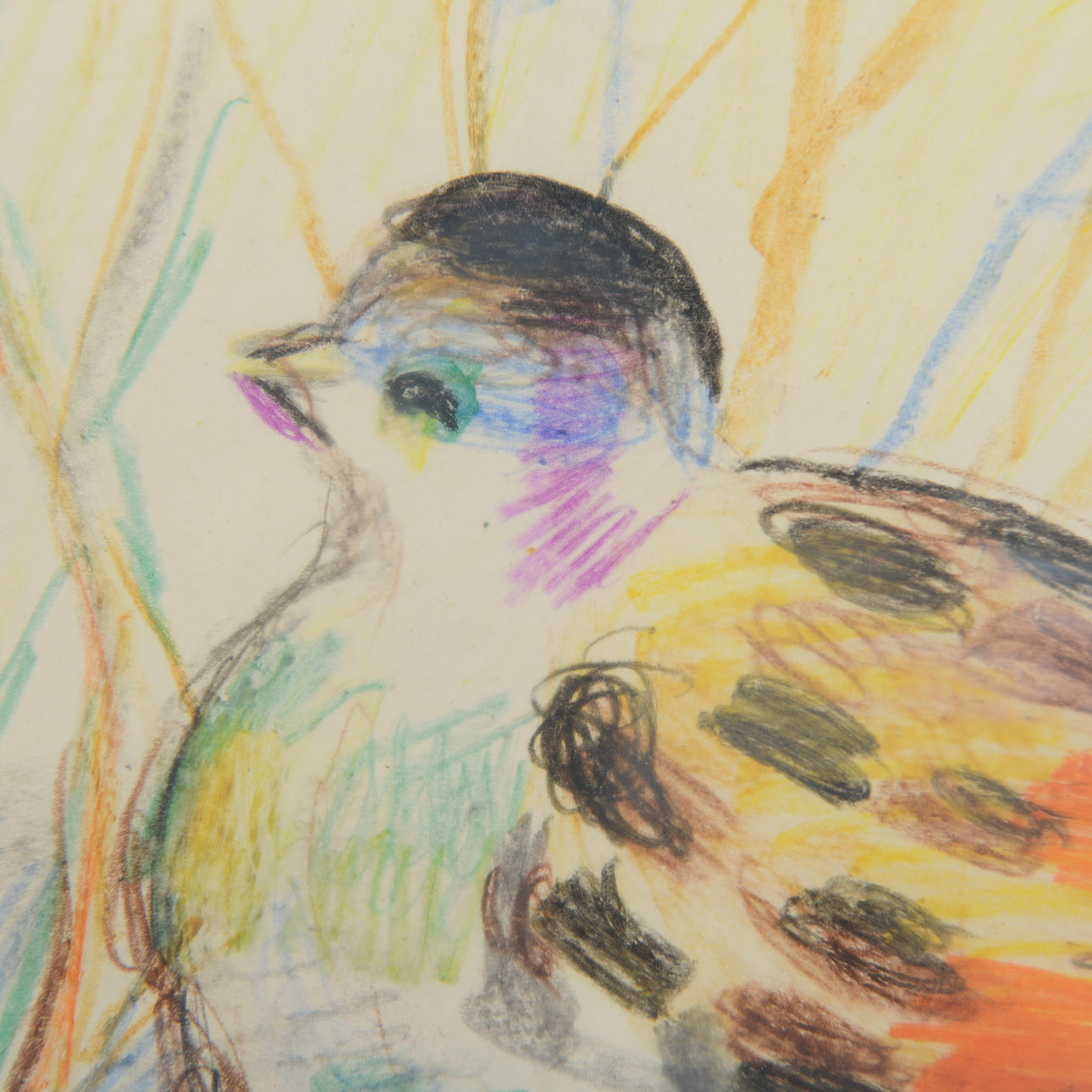
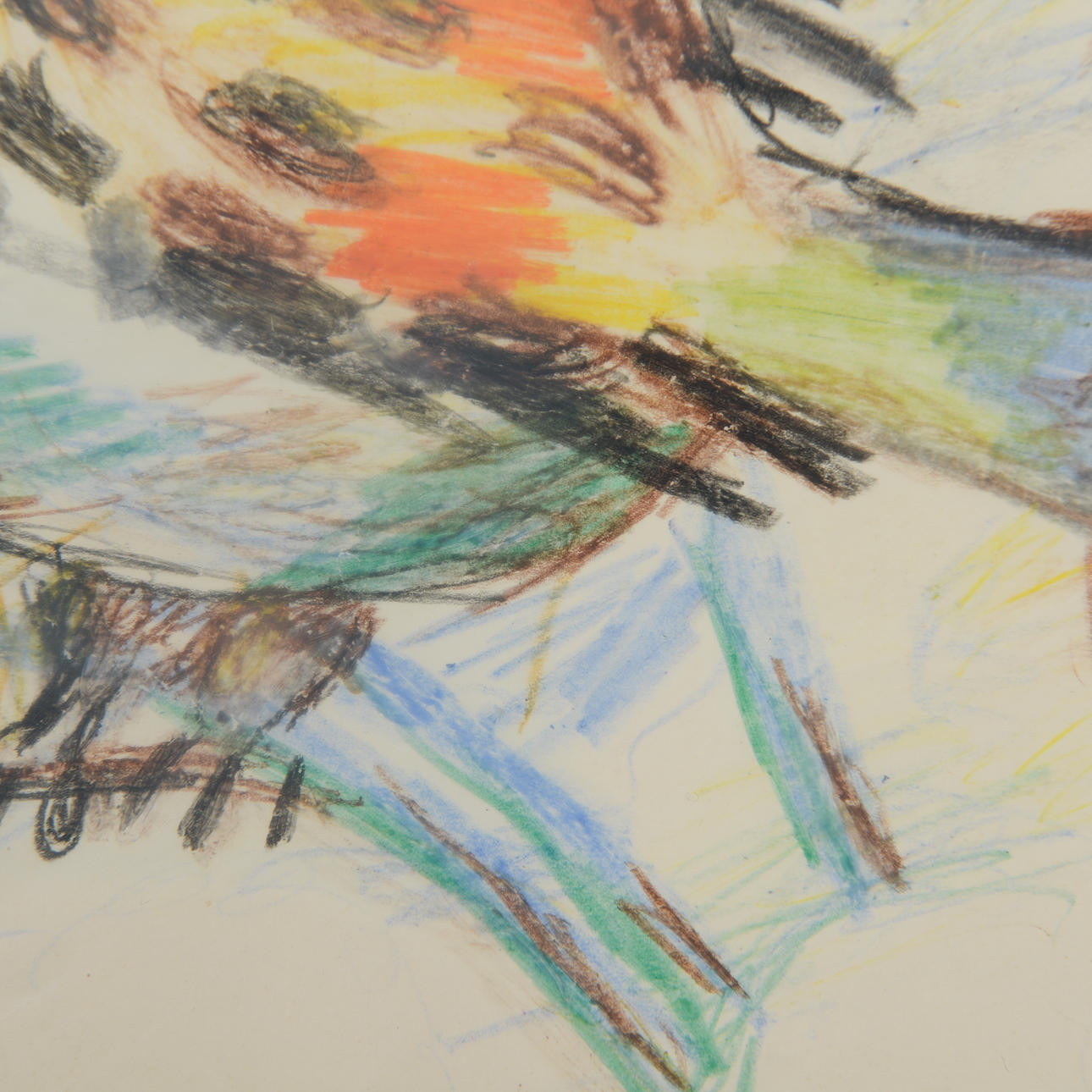
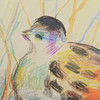
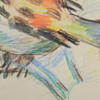
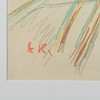
The pastel medium allows for an immediacy in the expression. The streaks are visible, the movement of the hand is clear. At the same time, the composition shows a conscious structuring of the image surface. The bird is placed slightly to the side, giving a subtle asymmetry and creating movement in the picture space. The discreet signature in the lower left corner anchors the work to the artist's late institutional period, when creation had become a continuous and central part of her everyday life.
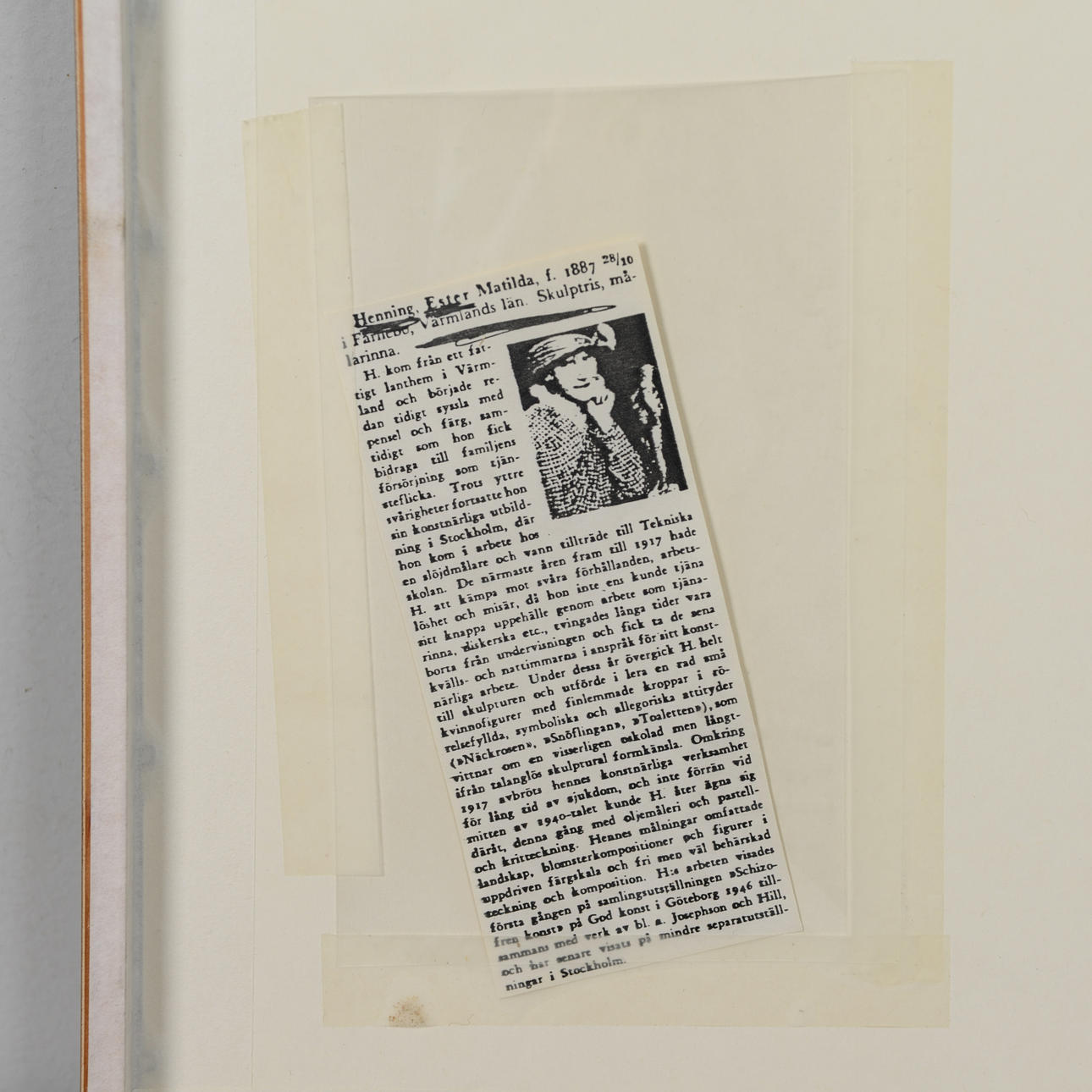
Ester Matilda Henning occupies a special position in Swedish art history. Her life was mostly set in psychiatric institutional care, but in parallel she developed a consistent and distinctive artistry that is today considered a significant part of the Swedish visual world of the 20th century.
She was born in 1887 in Yngshyttan in Värmland and died in 1985 in Stockholm. Raised in a family of shoemakers and forced early on to contribute to the family's livelihood, she nurtured a stated ambition to become an artist as a young man. In 1911 she moved to Stockholm and enrolled at the Technical School's department for female disciples, where she studied figure and ornament modeling. The studies were conducted under financially squeezed conditions and in combination with temporary jobs as a maid and seamstress.
In 1916 Henning fell ill and was admitted to Katarina Hospital. After further breakdowns, in 1919 she came to be admitted to Säters Hospital. Then followed nursing appointments at Uppsala hospital, Långbro, Beckomberga and finally Solberga hospital, where she died in 1985.
A crucial turning point occurred in 1936, when a curator at Beckomberga noticed her artistic talent and provided her with material. In the following decades, she produced drawings, paintings, sculptures and textile works. Creation became a continuous and structuring force in her life.
Henning's work attracted attention in the collection exhibition Schizophrenic Art in Gothenburg, where she was shown together with artists such as Ernst Josephson and Carl Fredrik Hill. Subsequently, her art has been presented in separate and thematic exhibitions.
Works by Ester Henning are represented at the Nationalmuseum and Moderna museet as well as in several public and private collections. Her art has also been exhibited at Liljevalchs konsthall and Bror Hjorths Hus.
Condition
The paper may have yellowed a little. Not examined out of frame.
Resale right
Artist/designer
Theme
Description
Day dimensions 36 x 42,5 cm. Frame dimensions 52 x 57 cm.
“Winter Bird”, dated 1951, depicts a solitary bird perched on a branch in a stylized shrubbery. The motif is seemingly simple, but contains a tangible presence characteristic of Ester Henning. In her production from this period, a concentrated focus on a single figure or gestalt often emerges. Here the bird appears not only as a study of nature, but as an almost symbolic entity. It sits firmly on the branch, but is surrounded by an environment that is more hinted at than firmly anchored. There is a balance between stability and fragility, where the precision of the line meets the sensitivity of the color.
The pastel medium allows for an immediacy in the expression. The streaks are visible, the movement of the hand is clear. At the same time, the composition shows a conscious structuring of the image surface. The bird is placed slightly to the side, giving a subtle asymmetry and creating movement in the picture space. The discreet signature in the lower left corner anchors the work to the artist's late institutional period, when creation had become a continuous and central part of her everyday life.
Ester Matilda Henning occupies a special position in Swedish art history. Her life was mostly set in psychiatric institutional care, but in parallel she developed a consistent and distinctive artistry that is today considered a significant part of the Swedish visual world of the 20th century.
She was born in 1887 in Yngshyttan in Värmland and died in 1985 in Stockholm. Raised in a family of shoemakers and forced early on to contribute to the family's livelihood, she nurtured a stated ambition to become an artist as a young man. In 1911 she moved to Stockholm and enrolled at the Technical School's department for female disciples, where she studied figure and ornament modeling. The studies were conducted under financially squeezed conditions and in combination with temporary jobs as a maid and seamstress.
In 1916 Henning fell ill and was admitted to Katarina Hospital. After further breakdowns, in 1919 she came to be admitted to Säters Hospital. Then followed nursing appointments at Uppsala hospital, Långbro, Beckomberga and finally Solberga hospital, where she died in 1985.
A crucial turning point occurred in 1936, when a curator at Beckomberga noticed her artistic talent and provided her with material. In the following decades, she produced drawings, paintings, sculptures and textile works. Creation became a continuous and structuring force in her life.
Henning's work attracted attention in the collection exhibition Schizophrenic Art in Gothenburg, where she was shown together with artists such as Ernst Josephson and Carl Fredrik Hill. Subsequently, her art has been presented in separate and thematic exhibitions.
Works by Ester Henning are represented at the Nationalmuseum and Moderna museet as well as in several public and private collections. Her art has also been exhibited at Liljevalchs konsthall and Bror Hjorths Hus.
Condition
The paper may have yellowed a little. Not examined out of frame.
Resale right
Artist/designer
Theme
Payment options for this item
Payment cardsBank transferDelivery
: Provide your locationInfo temporarily unavailableLoading…Provide your location to see transport options and prices.
Oops! Something went wrong.
Please try again in a moment. If it still doesn't work, contact Auctionet support.
Details
- House
- Formstad Auktioner
- Address
Gårdsfogdevägen 16
168 67 Bromma
Sweden- Placement
- Tavelhylla 2