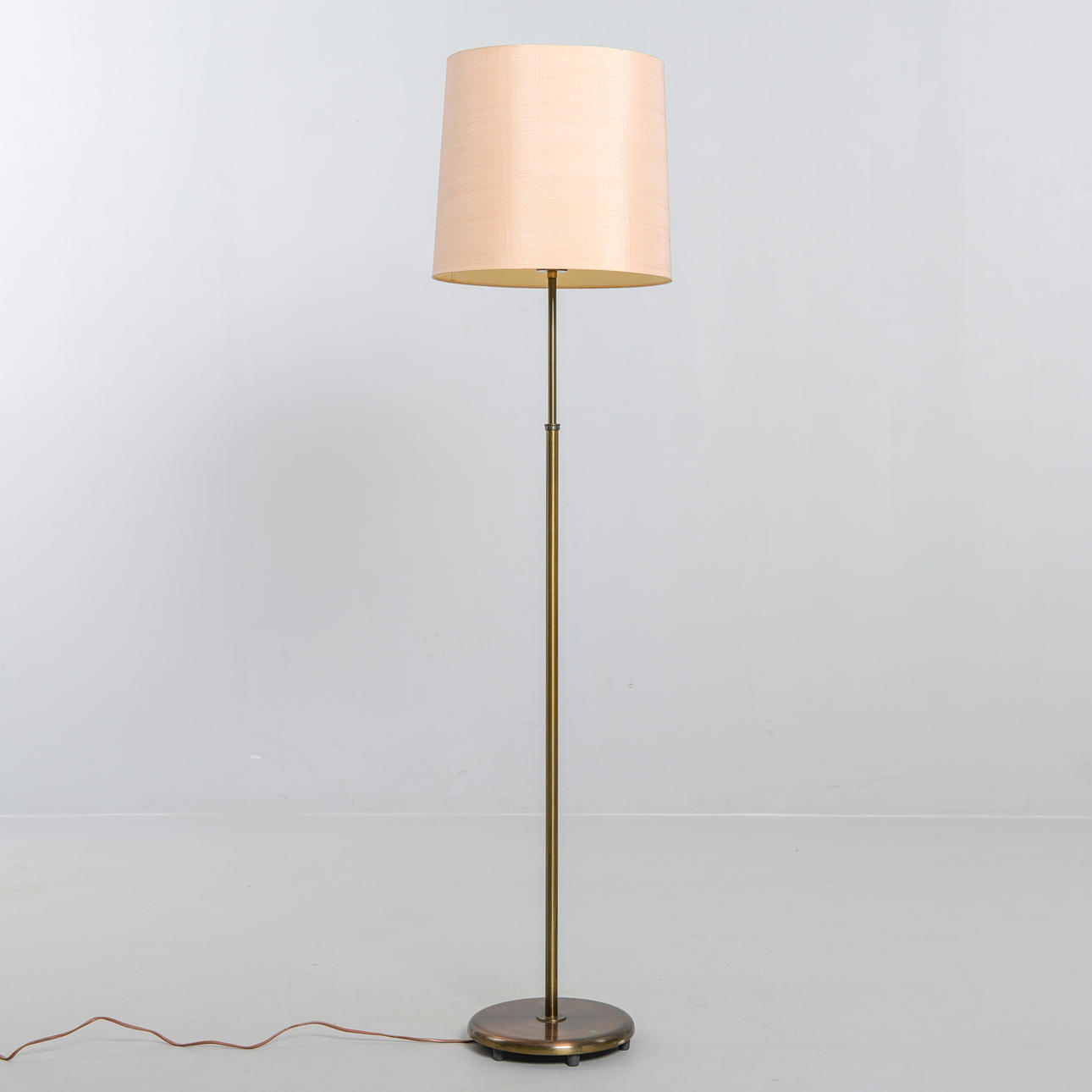
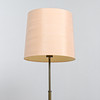
ARVID BÖHLMARKS LAMPFABRIK. Floor lamp, model 15267.

Images
Description
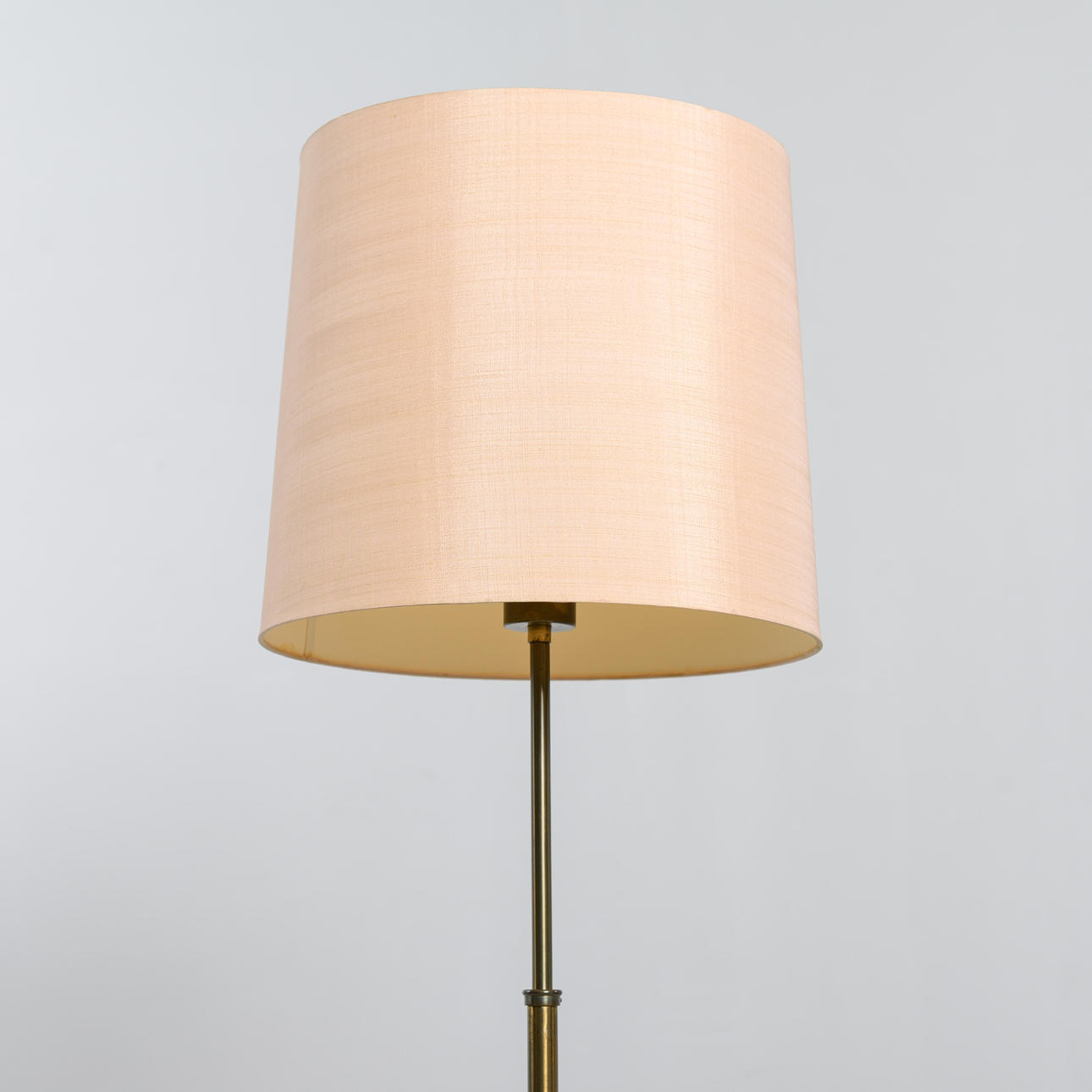
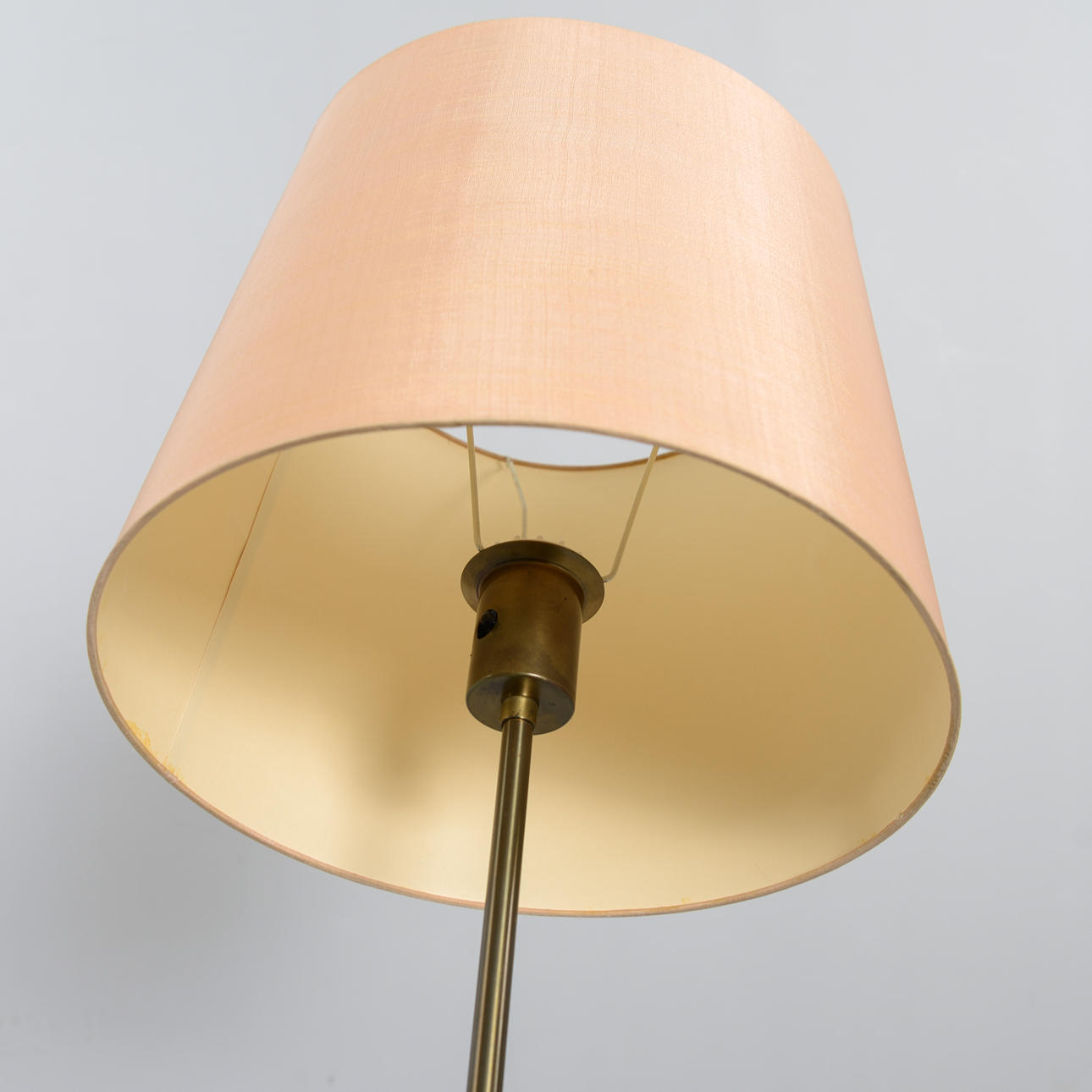
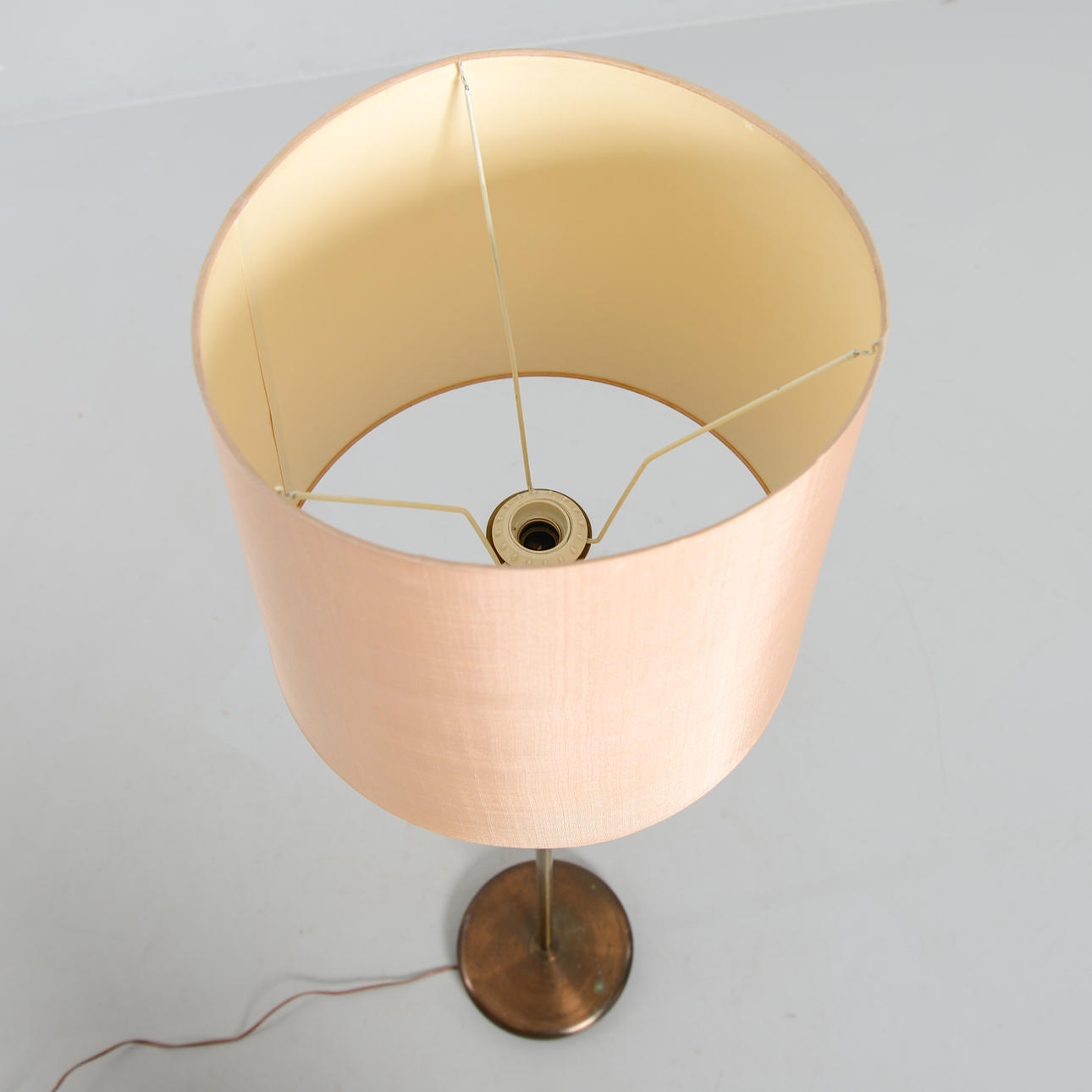
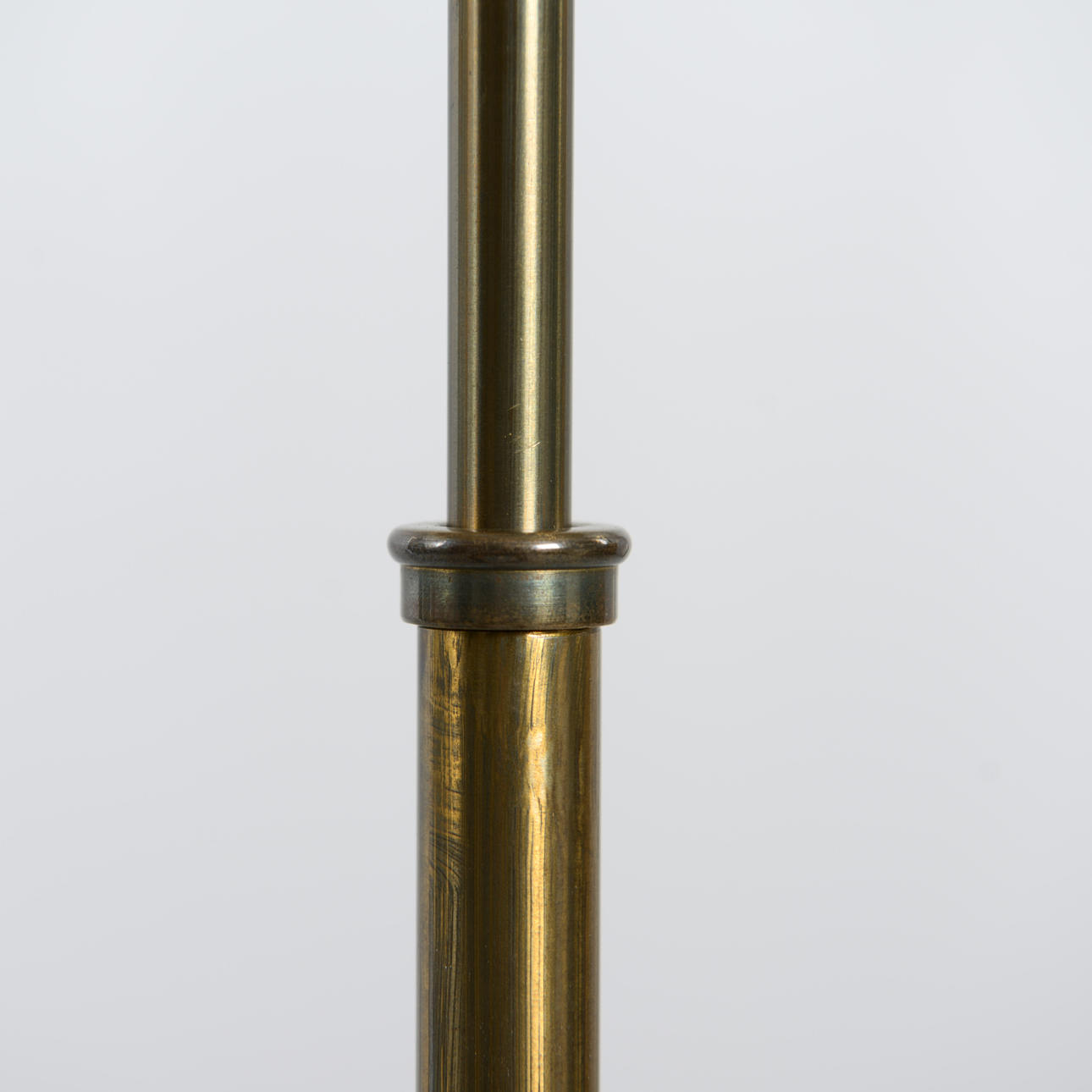
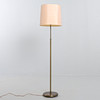
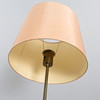
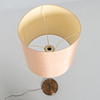
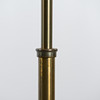
Brass. Textile lampshade. Adjustable height. Height 145 cm.
Arvid Böhlmarks Lampfabrik was founded in Stockholm in 1872 by Arvid Böhlmark and quickly developed into one of the country's leading companies in lighting production. The business started with the import of kerosene and gas oil lamps, but already in the 1880s its own production began in the extensive factory premises on Högbergsgatan in Stockholm. Everything from metal pressing and casting to advanced finishes such as nickel plating, silvering and gilding were performed here.
An important step in the company's expansion came in 1894 when Böhlmark acquired Pukeberg's glassworks in Nybro. Through this, the company became self-sufficient in lighting glass and was able to combine metal and glass in a way that came to characterize their luminaires. At the turn of the century, the manufacture of electric lighting was also established, and already in 1904 the company's first electric luminaires were launched.
During the first half of the 20th century, Böhlmarks developed into a pioneer player in Swedish design. Collaborations with significant architects and designers such as Gunnar Asplund, Alice Nordin, Harald and Bo Notini and Alf Wallander contributed to the company being at the core of the aesthetic renewal that came to shape Swedish Grace during the 1920s. In this style, classicising lines were combined with elegant proportions and exquisite material sense, something that was clearly reflected in the company's luminaires with their sheer glass volumes, their symmetrical metal structures and their period balance between luxury and restraint.
During the 1930s, the design moved towards what later came to be known as Swedish Modern, a more austere and functionalist aesthetic in which the diffusion of light and the practical function of the luminaires were emphasized. Böhlmarks was also one of the leading companies in the country. The glass from Pukeberg was used in the form of opal glass, pressed glass and etched glass and was often combined with nickel-plated or brass-treated metal. The result was luminaires that combined industrial precision with artistic sense of form.
In the 1940s the company employed around 250 people in Stockholm and Nybro and was regarded as Sweden's largest producer of lighting fixtures. The store at Norrmalmstorg served as an important showplace for the company's wide range, from exclusive ceiling chandeliers to series-made luminaires for homes and public environments.
In 1964, the entire production was moved to Pukeberg's glassworks. Operations continued there until the late 1970s. Today, Böhlmarks stands out as one of the cornerstones of Swedish design history. Their lighting fixtures highlight the evolution from Art Nouveau and Swedish Grace to Swedish Modern and are valued for their distinct stylistic qualities and significant contributions to Swedish design.
Condition
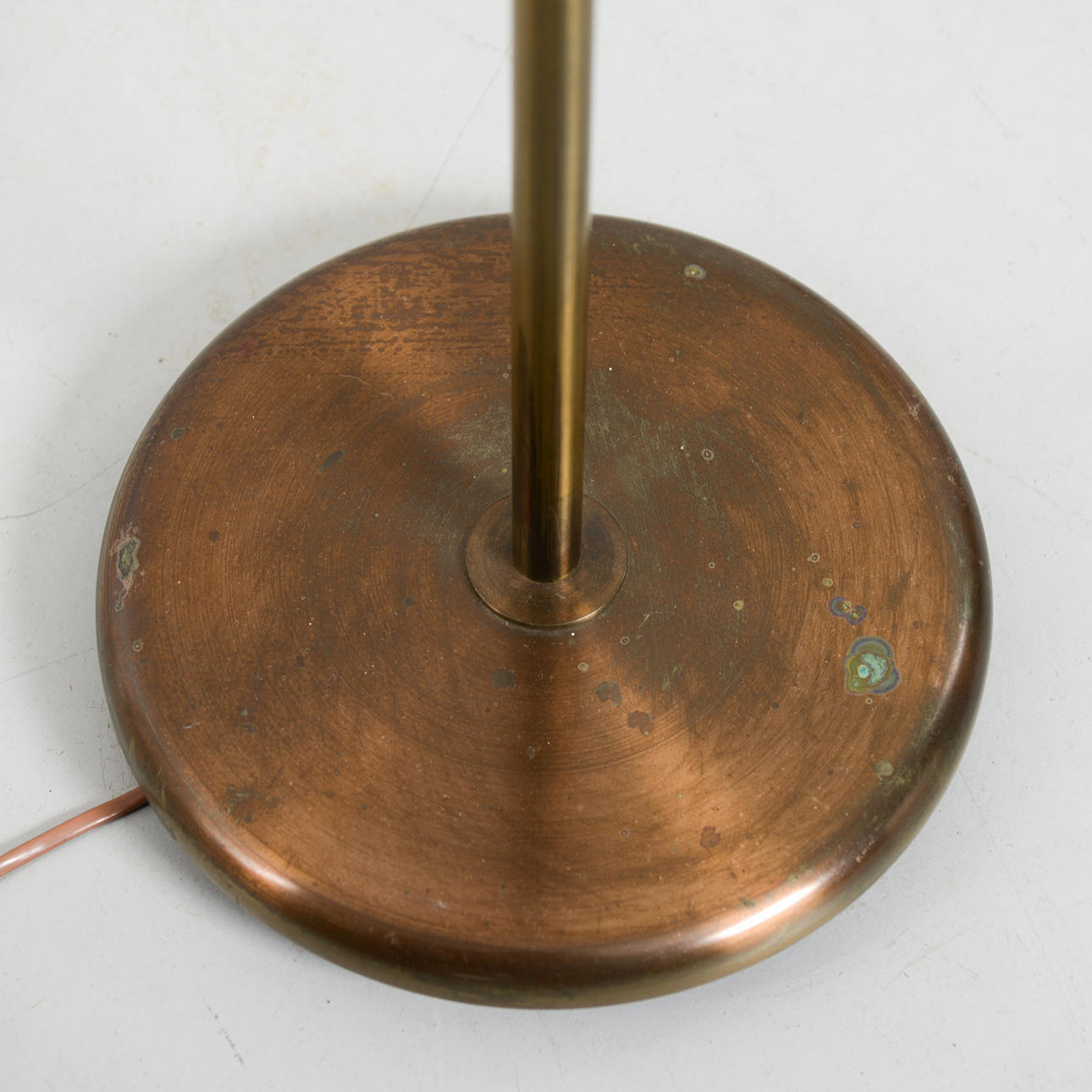
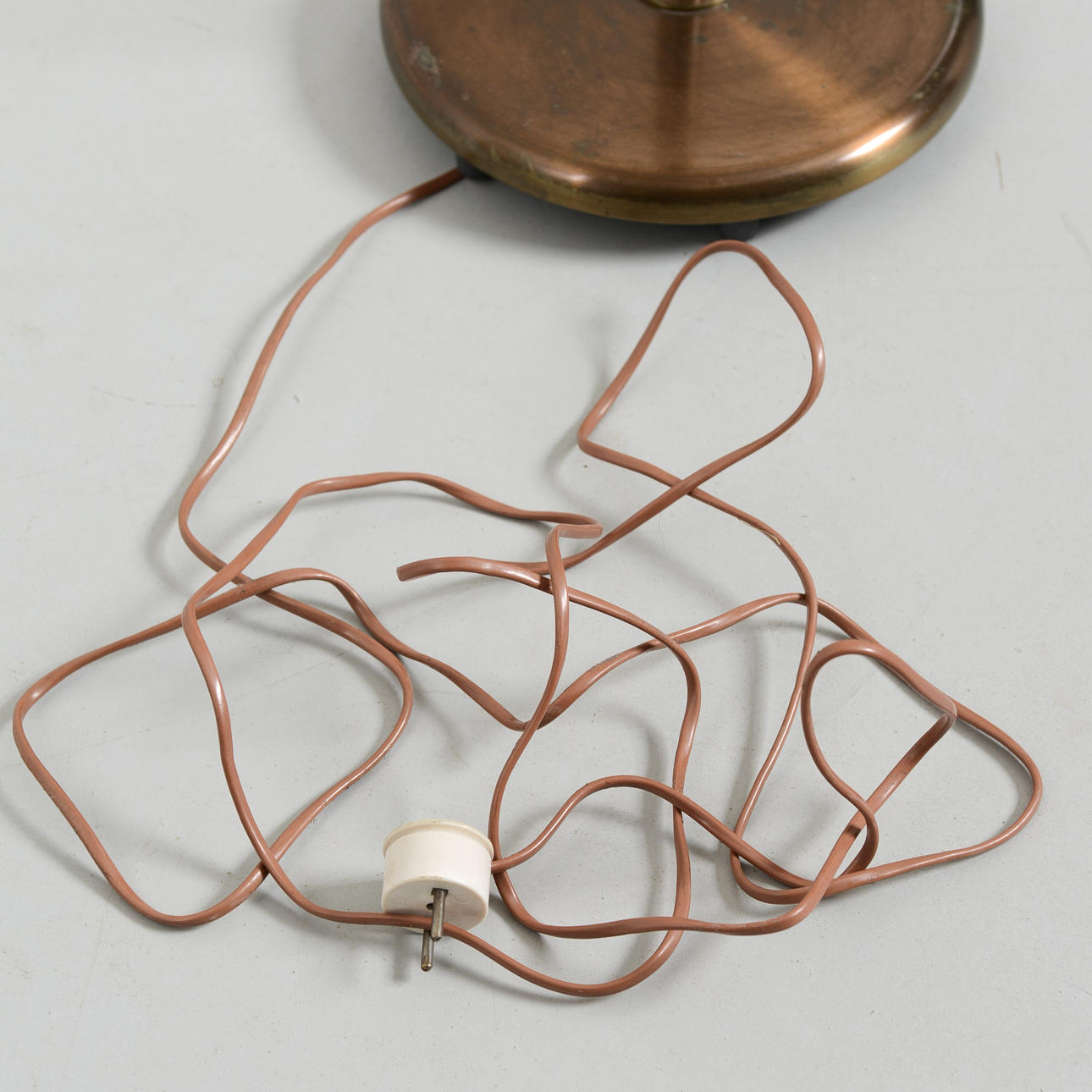
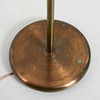
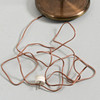
Normal wear and tear. Minor marks and oxidation on foot. Worked at the time of cataloging. No functional warranty is provided.
Resale right
Description
Brass. Textile lampshade. Adjustable height. Height 145 cm.
Arvid Böhlmarks Lampfabrik was founded in Stockholm in 1872 by Arvid Böhlmark and quickly developed into one of the country's leading companies in lighting production. The business started with the import of kerosene and gas oil lamps, but already in the 1880s its own production began in the extensive factory premises on Högbergsgatan in Stockholm. Everything from metal pressing and casting to advanced finishes such as nickel plating, silvering and gilding were performed here.
An important step in the company's expansion came in 1894 when Böhlmark acquired Pukeberg's glassworks in Nybro. Through this, the company became self-sufficient in lighting glass and was able to combine metal and glass in a way that came to characterize their luminaires. At the turn of the century, the manufacture of electric lighting was also established, and already in 1904 the company's first electric luminaires were launched.
During the first half of the 20th century, Böhlmarks developed into a pioneer player in Swedish design. Collaborations with significant architects and designers such as Gunnar Asplund, Alice Nordin, Harald and Bo Notini and Alf Wallander contributed to the company being at the core of the aesthetic renewal that came to shape Swedish Grace during the 1920s. In this style, classicising lines were combined with elegant proportions and exquisite material sense, something that was clearly reflected in the company's luminaires with their sheer glass volumes, their symmetrical metal structures and their period balance between luxury and restraint.
During the 1930s, the design moved towards what later came to be known as Swedish Modern, a more austere and functionalist aesthetic in which the diffusion of light and the practical function of the luminaires were emphasized. Böhlmarks was also one of the leading companies in the country. The glass from Pukeberg was used in the form of opal glass, pressed glass and etched glass and was often combined with nickel-plated or brass-treated metal. The result was luminaires that combined industrial precision with artistic sense of form.
In the 1940s the company employed around 250 people in Stockholm and Nybro and was regarded as Sweden's largest producer of lighting fixtures. The store at Norrmalmstorg served as an important showplace for the company's wide range, from exclusive ceiling chandeliers to series-made luminaires for homes and public environments.
In 1964, the entire production was moved to Pukeberg's glassworks. Operations continued there until the late 1970s. Today, Böhlmarks stands out as one of the cornerstones of Swedish design history. Their lighting fixtures highlight the evolution from Art Nouveau and Swedish Grace to Swedish Modern and are valued for their distinct stylistic qualities and significant contributions to Swedish design.
Condition
Normal wear and tear. Minor marks and oxidation on foot. Worked at the time of cataloging. No functional warranty is provided.
Resale right
Payment options for this item
Payment cardsBank transferDelivery
: Provide your locationInfo temporarily unavailableLoading…Provide your location to see transport options and prices.
Oops! Something went wrong.
Please try again in a moment. If it still doesn't work, contact Auctionet support.
Details
- House
- Formstad Auktioner
- Address
Gårdsfogdevägen 16
168 67 Bromma
Sweden- Placement
- Showroom