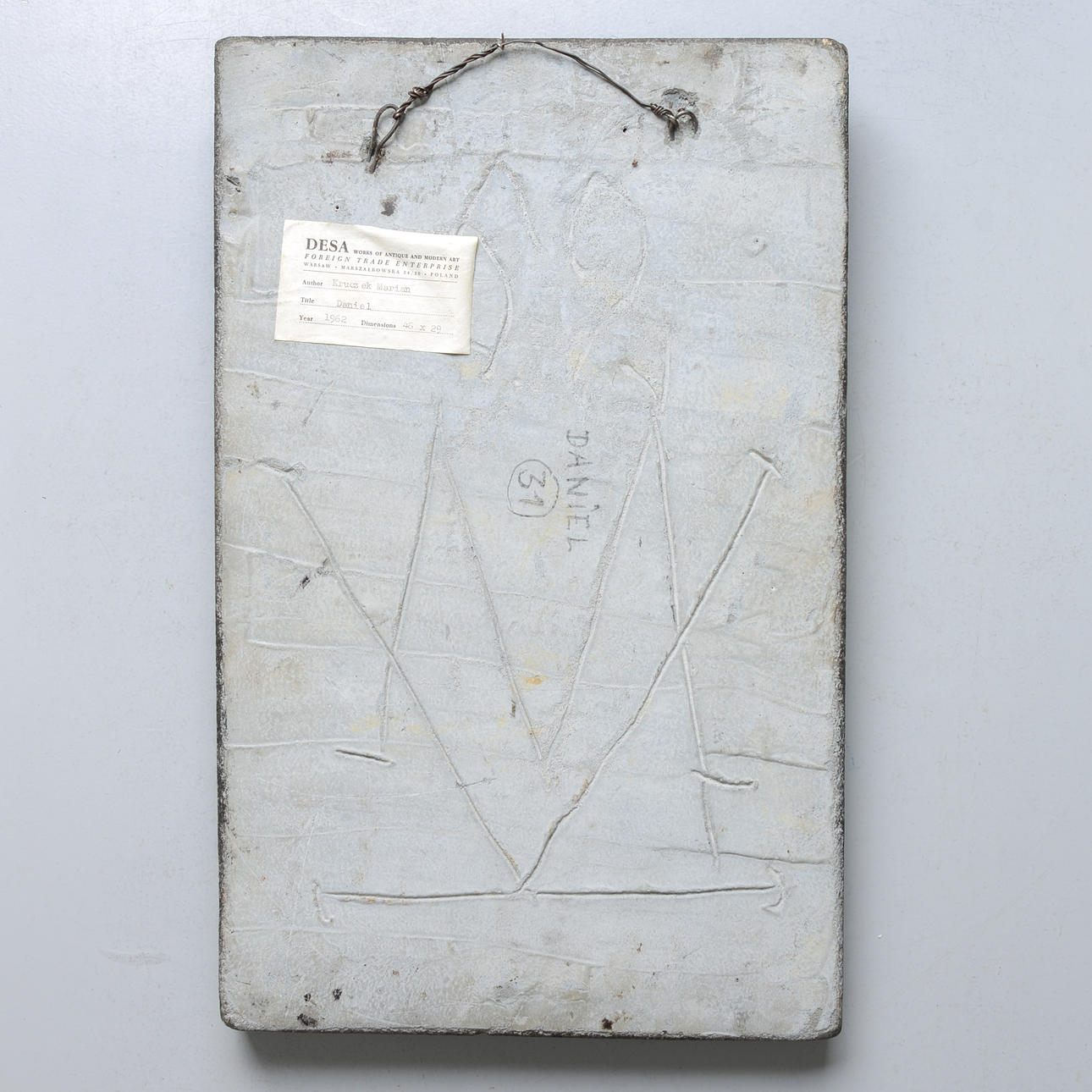
MARIAN KRUCZEK. Sculpture, “Daniel”, 1962.

Images
Description
Dimensions: 46 x 29 cm.
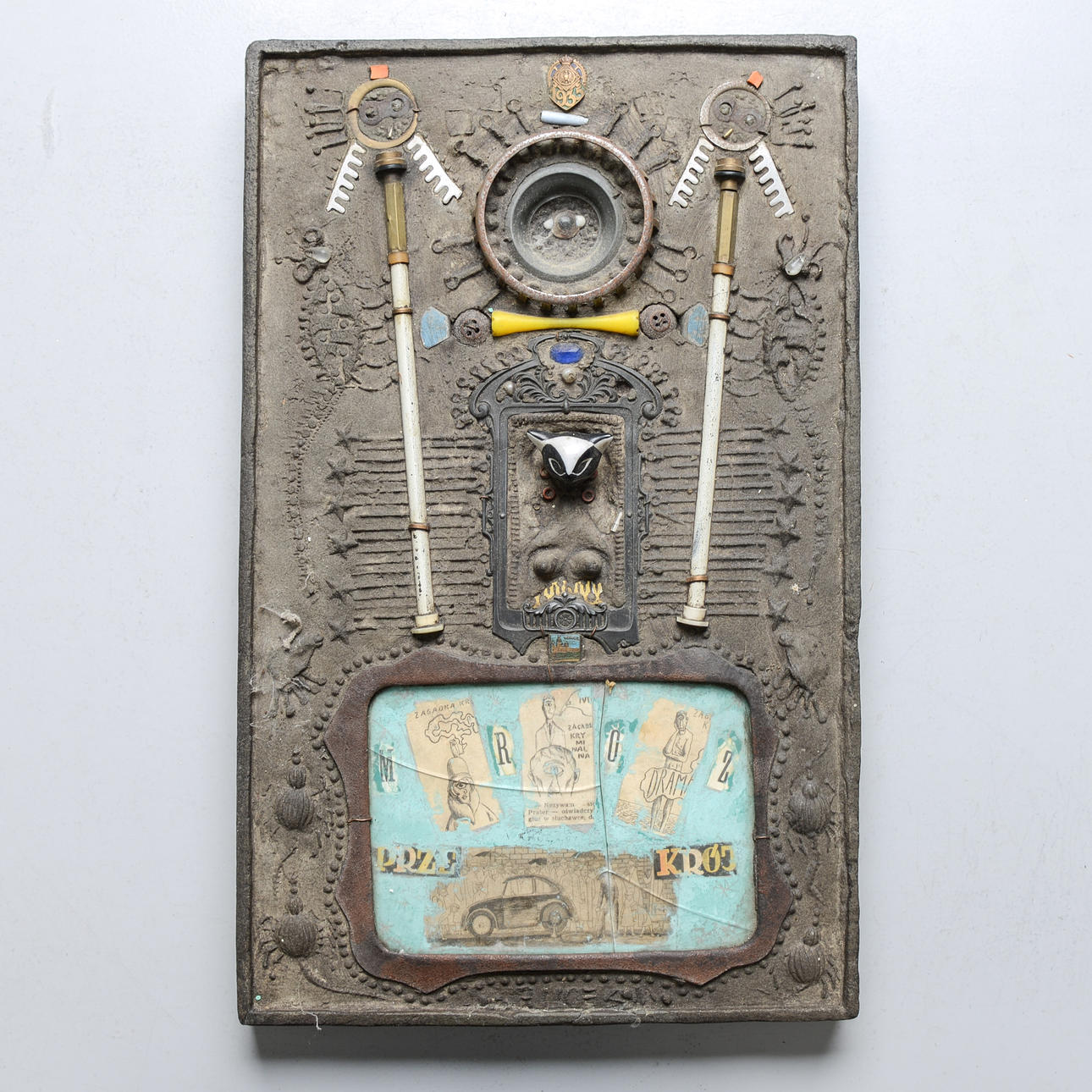
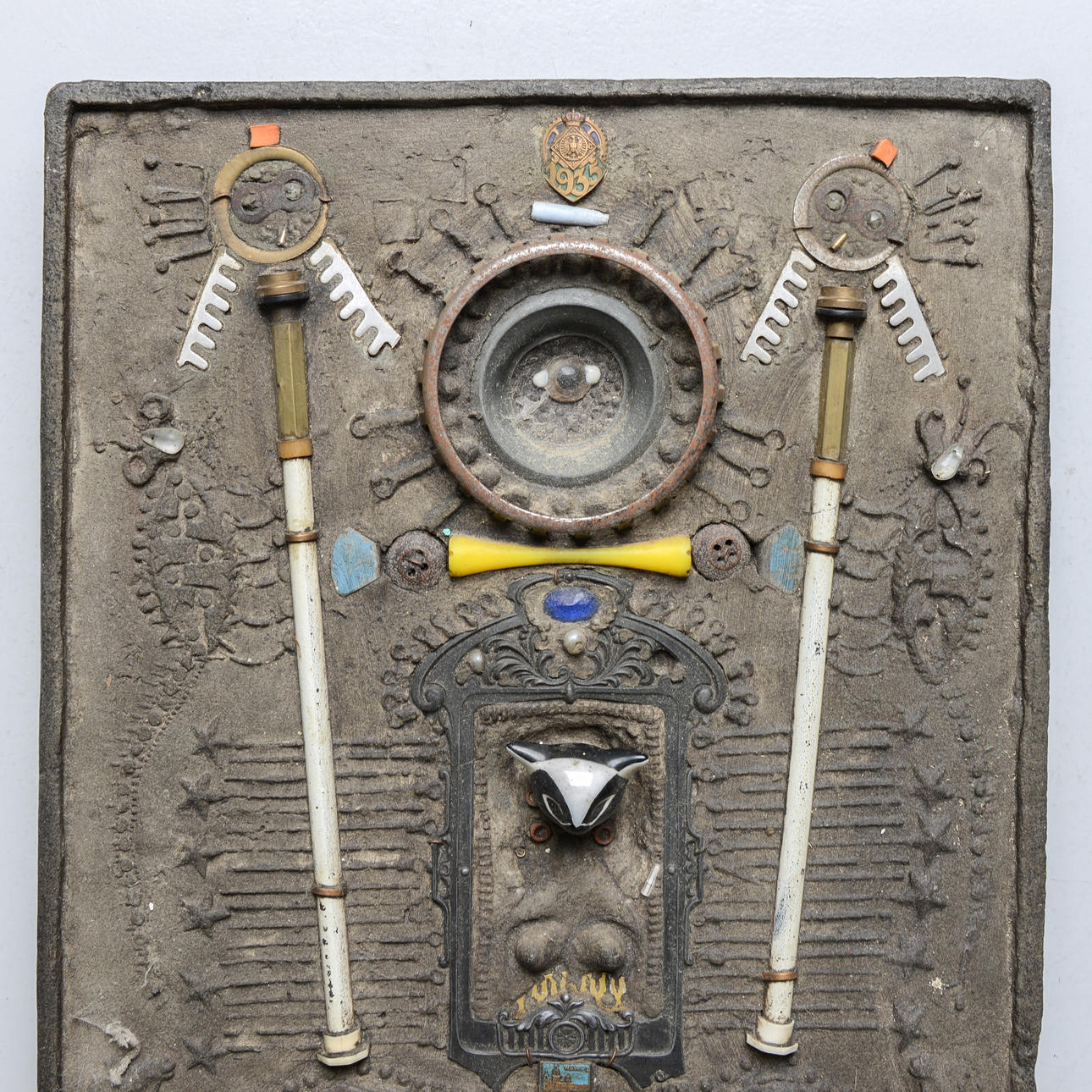
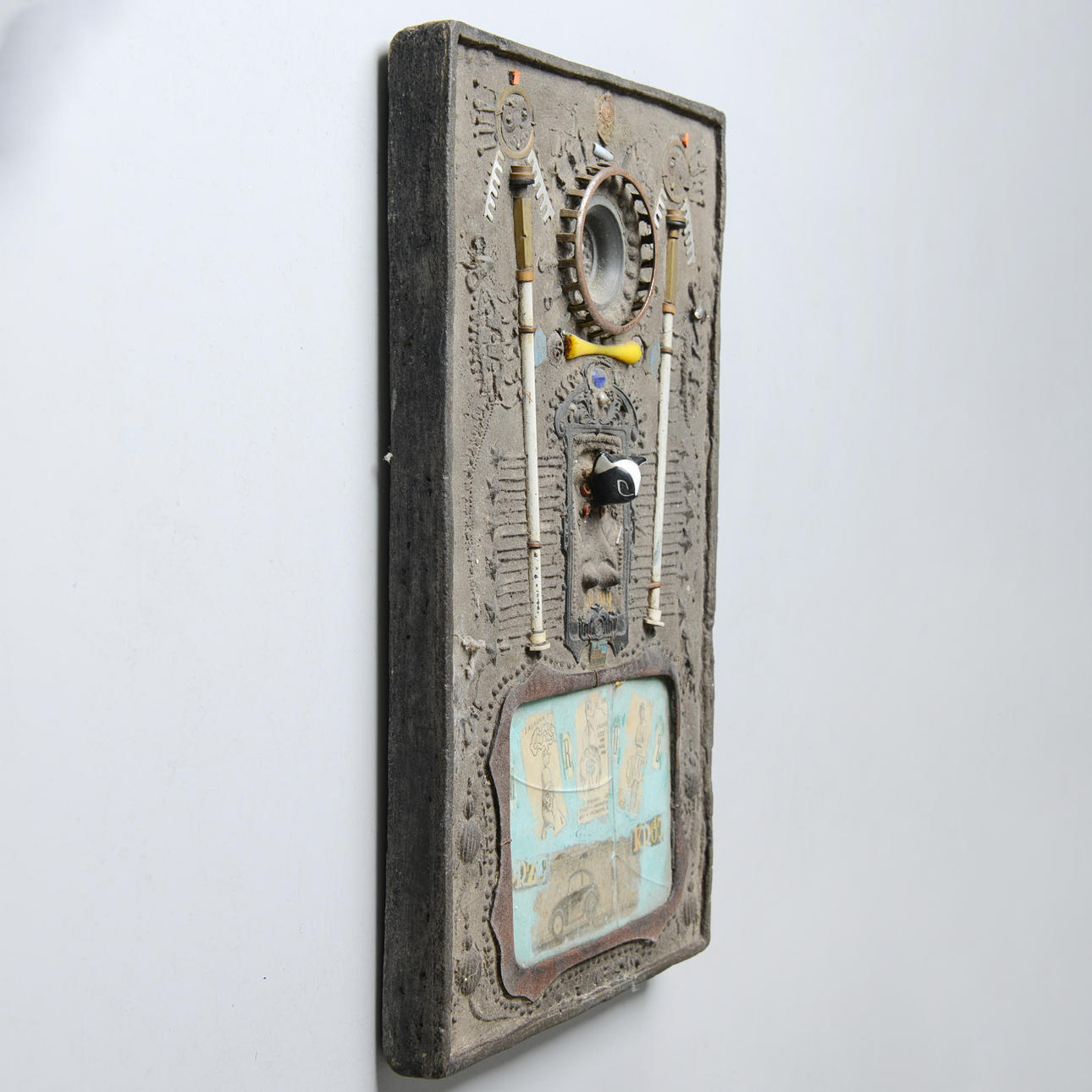
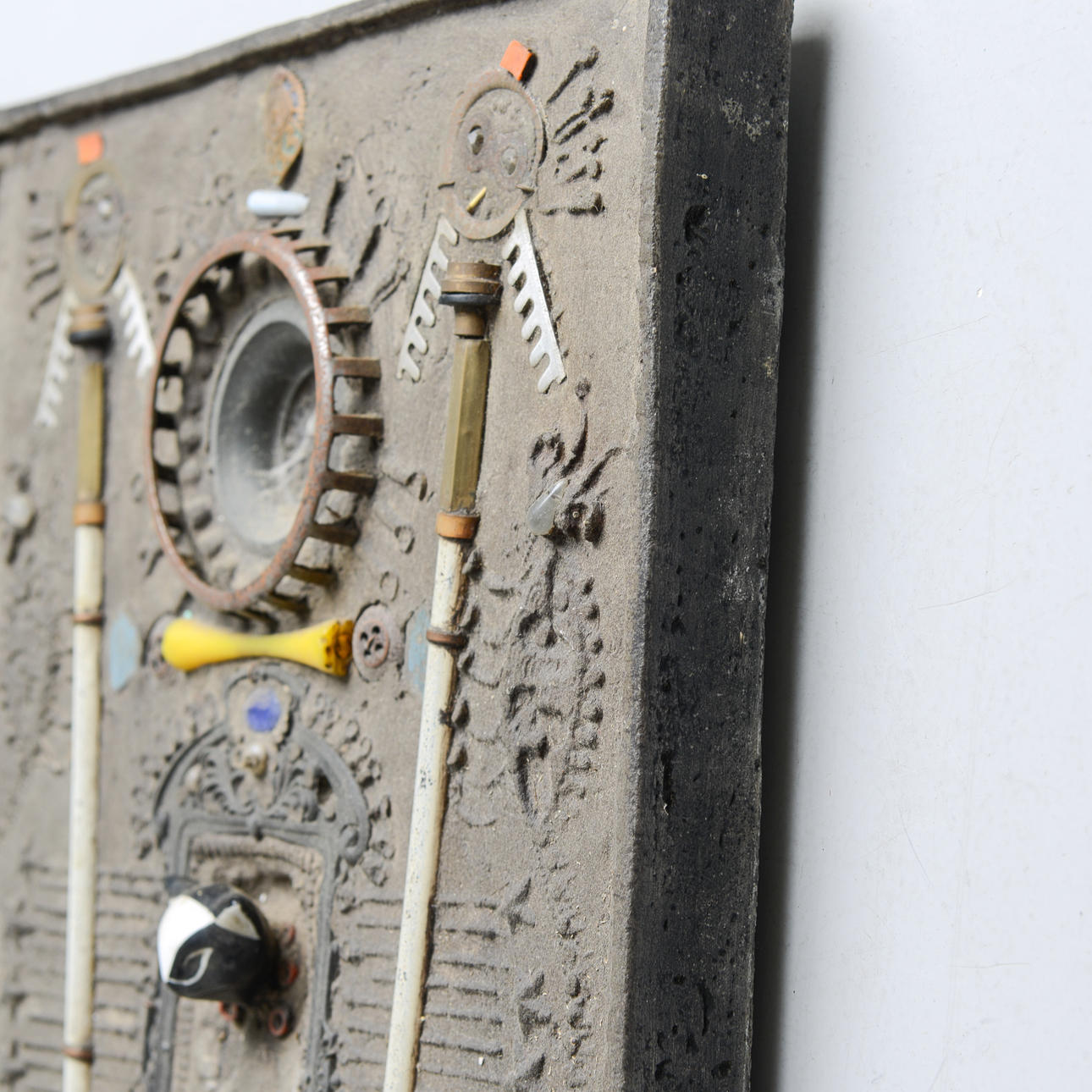
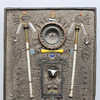
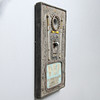
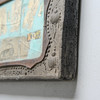
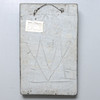
“Daniel” from 1962 is a relief assemblage in which found objects, metal fragments and a roughly modeled surface are united in a strictly vertical and symmetrical composition. Two rod-like elements frame a central, mask-like motif that gives the work an iconic and totemic character.
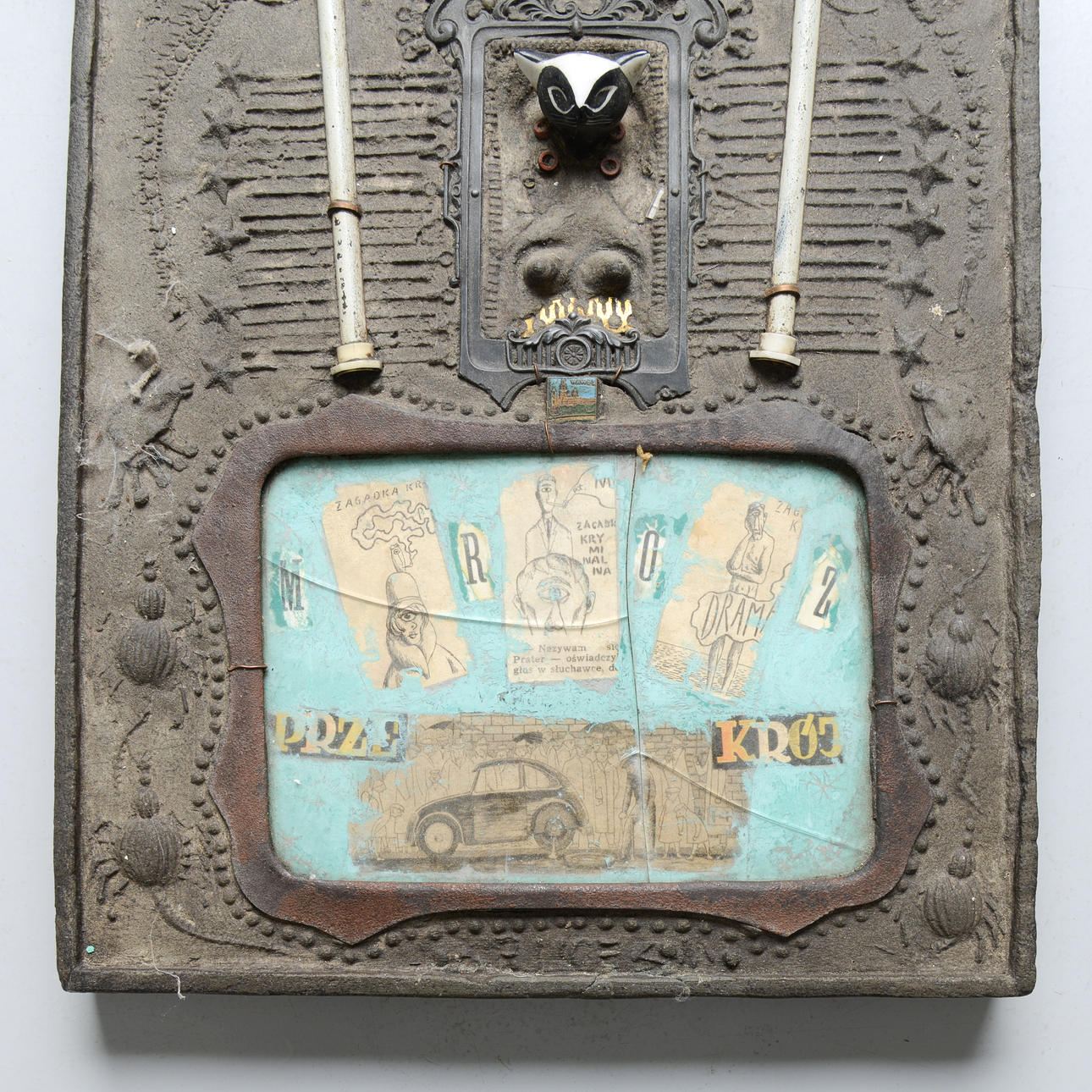
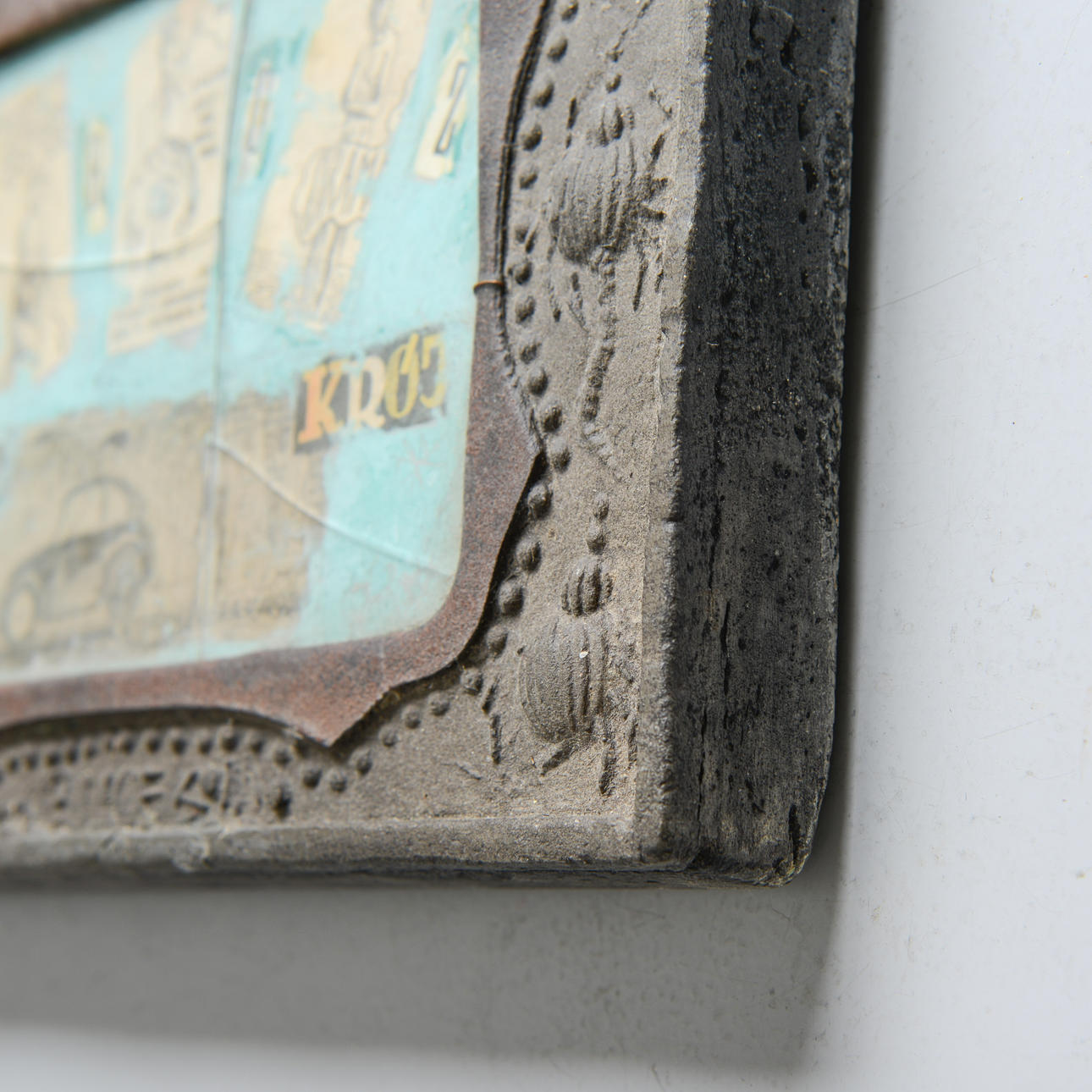
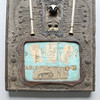
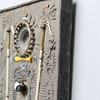
Materiality is central. The raw, sand-blended surface contrasts with inserted industrial objects and printed image fragments in the lower section, where text and a car hint at contemporary urban realities. The combination of sacred structure and everyday elements creates a tension between myth and modernity. The work reflects Kruczek's interest in experimental techniques and in the encounter between art, objects and social environment in the Nowa Huta of the 1960s.
Marian Kruczek (1927-1983) was a Polish visual artist active as a painter, graphic artist and sculptor, strongly associated with Kraków and the Nowa Huta neighborhood. Born in Płowce in 1927, he was educated at the Academy of Fine Arts in Kraków, where he completed his studies in 1954 at the faculty of painting under the tutelage of Wojciech Weiss and Zbigniew Pronaszko, among others. The following year he obtained a diploma in the studio of Tadeusz Łakomski.
Kruczek was active both as an artist and educator, and was attached as an associate professor to the Academy in Kraków. Working in several techniques, he developed a diverse artistry that included painting, printmaking and sculpture. During his lifetime, he presented his works in over fifty solo exhibitions and participated in more than 150 collection exhibitions in Poland and internationally, including in Sweden, Belgium, the United States, Norway, Germany and Hungary.
A particular characteristic of Kruczek's activities was his local anchorage and experimental initiatives. In Nowa Huta he took an active part in cultural life, including through the Widzimisie puppet theatre in the late 1950s, where everyday objects were transformed into scenic figures. He also initiated the open-air Galeria Pod Chmurką, inaugurated in 1973, where art was presented in a makeshift exhibition room between the residential buildings. This project combined artistic practice with social engagement and opened up a direct dialogue between art and audiences in the public space.
Condition
Damage to glass detail on board. General wear and tear.
Resale right
Theme
Description
Dimensions: 46 x 29 cm.
“Daniel” from 1962 is a relief assemblage in which found objects, metal fragments and a roughly modeled surface are united in a strictly vertical and symmetrical composition. Two rod-like elements frame a central, mask-like motif that gives the work an iconic and totemic character.
Materiality is central. The raw, sand-blended surface contrasts with inserted industrial objects and printed image fragments in the lower section, where text and a car hint at contemporary urban realities. The combination of sacred structure and everyday elements creates a tension between myth and modernity. The work reflects Kruczek's interest in experimental techniques and in the encounter between art, objects and social environment in the Nowa Huta of the 1960s.
Marian Kruczek (1927-1983) was a Polish visual artist active as a painter, graphic artist and sculptor, strongly associated with Kraków and the Nowa Huta neighborhood. Born in Płowce in 1927, he was educated at the Academy of Fine Arts in Kraków, where he completed his studies in 1954 at the faculty of painting under the tutelage of Wojciech Weiss and Zbigniew Pronaszko, among others. The following year he obtained a diploma in the studio of Tadeusz Łakomski.
Kruczek was active both as an artist and educator, and was attached as an associate professor to the Academy in Kraków. Working in several techniques, he developed a diverse artistry that included painting, printmaking and sculpture. During his lifetime, he presented his works in over fifty solo exhibitions and participated in more than 150 collection exhibitions in Poland and internationally, including in Sweden, Belgium, the United States, Norway, Germany and Hungary.
A particular characteristic of Kruczek's activities was his local anchorage and experimental initiatives. In Nowa Huta he took an active part in cultural life, including through the Widzimisie puppet theatre in the late 1950s, where everyday objects were transformed into scenic figures. He also initiated the open-air Galeria Pod Chmurką, inaugurated in 1973, where art was presented in a makeshift exhibition room between the residential buildings. This project combined artistic practice with social engagement and opened up a direct dialogue between art and audiences in the public space.
Condition
Damage to glass detail on board. General wear and tear.
Resale right
Theme
Payment options for this item
Payment cardsBank transferDelivery
: Provide your locationInfo temporarily unavailableLoading…Provide your location to see transport options and prices.
Oops! Something went wrong.
Please try again in a moment. If it still doesn't work, contact Auctionet support.
Details
- House
- Formstad Auktioner
- Address
Gårdsfogdevägen 16
168 67 Bromma
Sweden- Placement
- Vagn 007