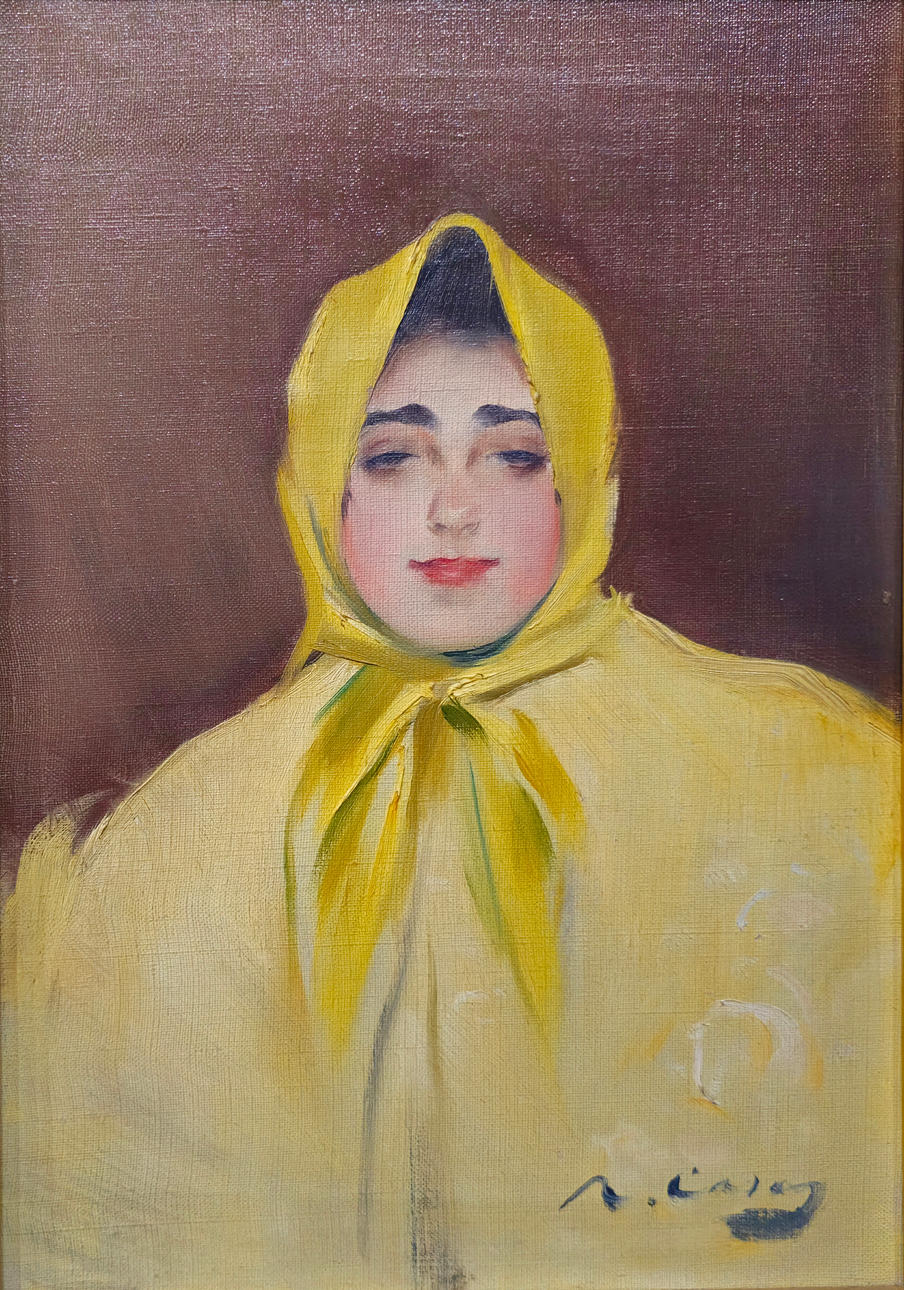
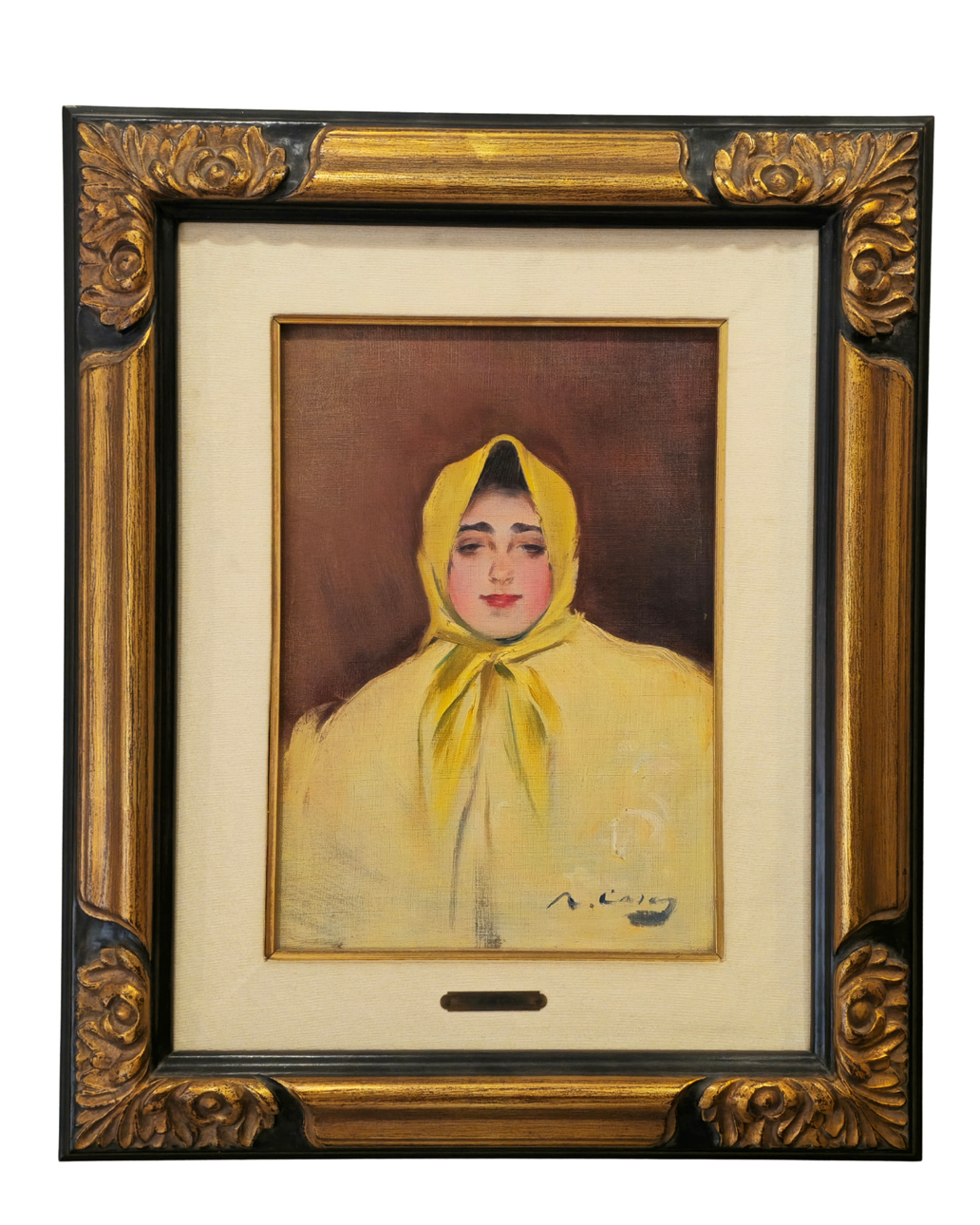
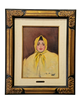
RAMON CASAS (1866-1932). Una joven.
This auction is closed, but maybe you like the following items?

Images

Description
Oil on canvas
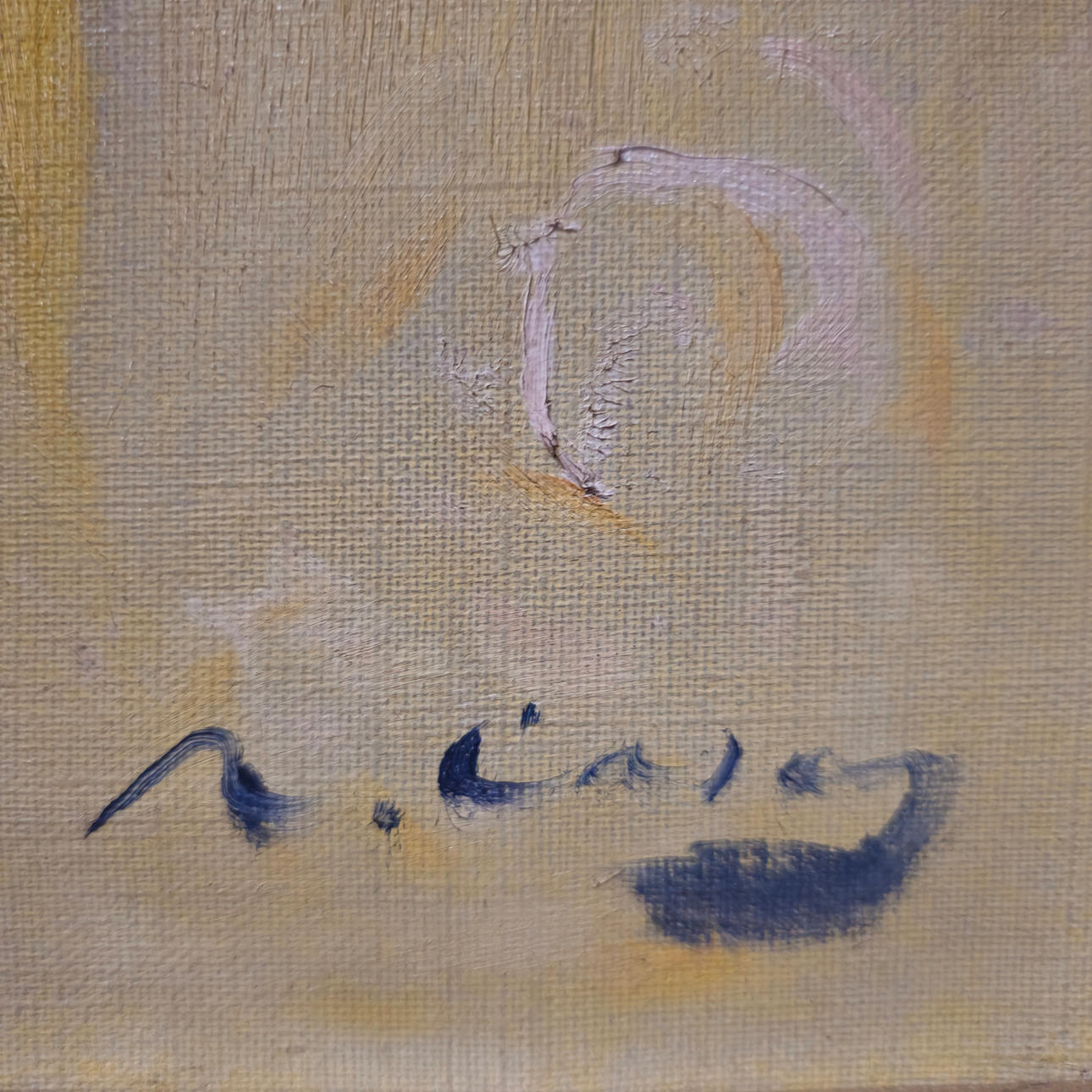
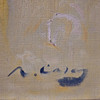
Signed. Executed circa 1895.
38.5x27 cm
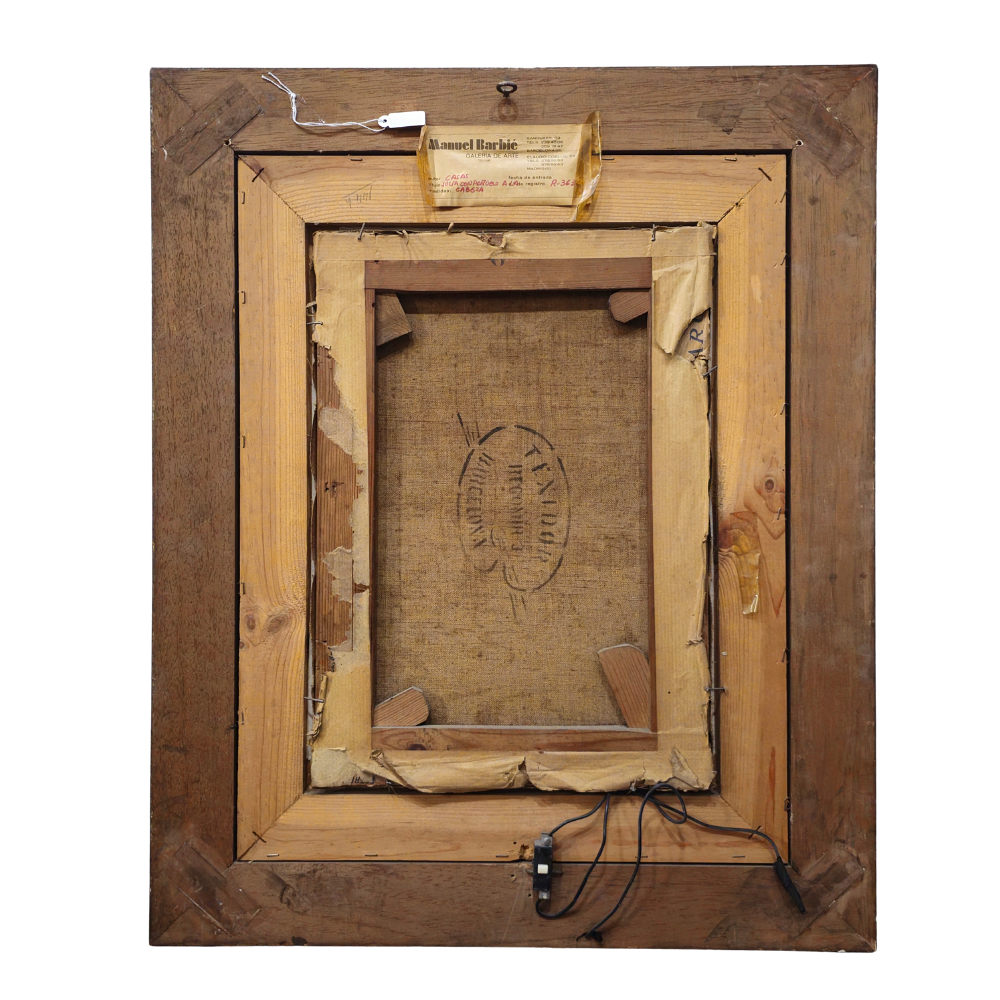
Bibliography: Isabel Coll, "Una vida dedicada al arte. Ramon Casas 1866-1932. Catálogo razonado", Murcia, De la Cierva Editores, 2002, p. 276, cat. no. 318 (reproduced).
64x53 cm (frame)
This work dates to circa 1895, a decisive moment in Ramon Casas's career, coinciding with the beginning of his full artistic maturity and the emergence of one of his most characteristic female iconographies: the figure of the “chula”. Alongside the portraits of bourgeois ladies that consolidated his social prestige, Casas developed a parallel gallery of working-class women with a traditional air and confident attitude, linked to the urban imaginary, the world of entertainment, bullfighting, or flamenco.
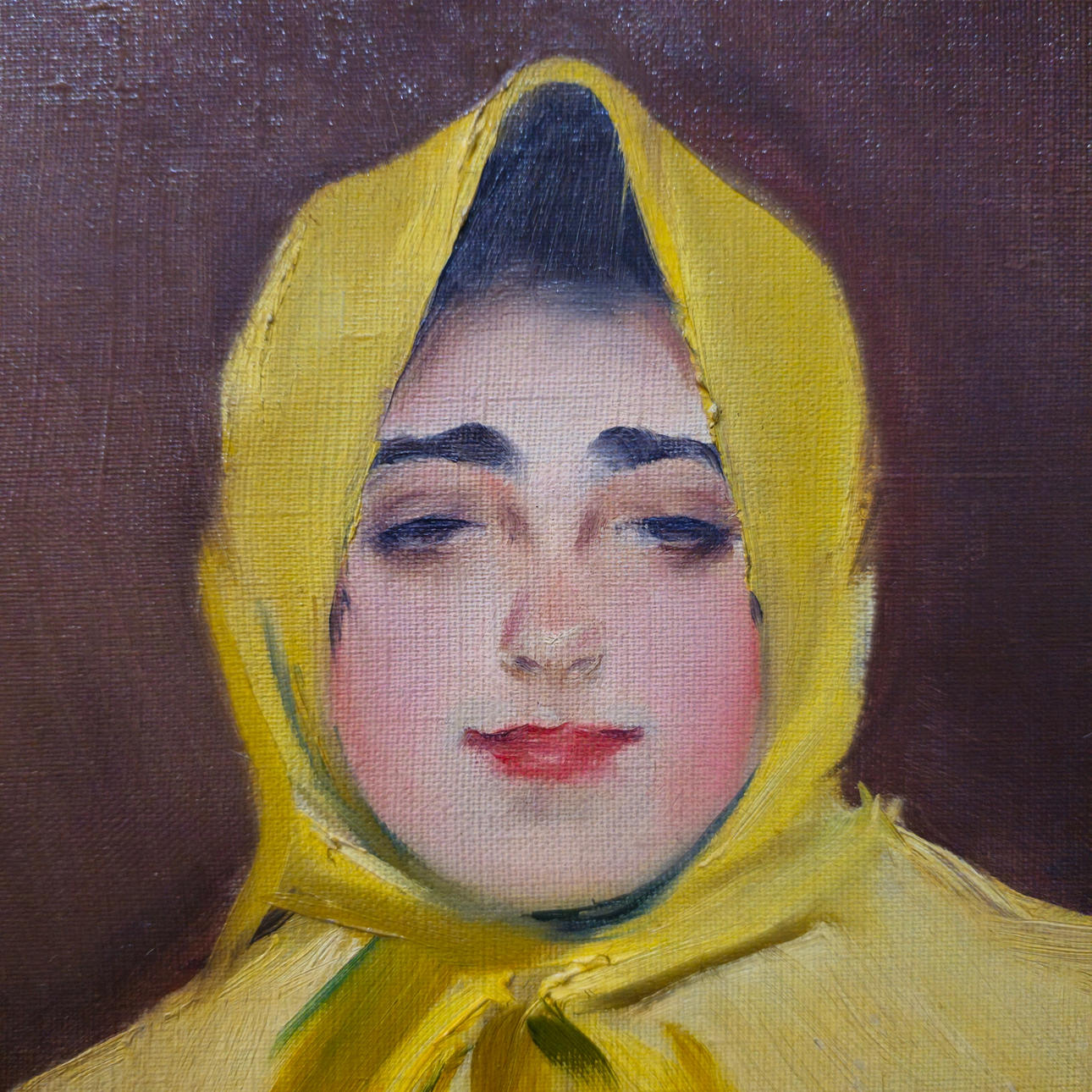
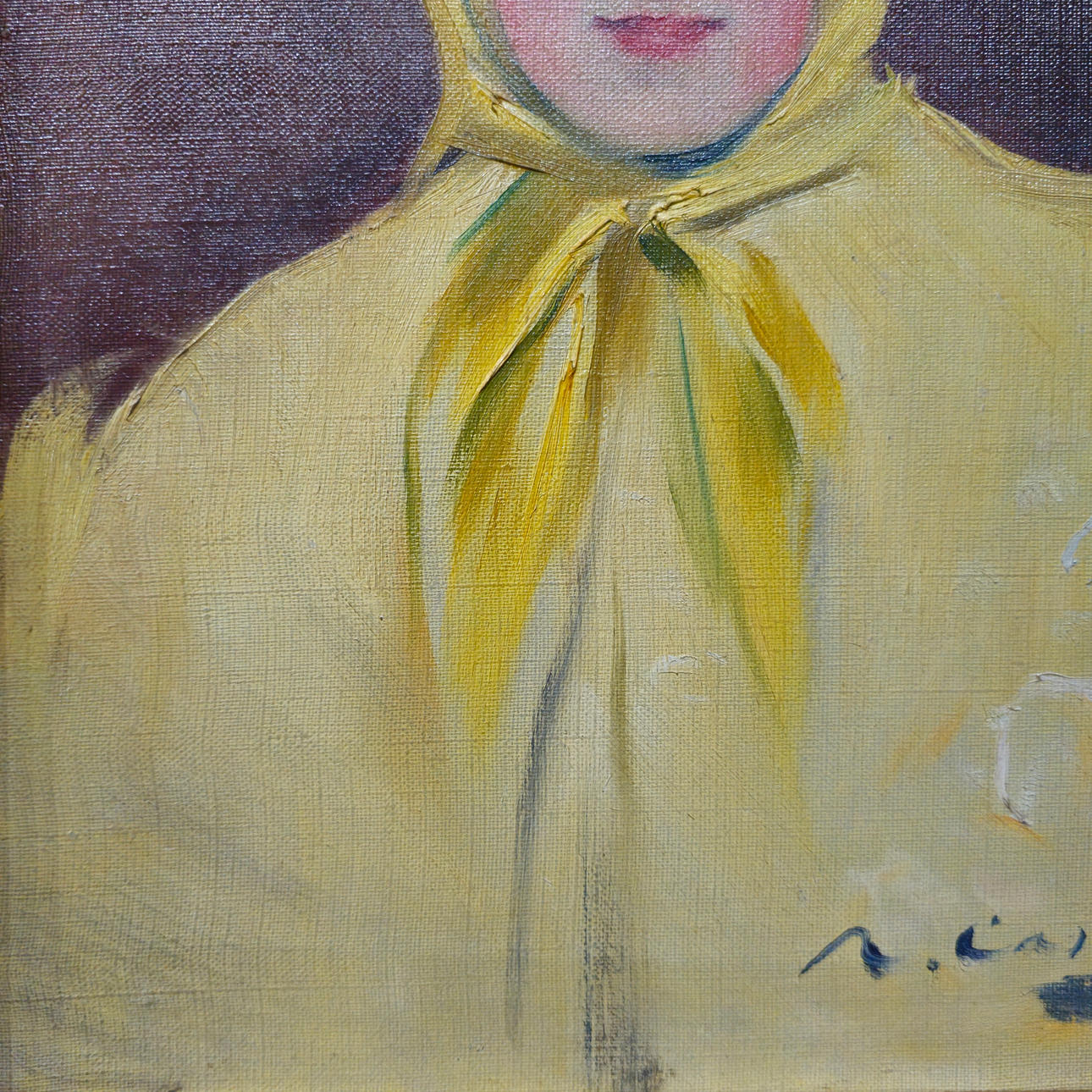
The present figure responds to this new archetype. The model appears wrapped in a wide yellow shawl or mantón, which concentrates the main chromatic effect of the composition. The face, serene and slightly enigmatic, is framed by the clothing, while the dark, neutral background reinforces the presence of the figure. Casas does not seek a detailed psychological portrait here, but rather a synthetic capture of an attitude: a contained expression, between distant and seductive, typical of his early interpretations of the subject.
From a technical point of view, the work shows the artist's characteristic ease during these years: broad brushstrokes, areas barely sketched in the clothing, and greater precision in the face. The economy of the background and the combination of ochres, browns, and yellows link to the Spanish pictorial tradition, especially the legacy of Velázquez and Goya, filtered through Casas's modern experience in Paris.
The “chulas” constitute one of the artist's most recognizable and commercially successful series. From the mid-1890s onwards, Casas turned this female type into an emblem of traditional modernity, capable of uniting realism, graphic elegance, and popular appeal. Its subsequent dissemination in posters, illustrations, and postcards confirms the importance of this iconography within Catalan Modernism.
Due to its chronology, dimensions, technique, and bibliographic reference in Isabel Coll's catalogue raisonné, the work should be understood as an early and significant example of this thematic line, in which Ramon Casas establishes a new female model far from bourgeois idealization and close to the urban modernity of the fin de siècle.
Condition
Work in good condition. Frame with slight defects.
Resale right
Theme
Do you have something similar to sell? Get your items valued free of charge!