ERIK CHAMBERT. Secretary, art deco, 1930s.

Images
Description
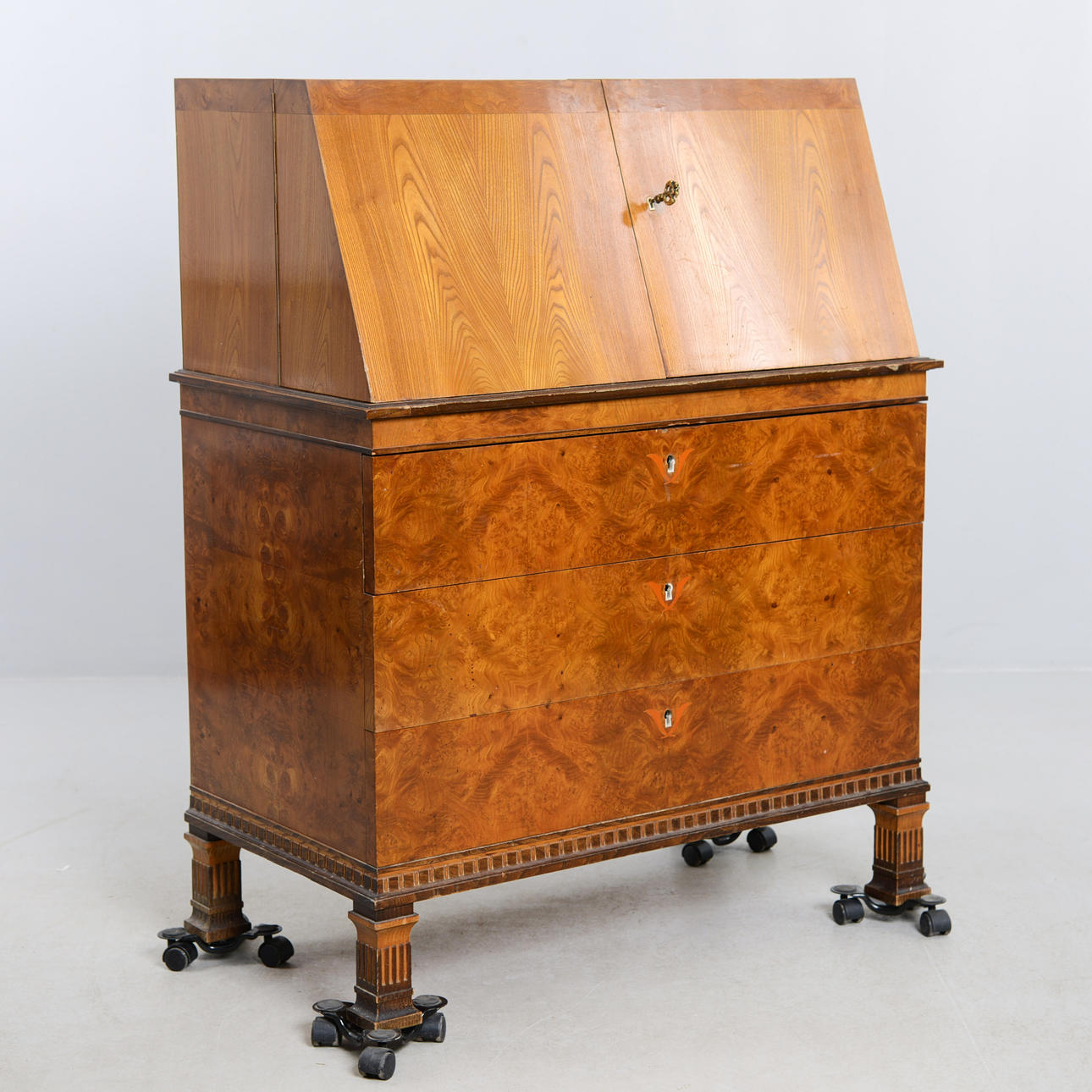
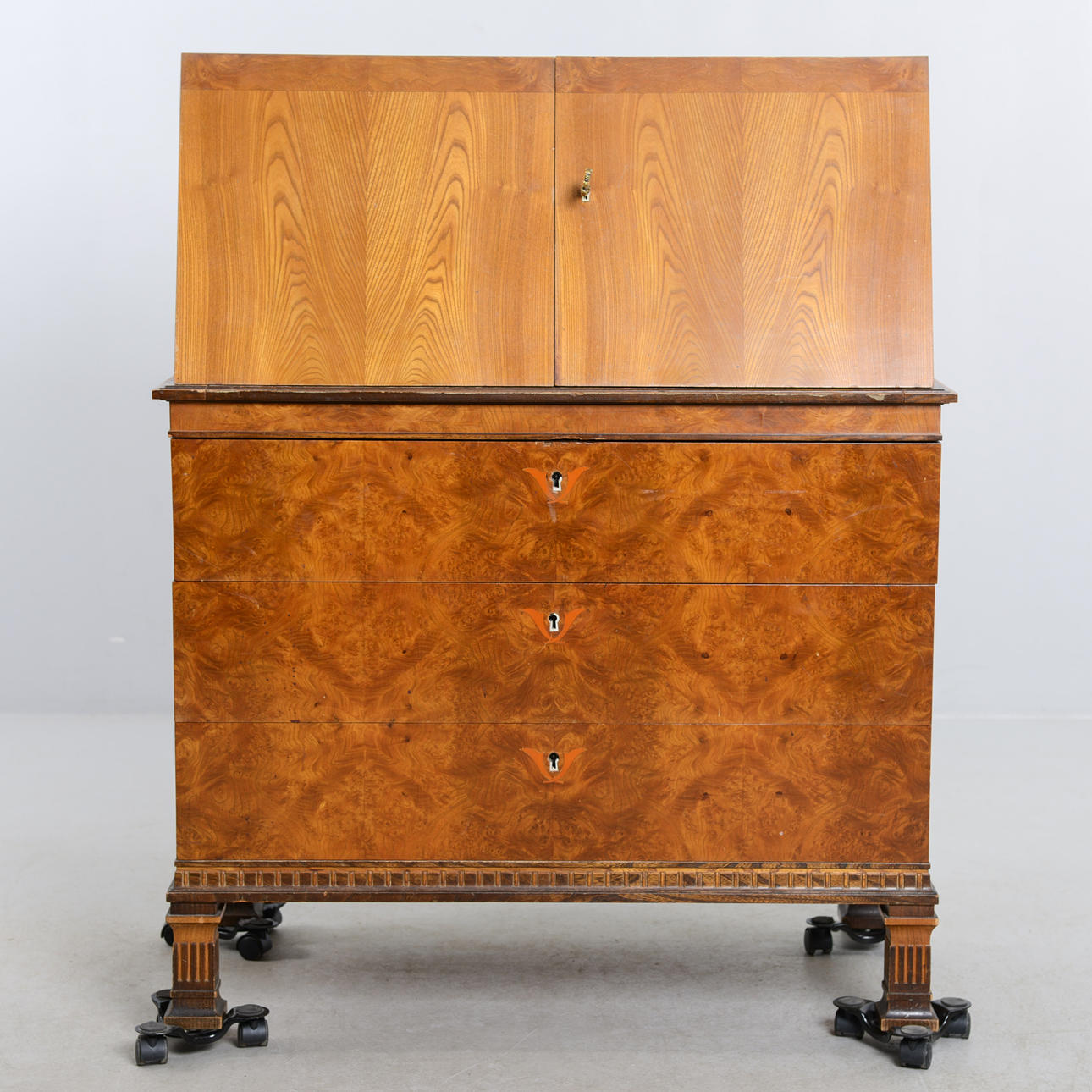
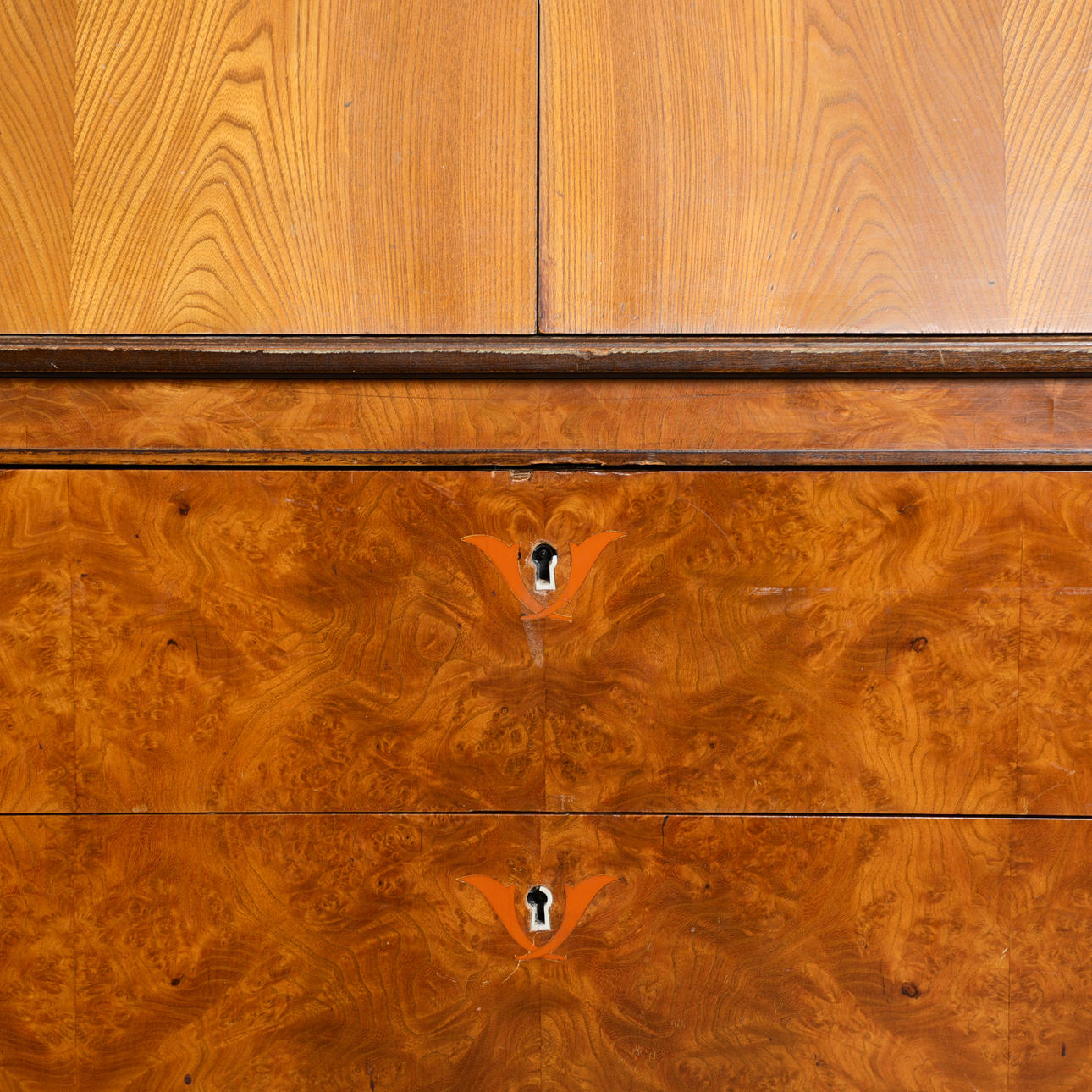
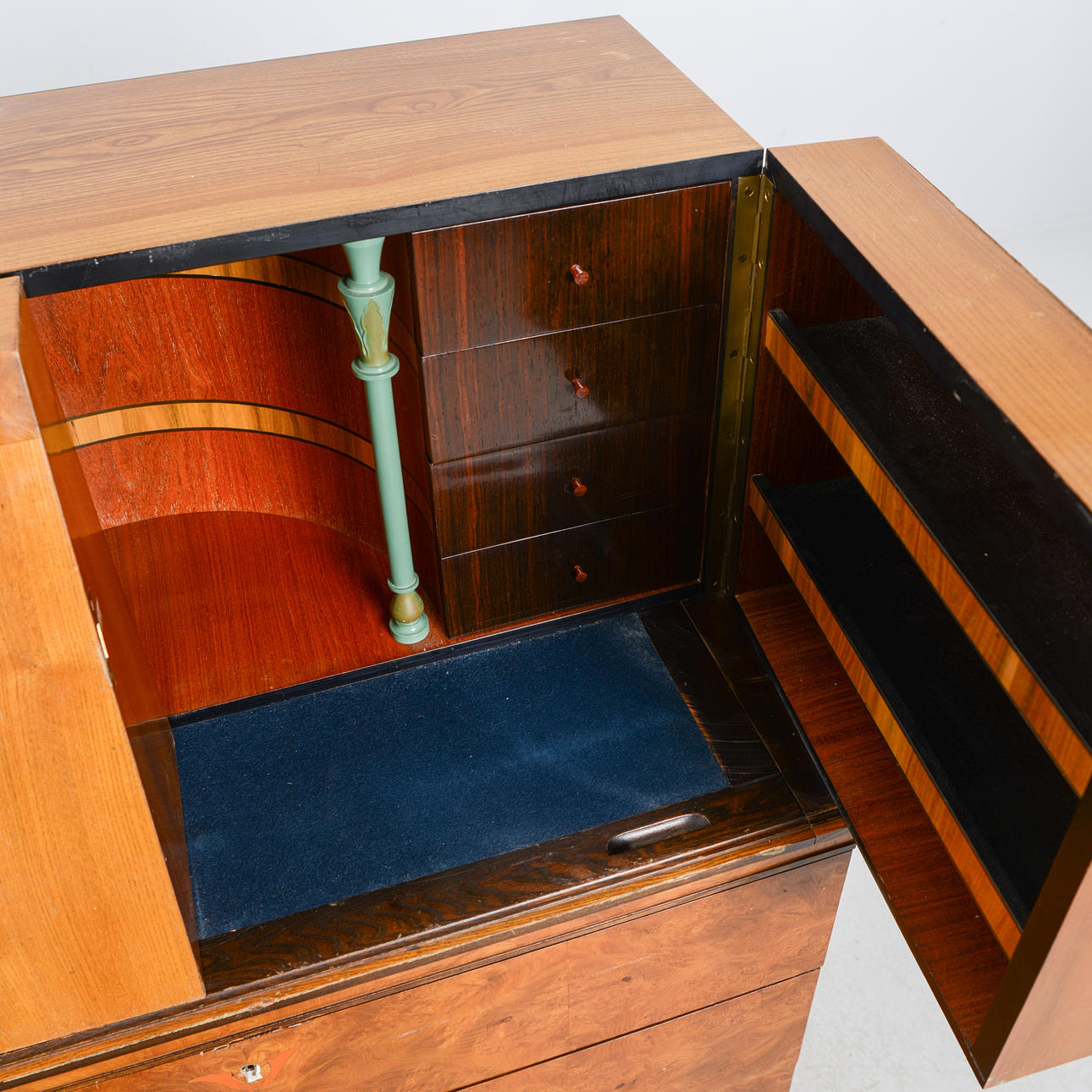
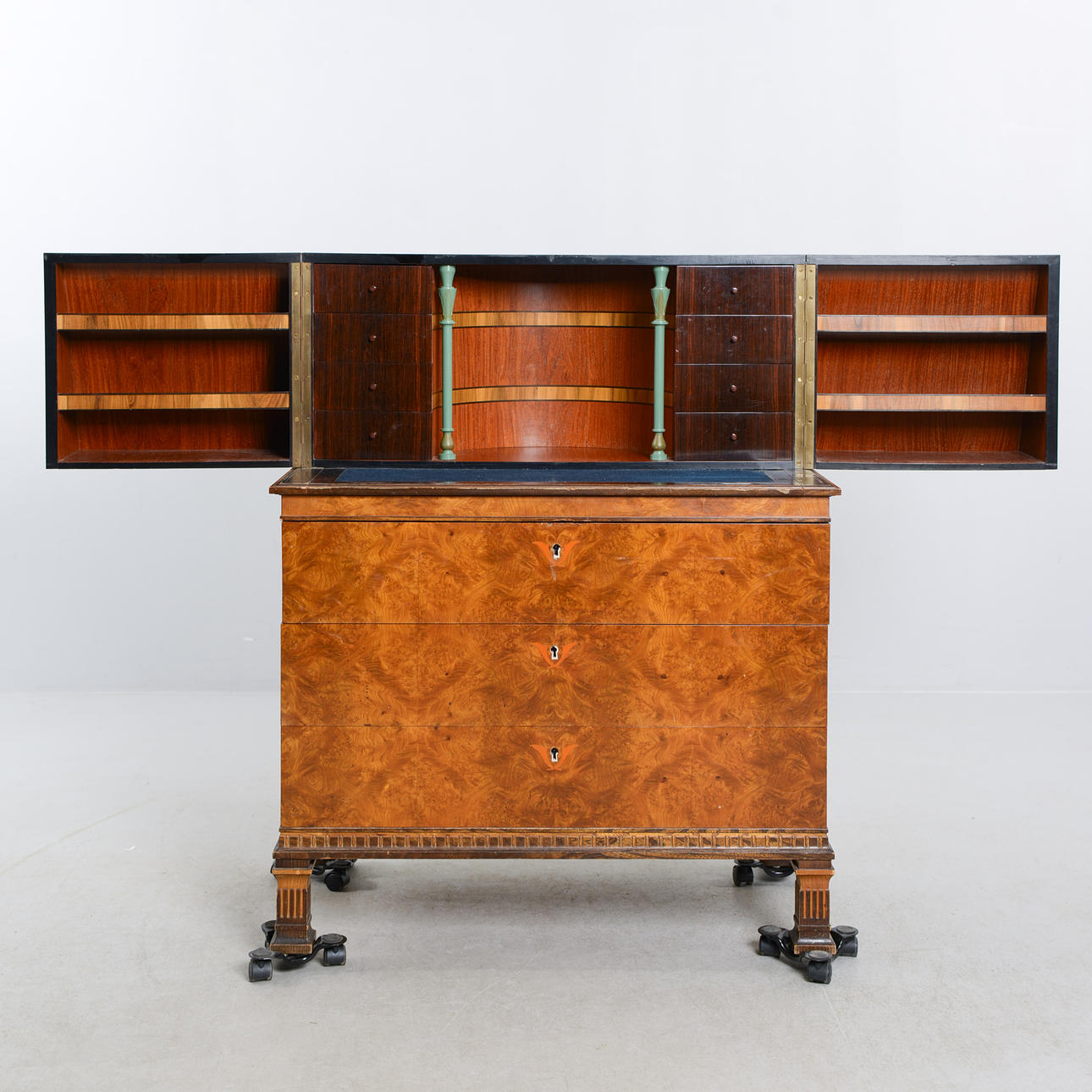
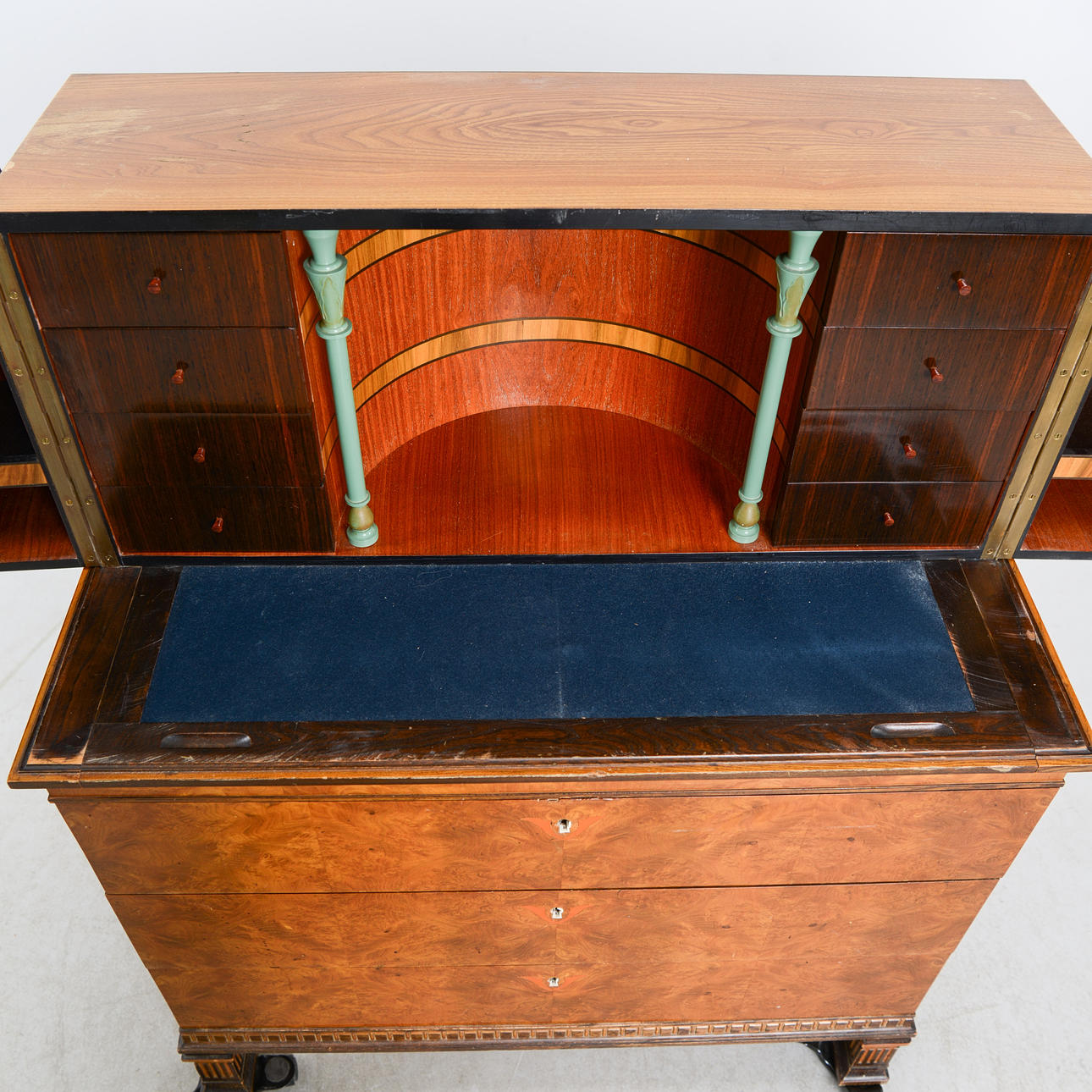
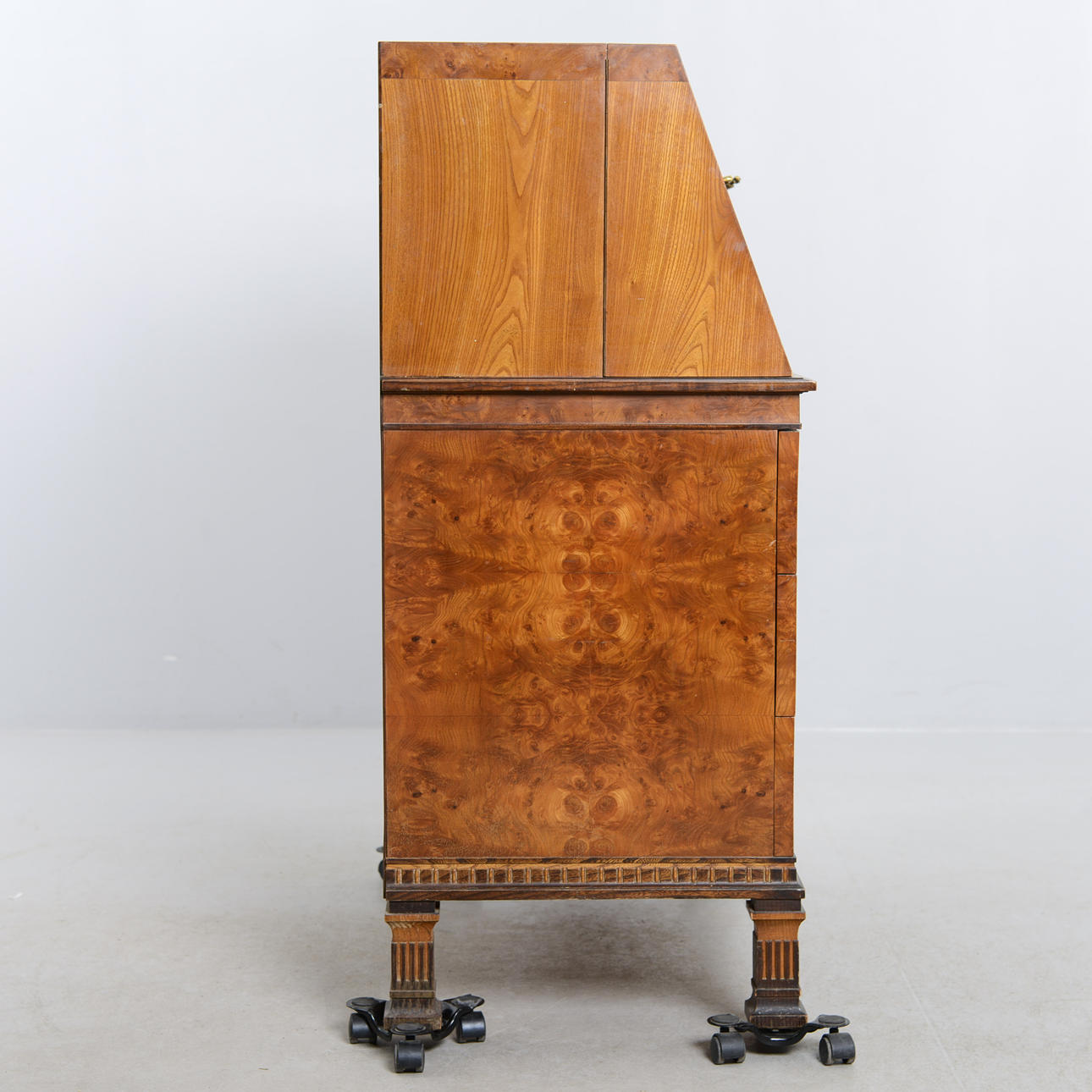
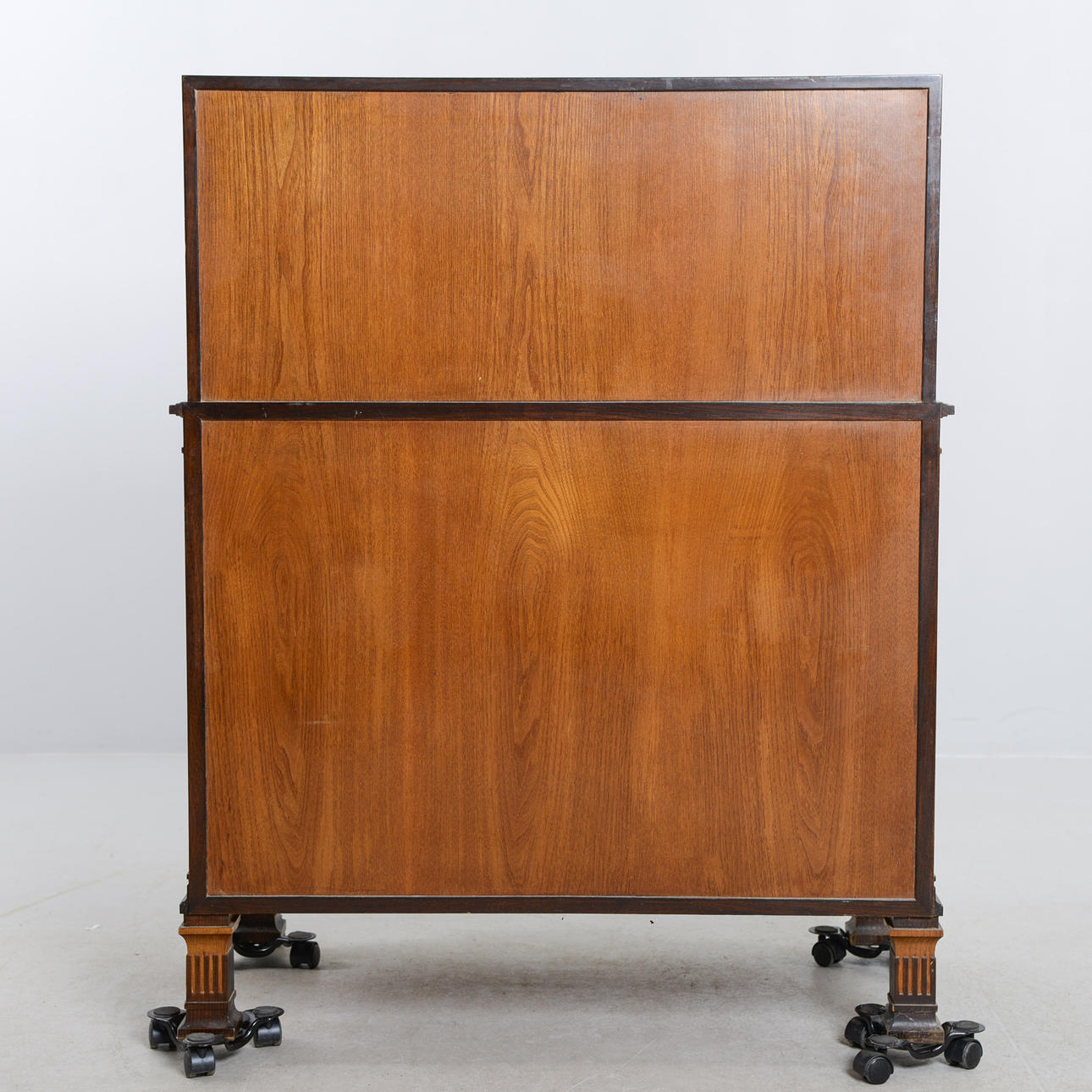
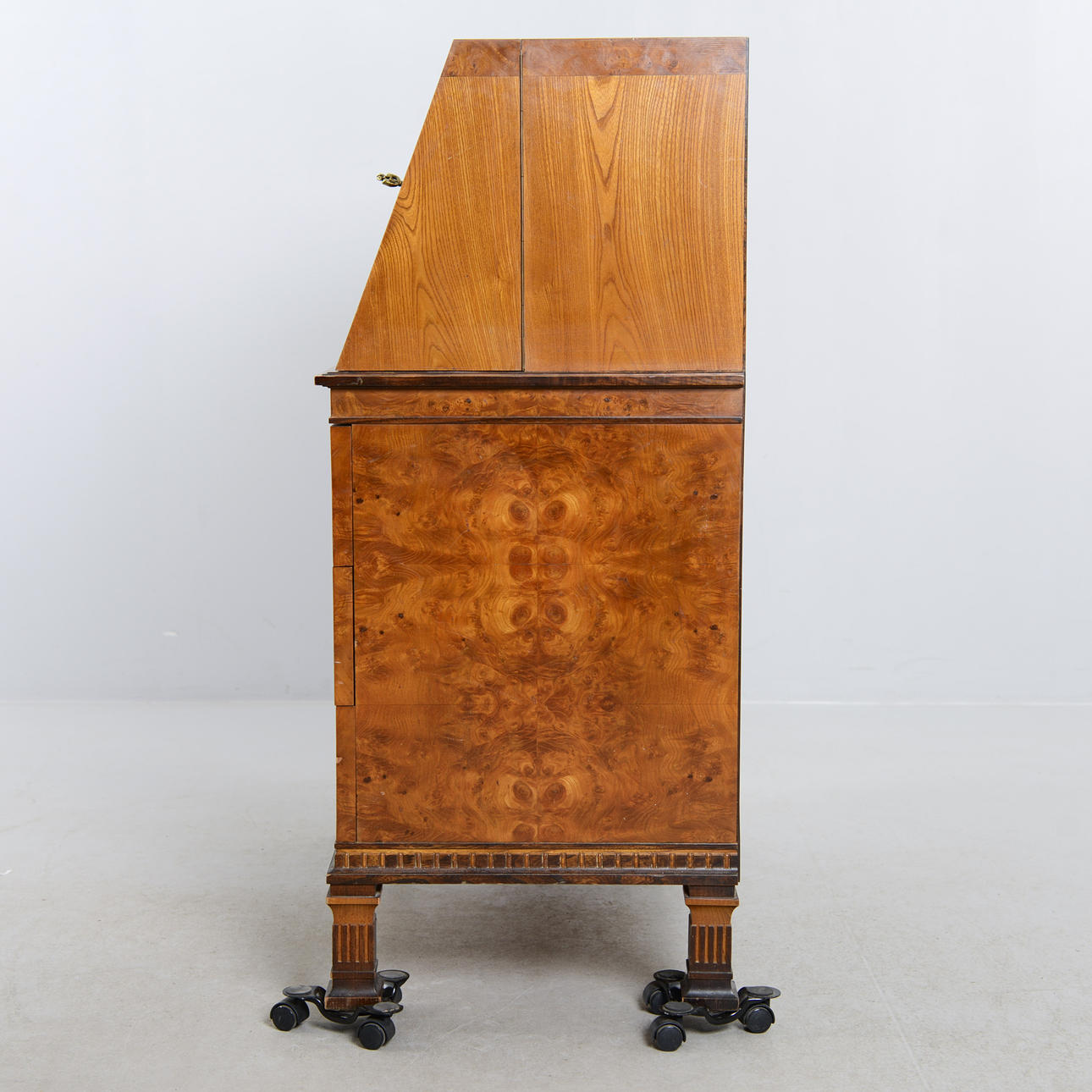
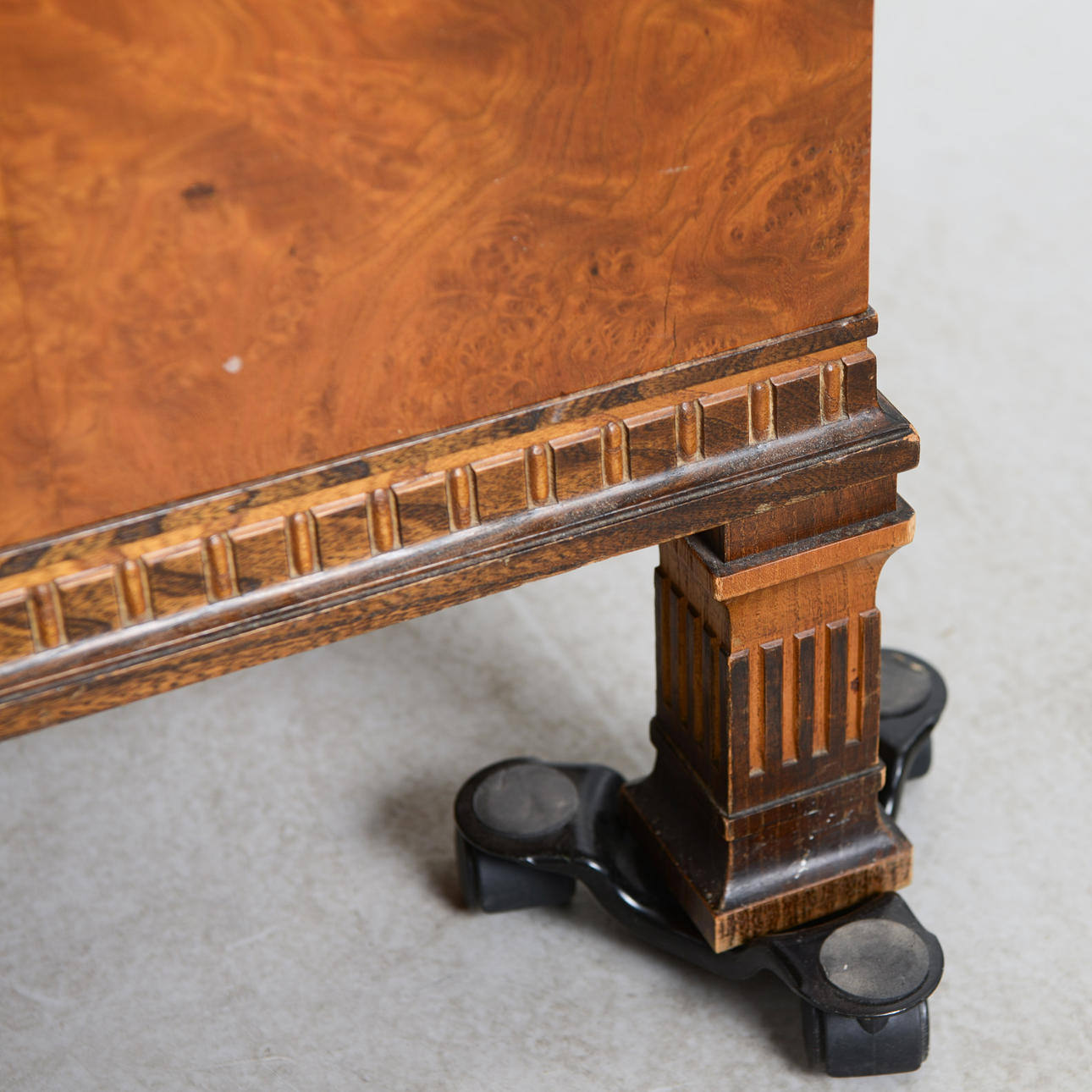
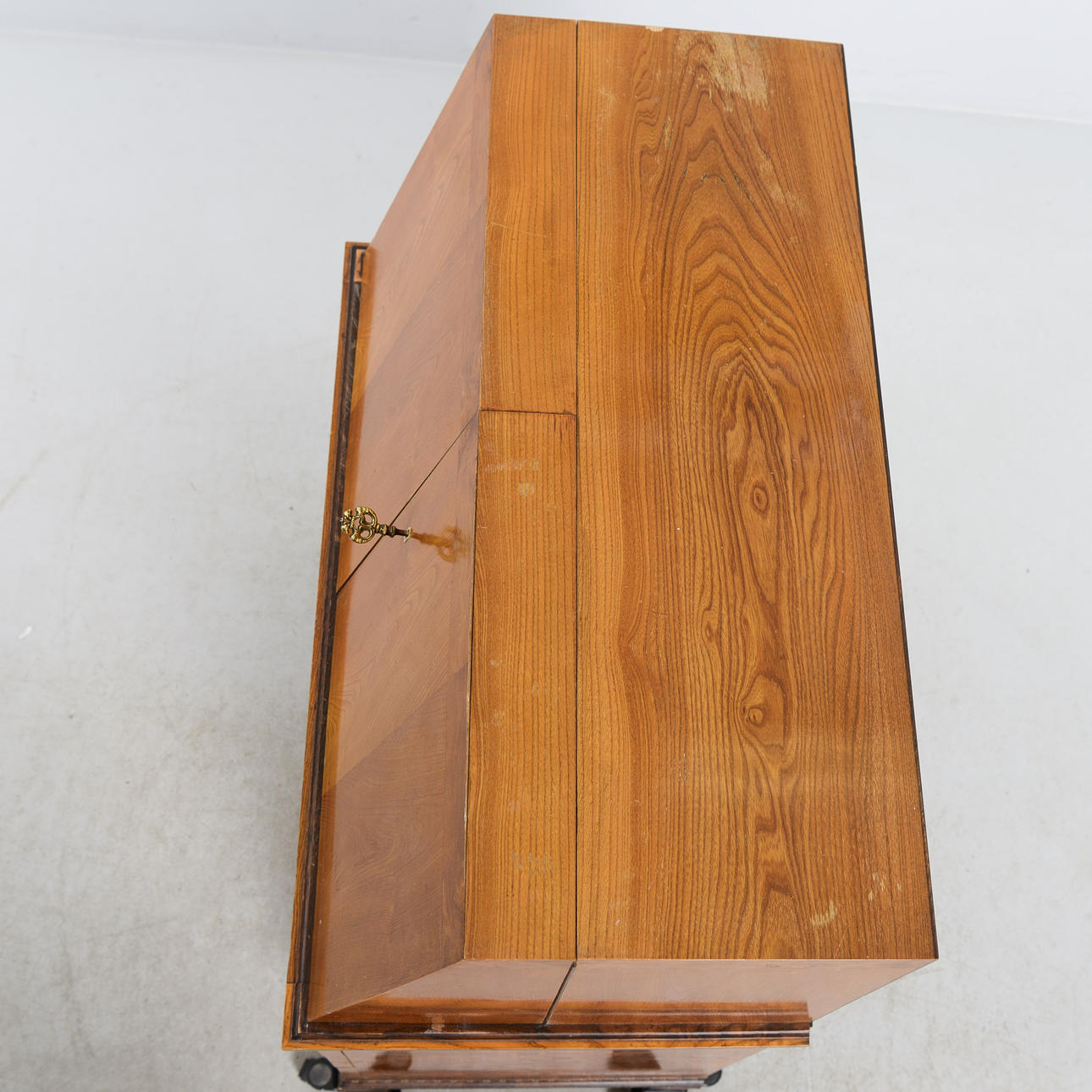
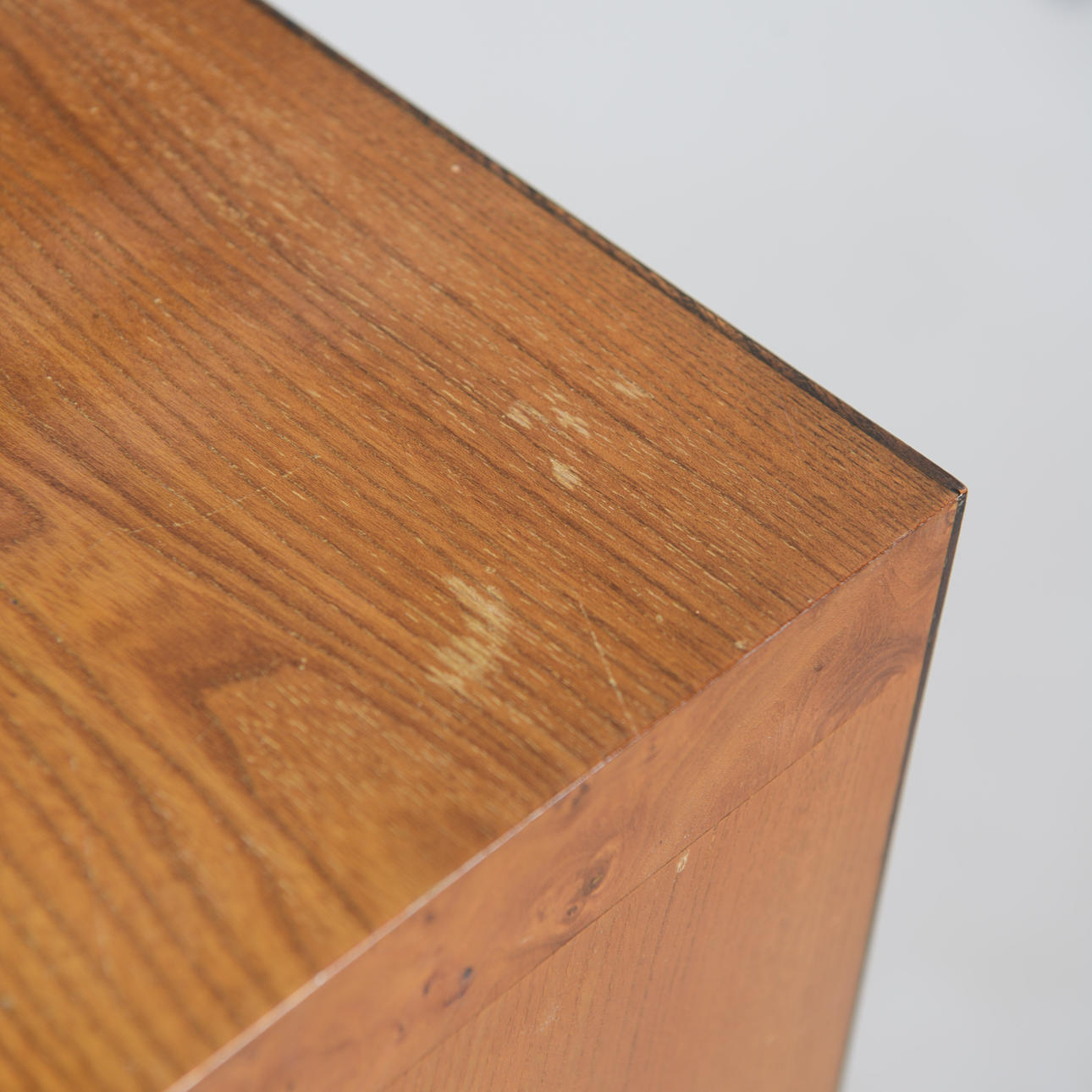
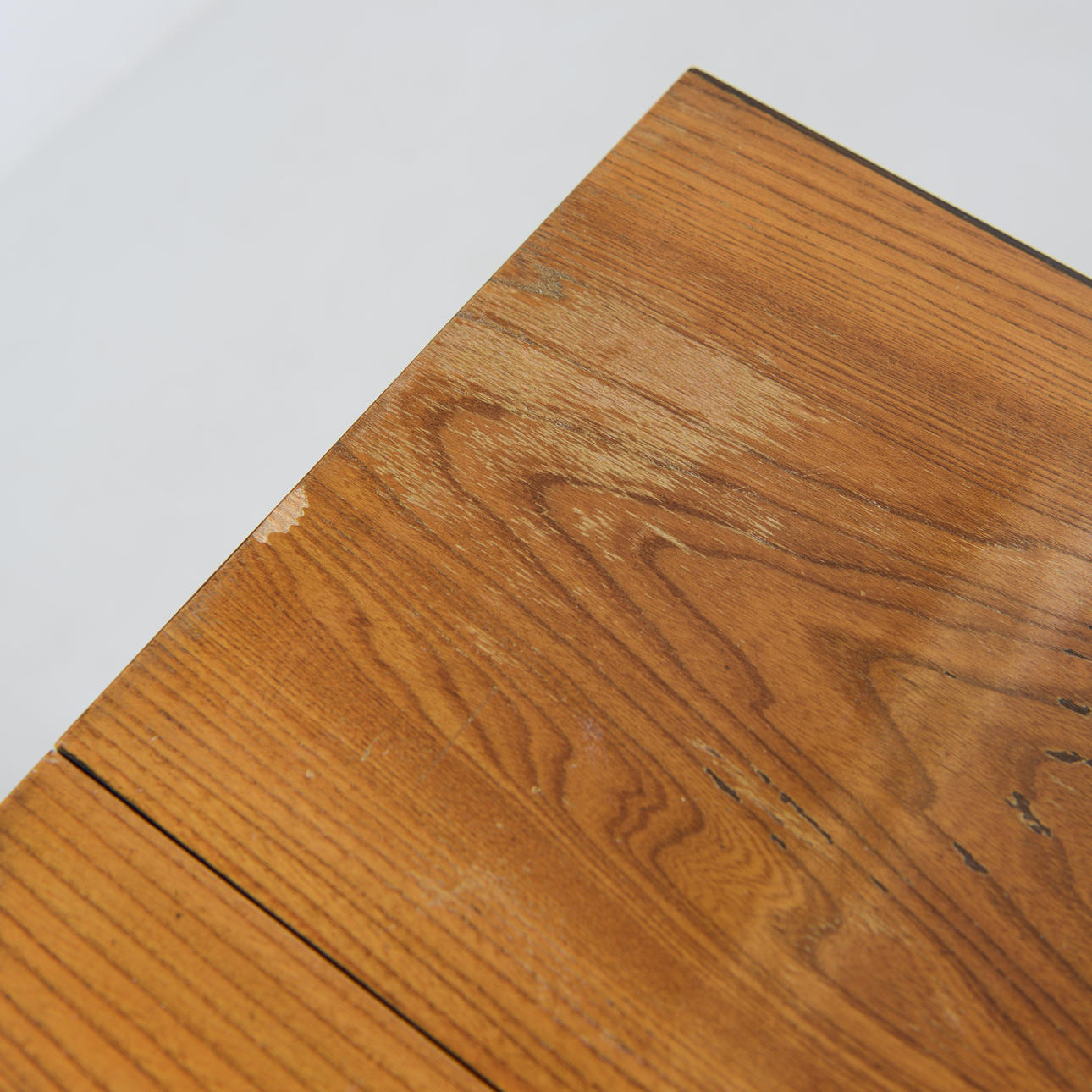
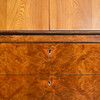
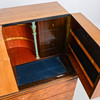
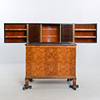
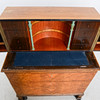
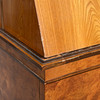
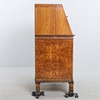
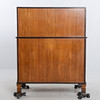
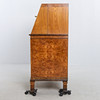
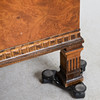
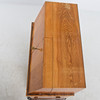
Veneered in different types of wood. City Hall with three drawers. Legs with neoclassical decor. Top with pull-out writing disc. Cabinet interior with a total of eight pull-out drawers, in the center niche with two green-painted columns. In each door two shelves. Keys are available. Height 110 cm. Width 84 cm. Depth 48 cm.
Erik Chambert (1902—1988) was a central figure in Swedish furniture and interior architecture during the 20th century. Educated at the Högre KonstSkolan in Stockholm, where he graduated in 1925, he combined solid craft knowledge with a consistent awareness of form. As early as 1922, he was awarded a silver medal for his apprenticeship as a carpenter, a background that came to characterize his entire professional career.
As artistic director of the family business AB Chamberts furniture factory in Norrköping, he developed a personal design language that is often described as human functionalism. His breakthrough came at the Stockholm Exhibition in 1930, where he presented a functionalist interior that was noted for its balance between simplicity and elegance. His furniture from this period is characterized by clear proportions, careful material treatment and a pursuit of lightness and spatial harmony.
International field trips during the late 1920s and early 1930s brought him into contact with the Bauhaus and European modernism. The impressions were translated into a tighter and more reduced design where the construction is clear and the decor restrained. At the same time, his furniture remained tactile and humanly adapted, paying particular attention to comfort and everyday usefulness.
Chambert often worked with special orders and produced many pieces of furniture in limited editions. A recurring feature is the integration of artistic elements into the furniture, particularly through advanced intarsia installations in which figurative or symbolic motifs were executed in different types of wood, sometimes complemented by mother-of-pearl or metal. The cabinet Life's wave bowl from 1945, now preserved at the Nationalmuseum, is an important example of how he combined furniture architecture and visual art in a coherent work.
As an interior designer, he designed both private and public environments, where furniture, textiles and colour schemes formed a whole. He also designed his own textile designs and collaborated with Swedish textile manufacturers. For Chambert, furniture was never an isolated object but part of a spatial and aesthetic context.
Condition
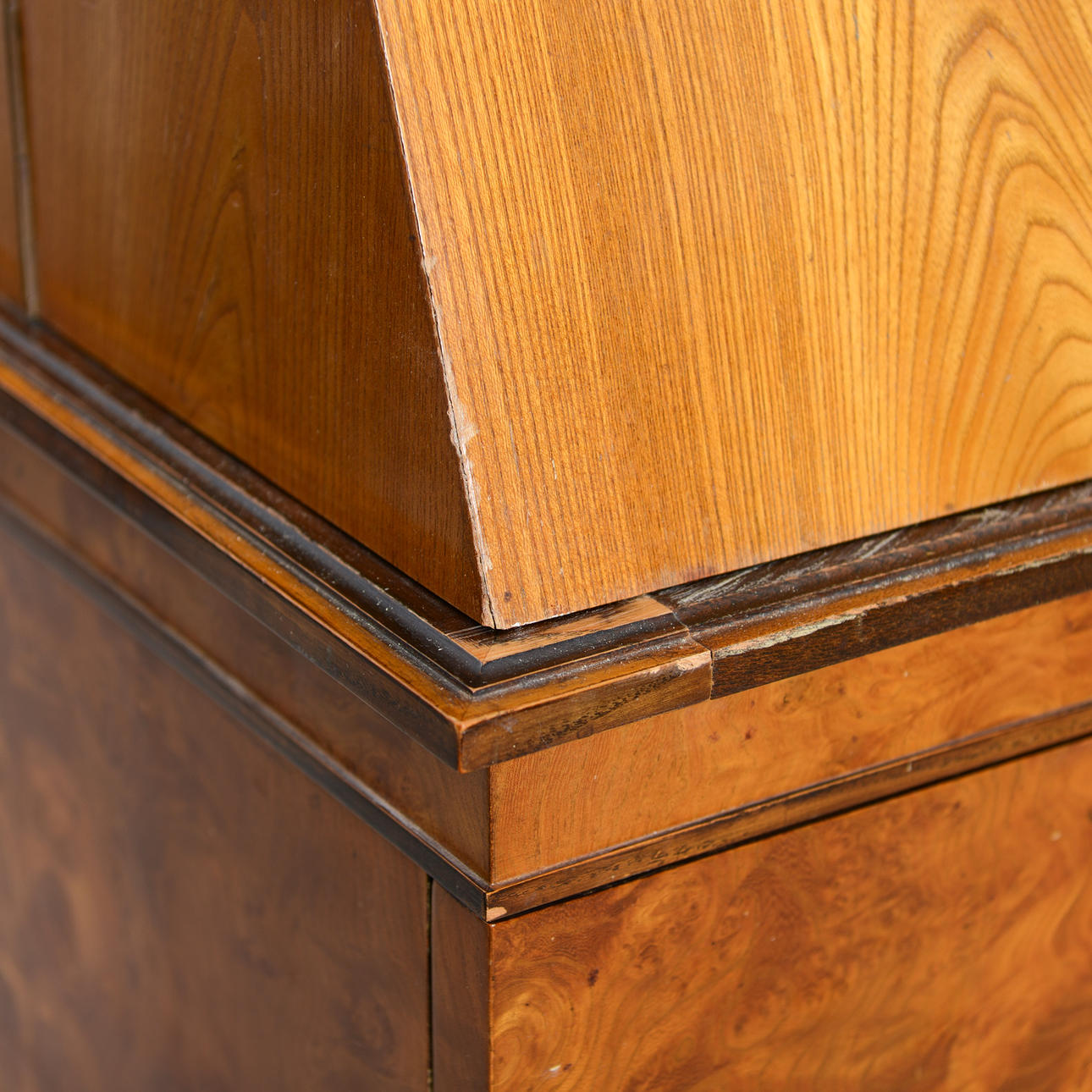
Wear and scratches on the outside. Partial nutmarks.
Resale right
Artist/designer
Theme
Description
Veneered in different types of wood. City Hall with three drawers. Legs with neoclassical decor. Top with pull-out writing disc. Cabinet interior with a total of eight pull-out drawers, in the center niche with two green-painted columns. In each door two shelves. Keys are available. Height 110 cm. Width 84 cm. Depth 48 cm.
Erik Chambert (1902—1988) was a central figure in Swedish furniture and interior architecture during the 20th century. Educated at the Högre KonstSkolan in Stockholm, where he graduated in 1925, he combined solid craft knowledge with a consistent awareness of form. As early as 1922, he was awarded a silver medal for his apprenticeship as a carpenter, a background that came to characterize his entire professional career.
As artistic director of the family business AB Chamberts furniture factory in Norrköping, he developed a personal design language that is often described as human functionalism. His breakthrough came at the Stockholm Exhibition in 1930, where he presented a functionalist interior that was noted for its balance between simplicity and elegance. His furniture from this period is characterized by clear proportions, careful material treatment and a pursuit of lightness and spatial harmony.
International field trips during the late 1920s and early 1930s brought him into contact with the Bauhaus and European modernism. The impressions were translated into a tighter and more reduced design where the construction is clear and the decor restrained. At the same time, his furniture remained tactile and humanly adapted, paying particular attention to comfort and everyday usefulness.
Chambert often worked with special orders and produced many pieces of furniture in limited editions. A recurring feature is the integration of artistic elements into the furniture, particularly through advanced intarsia installations in which figurative or symbolic motifs were executed in different types of wood, sometimes complemented by mother-of-pearl or metal. The cabinet Life's wave bowl from 1945, now preserved at the Nationalmuseum, is an important example of how he combined furniture architecture and visual art in a coherent work.
As an interior designer, he designed both private and public environments, where furniture, textiles and colour schemes formed a whole. He also designed his own textile designs and collaborated with Swedish textile manufacturers. For Chambert, furniture was never an isolated object but part of a spatial and aesthetic context.
Condition
Wear and scratches on the outside. Partial nutmarks.
Resale right
Artist/designer
Theme
Payment options for this item
Payment cardsBank transferDelivery
: Provide your locationInfo temporarily unavailableLoading…Provide your location to see transport options and prices.
Oops! Something went wrong.
Please try again in a moment. If it still doesn't work, contact Auctionet support.
Details
- House
- Formstad Auktioner
- Address
Gårdsfogdevägen 16
168 67 Bromma
Sweden- Placement
- Möbler golv