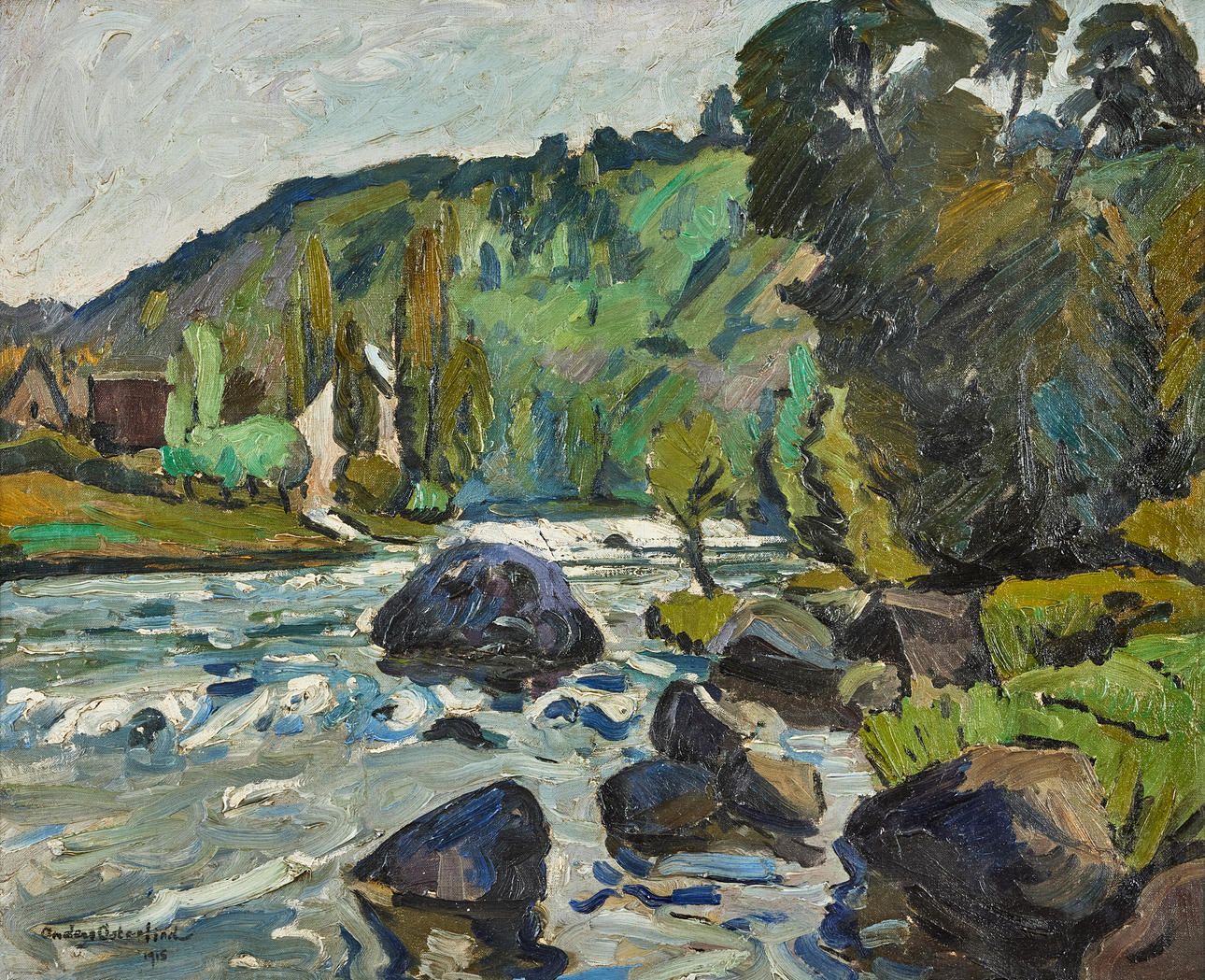
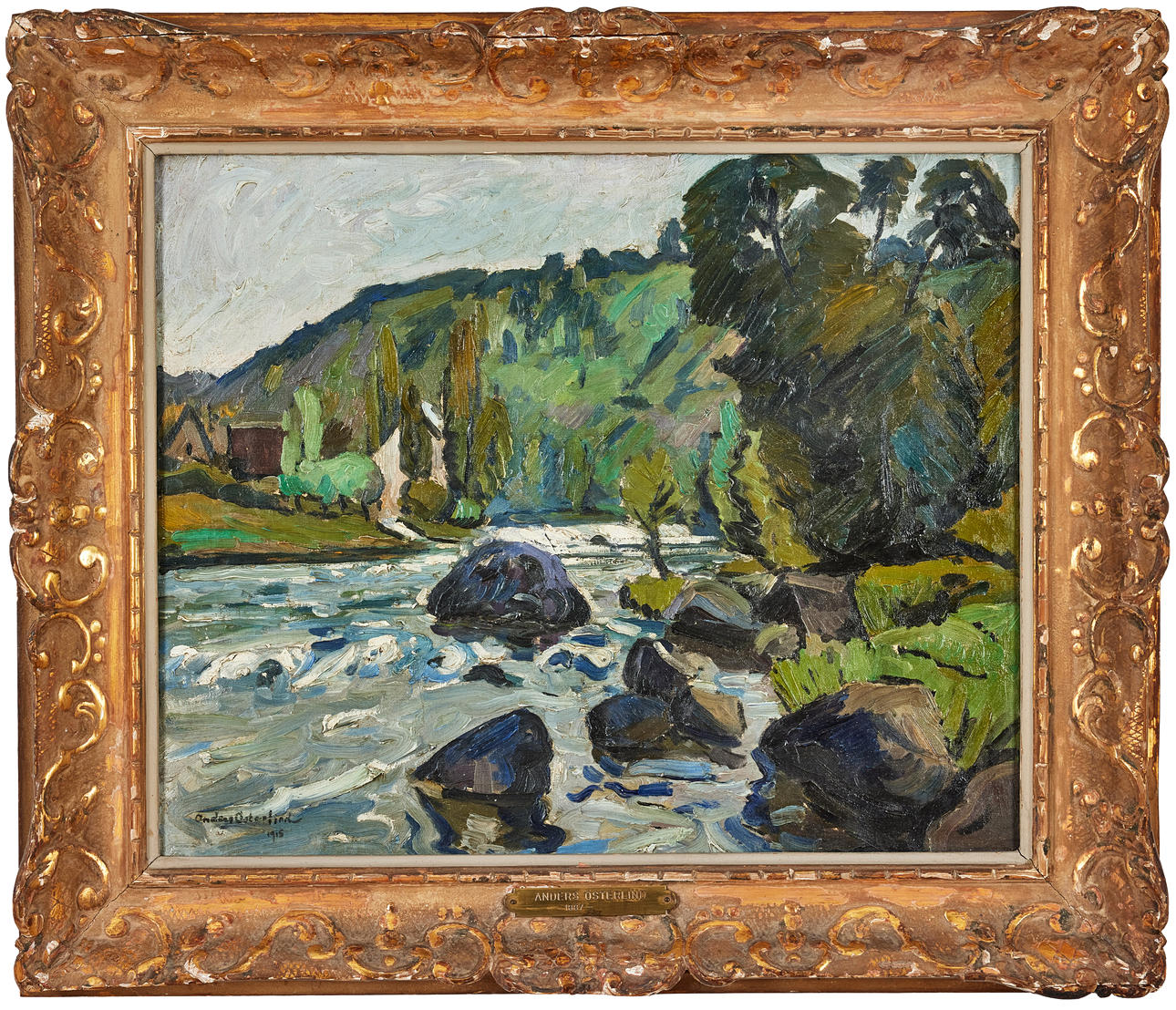
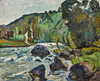
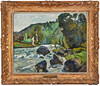
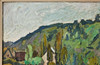
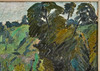
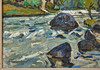
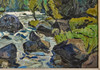
ANDERS ÖSTERLIND (1887-1960). River landscape.
This auction is closed, but maybe you like the following items?

Images
Description
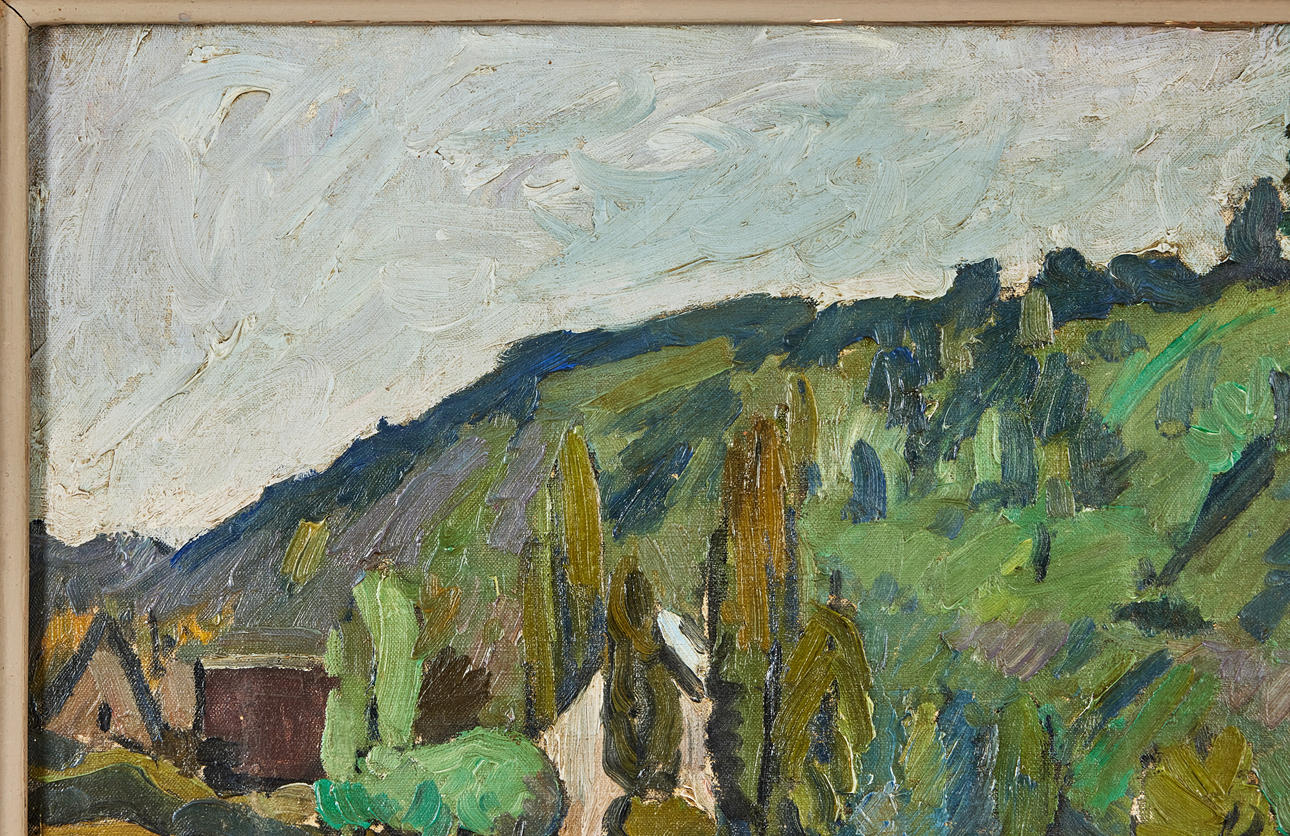
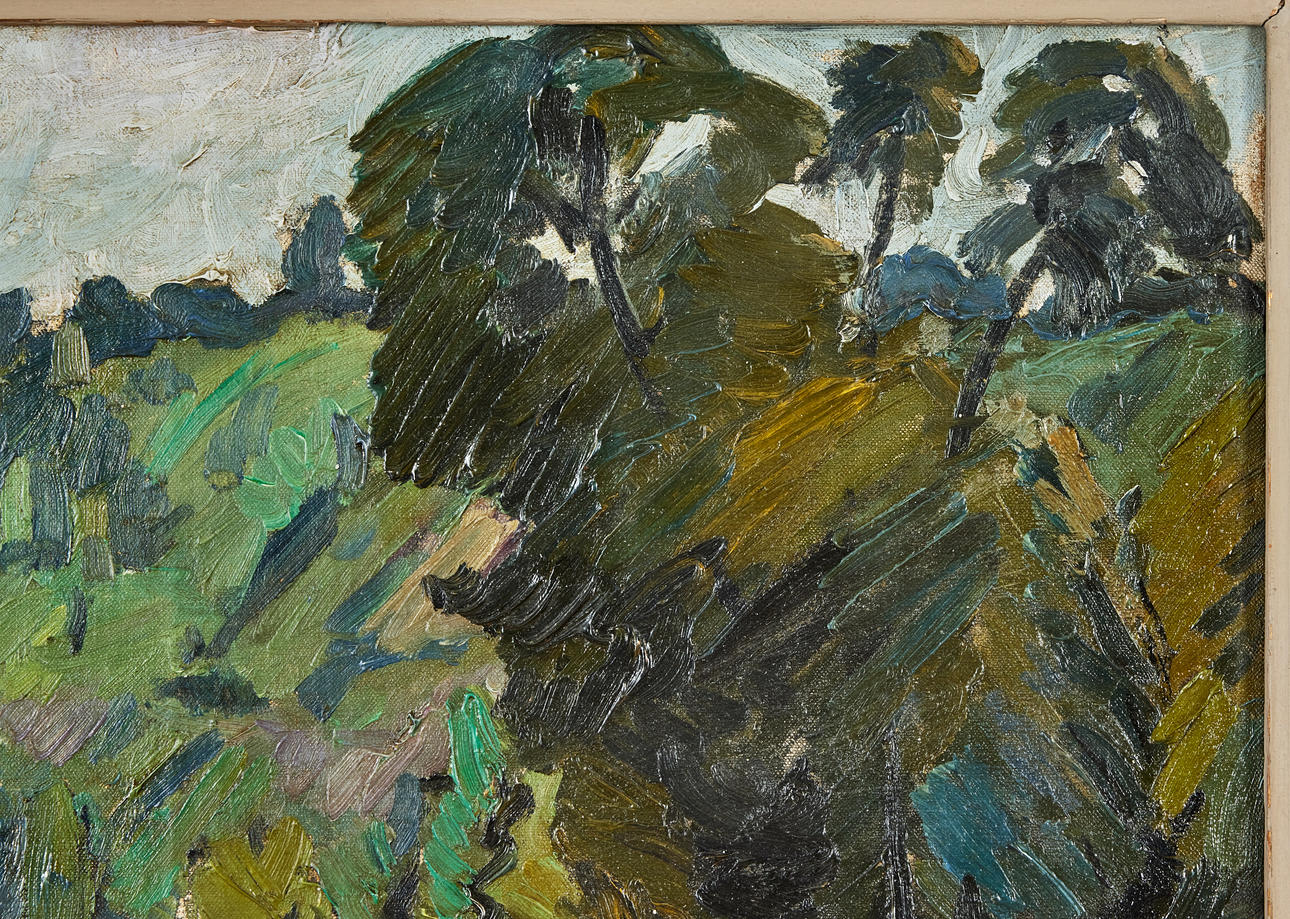
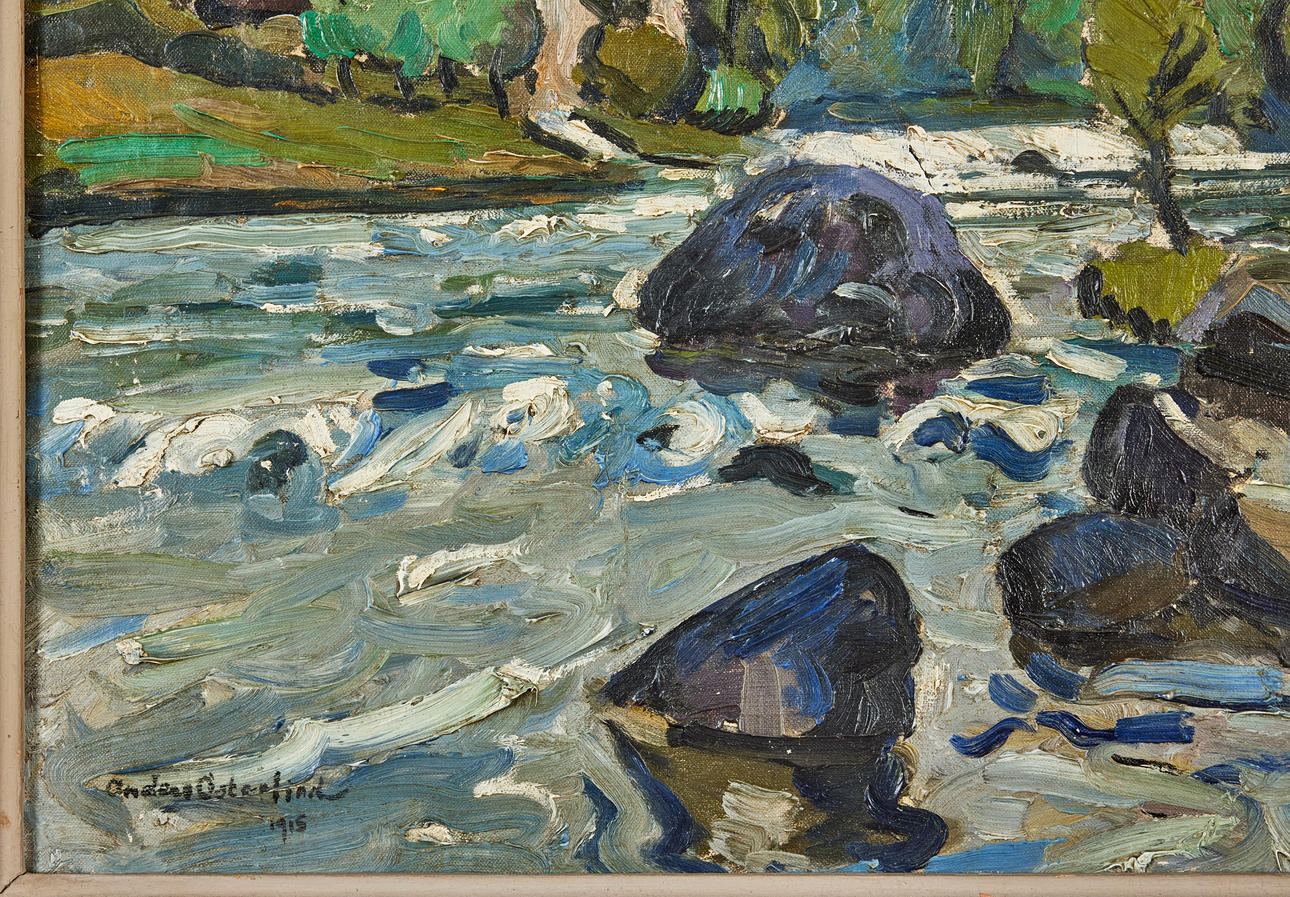
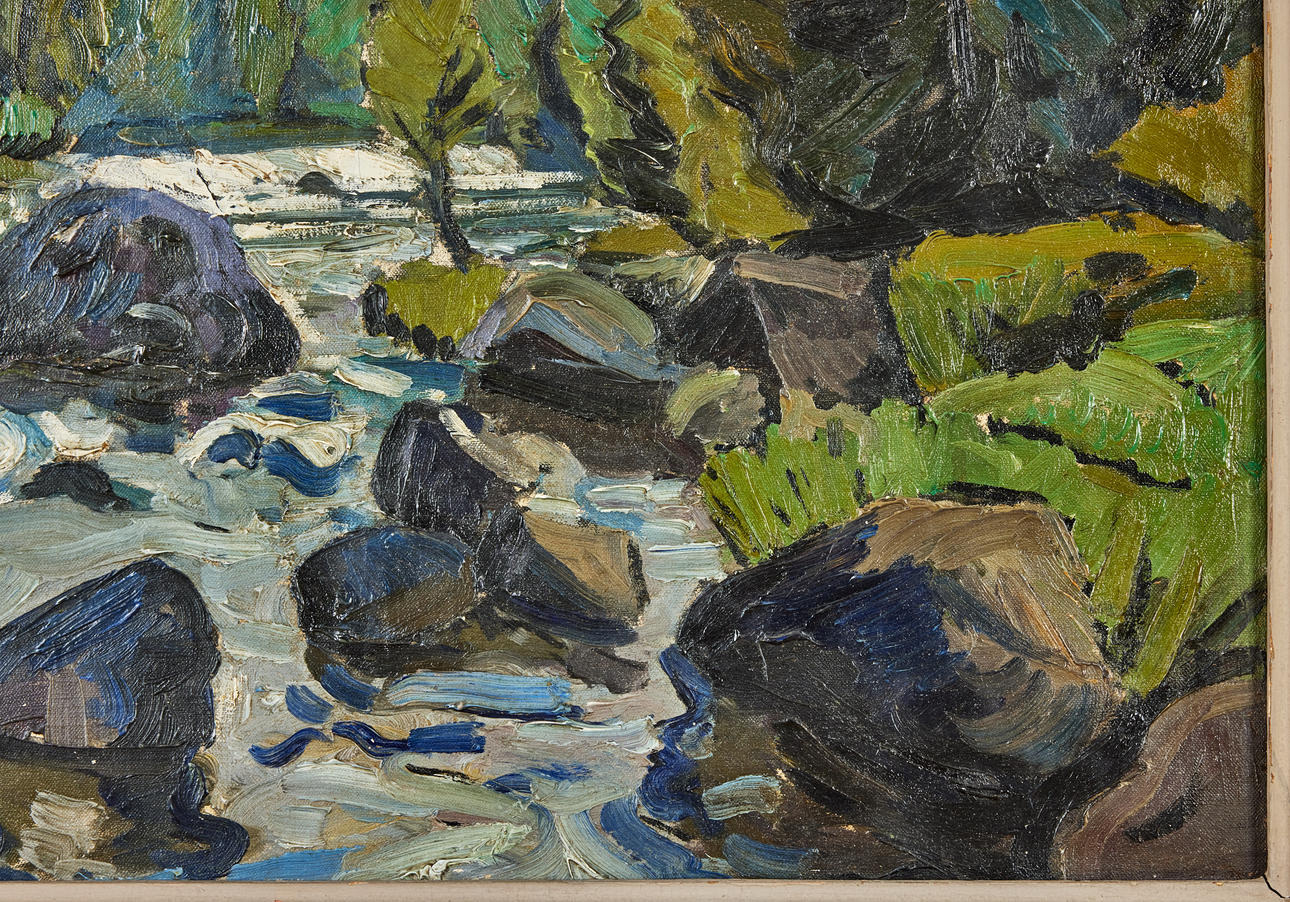
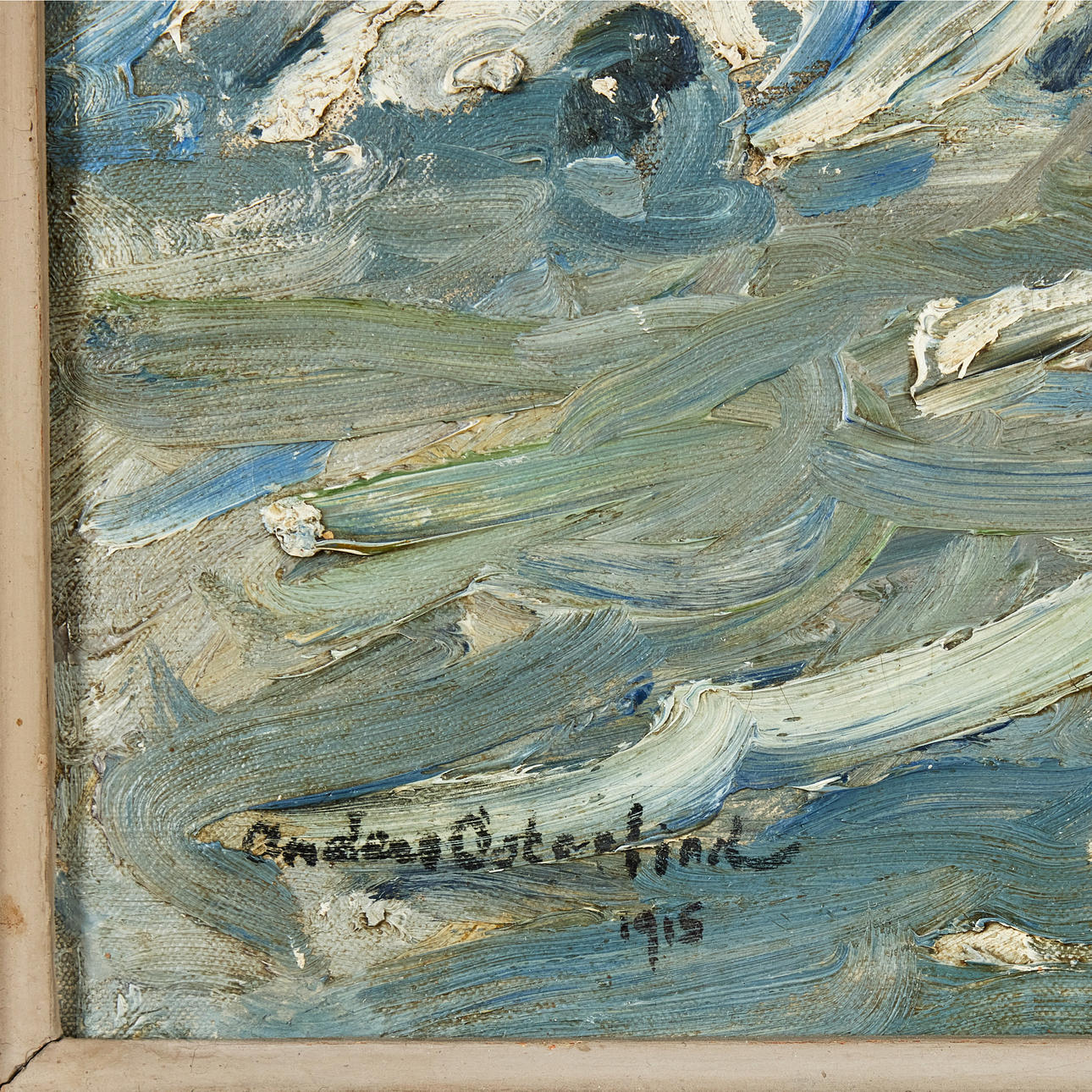
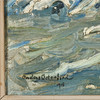
Oil on canvas, 52 x 63 cm, including frame 70 x 85 cm. Signed Anders Österlind and dated 1915.
PROVENANCE
Swedish Club, Paris. Gift from the artist in 1937.
Born in Lépauld, Creuse, in France, Anders Österlind grew up in an artistic home marked by brushes, easels and a constant presence of creative figures. The father, the Swedish artist Allan Österlind, and mother Eugénie created an environment in which the artistic trajectory of the son was naturally close at hand. Among the Swedish friends of the family were names such as Ernst Josephson, Christian Skredsvig, Per Ekström and August Strindberg — the latter one of those whose technique of painting with a knife came to influence the young Österlind, as well as Per Ekström's. The greatest teacher, however, remained the father, who conveyed the importance of artistic freedom and independence.
Anders Österlind made his debut at the Société Nationale des Beaux-Arts in Paris in 1906 and participated there in exhibitions four years in succession. Shortly afterwards, he broke up from the safe home to study the masterpieces of the Louvre on his own. It was also during this time that the Fauvists — Matisse, Derain, Braque and Vlaminck — began to make an impact. Although he himself denied their influence, admitting only a certain influence from Cézanne, it is hard not to see the explosion of contemporary colour reflected in his works.
In 1908 he married and settled down in Colombes, at the same time he began to associate with the artistic circles around Montparnasse. Summers were often spent in Brittany, the north coast of which he had known since childhood. He held his first solo exhibition at Galerie Drouet in Paris in 1917. During the same year, he tried to push for his new homeland by applying to the Foreign Legion — but he was deemed not strong enough for front-line service. Instead, he became active in the Resistance during World War II, where he collaborated with Raoul Nordling.
After becoming a widower, he remarried and the family moved to the Mediterranean coast. There they became neighbors with the aged Auguste Renoir, whom Österlind also got to know personally. His life was marked by many moves — sometimes away from sadness, sometimes back to bright memories, but always with painterly intentions. Österlind exhibited regularly at the larger salons and galleries in France, while also making study trips to Holland and Italy. His work reached far beyond the borders of Europe, with exhibitions in Copenhagen, Stockholm, Amsterdam, Algiers, Cairo, Pittsburgh and Tokyo, among others.
Österlind's artistry is not characterized by a uniform style. His expression changed markedly over time: from the early 1910s landscapes with wide color fields, to the dramatic depictions of severe weather and autumnal landscapes of the 1920s and 30s, and on to a later phase in which he depicted sunlit villages surrounded by dense, verdant vegetation.
The club's two boards were donated simultaneously in 1937. This depicted painting dates from 1915 and represents the artist's early period. The second work, signed in 1937, is a clear example of the later landscapes where the storm is looming on the horizon, with a powerful presence and dramatic mood.
All lots in this themed auction sold without reserve.
Condition
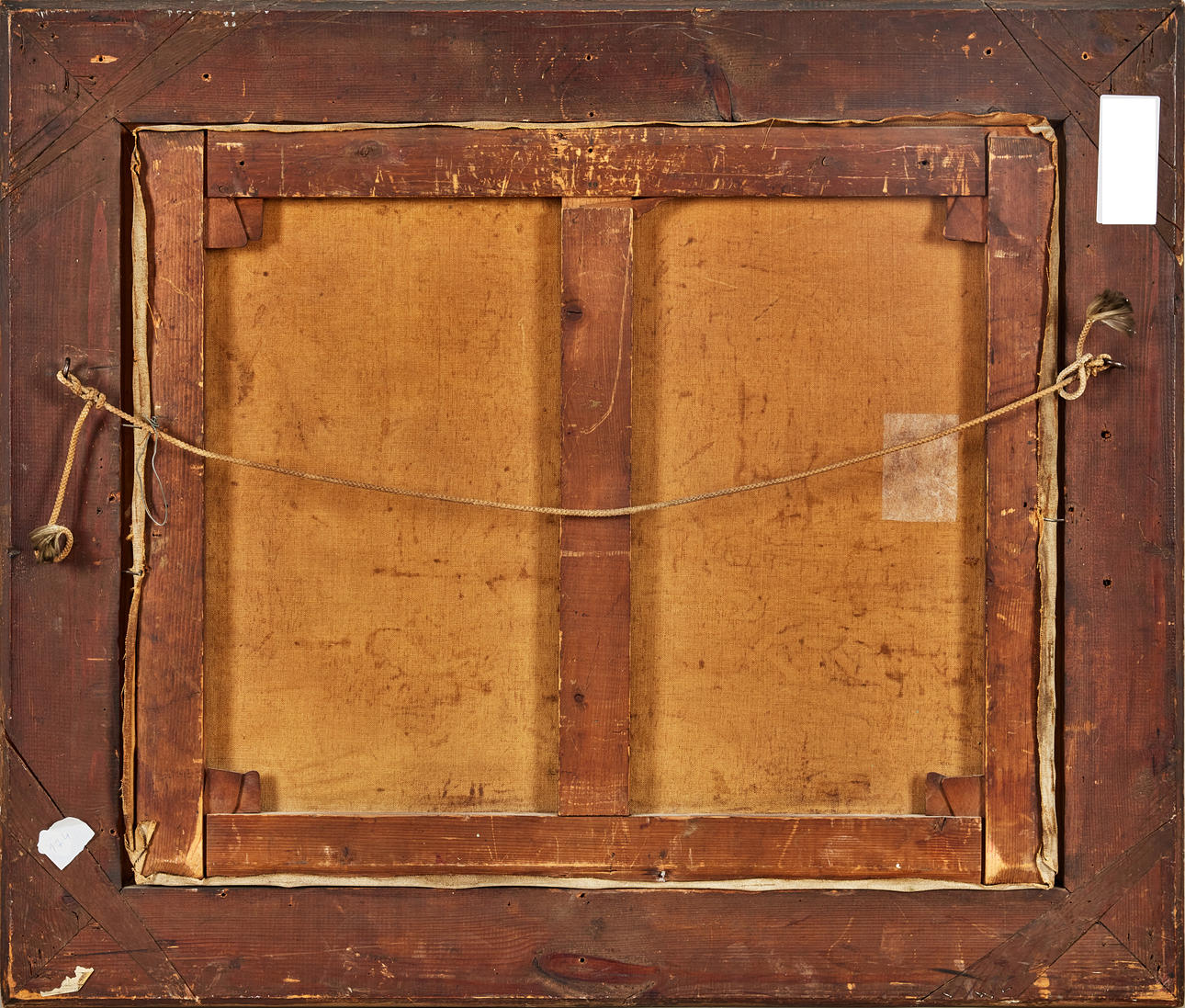
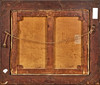
Repair, the tensioning frame loose in the frame, the frame with loose parts.
Resale right
Theme
Do you have something similar to sell? Get your items valued free of charge!
Description
Oil on canvas, 52 x 63 cm, including frame 70 x 85 cm. Signed Anders Österlind and dated 1915.
PROVENANCE
Swedish Club, Paris. Gift from the artist in 1937.
Born in Lépauld, Creuse, in France, Anders Österlind grew up in an artistic home marked by brushes, easels and a constant presence of creative figures. The father, the Swedish artist Allan Österlind, and mother Eugénie created an environment in which the artistic trajectory of the son was naturally close at hand. Among the Swedish friends of the family were names such as Ernst Josephson, Christian Skredsvig, Per Ekström and August Strindberg — the latter one of those whose technique of painting with a knife came to influence the young Österlind, as well as Per Ekström's. The greatest teacher, however, remained the father, who conveyed the importance of artistic freedom and independence.
Anders Österlind made his debut at the Société Nationale des Beaux-Arts in Paris in 1906 and participated there in exhibitions four years in succession. Shortly afterwards, he broke up from the safe home to study the masterpieces of the Louvre on his own. It was also during this time that the Fauvists — Matisse, Derain, Braque and Vlaminck — began to make an impact. Although he himself denied their influence, admitting only a certain influence from Cézanne, it is hard not to see the explosion of contemporary colour reflected in his works.
In 1908 he married and settled down in Colombes, at the same time he began to associate with the artistic circles around Montparnasse. Summers were often spent in Brittany, the north coast of which he had known since childhood. He held his first solo exhibition at Galerie Drouet in Paris in 1917. During the same year, he tried to push for his new homeland by applying to the Foreign Legion — but he was deemed not strong enough for front-line service. Instead, he became active in the Resistance during World War II, where he collaborated with Raoul Nordling.
After becoming a widower, he remarried and the family moved to the Mediterranean coast. There they became neighbors with the aged Auguste Renoir, whom Österlind also got to know personally. His life was marked by many moves — sometimes away from sadness, sometimes back to bright memories, but always with painterly intentions. Österlind exhibited regularly at the larger salons and galleries in France, while also making study trips to Holland and Italy. His work reached far beyond the borders of Europe, with exhibitions in Copenhagen, Stockholm, Amsterdam, Algiers, Cairo, Pittsburgh and Tokyo, among others.
Österlind's artistry is not characterized by a uniform style. His expression changed markedly over time: from the early 1910s landscapes with wide color fields, to the dramatic depictions of severe weather and autumnal landscapes of the 1920s and 30s, and on to a later phase in which he depicted sunlit villages surrounded by dense, verdant vegetation.
The club's two boards were donated simultaneously in 1937. This depicted painting dates from 1915 and represents the artist's early period. The second work, signed in 1937, is a clear example of the later landscapes where the storm is looming on the horizon, with a powerful presence and dramatic mood.
All lots in this themed auction sold without reserve.
Condition
Repair, the tensioning frame loose in the frame, the frame with loose parts.
Resale right
Theme
Do you have something similar to sell? Get your items valued free of charge!