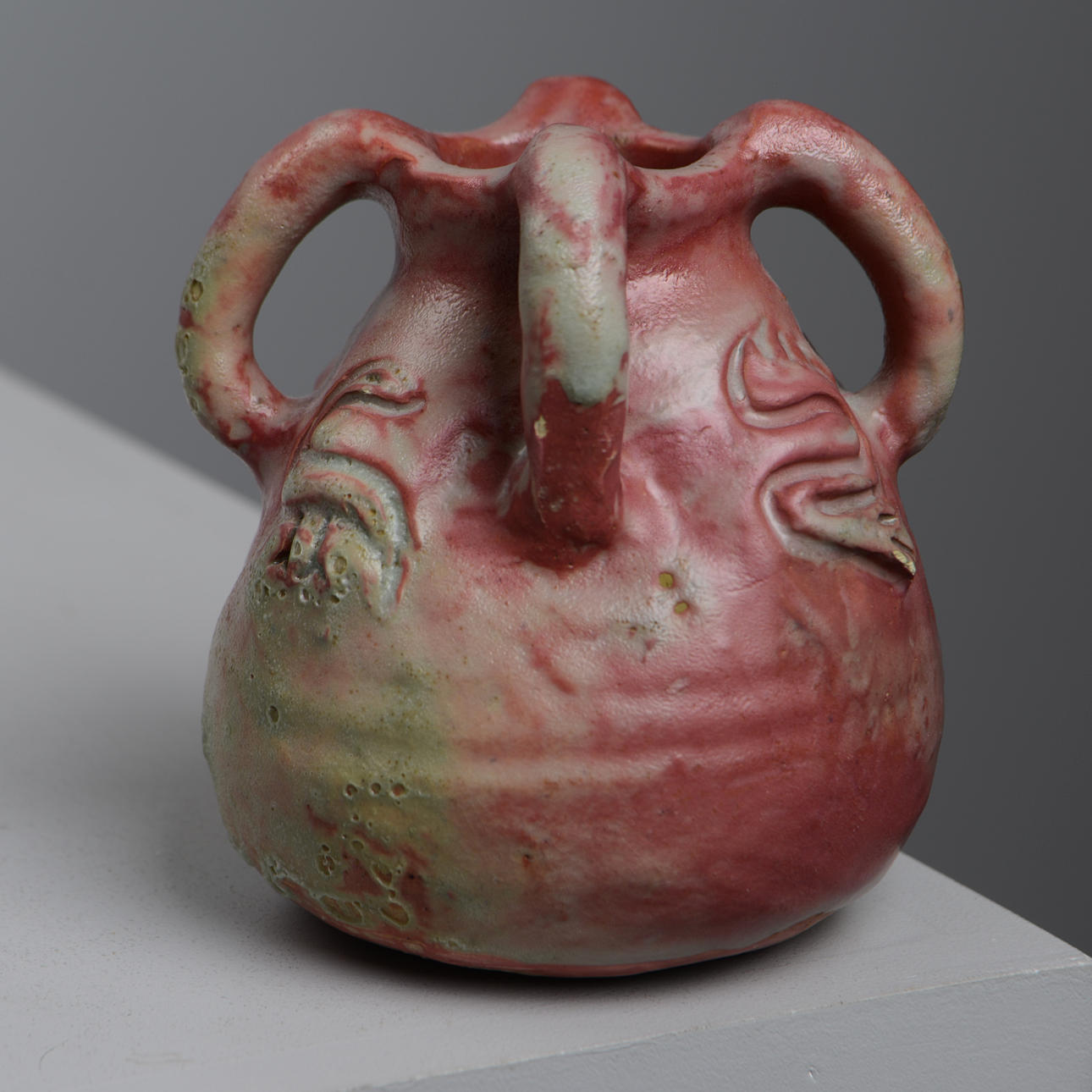
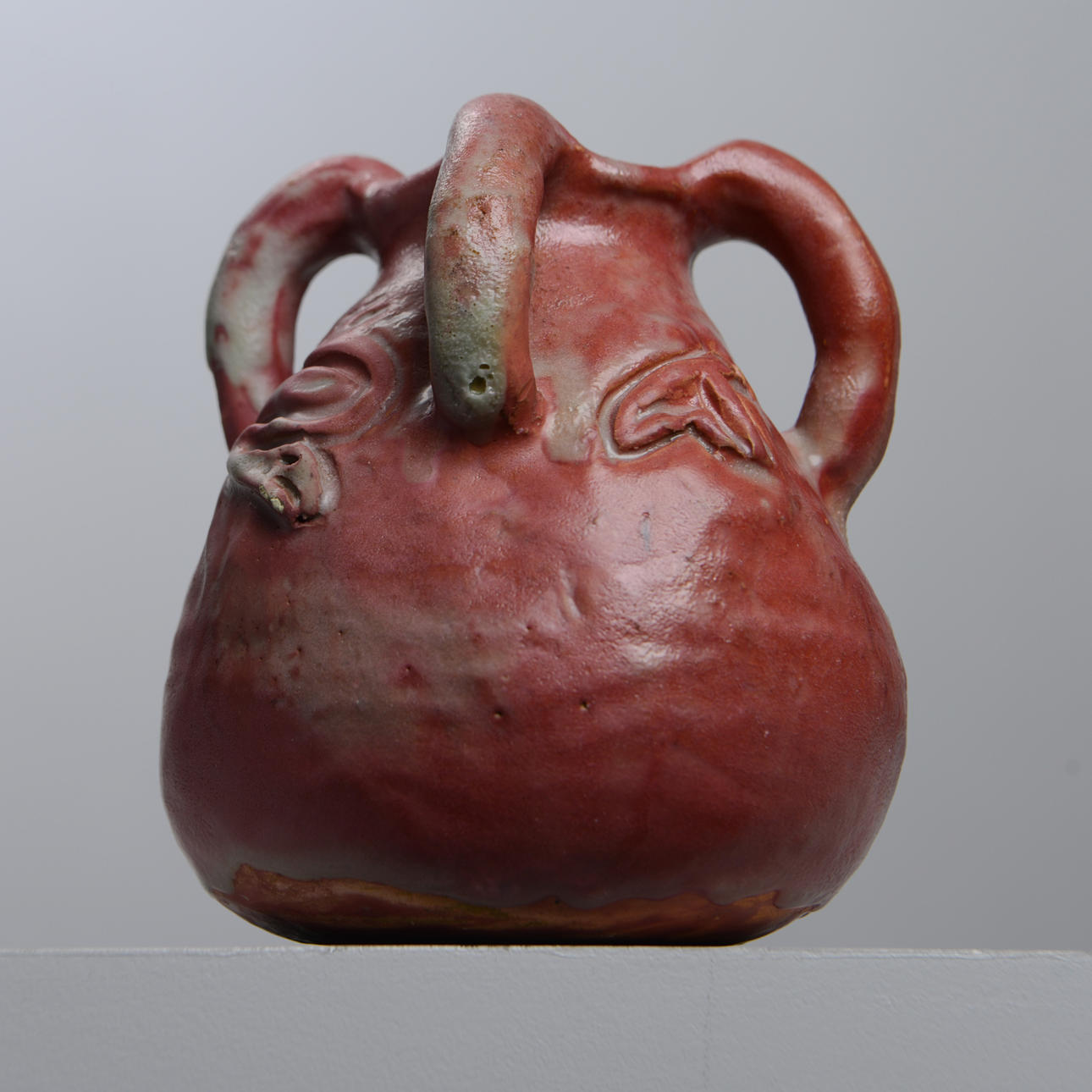
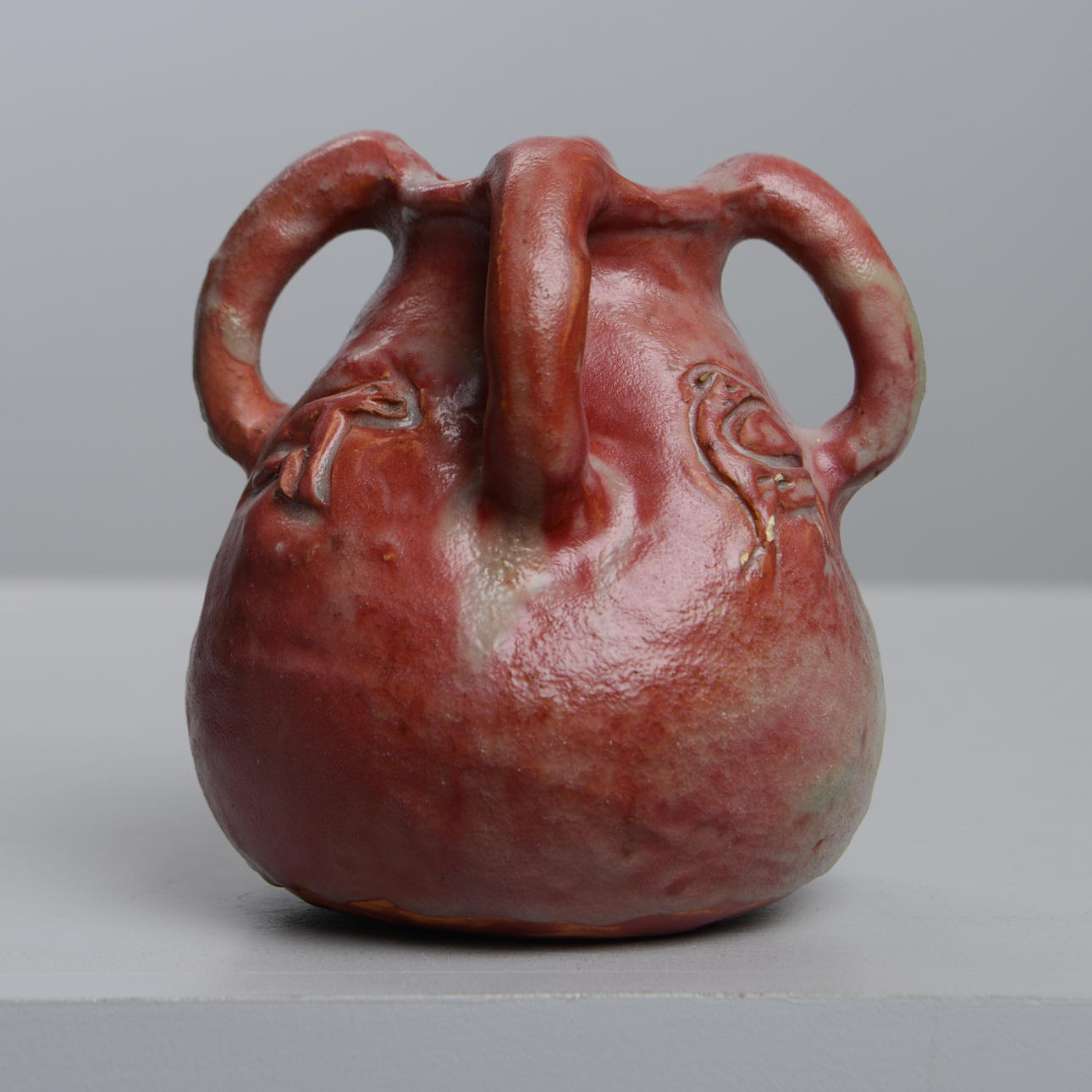
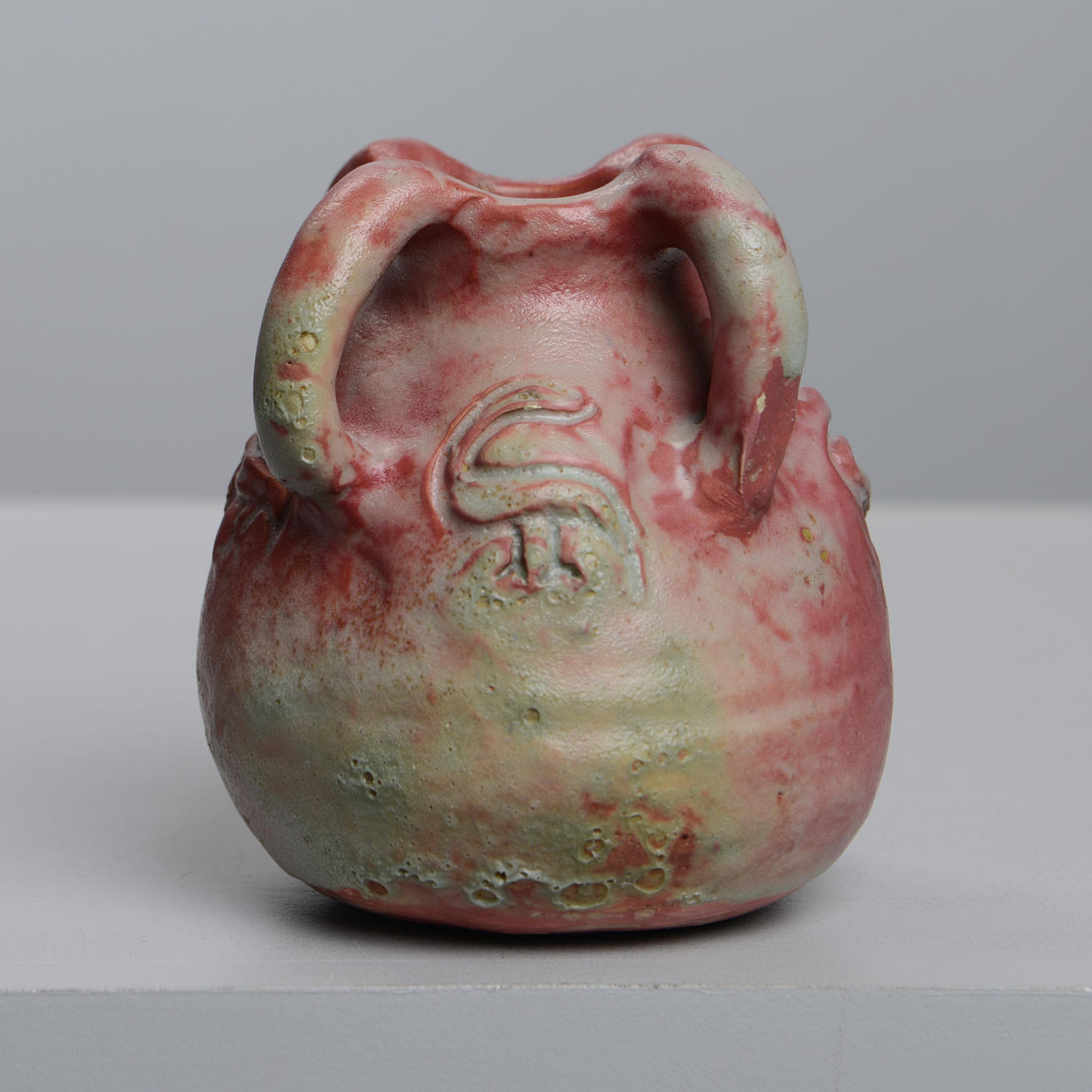
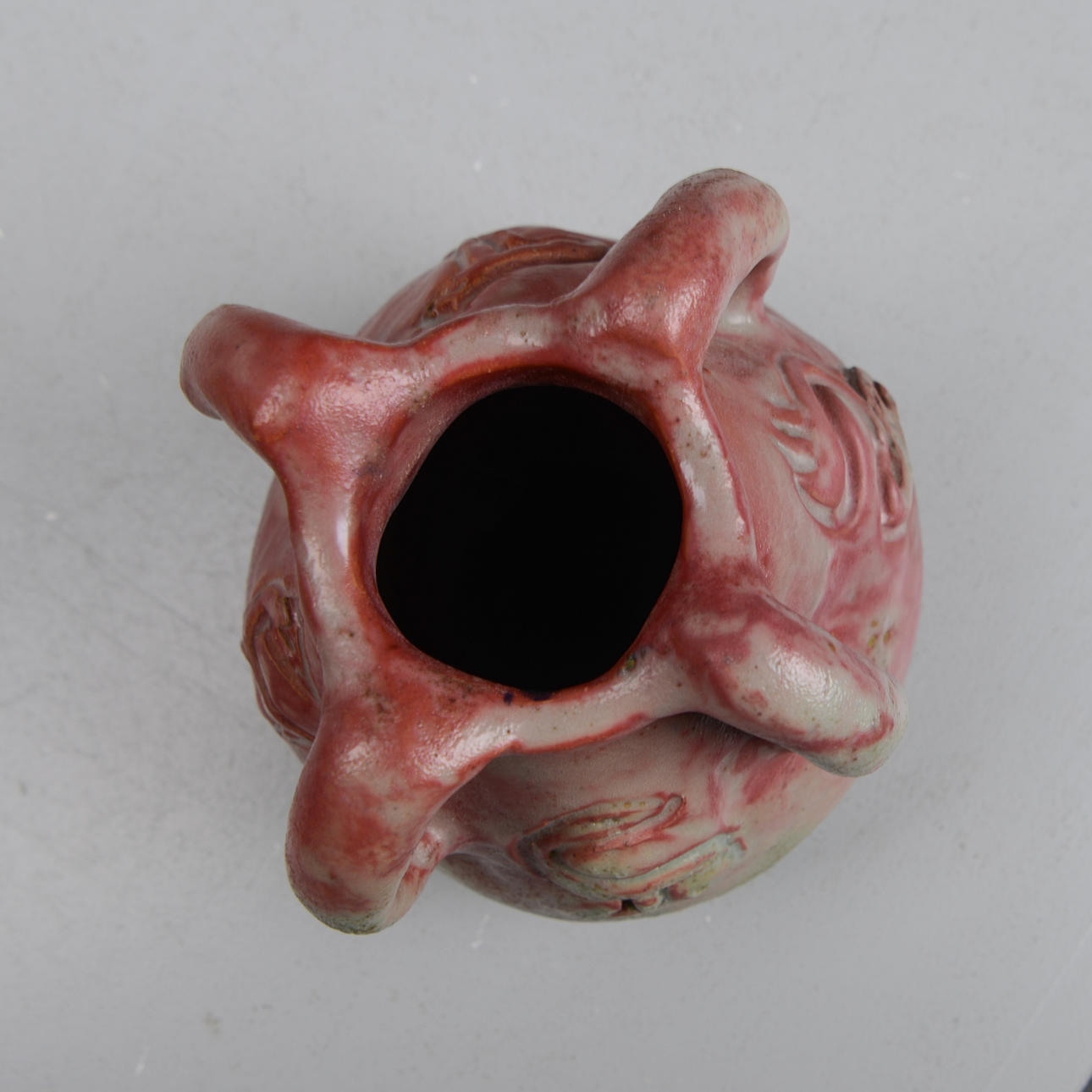
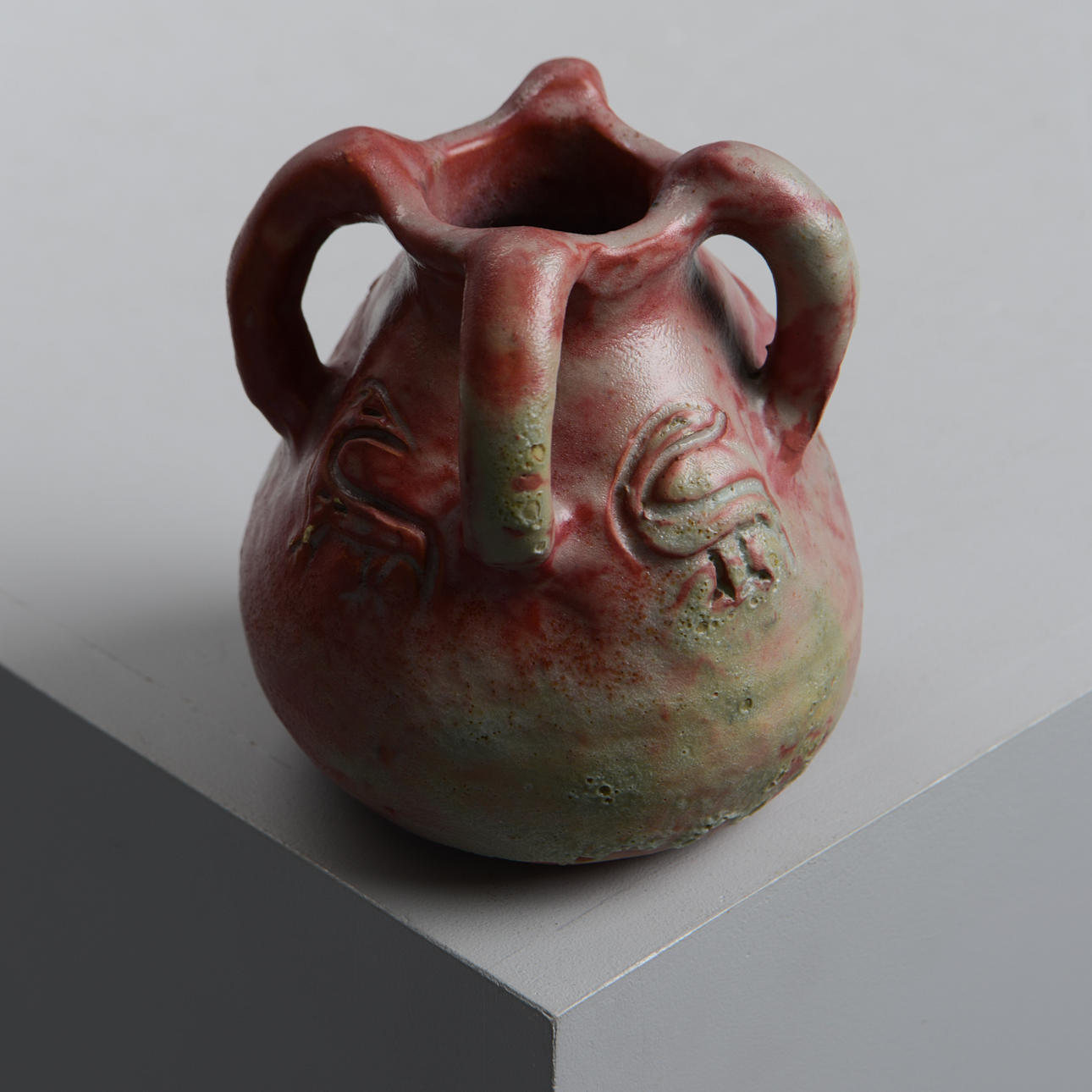
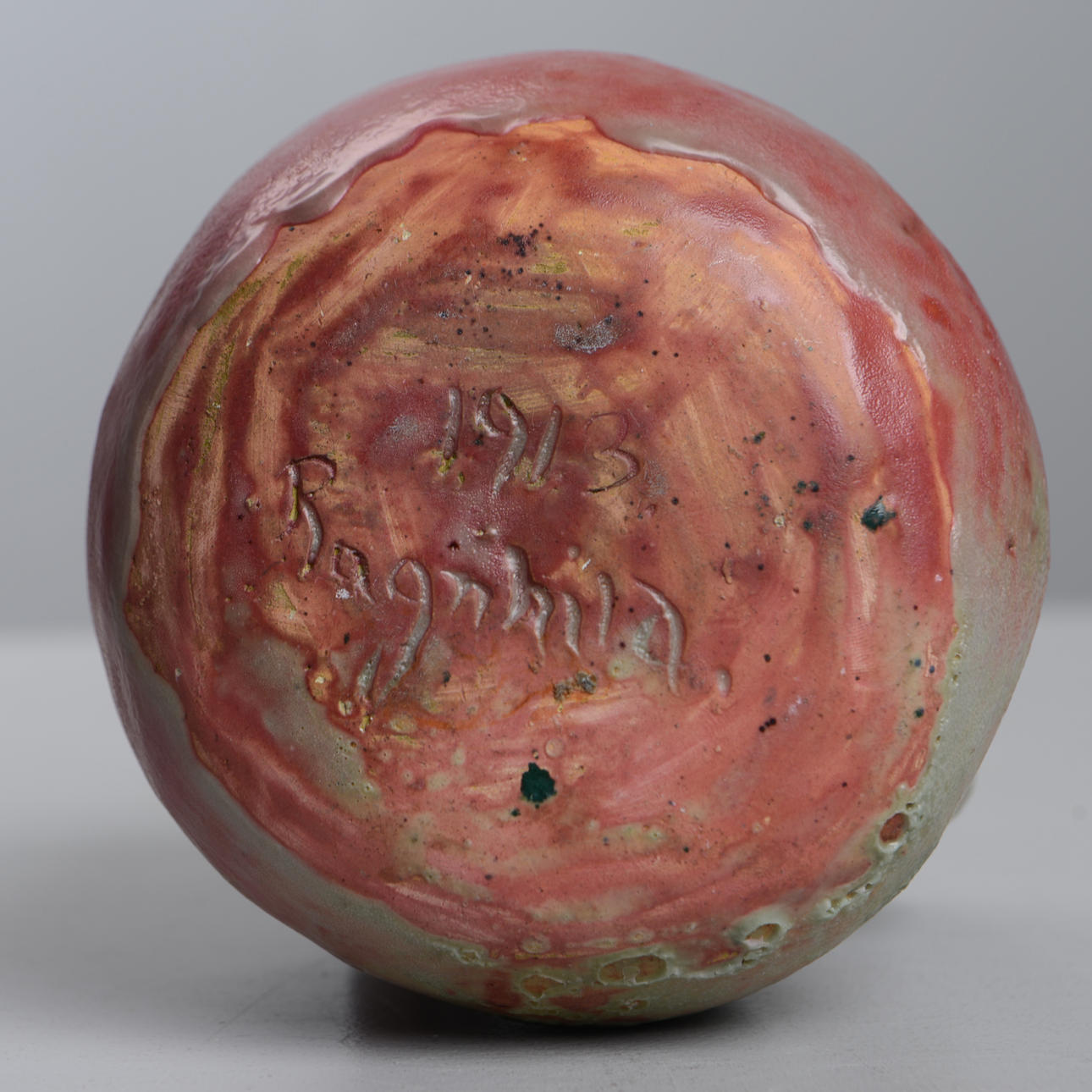
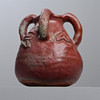
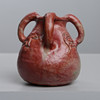
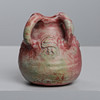
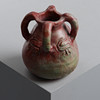
RAGNHILD GODENIUS. Vase, stoneware, own studio, signed, dated 1913.
This auction is closed, but maybe you like the following items?

Images
Description
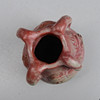
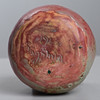
Pink green mottled glaze with carved decoration of animals, four handles. Signed "Ragnhild 1913" underneath.
Height approx. 14.5 cm.
Gerda Ragnhild Godenius was a significant Finnish-Swedish sculptor and ceramicist born on September 4, 1877 in Pojo, Finland, and died on April 3, 1966 in Stockholm. She was a pioneer in studio ceramics.
Godenius began his artistic studies at the School of the Finnish Art Association in Helsinki, focusing on the sculpture course. She continued her studies in Germany and Italy and worked for a time as a drawing teacher at various schools in Finland. In 1907 she moved to Sweden and established a studio together with Gerda Sprinchorn. They shared a home and life for over 50 years.
As an artist, Godenius was pioneering. She was one of the first in Sweden to use high-fired glazes in her ceramics, which made her a pioneer in Swedish ceramics. Her artistic production included a variety of objects, including bowls, pots, vases, urns, ashtrays, candlesticks and also figural objects. In addition to ceramics, she also worked with materials such as bronze, terracotta and plaster as well as painted paintings. She also produced objects for Upsala-Ekeby in the 1910s.
Ragnhild Godenius participated in many exhibitions, both in Sweden and abroad, including a significant presence at the Finnish Art Association's exhibitions in Finland. She represented Svensk Keramik together with Bess Wissler at an exhibition in London in 1923. In 1932 she became a Swedish citizen.
It is worth noting that Ragnhild Godenius remained unmarried and childless. Her life partner was Gerda Sprinchorn, and they shared their home throughout their lives. Godenius died in 1966, and her artwork is often signed "Ragnhild" or "Ragnhild Godenius" or "GR Godenius." Despite his significant artistic work, Godenius has been relatively forgotten in posterity. This may be due in part to the lack of surviving letters or diaries as well as the fact that she lived at a time when her relationship with another woman, Gerda Sprinchorn, was not fully accepted. In addition, her ceramic works gradually lost popularity as industrially manufactured products with perfect finishes became more sought after.
The auction's vase dated 1916 was added when the social climate in Stockholm was characterized by a time of change and turbulence. Sweden was neutral during the First World War, and the city experienced increased urbanization and industrialization. Women fought for the right to vote, and it was a period of cultural flourishing in art and literature, with prominent artists and writers active in the city. At the same time, it was a time of political debate and change, including issues of social and economic reform.
For Godenius personally, the 1910s were also a time of change when she and her life partner Gerda Sprinchorn moved to different addresses in Stockholm. In 1912 they left Hamngatan and moved to Mäster Samuelsgatan 56 A. Later, in 1915, they moved again, this time to Mäster Samuelsgatan 56 B. They lived there together with the artist Annie Frykholm. It is worth noting that this was a period when she developed her ceramic technique and became known for her use of colorful glazes containing various metal oxides. Her ceramic works were powerful and sometimes had Art Nouveau decor as well as clear glazes that were allowed to flow over the underlying colors of the vessels.
Condition
Normal wear and tear. Frosting nibs.
Resale right
Theme
Do you have something similar to sell? Get your items valued free of charge!
Description
Pink green mottled glaze with carved decoration of animals, four handles. Signed "Ragnhild 1913" underneath.
Height approx. 14.5 cm.
Gerda Ragnhild Godenius was a significant Finnish-Swedish sculptor and ceramicist born on September 4, 1877 in Pojo, Finland, and died on April 3, 1966 in Stockholm. She was a pioneer in studio ceramics.
Godenius began his artistic studies at the School of the Finnish Art Association in Helsinki, focusing on the sculpture course. She continued her studies in Germany and Italy and worked for a time as a drawing teacher at various schools in Finland. In 1907 she moved to Sweden and established a studio together with Gerda Sprinchorn. They shared a home and life for over 50 years.
As an artist, Godenius was pioneering. She was one of the first in Sweden to use high-fired glazes in her ceramics, which made her a pioneer in Swedish ceramics. Her artistic production included a variety of objects, including bowls, pots, vases, urns, ashtrays, candlesticks and also figural objects. In addition to ceramics, she also worked with materials such as bronze, terracotta and plaster as well as painted paintings. She also produced objects for Upsala-Ekeby in the 1910s.
Ragnhild Godenius participated in many exhibitions, both in Sweden and abroad, including a significant presence at the Finnish Art Association's exhibitions in Finland. She represented Svensk Keramik together with Bess Wissler at an exhibition in London in 1923. In 1932 she became a Swedish citizen.
It is worth noting that Ragnhild Godenius remained unmarried and childless. Her life partner was Gerda Sprinchorn, and they shared their home throughout their lives. Godenius died in 1966, and her artwork is often signed "Ragnhild" or "Ragnhild Godenius" or "GR Godenius." Despite his significant artistic work, Godenius has been relatively forgotten in posterity. This may be due in part to the lack of surviving letters or diaries as well as the fact that she lived at a time when her relationship with another woman, Gerda Sprinchorn, was not fully accepted. In addition, her ceramic works gradually lost popularity as industrially manufactured products with perfect finishes became more sought after.
The auction's vase dated 1916 was added when the social climate in Stockholm was characterized by a time of change and turbulence. Sweden was neutral during the First World War, and the city experienced increased urbanization and industrialization. Women fought for the right to vote, and it was a period of cultural flourishing in art and literature, with prominent artists and writers active in the city. At the same time, it was a time of political debate and change, including issues of social and economic reform.
For Godenius personally, the 1910s were also a time of change when she and her life partner Gerda Sprinchorn moved to different addresses in Stockholm. In 1912 they left Hamngatan and moved to Mäster Samuelsgatan 56 A. Later, in 1915, they moved again, this time to Mäster Samuelsgatan 56 B. They lived there together with the artist Annie Frykholm. It is worth noting that this was a period when she developed her ceramic technique and became known for her use of colorful glazes containing various metal oxides. Her ceramic works were powerful and sometimes had Art Nouveau decor as well as clear glazes that were allowed to flow over the underlying colors of the vessels.
Condition
Normal wear and tear. Frosting nibs.
Resale right
Theme
Do you have something similar to sell? Get your items valued free of charge!