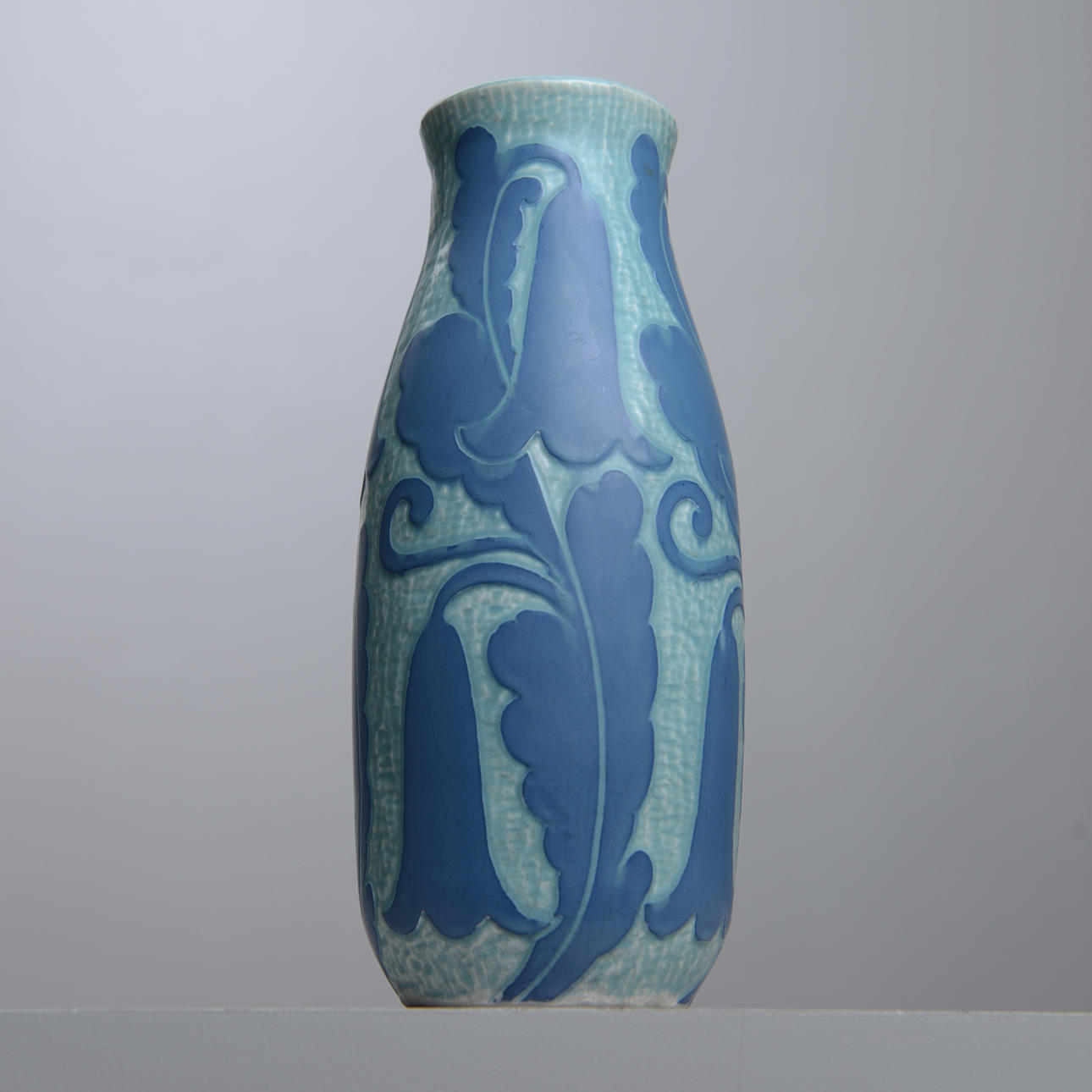
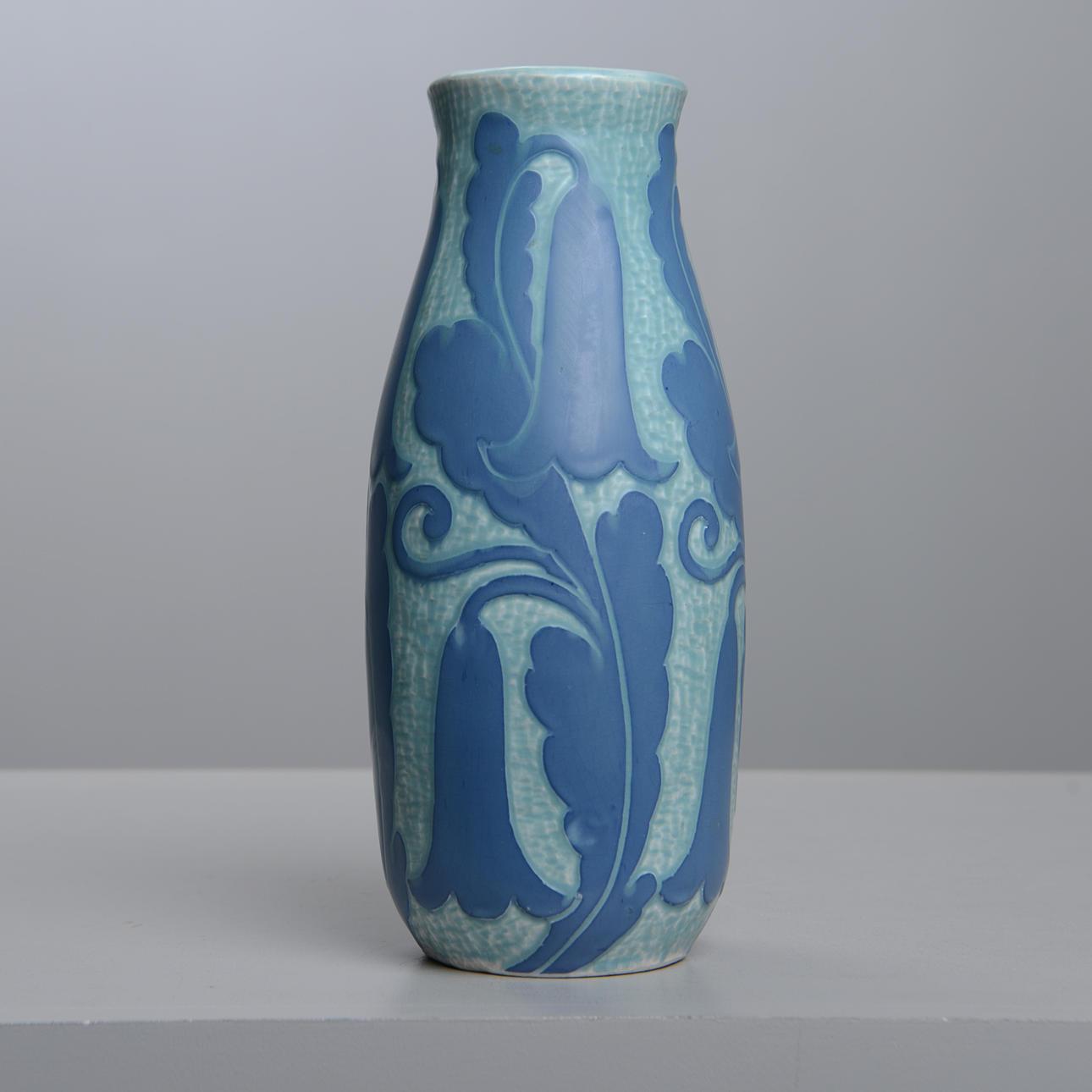
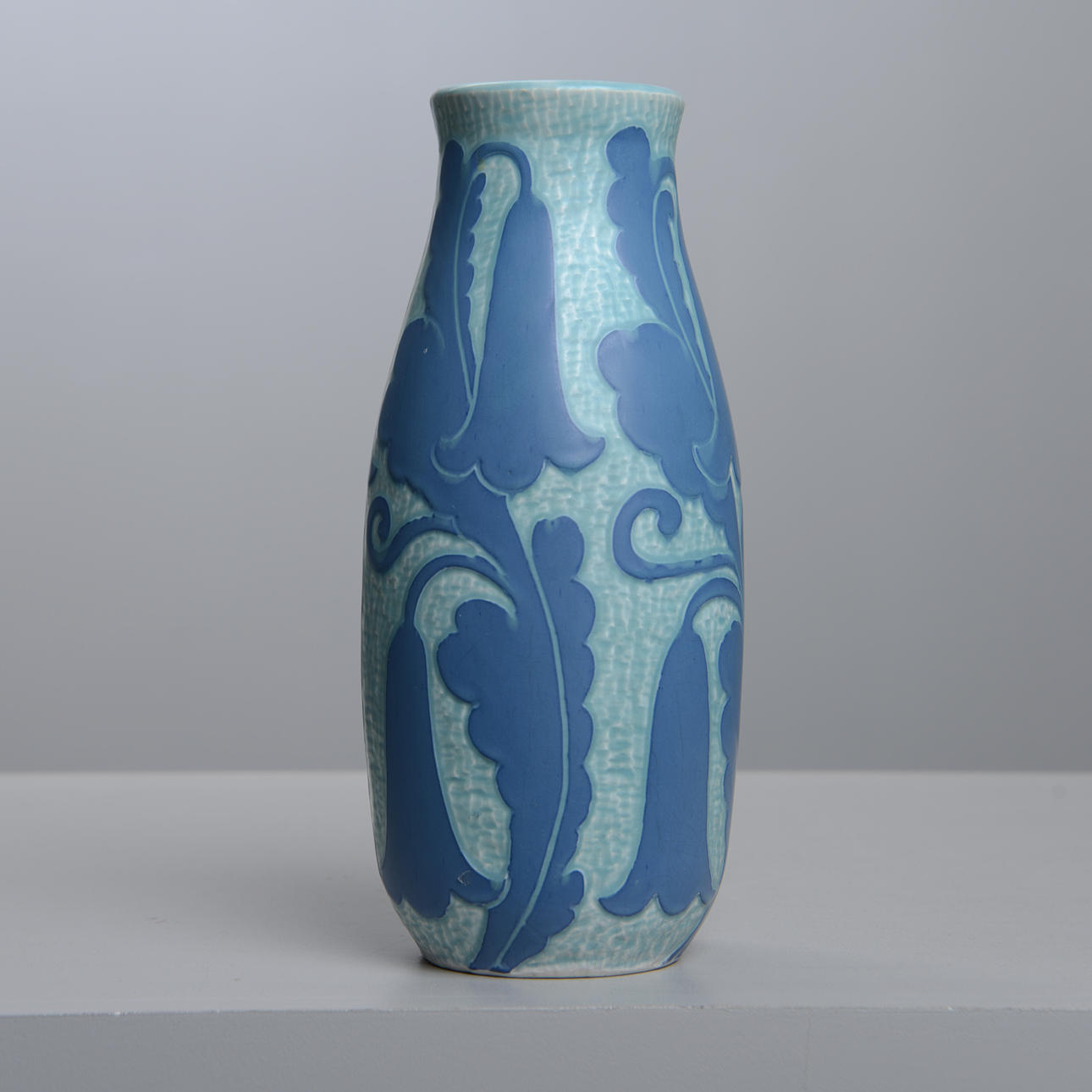
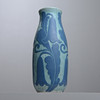
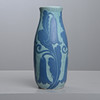
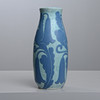
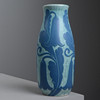
JOSEF EKBERG. Vase, stoneware, Sgraffito, Gustavsberg, dated 1920.
This auction is closed, but maybe you like the following items?

Images
Description
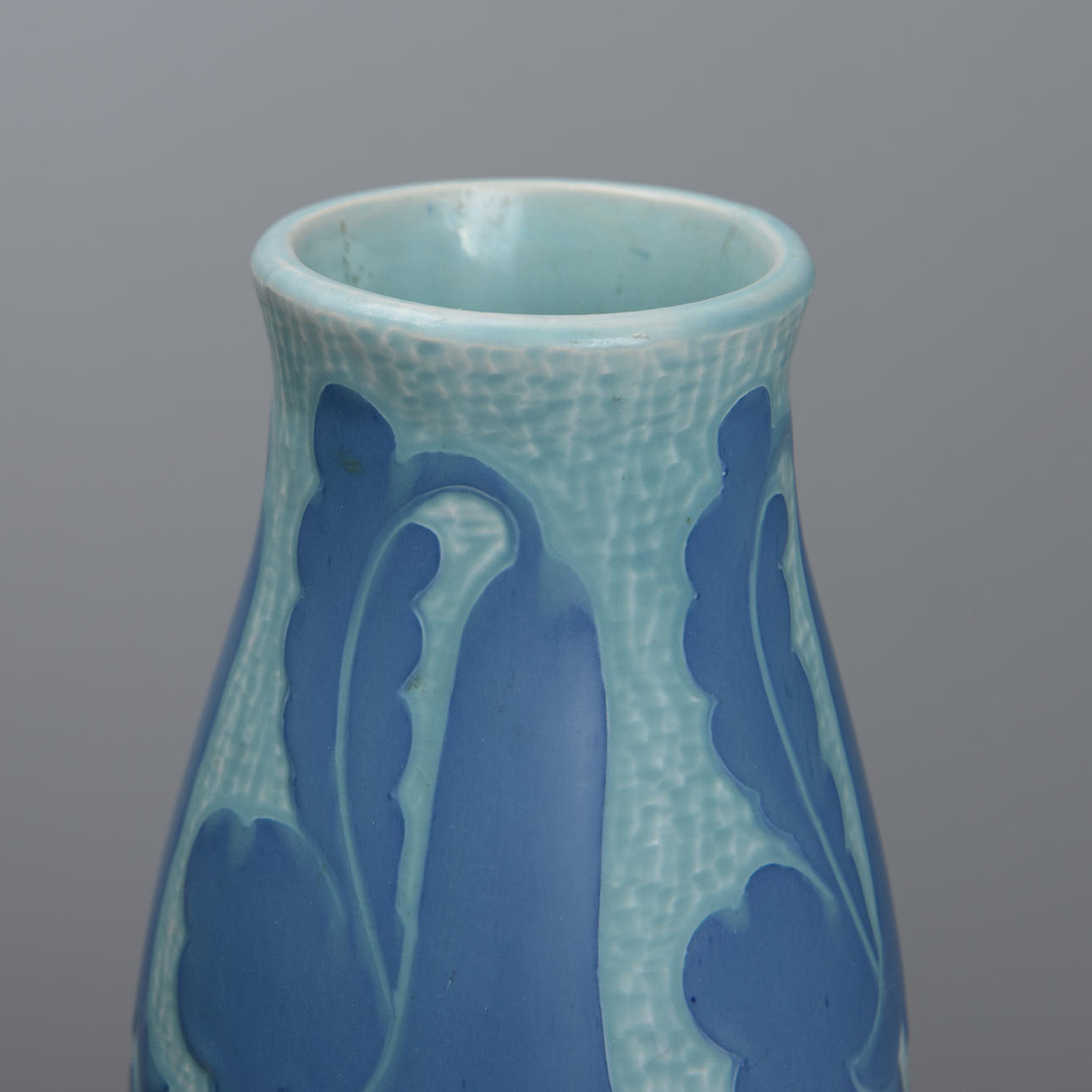
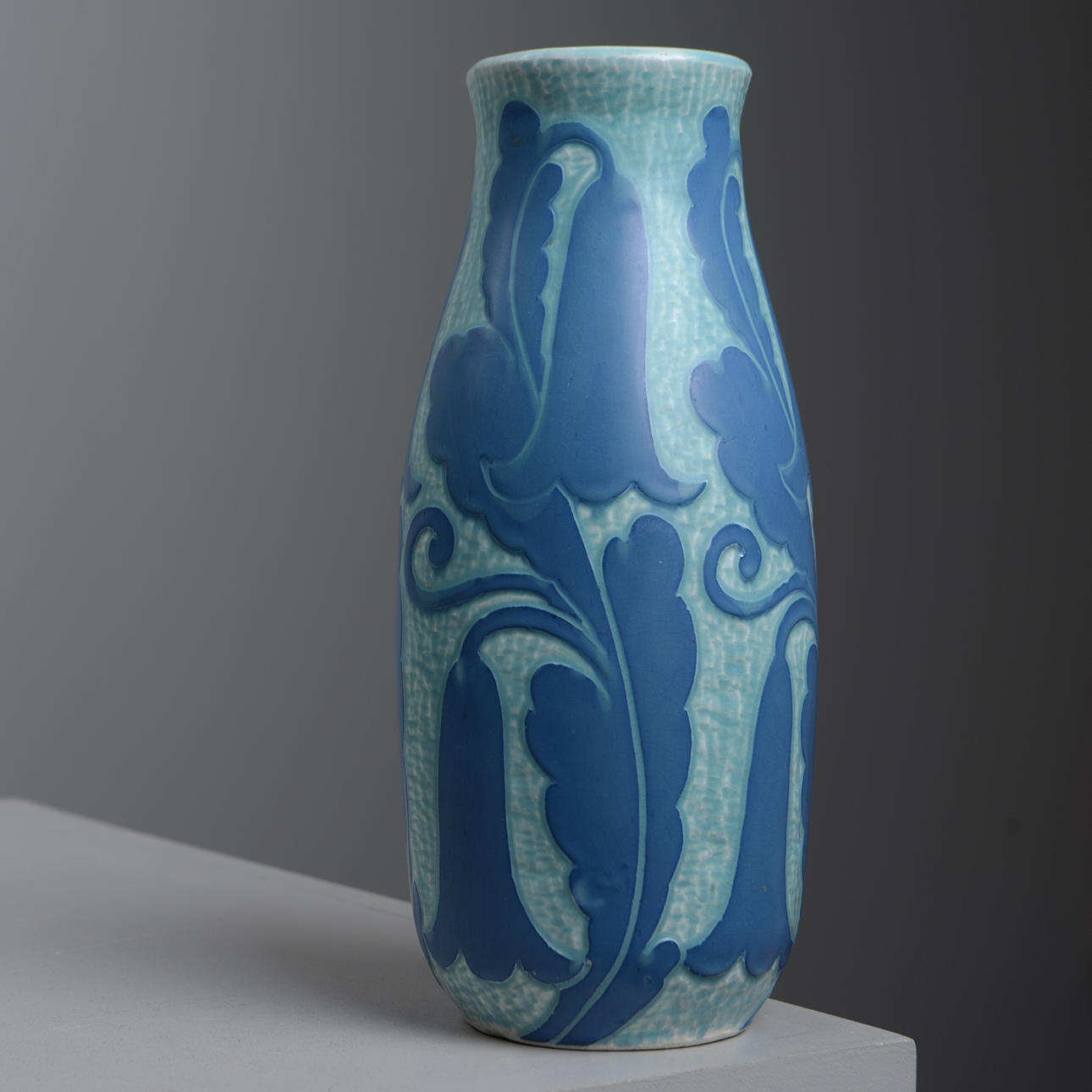
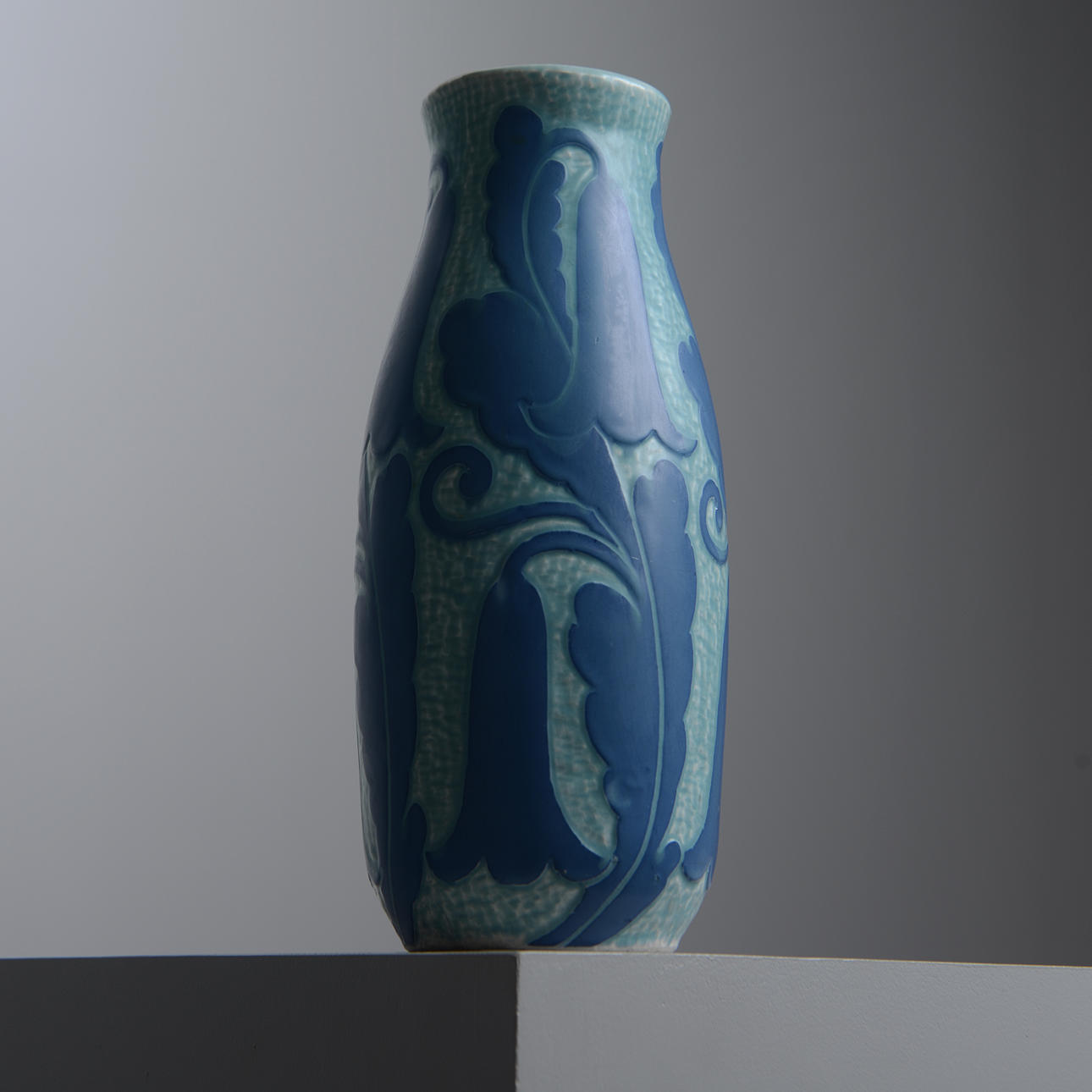
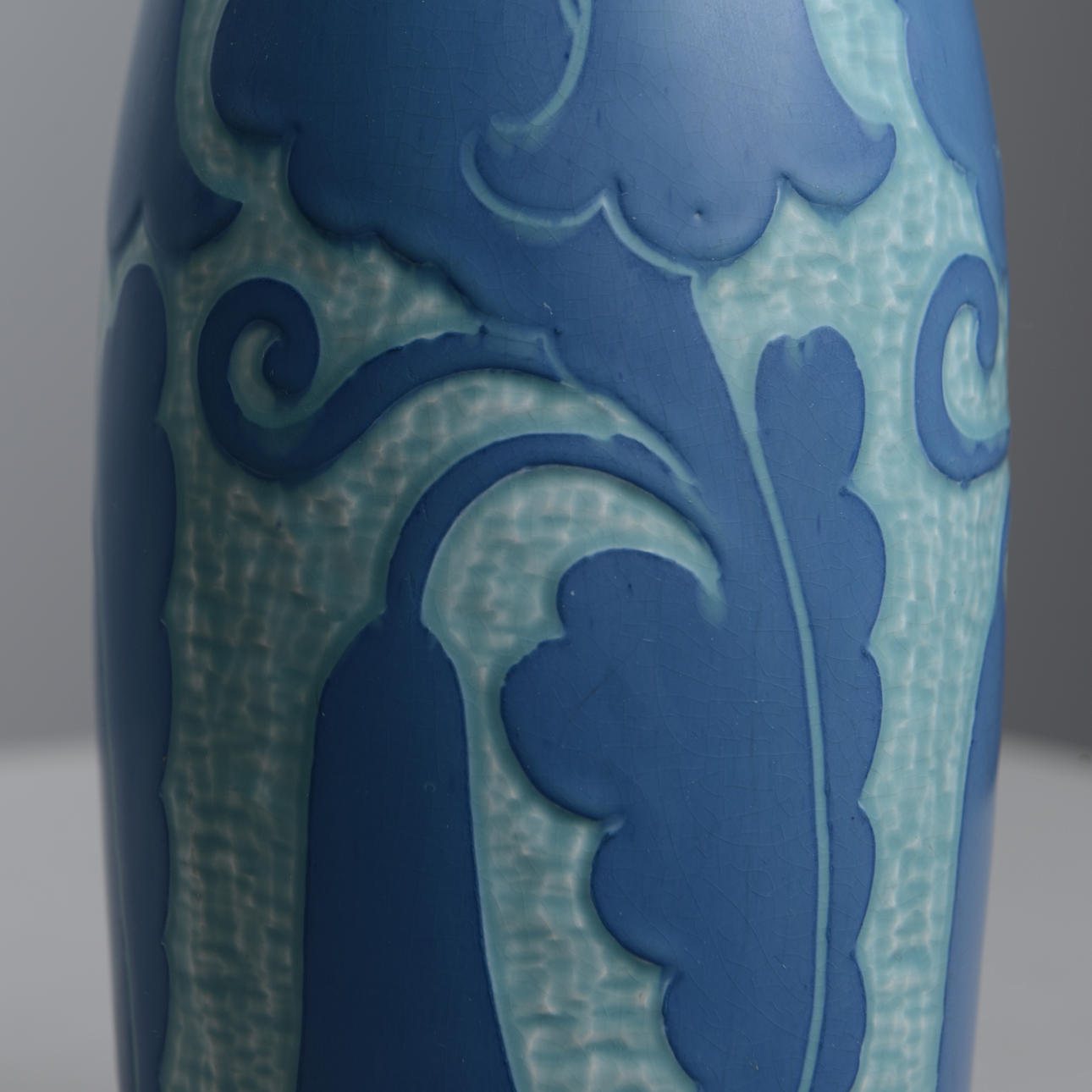
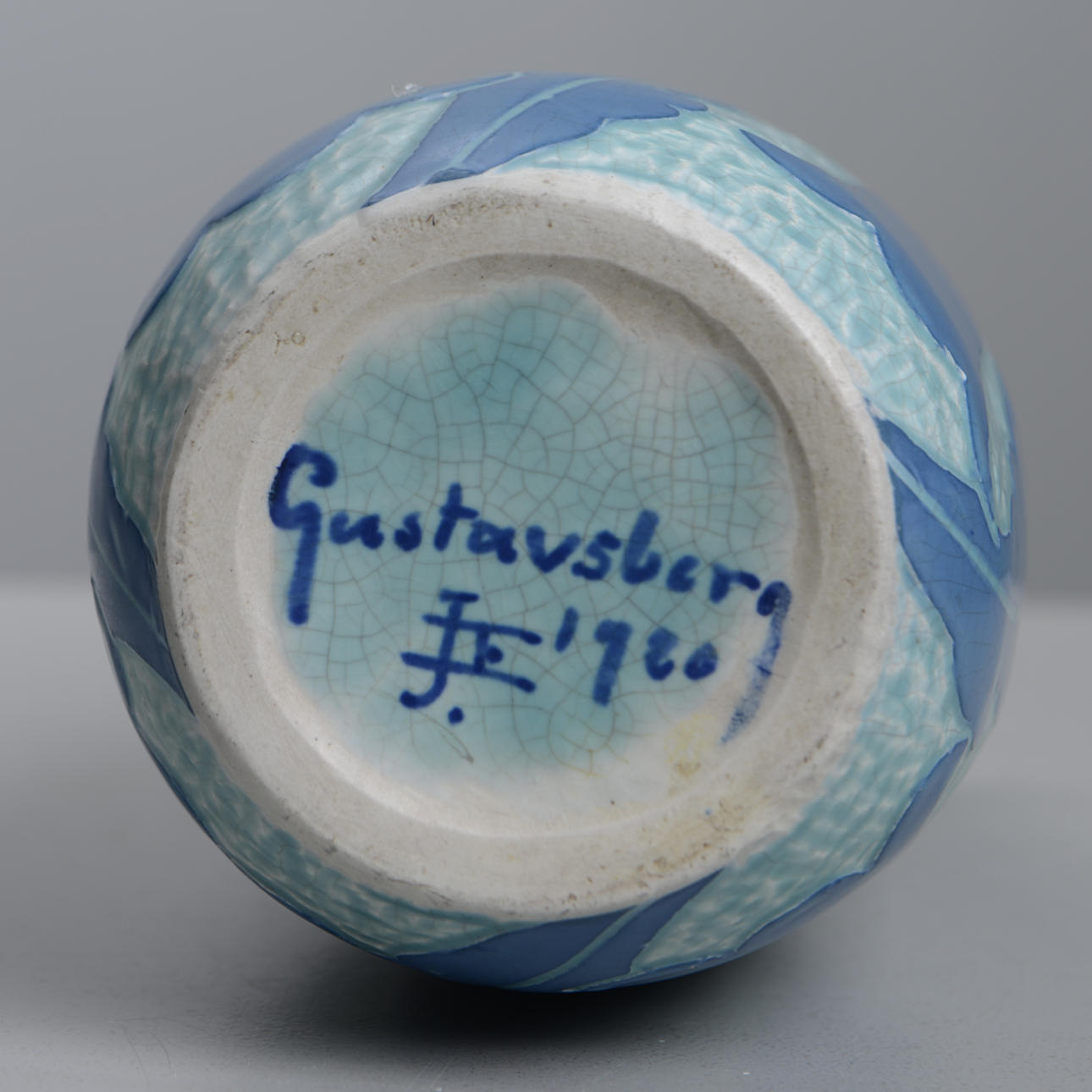
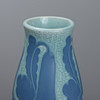
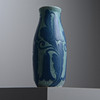
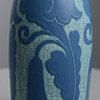
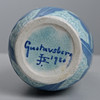
Sgraffito decoration of stylized flowers, glazed in blue. Signed "Gustavsberg JE 1920" underneath.
Height 28 cm.
Josef Ekberg (1877-1945) was a Swedish ceramist and designer who had a long and successful career at the Gustavsberg Porcelain Factory. He was born in Värmdö, Sweden, and started working at the Gustavsberg Porcelain Factory at the age of twelve, where his father Bernhard had also worked as a painter.
During his time at Gustavsberg, Josef Ekberg developed a close friendship with the artist Gunnar Wennerberg. Together, they created the so-called sgraffito technique, where you apply two layers of contrasting glaze to an unfired object and then carefully cut patterns into the surface to reveal the inner layer. This technology was successfully presented at the World Exhibition in Paris in 1900 and caught the attention of the factory owner Wilhelm Odelberg.
Ekberg's artistic works at Gustavsberg mainly included objects decorated with sgraffito technique or luster glaze. His designs were often characterized by vines, flowers and other organic motifs.
From 1908 to 1917, Ekberg was the artistic director and ceramic designer at Gustavsberg. His work was exhibited at the Stockholm Exhibition in 1909 and in the Swedish industrial pavilion at the Baltic Exhibition in 1914 in Malmö. He later handed over the position of artistic director to Wilhelm Kåge.
During his time as artistic director and ceramic designer at Gustavsbergs Porslinsfabrik, Ekberg experimented intensively with glazes. It was during this period that he developed the blue glazes that would become his signature style.
These blue glazes had a distinct matte blue-green color and created a particular visual effect on the pottery. They gave the ceramics a sense of calm and harmony, and their soft blue-green hues created a pleasant contrast to the organic motifs and patterns that often adorned his work. The glazes also enhanced the texture of the pottery and created a sense of depth and dimension in the surface.
Condition
Wear with occasional scratches, marks, inside dirty. Glaze cracklings.
Resale right
Artist/designer
Theme
Do you have something similar to sell? Get your items valued free of charge!
Description
Sgraffito decoration of stylized flowers, glazed in blue. Signed "Gustavsberg JE 1920" underneath.
Height 28 cm.
Josef Ekberg (1877-1945) was a Swedish ceramist and designer who had a long and successful career at the Gustavsberg Porcelain Factory. He was born in Värmdö, Sweden, and started working at the Gustavsberg Porcelain Factory at the age of twelve, where his father Bernhard had also worked as a painter.
During his time at Gustavsberg, Josef Ekberg developed a close friendship with the artist Gunnar Wennerberg. Together, they created the so-called sgraffito technique, where you apply two layers of contrasting glaze to an unfired object and then carefully cut patterns into the surface to reveal the inner layer. This technology was successfully presented at the World Exhibition in Paris in 1900 and caught the attention of the factory owner Wilhelm Odelberg.
Ekberg's artistic works at Gustavsberg mainly included objects decorated with sgraffito technique or luster glaze. His designs were often characterized by vines, flowers and other organic motifs.
From 1908 to 1917, Ekberg was the artistic director and ceramic designer at Gustavsberg. His work was exhibited at the Stockholm Exhibition in 1909 and in the Swedish industrial pavilion at the Baltic Exhibition in 1914 in Malmö. He later handed over the position of artistic director to Wilhelm Kåge.
During his time as artistic director and ceramic designer at Gustavsbergs Porslinsfabrik, Ekberg experimented intensively with glazes. It was during this period that he developed the blue glazes that would become his signature style.
These blue glazes had a distinct matte blue-green color and created a particular visual effect on the pottery. They gave the ceramics a sense of calm and harmony, and their soft blue-green hues created a pleasant contrast to the organic motifs and patterns that often adorned his work. The glazes also enhanced the texture of the pottery and created a sense of depth and dimension in the surface.
Condition
Wear with occasional scratches, marks, inside dirty. Glaze cracklings.
Resale right
Artist/designer
Theme
Do you have something similar to sell? Get your items valued free of charge!