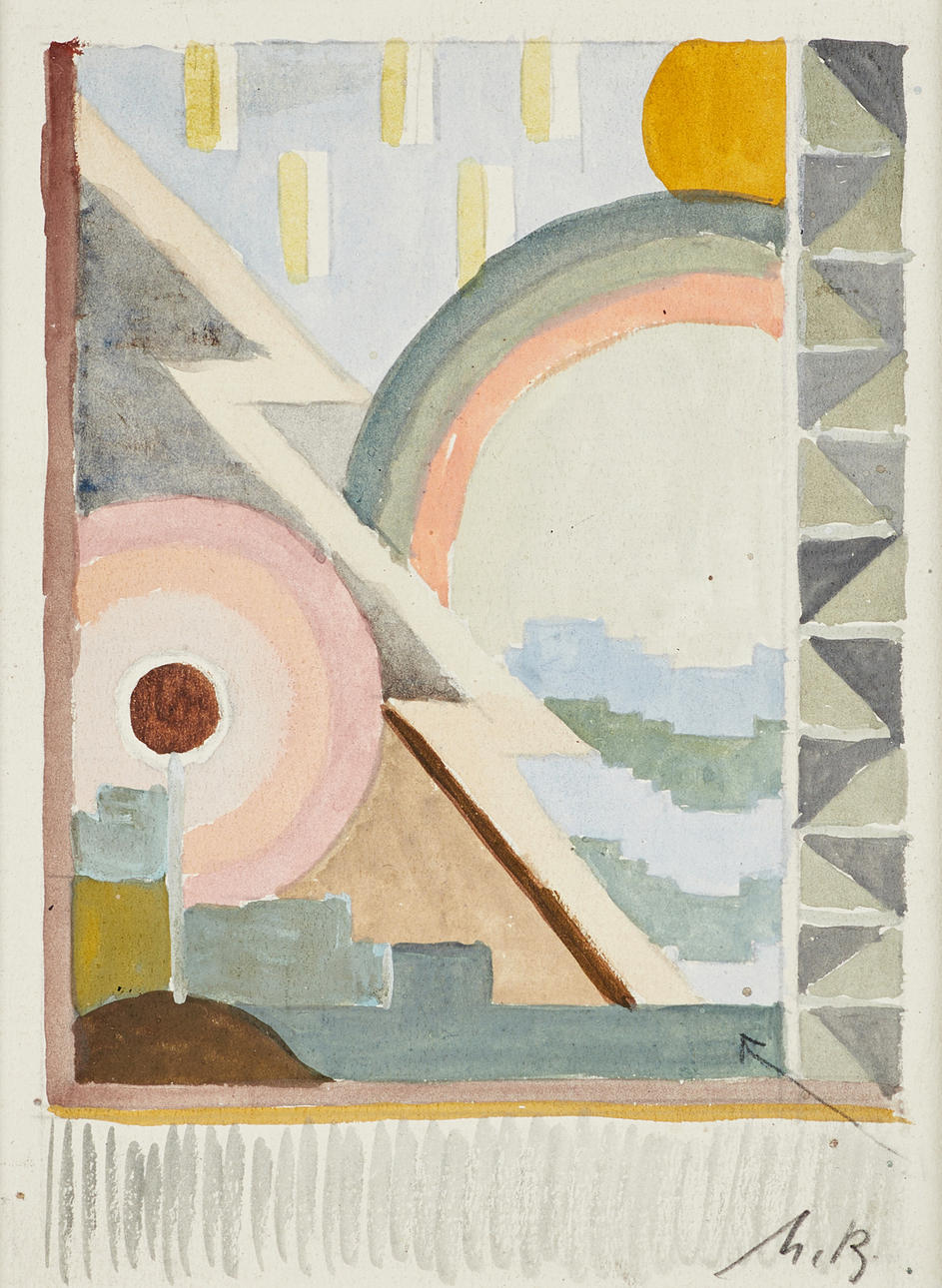
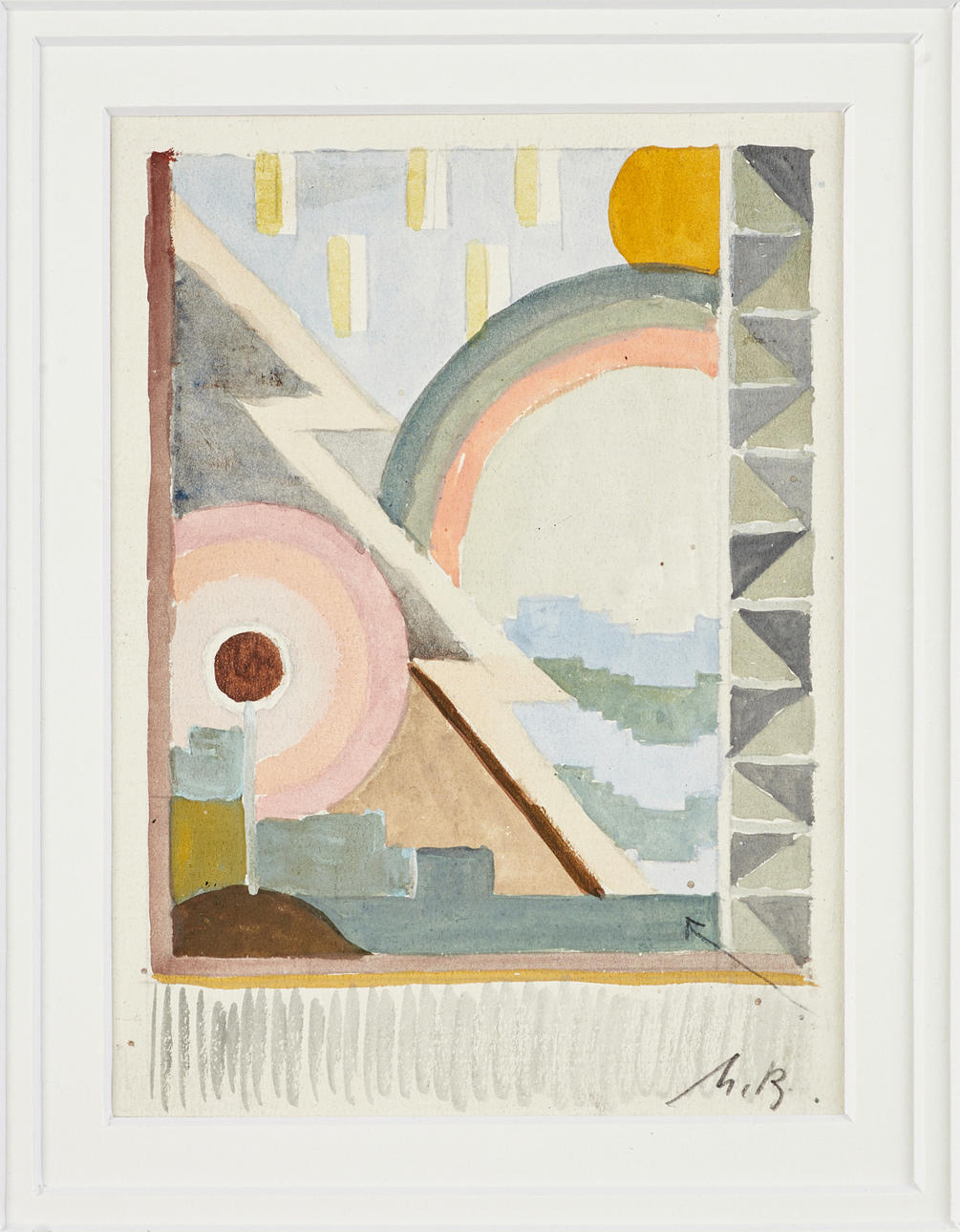
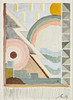
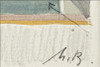
MARTHE BOHM (Warnsdorf/Böhmen 1898-1972), Plan geometric composition, monogram signed MB, 1920s, gouache.
This auction is closed, but maybe you like the following items?

Images





Description
image size approx. 14x9.5 cm frame size 32x27 cm MARTHE BOHM Marthe Bohm was born in 1898 in Varnsdorf in the northernmost part of Bohemia, which was then part of Austria-Hungary. The city had an important textile industry and the father, Franz Kieseberg, worked there as a textile draftsman, which corresponds to today's textile designer. Four sisters grew up in the family, and of them, Marthe was considered to be the one who inherited her father's artistic skill, which is why she was allowed to study art. German was spoken in the family and the family belonged to the Old Catholic faith (a breakaway from the Catholic Church). The father died in 1919 of the Spanish Flu. The mother, Adele Kieseberg, had a mind for business and opened a paper shop on the ground floor of the family house.
Marthe Bohm received her first artistic education at the local art school in Varnsdorf. At the age of 23, she moved to Dresden where she studied at the Akademie der Bildenden Künste Dresden (now Hochshule für Bildende Künste Dresden, HfBK) 1921–27. When she had been there for two years, the Swede Gösta Bohm came to the same school. They became a couple, married in 1927 and moved to his hometown Hudiksvall the same year. Apart from six months in Stockholm and a year in Germany, the Bohms came to be faithful to Hudiksvall for the rest of their lives. They made a living as artists, painting pictures and performing public decoration.
During her studies in the 1920s, Marthe Bohm had encountered "the new objectivity" which had a great influence on her continued painting. She executed portraits, still lifes and landscape views. During the 1940s, she began to paint cubistically, in what is usually called "painterly cubism".
The motifs she chose for this abstract painting were often still lifes and landscapes. They were often taken from her and her husband's many travels in the 1950s and 1960s in Spain, France, Italy and Greece.
Her warm religiosity was reflected in some works, where the religious was inserted into an everyday context.
As a youngster in Varnsdorf, Marthe Bohm had drawn textile patterns. She then came to work a bit with advertising images, both in Germany and in Sweden. She also performed congratulations with miniatures in an almost medieval style.
Already in her first year in Sweden, 1927, Marthe Bohm exhibited her art in Gävle and the following year in Hudiksvall. There were then many exhibitions in Gävleborg county, sometimes together with her husband. Own exhibitions were also shown in Ljusdal, Bollnäs, Söderhamn and Gävle. She also participated in collective exhibitions in Stockholm, Helsingborg, Gothenburg, Malmö, Oslo, Halmstad, Sandviken, Falun, Agrigento, Paris and Monaco.
As a wife, mother and hostess, Marthe Bohm did not have the same conditions to work with her art as her husband did. She thus came to stand in his shadow. After the daughter grew up, the possibility of a more equal artistry increased with the Bohm couple.
Marthe Bohm died in 1972 and is buried in Hudiksvall's cemetery.
Source: Lars Nylander Marthe Louise Bohm, www.skbl.se/sv/artikel/MartheBohm, Swedish Women's Biographical Lexicon.
Condition
No remarks.
Resale right
Theme
Do you have something similar to sell? Get your items valued free of charge!
Description
image size approx. 14x9.5 cm frame size 32x27 cm MARTHE BOHM Marthe Bohm was born in 1898 in Varnsdorf in the northernmost part of Bohemia, which was then part of Austria-Hungary. The city had an important textile industry and the father, Franz Kieseberg, worked there as a textile draftsman, which corresponds to today's textile designer. Four sisters grew up in the family, and of them, Marthe was considered to be the one who inherited her father's artistic skill, which is why she was allowed to study art. German was spoken in the family and the family belonged to the Old Catholic faith (a breakaway from the Catholic Church). The father died in 1919 of the Spanish Flu. The mother, Adele Kieseberg, had a mind for business and opened a paper shop on the ground floor of the family house.
Marthe Bohm received her first artistic education at the local art school in Varnsdorf. At the age of 23, she moved to Dresden where she studied at the Akademie der Bildenden Künste Dresden (now Hochshule für Bildende Künste Dresden, HfBK) 1921–27. When she had been there for two years, the Swede Gösta Bohm came to the same school. They became a couple, married in 1927 and moved to his hometown Hudiksvall the same year. Apart from six months in Stockholm and a year in Germany, the Bohms came to be faithful to Hudiksvall for the rest of their lives. They made a living as artists, painting pictures and performing public decoration.
During her studies in the 1920s, Marthe Bohm had encountered "the new objectivity" which had a great influence on her continued painting. She executed portraits, still lifes and landscape views. During the 1940s, she began to paint cubistically, in what is usually called "painterly cubism".
The motifs she chose for this abstract painting were often still lifes and landscapes. They were often taken from her and her husband's many travels in the 1950s and 1960s in Spain, France, Italy and Greece.
Her warm religiosity was reflected in some works, where the religious was inserted into an everyday context.
As a youngster in Varnsdorf, Marthe Bohm had drawn textile patterns. She then came to work a bit with advertising images, both in Germany and in Sweden. She also performed congratulations with miniatures in an almost medieval style.
Already in her first year in Sweden, 1927, Marthe Bohm exhibited her art in Gävle and the following year in Hudiksvall. There were then many exhibitions in Gävleborg county, sometimes together with her husband. Own exhibitions were also shown in Ljusdal, Bollnäs, Söderhamn and Gävle. She also participated in collective exhibitions in Stockholm, Helsingborg, Gothenburg, Malmö, Oslo, Halmstad, Sandviken, Falun, Agrigento, Paris and Monaco.
As a wife, mother and hostess, Marthe Bohm did not have the same conditions to work with her art as her husband did. She thus came to stand in his shadow. After the daughter grew up, the possibility of a more equal artistry increased with the Bohm couple.
Marthe Bohm died in 1972 and is buried in Hudiksvall's cemetery.
Source: Lars Nylander Marthe Louise Bohm, www.skbl.se/sv/artikel/MartheBohm, Swedish Women's Biographical Lexicon.
Condition
No remarks.
Resale right
Theme
Do you have something similar to sell? Get your items valued free of charge!