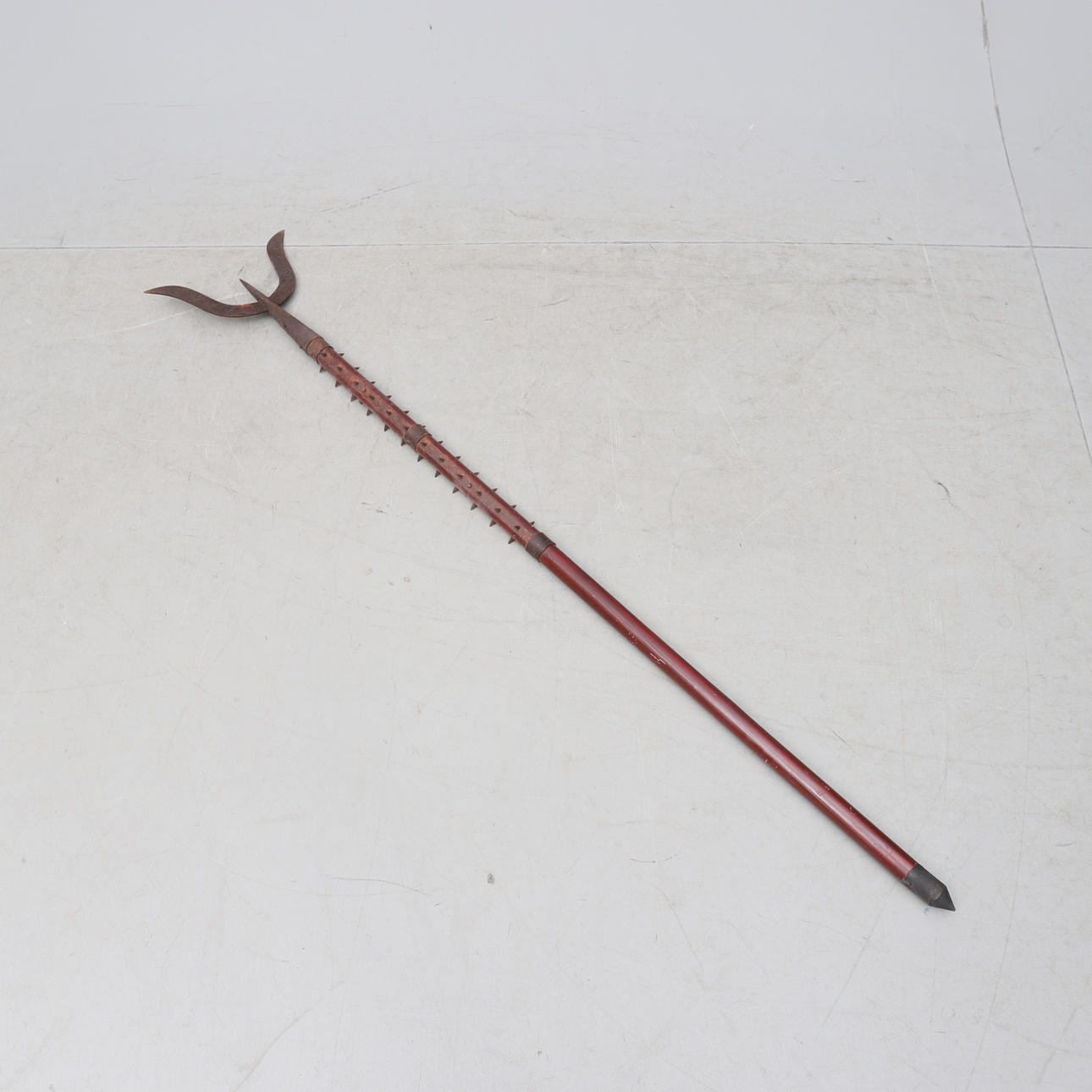
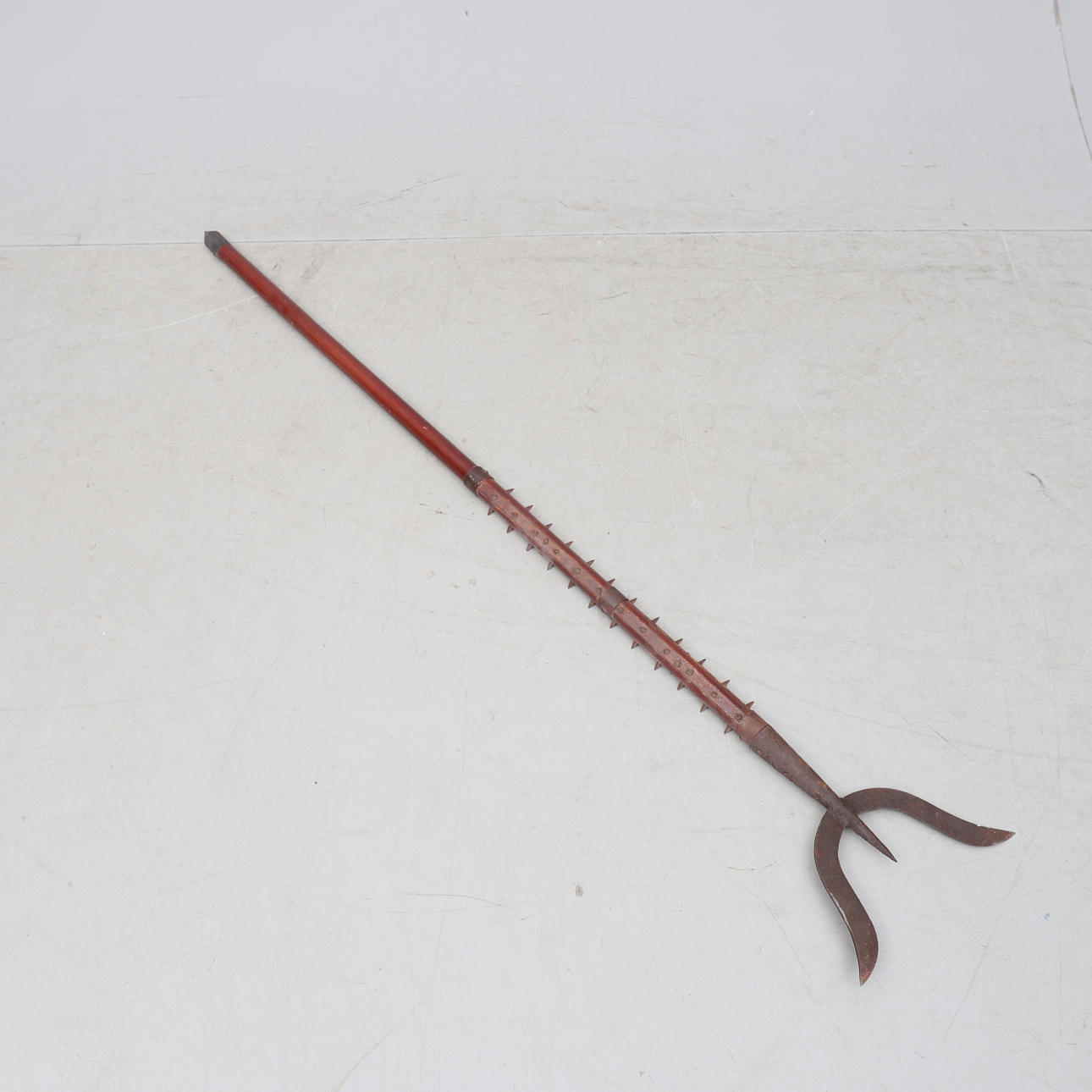
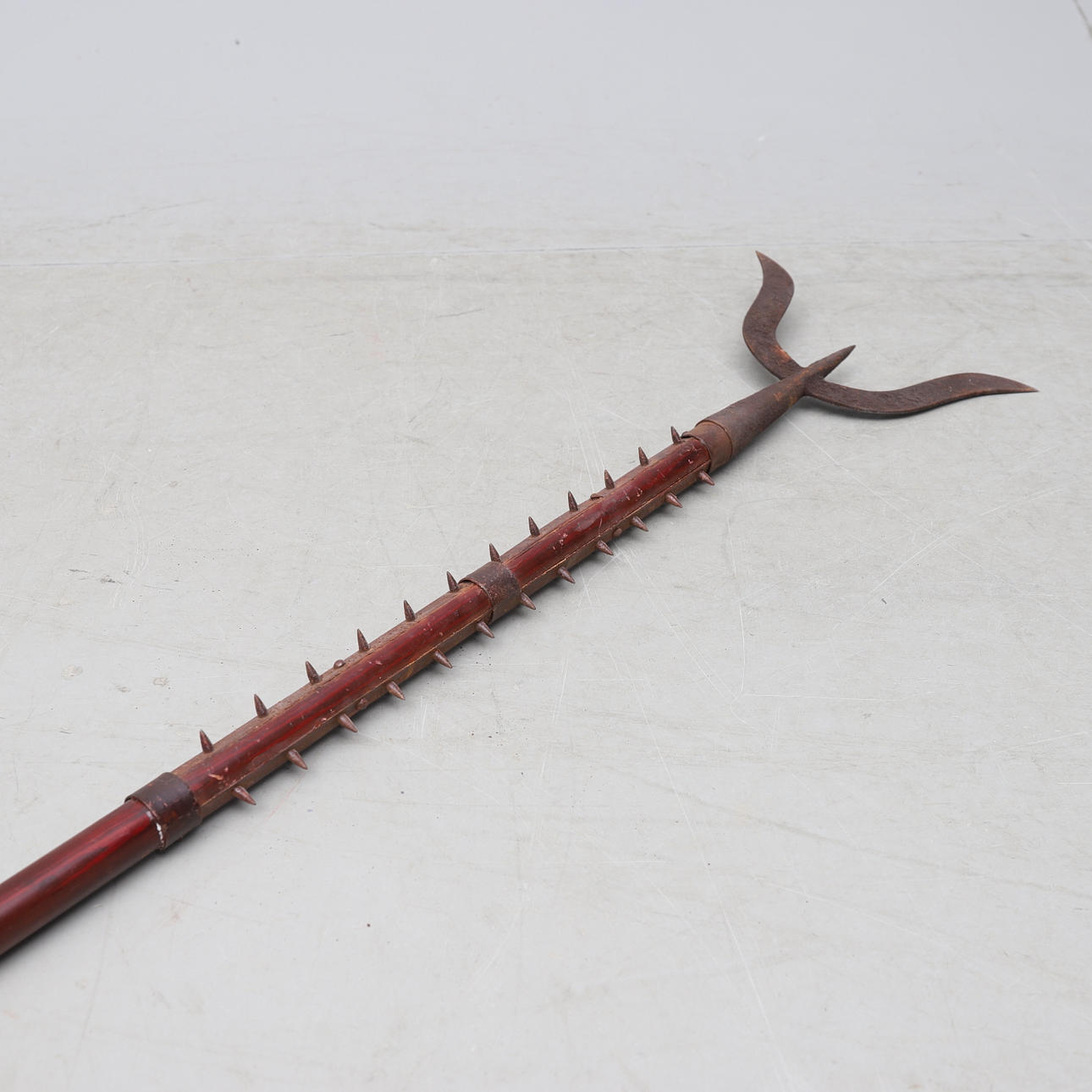
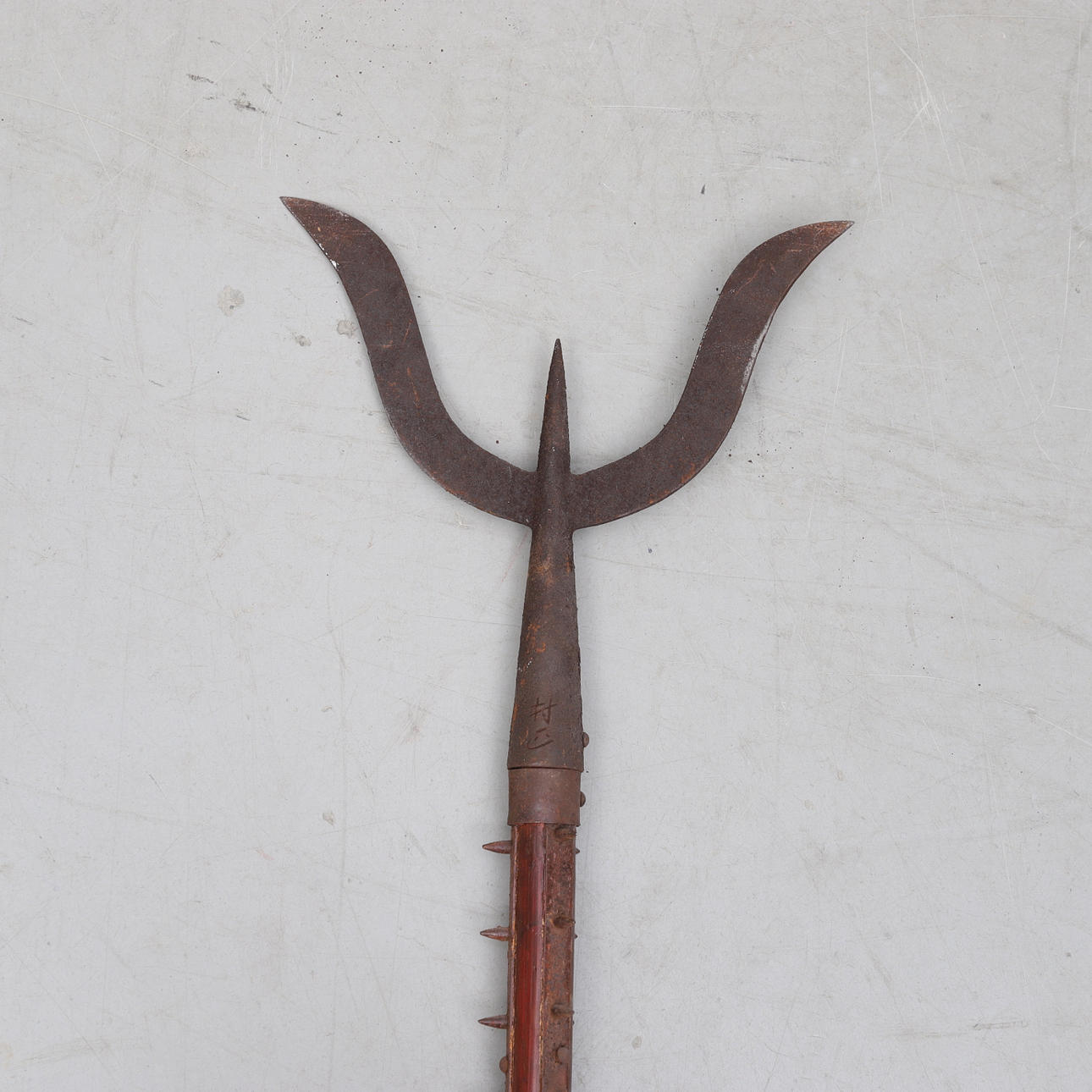
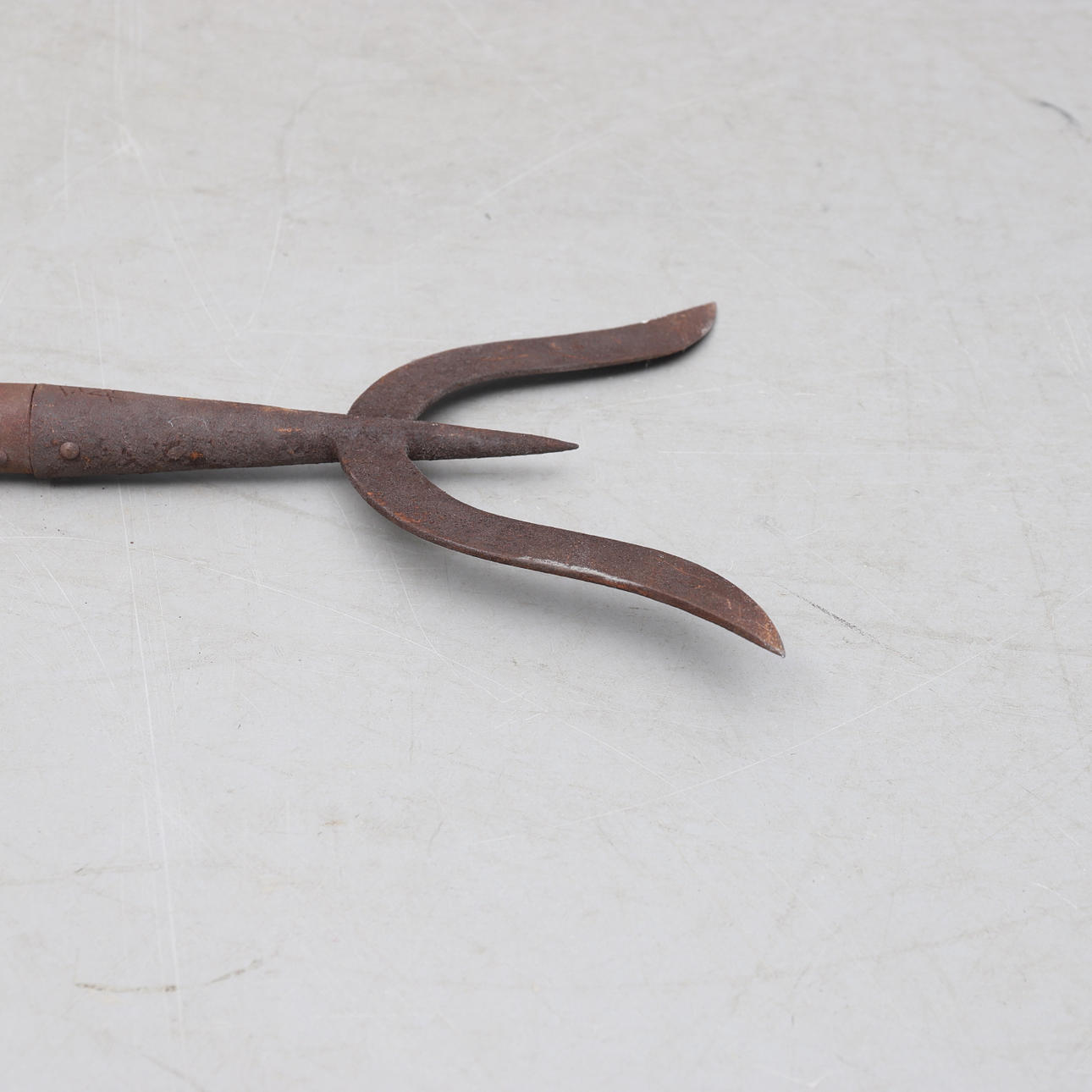
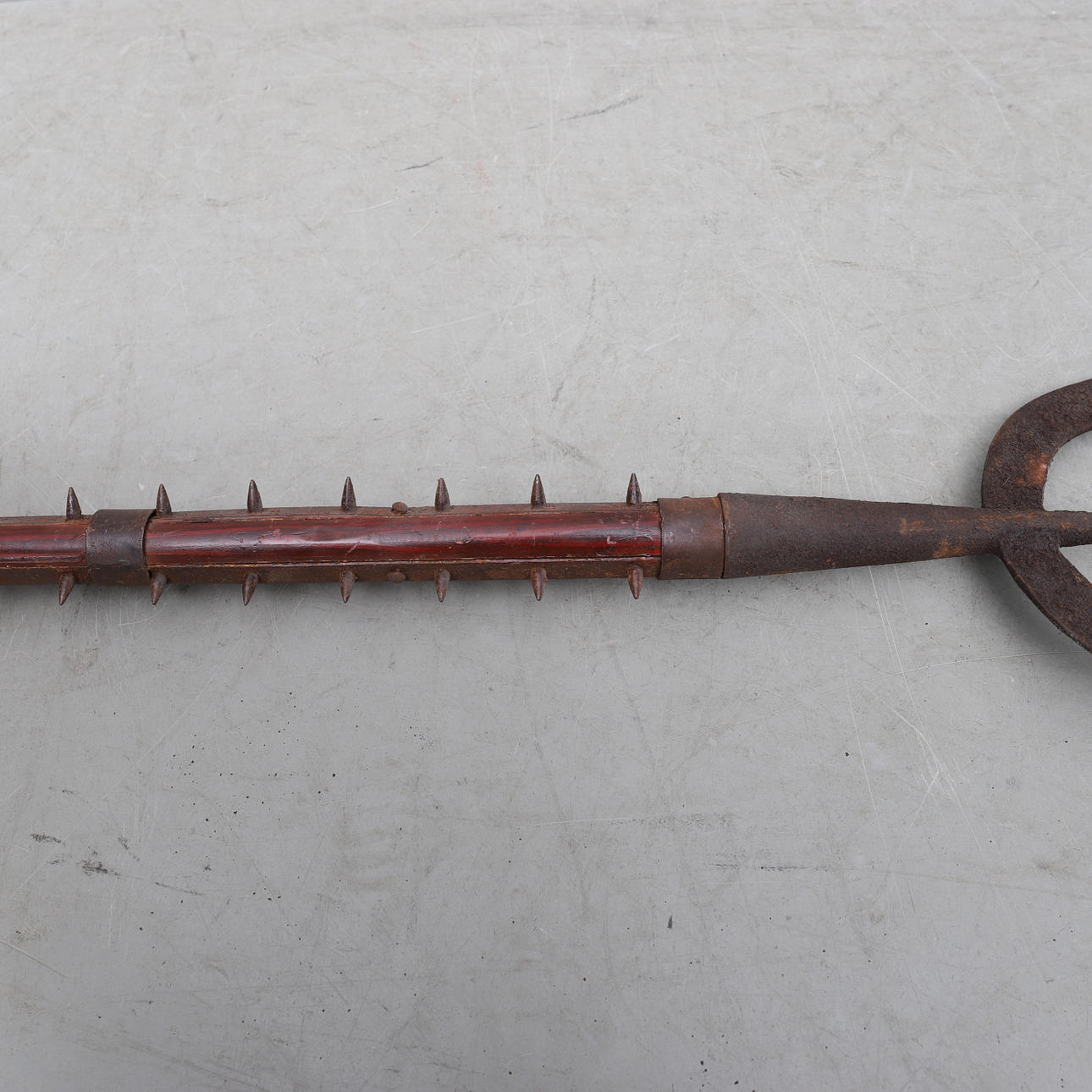
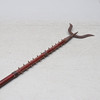
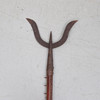
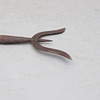
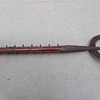
Polearm , Japan, SASUMATA 刺股.
This auction is closed, but maybe you like the following items?

Images
Description
Date of manufacture: 1801 (享和 Kyowa) - 1804 onwards
Art Period: Edo (1603–1867)
In Edo period Japan, the samurai were responsible for police operations; various levels of samurai police assisted by non-samurai people used many types of non-lethal weapons to capture suspected criminals for trial. Torimono sandōgu was part of the police station's six tools (bansho rokugin or keigo roku-go), these were kanamuchi, kiriko no bo, tetto, sodegarami, tsukubo and just sasumata.
These three weapons (torimono sandōgu) were also used at sea to ward off boarding by pirates.
After the Edo period, the sasumata was used in schools by teachers to evict undesirables from the school and its surrounding area.
Length: 148cm
LINK TO REFERENCE MATERIALS .
Condition
Normal wear and tear. All years and eras are related to the blade. Sometimes, depending on the material, other details can be contemporary.
Do you have something similar to sell? Get your items valued free of charge!
Description
Date of manufacture: 1801 (享和 Kyowa) - 1804 onwards
Art Period: Edo (1603–1867)
In Edo period Japan, the samurai were responsible for police operations; various levels of samurai police assisted by non-samurai people used many types of non-lethal weapons to capture suspected criminals for trial. Torimono sandōgu was part of the police station's six tools (bansho rokugin or keigo roku-go), these were kanamuchi, kiriko no bo, tetto, sodegarami, tsukubo and just sasumata.
These three weapons (torimono sandōgu) were also used at sea to ward off boarding by pirates.
After the Edo period, the sasumata was used in schools by teachers to evict undesirables from the school and its surrounding area.
Length: 148cm
LINK TO REFERENCE MATERIALS .
Condition
Normal wear and tear. All years and eras are related to the blade. Sometimes, depending on the material, other details can be contemporary.
Do you have something similar to sell? Get your items valued free of charge!