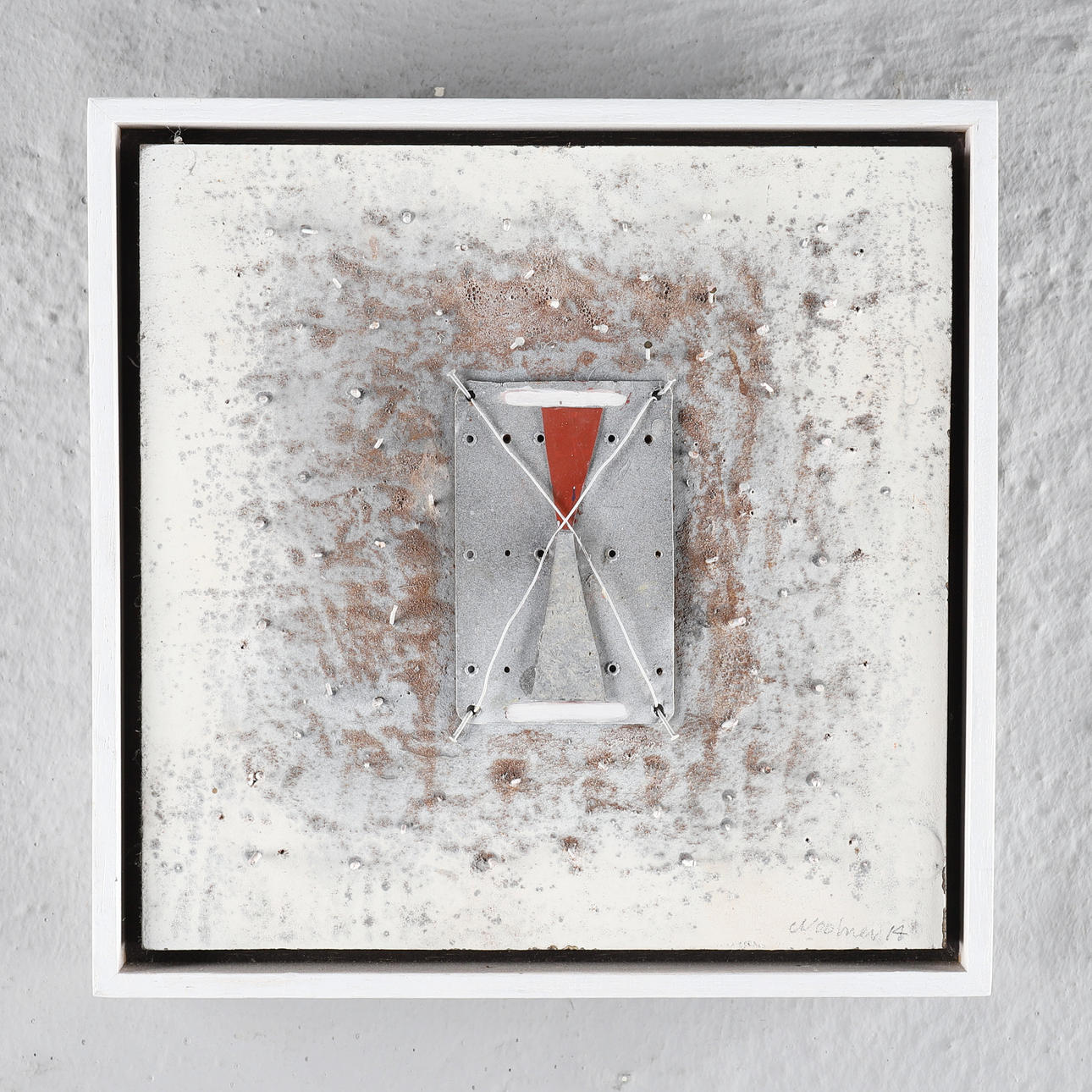
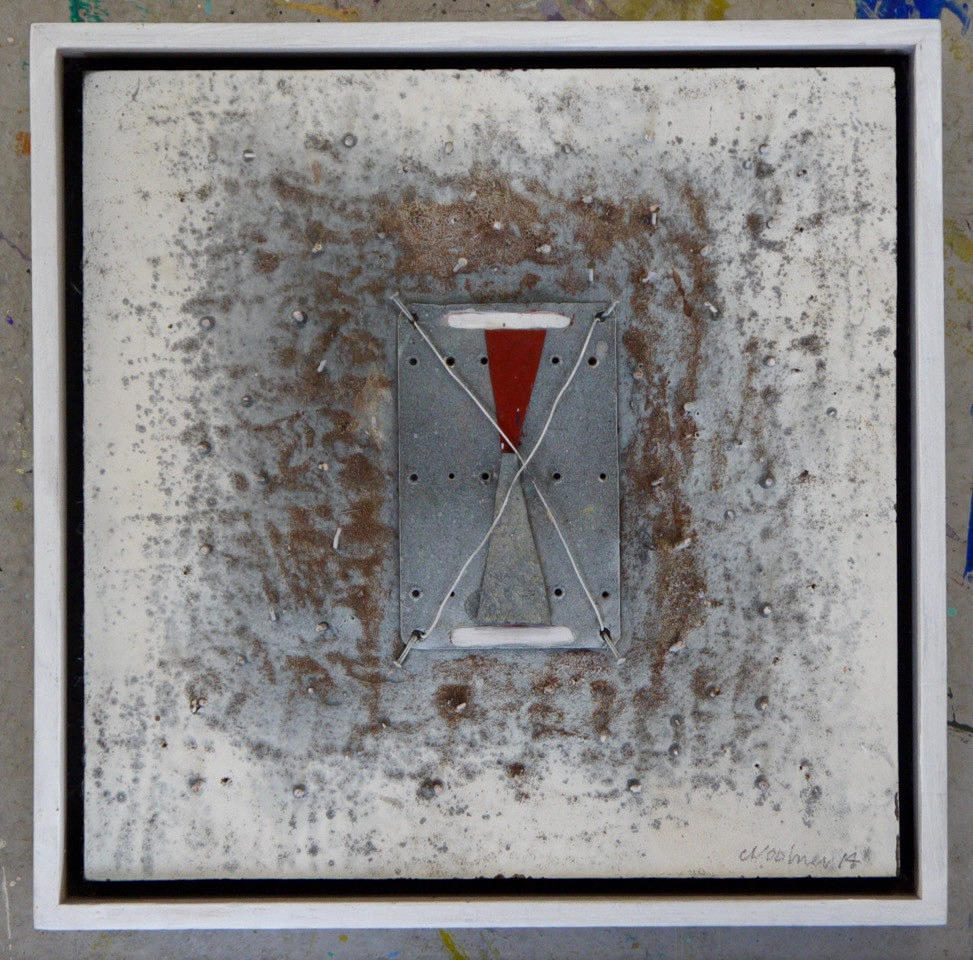
ROB WOOLNER. CROSSING.
This auction is closed, but maybe you like the following items?

Images
Description
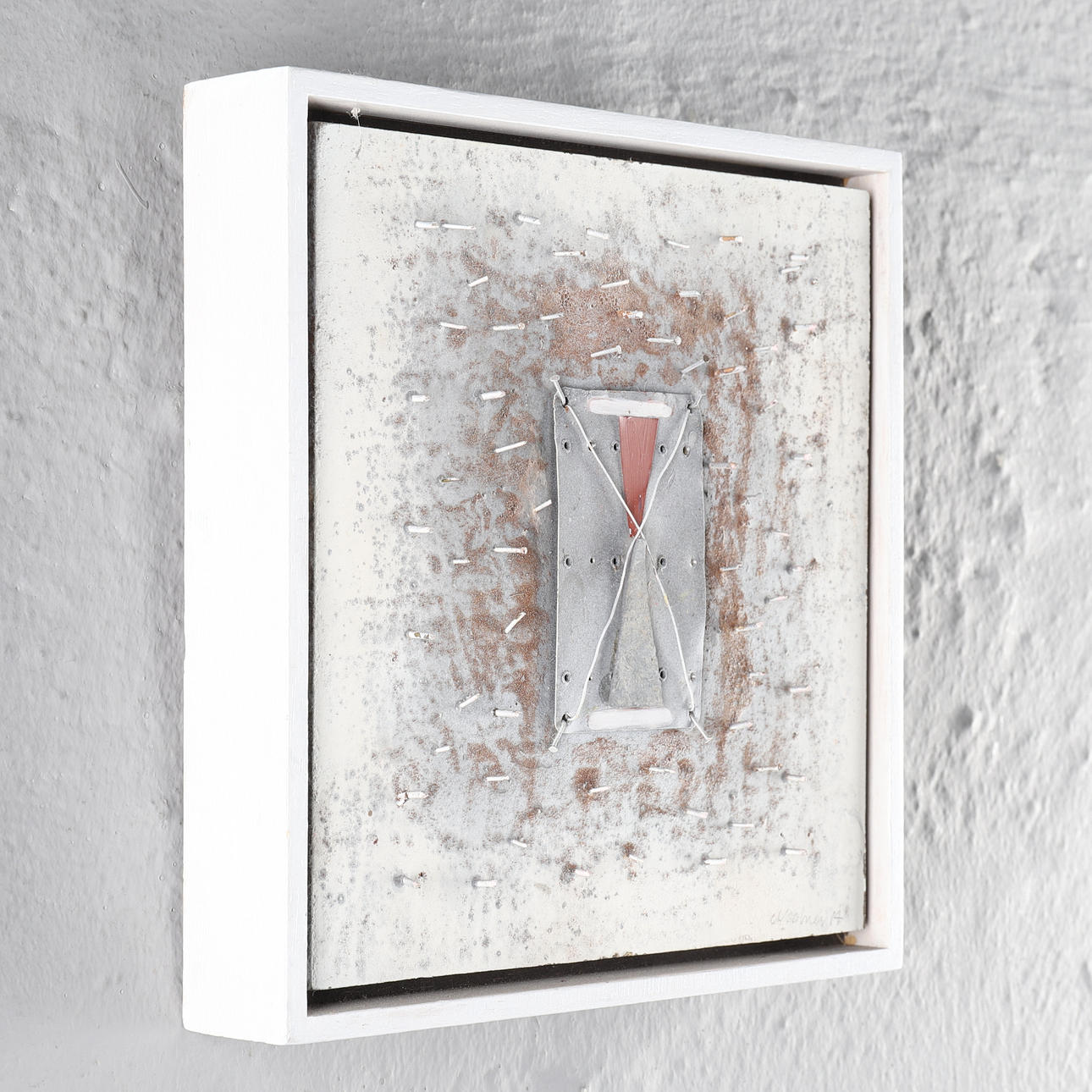
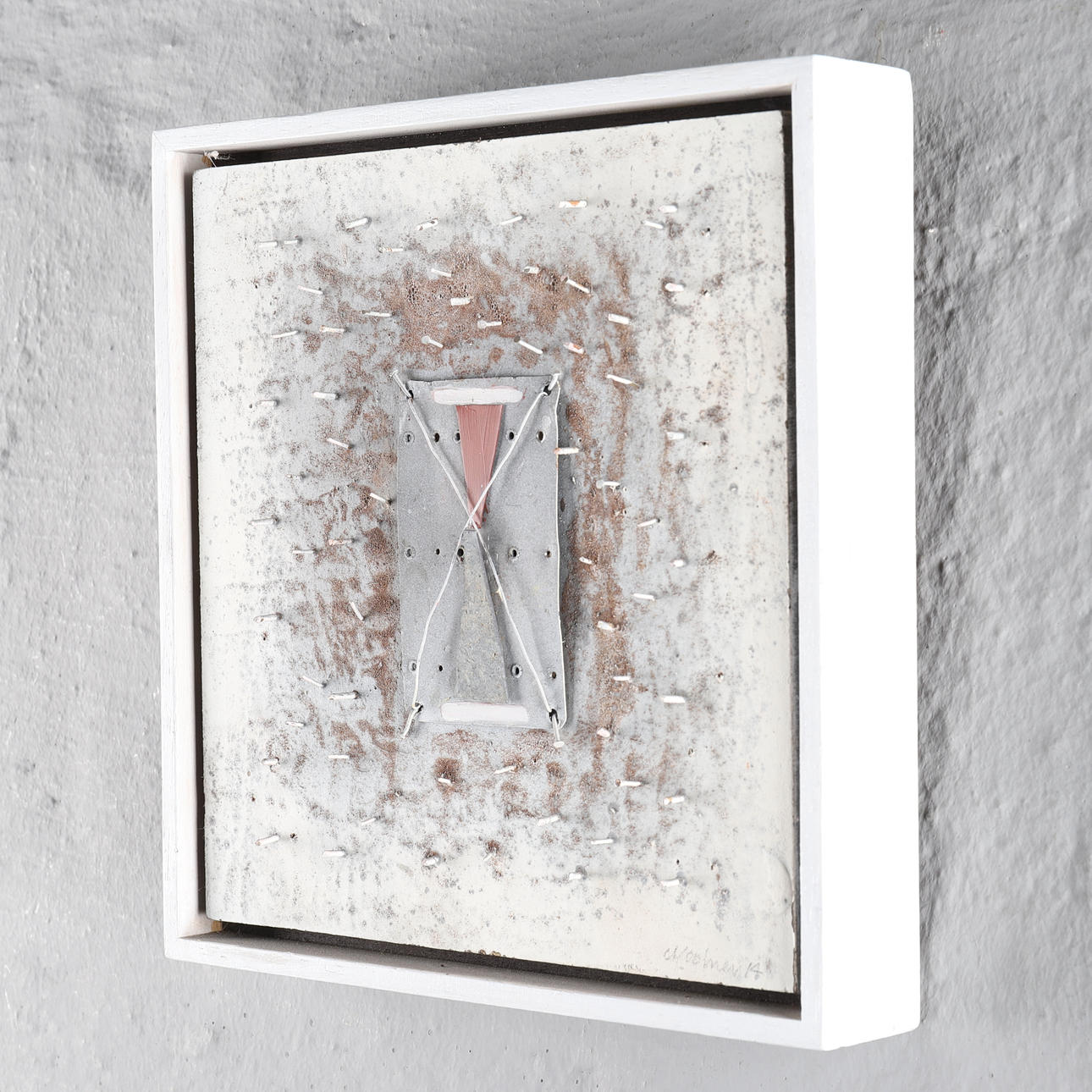
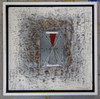
Mixed Media,
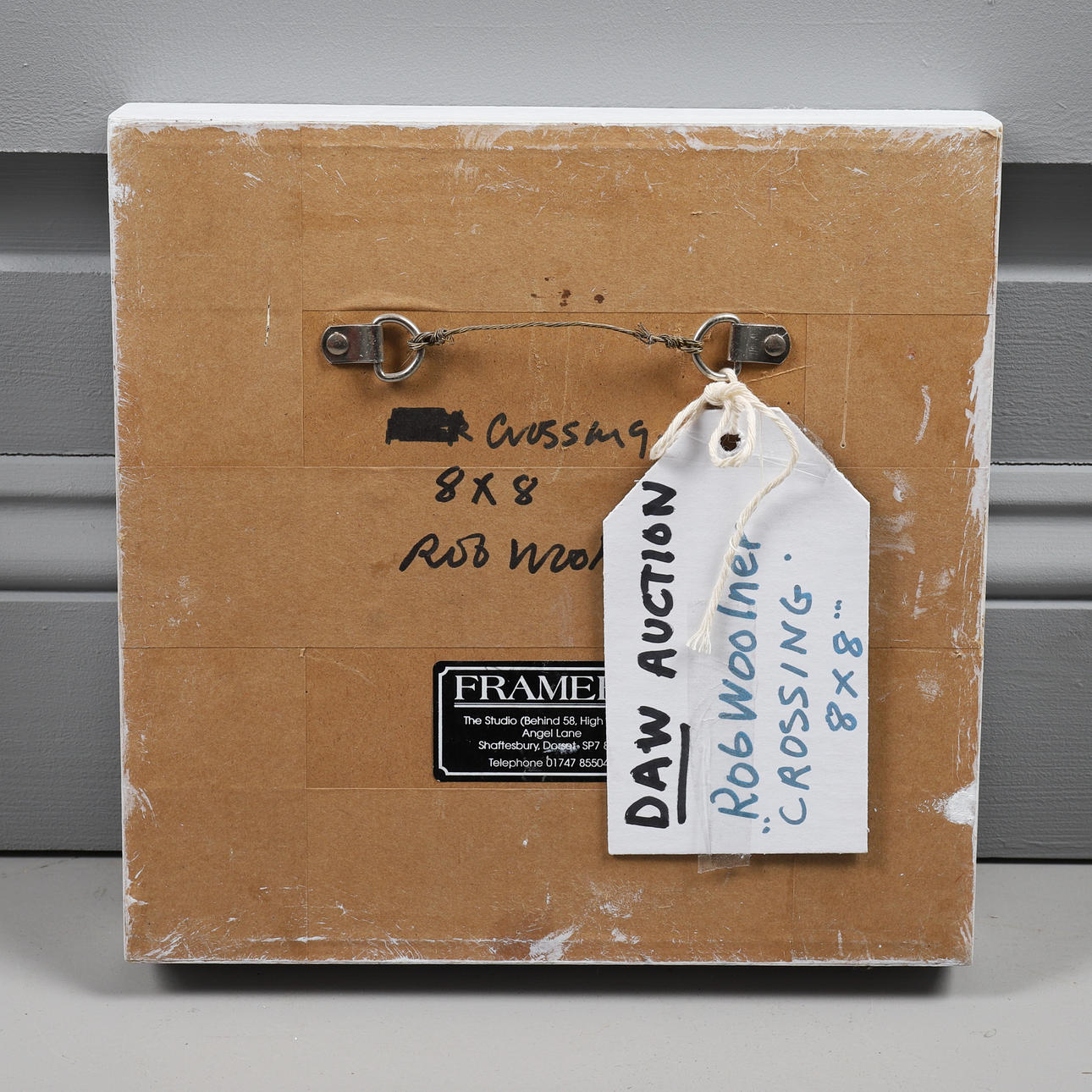
Signed and dated '14, also inscribed and dated verso.
(20cm x 20cm including frame.)
Rob Woolner:
Dorset is a county rich with practising artists and today I’m visiting one of its longest serving talents - Rob Woolner, at his Chantry Studio in Glanvilles Wooton. An important, prolific artist, Rob has produced an enviable body of work which has been shown widely since the late 60’s. Meeting Rob, I can’t help but be taken in by his gentle charm. He’s a softly spoken man although a wicked twinkle in his eye hints at the rebel within (he likes a bit of David Shrigley, I discover). Dressed in varying degrees of blue and paint-flecked deck shoes, Rob looks every bit the artist as he goes about making us coffee. He grinds the beans and selects a pot with the quiet sensory precision of someone in pursuit of perfection.
‘I have always been attached to the Dorset landscape,’ says Rob, ‘I have lived a lot of my life here – 40 odd years – so yes the place is my life, it all comes from that…’ We wander down to Rob’s studio which abuts the house. The Chantry Studio as it is called – a striking construction of Shou Sugi Ban charred timber – was a collaboration between Rob and one of his daughters, an architect at the award-wining practice YOU&ME. The Japanese technique of charring gives timber added durability and a beautiful blackened silvery glow. Once inside however, the dark exterior is immediately contrasted by a haunting light. A high ceiling and symmetrical tiny slits for windows at the eastern end evoke an ecclesiastical presence, while ’floating’ walls that hang above the floor add a sense of levity. A wide, west-facing window frames the fields and hills beyond. ‘I want to make things that are contemplative, that are about quietness. A lot of people come in here and ask if this is a church,’ says Rob, ‘but I wanted that feeling of soundlessness and consideration. They are life-enhancing qualities,’ he explains. Rob studied at Camberwell School of Art in the60s. Frank Auerbach was among his tutors and the likes of Pink Floyd’s Syd Barrett were among the students. These were heady times; Artists such as Rothko and de Kooning, members of the American expressionist wave, were beginning to show in London. ‘It was a very figurative tradition at Camberwell,’ explains Rob, ‘there we were painting little grey paintings when all the American abstract expressionists were starting to show and we thought ‘what the hell are we doing?’, so suddenly all our paintings became huge abstracts.’ On moving to Dorset, Rob became more affected by the landscape. ‘If you look back at my early work you would probably think I was an impressionist painter,’ he says of the time. During the early 2000s his worked evolved into more abstract forms rooted in the county’s earth. ‘My pictures of Hambledon Hill were about the form and the wonderful movements in the land, and the Dorset hill-forts were a terrific starting point because they were real and physical and sculptural,’ he explains. ‘They are imbued with so much power. You can go there one day and it could be very benign and on another it is really spooky; hill forts are condensers of time, that is the sort of feeling that I find very important. The pictorial is not very important to me, but surface is important and form, you can see in my work that you ‘touch things with your eyes’ and I like the feeling of getting your hand on to the painting.’ For a period, his work became focused on working with mixed media, ‘I work with anything,’ he remarks, ‘natural pigments, oxides etc. because texture is such an important part of the visual language. It is my first response; it is as sensuous as colour. I like earth colours because they are just iron oxides, rust, things out of the landscapes. But I have started to use much more colour now.’ We are standing in front of two of his most recent paintings. From afar you would think they are textural, your hand longs to reach out and touch the raised ridges of the paint strokes, but on closer inspection the surface is smooth. The stark pale blue grid of Quiet Evening tricks the brain seeing into texture where there is none. Alongside, Red Fall, with its riot of colour, emanates anapparent glow from behind its horizontal lines. ‘Light is something that interests me,’ says Rob. ‘It is romantic and exciting, you just react in a very subjective way to light, that magic moment of light in the early morning or in the evening, one is trying to distill that too.’ We stand and contemplate Quiet Evening a little longer, letting the yellows rise up through the blue and into our senses. ‘If you look carefully into the blue,’ urges Rob, ‘you can see weeks and weeks of underpainting. So many of my paintings are built up over layers; I like the idea of layers of time in a painting.’ Rob is known for crafting his paintings over a number of years. ‘I put things on the wall and hang current work etc. but they have got to stand the test of time. You have to come in everyday and say ‘that is absolutely right’. The objective is that it has to become immovable; it has got to have a rightness about it. If you have doubts after a month or two, it starts to worry you. After a year or two if I think of something isn’t quite right, it comes off the wall again.’ He breaks into a lovely story about Bonnard who, it is said, always travelled with a small paint kit in his bag and while at an exhibition of his work in Paris, he noticed something in one of his paintings that niggled him. So asking his wife to distract the guard, he whipped out his paints and altered the painting. We both laugh. Rob clearly loves his work and would be at a loss without it. ‘I really want to do it,’ he says, ‘it’s that feeling of getting up in the morning and wanting to see what you have done before. It is that kind of love that drives you on. If you didn’t have it, you wouldn’t do it. It sustains me. What I worry about is not wanting to do it and time is so precious. Having the time to work.’ It was mid-March when I met Rob and he was working towards opening his studio to the public for Dorset Arts Weeks. As I write this now, we are in lockdown and I suspect we still will be by the time you read it. There is barely a trickle of traffic outside and, for once, the bird song is drowning out human noise. But oddly, although many of us have a lot more time, it is hard for some of us to focus. We have lost our routines and more immediateconcerns cloud the creativity that some of us might have. But then I think of Rob and his own ritual: ‘I start every day early. As soon as I get up, I come to the studio in my pjs and look at the pictures. Sometimes you have ended the day on a high or with the feeling ‘God it’s crap’ and you’ve ruined everything. Or on the days when in the evening light everything looks good, but in the morning you come in and it’s a bit of a disappointment. But it is that which creates a kind of energy. If you don’t generate energy, how can you do it? My life is that of a hermit, I just want to get things right. Just get up, go in your pjs and have a look before the day’s distractions. Give yourself a shock.’ In the absence of this year’s Dorset Art Weeks and when the dust has finally settled, Rob’s work will be available to view at his studio by appointment. In the meantime, a book documenting his work from 2000-2016, with an introduction by John Renner, is available via Rob’s website. robwoolner.com
Published with kind permission from Jo Danbury, a writer specialising in arts and lifestyle.
Condition
Direct from artists studio - apparently in gallery condition, see images.
Resale right
Theme
Do you have something similar to sell? Get your items valued free of charge!
Description
Mixed Media,
Signed and dated '14, also inscribed and dated verso.
(20cm x 20cm including frame.)
Rob Woolner:
Dorset is a county rich with practising artists and today I’m visiting one of its longest serving talents - Rob Woolner, at his Chantry Studio in Glanvilles Wooton. An important, prolific artist, Rob has produced an enviable body of work which has been shown widely since the late 60’s. Meeting Rob, I can’t help but be taken in by his gentle charm. He’s a softly spoken man although a wicked twinkle in his eye hints at the rebel within (he likes a bit of David Shrigley, I discover). Dressed in varying degrees of blue and paint-flecked deck shoes, Rob looks every bit the artist as he goes about making us coffee. He grinds the beans and selects a pot with the quiet sensory precision of someone in pursuit of perfection.
‘I have always been attached to the Dorset landscape,’ says Rob, ‘I have lived a lot of my life here – 40 odd years – so yes the place is my life, it all comes from that…’ We wander down to Rob’s studio which abuts the house. The Chantry Studio as it is called – a striking construction of Shou Sugi Ban charred timber – was a collaboration between Rob and one of his daughters, an architect at the award-wining practice YOU&ME. The Japanese technique of charring gives timber added durability and a beautiful blackened silvery glow. Once inside however, the dark exterior is immediately contrasted by a haunting light. A high ceiling and symmetrical tiny slits for windows at the eastern end evoke an ecclesiastical presence, while ’floating’ walls that hang above the floor add a sense of levity. A wide, west-facing window frames the fields and hills beyond. ‘I want to make things that are contemplative, that are about quietness. A lot of people come in here and ask if this is a church,’ says Rob, ‘but I wanted that feeling of soundlessness and consideration. They are life-enhancing qualities,’ he explains. Rob studied at Camberwell School of Art in the60s. Frank Auerbach was among his tutors and the likes of Pink Floyd’s Syd Barrett were among the students. These were heady times; Artists such as Rothko and de Kooning, members of the American expressionist wave, were beginning to show in London. ‘It was a very figurative tradition at Camberwell,’ explains Rob, ‘there we were painting little grey paintings when all the American abstract expressionists were starting to show and we thought ‘what the hell are we doing?’, so suddenly all our paintings became huge abstracts.’ On moving to Dorset, Rob became more affected by the landscape. ‘If you look back at my early work you would probably think I was an impressionist painter,’ he says of the time. During the early 2000s his worked evolved into more abstract forms rooted in the county’s earth. ‘My pictures of Hambledon Hill were about the form and the wonderful movements in the land, and the Dorset hill-forts were a terrific starting point because they were real and physical and sculptural,’ he explains. ‘They are imbued with so much power. You can go there one day and it could be very benign and on another it is really spooky; hill forts are condensers of time, that is the sort of feeling that I find very important. The pictorial is not very important to me, but surface is important and form, you can see in my work that you ‘touch things with your eyes’ and I like the feeling of getting your hand on to the painting.’ For a period, his work became focused on working with mixed media, ‘I work with anything,’ he remarks, ‘natural pigments, oxides etc. because texture is such an important part of the visual language. It is my first response; it is as sensuous as colour. I like earth colours because they are just iron oxides, rust, things out of the landscapes. But I have started to use much more colour now.’ We are standing in front of two of his most recent paintings. From afar you would think they are textural, your hand longs to reach out and touch the raised ridges of the paint strokes, but on closer inspection the surface is smooth. The stark pale blue grid of Quiet Evening tricks the brain seeing into texture where there is none. Alongside, Red Fall, with its riot of colour, emanates anapparent glow from behind its horizontal lines. ‘Light is something that interests me,’ says Rob. ‘It is romantic and exciting, you just react in a very subjective way to light, that magic moment of light in the early morning or in the evening, one is trying to distill that too.’ We stand and contemplate Quiet Evening a little longer, letting the yellows rise up through the blue and into our senses. ‘If you look carefully into the blue,’ urges Rob, ‘you can see weeks and weeks of underpainting. So many of my paintings are built up over layers; I like the idea of layers of time in a painting.’ Rob is known for crafting his paintings over a number of years. ‘I put things on the wall and hang current work etc. but they have got to stand the test of time. You have to come in everyday and say ‘that is absolutely right’. The objective is that it has to become immovable; it has got to have a rightness about it. If you have doubts after a month or two, it starts to worry you. After a year or two if I think of something isn’t quite right, it comes off the wall again.’ He breaks into a lovely story about Bonnard who, it is said, always travelled with a small paint kit in his bag and while at an exhibition of his work in Paris, he noticed something in one of his paintings that niggled him. So asking his wife to distract the guard, he whipped out his paints and altered the painting. We both laugh. Rob clearly loves his work and would be at a loss without it. ‘I really want to do it,’ he says, ‘it’s that feeling of getting up in the morning and wanting to see what you have done before. It is that kind of love that drives you on. If you didn’t have it, you wouldn’t do it. It sustains me. What I worry about is not wanting to do it and time is so precious. Having the time to work.’ It was mid-March when I met Rob and he was working towards opening his studio to the public for Dorset Arts Weeks. As I write this now, we are in lockdown and I suspect we still will be by the time you read it. There is barely a trickle of traffic outside and, for once, the bird song is drowning out human noise. But oddly, although many of us have a lot more time, it is hard for some of us to focus. We have lost our routines and more immediateconcerns cloud the creativity that some of us might have. But then I think of Rob and his own ritual: ‘I start every day early. As soon as I get up, I come to the studio in my pjs and look at the pictures. Sometimes you have ended the day on a high or with the feeling ‘God it’s crap’ and you’ve ruined everything. Or on the days when in the evening light everything looks good, but in the morning you come in and it’s a bit of a disappointment. But it is that which creates a kind of energy. If you don’t generate energy, how can you do it? My life is that of a hermit, I just want to get things right. Just get up, go in your pjs and have a look before the day’s distractions. Give yourself a shock.’ In the absence of this year’s Dorset Art Weeks and when the dust has finally settled, Rob’s work will be available to view at his studio by appointment. In the meantime, a book documenting his work from 2000-2016, with an introduction by John Renner, is available via Rob’s website. robwoolner.com
Published with kind permission from Jo Danbury, a writer specialising in arts and lifestyle.
Condition
Direct from artists studio - apparently in gallery condition, see images.
Resale right
Theme
Do you have something similar to sell? Get your items valued free of charge!
Details
- House
- The Auction Hub