WILHELM WAGENFELD. WMF GLASS VASE.
This auction is closed, but maybe you like the following items?

Images
Description
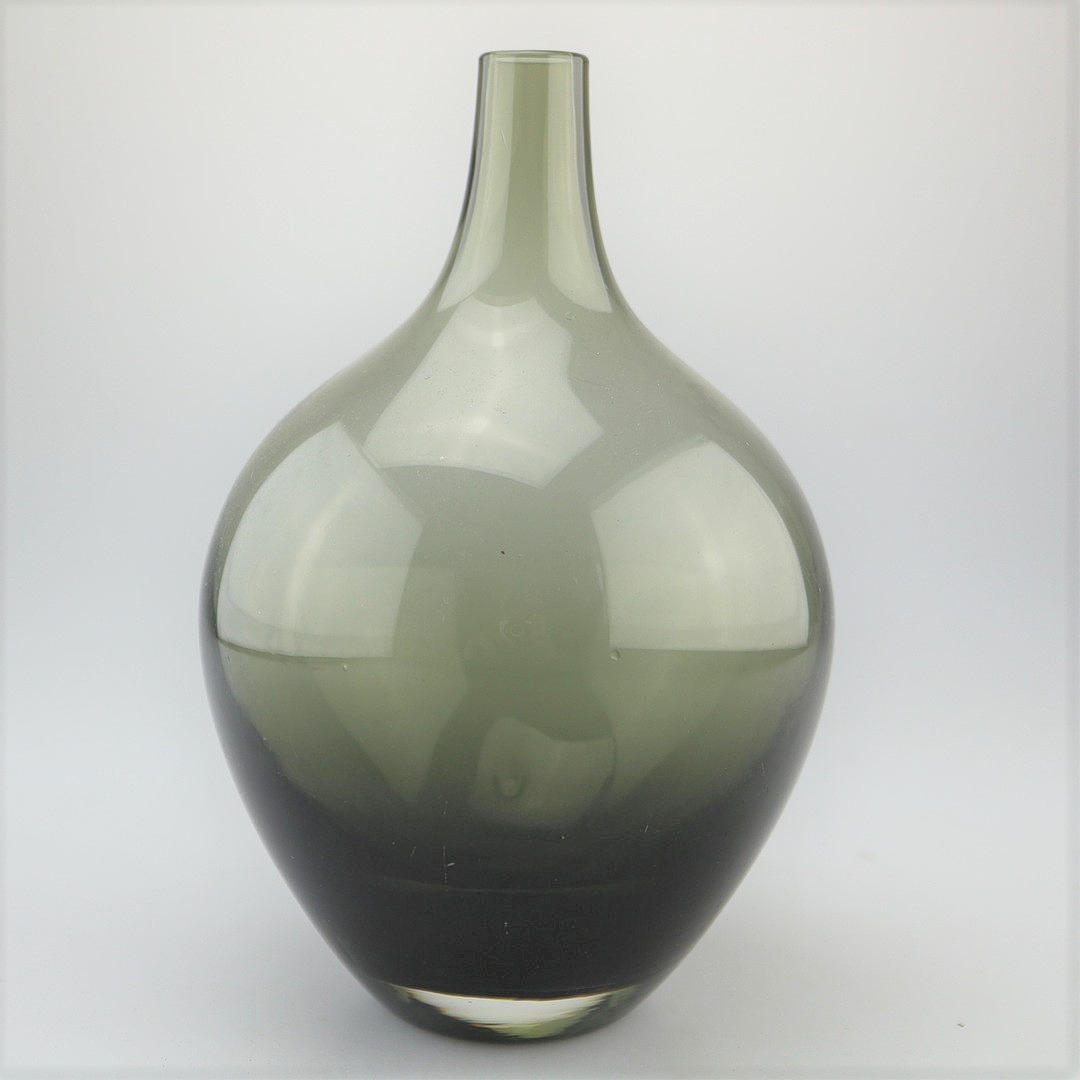
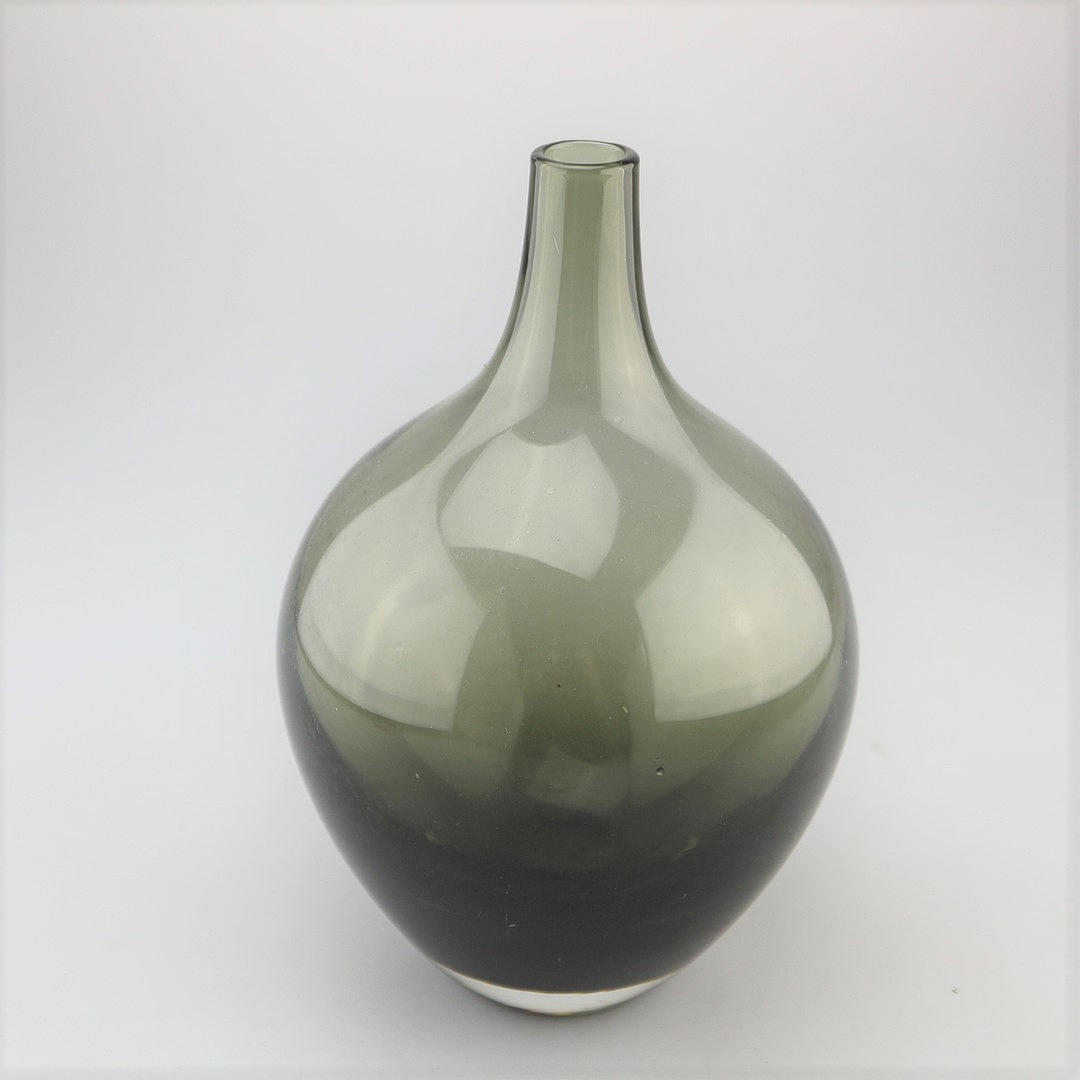
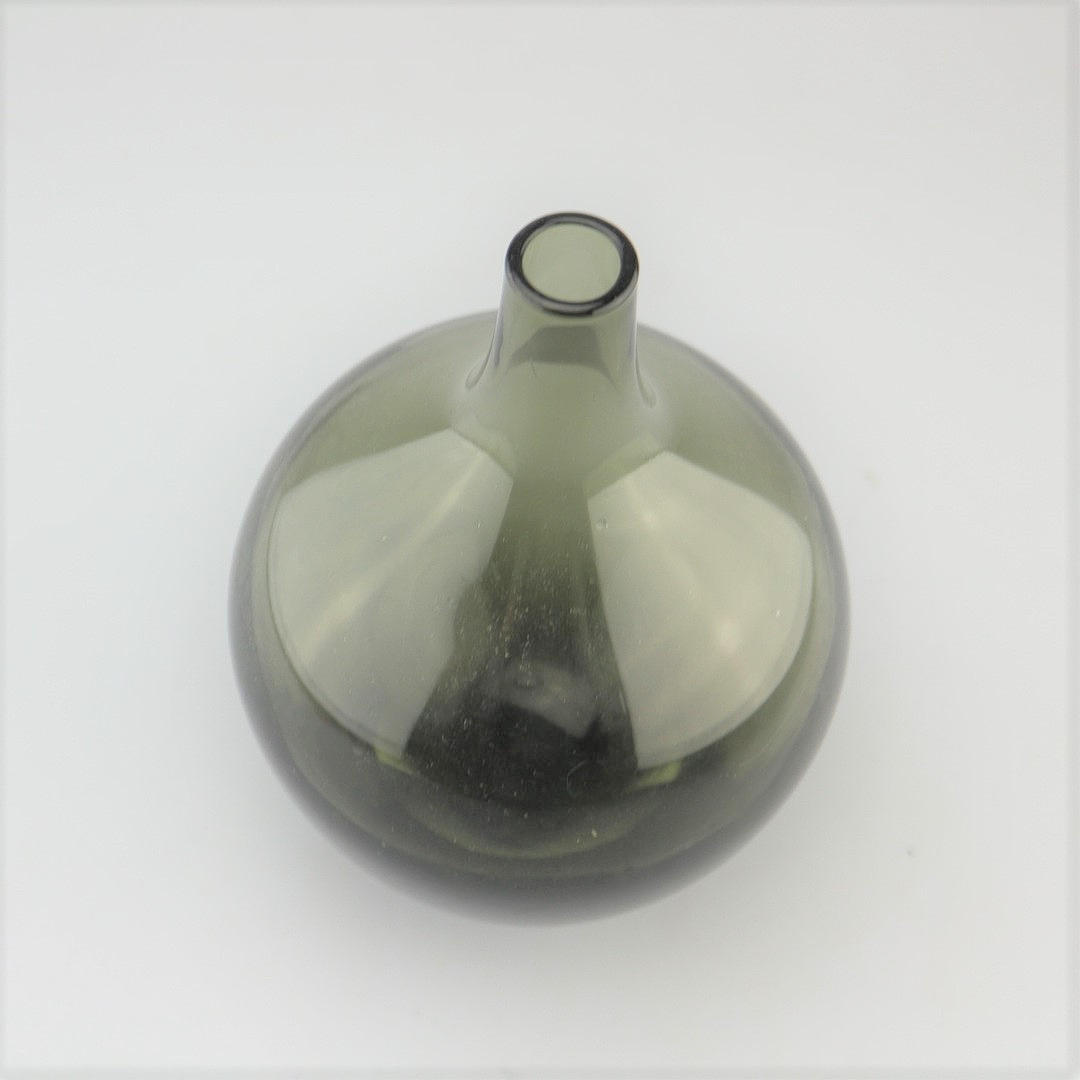
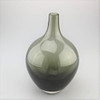
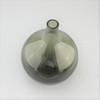
Glass vase by WMF based on a design by Wilhelm Wagenfeld, 1950s. Tourmaline colored glass, wide body. Height: 20.5 cm.
From 1914 Wilhelm Wagenfeld completed an apprenticeship as a silversmith in his birthplace of Bremen, with which he had a very close relationship throughout his life. At the same time, Wilhelm Wagenfeld attended the Bremen School of Applied Arts from 1916 to 1919. 1919-22 Wilhelm Wagenfeld receives a scholarship for the technical school for precious metals at the drawing academy in Hanau. 1922-23 Wilhelm Wagenfeld was in Bremen and Worpswede, he was friends with Heinrich Vogeler and Bernhard Hoetger, and was enthusiastic about Expressionism.
1923-25 Wilhelm Wagenfeld is enrolled at the Bauhaus in Weimar and takes part in the classes of László Moholy-Nagy and Christian Dell in the metal workshop. In 1926 Wagenfeld did not move to Dessau with the Bauhaus, but became an assistant in the metal workshop of the Staatliche Bauhochschule Weimar, and from 1928 until its dissolution in 1930 he was its director. 1931-35 Wilhelm Wagenfeld worked for the Jena glassworks Schott & Gen. active and designs fireproof household glass, such as the glass tea set from 1931. He then worked for the United Lausitzer Glaswerke Weißwasser, and his designs were increasingly geared towards industrial production. In 1938, the "Kubus" stackable tableware made of glass was created for VLG.
He also carries out individual orders for Hutschenreuther, Fürstenberg and Rosenthal. From 1947 to 1949 Wilhelm Wagenfeld was a professor at the Academy of Fine Arts in Berlin, and in the years that followed he received numerous teaching positions at academies and universities. In 1949 Wilhelm Wagenfeld moved to Stuttgart, where he became artistic director for metal and glass at the Württembergische Metallwarenfabrik (WMF). In addition, Wilhelm Wagenfeld has other consultancy contracts for Pott/Solingen, Rosenthal/Selb (porcelain and glass) and Peill & Putzler/Düren (lamps, later also goblet glass).
In 1954, Wilhelm Wagenfeld founded his own office in Stuttgart, the "Wagenfeld workshop, test and development workshop for industrial models" (until 1978). In 1966 his existing contract was terminated by WMF, and in 1970 a new contract was signed with Wilhelm Wagenfeld. The work for the WMF is Wilhelm Wagenfeld's most extensive and also most fruitful activity. In 1980, Wilhelm Wagenfeld authorized the Tecnolumen company in Bremen to rework his famous Bauhaus lamp (1924).
Wilhelm Wagenfeld is considered one of the most important and influential industrial designers in Germany.
Condition
Signs of age and wear, see pictures.
Resale right
Do you have something similar to sell? Get your items valued free of charge!
Description
Glass vase by WMF based on a design by Wilhelm Wagenfeld, 1950s. Tourmaline colored glass, wide body. Height: 20.5 cm.
From 1914 Wilhelm Wagenfeld completed an apprenticeship as a silversmith in his birthplace of Bremen, with which he had a very close relationship throughout his life. At the same time, Wilhelm Wagenfeld attended the Bremen School of Applied Arts from 1916 to 1919. 1919-22 Wilhelm Wagenfeld receives a scholarship for the technical school for precious metals at the drawing academy in Hanau. 1922-23 Wilhelm Wagenfeld was in Bremen and Worpswede, he was friends with Heinrich Vogeler and Bernhard Hoetger, and was enthusiastic about Expressionism.
1923-25 Wilhelm Wagenfeld is enrolled at the Bauhaus in Weimar and takes part in the classes of László Moholy-Nagy and Christian Dell in the metal workshop. In 1926 Wagenfeld did not move to Dessau with the Bauhaus, but became an assistant in the metal workshop of the Staatliche Bauhochschule Weimar, and from 1928 until its dissolution in 1930 he was its director. 1931-35 Wilhelm Wagenfeld worked for the Jena glassworks Schott & Gen. active and designs fireproof household glass, such as the glass tea set from 1931. He then worked for the United Lausitzer Glaswerke Weißwasser, and his designs were increasingly geared towards industrial production. In 1938, the "Kubus" stackable tableware made of glass was created for VLG.
He also carries out individual orders for Hutschenreuther, Fürstenberg and Rosenthal. From 1947 to 1949 Wilhelm Wagenfeld was a professor at the Academy of Fine Arts in Berlin, and in the years that followed he received numerous teaching positions at academies and universities. In 1949 Wilhelm Wagenfeld moved to Stuttgart, where he became artistic director for metal and glass at the Württembergische Metallwarenfabrik (WMF). In addition, Wilhelm Wagenfeld has other consultancy contracts for Pott/Solingen, Rosenthal/Selb (porcelain and glass) and Peill & Putzler/Düren (lamps, later also goblet glass).
In 1954, Wilhelm Wagenfeld founded his own office in Stuttgart, the "Wagenfeld workshop, test and development workshop for industrial models" (until 1978). In 1966 his existing contract was terminated by WMF, and in 1970 a new contract was signed with Wilhelm Wagenfeld. The work for the WMF is Wilhelm Wagenfeld's most extensive and also most fruitful activity. In 1980, Wilhelm Wagenfeld authorized the Tecnolumen company in Bremen to rework his famous Bauhaus lamp (1924).
Wilhelm Wagenfeld is considered one of the most important and influential industrial designers in Germany.
Condition
Signs of age and wear, see pictures.
Resale right
Do you have something similar to sell? Get your items valued free of charge!