- Temas y subastas en sala
- /
- Röllakan and Rya Rugs
Röllakan and Rya Rugs
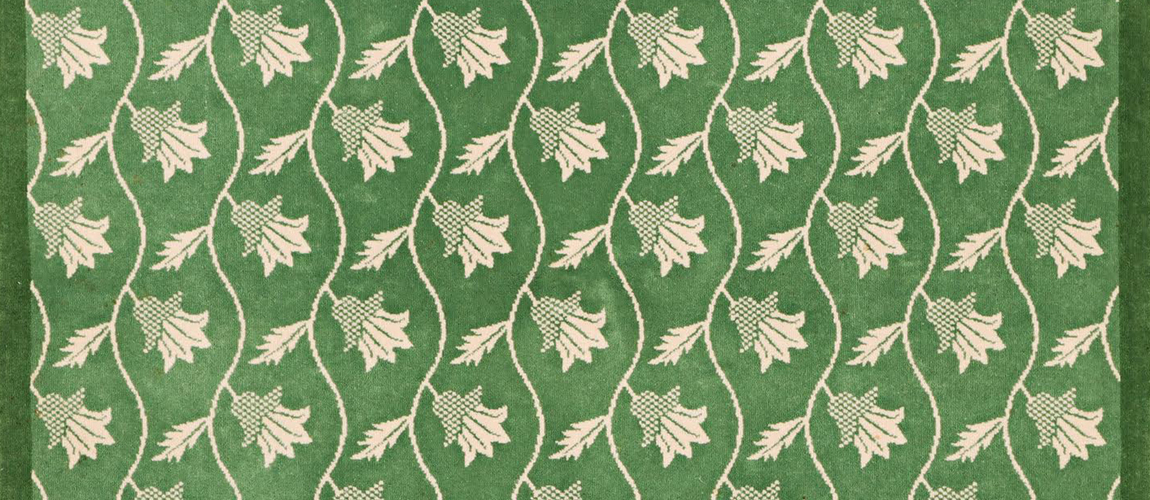
Röllakan and rya are presented here in a selection that clearly illuminates the breadth of Swedish textile design throughout the 20th century. From the restrained and structured to the more expressive and colour-intense, the rug emerges as an independent artistic object in which composition, scale and materiality interact with the architecture of the room.
The flat-weave technique of the röllakan produces a firm and clearly articulated surface in which the pattern is built up through the colour fields of the weft. The result is a graphic precision in which each form serves a defined function within the whole. The rya, by contrast, works through its knotted pile, where the surface is activated by the play of light in the wool and where the motif is often resolved into a more painterly effect. Together, two complementary approaches to working with textile emerge – one more constructive, the other more tactile and optical.
Among the most prominent works are several larger röllakan in which scale itself becomes a defining quality. One example is the monumental works of Anna Johanna Ångström, where the symmetrical composition and softly balanced colour fields create a calm yet assured presence. A classically inspired arrangement is here combined with a modern sensibility for colour and surface, lending the rugs an effortless weight in the room.
Ingegerd Silow occupies a central position with works that demonstrate her confident sense of proportion and rhythm. In a larger piece in pale blue and grey tones, an intricate interplay is created between geometric forms and a more dissolved background, where the colour transitions contribute to a living yet controlled expression. Another, warmer work in rose and sand-coloured hues reveals her ability to work with decorative borders without losing the overall balance. In the larger formats, where the pattern is given room to breathe, her feeling for proportion becomes particularly evident.
A more striking departure is found in a powerful rya in red and black, where the almost forest-like motif breaks with the ordered geometry of the röllakan. Here colour is used more directly and expressively, and the pile reinforces the depth and movement of the motif. A rya in a strongly golden palette also stands out through its intensity and its almost luminous surface, where light is caught in the dense pile.
Erik Lundberg's röllakan brings a different kind of energy through its more fragmented and dynamic formal language. The irregular forms and contrasting colour scheme create a sense of movement across the surface, while the composition is held together by a clear underlying structure.
Taken together, a selection emerges in which röllakan and rya represent not merely different techniques, but different ways of thinking about form, colour and space. The rugs function both as visual focal points and as unifying elements within the interior, demonstrating how textile can unite the decorative with the constructive. Here tradition and renewal meet in an art form that remains closely tied to everyday use, yet at the same time carries a clear artistic integrity.