Lo sentimos, no tenemos ningún lote que coincida con lo que estás buscando.
- Temas y subastas en sala
- /
- Good Art XV
Good Art XV
FiltrosFiltra y ordena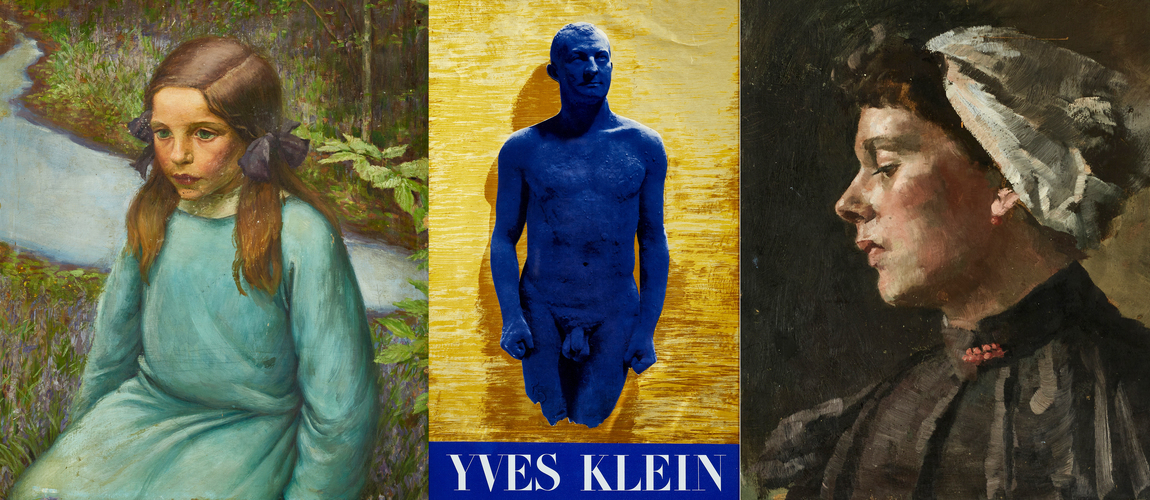
Good Art XV
31 ene 2026 · Crafoord Auktioner Stockholm
Crafoord Auktioner Stockholm presents the themed auction Good Art, highlighting the month’s selection of compelling artists and works. These are pieces that deserve to be seen in context—and, hopefully, to grace many walls.
We now champion art by presenting more than 200 works by artists such as James Rosenquist, Fernandez Arman, Mårten Andersson, Erland Cullberg, Joan Miró, Lennart Jirlow, Roj Friberg, Yves Klein, Pelle Åberg, Antoni Clavé, Gunnar Johnsson, Lucio Del Pezzo, Jarl Ingvarsson, Patrick Caulfield, Sven X:et Erixson, Howard Hodgkin, Torbjörn Östman, Emerik Fejes, Daniele Nalin, Sture Johannesson, Enrico Baj, Gunnar Torhamn, and many others.
Among the highlights is a particularly interesting section devoted to Concrete and Abstract art, featuring artists such as KG Nilson, Ilka Pärni, Karl Patric Näsman, Sam Vanni, Olle Bonnier, Hans Richter, Constant, Marc Guyard, Lars Arvidsson, Ove Carlson, Kurt Simons, Jean Dewasne, among others.
In addition, the auction includes an exciting selection of literature and printed matter, including the magazine Art d’Aujourd’hui as well as the very first issue of the comic magazine Bamse (1973), featuring the classic cover illustration by its creator Rune Andréasson (1925–1999).
The sculpture section is represented by works by artists such as Timo Solin, Ansgar Almquist, Evert Lindfors, and Puck Stocklassa, among others.
The name Good Art has been used in earlier contexts. In 1941, the exhibition GOOD ART IN EVERY HOME opened under the auspices of HSB. Its aim was to promote quality art in domestic settings. As stated in the exhibition catalogue’s foreword, it was not enough to build good homes—art, too, had to be given its place. The guiding principle was to make good art available to a broader public at affordable prices. To ensure that the art truly was “good,” a jury of well-known artists and art critics was appointed to review the works selected for exhibition. As a result, it was possible, for example, to purchase GAN’s oil painting Berns 1918 for 5,000 kronor, the tempera Ratten for 350 kronor, and Laboratorium for 500 kronor. Other artists involved in this initiative—art for the people—included Oskar Bergman, Einar Jolin, Arne Jones, Isaac Grünewald, Sixten Lundbohm, and Erik and Axel Olson. The exhibition’s 10th anniversary was celebrated at Liljevalchs Art Gallery in Stockholm.
That same year, 1941, Gunnar Hjorthén (1913–1997) opened Galleri God Konst on Vallgatan in Gothenburg. He would come to be regarded as something of an institution in the city’s art life. Over the years, the gallery relocated to several addresses, including Drottninggatan, the Concert Hall, and Södra Vägen. Hjorthén devoted himself to promoting and championing “young art,” working with artists such as Ivan Ivarson, Karin Parrow, Ragnar Sandberg, and Inge Schiöler. Largely thanks to Hjorthén and Galleri God Konst, Gothenburg Colourism became an established concept. Like the Svensk-Franska Konstgalleriet, Hjorthén early on turned his attention to Paris, mediating contact with new developments in painting through his gallery. In 1953, for example, an exhibition of works by Tsuguharu Foujita was held.
Subastas en curso
Estos son los lotes existentes nuestro archivo que coinciden con tu búsqueda.Mostrar todos los lotes