Harry Stinton was born into artistic brilliance, a member of the famed Stinton family whose name became synonymous with excellence at the Royal Worcester Porcelain Factory. Despite fragile health in his childhood and frequent hospitalizations, Harry’s passion for art flourished under the tutelage of his father, John Stinton Junior, and inspired by his uncle James Stinton, both eminent artists. This nurturing environment propelled him to an apprenticeship at Royal Worcester in 1896 as a teenager, where he rapidly absorbed technical skill and aesthetic sensibility. His early promise was soon recognized at the National Art School, earning him medals and fostering the foundation for a remarkable career.
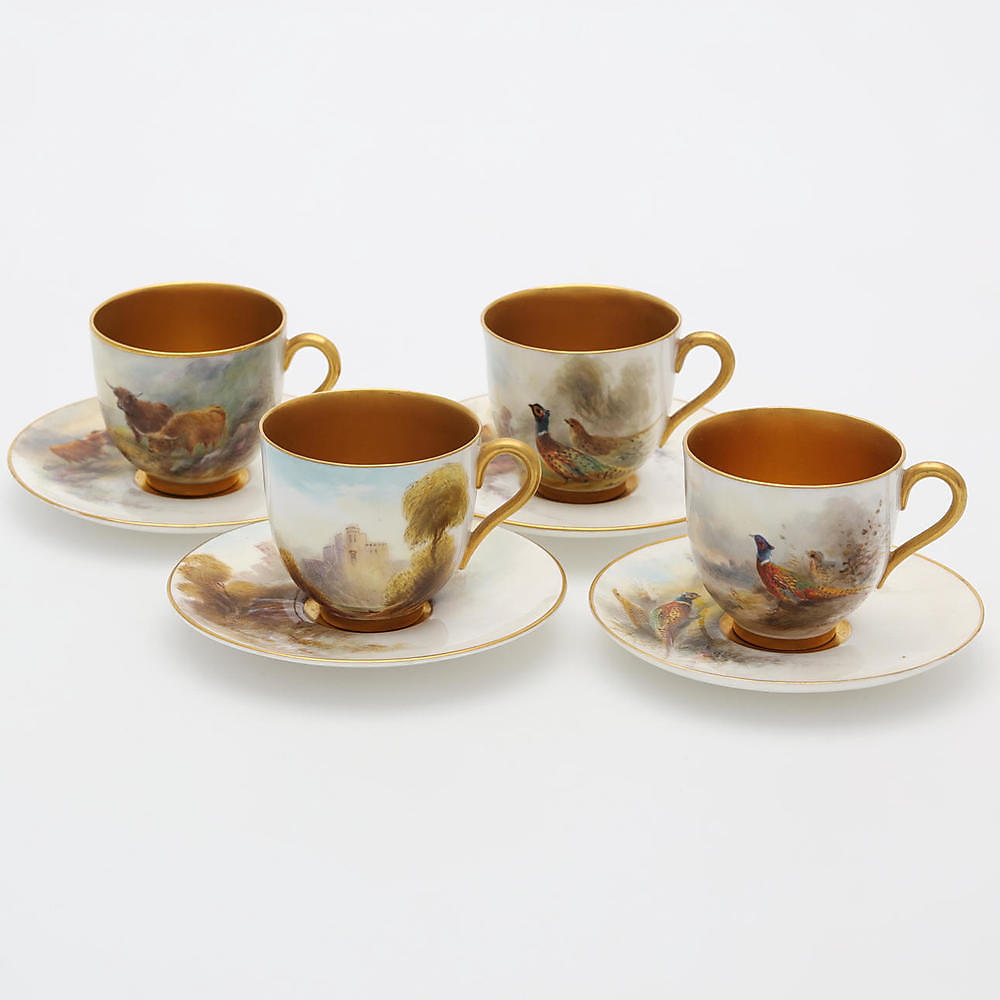
Clubbed for 443 GBP at Auktionsmagasinet Vänersborg.
Transforming Tradition: The Artistry of Harry Stinton
Building on his father’s legacy, Harry Stinton became renowned for his transformative approach to ceramic painting. He reimagined the beloved highland cattle scenes pioneered by John Stinton Junior, blending tradition with innovation. Rich purples and autumnal tones became Harry’s signature, infusing his landscapes with atmosphere and emotional depth. His meticulous hand adorned vases, plates, and cabinet pieces, expanding his repertoire to include sheep, gamebirds, and evocative, misty countrysides. His unique atmospheric style brought new dimensions to pastoral ceramics and watercolors, enhancing Royal Worcester’s prestige and endearing collectors across generations.
Enduring Legacy: A Painter of Countryside and Character
Harry’s 67-year tenure at Royal Worcester culminated in a legacy that resonates in the art world to this day. Retiring in 1963, he closed a historic chapter for both his family and the factory. Yet his influence endures: the vivid, gilded works of Harry Stinton are sought after in both exhibitions and high-profile auctions, considered by many as the pinnacle of the Stinton lineage. Blending technical excellence with poetic vision, Harry’s art celebrates English country life, immortalized in porcelain and watercolor, cementing his status as a visionary within British ceramic artistry.