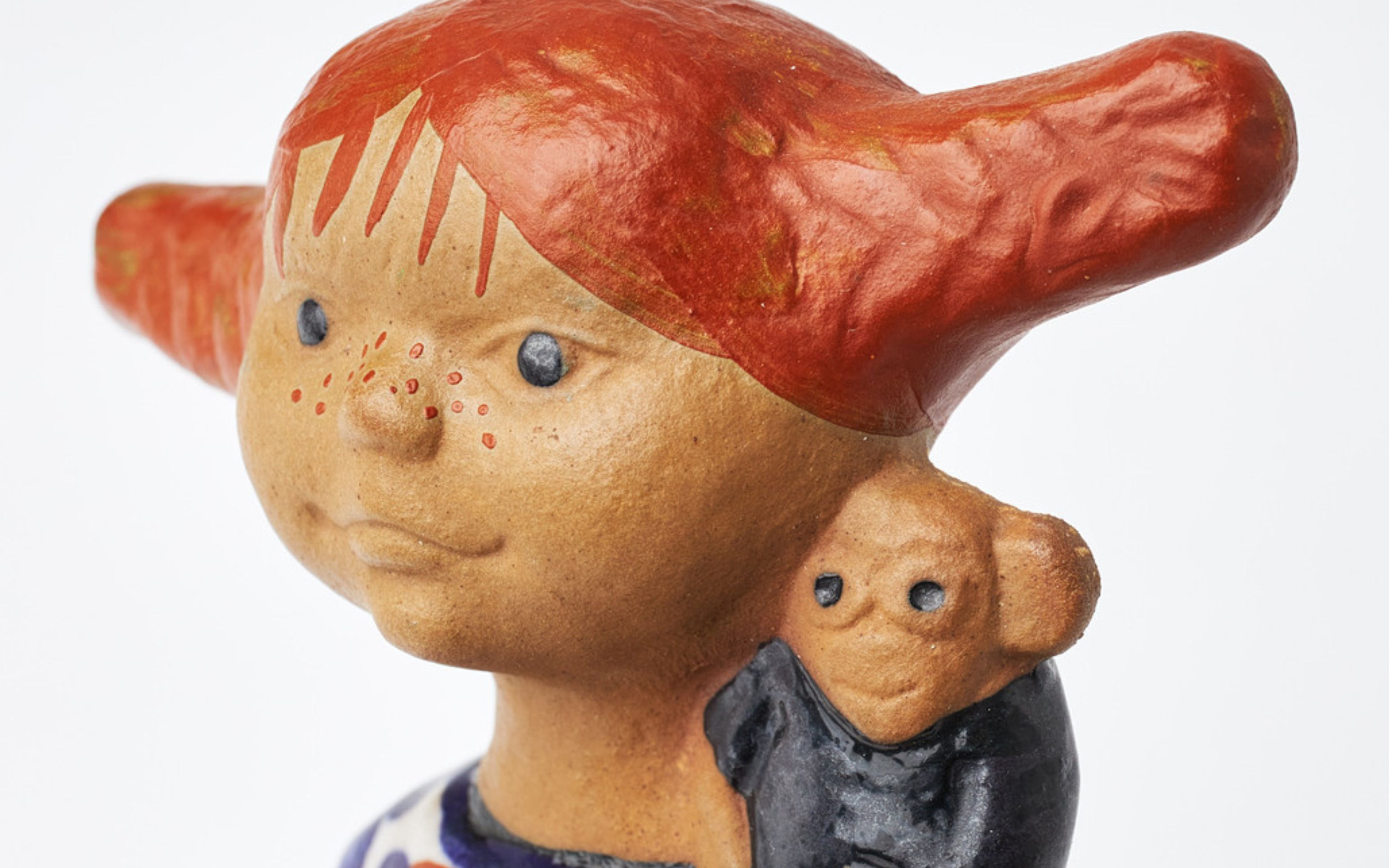
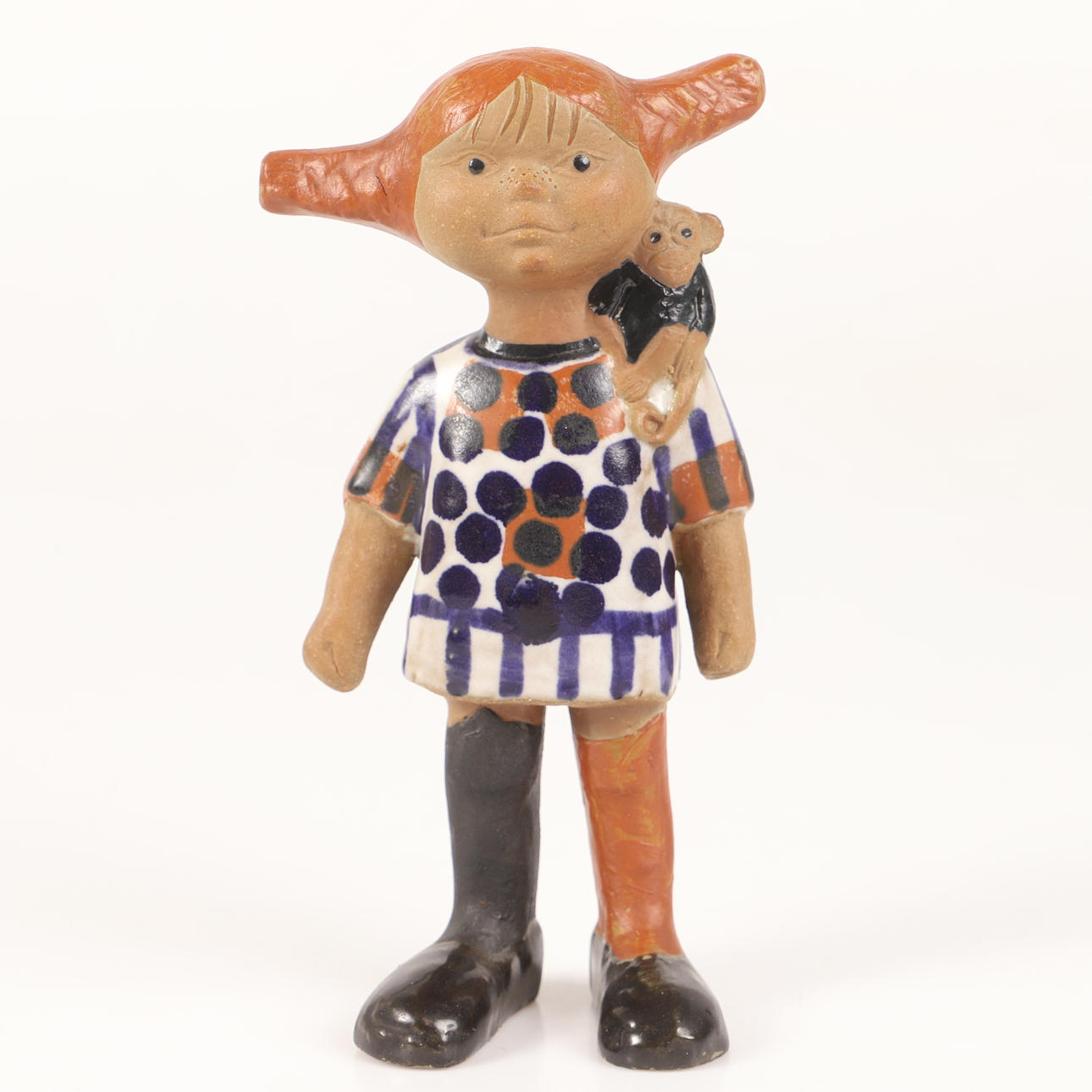
In the late 1960s, ceramic artist Lisa Larson created a figurine of Pippi Longstocking for Gustavsberg, Sweden’s leading porcelain manufacturer at the time. The figurine depicts Astrid Lindgren’s character with her iconic pigtails and her monkey, Mr Nilsson, on her shoulder. Produced only between 1969 and 1971, it has since become a sought-after piece among enthusiasts of Scandinavian ceramics and literary memorabilia.
The Pippi Longstocking figurine was the result of a direct collaboration with Astrid Lindgren and the licensing company, with Lindgren personally approving Larson's design.

The iconic Pippi Longstocking figurine by Lisa Larson.
A Legendary Collaboration: Lisa Larson and Gustavsberg
Lisa Larson, born in 1931, was one of Sweden’s most recognised ceramic artists. After studying at the School of Design and Crafts in Gothenburg, she was recruited in 1954 by art director Stig Lindberg to join the Gustavsberg porcelain factory.
During her time at Gustavsberg, Larson created a wide range of figures, often associated with mid-century Swedish design. Her work blends studio pottery aesthetics with playful characterisation, drawing on folk art influences and featuring expressive, stylised features. Among her most popular works are for example ABC Girls, Lilla Zoo and numerous one-off figures.
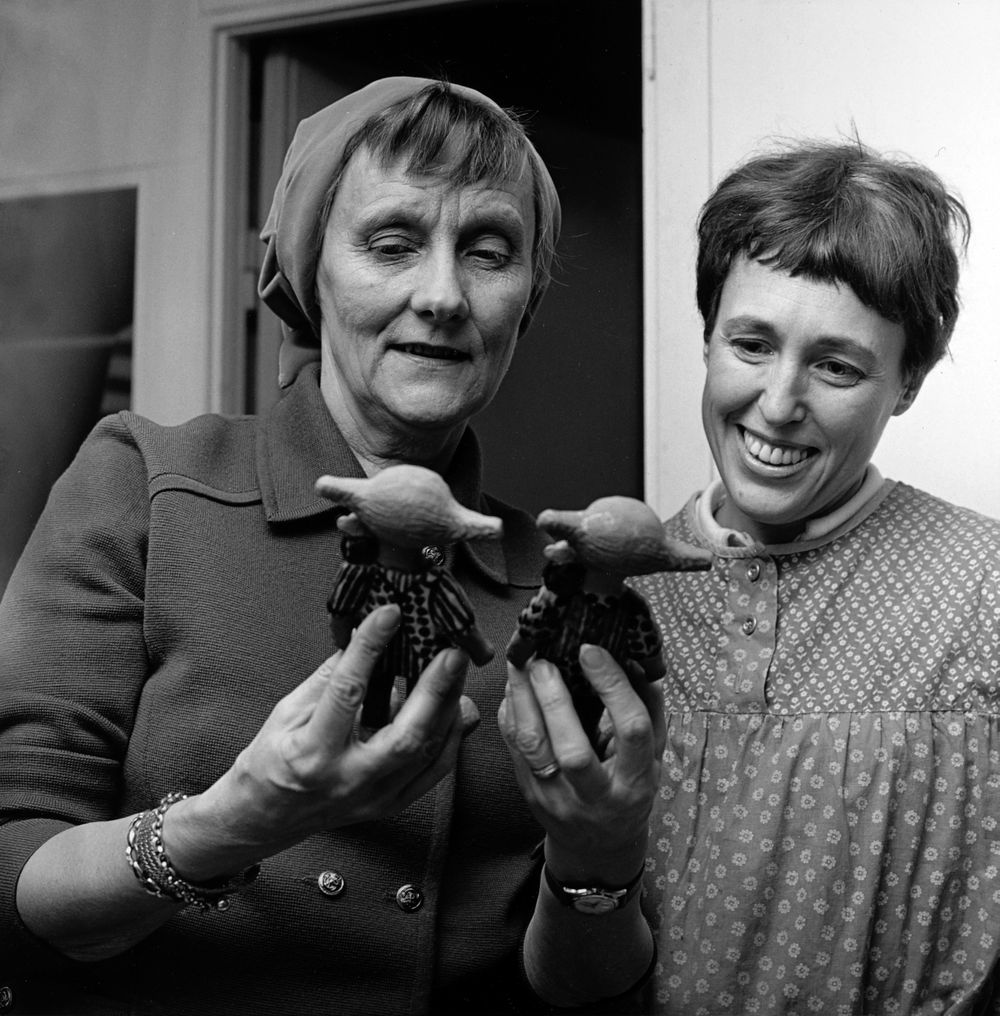
Lisa Larson and Astrid Lindgren in the Gustavsberg studio, 1968 © Foto: Hilding Engströmer, Gustavsbergssamlingen/Nationalmuseum
In addition to Pippi, Lisa Larson also created ceramic figurines of other beloved Astrid Lindgren characters at Gustavsberg, including Emil i Lönneberga, Ida and Ronja Rövardotter. These figures were produced in limited runs and share the same hand-crafted charm and characterful expression that define her other works.
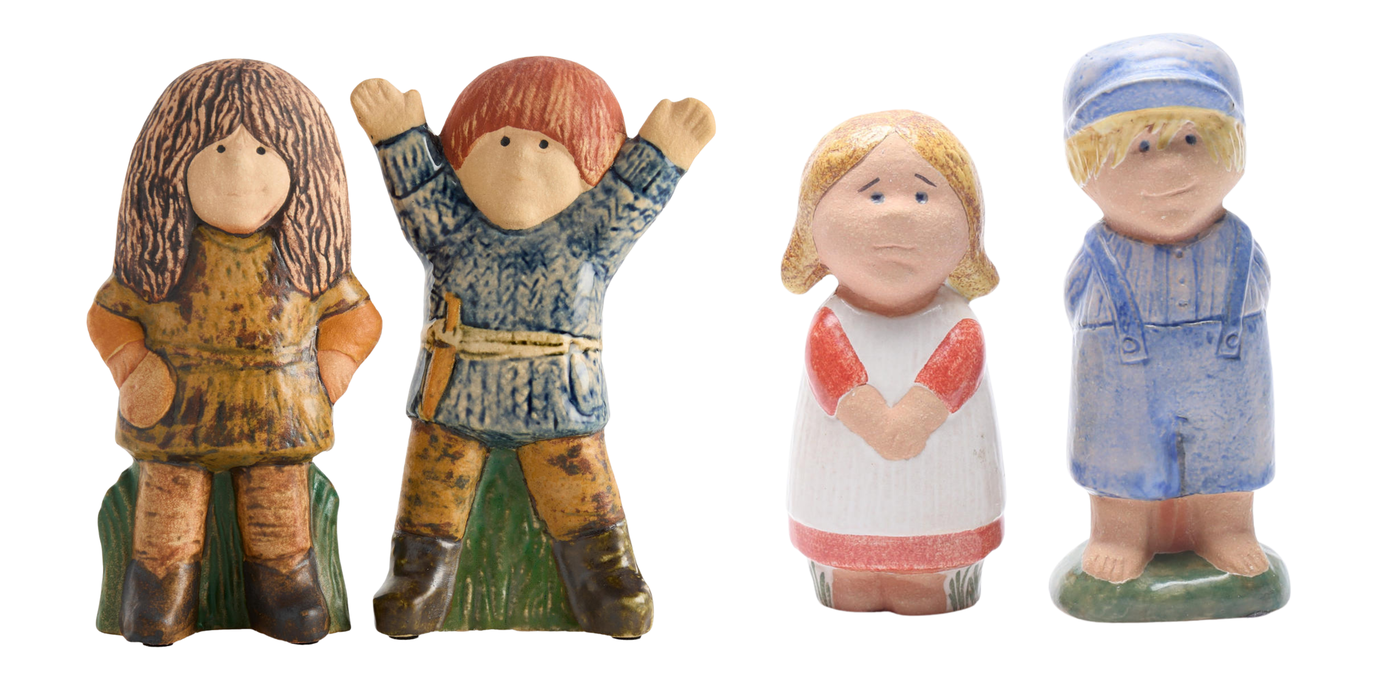
Other Astrid Lindgren characters by Lisa Larson. (Left) Ronja Rövardotter and Birk. (Right) Ida and Emil i Lönneberga.
The Making of Pippi: Design and Materials
Standing 18 cm tall and made from stoneware clay, the Pippi figure is both robust and detailed. Each example is hand-painted, meaning no two are exactly alike.
The figurine depicts Pippi Longstocking in a standing pose, with her hands on her hips, dressed in a short-sleeved tunic patterned with bold blue polka dots and vertical orange stripes. She wears mismatched stockings, one black and one orange, and black shoes. Her trademark red pigtails stick straight out from her head, and Mr Nilsson, her monkey, sits perched on her shoulder.
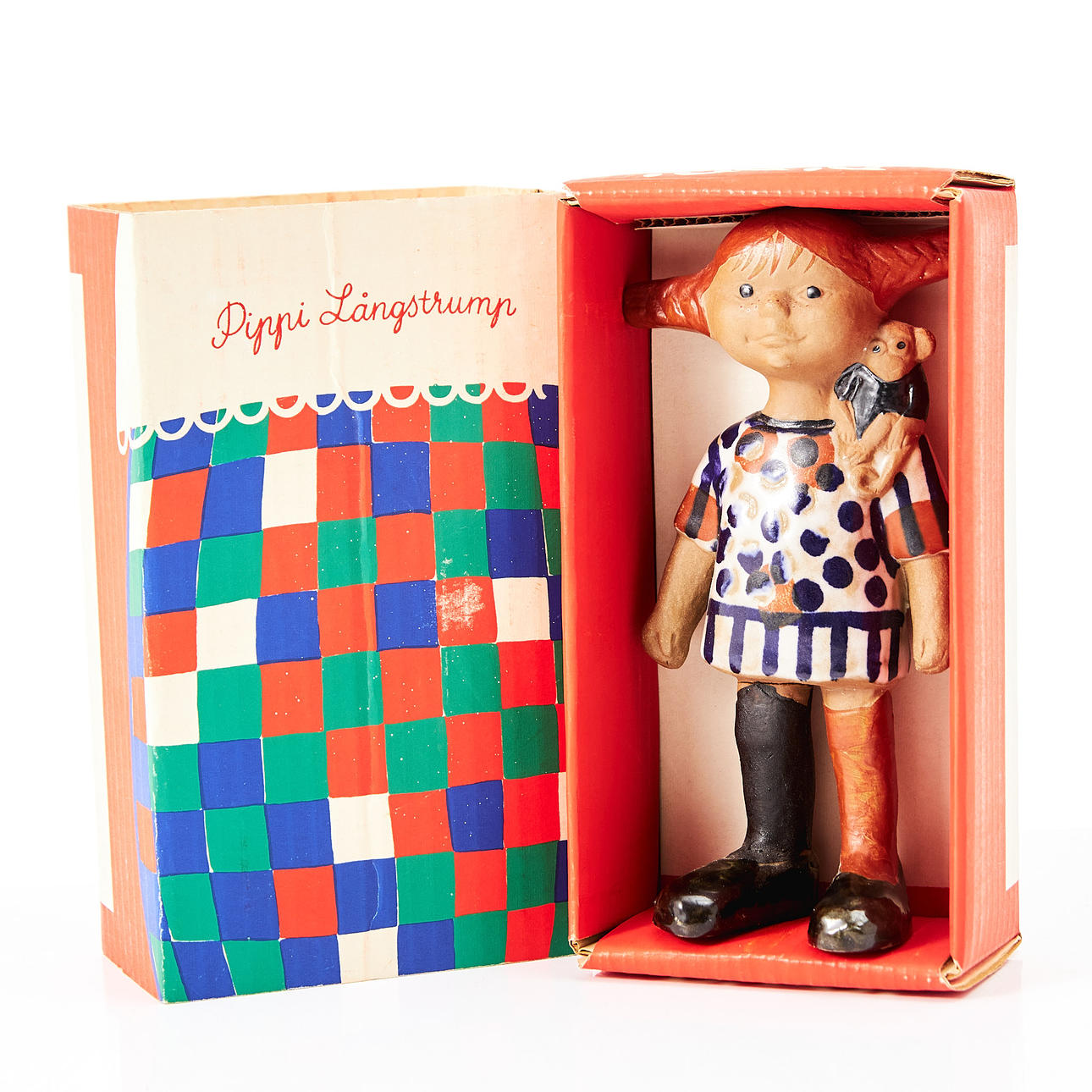
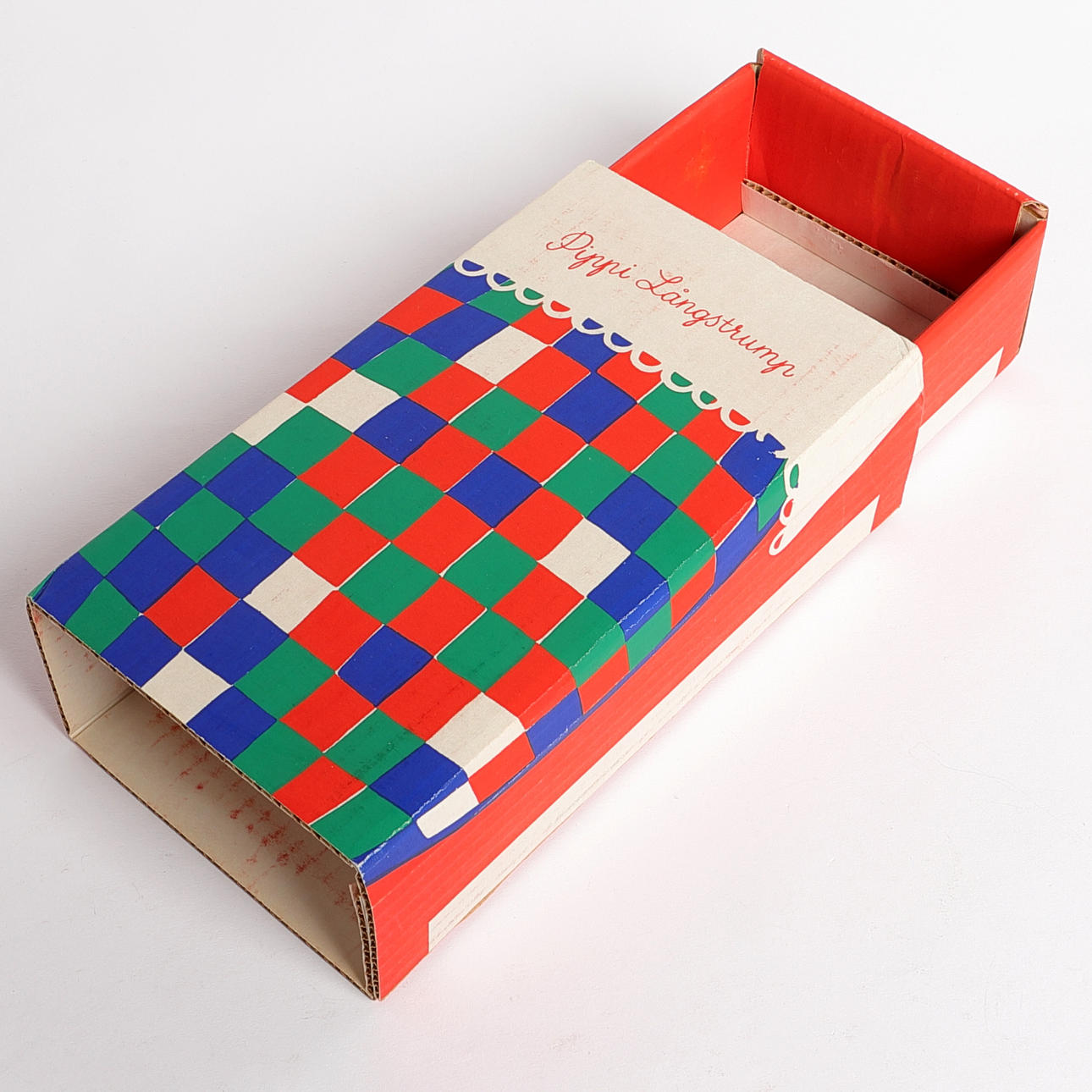
The original figure was sold in a carton shaped like Pippi’s bed, designed by Lisa Larson’s husband, Gunnar Larson. This playful and now rare packaging detail adds to the figure’s charm and value.
Due to the figurine’s delicate features, especially the thin braids and legs, the production process was challenging and, unfortunately, ended just two years after the release. This makes undamaged originals relatively rare today.
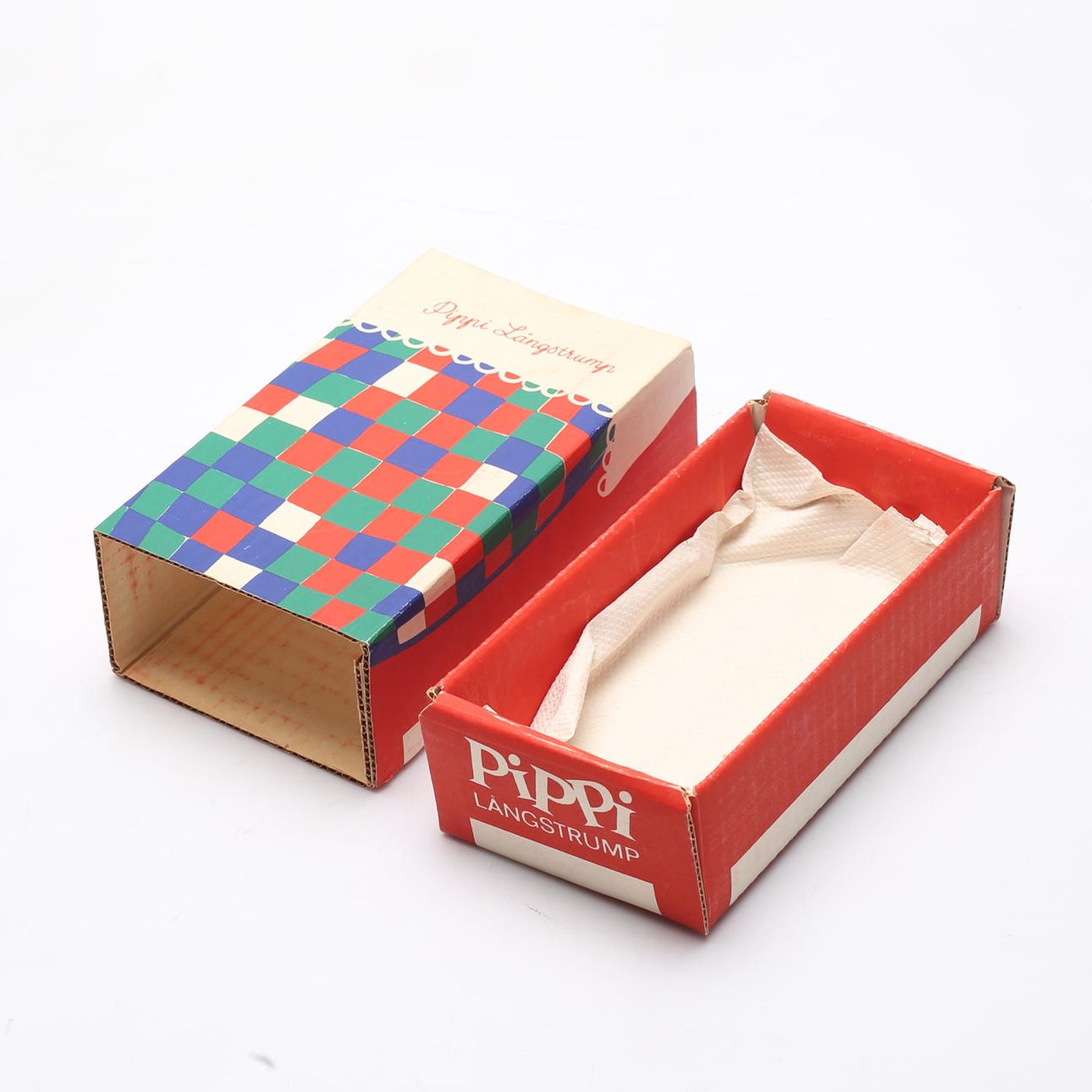
The original carton was made by her husband Gunnar Larson.
How Many Versions of Lisa Larson’s Pippi Figurines Exist?
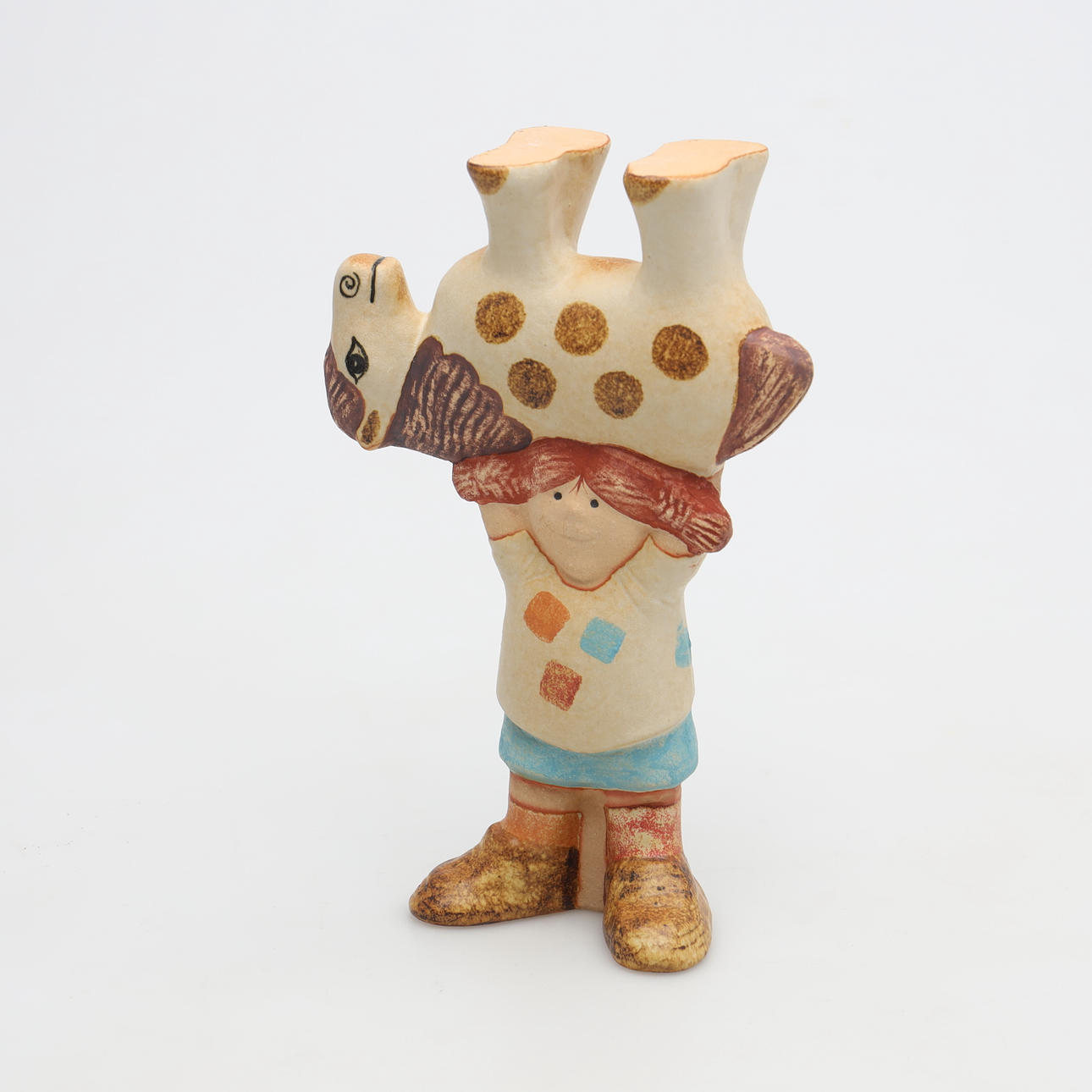
Lisa Larson’s original Pippi Långstrump figure was not the only version ever produced. Since 2016, new figurines have been produced by Keramikstudion Gustavsberg in collaboration with the Astrid Lindgren Company. These newer versions are typically 9–10 cm tall and include several different poses, such as Pippi lifting her horse, Lilla Gubben, or sitting next to Mr Nilsson. Each piece continues to be crafted from chamotte stoneware and hand-painted, preserving the characterful style that defines Larson’s work.
How to Identify an Original Lisa Larson Pippi Figurine
To recognise an original Lisa Larson Pippi Långstrump figurine from Gustavsberg, collectors should pay attention to several key details:
Hand-painted details: As mentioned above, each figurine is hand-painted, so minor variations in colour and detail are normal. The craftsmanship should reflect Lisa Larson’s distinctive, expressive style.
Markings: Genuine originals are marked underneath with the Gustavsberg anchor symbol, Lisa Larson’s initials (“LL”), and sometimes the model name. These marks help verify authenticity and production era.
Original packaging: The earliest and most valuable examples may come with the original box, designed to resemble Pippi’s bed. This packaging is rare and adds significant collector value.
Condition: Due to the delicate design, many surviving figures have minor chips or repairs. Pristine, undamaged examples are particularly sought after.
Curious what your Lisa Larson figurines are worth? Ask our experts online or visit your local auction house for a valuation.
Collector Appeal and Market Value
Collectors value these early Pippi figures for their craftsmanship, limited production run and connection to two major Swedish cultural figures: Lisa Larson and Astrid Lindgren. They are considered part of the broader category of collectable ceramics and often appeal to those interested in Scandinavian studio pottery and limited edition design pieces.
Well-preserved originals from Gustavsberg can reach notable auction prices, especially when complete with original packaging or markings.
So, how much are Lisa Larson’s Pippi figurines worth? Original figures have sold for substantial sums at auction, especially when accompanied by original boxes or in near-mint condition. One rare example of an original bed-shaped box, even without the Pippi figurine, reached 1 930 GBP at Auctionet, well above initial estimate.
)


