137. 1736858. CELESTIAL GLOBAL, ANDERS ÅKERMAN 1759.
Description
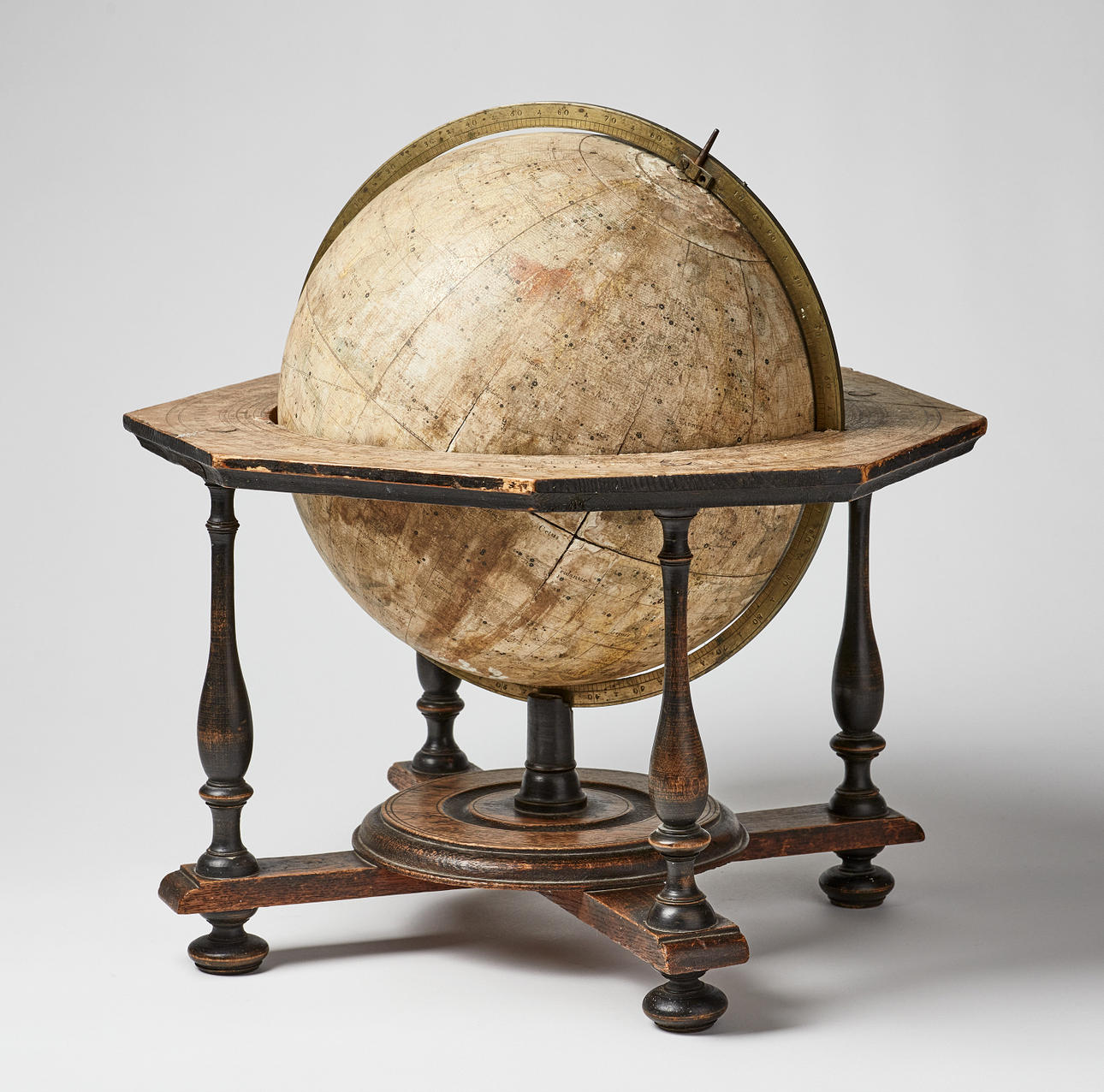
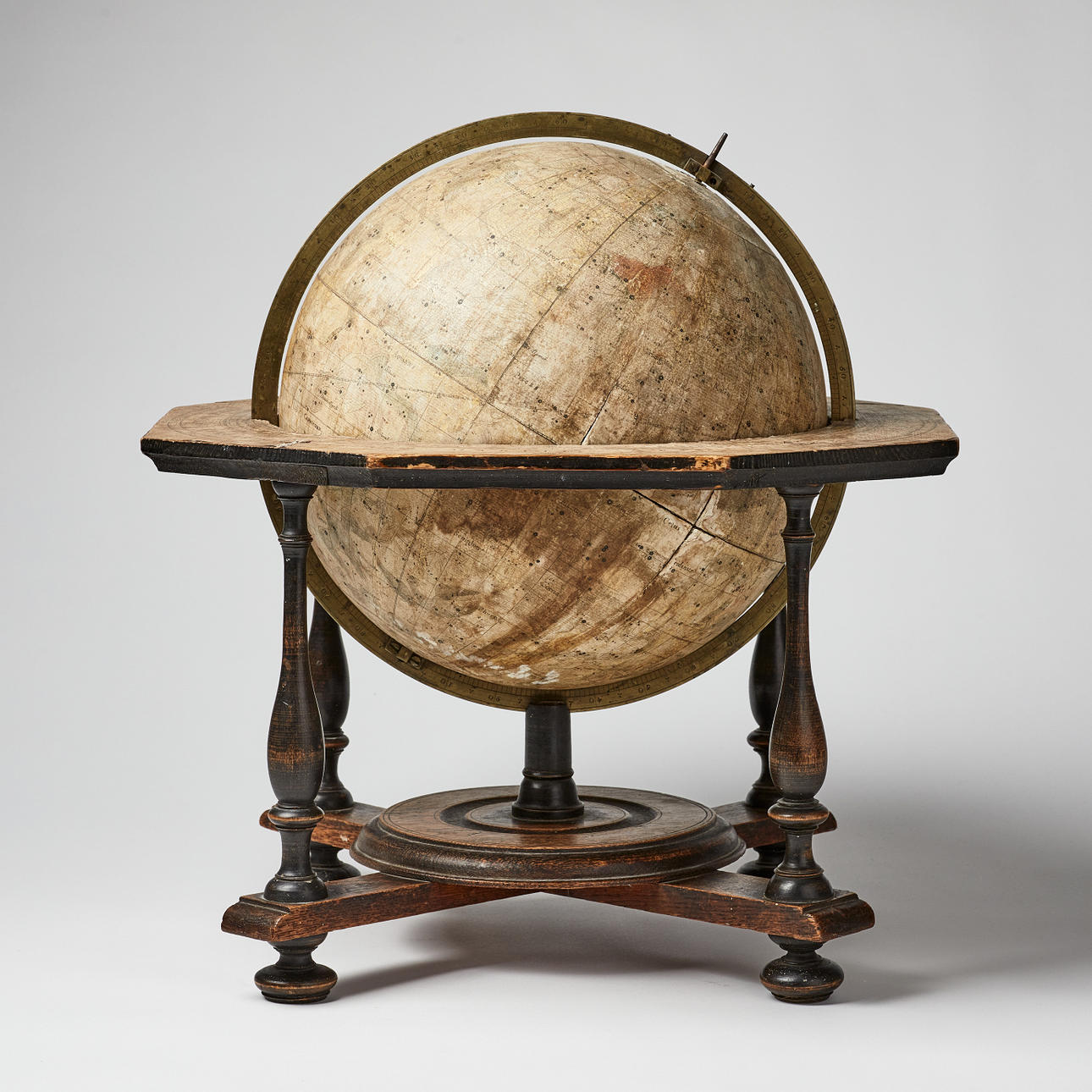
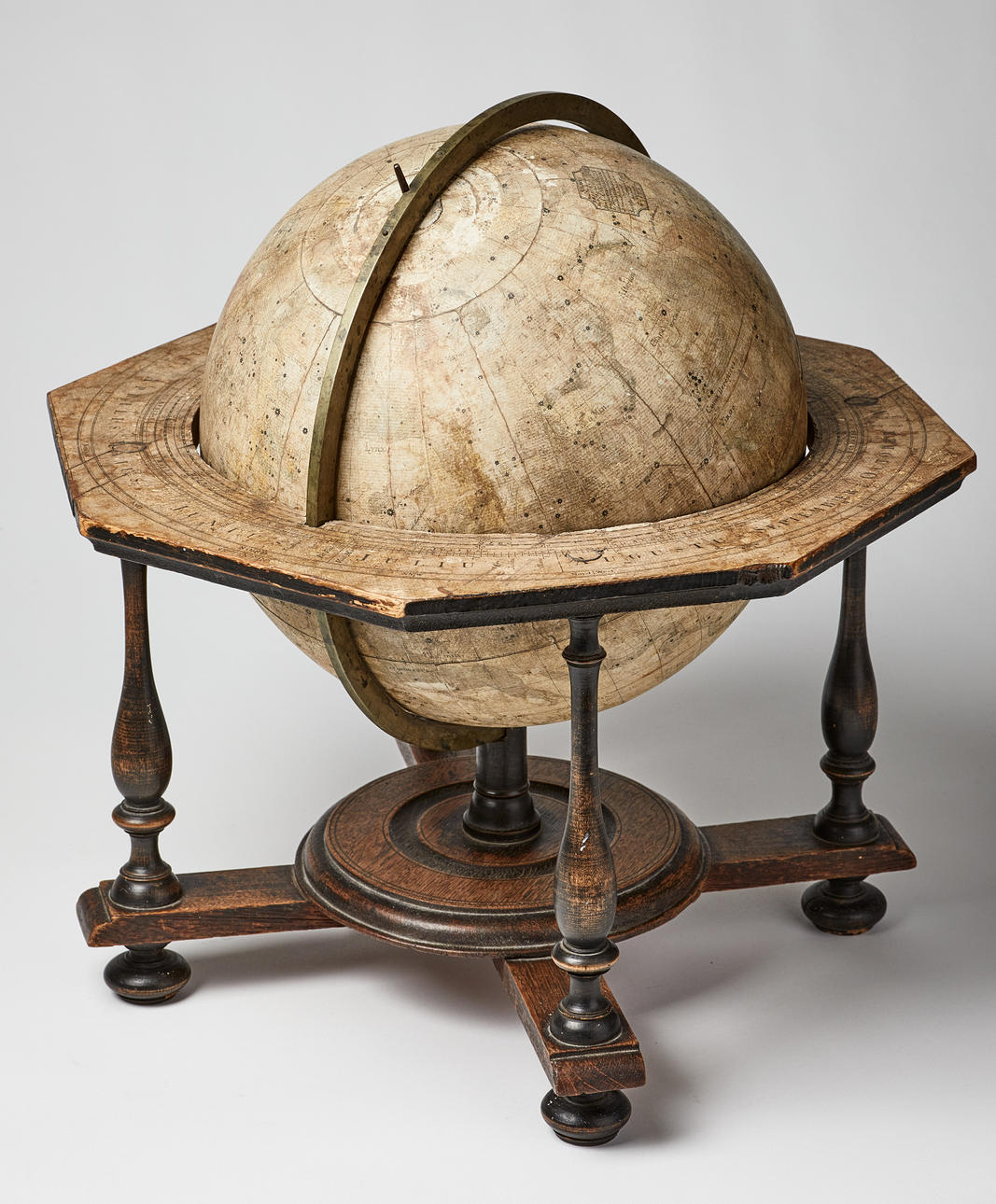
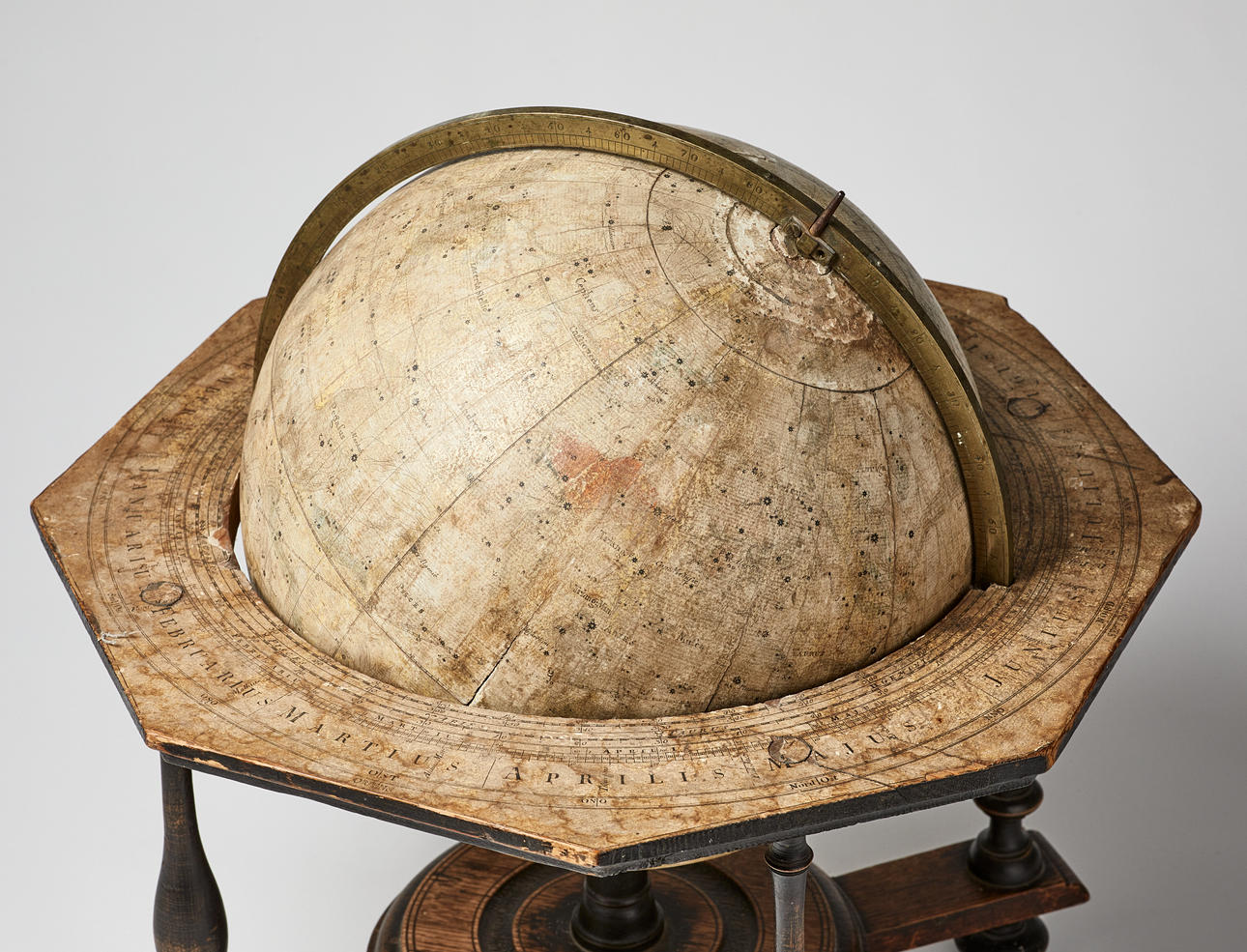
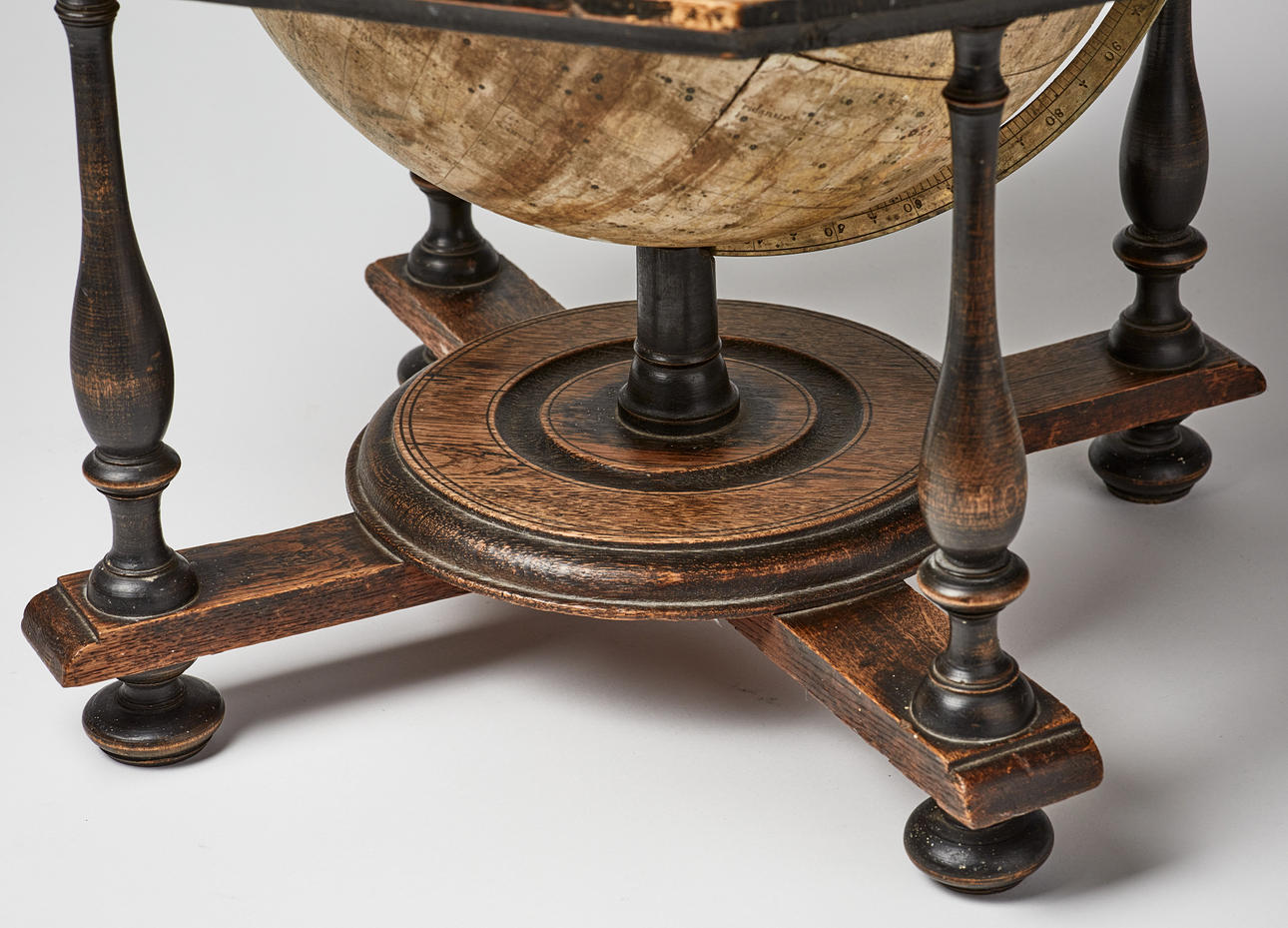
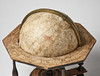
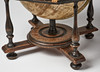
CELESTIAL GLOBE GLOBUS COELESTIS, Anders Åkerman 1759, the legend with the text Atlanti Acad. Oops. Scientarium. RRSs Coll.Nom.Praes.etc. Illustr mo Exellento Com. ac Domino Dom. C.Ehrenpreus Hunc Globum Coelestem Ex Flamstedii Catalogo et recentissimis De la Cailli observationibus ad An um 1760 adornatum Consecrat Societas Cosmogr. Upss Interprete A. Åkerman Reg.Soc.Scient.Sculptore 1759, meridian arc of brass, original stand in mahogany and blackened wood, height 45 cm, globe diameter 30 cm Compare stand on sky globe in Skokloster Castle, inventory no. 10560 LITERATURE: Einar Bratt: A chronicle about Swedish globes, Uppsala 1968, page 116 ff. In 1758, the "Cosmographic Society" was formed in Uppsala, which was to prepare and manufacture maps and globes for the public. It was considered that the foreign maps and globes that were referred to were unnecessarily expensive, which meant that they were few and far between. In the protectionist spirit of the time, maps and globes would begin to be manufactured at home and benefit more people, preferably also eventually sold abroad. Another driving factor was the great interest in the natural sciences at the time. Those who engaged in globography also came into contact with geography, cartography, astronomy and meteorology. The globes were regarded as cultural formation factors and it was part of a young noble's knowledge bank to be able to read a globe. As early as 1690, Åke Claesson Rålamb published "Adelig Öfnings Fierde Tom: Usus Globorum Det är: Den nytta man hafver af Globerne uthi Astronomien och Geographien", the first Swedish-language work that dealt with the science of globography.
The person who was commissioned to manufacture the globes was Anders Åkerman, active at the Uppsala Science Society as an engraver. The globes were made of papier-mâché, covered with plaster that was plastered before the engraved map was applied. The stands for the globes were carved in Åkerman's workshop according to a template. During his time in business, Åkerman came to publish the following pairs of globes; in 1759 with a size of 30 cm in diameter, in 1762 a pair that measured 11 cm in diameter, a double globe/pocket globe in 1762 also 11 cm in diameter and a pair of globes in 1766 with a size of 59 cm in diameter. In Anders Åkerman's time, the measurements were given as follows; 2 foot, 1 foot and 5 inch globe.
Condition
Wear, cracks, hour circle missing. For further information and condition report, please contact: markus.anderzon@auktionsverket.se.
137. 1736858. CELESTIAL GLOBAL, ANDERS ÅKERMAN 1759.
Description
CELESTIAL GLOBE GLOBUS COELESTIS, Anders Åkerman 1759, the legend with the text Atlanti Acad. Oops. Scientarium. RRSs Coll.Nom.Praes.etc. Illustr mo Exellento Com. ac Domino Dom. C.Ehrenpreus Hunc Globum Coelestem Ex Flamstedii Catalogo et recentissimis De la Cailli observationibus ad An um 1760 adornatum Consecrat Societas Cosmogr. Upss Interprete A. Åkerman Reg.Soc.Scient.Sculptore 1759, meridian arc of brass, original stand in mahogany and blackened wood, height 45 cm, globe diameter 30 cm Compare stand on sky globe in Skokloster Castle, inventory no. 10560 LITERATURE: Einar Bratt: A chronicle about Swedish globes, Uppsala 1968, page 116 ff. In 1758, the "Cosmographic Society" was formed in Uppsala, which was to prepare and manufacture maps and globes for the public. It was considered that the foreign maps and globes that were referred to were unnecessarily expensive, which meant that they were few and far between. In the protectionist spirit of the time, maps and globes would begin to be manufactured at home and benefit more people, preferably also eventually sold abroad. Another driving factor was the great interest in the natural sciences at the time. Those who engaged in globography also came into contact with geography, cartography, astronomy and meteorology. The globes were regarded as cultural formation factors and it was part of a young noble's knowledge bank to be able to read a globe. As early as 1690, Åke Claesson Rålamb published "Adelig Öfnings Fierde Tom: Usus Globorum Det är: Den nytta man hafver af Globerne uthi Astronomien och Geographien", the first Swedish-language work that dealt with the science of globography.
The person who was commissioned to manufacture the globes was Anders Åkerman, active at the Uppsala Science Society as an engraver. The globes were made of papier-mâché, covered with plaster that was plastered before the engraved map was applied. The stands for the globes were carved in Åkerman's workshop according to a template. During his time in business, Åkerman came to publish the following pairs of globes; in 1759 with a size of 30 cm in diameter, in 1762 a pair that measured 11 cm in diameter, a double globe/pocket globe in 1762 also 11 cm in diameter and a pair of globes in 1766 with a size of 59 cm in diameter. In Anders Åkerman's time, the measurements were given as follows; 2 foot, 1 foot and 5 inch globe.
Condition
Wear, cracks, hour circle missing. For further information and condition report, please contact: markus.anderzon@auktionsverket.se.