Axel Törneman was a Swedish modernist painter, recognised as one of the country's earliest exponents of Expressionism. Born in Persberg in 1880, Törneman studied at the Valand Academy in Gothenburg and later in Munich and Paris, where he was strongly influenced by Symbolism and the vibrant colourism of Post-Impressionism. His breakthrough came in the early 1900s, when his bold use of colour, stylised forms and dramatic compositions set him apart in the Swedish art scene.
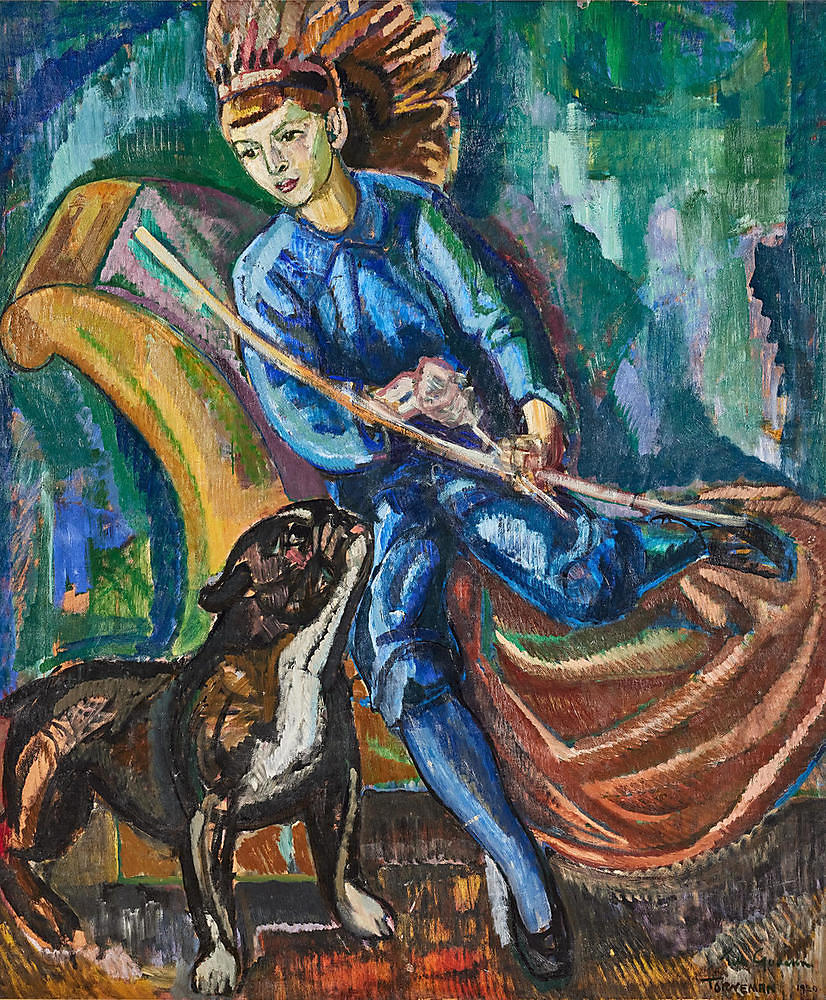
"The Arcer", oil on board, clubbed for 12 751 GBP at Stockholms Auktionsverk.
Modernist Vision and Symbolist Influences
Törneman’s art was often charged with emotion and symbolism, featuring portraits, allegorical figures and imaginative interior scenes. His most renowned works include Night Café I (1905) and Night Café II (1906) – paintings that reflect the influence of Toulouse-Lautrec and the Parisian nightlife. These pieces marked a radical departure from the academic realism dominant in Sweden at the time. Törneman’s palette was vivid and expressive, and his brushwork dynamic, lending a sense of movement and inner life to his subjects.
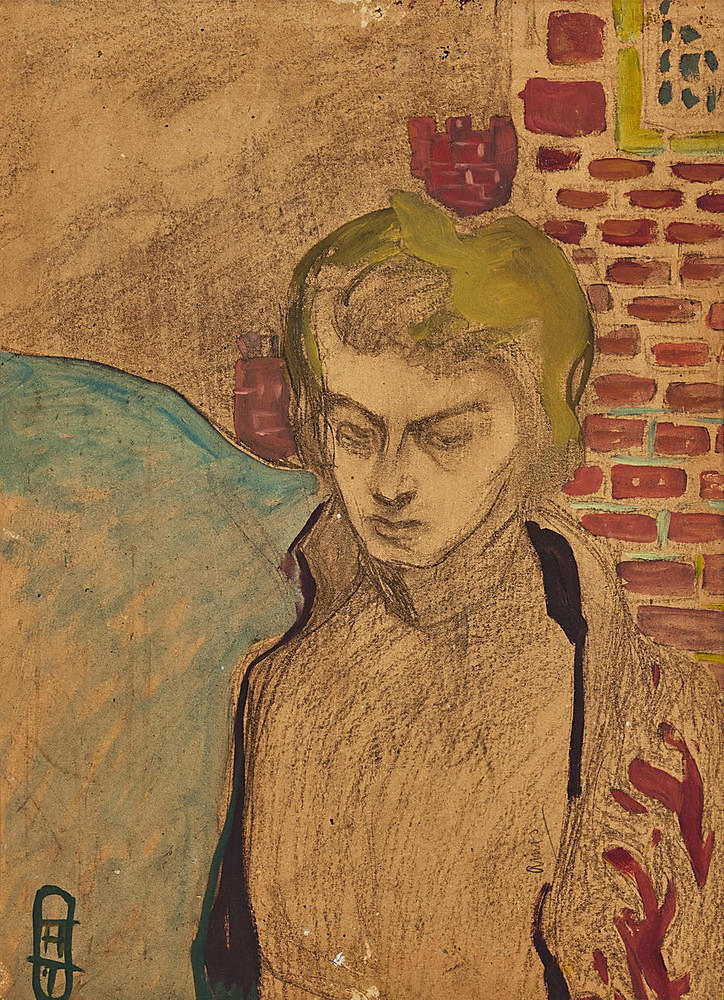
Figure scene, mixed media on paper.
Public Commissions and Lasting Impact
During the 1910s and early 1920s, Törneman received several prominent mural commissions, including works for the Royal Institute of Technology and the Golden Hall (Gyllene Salen) in Stockholm City Hall. These large-scale projects allowed him to blend modernist aesthetics with Swedish decorative traditions, contributing to the era’s evolving public art.