Edward Brian Seago, born in Norwich in 1910, displayed artistic promise from an early age. Largely self-taught, he honed his technical skills through youthful curiosity and perseverance, with only brief guidance from established artists like Sir Alfred Munnings. Despite his parents’ concerns, Seago followed his passion, by age fourteen, he had already won a Royal Drawing Society award. His travels with circuses as a teenager enriched his early portfolio with society portraits and dynamic studies of horses, laying the groundwork for the confident draftsmanship and adventurous spirit that would define his career. Over time, his attention shifted from figures to landscapes, seascapes, and street scenes, securing the admiration of British royalty and art lovers alike.
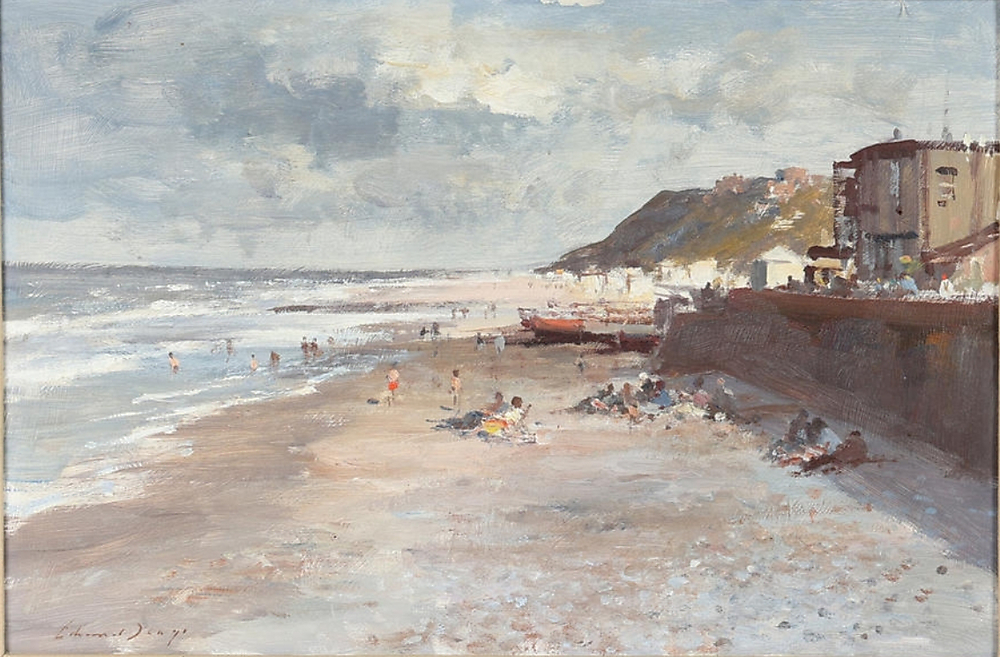
"Cromer", clubbed for 14 500 GBP at Bishop and Miller.
Painting Light: Mastery of Atmosphere and Technique
Seago’s artistic evolution is marked by a blend of late Impressionism and Post-Impressionism, uniting lively brushwork with grounded realism. Renowned for his oils and watercolours, he most frequently depicted the tranquil yet changeful landscapes of East Anglia, especially Norfolk. Expert control of colour—cool, muted tones balanced by subtle warmth—allowed him to evoke fleeting light and shifting weather with poetic sensitivity. His technique married broad, energetic strokes with delicate, thinly painted passages, while his use of absorbent canvas facilitated rapid adaptation to atmospheric changes. Although he embraced plein air observation, Seago often worked from sketches and notes in his studio, striving to distill the essence and rhythm of his subjects over mere topographical detail. The influences of Turner, Constable, and Boudin shimmer through his work, enriching his unique vision.
Enduring Luminosity: Legacy of a Modern Traditionalist
World War II proved transformative for Seago, who, unable to enlist fully due to health, channeled his talents into camouflage work and official wartime painting. Exhibitions of his evocative Italian campaign scenes after the war cemented his reputation and led to celebrated annual shows. Seago’s extensive travels, from Europe to Africa and Australia, deepened his dedication to capturing atmosphere and light. His election to prestigious art societies and inclusion in major collections worldwide attest to his artistic legacy. Passing away in 1974, Edward Seago is remembered as a master who bridged traditional English landscape painting with the emotive nuance of modern impressionism, his luminous canvases continuing to inspire and captivate.