Erik Haamer was an Estonian painter known for his emotionally resonant depictions of life by the sea. Born in Kuressaare on the island of Saaremaa in 1908, Haamer became one of Estonia’s most prominent modernist painters, blending realism with symbolism and a distinct narrative sensitivity. His works often explore themes of isolation, human resilience and the rugged coastal landscapes of the Baltic.

"Puhaev VIII", clubbed for 13 643 GBP at Stockholms Auktionsverk.
Maritime Life and Symbolic Depth
Haamer’s early work focused on maritime subjects—fishermen, boats and the harsh conditions of island life. His paintings are noted for their dramatic use of light, stylised compositions and expressive brushwork. Over time, his style evolved towards a more symbolic and psychological approach, where human figures became metaphors for existential themes. Even when portraying ordinary scenes, Haamer managed to evoke a sense of inner struggle and quiet dignity.
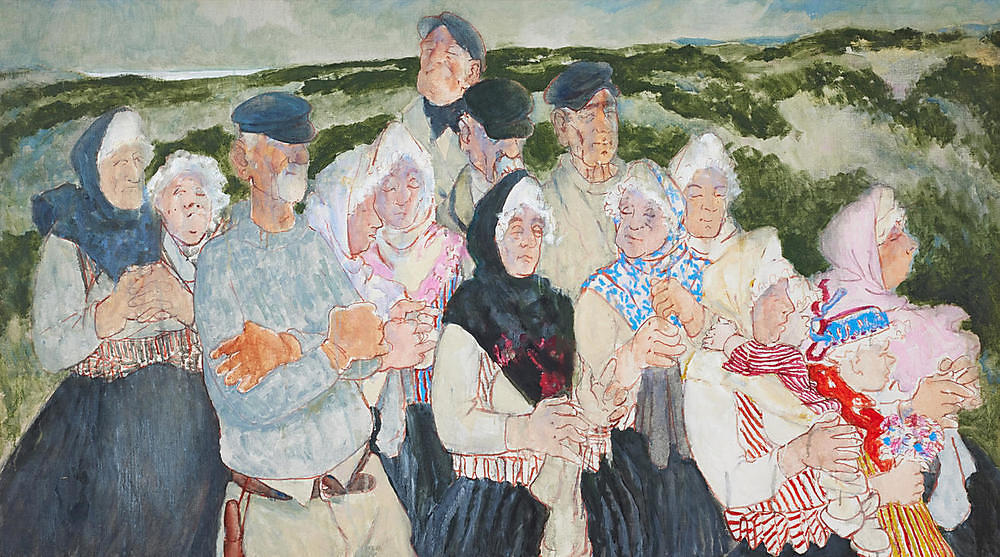
Runic Islanders, clubbed for 17 151 GBP at Stockholms Auktionsverk.
Exile, Reflection and Recognition
Following the Soviet occupation of Estonia, Haamer fled to Sweden in 1944, where he continued to paint in exile. The experience of displacement added depth to his art, which now reflected themes of longing and memory. Despite living abroad, he remained deeply connected to Estonian culture and identity. His work is represented in major Estonian collections, and he is remembered as a key figure in 20th-century Baltic art, both for his technical mastery and his ability to give voice to a nation’s silent narratives.