George Tinworth, often hailed as England’s leading ceramic sculptor, began his journey in the challenging streets of Walworth, South London. Born into hardship, Tinworth was expected to enter his father’s wheelwright or greengrocer trade. Yet, from an early age, his passion for sculpture became clear. Secretly crafting wood offcuts inspired by the ""living statues"" at fairs, Tinworth’s raw talent soon gained local notice. Encouraged by a neighbor to pursue formal study, he bravely pawned his overcoat at 19 to fund evening classes at the Lambeth School of Art, concealing his ambitions from his family. There, he flourished, studying alongside future greats like Robert Wallace Martin and quickly earning a scholarship to the Royal Academy Schools, where his success was marked by numerous awarded medals.
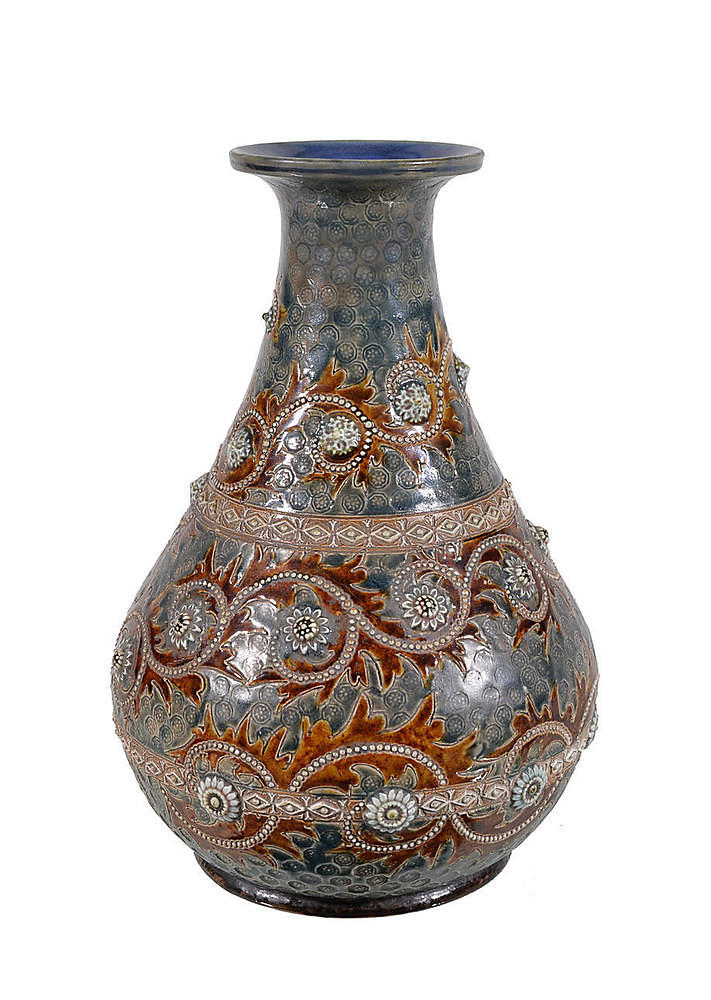
Doulton Lambeth Stoneware Baluster Vase.
Shaping Ceramic Artistry at Royal Doulton
Tinworth’s life transformed when he joined the Doulton factory in Lambeth in 1867. Over the following decades, he became renowned for his extraordinary range, producing everything from stoneware vases with intricate organic glazes to imaginative animal figurines and high-relief biblical panels. His terracotta works, frequently exhibited at the Royal Academy, drew acclaim from luminaries such as John Ruskin. The “History of England” vase, an imposing, intricately modeled feat over four feet high, stood as a symbol of his technical mastery and became a centerpiece at international fairs. While his religious subjects established his early reputation, his playful animal figurines, like mouse chess sets and humorous scenes, are especially cherished by collectors for their wit and craftsmanship.
Enduring Creativity and Timeless Inspiration
Although Victorian religious panels may be less prominent today, Tinworth’s legacy continues to command respect. His decorative vases and whimsical animal groups are highly sought after at auctions worldwide. Tirelessly inventive, Tinworth forever elevated English pottery, blending artistic innovation with rich storytelling. Works such as church panels, public fountains, and museum pieces ensure his influence endures. His journey from adversity to acclaim remains an inspiring testament to perseverance and artistic brilliance, solidifying his place as a pivotal figure in Victorian art.