Kikukawa Eizan was born in Edo (modern-day Tokyo) during the late Edo period, a time when the ukiyo-e woodblock print tradition was flourishing. He was the son of a painter who specialised in the Kano school style, which gave Eizan early exposure to disciplined artistic training. However, he gravitated toward the popular art of ukiyo-e, studying under masters such as Totoya Hokkei and eventually developing a style influenced by the refined elegance of artists like Kitagawa Utamaro.
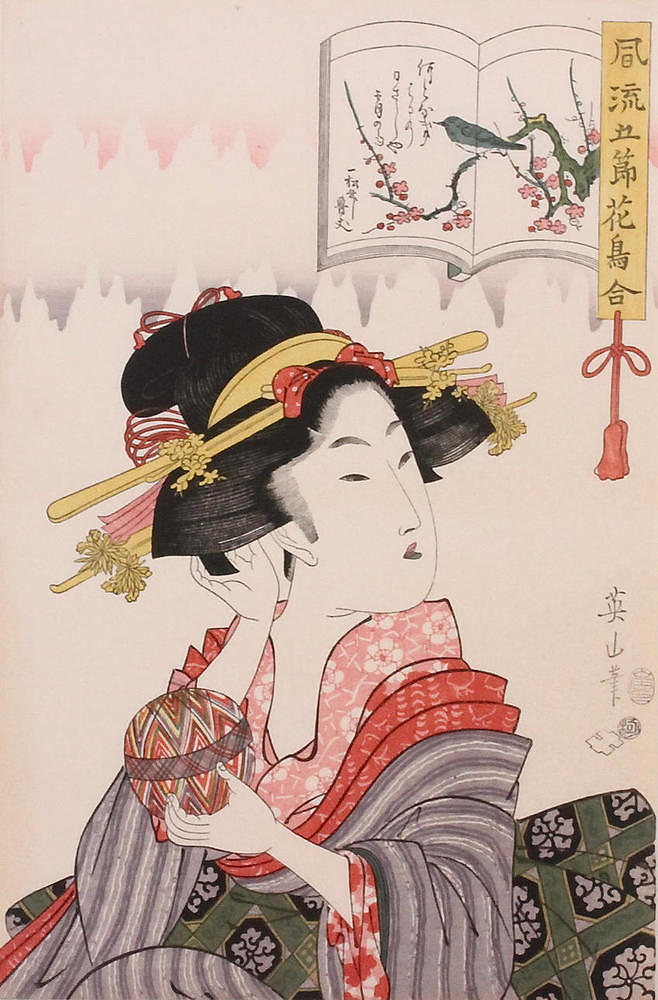
Woman holding an embroidered ball, clubbed for 851 GBP at Halmstads Auktionskammare.
Master of Bijin-ga and Elegant Scenes
Eizan became celebrated for his bijin-ga, portraits of beautiful women, which depicted courtesans, geishas, and townspeople with grace and sophistication. His works often emphasised flowing lines, delicate facial expressions, and sumptuous patterns in clothing, reflecting both the fashions and the cultural ideals of his time. While he began his career working in a style reminiscent of Utamaro, he gradually established his own artistic voice, favouring a softer palette and more naturalistic poses. Beyond bijin-ga, he also produced landscapes and illustrations for popular literature, contributing to the vibrant visual culture of Edo.
Legacy in the Ukiyo-e Tradition
Eizan was among the leading ukiyo-e artists of the early 19th century, active during a period when the genre was adapting to shifting tastes and economic changes. His prints were widely collected in his day, and they remain admired for their elegance, technical precision, and insight into the aesthetics of Edo society. While later generations of ukiyo-e artists introduced bolder colours and more dramatic compositions, Eizan’s work stands as a testament to the refined beauty and harmonious design principles that defined the golden age of Japanese woodblock prints. Today, his bijin-ga are treasured both as works of art and as cultural records of Japan’s urban life in the early 1800s.