Tsukioka Yoshitoshi was born in Edo (modern-day Tokyo) during the late Edo period, a time of profound political and cultural transformation in Japan. At the age of 11, he became a student of Utagawa Kuniyoshi, one of the last great masters of the ukiyo-e woodblock print tradition. Under Kuniyoshi’s guidance, Yoshitoshi learned the intricacies of drawing, composition, and the highly disciplined techniques required for woodblock printing. His early works reflected his teacher’s dramatic style, often depicting historical warriors, kabuki actors, and scenes from folklore.
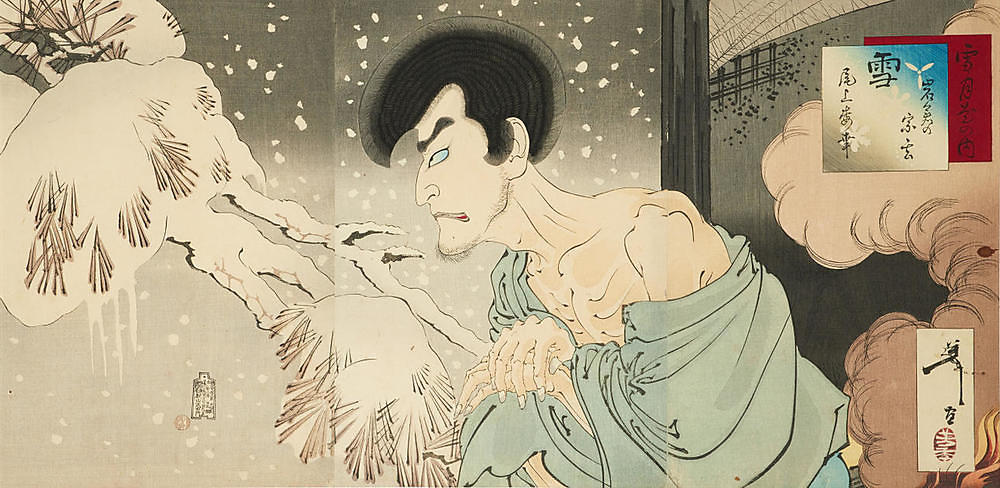
Snow: The Actor Onoe Baiko V in the role of Iwakura Sogen, clubbed for 1 983 GBP at Crafoord Auktioner Stockholm.
Master of Ukiyo-e in a Changing Era
Yoshitoshi’s career spanned a period of intense upheaval as Japan transitioned from feudal rule to modernisation during the Meiji Restoration. This transformation brought new artistic influences from the West, yet Yoshitoshi remained committed to the ukiyo-e tradition while also innovating within it. He became known for his psychologically complex imagery, bold use of colour, and dramatic compositions. His subjects ranged from ghost stories and supernatural beings to vivid depictions of historical events and contemporary urban life. One of his most celebrated series, One Hundred Aspects of the Moon, combined lyrical beauty with narrative depth, cementing his status as a master storyteller in print.
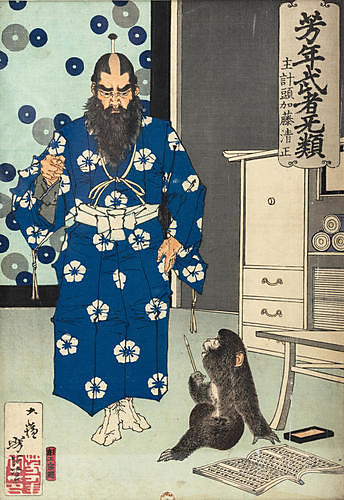
Kazue no Kami Katō Kiyomasa Observes a Monkey, from series "Yoshitoshi Musha Burui".
Enduring Influence and Legacy
Despite personal struggles, including periods of ill health and poverty, Yoshitoshi continued to produce groundbreaking work until his death. By the late 19th century, he was widely regarded as the last great ukiyo-e artist, bridging the gap between traditional Japanese printmaking and modern sensibilities. His prints remain highly sought after by collectors worldwide, valued for their technical excellence and emotional power. Tsukioka Yoshitoshi’s legacy lies not only in preserving a centuries-old art form but in expanding its expressive potential during one of Japan’s most transformative periods.