Richard Sagrits was born in the picturesque village of Karepa, on Estonia’s northern coast, where the sea was both a livelihood and a constant source of inspiration. Surrounded by maritime life, he developed an intimate knowledge of the rhythms, colours, and moods of the Baltic. In the early 1930s, Sagrits enrolled at the Pallas Art School in Tartu — a progressive institution that nurtured the country’s leading modernists.
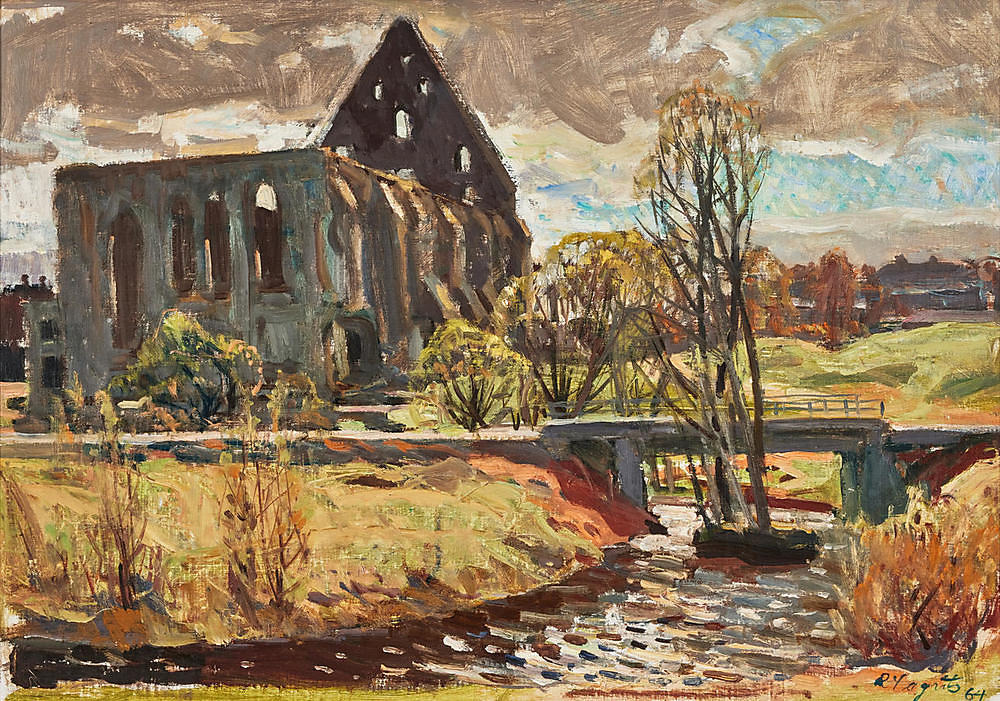
Pirita klooster, Talinn. Clubbed for 7 735 GBP at Stockholms Auktionsverk.
Painting the Spirit of the Sea
Sagrits became known for his evocative seascapes, fishing village scenes, and harbour views. His brushwork combined the disciplined realism of his academic training with the freer, expressive qualities of European modernism. In winter scenes, he captured the cool greys and blues of ice-laden harbours, while summer canvases glowed with warm ochres and sunlit reflections on water. His work often featured fishermen repairing nets, boats at rest after a day’s work, and the ever-changing seasons.
Cultural Legacy and Preservation of a Way of Life
Sagrits’ art is more than an aesthetic achievement; it is a visual record of a disappearing world. His paintings document the traditions, labour, and natural beauty of Estonia’s coast before the dramatic social changes of the mid-20th century. Today, his works are housed in the Estonian Maritime Museum, Tartu Art Museum, and private collections, where they are valued both for their artistic merit and historical importance.