Liss Eriksson was born into a family of artists in Stockholm, where his father, the sculptor Christian Eriksson, provided an early model of creative dedication. His education at the Royal Swedish Academy of Fine Arts grounded him in the discipline of figurative sculpture. In search of broader influences, Eriksson moved to Paris, immersing himself in the city’s post-war art scene. Encounters with European humanist traditions would shape his belief that sculpture should reflect shared human experience.
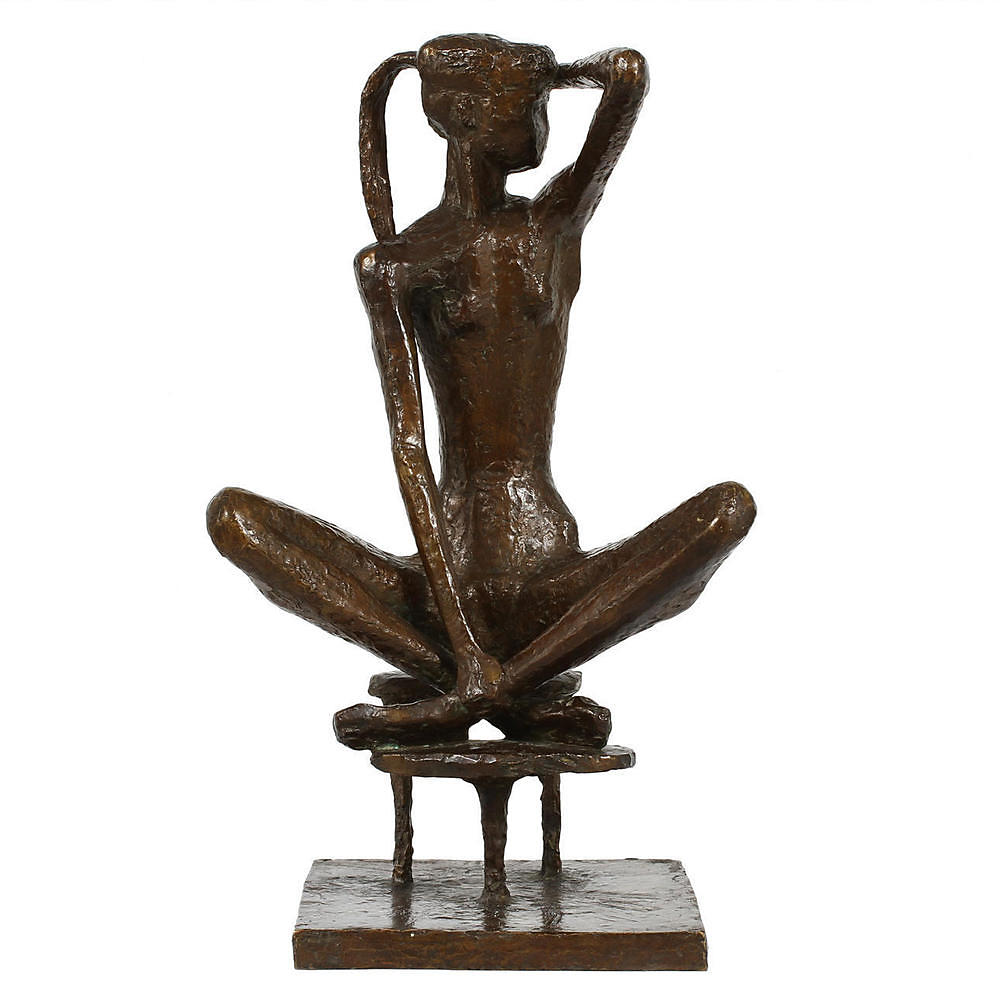
Sculpture "Tintomara", clubbed for 9 668 GBP at Göteborgs Auktionsverk.
Capturing Humanity in Bronze and Stone
Eriksson’s sculptures, often life-sized and publicly placed, embody quiet dignity and compassion. Whether portraying a child at rest, a figure in thought, or a couple in embrace, his works invite personal connection. The tactile surfaces, sensitive modelling, and intimate scale create an immediacy that draws viewers into the emotional world of his subjects. By placing these works in accessible public spaces, Eriksson reinforced the idea that art belongs to everyone.
Public Commissions and Lasting Impact
Over decades, Eriksson completed numerous commissions across Sweden, making his art a familiar part of the national landscape. His belief in the accessibility of art helped shape public perceptions of sculpture in the 20th century. Even today, his works remain gathering points in parks and squares, encouraging moments of reflection amid daily life.