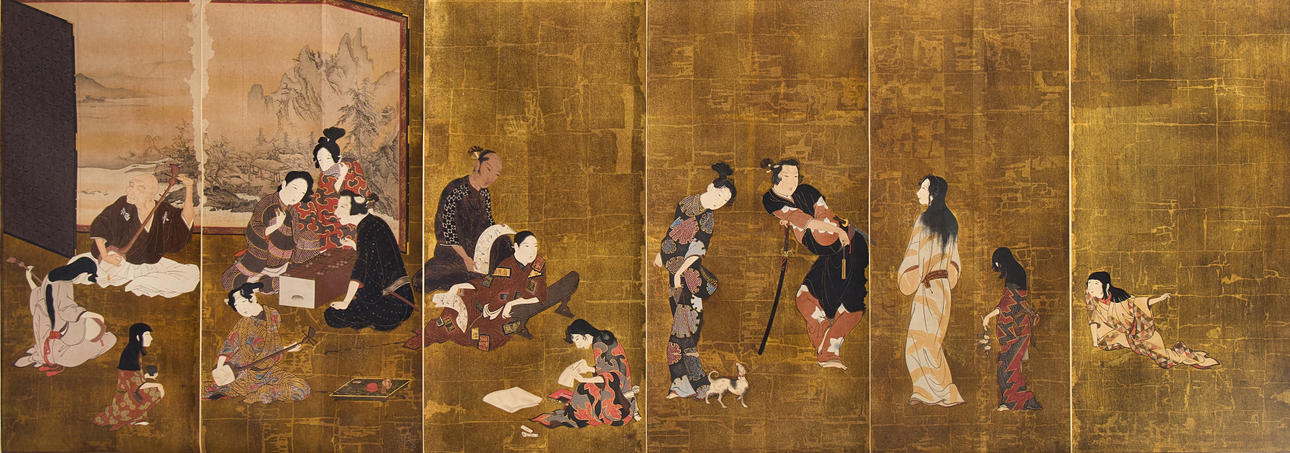
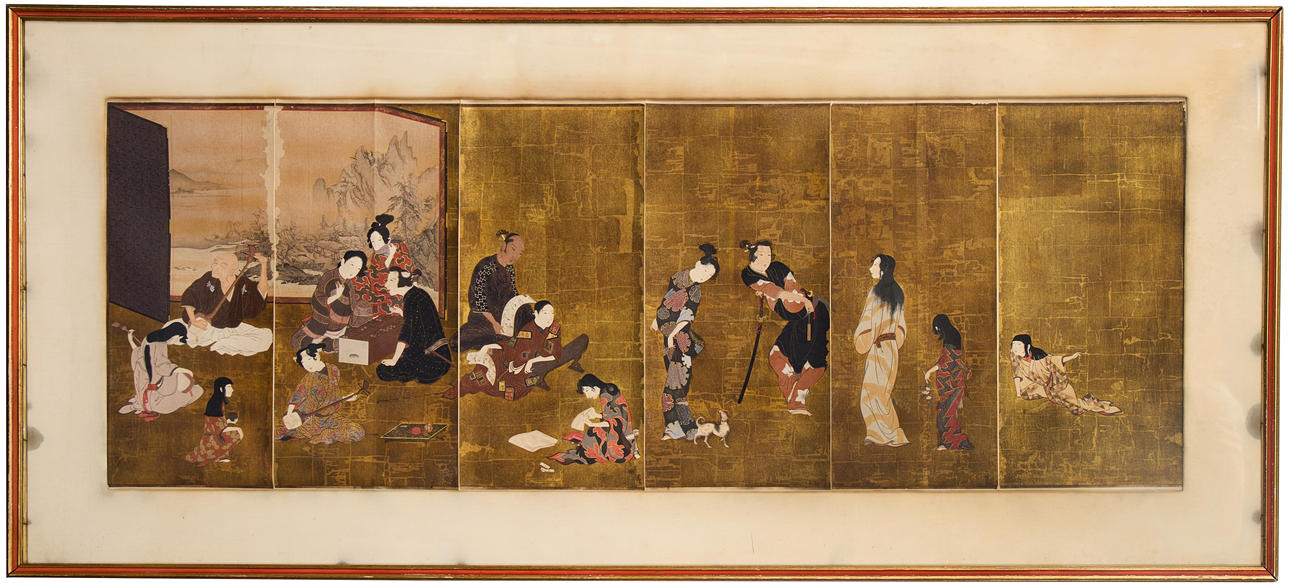
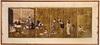
PRINT depicting "Hikone byōbu" (彦根屏風).
This auction is closed, but maybe you like the following items?

Images

Description
Visible dimensions 40 x 110 cm.
The Hikone screen (彦根屏風, Hikone byōbu) is a Japanese painted folding screen in the form of a byōbu by an unknown artist, created during the Kan'ei era (c. 1624–1644). The 94 × 274.8 centimeter screen is foldable into six panels and is painted on gold-leaf paper. It depicts people in the pleasure quarters of Kyoto playing music and games. The screen originates from the feudal Hikone domain, which was ruled by the screen's owners, the Ii clan. It is owned by the city of Hikone in Shiga Prefecture, in the Ii Naochika collection.
The work is considered representative of early modern Japanese genre painting; some consider it the earliest work of ukiyo-e. In 1955, it was designated a National Treasure of Japan and given the official name Shihon Kinjichaku-shoku Fuzoku-zu (紙本金地著色風俗図).
Condition
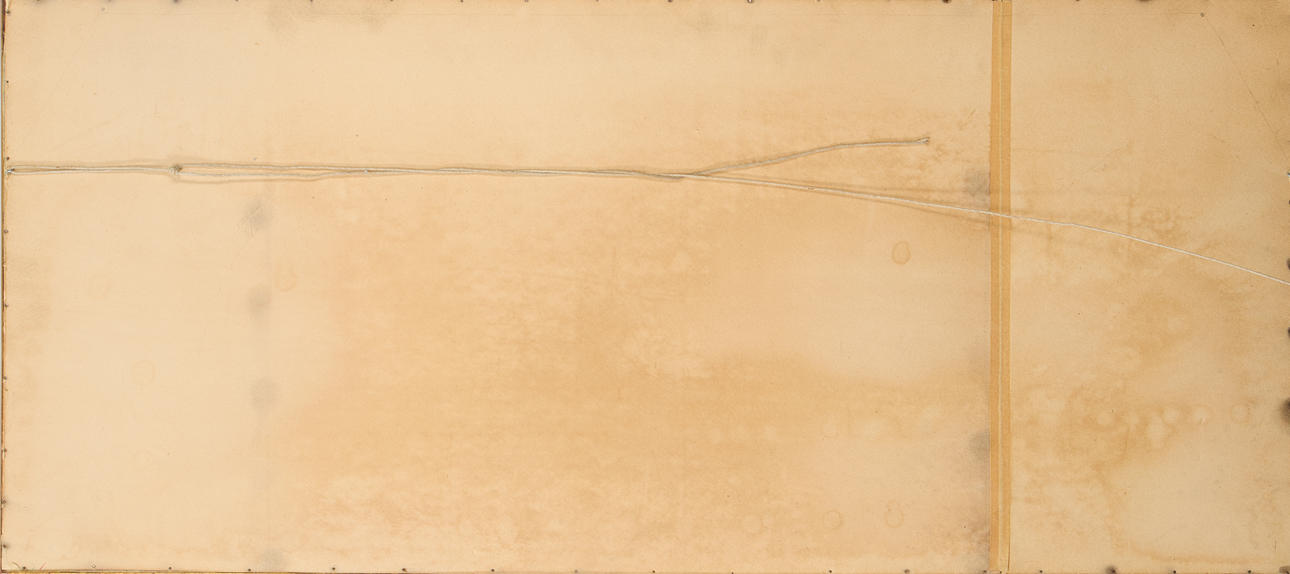
Not examined out of frame. Mount with stains.
Frame dimensions 60 x 130 cm.
Do you have something similar to sell? Get your items valued free of charge!
Description
Visible dimensions 40 x 110 cm.
The Hikone screen (彦根屏風, Hikone byōbu) is a Japanese painted folding screen in the form of a byōbu by an unknown artist, created during the Kan'ei era (c. 1624–1644). The 94 × 274.8 centimeter screen is foldable into six panels and is painted on gold-leaf paper. It depicts people in the pleasure quarters of Kyoto playing music and games. The screen originates from the feudal Hikone domain, which was ruled by the screen's owners, the Ii clan. It is owned by the city of Hikone in Shiga Prefecture, in the Ii Naochika collection.
The work is considered representative of early modern Japanese genre painting; some consider it the earliest work of ukiyo-e. In 1955, it was designated a National Treasure of Japan and given the official name Shihon Kinjichaku-shoku Fuzoku-zu (紙本金地著色風俗図).
Condition
Not examined out of frame. Mount with stains.
Frame dimensions 60 x 130 cm.
Do you have something similar to sell? Get your items valued free of charge!