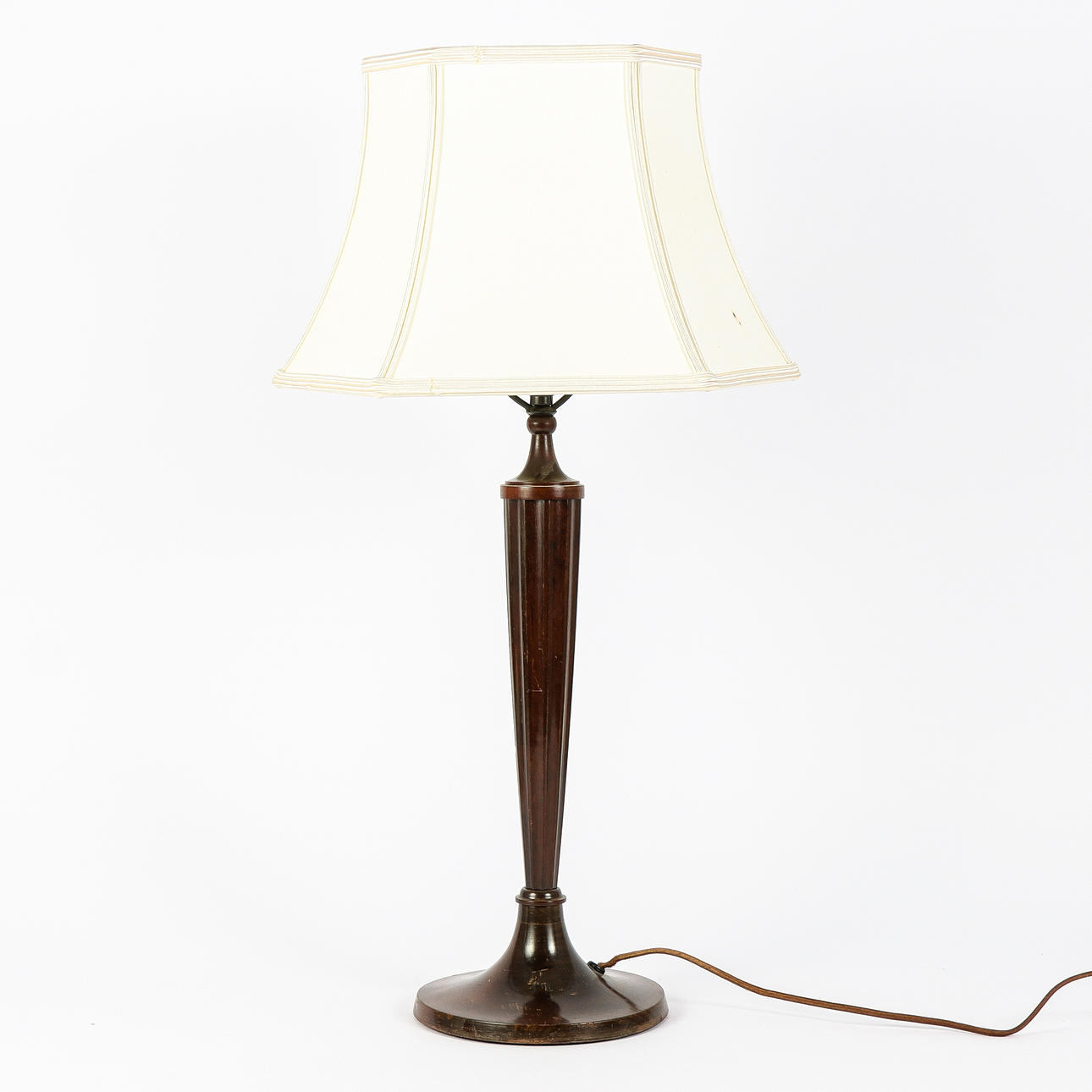
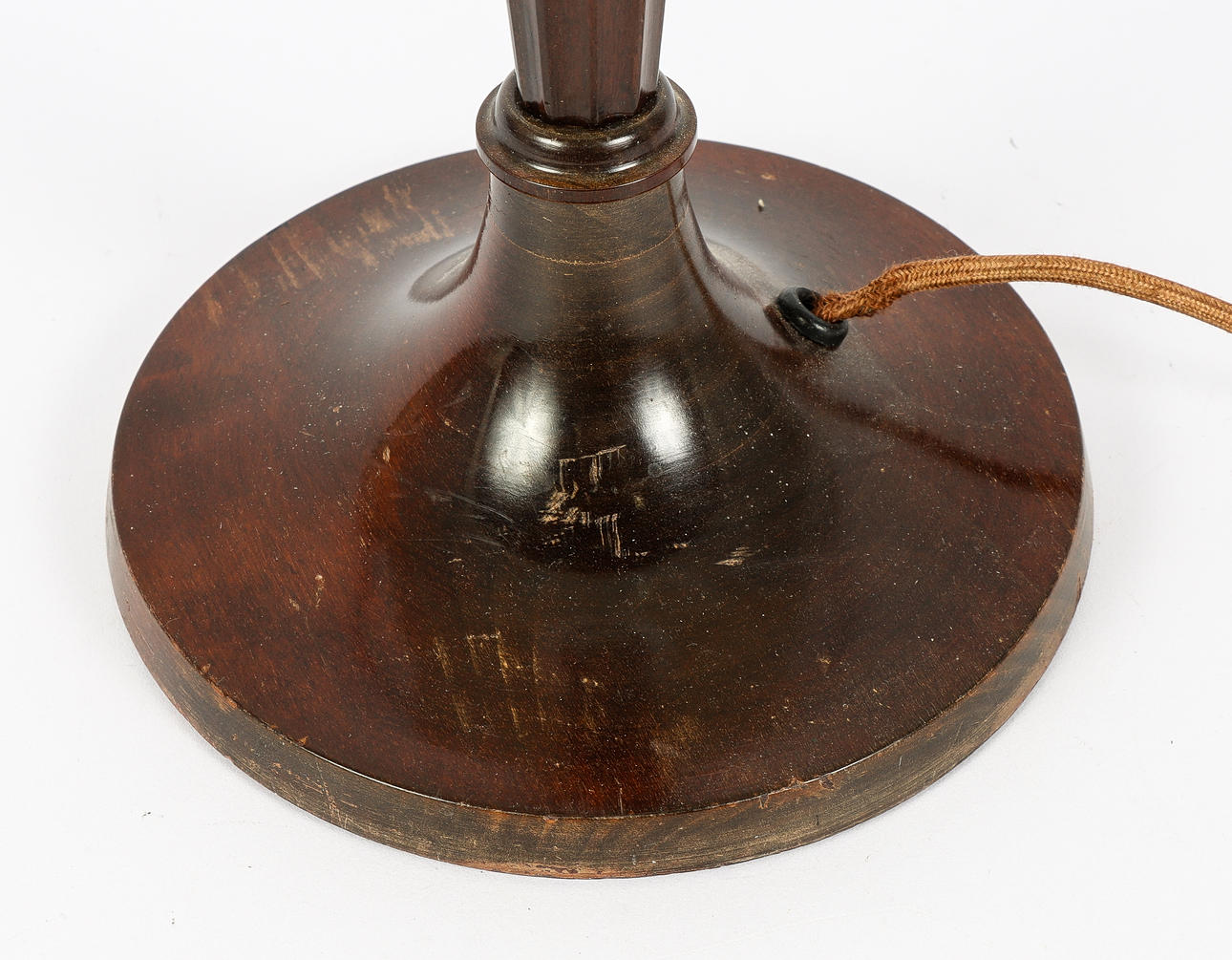
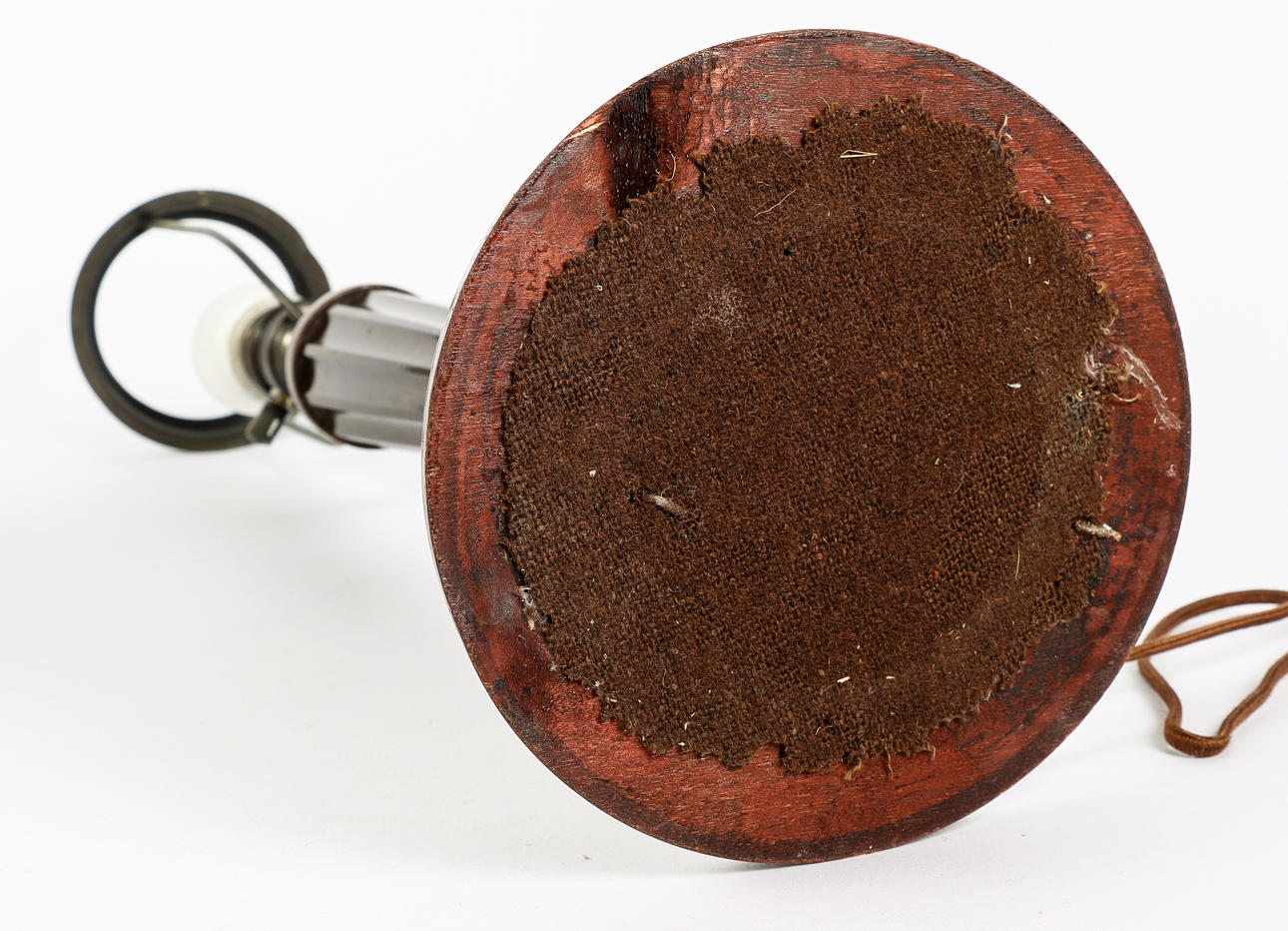
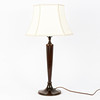
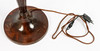
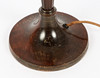
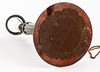
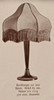
Table lamp "no. 210" Vidus, Arvika 1920s.

Images

Description
Designed in 1922 with Axel Einar Hjorth as artistic director.
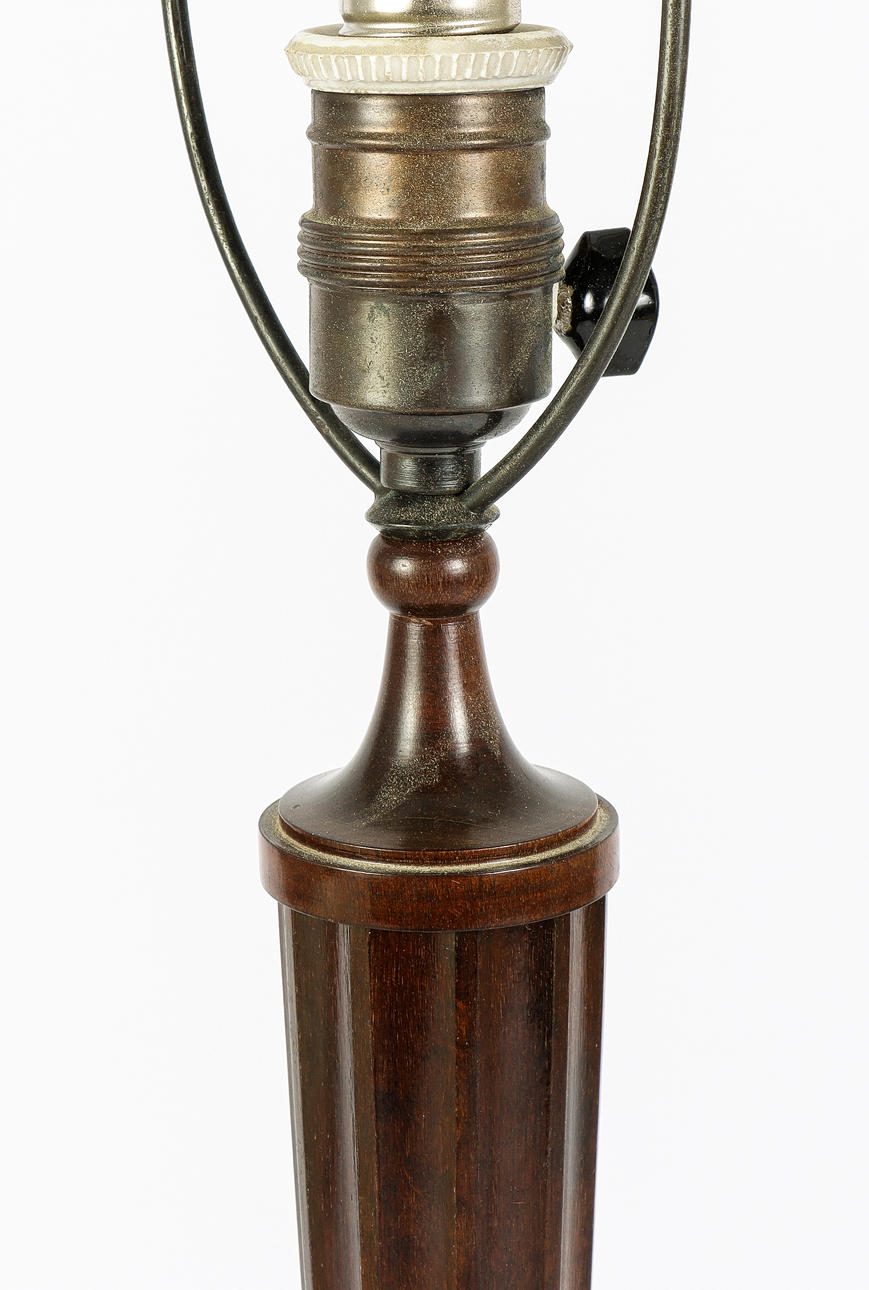
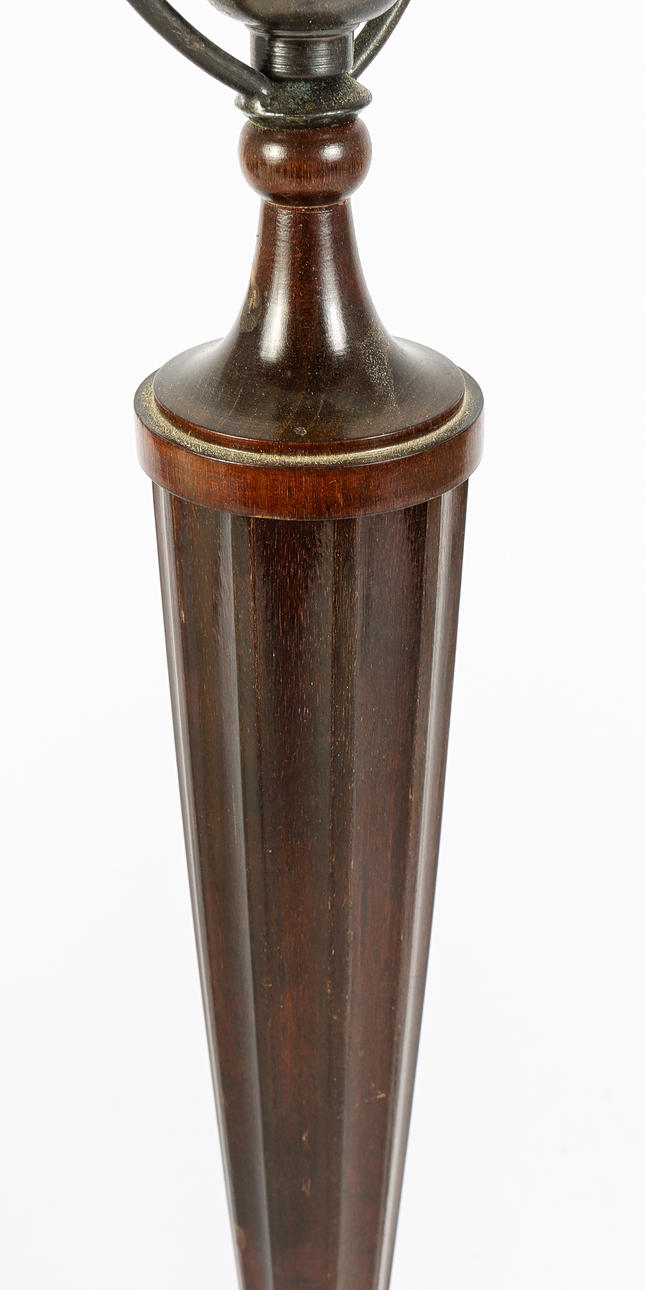
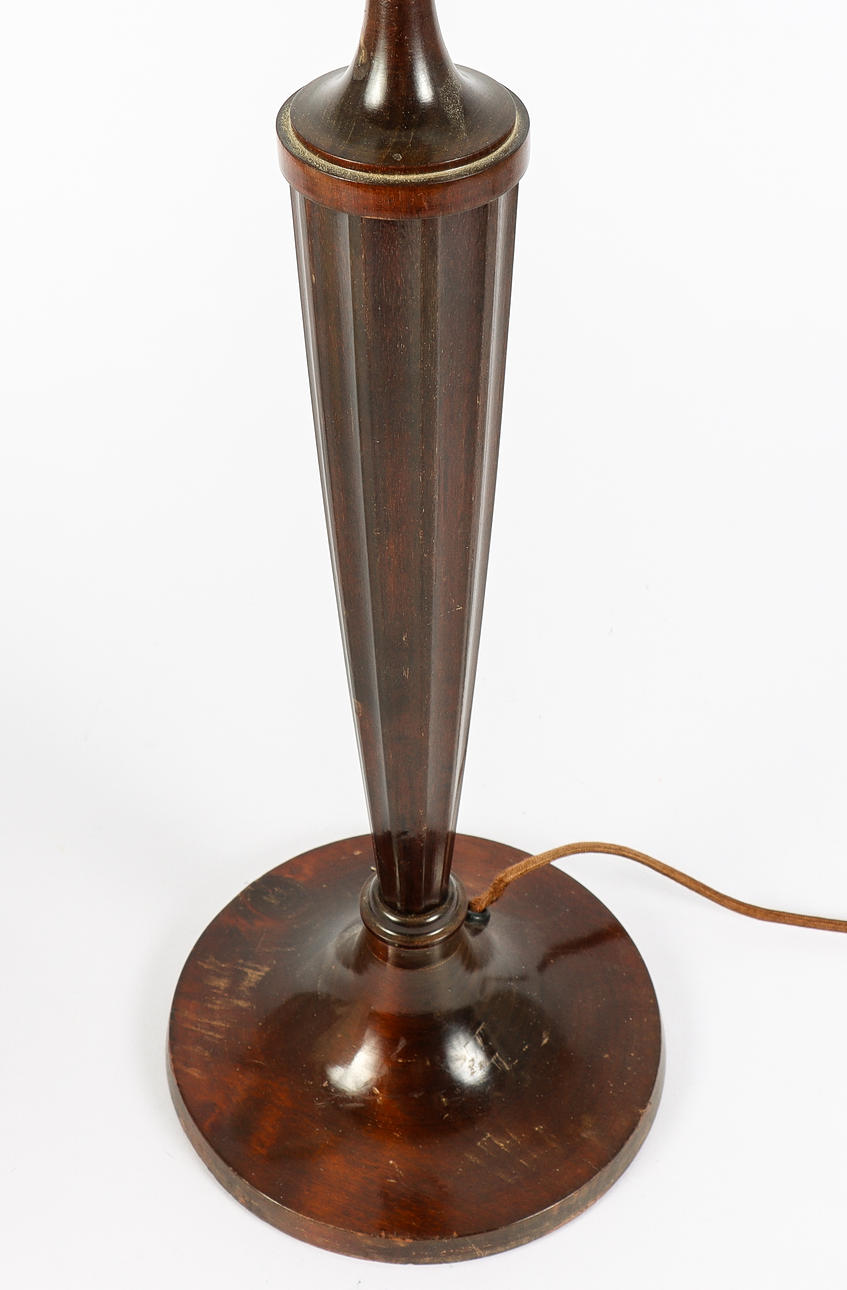
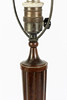
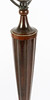
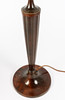
Frame in birch with later shade.
Height 59 cm.
In 1918, Karl Persson, previously the manager at Arvika Möbelfabriks AB, formed the limited company Vidus. Early on, Axel Einar Hjorth was engaged as an architect and artistic director. During the early 20th century, Hjorth was employed as a freelancer by various furniture manufacturers before being hired as chief architect at Nordiska Kompaniet in 1927. Hjorth's work with Vidus gained attention at the Swedish Fair in 1919, as reported in Göteborgs Dagblad on June 16, 1919: "In another area, where barbarism and confusion have long reigned supreme, one finds that a certain beauty of form is beginning to grope its way forward and appear even at the fair, where it was almost drowned out by all the predominantly ugly - I am referring to electric lighting fixtures and the breakthrough of wood as a material. At the wooden lighting exhibition, one found several good forms, and a newly started company in Arvika, 'Vidus', which has managed to associate itself with such a prominent force as architect Hjorth, who made the drawings for several of the exhibited models, of which, however, by no means all can be counted as successful, sought to undercut other firms through lower prices. All wooden lighting, however, was still at too high a price level, thanks to the expensive material used for the shades. Also, both of the firms mentioned here had sinned and been extravagant in the choice of forms and colors as well as the pattern design of the fabric on the lampshades."
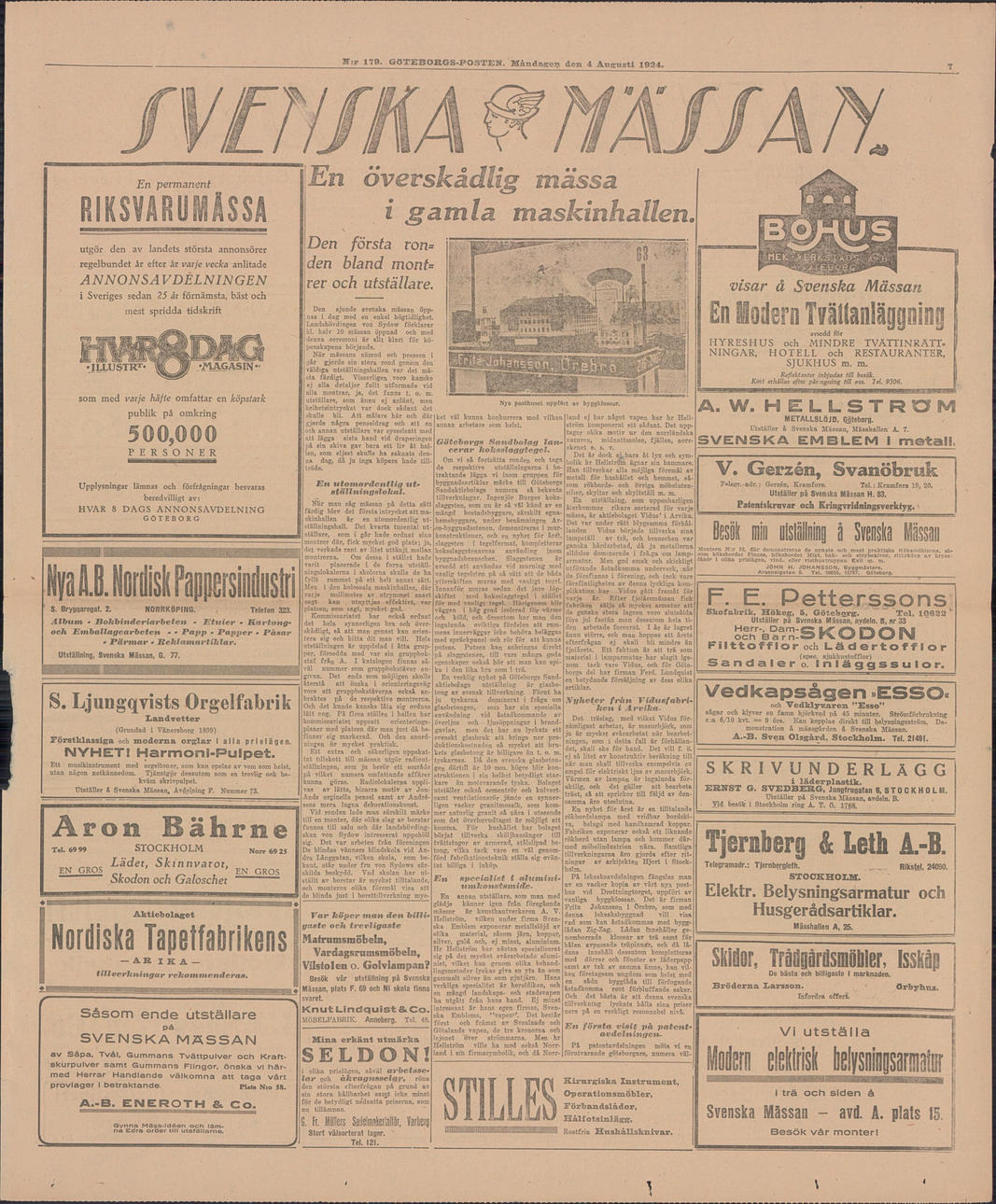
At an exhibition at Svenska Dagbladet's dispatch bureau and at the Swedish Fair in 1924, Hjorth is mentioned again; in a report on Vidus in Göteborgs-Posten on August 4, 1924, it concludes: "All products are made according to drawings by the architect Hjorth in Stockholm".
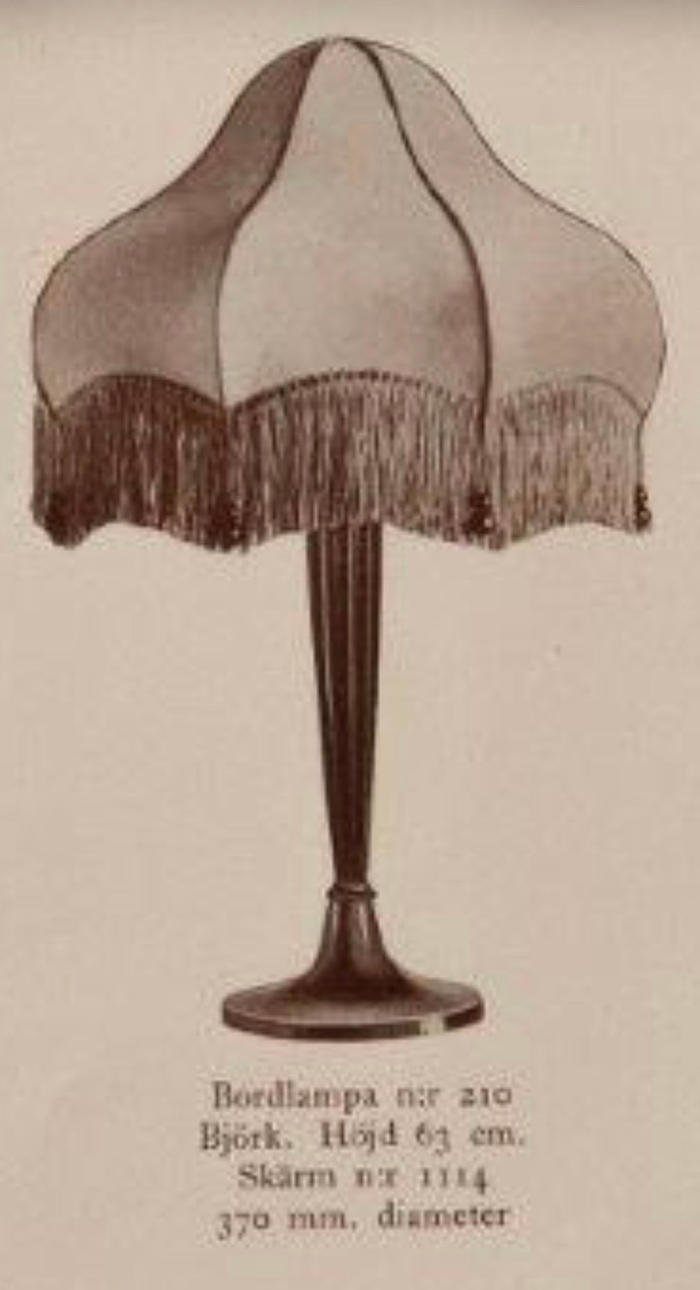
Image from Vidus price list 1925.
Condition
Surface wear, scratches.
Theme
Description
Designed in 1922 with Axel Einar Hjorth as artistic director.
Frame in birch with later shade.
Height 59 cm.
In 1918, Karl Persson, previously the manager at Arvika Möbelfabriks AB, formed the limited company Vidus. Early on, Axel Einar Hjorth was engaged as an architect and artistic director. During the early 20th century, Hjorth was employed as a freelancer by various furniture manufacturers before being hired as chief architect at Nordiska Kompaniet in 1927. Hjorth's work with Vidus gained attention at the Swedish Fair in 1919, as reported in Göteborgs Dagblad on June 16, 1919: "In another area, where barbarism and confusion have long reigned supreme, one finds that a certain beauty of form is beginning to grope its way forward and appear even at the fair, where it was almost drowned out by all the predominantly ugly - I am referring to electric lighting fixtures and the breakthrough of wood as a material. At the wooden lighting exhibition, one found several good forms, and a newly started company in Arvika, 'Vidus', which has managed to associate itself with such a prominent force as architect Hjorth, who made the drawings for several of the exhibited models, of which, however, by no means all can be counted as successful, sought to undercut other firms through lower prices. All wooden lighting, however, was still at too high a price level, thanks to the expensive material used for the shades. Also, both of the firms mentioned here had sinned and been extravagant in the choice of forms and colors as well as the pattern design of the fabric on the lampshades."
At an exhibition at Svenska Dagbladet's dispatch bureau and at the Swedish Fair in 1924, Hjorth is mentioned again; in a report on Vidus in Göteborgs-Posten on August 4, 1924, it concludes: "All products are made according to drawings by the architect Hjorth in Stockholm".
Image from Vidus price list 1925.
Condition
Surface wear, scratches.
Theme
Payment options for this item
Payment cardsBank transferDelivery
: Provide your locationInfo temporarily unavailableLoading…Provide your location to see transport options and prices.
Oops! Something went wrong.
Please try again in a moment. If it still doesn't work, contact Auctionet support.
Details
- Address
Pråmvägen 13
652 16 Karlstad
Sweden- Placement
- Bord 6