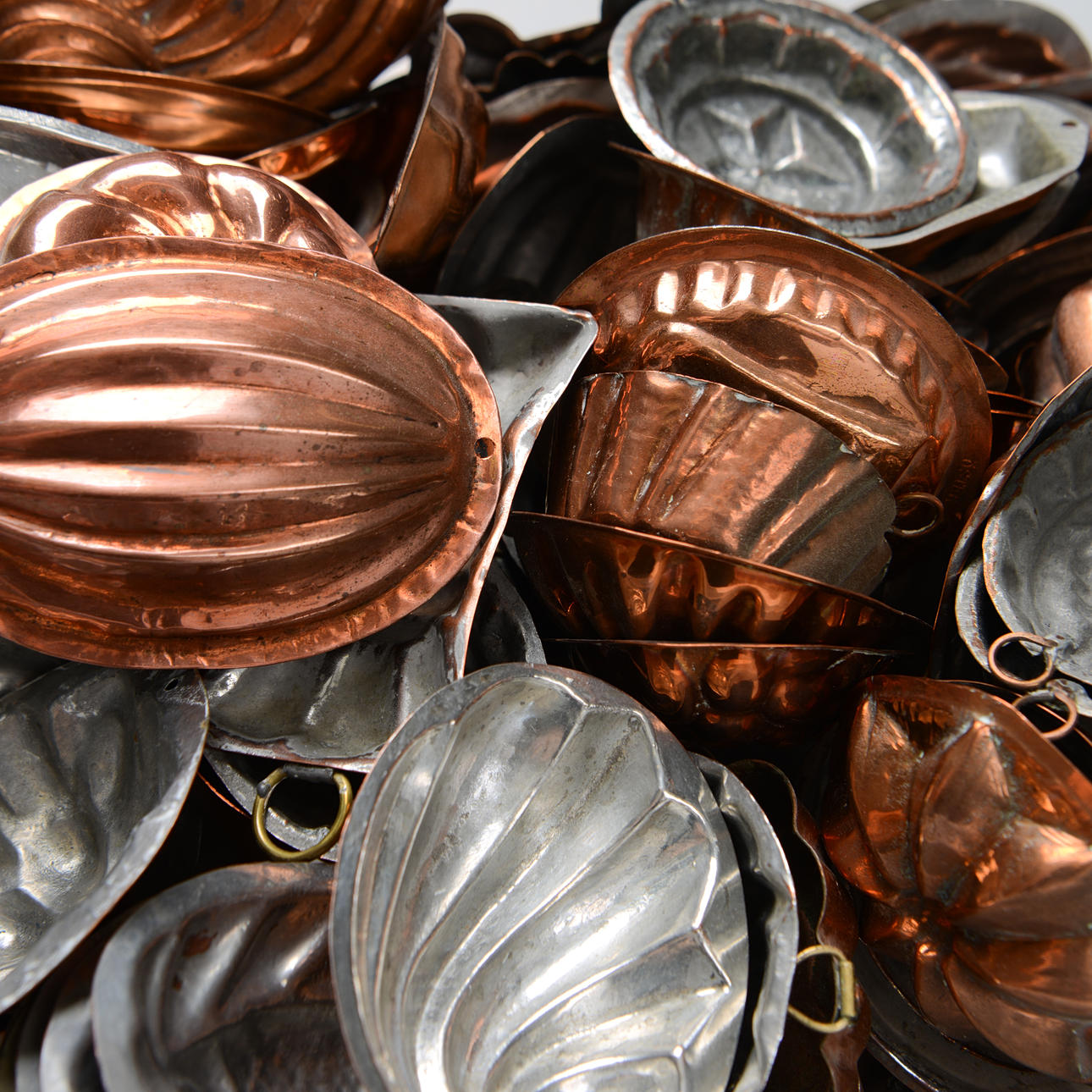
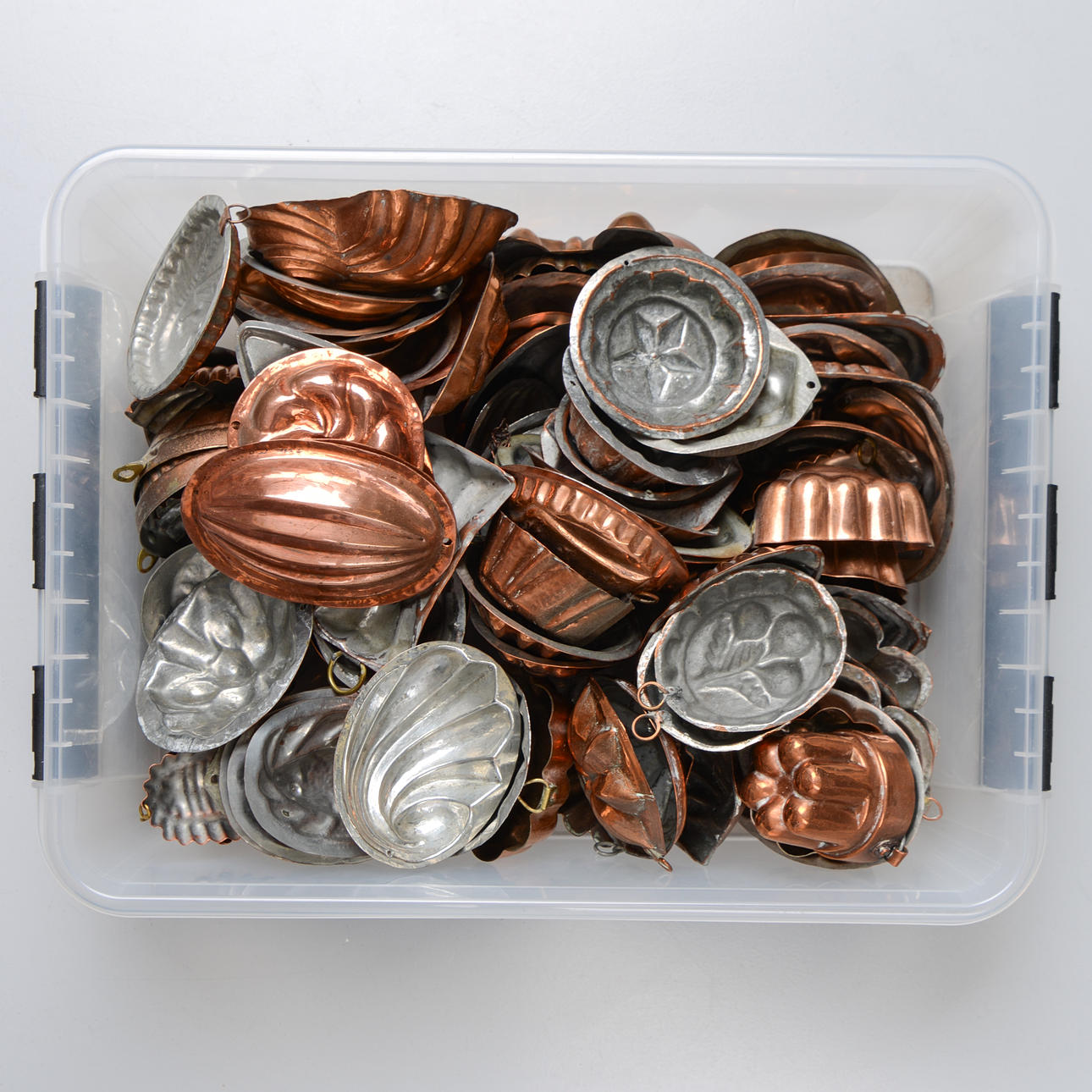
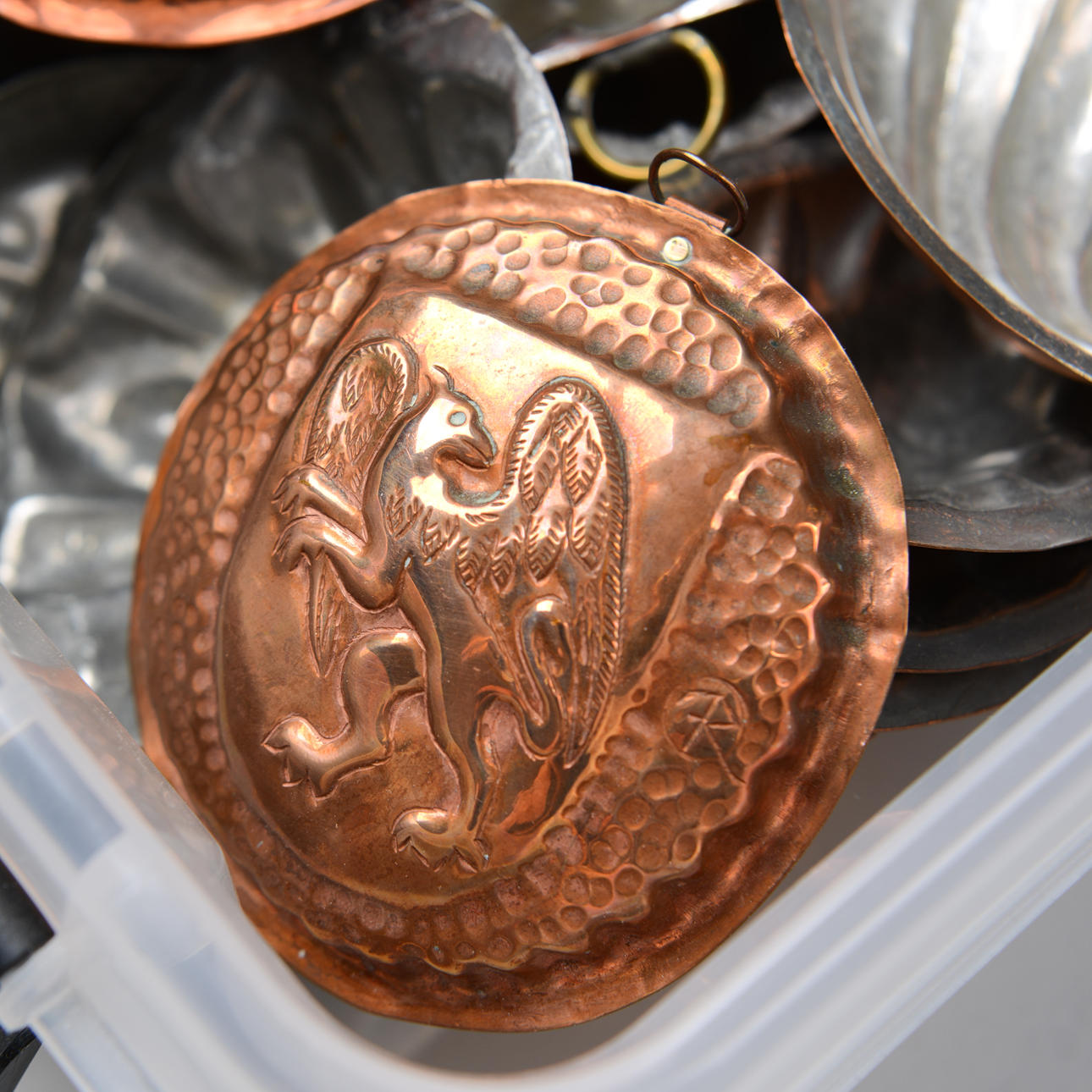
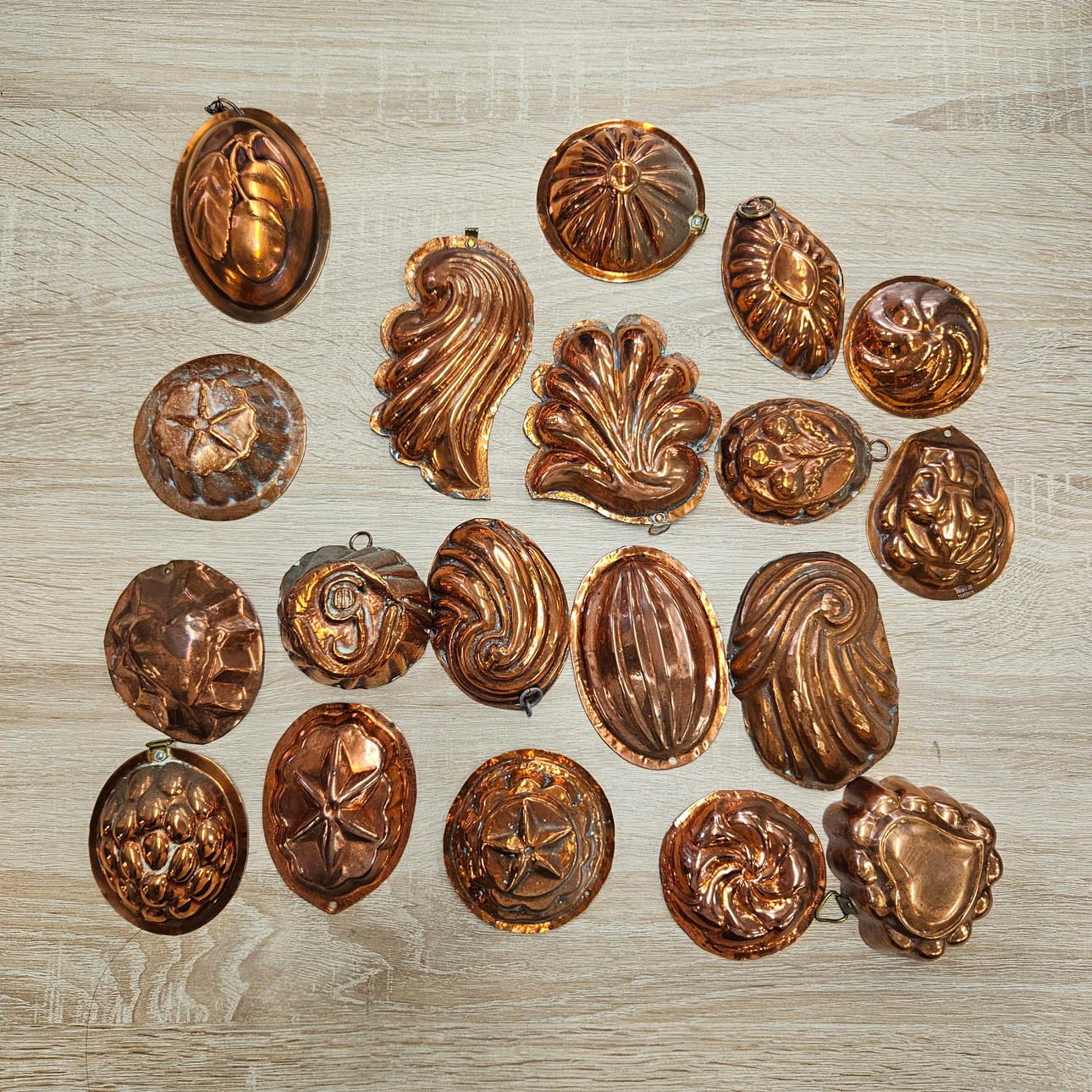
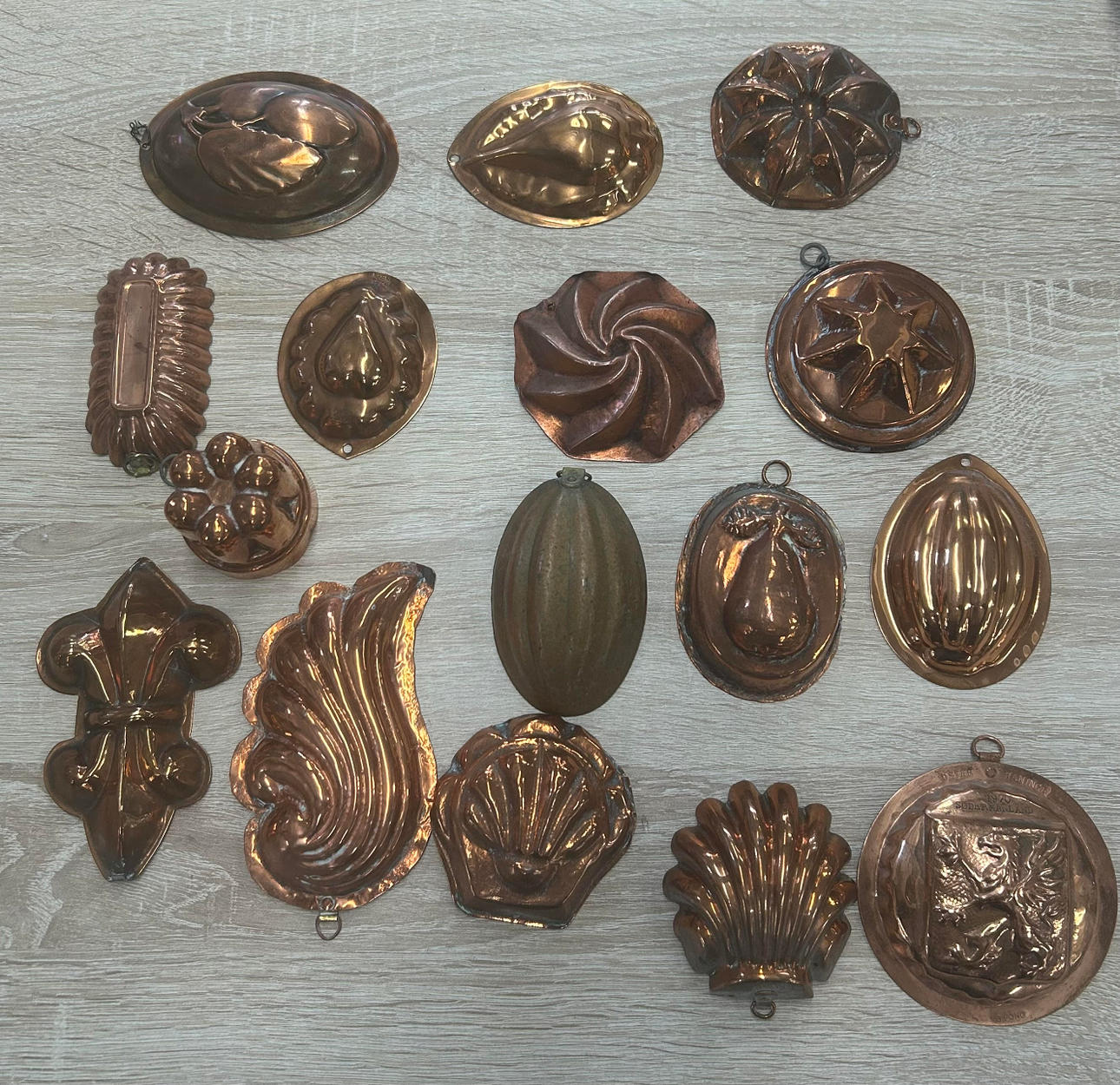
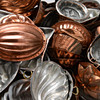
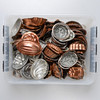
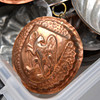
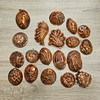
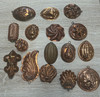
CAKE MOLDS, approx. 80 pcs, cups, 1800/1900's.
This auction is closed, but maybe you like the following items?

Images
Description
Copper molds with various decorations in relief have a long and rich history in bakery and confectionery. Initially, wooden and terracotta models were used to create patterns on pastries in ancient Greece and Rome.
During the Middle Ages and Renaissance, people switched to wooden moulds, and it was not until the 17th and 18th centuries that copper moulds began to be used. The copper moulds were made by hand, replacing the wooden moulds thanks to the ability of copper to provide fine detail in the cut-outs.
Industrialization led to more efficient mass production of the molds, making them more accessible to a wider audience. During the 20th century, copper molds enjoyed a renaissance and are still used today by professional bakers and pastry chefs.
Condition
Variable wear and tear.
Theme
Do you have something similar to sell? Get your items valued free of charge!
Description
Copper molds with various decorations in relief have a long and rich history in bakery and confectionery. Initially, wooden and terracotta models were used to create patterns on pastries in ancient Greece and Rome.
During the Middle Ages and Renaissance, people switched to wooden moulds, and it was not until the 17th and 18th centuries that copper moulds began to be used. The copper moulds were made by hand, replacing the wooden moulds thanks to the ability of copper to provide fine detail in the cut-outs.
Industrialization led to more efficient mass production of the molds, making them more accessible to a wider audience. During the 20th century, copper molds enjoyed a renaissance and are still used today by professional bakers and pastry chefs.
Condition
Variable wear and tear.
Theme
Do you have something similar to sell? Get your items valued free of charge!