MAHATMA GANDHI INTEREST: A SIGNED LETTER.
This auction is closed, but maybe you like the following items?

Images


Description
GANDHI MAHATMA: (1869-1948) Indian Political and Spiritual Leader during the Indian Independence Movement.
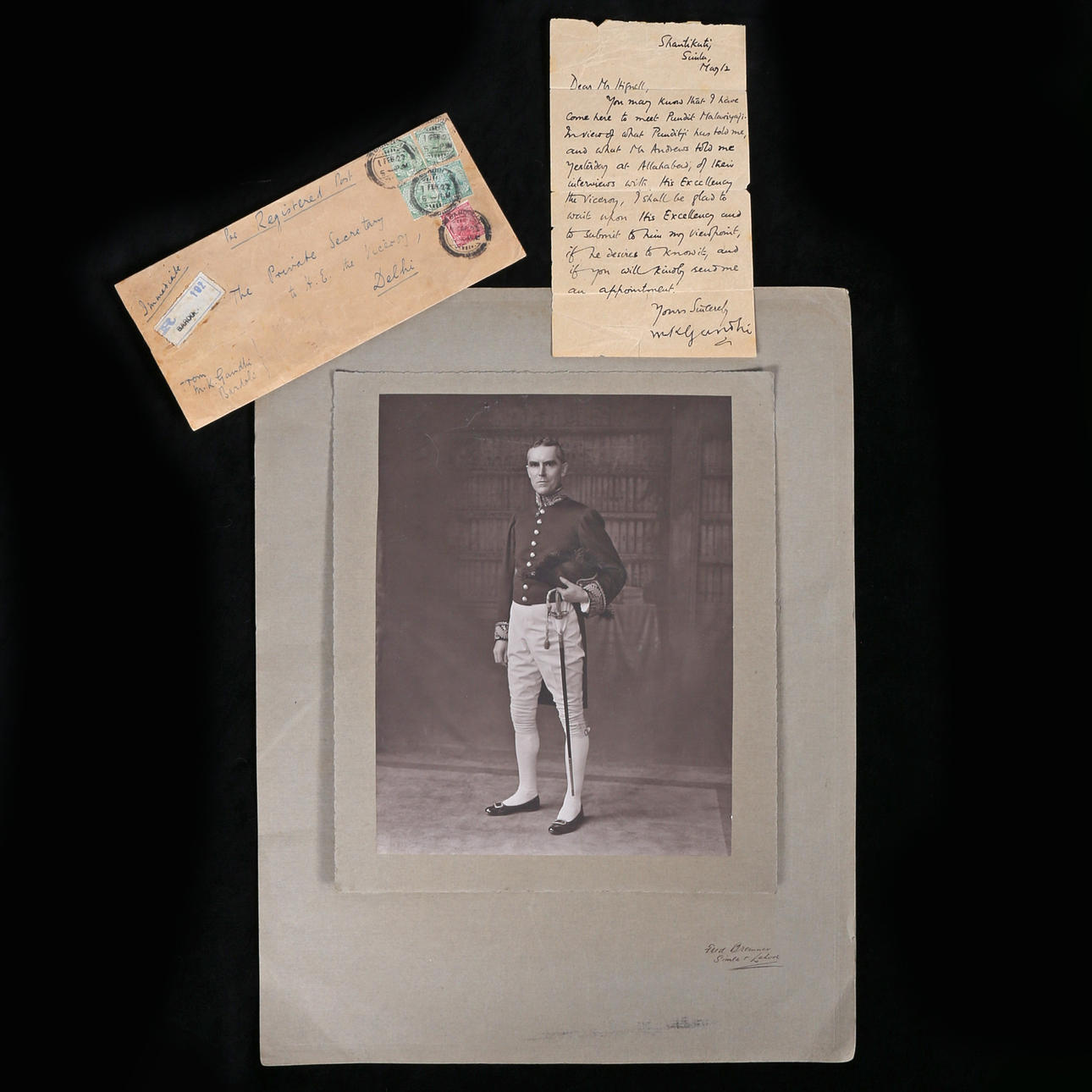
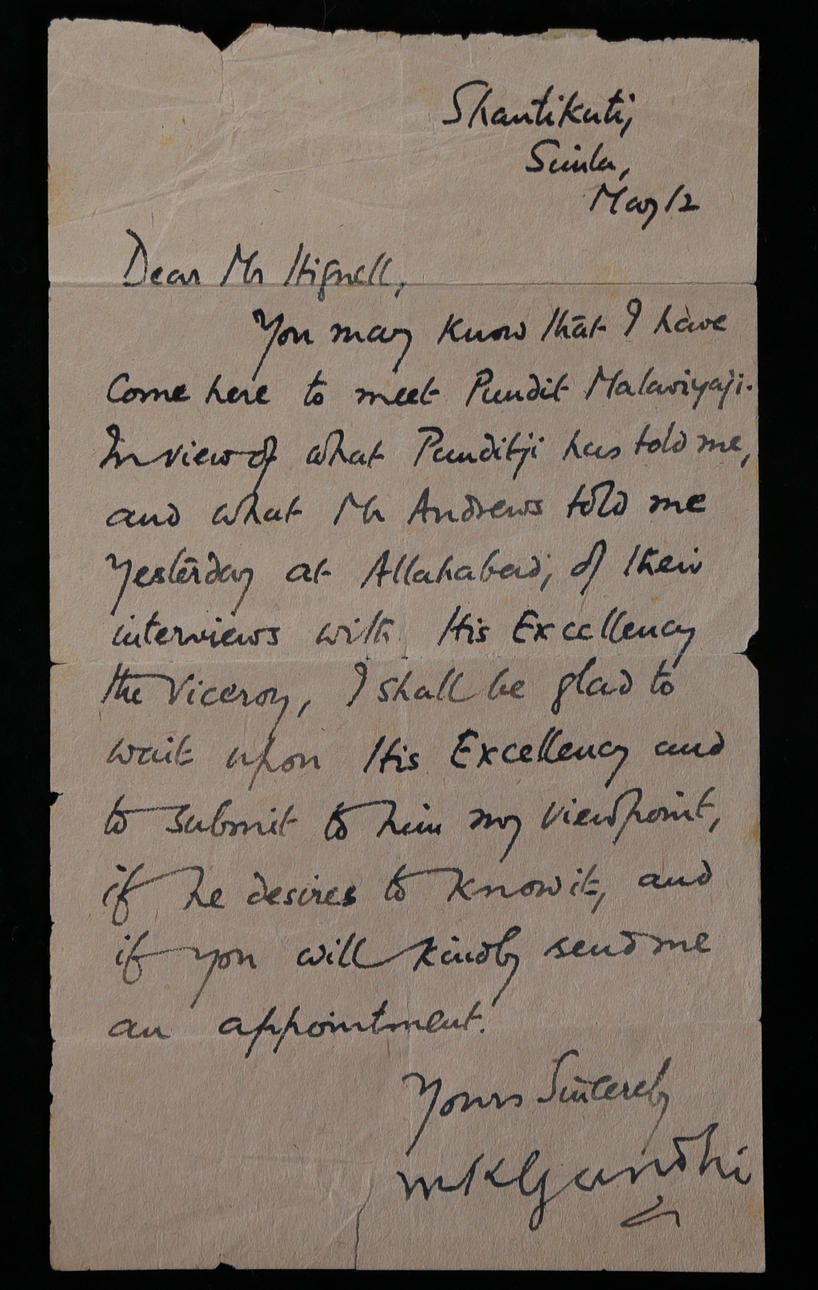
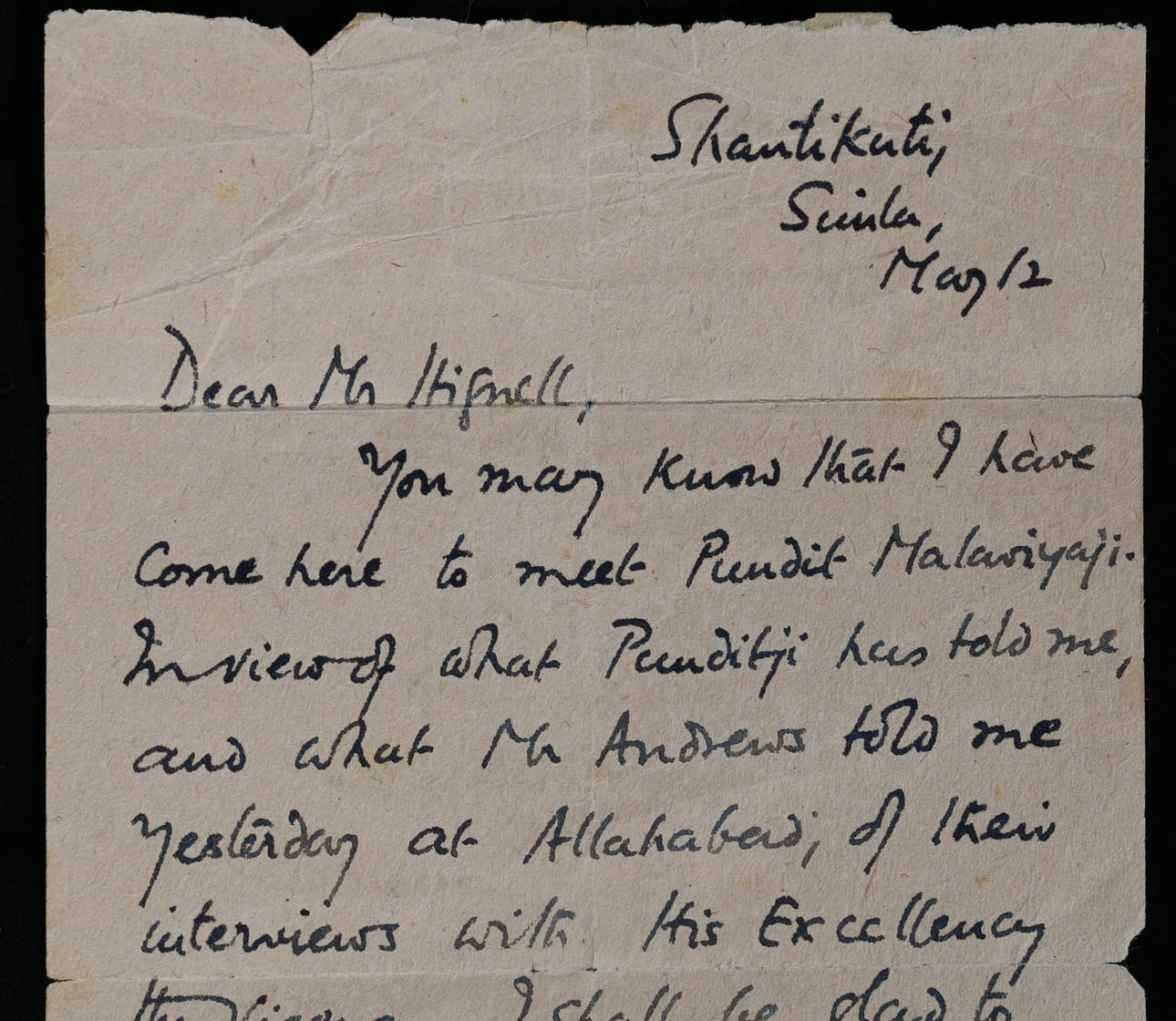
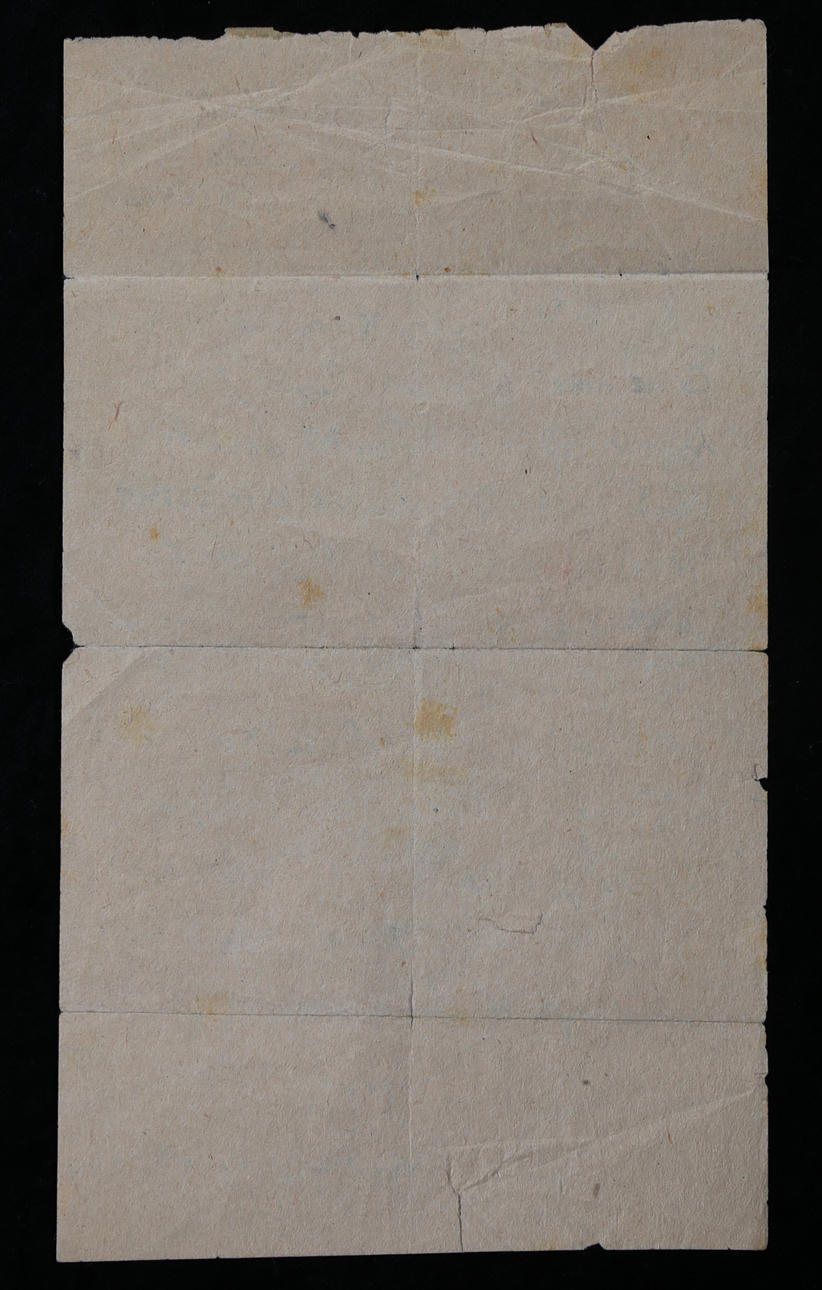
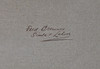
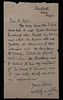
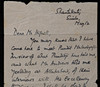
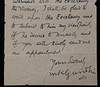
A letter sent to the Private Secretary of the Viceroy of India (Mr Sidney Robert Hignall C.I.E. I.C.S.) in the early 1920’s and signed by Mahatma Gandhi. The letter, sent from ‘Shantikuti, Simla’ and dated May 12, reads,
Dear Mr Hignell,
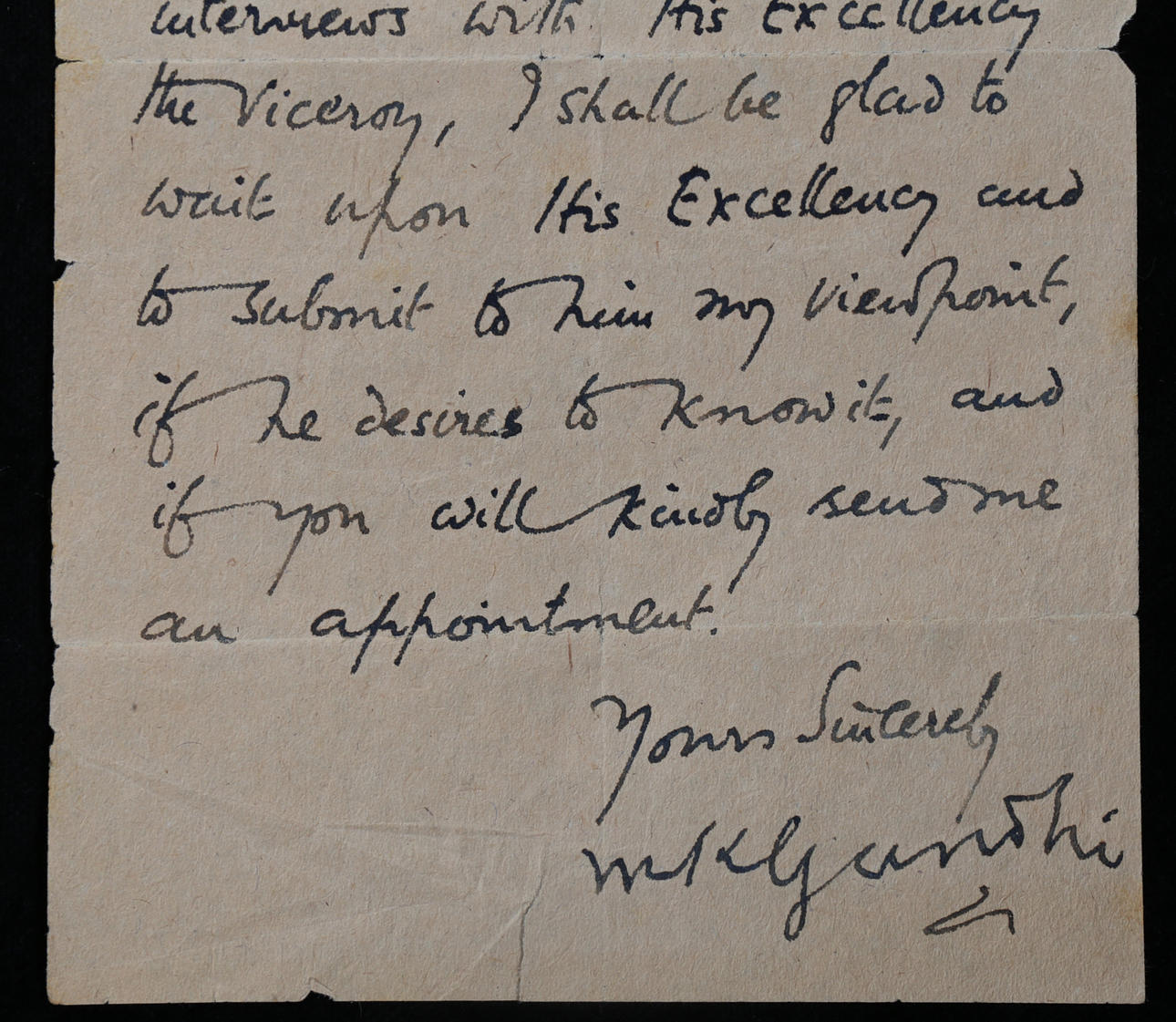
You may know that I have come here to meet Pundit Malaviyaji. In view of what Punditji has told me, and what Mr Andrews told me yesterday at Allahabad, of their interviews with His Excellency the Viceroy, I shall be glad to wait upon His Excellency and to submit to him my viewpoint, if he desires to know it, and if you will kindly send me an appointment.
Yours Sincerely
M K Gandhi
The letter, dated May 12 doesn’t have a year but research shows that Gandhi visited Simla, once the summer capital of British India, on a limited number of occasions during his lifetime, around ten times in all. The very first visit was May 12th 1921, he stayed at the ‘Shanti Kuti’ at Summer Hill accompanied by Pandit Madan Mohan Malviya and Lala Lajpat Rai. Pandit Malviya, 25/12/1861-12/11/1946, mentioned by name in the letter, was an Indian scholar, politician and educational reformer, prominent in the Indian Independence Movement, and President of the Indian National Congress four times, he was also referred to as ‘Mahamana’ (Great Soul), a title bestowed by the Indian Polymath Rabindranath Tagore. Pandit Malviya played a significant role in arranging meetings between Gandhi and the Viceroy Lord Reading. The other gentleman named in the letter ‘Mr Andrews’ is Charles Freer Andrews 12/2/1871-5/4/1940, an Anglican priest and missionary, Andrews became a close friend of Gandhi and Rabindranath Tagore and was active in the Indian Independence Movement. Gandhi arrived at Simla on the afternoon of the 12th of May, he was granted his request for an appointment with the Viceroy, meeting him on the afternoon of the 13th and again on the morning of the 14th May. The letter can be seen in the context of what was happening in India at that time, The Viceroy, Lord Reading, had only taken up his post on 2nd April 1921, taking over from Lord Chelmsford, Gandhi had implemented the Non Co-operation Movement in September 1920 and became leader of the Indian National Congress in 1921, advocating non violent resistance methods. The meetings were held at a time when Gandhis Muslim allies, Nationalist leaders Shaukat Ali and Mohammad Ali Jauhar (Ali brothers), had been threatened with arrest by Reading for publishing articles in newspapers encouraging muslims to leave the army, what the British regarded as sedition, Gandhi was concerned that the arrest of the Ali brothers would weaken the Hindu-Muslim alliance and possibly arranged to meet the Viceroy in order to effect a compromise. The first meetings apparently discussed matters relating to the Amritsar Massacre of 1919, in which Gandhi made four demands including the dismissal of all government officials involved and stopping the pension of General Dyer the officer who commanded the troops, Reading was unable to agree and wrote to the Secretary of State ‘…to be frank I see little if any hope of arriving at anything satisfactory with Gandhi..’, the meetings continued however, and by 19th May some common ground had been found with Reading writing to London
‘..altogether you will judge that I liked him and that I believe there are possibilities for the future..’,
The New York Times of May 17th 1921 has the headline ‘Reading and Gandhi Meet: Viceroy has a long interview with the Indian Nationalist Leader’,
The Lahore Tribune of 3rd August 1921 refers to the meetings, ‘We have said that the agreed version of the interviews that took place between the Viceroy and Mahatma Gandhi at Simla some time ago amounts to a full vindication of Gandhi’s position. It will be remembered that four main questions were agitating the public mind at the time when we pressed for the publication of an agreed version. These were (1) the circumstances under which the interviews took pace, and whether they were in any way the outcome of Gandhi’s anxiety to save the Ali brothers; (2) whether there was anything said or done at the interviews calculated to suggest that it was for the purpose of saving the two brothers that Gandhi undertook to advise them to publicly express their regret for the unintentional incitement contained in their speeches; (3) whether Gandhi gave anything in the nature of an assurance to the Viceroy that the brothers would apologise to the Government; (4) whether during the conversations, any detailed scheme of Swaraj was put forward or discussed. On all these points, the version fully satisfies the public curiosity. On all of them, Gandhi comes triumphantly out of the ordeal. First, as regards the circumstances under which the interviews took place, we know for certain what we had suspected, that the idea of the interview originated, not with Gandhi but first with Pandit Malaviya, then with Mr. Andrews, that when it was suggested to His Excellency, he replied that he would gladly see Mr. Gandhi if he called, that Pandit Malaviya, inviting Mr. Gandhi to Simla, did not refer to the contemplated proceedings against Mr. Shaukat Ali and Mr. Mahommed Ali, and that the interviews that took place between the two eminent men were intended to have and did have reference to the situation generally.’
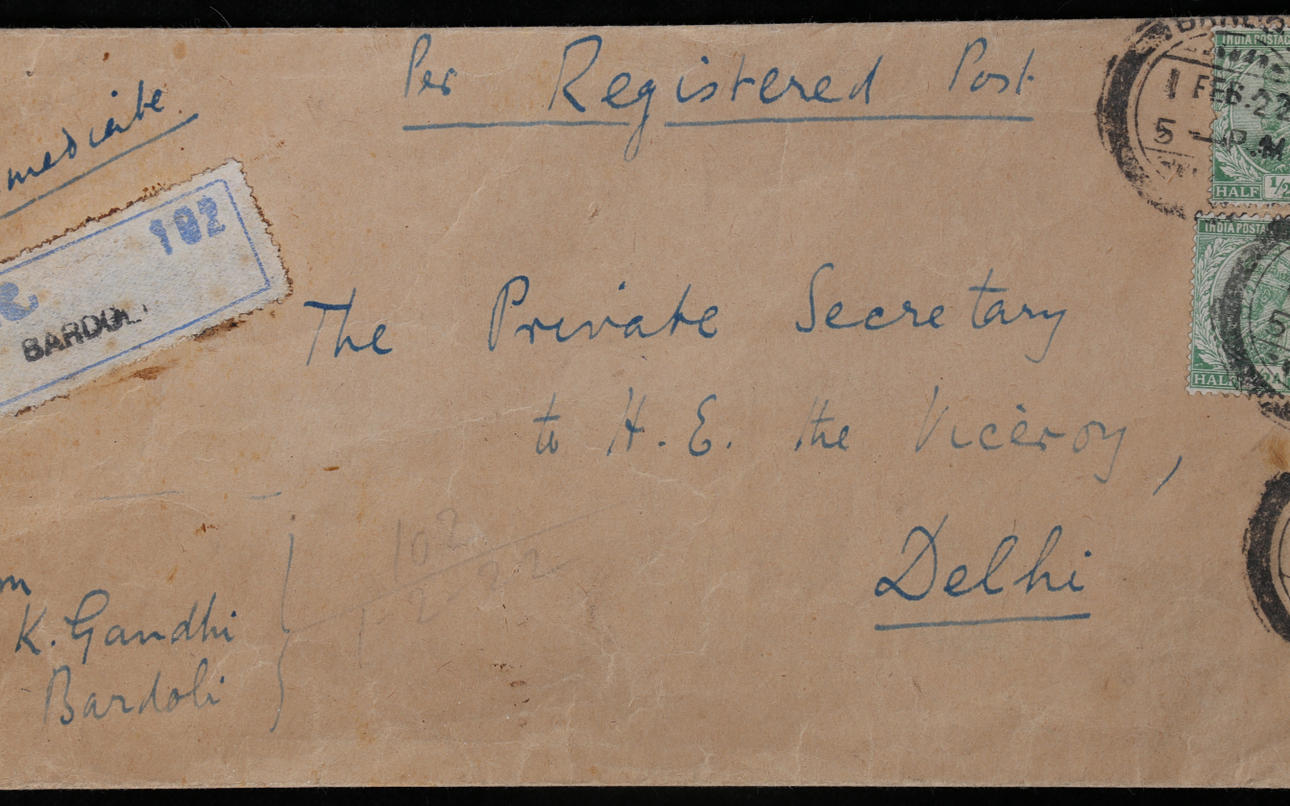
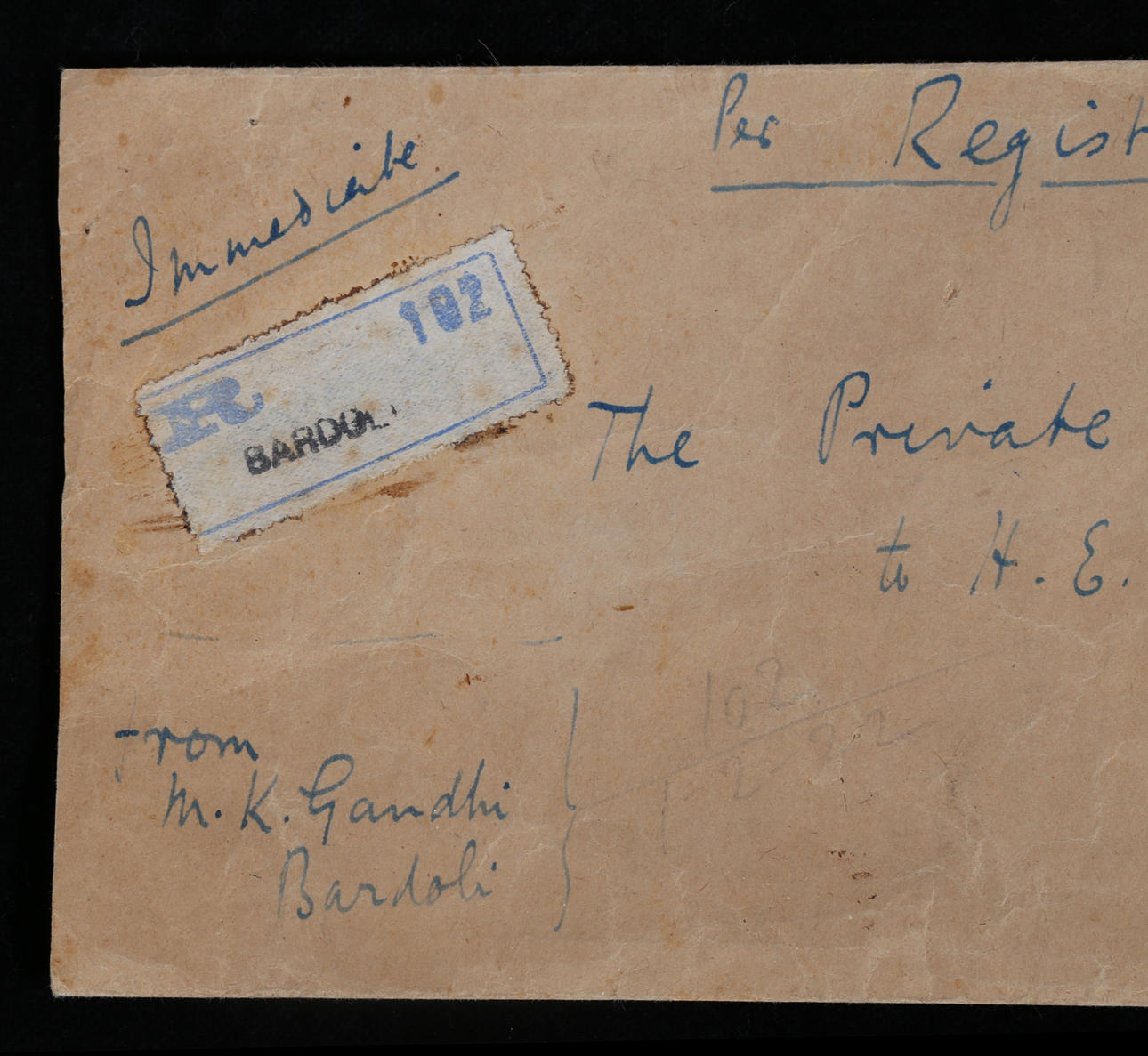
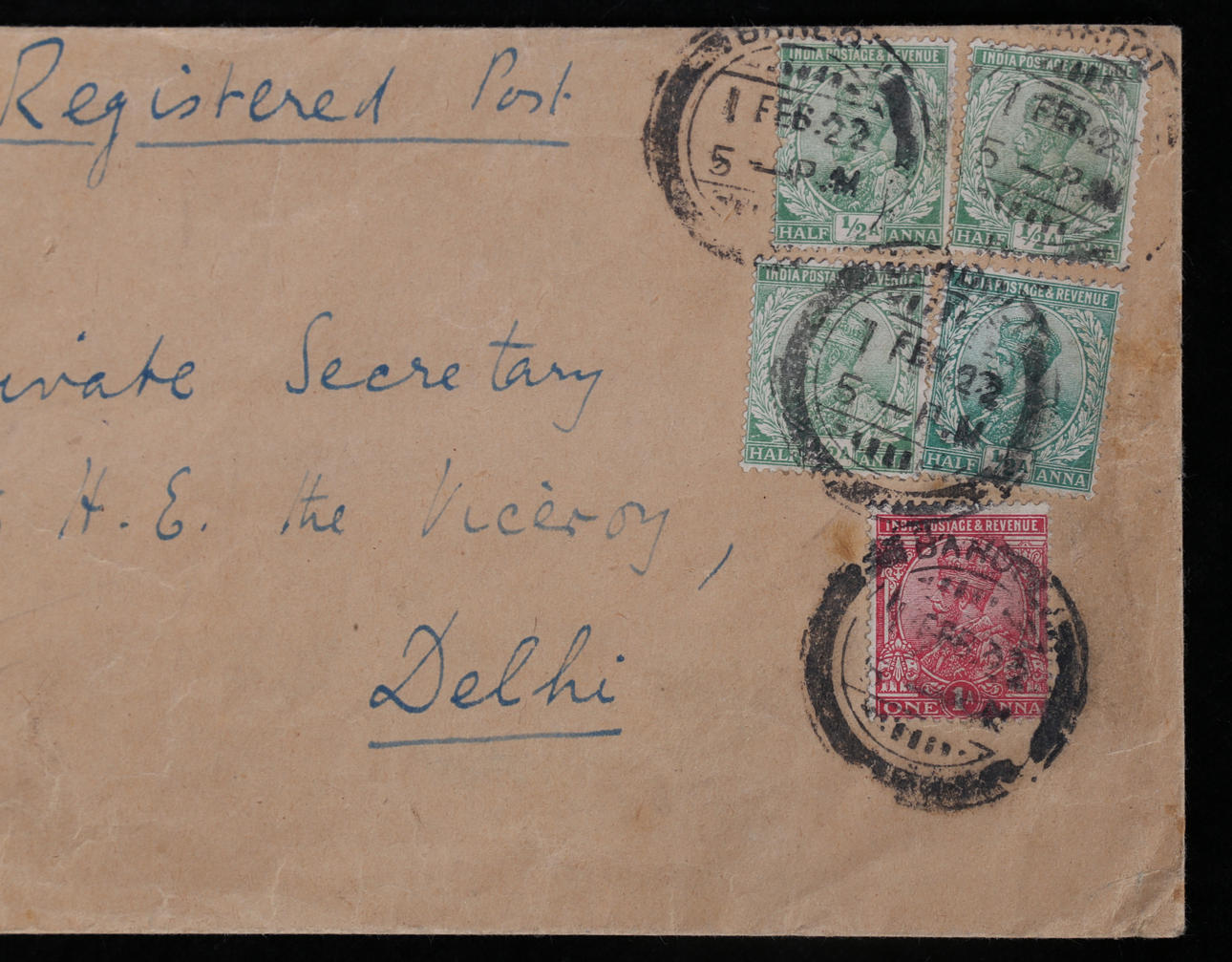
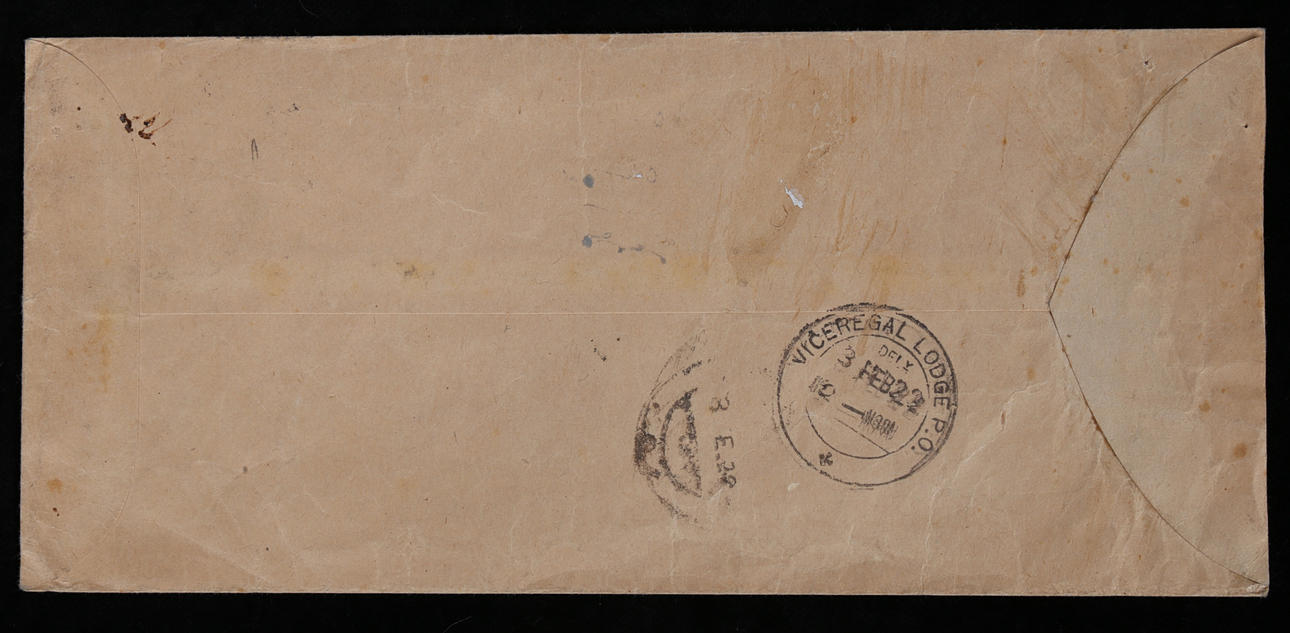
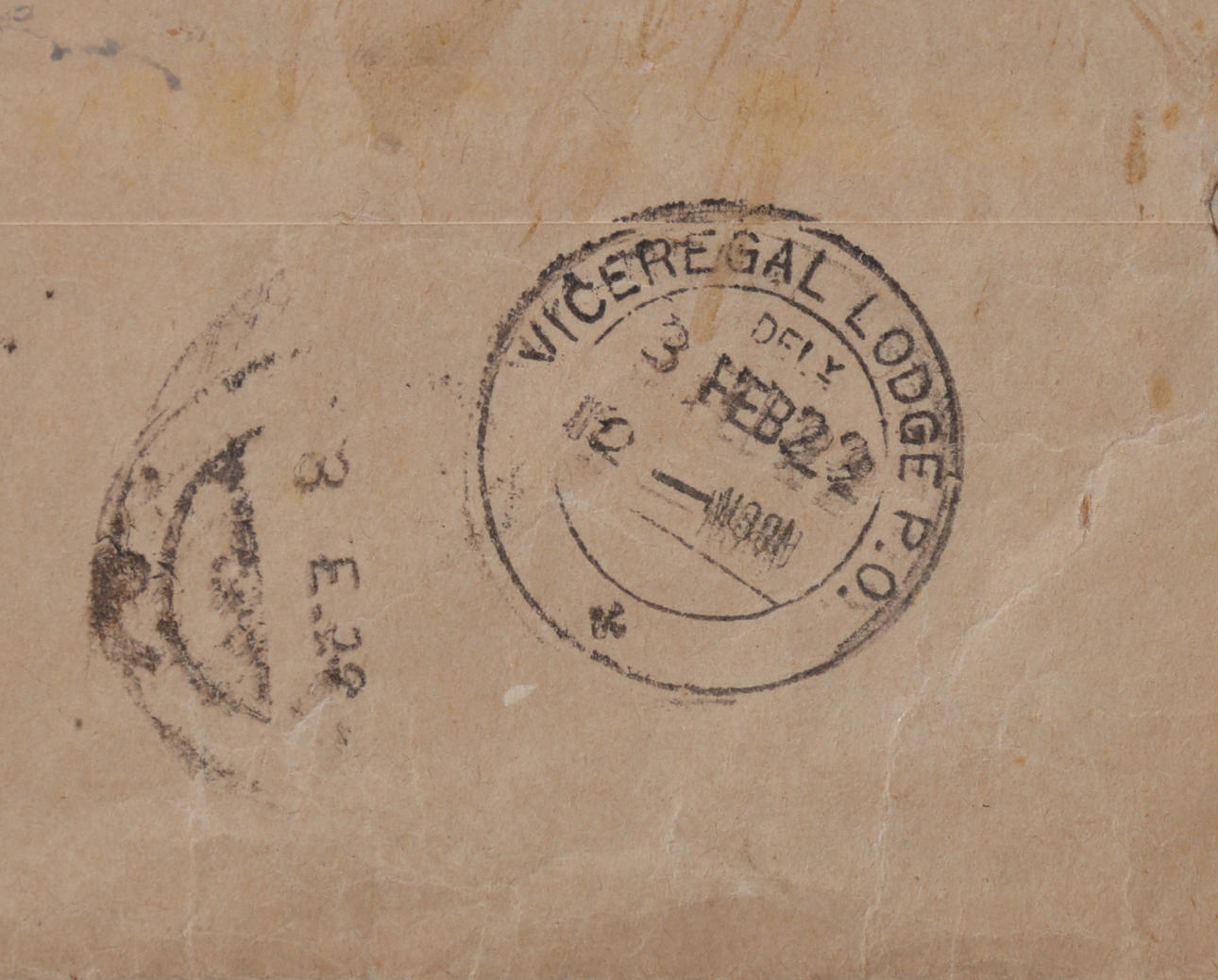
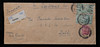
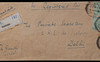
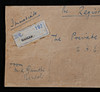
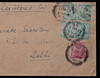
The letter is held in an envelope that is clearly for another letter, it is addressed to ‘The Private Secretary to H.E. the Viceroy, Delhi’ from ‘M.K. Gandhi, Bardoli’ and has post office stamps for 1st February 1922 and acceptance stamps for the Viceregal Lodge dated 3rd February 1922.
The letter has come, with other items, directly from Mr Hignells family, it has also been authenticated by Mr Garry King of Autografica who states that he believes the signature to be original to Gandhi and the letter itself written in another hand, possibly a secretary.
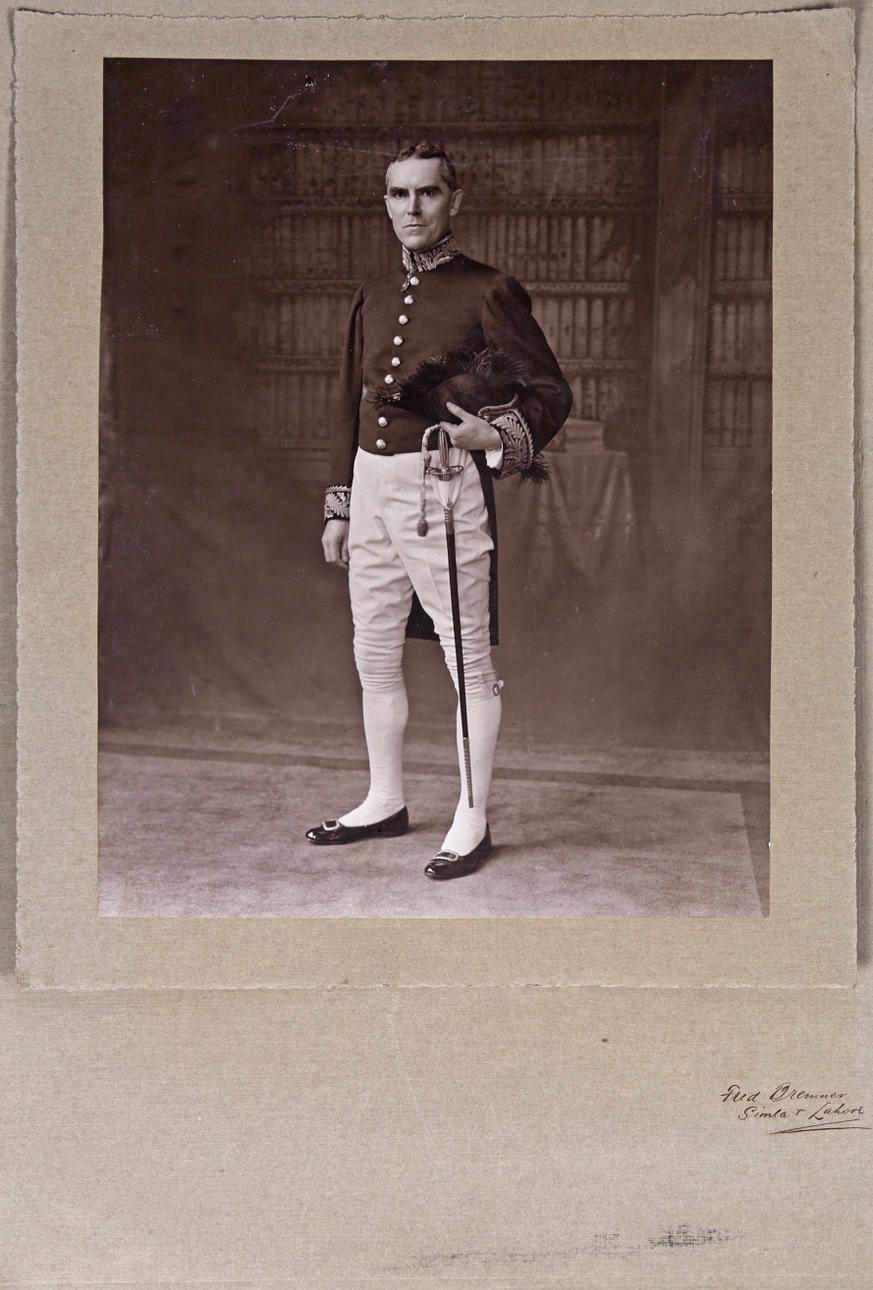
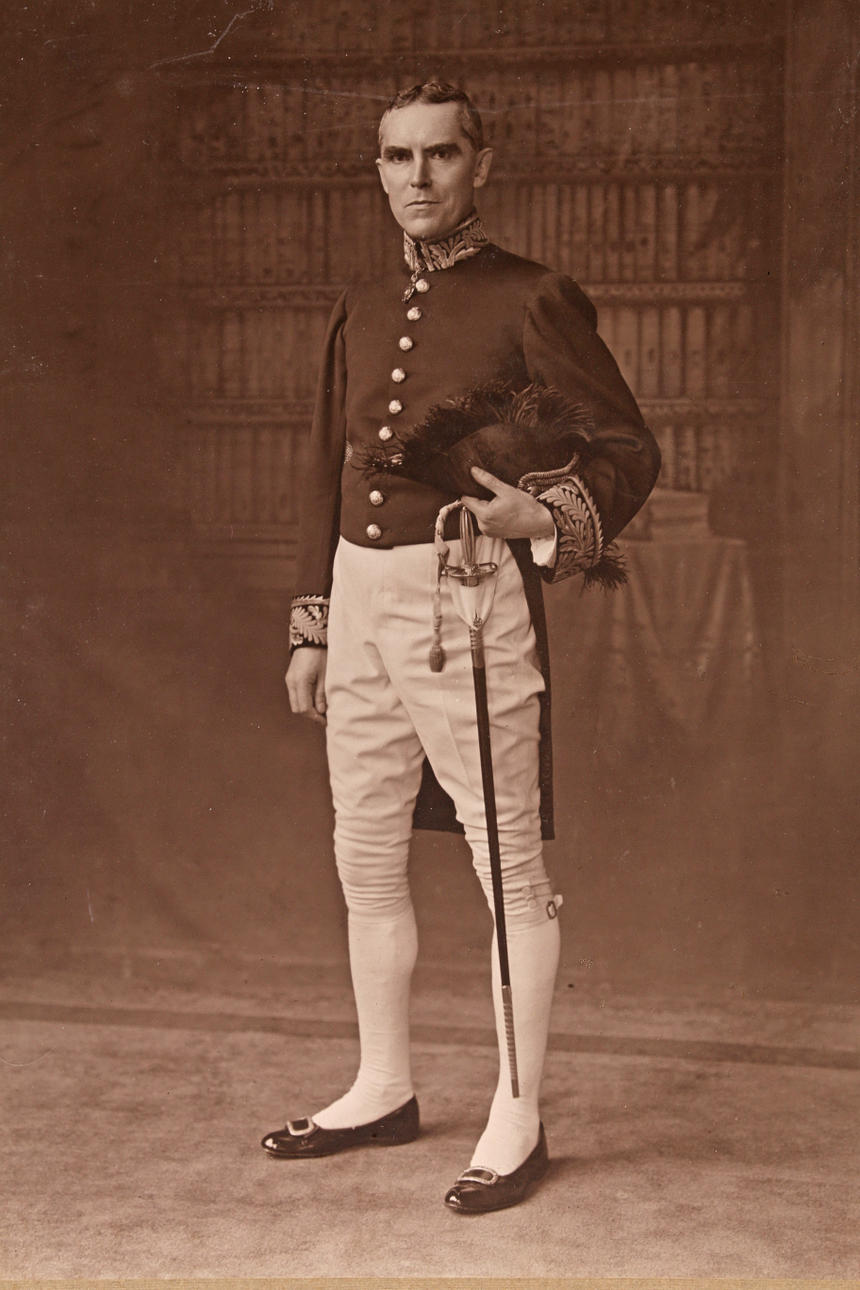
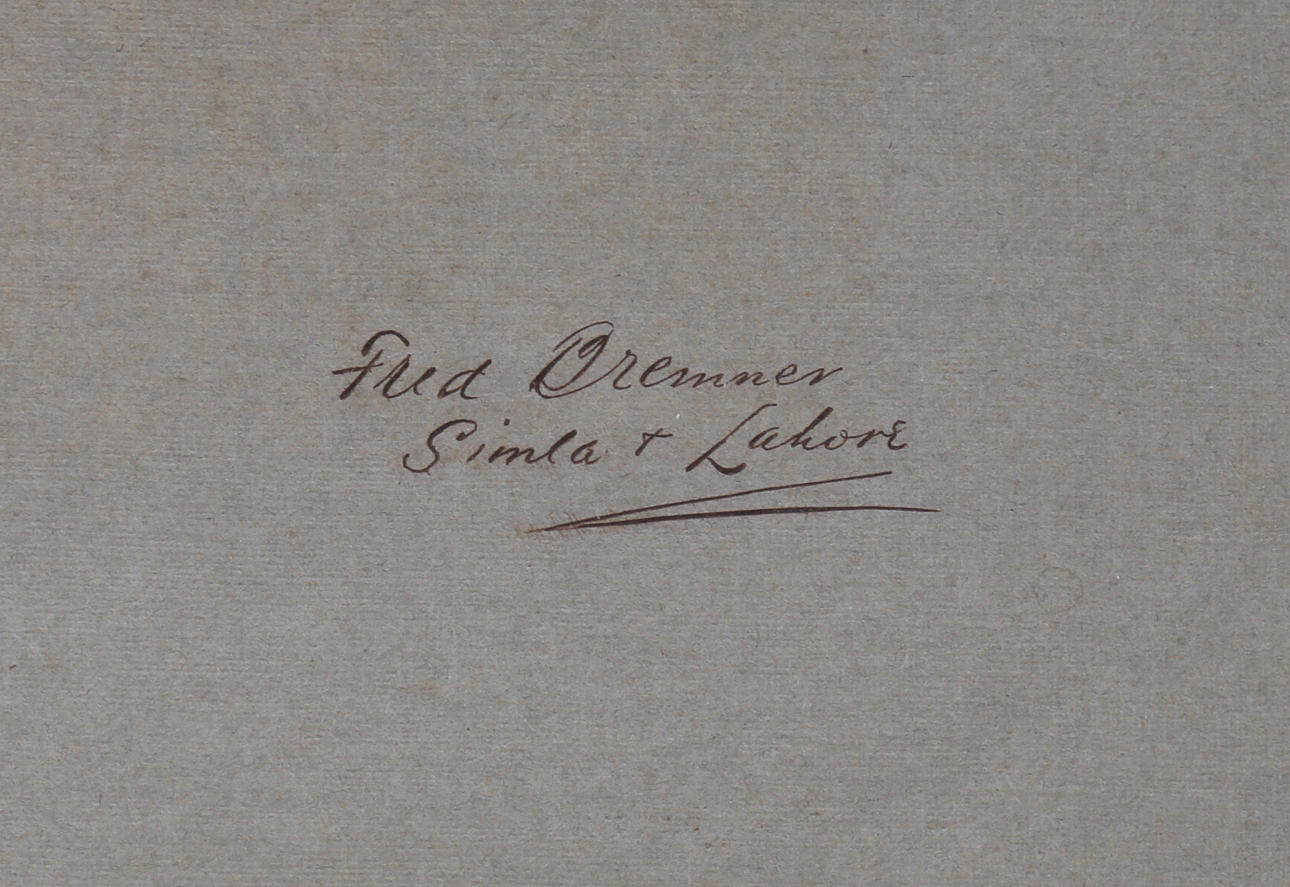
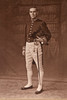
Also included in this lot is an original portrait photograph of Mr Hignall in Court Dress.
Sidney Robert Hignell C.I.E. I.C.S. was born 3rd June 1873 at Thornbury, Gloucestershire, one of seven children he was known as ‘Bob’, he was educated at Malvern College and won a scholarship to Worcester College Oxford. He joined the Indian Civil Service in his twenties and was a keen sportsman playing cricket and tennis. He played cricket for the ‘Gentlemen of India’ team in 1903/04 and won a tennis tournament in Darjeeling in 1904 (see Lot 105 Silver Cigarette Case). In 1910 he became Deputy Commissioner and Financial Secretary in Bihar and Orissa, in 1916 Deputy Home Secretary, Government of India, in 1917 he was awarded the Indian Distinguished Service Medal, from 1920-1924 he was Private Secretary to the Viceroy of India, first under Lord Chelmsford and then Lord Reading, in 1922 he was made Companion of the Most Exalted Order of the Star of India in the New Years Honours List, on completion of his service to the Viceroy in 1924 Hignell returned to Thornbury in Gloucestershire where he purchased and renovated a large estate called ‘The Chalet’, a life long bachelor, he passed away on 24th May 1939
Provenance: By family descent.
Condition
Good order.
Theme
Do you have something similar to sell? Get your items valued free of charge!
Description
GANDHI MAHATMA: (1869-1948) Indian Political and Spiritual Leader during the Indian Independence Movement.
A letter sent to the Private Secretary of the Viceroy of India (Mr Sidney Robert Hignall C.I.E. I.C.S.) in the early 1920’s and signed by Mahatma Gandhi. The letter, sent from ‘Shantikuti, Simla’ and dated May 12, reads,
Dear Mr Hignell,
You may know that I have come here to meet Pundit Malaviyaji. In view of what Punditji has told me, and what Mr Andrews told me yesterday at Allahabad, of their interviews with His Excellency the Viceroy, I shall be glad to wait upon His Excellency and to submit to him my viewpoint, if he desires to know it, and if you will kindly send me an appointment.
Yours Sincerely
M K Gandhi
The letter, dated May 12 doesn’t have a year but research shows that Gandhi visited Simla, once the summer capital of British India, on a limited number of occasions during his lifetime, around ten times in all. The very first visit was May 12th 1921, he stayed at the ‘Shanti Kuti’ at Summer Hill accompanied by Pandit Madan Mohan Malviya and Lala Lajpat Rai. Pandit Malviya, 25/12/1861-12/11/1946, mentioned by name in the letter, was an Indian scholar, politician and educational reformer, prominent in the Indian Independence Movement, and President of the Indian National Congress four times, he was also referred to as ‘Mahamana’ (Great Soul), a title bestowed by the Indian Polymath Rabindranath Tagore. Pandit Malviya played a significant role in arranging meetings between Gandhi and the Viceroy Lord Reading. The other gentleman named in the letter ‘Mr Andrews’ is Charles Freer Andrews 12/2/1871-5/4/1940, an Anglican priest and missionary, Andrews became a close friend of Gandhi and Rabindranath Tagore and was active in the Indian Independence Movement. Gandhi arrived at Simla on the afternoon of the 12th of May, he was granted his request for an appointment with the Viceroy, meeting him on the afternoon of the 13th and again on the morning of the 14th May. The letter can be seen in the context of what was happening in India at that time, The Viceroy, Lord Reading, had only taken up his post on 2nd April 1921, taking over from Lord Chelmsford, Gandhi had implemented the Non Co-operation Movement in September 1920 and became leader of the Indian National Congress in 1921, advocating non violent resistance methods. The meetings were held at a time when Gandhis Muslim allies, Nationalist leaders Shaukat Ali and Mohammad Ali Jauhar (Ali brothers), had been threatened with arrest by Reading for publishing articles in newspapers encouraging muslims to leave the army, what the British regarded as sedition, Gandhi was concerned that the arrest of the Ali brothers would weaken the Hindu-Muslim alliance and possibly arranged to meet the Viceroy in order to effect a compromise. The first meetings apparently discussed matters relating to the Amritsar Massacre of 1919, in which Gandhi made four demands including the dismissal of all government officials involved and stopping the pension of General Dyer the officer who commanded the troops, Reading was unable to agree and wrote to the Secretary of State ‘…to be frank I see little if any hope of arriving at anything satisfactory with Gandhi..’, the meetings continued however, and by 19th May some common ground had been found with Reading writing to London
‘..altogether you will judge that I liked him and that I believe there are possibilities for the future..’,
The New York Times of May 17th 1921 has the headline ‘Reading and Gandhi Meet: Viceroy has a long interview with the Indian Nationalist Leader’,
The Lahore Tribune of 3rd August 1921 refers to the meetings, ‘We have said that the agreed version of the interviews that took place between the Viceroy and Mahatma Gandhi at Simla some time ago amounts to a full vindication of Gandhi’s position. It will be remembered that four main questions were agitating the public mind at the time when we pressed for the publication of an agreed version. These were (1) the circumstances under which the interviews took pace, and whether they were in any way the outcome of Gandhi’s anxiety to save the Ali brothers; (2) whether there was anything said or done at the interviews calculated to suggest that it was for the purpose of saving the two brothers that Gandhi undertook to advise them to publicly express their regret for the unintentional incitement contained in their speeches; (3) whether Gandhi gave anything in the nature of an assurance to the Viceroy that the brothers would apologise to the Government; (4) whether during the conversations, any detailed scheme of Swaraj was put forward or discussed. On all these points, the version fully satisfies the public curiosity. On all of them, Gandhi comes triumphantly out of the ordeal. First, as regards the circumstances under which the interviews took place, we know for certain what we had suspected, that the idea of the interview originated, not with Gandhi but first with Pandit Malaviya, then with Mr. Andrews, that when it was suggested to His Excellency, he replied that he would gladly see Mr. Gandhi if he called, that Pandit Malaviya, inviting Mr. Gandhi to Simla, did not refer to the contemplated proceedings against Mr. Shaukat Ali and Mr. Mahommed Ali, and that the interviews that took place between the two eminent men were intended to have and did have reference to the situation generally.’
The letter is held in an envelope that is clearly for another letter, it is addressed to ‘The Private Secretary to H.E. the Viceroy, Delhi’ from ‘M.K. Gandhi, Bardoli’ and has post office stamps for 1st February 1922 and acceptance stamps for the Viceregal Lodge dated 3rd February 1922.
The letter has come, with other items, directly from Mr Hignells family, it has also been authenticated by Mr Garry King of Autografica who states that he believes the signature to be original to Gandhi and the letter itself written in another hand, possibly a secretary.
Also included in this lot is an original portrait photograph of Mr Hignall in Court Dress.
Sidney Robert Hignell C.I.E. I.C.S. was born 3rd June 1873 at Thornbury, Gloucestershire, one of seven children he was known as ‘Bob’, he was educated at Malvern College and won a scholarship to Worcester College Oxford. He joined the Indian Civil Service in his twenties and was a keen sportsman playing cricket and tennis. He played cricket for the ‘Gentlemen of India’ team in 1903/04 and won a tennis tournament in Darjeeling in 1904 (see Lot 105 Silver Cigarette Case). In 1910 he became Deputy Commissioner and Financial Secretary in Bihar and Orissa, in 1916 Deputy Home Secretary, Government of India, in 1917 he was awarded the Indian Distinguished Service Medal, from 1920-1924 he was Private Secretary to the Viceroy of India, first under Lord Chelmsford and then Lord Reading, in 1922 he was made Companion of the Most Exalted Order of the Star of India in the New Years Honours List, on completion of his service to the Viceroy in 1924 Hignell returned to Thornbury in Gloucestershire where he purchased and renovated a large estate called ‘The Chalet’, a life long bachelor, he passed away on 24th May 1939
Provenance: By family descent.
Condition
Good order.
Theme
Do you have something similar to sell? Get your items valued free of charge!