RUSSIAN FEDOSKINO JEWELERY BOX LACQUER.
This auction is closed, but maybe you like the following items?

Images
Description
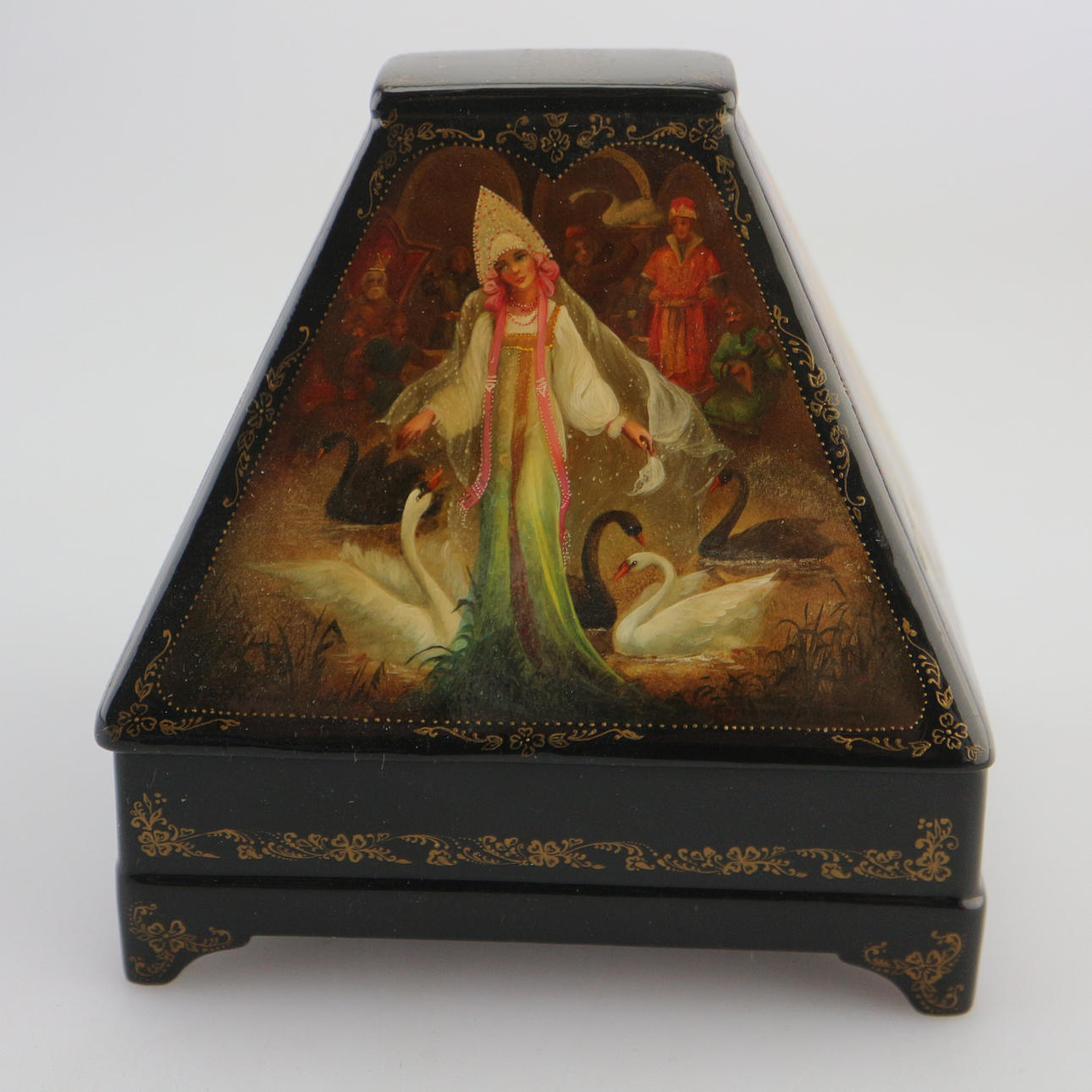
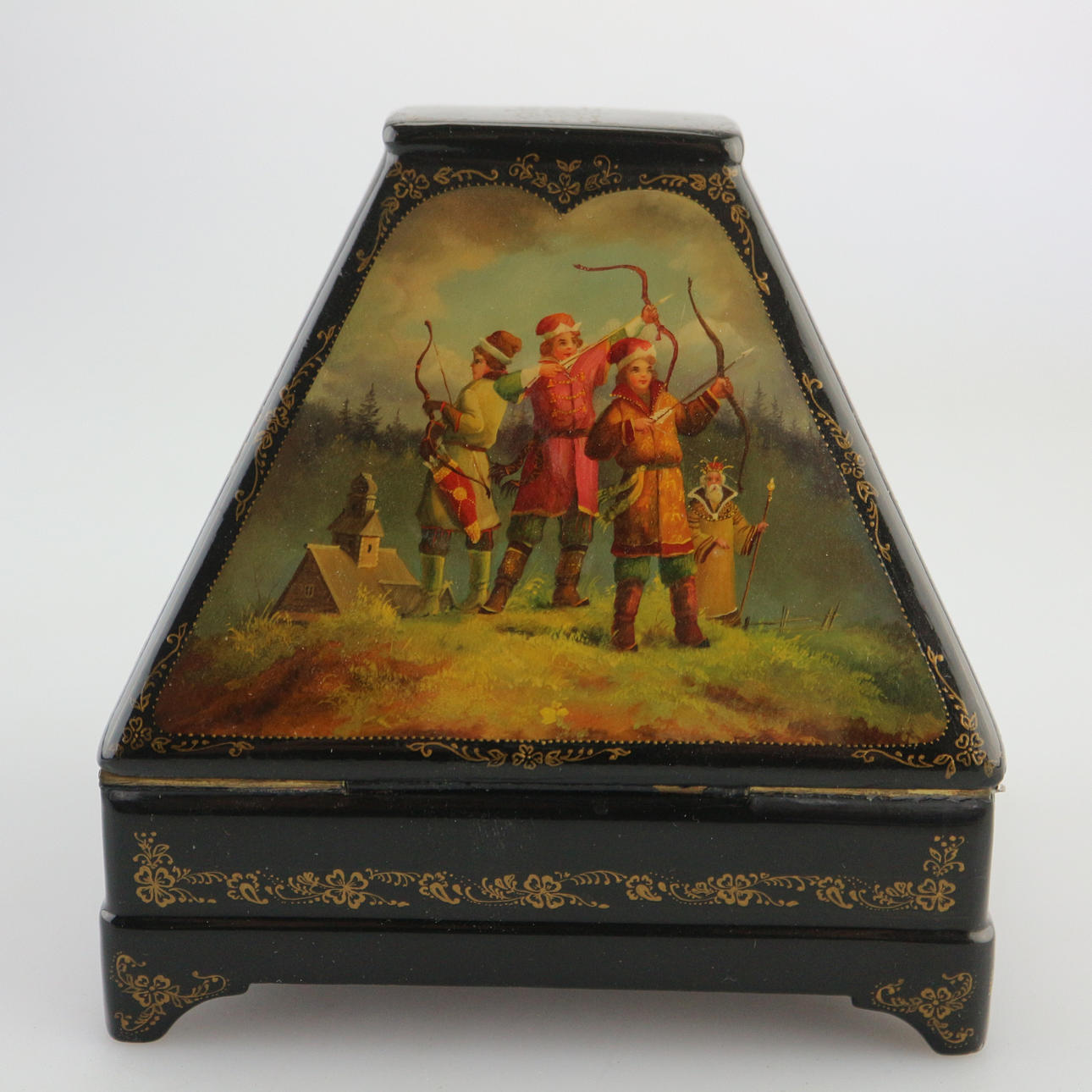
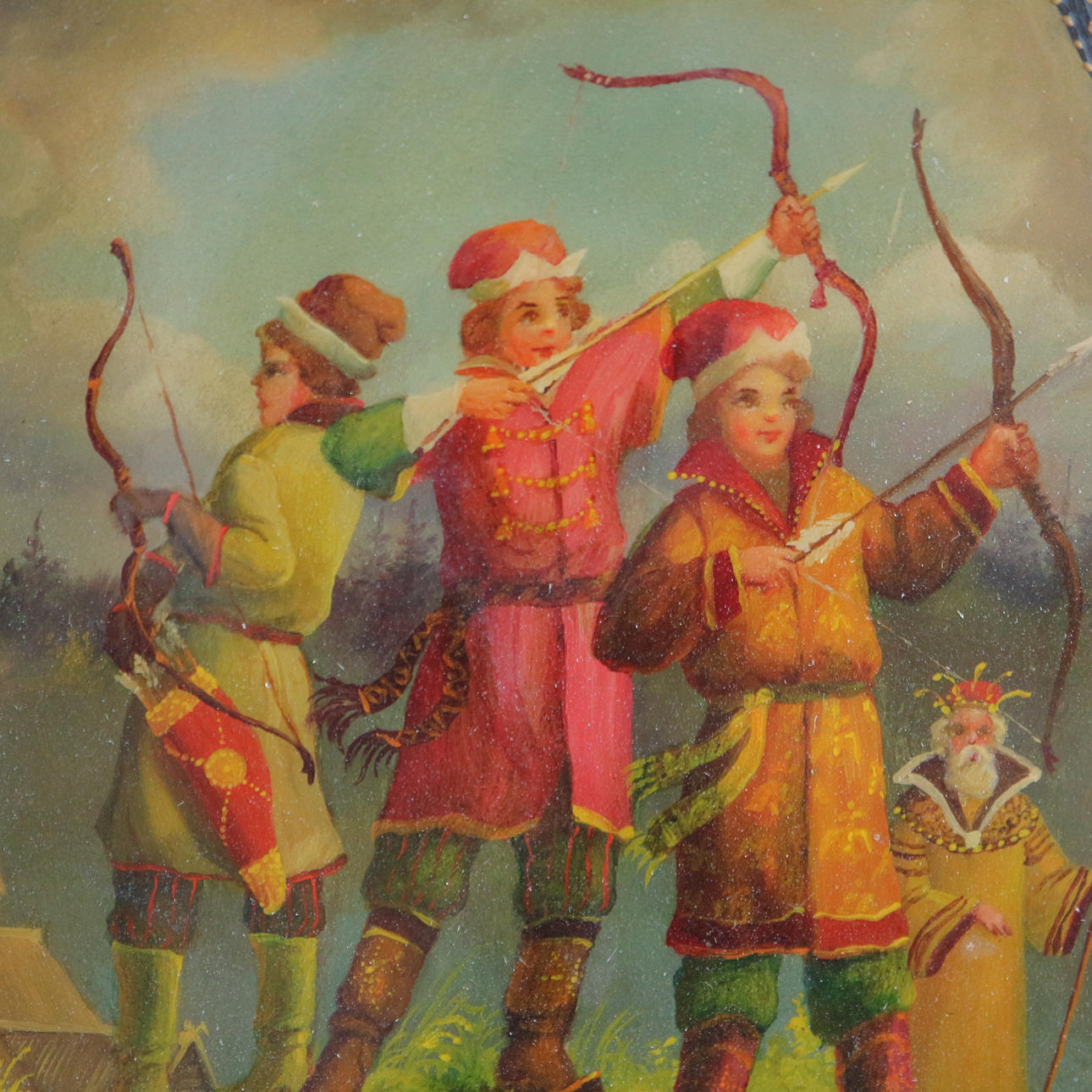
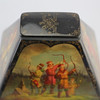
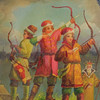
Russia, Fedoskino, lacquer painting, dated 1950, signed, jewelry box, dimensions: 11 x 8.5 x 11.5 cm.
Fedoskino: It takes about four to six months to make one work: three months for the papier-mâché box. The papier-mâché blanks are soaked in hot linseed oil and then dried at room temperature for a month and in a drying oven for a month. Clay, oil and soot are then used as a primer before a black varnish is applied. After that, the actual painting of the miniature painting on the auxiliary product takes another two months and the final painting and grinding takes another month. However, elaborate motifs take up to a year to be painted.
A "translucent painting" is typical of the original technique of the Fedoskino lacquer miniatures. Before painting, a light-reflecting material is applied to the surface: the pictures are usually underlaid with gold leaf or golden shimmering silver bronze. Some pictures are also backed with mother-of-pearl (mother-of-pearl inlay work), which is then painted on and often decorated with gold. A corresponding recess is ground out beforehand for the mother-of-pearl inlays. Metal powder (aluminum powder or bronze powder), tin sulfide, metal flakes made of copper, zinc, aluminum or brass foil (trash gold) can also serve as a substrate. By backing the images with a light-reflecting background, a shimmering shine or a silvery sparkle is achieved. The metallic background shines through the transparent colors that are applied afterwards and is almost imperceptible, giving the picture a special depth effect.
The miniatures were executed in oil paints (tempera, transparent varnish) applied in three to four layers. Typical of the style of the Fedoskino miniatures are bright and garish colors, the fine color gradations, smooth transitions between the different colors, as well as the precise and realistic painting technique. After the outline of the composition was painted (a sketch of the silhouettes), a detailed elaboration followed. Finally, the objects with bright colors are given their luster.
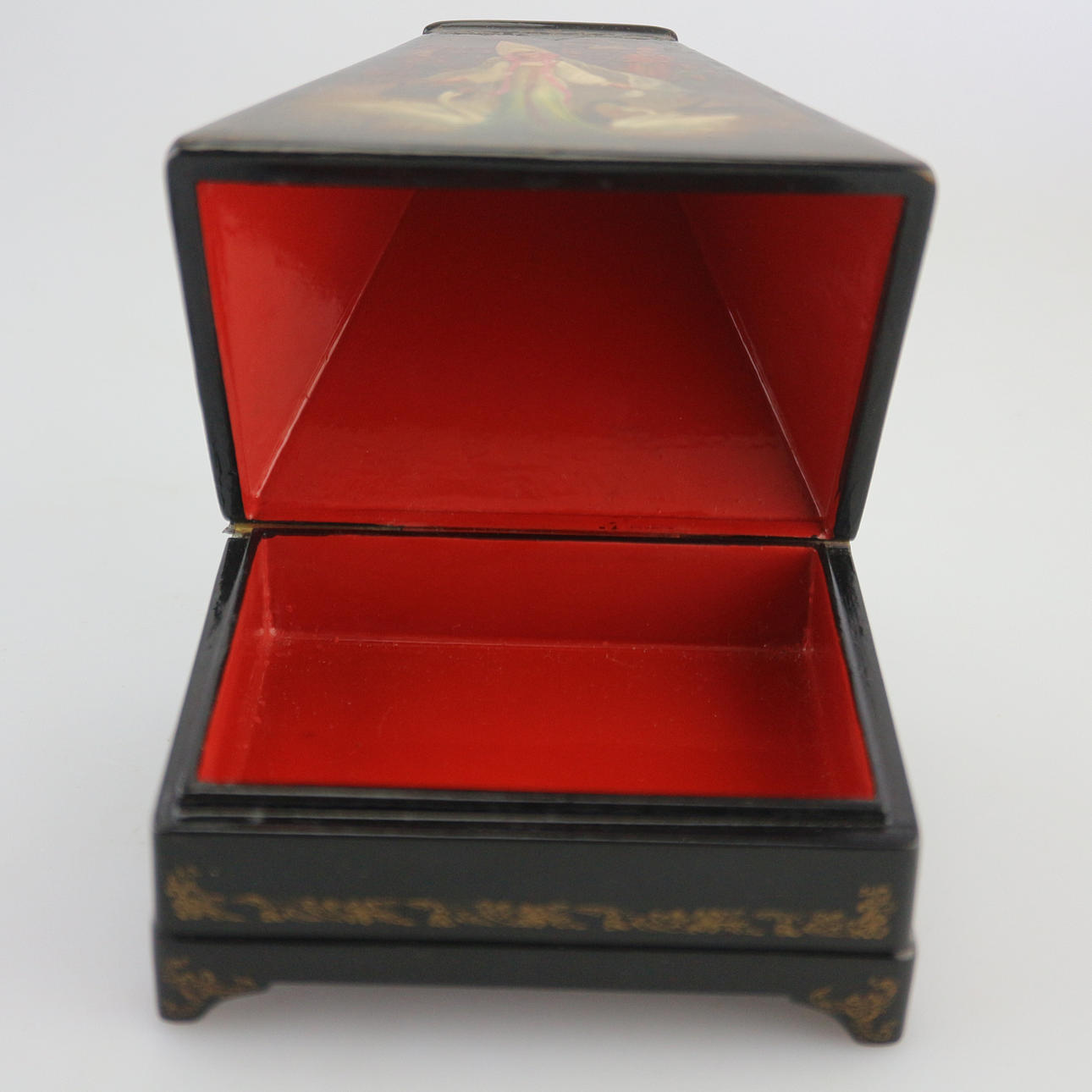
Otherwise, the papier-mâché boxes are usually painted black. The contrast of the image colors is further enhanced by the glossy black lacquer background. However, many boxes are painted both outside and inside to imitate turtle shell, birch bark, mahogany, ivory, malachite, or tartan. The insides of the lids are usually painted vermilion and bear a factory stamp: a golden troika with the inscription "Fedoskino". All pieces from the Fedoskino factory are numbered.
Only at the end of the 1950s did individual miniature painters emerge. Recognized miniaturists who made major contributions to the development of the Fedoskino miniatures included: S. I. Borodkin (С. I. Borodkin), D. A. Krylov (D. A. Крылов), G. I. Larishev (Г.И. Ларишев), VD Lipitsk (В.Д. Липицк), MG Pashinin (М.Г. Пашинин), P. N. Puchkov (П. N. Пучков), SP Rogatorv (С. p Rogatov), A. A. Shavrin (А. A. Shavrin), I. I. Starakhov (И.И. Страхов), AV Tikhomirov (А. B. Тихомиров) and MS Chizhov (М.С. Chizhov).
AV Tikhomirov (A. B. Attributed to Тихомиров).
Condition
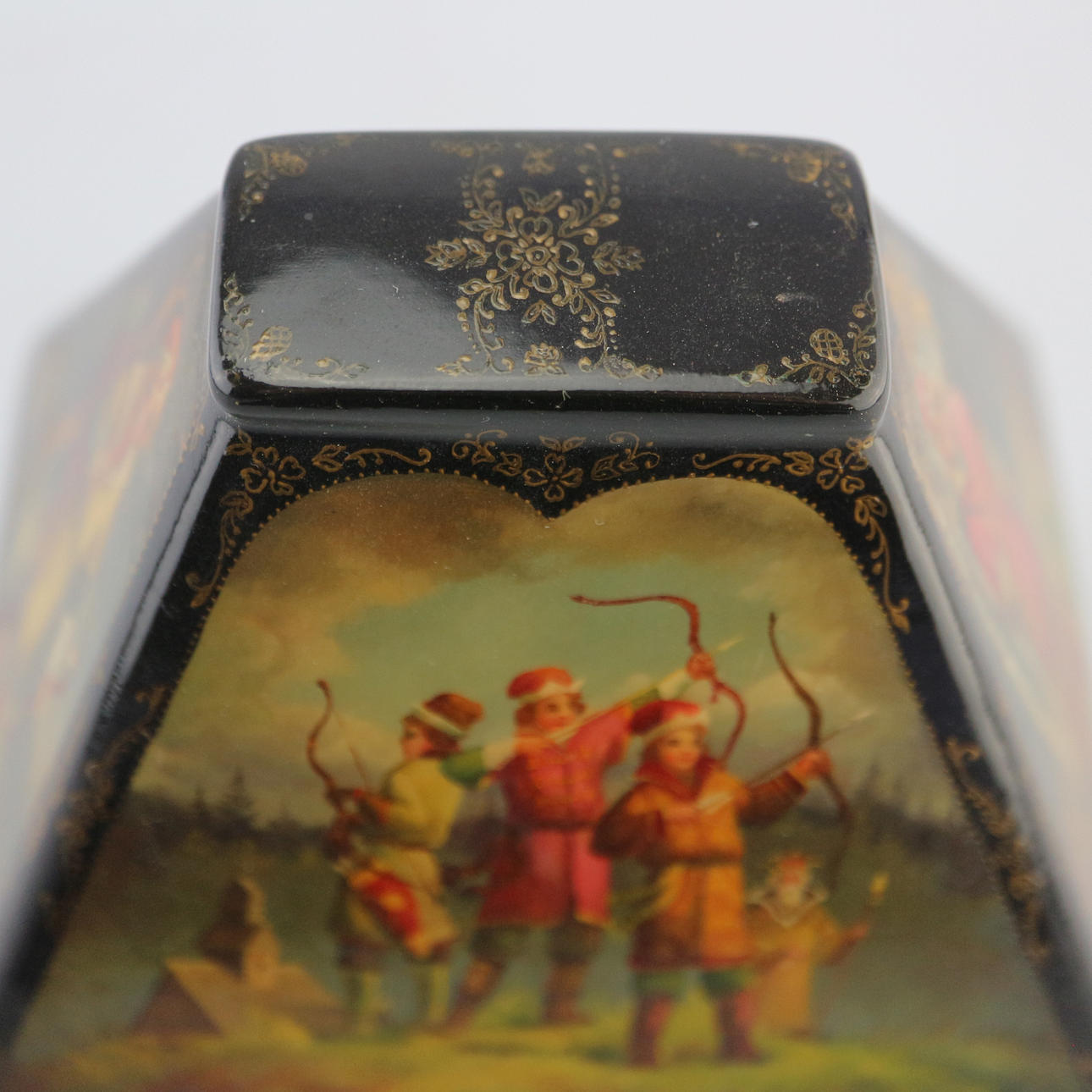
Signs of age and wear, see pictures.
Do you have something similar to sell? Get your items valued free of charge!
Description
Russia, Fedoskino, lacquer painting, dated 1950, signed, jewelry box, dimensions: 11 x 8.5 x 11.5 cm.
Fedoskino: It takes about four to six months to make one work: three months for the papier-mâché box. The papier-mâché blanks are soaked in hot linseed oil and then dried at room temperature for a month and in a drying oven for a month. Clay, oil and soot are then used as a primer before a black varnish is applied. After that, the actual painting of the miniature painting on the auxiliary product takes another two months and the final painting and grinding takes another month. However, elaborate motifs take up to a year to be painted.
A "translucent painting" is typical of the original technique of the Fedoskino lacquer miniatures. Before painting, a light-reflecting material is applied to the surface: the pictures are usually underlaid with gold leaf or golden shimmering silver bronze. Some pictures are also backed with mother-of-pearl (mother-of-pearl inlay work), which is then painted on and often decorated with gold. A corresponding recess is ground out beforehand for the mother-of-pearl inlays. Metal powder (aluminum powder or bronze powder), tin sulfide, metal flakes made of copper, zinc, aluminum or brass foil (trash gold) can also serve as a substrate. By backing the images with a light-reflecting background, a shimmering shine or a silvery sparkle is achieved. The metallic background shines through the transparent colors that are applied afterwards and is almost imperceptible, giving the picture a special depth effect.
The miniatures were executed in oil paints (tempera, transparent varnish) applied in three to four layers. Typical of the style of the Fedoskino miniatures are bright and garish colors, the fine color gradations, smooth transitions between the different colors, as well as the precise and realistic painting technique. After the outline of the composition was painted (a sketch of the silhouettes), a detailed elaboration followed. Finally, the objects with bright colors are given their luster.
Otherwise, the papier-mâché boxes are usually painted black. The contrast of the image colors is further enhanced by the glossy black lacquer background. However, many boxes are painted both outside and inside to imitate turtle shell, birch bark, mahogany, ivory, malachite, or tartan. The insides of the lids are usually painted vermilion and bear a factory stamp: a golden troika with the inscription "Fedoskino". All pieces from the Fedoskino factory are numbered.
Only at the end of the 1950s did individual miniature painters emerge. Recognized miniaturists who made major contributions to the development of the Fedoskino miniatures included: S. I. Borodkin (С. I. Borodkin), D. A. Krylov (D. A. Крылов), G. I. Larishev (Г.И. Ларишев), VD Lipitsk (В.Д. Липицк), MG Pashinin (М.Г. Пашинин), P. N. Puchkov (П. N. Пучков), SP Rogatorv (С. p Rogatov), A. A. Shavrin (А. A. Shavrin), I. I. Starakhov (И.И. Страхов), AV Tikhomirov (А. B. Тихомиров) and MS Chizhov (М.С. Chizhov).
AV Tikhomirov (A. B. Attributed to Тихомиров).
Condition
Signs of age and wear, see pictures.
Do you have something similar to sell? Get your items valued free of charge!