CHINESE MING PLATE ANTIQUE.
This auction is closed, but maybe you like the following items?

Images
Description
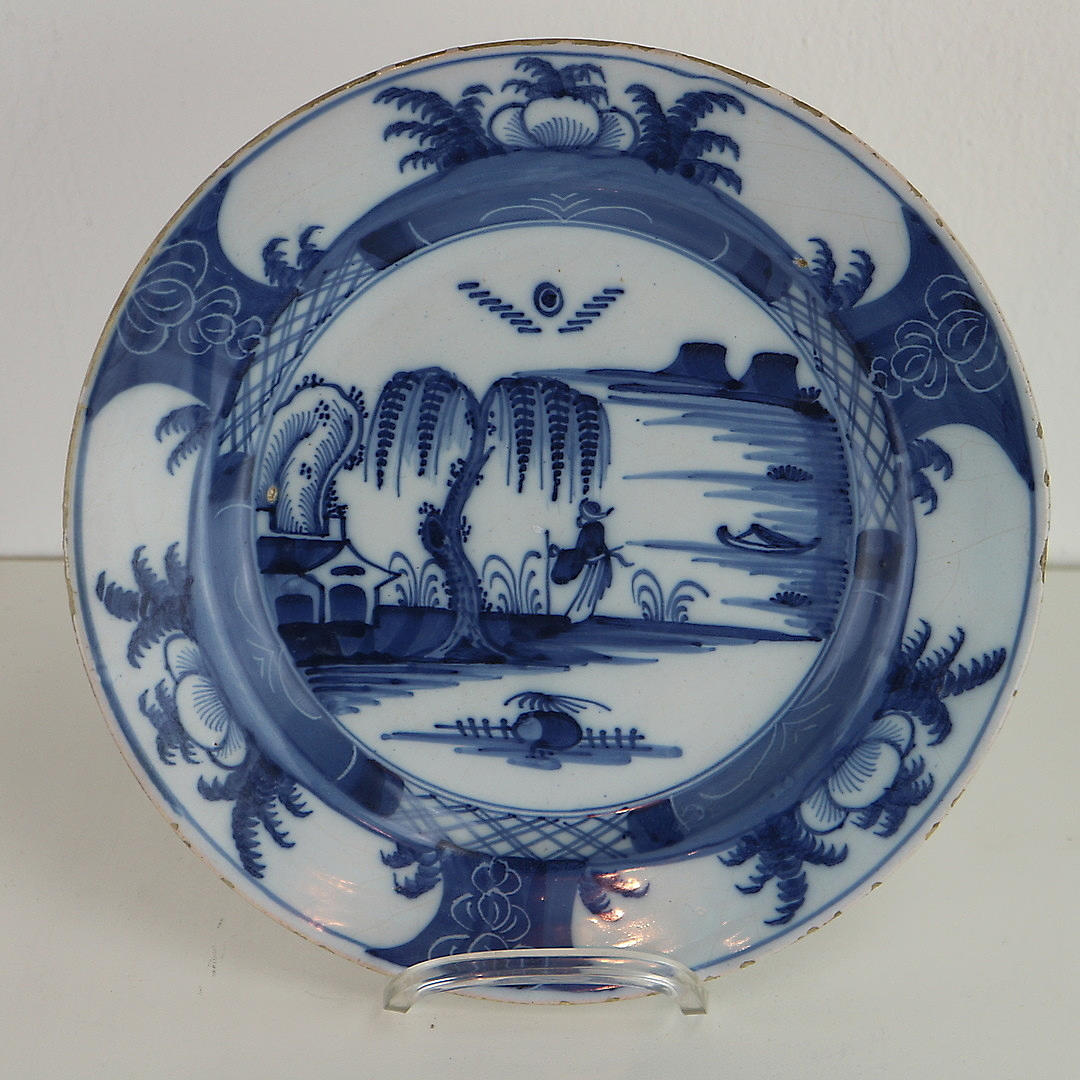
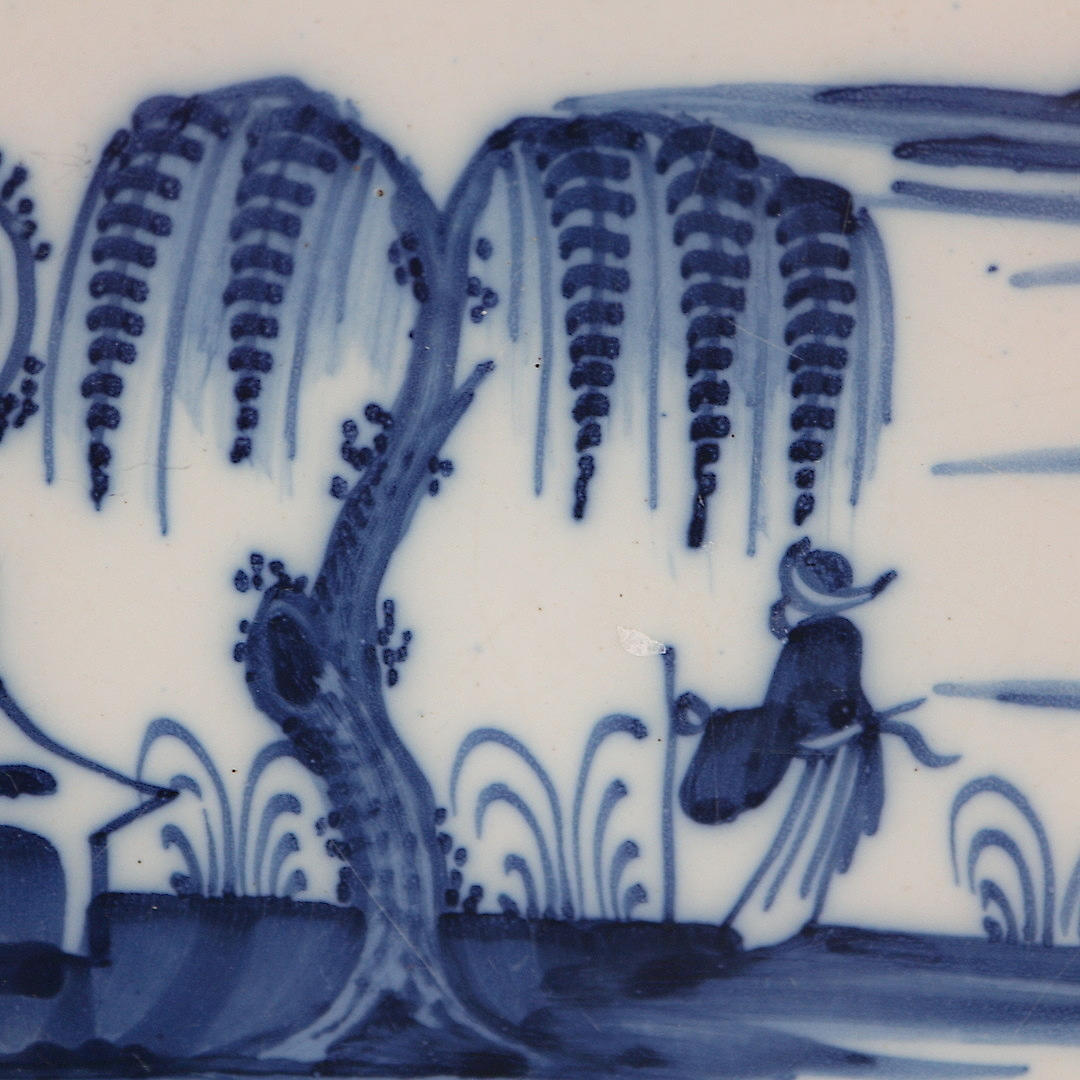
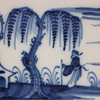
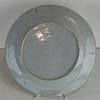
A Chinese Ming plate, landscape motif with people, probably 18th century, diameter: 22.5 cm.
The Ming Dynasty (1368-1644) is considered the heyday of Chinese porcelain. Above all, the blue and white painting reached its peak in this epoch. The Ming phase was a time of constant renewal and refinement of techniques. The Ming Vase is synonymous with the splendor of this period. The center of Ming porcelain continued to be the city of Jingdezhen, as it had been for centuries. Other manufactories joined the already existing ones.
A cobalt aluminate, called cobalt blue, was responsible for the blue color. It not only complemented the already existing colors, but became the characteristic of an entire stylistic epoch. The paint was applied under the glaze. The color was imported from the Near East, the larger area of Mesopotamia, i.e. the area of today's Iran and Iraq and neighboring countries.
The motifs of the Ming dynasty were mainly plants, often also animals such as dragons or fish. Geometric motifs also existed.
Over time, the representations concentrated on a decor, a leitmotif. The exuberance, the abundance of ornaments decreased. The floral ornaments were soon joined by depictions of landscapes and courtly scenes, as well as scenes from Taoist philosophy and literature.
Dehua porcelain was still popular in the Ming Dynasty. It is very light, white to off-white with sometimes pink to bluish tints or tinges. This unpainted porcelain, produced with less kaolin but more feldspar, was often used for statues or sculptures and was highly regarded in Europe. It was widely imitated, especially in the Rococo period. The Dehua porcelain became known as Blanc-de-Chine; However, it only reached its special form in the subsequent Qing dynasty during the Kangxi epoch from 1622.
Condition
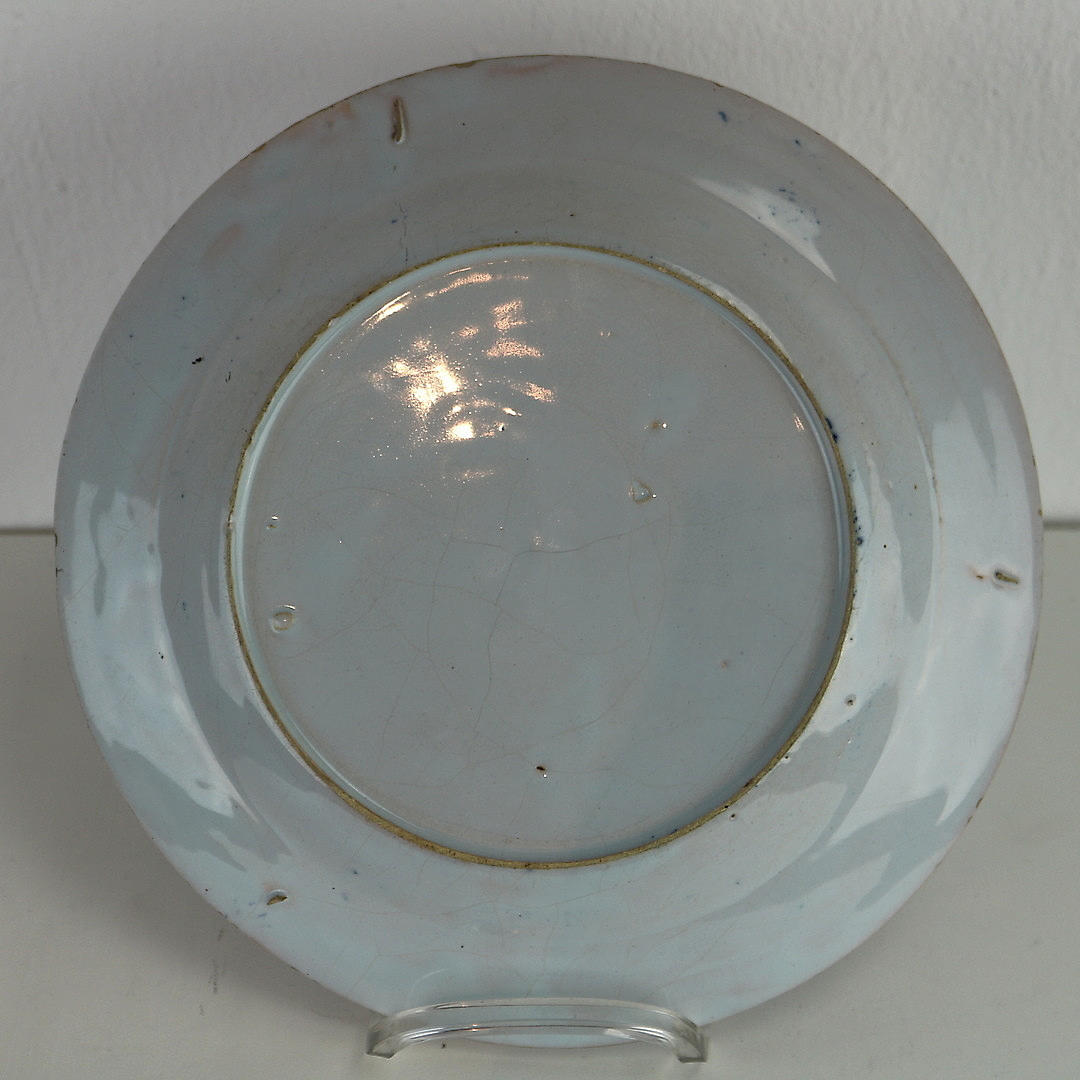
Signs of age and wear, see pictures.
Do you have something similar to sell? Get your items valued free of charge!
Description
A Chinese Ming plate, landscape motif with people, probably 18th century, diameter: 22.5 cm.
The Ming Dynasty (1368-1644) is considered the heyday of Chinese porcelain. Above all, the blue and white painting reached its peak in this epoch. The Ming phase was a time of constant renewal and refinement of techniques. The Ming Vase is synonymous with the splendor of this period. The center of Ming porcelain continued to be the city of Jingdezhen, as it had been for centuries. Other manufactories joined the already existing ones.
A cobalt aluminate, called cobalt blue, was responsible for the blue color. It not only complemented the already existing colors, but became the characteristic of an entire stylistic epoch. The paint was applied under the glaze. The color was imported from the Near East, the larger area of Mesopotamia, i.e. the area of today's Iran and Iraq and neighboring countries.
The motifs of the Ming dynasty were mainly plants, often also animals such as dragons or fish. Geometric motifs also existed.
Over time, the representations concentrated on a decor, a leitmotif. The exuberance, the abundance of ornaments decreased. The floral ornaments were soon joined by depictions of landscapes and courtly scenes, as well as scenes from Taoist philosophy and literature.
Dehua porcelain was still popular in the Ming Dynasty. It is very light, white to off-white with sometimes pink to bluish tints or tinges. This unpainted porcelain, produced with less kaolin but more feldspar, was often used for statues or sculptures and was highly regarded in Europe. It was widely imitated, especially in the Rococo period. The Dehua porcelain became known as Blanc-de-Chine; However, it only reached its special form in the subsequent Qing dynasty during the Kangxi epoch from 1622.
Condition
Signs of age and wear, see pictures.
Do you have something similar to sell? Get your items valued free of charge!