Bram Bogart was a Dutch-Belgian painter celebrated for his bold, tactile works that blurred the boundaries between painting and sculpture. Initially aligned with post-war abstraction, Bogart developed a unique approach in the 1950s and 60s, using thick impasto and custom mixtures of cement, powdered chalk and pigment to create dense, almost architectural surfaces. His practice merged material experimentation with expressive colour, establishing him as a singular voice in European art.
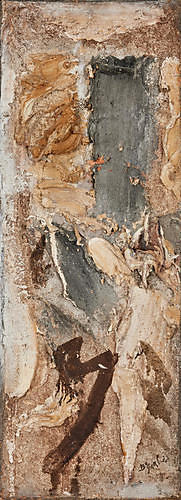
"Le Sol", clubbed for 7 796 GBP at Stockholms Auktionsverk.
Painting as Matter
Bogart’s early work was influenced by Cubism and the CoBrA movement, but he soon found his own language—one rooted in the physicality of paint. He moved to Belgium in the late 1950s, where he began producing the highly textured, monochromatic reliefs that would become his signature. These compositions, often built up over time, reflect a deep engagement with the act of painting as construction, pushing the canvas to its sculptural limits. Despite their material weight, his works often possess a meditative stillness.
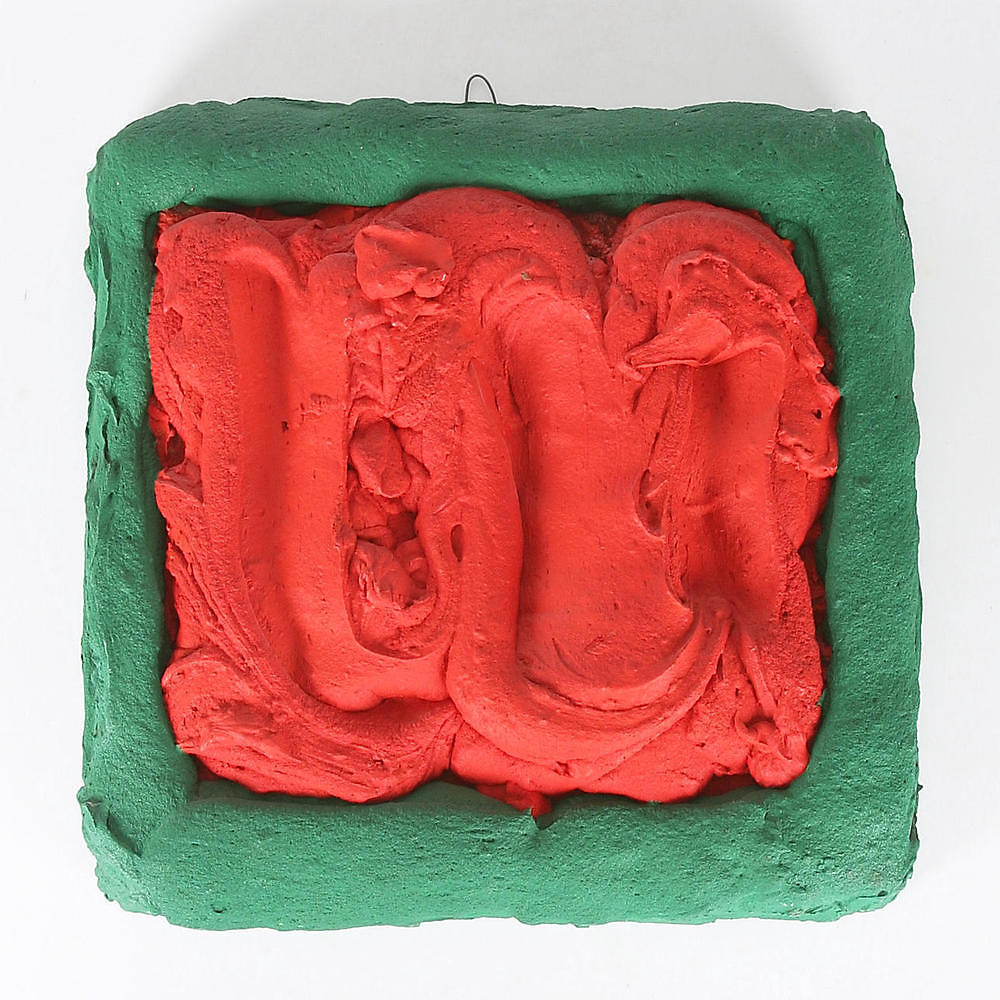
"Rougevert", mixed media.
Recognition and Legacy
Throughout his career, Bogart exhibited widely in Europe, including representing Belgium at the Venice Biennale in 1971. His works are held in major public and private collections, appreciated for their fusion of minimalism, tactility and painterly energy. Today, Bogart is regarded as a pioneer of matter painting and a key figure in the post-war European avant-garde, particularly within the context of Art Informel and lyrical abstraction.